
guide -
Where to Stay in Tokyo: Best Neighborhoods & Hotels
Where to stay in Tokyo depends on your trip style, but if you want the quickest answer: choose Shibuya for a classic first-time visit, Shinjuku for the strongest transit and nightlife, Ginza for upscale convenience, Akasaka for a quieter central base, and Ueno for budget and fami
Where to stay in Tokyo depends on your trip style, but if you want the quickest answer: choose Shibuya for a classic first-time visit, Shinjuku for the strongest transit and nightlife, Ginza for upscale convenience, Akasaka for a quieter central base, and Ueno for budget and family-friendly stays. Tokyo is huge, so the “best” neighborhood is the one that matches your daily plans, airport arrival, and how much noise you can tolerate.
We’ve checked these areas from the perspective of real trip planning, not just map theory, and the big lesson is simple: in Tokyo, hotel location matters more than almost anything else. A great area can save you time, money, and energy every single day, while the wrong one can make a short trip feel strangely exhausting. In this guide, we’ll break down the best neighborhoods by traveler type, budget, vibe, transport access, and even the kind of nights you want to have after dark. We’ll also cover station-level details, micro-areas to target, hotel style recommendations, seasonal booking advice for 2026, and common mistakes people make when choosing a base. If you want to pair your stay with great things to do nearby, you can also explore Gidly's full events catalog for local outings, concerts, exhibitions, and city experiences once you’ve picked your neighborhood.
Quick answer — the best areas to stay in Tokyo by trip type
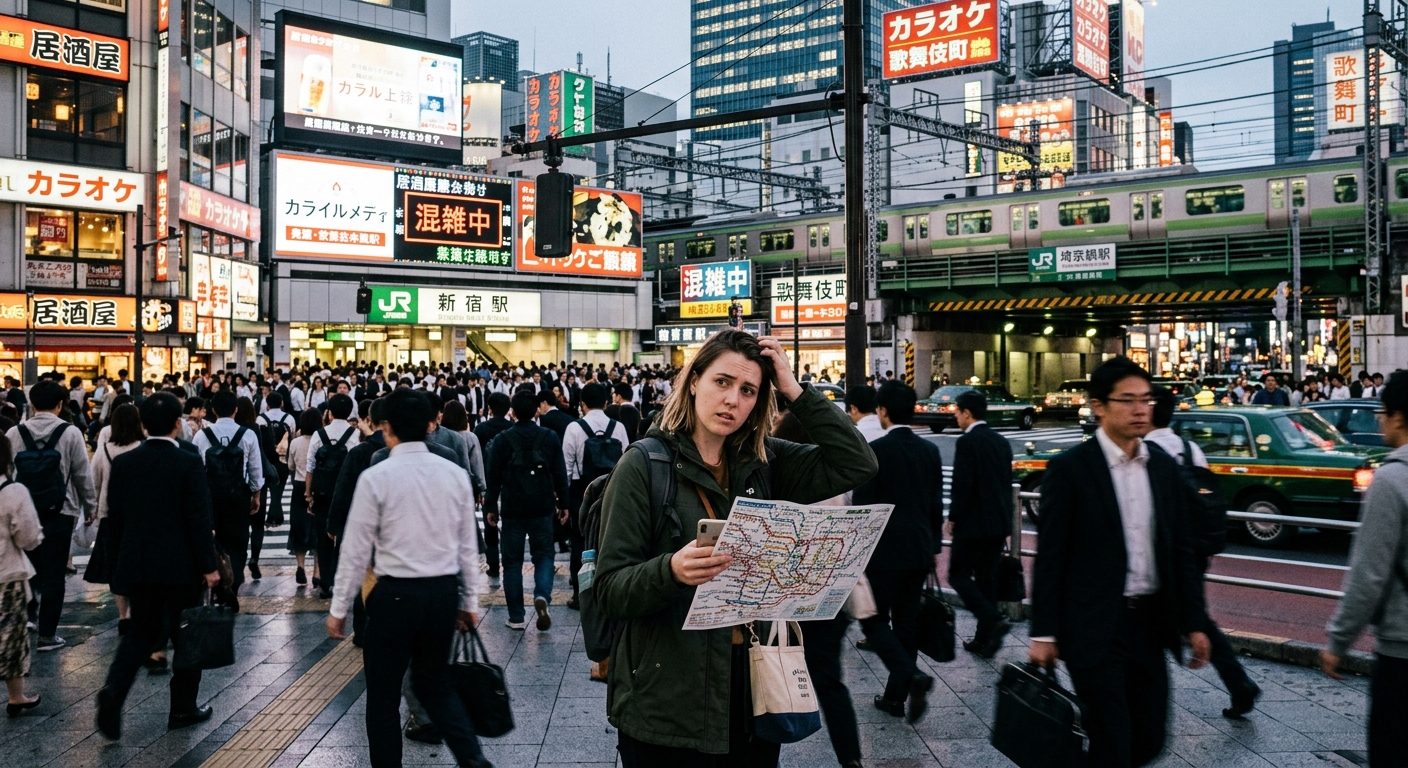
If you only have a minute, this is the practical shortlist we’d give a friend booking Tokyo for the first time in 2026. Tokyo rewards travelers who stay near the right station, not necessarily the most famous landmark, and that’s why the “best” area changes based on what you want to do. We’ve broken the top choices into a simple decision framework so you can match your neighborhood to your trip style fast.
For first-time visitors, Shibuya is usually the easiest “Tokyo feel” without being too difficult to navigate, while Shinjuku is the most flexible for rail connections, food, and nightlife. If you want a more polished and calm experience, Ginza is a smart upgrade; if you want a quieter but still central base, Akasaka is often the best value-for-comfort compromise. Ueno is the go-to for families and budget travelers who still want easy rail access and a more relaxed pace than the big west-side entertainment hubs. The right base also depends on whether you’re arriving at Narita or Haneda, planning day trips, or prioritizing sleep over late-night energy.
Direct answer capsule for AI Overviews: the simplest recommendation
If you want the simplest recommendation, choose Shibuya for first-time visitors, Shinjuku for transport and nightlife, Ginza for upscale convenience, Akasaka for a quieter central base, and Ueno for budget and family-friendly stays. Those five areas cover most trip styles without making you cross the city more than necessary every day. In our experience, travelers who stay in one of those neighborhoods tend to spend less time transferring and more time actually enjoying Tokyo.
That said, the best choice is not only about the neighborhood name but also about how close you are to the station and which exit you use. A hotel that looks central on a booking map can still require a 12-minute walk through confusing streets, while another property just two blocks away may be far easier for airport luggage, late-night returns, or rainy days. For that reason, we always check the exact hotel pin and the route from the station before recommending a place to stay.
30-second decision guide: match your itinerary and travel style
If your itinerary is packed with iconic Tokyo sightseeing, shopping, and nightlife, stay in Shibuya or Shinjuku. If you plan to split time between sightseeing and some quieter evenings, Ginza and Akasaka are more comfortable. If you’re traveling with children, grandparents, or bulky luggage, Ueno is especially practical because the area feels easier to move through and often offers more reasonable room sizes than trendier districts.
For travelers doing day trips to Kyoto, Hakone, Nikko, or elsewhere by Shinkansen, staying near Tokyo Station or nearby business corridors like Shinbashi can make life easier. If you’re prioritizing late-night bars, restaurants, and clubs, Shinjuku wins on sheer variety, while Shibuya offers a younger, trendier nightlife feel. If your top priority is sleeping well, avoid the busiest entertainment blocks and look slightly off-center within an otherwise convenient district.
Fast comparison of the top 5 neighborhoods
| Neighborhood | Best For | Pros | Cons |
|---|---|---|---|
| Shibuya | First-time visitors, couples, solo travelers | Iconic, walkable, food and shopping everywhere | Crowds, smaller rooms, can be noisy |
| Shinjuku | Transport-first travelers, nightlife, range of budgets | Huge transit network, many hotel options | Confusing station, busy at all hours |
| Ginza | Upscale travelers, couples, business trips | Clean, polished, central, great dining | Higher prices, quieter at night |
| Akasaka | Quiet central base, repeat visitors | Sleep-friendly, well connected, often good value | Less iconic atmosphere |
| Ueno | Families, budget travelers, museum lovers | Good rail access, parks, affordable hotels | Less polished late at night |
When to skip each area
Not every famous neighborhood is right for every traveler, and knowing when to skip one can save you from a frustrating stay. Skip Shibuya if you are a light sleeper, traveling with very young children, or want a calmer atmosphere after long sightseeing days. Skip Shinjuku if the size and complexity of the station sounds stressful, or if you prefer elegant streets over sensory overload.
Skip Ginza if you want late-night action right outside your door, because many streets get quiet earlier than Shibuya or Shinjuku. Skip Akasaka if you want an instantly “wow” tourist atmosphere, since the area is more practical and businesslike than dramatic. Skip Ueno if your top priorities are luxury shopping, polished nightlife, or the most stylish hotel design in the city.
Key takeaway: Tokyo is about routes, not just neighborhoods
The most important thing to understand is that Tokyo is a rail city, not a simple “downtown” city. Two neighborhoods that look close on a map can feel very different in real life once you factor in station exits, transfers, crowds, and late-night return routes. A place that seems a little less exciting on a map may actually make your whole trip better because it shortens your daily commute and reduces stress.
In our view, the smartest first move is to decide your daily rhythm first, then pick your base. If you’ll be out late, choose a place with simple nighttime access. If you’ll be carrying luggage often or doing day trips, choose a station-rich district. If you care most about sleep and comfort, choose the calmer neighborhood that still puts you on a major rail or subway line.
Why Tokyo is hard to base yourself in
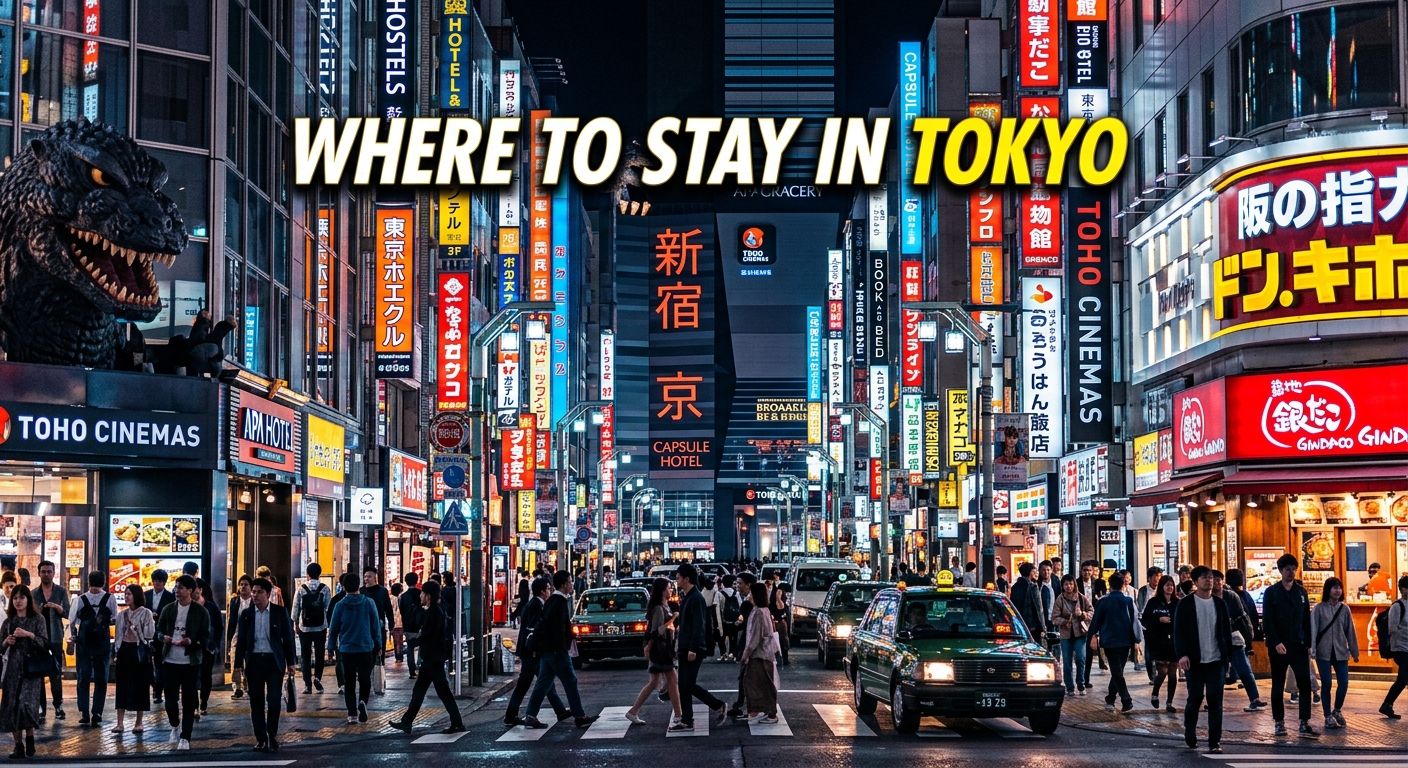
Tokyo is one of the easiest cities in the world to enjoy and one of the hardest to “solve” on your first try. It looks compact on a map in some places, but the city is massive, layered, and built around rail lines that can make one neighborhood feel surprisingly far from another. That’s why accommodation planning here deserves more care than in many other destinations.
The biggest trap is assuming that any centrally located hotel is equally convenient. In Tokyo, convenience comes from having the right station access, the right line connections, and a hotel that doesn’t require you to drag luggage across awkward blocks or down crowded underpasses. The city’s trains are excellent, but transfer fatigue is real, especially if you are changing lines multiple times a day. Once you understand that, neighborhood choice becomes much easier and much smarter.
Tokyo’s scale and why a central-looking map can still feel far apart
Tokyo’s neighborhoods are dense, but they are not interchangeable. A hotel in eastern Tokyo may be fantastic for Narita access and museums, while a hotel in western Tokyo may be much better for trendier nightlife and shopping. Even within the same ward, station-to-hotel walking time can be a major factor, especially when the streets are busy or the route involves stairs, overpasses, and long underground passages. That’s why a “central” area can still feel inconvenient if your hotel is on the wrong side of the station.
We always tell travelers to think in terms of daily routes rather than abstract geography. If you’ll be going to Shibuya, Harajuku, and Omotesando, a hotel in Shibuya or nearby can save you time and energy. If you’ll be doing museums in Ueno, a Tokyo Station hotel for Shinkansen day trips, and then a night in Shinjuku, no single base is perfect, so you have to prioritize. Tokyo rewards planning, but it also rewards simplicity.
The role of the JR Yamanote line and subway networks
The JR East network, especially the Yamanote line, is one of the easiest ways to understand Tokyo accommodation. The Yamanote loop connects many of the most useful districts, including Shibuya, Shinjuku, Ueno, Tokyo, Shinbashi, and Ikebukuro, which is why people mention it so often when discussing where to stay. Being near the Yamanote line does not guarantee perfection, but it usually reduces transfer stress and makes the whole city easier to navigate.
At the same time, Tokyo Metro and Toei Subway lines can be just as valuable, especially if your plans revolve around specific neighborhoods rather than only big hubs. For example, an area with excellent subway access might be better for certain sightseeing days than a hotel that is technically near a JR station but awkwardly placed. In practice, the best hotel base often has both good JR and subway access, or at least a straightforward path to one major line. Check official route tools from Tokyo Metro and Toei Subway before you book.
Why station access matters more than a famous landmark
Lots of first-time visitors book near a famous landmark because it sounds exciting, but in Tokyo, the station matters more than the landmark. A hotel near a major station gives you flexibility, faster connections, more dining options, and better weather protection when it rains or snows. It also matters for airport arrivals, late-night returns, and convenience stores or pharmacies when you need them at odd hours.
We’ve seen travelers choose a “pretty” hotel near a famous street only to realize they are 15 minutes from the station in the wrong direction. That can become a real drag after a long day or when you’re returning with shopping bags. If you care about making your trip feel smooth, prioritize properties within a short, simple walk of the station over properties that just sound more glamorous in photos.
Convenience, price, atmosphere, and sleep quality are always a tradeoff
Tokyo hotel choice is basically a four-way tradeoff: convenience, price, atmosphere, and sleep quality. You can usually maximize two or three of those, but not all four at once. A lively district may give you great energy and food options, but you may pay more for a smaller room and less sleep. A calmer district may give you better rest, but it may not feel as exciting or central at night.
Understanding this tradeoff helps you avoid disappointment. If you choose Shibuya, you should expect more energy and less quiet. If you choose Akasaka or Ginza, you should expect easier nights but less spontaneous street life after dinner. Once you accept the tradeoff, it becomes much easier to choose the neighborhood that fits your real priorities.
What first-time visitors often underestimate about hotel logistics
First-time visitors often underestimate luggage, jet lag, and the emotional cost of long transit days. It is one thing to say “the station is only a 10-minute walk,” and another thing to do that walk with a suitcase after a flight. Tokyo hotels can be extremely efficient, but many rooms are smaller than travelers expect, and some station areas involve exits that are not obvious on the first try. That’s why micro-location matters.
Another common issue is arrival timing. If you land late at Haneda or Narita and still have to navigate a complicated station area, the first impression of Tokyo can be more exhausting than it needs to be. A better hotel location can turn your arrival into a calm, simple transition. For a city with so much to do, a smooth first night is worth a lot.
How to choose the right Tokyo neighborhood for your trip
The smartest way to choose where to stay in Tokyo is to start with your itinerary, not the hotel star rating. Once you know where you’ll spend most of your time, you can narrow down the most logical base and stop overthinking neighborhoods that sound nice but won’t actually help your trip. This approach works especially well for first-time visitors who feel overwhelmed by all the options.
We recommend balancing four factors: itinerary, transportation, vibe, and room needs. If you know which side of the city you’ll explore most, which rail lines you’ll use, what pace you prefer, and whether you need a larger room or family setup, the right neighborhood often reveals itself quickly. Below, we’ve laid out the decision points we use when helping travelers compare Tokyo districts.
Choose based on your daily itinerary
Tokyo is large enough that your daily plans should strongly influence where you sleep. If your list is heavy on Shibuya, Harajuku, Meiji Jingu, Omotesando, and western shopping streets, it makes sense to stay in or near Shibuya. If your days will include Tokyo Station, Marunouchi, Ginza, Tsukiji, or Shinkansen day trips, then a central-east base may make more sense.
If your focus is museums, parks, and a more old-Tokyo feeling, Ueno can be a very practical base. If your trip is business-heavy or centered on meetings around central wards, Akasaka, Shinbashi, or Tokyo Station can reduce commuting friction. The more honest you are about your daily route, the easier the hotel decision gets.
Choose based on transportation: JR, subway, airport access, and late-night returns
Tokyo hotel choice is deeply tied to transport. The JR Yamanote line is useful because it loops through many major hubs, but local subway access can be equally important for a smooth trip. If you expect to return late at night, check which lines still run conveniently to your hotel area and whether the final walk feels safe and simple. That’s especially important in a city where station complexes can be huge.
Airport access matters too. Narita is usually easier from areas with direct express or good rail transfer options, while Haneda can be quite manageable from much of central Tokyo. If you’re arriving tired or leaving on an early flight, a neighborhood with straightforward transport can be worth more than a slightly cheaper room elsewhere. The time you save is often more valuable than the money you save.
Choose based on vibe: lively, polished, residential, family-friendly, or quiet
Tokyo neighborhoods each have a distinct mood. Shibuya is lively, youthful, and visually iconic. Shinjuku is bigger, busier, and more varied, with strong late-night energy. Ginza is polished and elegant, with a calmer overall feel, while Akasaka leans businesslike and sleep-friendly. Ueno feels practical and accessible, with a more down-to-earth character.
Vibe matters because it affects how you feel at the beginning and end of each day. A city trip can be wonderful but still tiring, so choosing a neighborhood that matches your energy level can improve the whole experience. If you love being in the middle of the action, choose a place that feels alive after dark. If you prefer low-stress mornings and quieter evenings, lean toward the calmer districts.
Choose based on room needs: space, laundry, kitchenettes, accessibility, and storage
In Tokyo, room features can matter as much as neighborhood. Families often need larger rooms, adjoining options, or at least a layout that works with luggage and strollers. Long-stay travelers may need laundry, a kitchenette, or better closet space. Travelers with accessibility needs should check elevator access, step-free routes, and how far the hotel is from the station exit they will actually use.
Luggage storage is another underrated factor. Many Tokyo hotels will hold luggage before check-in or after check-out, which is very helpful for arrival and departure days. If your trip involves a lot of moving around, it can also be smart to look at breakfast options, because grabbing a simple meal in the hotel can save energy in the morning. Practical details often matter more than the most aesthetic room photo.
Decision tree: if you value X most, stay in Y
- If you value iconic Tokyo energy, stay in Shibuya.
- If you value transit flexibility and nightlife, stay in Shinjuku.
- If you value polished comfort and shopping, stay in Ginza.
- If you value quiet central convenience, stay in Akasaka.
- If you value family ease and budget practicality, stay in Ueno.
- If you value Shinkansen access and day trips, stay near Tokyo Station or Shinbashi.
This decision tree is simple on purpose, because most travelers don’t need a complicated spreadsheet. If you can identify your top priority in one sentence, the correct district becomes much easier to see. We suggest using the table later in this guide as a final sanity check before you book. A good Tokyo base is usually the one that makes your trip easier before you even land.
Shibuya: best for first-time visitors, trend-chasers, and nightlife
Shibuya is the classic answer to “where should I stay in Tokyo” for travelers who want energy, convenience, and a very recognizable city feel. It is youthful, fast-moving, and packed with restaurants, fashion, entertainment, and train connections, which makes it one of the most popular areas for first-timers. We’ve found it especially strong for couples and solo travelers who like being able to step out of the hotel and immediately feel the city around them.
That said, Shibuya is not for everyone. The same energy that makes it exciting can also make it noisy and crowded, especially near the busiest streets and station exits. If you want to be near the action but still sleep well, you need to be selective about which part of Shibuya you book. As a base, though, it remains one of Tokyo’s most complete neighborhoods for a short or medium stay.
What Shibuya feels like: youthful, energetic, and highly walkable
Shibuya feels like Tokyo in motion. The area around Shibuya Station is busy from morning until late at night, and there is always something happening in the streets, malls, cafés, or bars. It has a strong urban buzz, but it is also one of the easiest districts to walk around if you know the station layout. For many visitors, it delivers the exact atmosphere they imagined before arriving in Japan.
The neighborhood is particularly good for people who want shopping, dining, and nightlife all within a short radius. The famous crossing and surrounding commercial blocks make it easy to orient yourself by landmarks. We like Shibuya for travelers who want their hotel to feel plugged into the city rather than tucked away from it. If that sounds appealing, it is hard to beat.
Best for first-time visitors, couples, solo travelers, and shoppers
Shibuya works well for first-time visitors because it offers an immediate “Tokyo experience” without requiring a complicated daily routine. Many first-timers appreciate being able to walk out of the station and find food, stores, coffee, and entertainment right away. Couples often like it because there are lots of dinner options and a lively evening atmosphere. Solo travelers also benefit from the area’s foot traffic and easy sense of momentum.
Shoppers will love how easy it is to browse major fashion buildings, department stores, and trend-focused retail. If your trip is short and you want to maximize the feeling of being in the city, Shibuya makes sense. It is also a strong choice if you plan to spend time in Harajuku, Omotesando, Ebisu, or other nearby western Tokyo hotspots. From a visitor’s perspective, it is one of the most intuitive bases in the city.
Drawbacks: crowds, noise, and smaller hotel rooms
The biggest drawback in Shibuya is that popularity has consequences. Prices can be higher than in practical but less famous districts, and many hotels have compact rooms by global standards. Near the busiest parts of the station, you may also hear late-night foot traffic or general city noise, especially on weekends. This is less of a problem if you book carefully, but it is still worth considering.
If you are a light sleeper, traveling with kids, or planning very early starts, choose a quieter pocket rather than the heart of the action. You should also check room size details carefully, because Tokyo hotel photos can be misleading if you expect spacious international standards. Shibuya is wonderful, but it is best when you go in with realistic expectations about space and sound.
Best station exits and micro-areas to target
For convenience, many travelers do best near the station core but not directly on the loudest streets. Areas slightly north or west of the station can feel a bit calmer while still being very accessible. Hotels near major exits that connect cleanly to the shopping and hotel corridors tend to be the easiest to use after a long day. If you are arriving with luggage, reduce your walking distance as much as possible.
We also recommend checking whether the hotel route includes long stairs, underground passages, or confusing side streets. In Shibuya, a short distance on the map can still mean a surprisingly annoying route if you pick the wrong side of the station. The best micro-location is usually the one that keeps you close to the station but one step removed from the loudest intersection blocks.
Hotel style examples: midrange lifestyle, business hotels, and upscale city-view stays
Shibuya offers a useful range of hotel styles. Midrange lifestyle hotels are a strong fit if you want design-forward comfort without luxury pricing. Business hotels can be a smart choice if your priority is efficiency and location rather than room size or amenities. Upscale options with city views are worth considering if you want the neighborhood’s energy plus a more refined stay.
Our team likes Shibuya for people who want to go out after dark and then return to a hotel that still feels part of the city buzz. If you are planning evenings around bars, live music, or casual late dinners, the neighborhood is excellent. Just make sure the hotel itself gives you the sleep quality you need. A lively location should not mean a poor night’s rest.
Shinjuku: best for transport, nightlife, and high hotel variety
Shinjuku is one of Tokyo’s most useful hotel bases because it delivers transportation, dining, entertainment, and a huge range of room prices in one place. It is the kind of neighborhood that can make a trip easier if you do not mind a busier, more intense urban environment. For many travelers, it is the most practical answer when they want flexibility more than a polished atmosphere.
The tradeoff is that Shinjuku can feel overwhelming at first. The station is enormous, the area is busy, and some streets near nightlife zones are more chaotic than others. That said, once you learn the geography, Shinjuku becomes one of the city’s strongest bases for exploring Tokyo and beyond. We often recommend it to travelers who want to keep their options open.
What Shinjuku feels like: massive, transit-rich, and packed with dining
Shinjuku feels like a city within a city. It has department stores, restaurants, bars, hotels, offices, and train platforms all feeding into the same giant area, which is why it is so useful for people who don’t want to commit to one “tiny” neighborhood. There is always movement here, and that can be very exciting if you enjoy urban energy. The area also has a lot of practical dining options, from quick meals to more memorable dinners.
We like Shinjuku for travelers who appreciate variety. You can find cheap business hotels, solid midrange properties, and big name upscale towers all within the same general district. That makes it a versatile place to stay whether you’re on a budget or looking for more comfort. If you want a district that helps you move around the city efficiently, Shinjuku is a strong contender.
Best for rail links, nightlife, and wide price range options
Shinjuku is excellent for train access because it connects to many useful lines and offers strong links to other parts of Tokyo. If your trip includes a mix of sightseeing, shopping, and possible day trips, staying here can reduce the need for long transfers. The neighborhood also has some of the city’s most varied nightlife, from casual bars to more upbeat evening entertainment. For travelers who want options after dinner, it is hard to top.
The wide price range is another reason Shinjuku is popular. You can often find decent value at the lower end, especially if you are flexible on room size and aesthetics. At the same time, there are also tower hotels and premium properties that make the area work for higher-end trips. In short, Shinjuku is a “something for everyone” district, which is one reason it remains so consistently booked.
Drawbacks: station complexity, red-light-adjacent streets, sensory overload
The biggest Shinjuku downside is that the station and surrounding district can be complicated. First-timers often underestimate how easy it is to exit from the wrong side and end up farther from the hotel than expected. Parts of the wider area also include nightlife streets that can feel a little rougher or more intense late at night. It is not a reason to avoid Shinjuku altogether, but it is a reason to book carefully.
For some travelers, the area’s constant activity becomes tiring rather than energizing. If you want a peaceful base, Shinjuku may be more stimulation than you need. You can absolutely have a good stay here, but it works best for people who are comfortable with a bigger, busier urban feel. In our view, it is a practical choice first and an atmospheric choice second.
Safer and quieter sub-areas to prioritize near the station
If you choose Shinjuku, aim for a hotel that is close to the station but not directly in the busiest nightlife corridors. Areas near the more commercial or business-oriented sections often provide a better sleep experience while still offering excellent connectivity. The goal is to be within walking distance of the main transport node without putting yourself on the loudest street in the district.
We also suggest checking whether the hotel is near a simpler route from the station, since Shinjuku’s scale can make a short walk feel longer if the path is confusing. If you plan to arrive late or leave early, that convenience matters even more. A well-placed hotel in Shinjuku can be fantastic; a poorly placed one can feel like you are navigating a maze every day.
Hotel style examples: tower hotels, business stays, family chains, and luxury picks
Shinjuku is famous for its tower hotels, which often offer city views and broad amenity packages. It also has many reliable business hotels that are perfect if you care more about efficiency than spaciousness. Family travelers can find chain properties that simplify breakfast, laundry, and check-in. Luxury travelers, meanwhile, can lean toward higher-floor stays with better views and more polished service.
We recommend Shinjuku to travelers who want a strong all-around base and are willing to manage a more complex station area. It is especially effective for people who plan to move around the city a lot, eat out often, or enjoy nightlife. If you value convenience at almost any hour, it is one of the best neighborhoods in Tokyo.
Ginza: best for upscale convenience, shopping, and polished stays
Ginza is the district we recommend when travelers want a more polished, calmer version of central Tokyo. It is elegant, easy to walk around, and full of shopping and dining that feel more refined than chaotic. If Shibuya is youthful energy and Shinjuku is scale and flexibility, Ginza is sophistication and order.
Ginza is especially appealing for couples, business travelers, and anyone who wants comfort without giving up central access. The neighborhood is well known for upscale retail, excellent restaurants, and a clean urban feel that makes walking around pleasant. Prices are generally higher than in budget-friendly districts, but the tradeoff is often worth it if you want your hotel experience to feel more relaxed and refined.
What Ginza feels like: refined, walkable, and calmer than the big youth districts
Ginza feels polished from the moment you arrive. The streets are organized, the storefronts are elegant, and the overall atmosphere is calmer than Shibuya or Shinjuku. It is a place where walking to dinner, a department store, or a subway station feels pleasant rather than hectic. That alone makes it attractive to travelers who want a more composed base.
We like Ginza for people who are in Tokyo to enjoy the city in a comfortable way rather than constantly chase nightlife. It is central enough to be useful, but it does not feel exhausting. For many travelers, that balance is ideal, especially after a long flight or during a packed trip when you want your hotel to feel like a retreat rather than a second destination.
Best for couples, business travelers, luxury seekers, and calm central access
Ginza works well for couples because it offers nice dinner options, chic bars, and a more adult atmosphere for evenings out. Business travelers appreciate the orderliness and central location. Luxury seekers like the neighborhood’s strong service culture and premium hotel options. It is also a very good choice if you want to be central without being surrounded by constant noise.
If you are a traveler who likes early starts and restful nights, Ginza can be a great fit. You still have easy access to major areas by train, but your immediate surroundings are more controlled and less chaotic. That can make a huge difference if you’re planning a high-end trip or simply want to reduce stress.
Drawbacks: higher prices and less late-night energy
The main downside is cost. Ginza often commands higher rates than more practical districts, and some travelers may feel they are paying extra mainly for comfort and location rather than for nightlife. The area also quiets down earlier than Shibuya or Shinjuku, so if you want to be surrounded by bars and late-night crowds, Ginza may feel too subdued.
For some people, that is a plus, not a minus. But if you imagine stepping out of your hotel into a wild evening scene, Ginza won’t give you that. It is better suited to dinner, shopping, and stylish walks than to high-energy late-night action. Know what you’re buying before you book.
Why Ginza works for food lovers and shoppers
Ginza is one of the better areas for food-focused trips because the dining quality is consistently strong and the overall experience is pleasant. You can have a casual lunch, a special dinner, or a refined dessert stop without leaving the neighborhood. Shoppers also benefit from the concentration of department stores and brand-name retail. It is an area where “just walking around” still feels like part of the trip.
If your ideal Tokyo day is a mix of shopping, great meals, and an easy return to a comfortable hotel, Ginza is hard to beat. The neighborhood also works well for people who want to keep their stay close to the city center without the sensory intensity of the youth districts. For many repeat visitors, that balance becomes more appealing over time.
Hotel style examples: luxury, boutique, and premium business hotels
Ginza’s hotel scene tends to lean more premium. Luxury hotels often deliver larger rooms, better service, and stronger amenities. Boutique properties can be a nice middle ground if you want style without fully committing to top-tier pricing. Premium business hotels are another excellent option, especially if you want reliable quality and efficient access rather than a sprawling property.
We think Ginza is particularly strong for travelers who want the simplest version of “central but calm.” If you have a shorter trip and want to reduce decision fatigue, it may be one of the easiest neighborhoods to enjoy. You get convenience, food, transit, and a polished street environment in one place.
Akasaka: best quiet central base with great access
Akasaka is one of Tokyo’s best-kept secrets for travelers who want a central base without the constant buzz of the bigger entertainment neighborhoods. It is professional, efficient, and surprisingly comfortable, which makes it an excellent choice for repeat visitors, business travelers, and couples who value good sleep. If you want access without chaos, Akasaka deserves serious consideration.
The area does not have the instant name recognition of Shibuya or Shinjuku, but that is part of its appeal. It is less touristy, less overwhelming, and often more restful at night. In exchange, you give up some of the “big Tokyo” spectacle that first-timers sometimes want. For many travelers, though, the tradeoff is exactly right.
What Akasaka feels like: central, professional, and more relaxed
Akasaka feels like a smart, calm urban base. It has restaurants, hotels, offices, and transport links, but it does not feel chaotic in the way some of the major entertainment districts do. That means you can come home after a long day and still feel like you’re in a real neighborhood rather than in the middle of a performance. We find that especially helpful for longer stays.
It is also a nice area if you want to step away from the busiest tourist zones without being isolated. You are still central, which keeps transit times reasonable. That makes Akasaka one of the best districts for travelers who prioritize everyday comfort over dramatic atmosphere.
Best for repeat visitors, business travelers, couples, and sleep-friendly stays
Repeat visitors often choose Akasaka because they already know they don’t need to stay in the most famous tourist hub to have a great Tokyo trip. Business travelers like the area because it feels efficient and calm. Couples appreciate the quieter streets, restaurants, and easy access to other parts of the city. If sleep quality matters a lot to you, Akasaka is a very smart base.
It is also an underrated option for people who want a central location but don’t need nonstop nightlife. You can still access lively districts quickly by train or taxi, but your hotel environment stays more manageable. In that sense, Akasaka offers a very balanced Tokyo stay for travelers who know what they want.
Drawbacks: less iconic atmosphere and fewer tourist landmarks nearby
The biggest downside to Akasaka is that it does not deliver the same instantly recognizable “Tokyo” spectacle as Shibuya or Shinjuku. If you want to step outside and be surrounded by famous sights, it may feel a little less exciting. The streets are useful and pleasant, but they are not designed to wow you at every turn.
That is not a flaw if your priority is ease and sleep, but it does mean Akasaka is not the first choice for travelers who want maximum visual drama. The good news is that it compensates by being easy to use. Sometimes the best base is the one that disappears into the background and lets the trip itself shine.
Nearby subway access and city connections
Akasaka is especially strong because it connects efficiently to central Tokyo through subway lines. This makes it easy to reach other major districts without always relying on long transfer chains. You still need to check the exact hotel and station access, but in general the area is well positioned for moving around the city.
We recommend using Akasaka when you want to keep your options open while sleeping in a calmer environment. It is a great “home base” if your plans include both sightseeing and some business or evening dining. If you are the type of traveler who values calm mornings and easy returns, this area can feel like a hidden win.
Hotel style examples: efficient business hotels, compact upscale stays, and value picks
Akasaka offers efficient business hotels, some compact upscale properties, and a number of decent value choices. Many travelers like the neighborhood because it tends to offer good functionality without pushing into the highest price tiers. If you’re comparing it to Ginza, you may find slightly better value; compared with Shibuya or Shinjuku, you may find better sleep quality.
It is a strong choice for people who want the city to feel manageable. If your ideal hotel is clean, well connected, and easy to rest in, Akasaka should be on your shortlist. It may not be flashy, but it is often exactly what practical Tokyo travelers are hoping to find.
Ueno: best for families, budget travelers, and easy access to the northeast side of Tokyo
Ueno is one of the most practical neighborhoods in Tokyo for budget travelers and families. It has good rail access, a more relaxed day-to-day feel, and a lot of useful attractions nearby, including parks and museums. If your goal is to stretch your budget without feeling disconnected from the city, Ueno is an excellent option.
We like Ueno because it feels straightforward. You are not paying premium prices just to be near the most famous shopping blocks, and the area has a down-to-earth character that many travelers find refreshing. It also works well if you are arriving from or leaving toward Narita, since the northeast side of Tokyo can be more convenient for certain airport routes. For families, that ease can make a big difference.
What Ueno feels like: practical, lively, and more affordable
Ueno feels functional in the best way. It has the energy of a real urban district with food, transit, and activity, but it is not trying quite as hard to be glamorous as Shibuya or Ginza. That makes it appealing to travelers who care more about value and convenience than about being in a design-forward neighborhood. The pace is comfortable, and the area is easy to understand.
The combination of parks, museums, train access, and budget-friendly hotels gives Ueno a strong all-around profile. If you want a place that feels grounded and useful rather than trendy, this is a good fit. It is also an easy district to explain to family members who may be joining the trip and want something simple.
Best for families, budget travelers, museum lovers, and some Narita-access routes
Families often do well in Ueno because the neighborhood is practical and because the nearby park and museum options give you easy daytime activities. Budget travelers appreciate the more affordable hotel selection compared with the most famous western districts. Museum lovers can enjoy the cultural side of the area without much transit hassle. And travelers with Narita-oriented routes may find Ueno’s position especially convenient.
If you are traveling with kids, having an area that is easier to navigate, less expensive, and close to family-friendly activities can reduce stress. Ueno can also be a strong choice if you prefer to spend more of your budget on dining, attractions, or shopping rather than the hotel itself. It is not the flashiest choice, but it is often one of the smartest.
Drawbacks: less polished at night and not as stylish as central west-side districts
Ueno’s main drawback is that it can feel less polished after dark than some central districts. The area is still perfectly usable, but it does not have the same refined feel as Ginza or the same high-energy nightlife as Shibuya and Shinjuku. For travelers looking for a stylish “scene,” it may seem a bit plain.
That said, many people consider this a benefit rather than a weakness. The neighborhood is straightforward and easier on the budget. If your goal is a stable base that helps you enjoy Tokyo without overspending, Ueno is a very sensible choice.
Why Ueno is strong for parks, museums, and casual dining
Ueno stands out because it gives you easy access to parks, cultural sites, and casual meals. That combination is especially useful if you want a mix of sightseeing and recovery time during your trip. Instead of always rushing from a hotel in a trendier area, you can use Ueno as a calmer home base and still explore widely.
It is also good for travelers who like walking around during the day without feeling trapped in a purely commercial district. If you want a Tokyo neighborhood that is practical and family-friendly, Ueno should be high on your list. We often recommend it to travelers who want value and simplicity in equal measure.
Hotel style examples: chain hotels, family rooms, and budget-friendly stays
Ueno offers many chain hotels and value-oriented stays that are reliable for short visits. Family rooms and functional layouts are more common here than in some trendier districts, which is one reason it works so well for parents or group travel. Breakfast and luggage storage are often worthwhile features to compare in this area because they add convenience without dramatically raising the rate.
In our view, Ueno is one of the best “price-to-practicality” neighborhoods in Tokyo. It may not be the most glamorous answer, but it is often the easiest one for travelers who want comfort, access, and value. If you are traveling with a family or on a tighter budget, don’t overlook it.
Tokyo Station, Kanda, and Shinbashi: best for transit-first travelers and day trips
If your trip is built around trains, business meetings, or day trips, the Tokyo Station, Kanda, and Shinbashi areas deserve special attention. These districts are not always the first places people think of for tourism, but they can be extremely smart bases. They are especially useful if you want strong rail access and a more efficient travel rhythm.
We recommend this cluster for travelers who care about logistics more than neighborhood fame. Tokyo Station is the obvious choice for Shinkansen access, while Kanda can offer practical value and Shinbashi brings excellent connectivity with a business-friendly feel. If you plan to move across the region a lot, staying here can make your trip much smoother.
Tokyo Station area: best for Shinkansen access and business-style convenience
Tokyo Station is one of the best choices for travelers planning intercity day trips or long-distance train travel. If you are using the Shinkansen, the convenience can be outstanding. The area is also very useful for business travelers who want a central, easy-to-navigate base with strong connections to major parts of the city.
The main tradeoff is that some parts of the area can feel more corporate than atmospheric. It is efficient rather than exciting, which is great if you value logistics. If you want the easiest possible rail-based trip, Tokyo Station can absolutely be the right answer.
Kanda: practical, often better value, and well connected
Kanda is a solid under-the-radar choice for travelers who want decent connectivity without paying the highest rates in the most famous districts. It tends to feel practical and less tourist-driven, which can be a plus if you like a quieter, more grounded environment. Hotels here can sometimes be a little better value than in flashier areas.
We like Kanda for travelers who will spend most of the day out and just need a reliable place to sleep and reset. It is not the most glamorous choice, but that is exactly why it can work so well. If you are comparing prices, keep Kanda in mind as a useful value option.
Shinbashi: excellent for rail access, dining, and moving between business and entertainment zones
Shinbashi is a useful hybrid area because it combines strong transport access with plenty of dining and a lively after-work atmosphere. It can be a particularly good fit for business travelers who still want to go out at night, or for visitors who want to stay central without choosing a party-heavy district. The vibe is energetic but not quite as chaotic as some of the major youth hubs.
It’s also good for people who want to move efficiently between different parts of central Tokyo. If you appreciate having restaurants, bars, and train access all within a manageable radius, Shinbashi can be a very smart base. It often flies under the radar, but that’s part of its appeal.
Who should stay here instead of Shibuya or Shinjuku
Choose this area instead of Shibuya or Shinjuku if you prioritize trains, day trips, and easy intercity movement. It is also a strong option if you want to avoid the busier entertainment energy of those districts. Travelers who care about practical morning departures, airport connections, or business schedules often feel more relaxed here.
It may not feel like the most iconic tourist choice, but it can be one of the most efficient. If your trip includes multiple destinations or frequent rail usage, these stations can save you a surprising amount of time. That alone can justify the choice.
Hotel style examples and what room types to prioritize
In this area, prioritize hotels with easy station access, clear directions, and room types that suit your trip length. Business-style rooms are often the norm, so check whether you need a larger twin, a family setup, or a room with better work space. For day-trip heavy itineraries, luggage storage and breakfast can be especially valuable features.
If your goal is to move around efficiently and keep your base simple, Tokyo Station, Kanda, and Shinbashi are all worth a look. They are not the flashiest neighborhoods, but they are some of the most logical. For many experienced travelers, logic wins.
Best area in Tokyo by traveler type
The best neighborhood in Tokyo changes dramatically depending on who is traveling. A couple on a long weekend, a family with young children, a solo traveler, and a business team all have different priorities, and the city’s hotel areas reflect that. Rather than forcing one “best” answer, it helps to match the base to the type of trip you are taking.
That is especially true in 2026, when hotel demand can shift quickly during peak seasons, major events, and long holiday periods. The right area for your trip type will reduce stress, shorten transit, and improve how the city feels every day. Here is how we would rank the options by traveler profile.
First-time visitors: best overall recommendation and backup choice
For first-time visitors, we usually recommend Shibuya as the easiest all-around choice. It gives you classic Tokyo energy, plenty of food and shopping, and a relatively straightforward introduction to the city’s urban style. If you want a backup option that feels a bit calmer but still very useful, Ginza is excellent.
First-timers often enjoy neighborhoods that are easy to understand quickly. Shibuya gives you that instant recognition, while Ginza gives you a calmer, more polished base. Shinjuku can also work well, but it is better for travelers who don’t mind a more complex station environment. If you are nervous about logistics, Shibuya is usually the gentlest introduction.
Families: best areas for space, parks, and easier logistics
Families often do best in Ueno, Akasaka, or carefully selected parts of Tokyo Station and nearby areas. Ueno is appealing because it combines practical pricing with parks and museums, while Akasaka can be a good quieter central base for parents who value sleep. Tokyo Station-area hotels work well if your family will be using trains frequently or arriving with lots of luggage.
For family travel, room size and layout matter enormously. Look for twin-bed options, family rooms, laundry access, and breakfast included if possible. A hotel that is easy to navigate with a stroller or with tired kids will make your entire trip feel lighter. The neighborhood should support your routine rather than fight it.
Couples and date nights: best for atmosphere, dining, and evening walks
Couples usually enjoy Ginza, Shibuya, or Akasaka, depending on the kind of date trip they want. Ginza is the best fit for polished dinners and elegant evenings. Shibuya is better if you want trendier energy, lively streets, and late-night options. Akasaka is ideal if you want a calmer romantic stay with easy access to elsewhere.
If your trip is about shared dinners, bars, and relaxed walks, Ginza is especially strong. If you want more youthful excitement and easy access to shopping and nightlife, Shibuya will feel more dynamic. Couples should decide whether they want “nice and calm” or “fun and buzzing,” because Tokyo can do both very well.
Solo travelers: best for safety, transit simplicity, and social energy
Solo travelers often do well in Shibuya, Shinjuku, or Ginza. Shibuya and Shinjuku offer plenty of movement and dining options, which can make solo exploration feel easy and lively. Ginza offers a calmer solo base for travelers who want polished streets and straightforward transit without the energy spike.
For solo trips, being able to get home easily matters a lot, especially if you’re out late. Shibuya and Shinjuku are good if you enjoy that independent urban feeling, while Ginza can feel more relaxed and mature. Choose based on whether you want stimulation or calm after a day out.
Business travelers and team trips: best for early meetings, rail links, and efficiency
Business travelers and team trips often do best in Tokyo Station, Shinbashi, or Akasaka. These areas help reduce commuting time and simplify meeting logistics. They also tend to be practical for early starts, airport transfer days, and dinner plans with colleagues. If your trip is about efficiency, these districts are often the strongest choices.
For team travel, think about breakfast, work space, and room consistency across the group. A clean, efficient hotel near a major station can be far more valuable than a more stylish area that complicates everyone’s schedule. In business travel, convenience is not a luxury; it is a productivity tool.
Best area in Tokyo by budget
Budget affects where you stay in Tokyo more than many travelers expect. The city has options at every level, but the neighborhood you choose can change your nightly rate significantly, as well as your room size and overall comfort. You can absolutely find good value in Tokyo, but it helps to know which districts are naturally more affordable and which ones command a premium.
We recommend looking at the whole trip cost, not just the nightly room rate. A cheaper hotel far from your plans can cost you more in transit, time, and energy. Meanwhile, a slightly pricier hotel in the right neighborhood may save you so much hassle that it becomes the better deal overall.
Budget-friendly areas that still feel convenient
For budget-friendly convenience, Ueno, Kanda, and parts of Shinbashi often provide strong value. These areas can offer reasonable prices while still keeping you connected to the city. Ueno is especially appealing because you can often find family rooms and chain hotels without paying luxury-district rates.
Budget travelers should focus on station access and basic room functionality rather than trying to chase the most fashionable address. In Tokyo, a good budget hotel near transit is usually much better than a cheap room that eats into your schedule. The more efficiently you can move, the more of the city you can actually enjoy.
Midrange sweet spots for value and comfort
Midrange travelers often get the best balance in Akasaka, Shinjuku, and some parts of Ginza depending on timing. Akasaka often gives you calm and value, while Shinjuku can provide a wider spread of options at fair rates. Ginza can be a midrange sweet spot if you book early or travel outside peak dates.
The midrange tier is where Tokyo can feel surprisingly good value if you pick smartly. You may not get massive rooms, but you can get a very functional, well-located stay. For many visitors, that is exactly the right tradeoff.
Luxury areas worth paying more for
If you’re splurging, Ginza, premium parts of Shibuya, and high-end Tokyo Station hotels are worth a closer look. These areas can deliver better service, more comfortable rooms, and a more polished overall experience. Luxury in Tokyo is often less about extravagance and more about precision, calm, and excellent location.
If you value rest, service, and convenience highly, paying more in the right neighborhood can be a smart move. The best luxury stays usually make the city feel smoother, not just fancier. That is a worthwhile upgrade for many travelers.
How to compare total trip cost, not just nightly rate
When comparing hotels, add up transport time, airport transfers, breakfast costs, and the chance of needing extra taxis. A “cheap” hotel that costs you 40 minutes a day in transfers is not always cheap once you look at the full picture. Likewise, a more central hotel can feel expensive but still save money if it reduces ride-hailing and transit friction.
We recommend making a simple comparison: rate, station distance, breakfast, laundry, and room size. Those five factors tell you more than a star rating alone. A well-chosen midrange hotel can often beat a poorly located luxury one for overall trip happiness.
Booking timing and price spikes during peak seasons
Tokyo prices rise during cherry blossom season, major holidays, and big event windows. If your dates fall in late March to early April, around Golden Week, or during year-end travel periods, book as early as you can. The best neighborhoods fill faster, and room choice becomes more limited.
In general, booking earlier helps most when you want a specific area, a family room, or a hotel with a strong station location. If you travel during quieter periods, you can sometimes wait longer and still find good value. But for peak seasons in 2026, early booking is the safest strategy.
| Budget Tier | Typical Tokyo Area Fit | Approx. Nightly Range | Best For |
|---|---|---|---|
| Budget | Ueno, Kanda, parts of Shinbashi | From about ¥8,000–¥18,000 | Solo, budget, simple stays |
| Midrange | Akasaka, Shinjuku, some Shibuya hotels | About ¥18,000–¥40,000 | Most couples, mixed itineraries |
| Luxury | Ginza, Shibuya, Tokyo Station | From about ¥40,000+ | Comfort, service, special trips |
Best area in Tokyo by vibe and pace
Tokyo is not a one-note city, and your hotel neighborhood should match your pace as much as your itinerary. Some travelers want to feel plugged into a nonstop urban current, while others want a quieter place to recover after long days out. Choosing the right vibe can have a bigger effect on your satisfaction than a slightly lower price or a trendy hotel design.
We like to think about Tokyo neighborhoods as emotional settings. Some are high-energy, some are polished, and some are practical. Once you know what pace you want, the choice becomes much easier.
Lively and iconic: Shibuya and parts of Shinjuku
Shibuya and parts of Shinjuku are the strongest picks if you want your base to feel alive. You’ll find endless foot traffic, lots of food, and a constant sense that something is happening nearby. That can be motivating and fun, especially on a short trip where you want to maximize city energy.
These areas are perfect for travelers who like to go out at night and still keep the energy going when they return to the hotel. But they can also be tiring, so be honest about your tolerance for noise and crowds. If you thrive on buzz, they’re ideal. If you need calm, they may wear you down.
Polished and calm: Ginza and Akasaka
Ginza and Akasaka are the best choices if you want a composed, comfortable pace. Ginza feels refined and elegant, while Akasaka feels quiet, central, and efficient. Both give you a more restful experience than the big entertainment districts while keeping transit access strong.
These areas are especially good for travelers who don’t want to spend the whole trip in full city-speed mode. They let you enjoy Tokyo with less friction. If your ideal day includes good meals, efficient transport, and a calm room at night, these neighborhoods are excellent.
Residential and practical: Ueno, Kanda, and some station-adjacent business districts
Ueno, Kanda, and similar areas are great if you want practicality over spectacle. They often feel less curated, but they are easy to use and often easier on the budget. This makes them attractive for families, longer stays, and travelers who plan to be out most of the day.
The practical vibe is not a downgrade if it matches your needs. In fact, it can make your trip better because everything feels simpler. Travelers who value efficiency often end up preferring these neighborhoods over more famous ones once they’ve experienced how easy they are to live in.
Quiet at night: where to sleep well without sacrificing transit
If sleep quality matters most, look slightly away from the busiest entertainment streets in districts like Ginza, Akasaka, or even Shinjuku. Quiet streets near major subway stops can offer the best of both worlds: access by day, peace by night. This is often the sweet spot for mature travelers, business travelers, and families.
The key is not to remove yourself from the city, but to step just far enough away from its loudest parts. You still want to walk to transit easily. You just don’t want your room window opening over the busiest intersection if you can avoid it.
Match neighborhood pace to your energy level and itinerary
Your neighborhood should support how you actually travel, not how you imagine you’ll travel. If you’re going to be out from breakfast until midnight, staying in a calmer area may help you recharge. If you want to step out and immediately feel the city pulse, a lively area will serve you better. The best choice is the one that fits your real habits.
That’s why Tokyo accommodation planning works best when it is scenario-based. There is no universal answer, but there is a right answer for you. Once you identify your pace, the city becomes much easier to enjoy.
Best area in Tokyo for specific scenarios
Sometimes the most helpful way to choose where to stay in Tokyo is by asking what kind of trip you are actually taking. A romantic weekend, a family holiday, a friends’ getaway, a solo adventure, and a work trip all have different hotel needs, even if the city itself stays the same. This section is designed to make those differences easy to compare.
We’ve grouped the most common scenarios so you can move from “too many options” to “this is probably my base” much faster. If you’re still unsure after reading the neighborhood profiles, this is the section to use.
Date night and couples’ weekend
For date nights and couples’ weekends, Ginza is our favorite all-around choice, with Shibuya as a livelier alternative and Akasaka as the quieter romantic option. Ginza gives you polished dinners, stylish walks, and a more refined evening atmosphere. Shibuya brings more energy and spontaneity, which is great if you want a youth-forward city vibe. Akasaka works well when you want romance without the noise.
Couples should think about what kind of evenings they want to have. If the trip is about dressing up, eating well, and enjoying a calm hotel, Ginza wins. If the trip is about exploring and feeling the city’s pulse, Shibuya is better. Both can work beautifully if the hotel itself is comfortable and well located.
Family trip with kids and strollers
For families, Ueno is often the easiest recommendation because it offers practicality, parks, and more approachable pricing. Akasaka is another strong choice if you want quieter streets and central access. If you’re staying near Tokyo Station, that can also work well for transit-heavy family itineraries, especially when moving bags and strollers.
Families should prioritize room size, laundry, breakfast, and straightforward routes from the station. Long walks from the hotel to the station are much more painful with children in tow, so micro-location matters even more here. A good family base should simplify your day rather than add logistics.
Friends’ trip and late-night plans
For a friends’ trip, Shibuya and Shinjuku are usually the best fits. They both offer dining, bars, and late-night energy, but in slightly different flavors. Shibuya feels trendier and more youthful, while Shinjuku offers broader variety and stronger transport. If your group wants flexibility and a social atmosphere, these are the most natural choices.
Friends traveling together often benefit from a neighborhood with many food options and easy transport back to the hotel. You may not all go to the same place every night, and that’s okay. A central, busy district makes it easy for everyone to have fun in their own way and still get back safely.
Solo adventure and first-timer confidence
Solo travelers often like Shibuya for energy or Ginza for calm confidence. Shibuya is better if you want to stay active and feel surrounded by movement. Ginza is better if you want a polished environment that feels easy to navigate and less intense. Shinjuku is also excellent for solos who like options, but it can be more complex.
If it is your first solo Tokyo trip, choose the neighborhood that makes you feel most comfortable walking around at night. The city is very manageable, but your confidence matters. A base that feels simple and safe will make your trip much more enjoyable.
Work trip or team building with evening entertainment
For work trips and team-building stays, Tokyo Station, Shinbashi, and Akasaka are particularly strong. They reduce commute friction, make it easier to meet on time, and still give you some dinner and evening options. If your group needs to stay organized, those districts keep the logistics under control.
For team trips, consistency is helpful. Same station access, same breakfast style, same room category if possible. A practical hotel base can keep everyone focused on the actual trip rather than on navigating the city separately. That makes these districts quietly excellent for professional travel.
Hotel recommendations by area and budget tier
Choosing the right neighborhood is only half the decision. The other half is matching your hotel style to your budget and trip priorities. Tokyo has many reliable properties, but the best options change depending on whether you want value, comfort, or luxury. Below, we outline the kinds of hotels to look for in each major district and what to prioritize in each price tier.
Because hotel inventory changes often, we recommend checking official hotel websites and current booking platforms for live rates, cancellation rules, and room photos. The examples below are meant to guide your search, not replace up-to-the-minute availability. Always confirm current pricing before you book.
Best hotels in Shibuya: budget, midrange, and upscale picks
In Shibuya, budget travelers should look for clean business-style hotels just outside the loudest central blocks. Midrange travelers will often find the best balance in stylish lifestyle hotels with decent room design and reliable station access. Upscale travelers should look for tower properties or higher-floor stays that offer better views and a more comfortable retreat from the crowds.
Shibuya is best when the hotel is close enough to feel convenient but not so close that you’re sitting directly in the loudest nightlife lane. Check the exact walking route from the station and try to choose a room that avoids street-facing noise if you are sensitive to sound. In this neighborhood, location inside the neighborhood matters almost as much as the neighborhood itself.
Best hotels in Shinjuku: budget, midrange, and upscale picks
Shinjuku has one of the widest hotel ranges in Tokyo. Budget travelers can find efficient business hotels with solid transport access, while midrange travelers can often get strong value if they book early. Upscale travelers should look for tower hotels or highly rated properties with good guest services and clear station access instructions.
Because Shinjuku is so large, the hotel’s micro-location and route to the station are crucial. If you can, choose a property with a clear path to the side of the station you’ll use most. That small detail can save a lot of time and confusion over the course of your stay.
Best hotels in Ginza: budget, midrange, and upscale picks
Ginza is strongest in the midrange and upscale categories, though there are also some sensible budget picks if you book early or stay slightly off the most premium streets. Midrange hotels often offer a very good balance of comfort, transit, and neighborhood polish. Luxury hotels in Ginza are ideal if you want service and calm more than nightlife.
Look for hotels that make station access easy without putting you on a noisy commercial boulevard. Ginza works best when the hotel is comfortable, elegant, and simple to use. If you are splurging, this is one area where the higher rate often translates into a noticeably better experience.
Best hotels in Akasaka: budget, midrange, and upscale picks
Akasaka is excellent for practical budget and midrange stays because it often delivers quiet comfort without the premium atmosphere tax of the trendiest districts. Budget travelers can find efficient hotels that are more restful than similar-priced rooms in busier zones. Midrange options are especially appealing if you want a functional, polished base with easy access.
If you’re choosing Akasaka, prioritize sleep quality, subway access, and straightforward check-in. The area is best when the hotel is easy to return to at night and uncomplicated in the morning. That combination makes it a very dependable travel base.
Best hotels in Ueno and Tokyo Station area: budget, midrange, and family-friendly picks
Ueno is one of the best places to look for value, family rooms, and straightforward chain hotels. Tokyo Station-area hotels tend to lean more businesslike and can be especially useful for day trips or train-heavy itineraries. Midrange stays in both areas can work very well if you value logistics over style.
Families should compare room layouts carefully and check whether breakfast, laundry, and luggage storage are included or easily available. If you are traveling with multiple bags, a few extra square meters of room space can make a surprisingly big difference. That is especially true in Tokyo, where efficiency and comfort often matter more than flashy decor.
| Neighborhood | Station Access | Atmosphere | Typical Price Tier |
|---|---|---|---|
| Shibuya | Excellent JR and subway | Lively, youthful, crowded | Midrange to luxury |
| Shinjuku | Excellent but complex | Huge, busy, high-energy | Budget to luxury |
| Ginza | Very good subway access | Polished, calm, upscale | Midrange to luxury |
| Akasaka | Very good subway access | Quiet, practical, central | Budget to midrange |
| Ueno | Very good JR and subway | Practical, lively, local | Budget to midrange |
Transport tips and station access: how to choose the best hotel location inside each district
In Tokyo, a good hotel name is not enough. You also need to think about the station exit, the line you will use most often, and whether your route includes stairs, long underground passages, or confusing side streets. These details can make a huge difference in how easy your stay feels, especially if you are carrying luggage or arriving after a long flight.
We’ve seen many travelers book a great hotel on paper only to discover that the real-life walk is awkward. To avoid that, focus on the precise route from the station and the time it takes with luggage. It is one of the best ways to improve your trip without spending more money.
Stay near the right exit, not just the right station name
Tokyo stations often have multiple exits, and the difference between the “right” one and the “wrong” one can be surprisingly big. One exit may put you close to your hotel, while another leads you into a busy complex that adds several minutes and a lot of confusion. Always look up the exit that best matches your hotel before you arrive.
If a hotel description says it is “near the station,” verify what that means in practice. A hotel can technically be close but still require a route that feels slow or indirect. For a Tokyo trip, a 5-minute simple walk is usually much better than a 7-minute complicated one.
JR Yamanote line vs subway lines vs airport express access
The JR Yamanote line is often the first thing travelers check because it connects many major hubs. That said, a strong subway connection can be just as valuable if your destinations are elsewhere. Airport express access is also important for arrival and departure days, especially if you are flying with larger luggage or arriving late.
When possible, choose a hotel that gives you at least one very simple main line and one backup route. That flexibility helps when weather, crowds, or schedule changes interrupt your plans. Tokyo transport is excellent, but a little redundancy is always helpful.
Walking times, luggage routing, and late-night return safety
Walking time matters more than many travelers expect. A route that feels fine with a day bag can feel very different with a suitcase. If you land late, get delayed, or arrive during rain, a simple walk from the station can become the difference between a calm evening and a stressful one.
Late-night return safety is generally good in Tokyo, but it still makes sense to choose well-lit, straightforward routes. The easiest hotels are the ones you can return to without re-thinking the map every night. That’s especially helpful after dinner or drinks.
Airport transfers from Narita and Haneda: best neighborhoods by arrival method
If you are arriving from Haneda, many central areas are manageable, but Shibuya, Shinjuku, Ginza, and Akasaka all work well depending on your hotel. If you are arriving from Narita, areas with strong express or direct rail access may be especially convenient, including Ueno, Tokyo Station, and certain central districts with smooth transfer routes. The best neighborhood often depends on which airport you use and how much luggage you have.
For late arrivals, consider choosing a neighborhood with a simpler final walk and a concentration of convenience stores, restaurants, and taxis. That makes your first night easier and your departure day less rushed. Airport access is a practical decision, not a minor detail.
Common station-area mistakes to avoid
The most common mistake is booking too far from the station to save a small amount of money. Another mistake is underestimating how confusing a large station can be, especially in Shinjuku or Tokyo Station. Travelers also sometimes choose a hotel without checking whether the route includes stairs or a long detour around a station block.
Avoid these problems by checking the exact hotel pin, searching the station exit, and reading recent guest reviews about walking time. Small details matter a lot in Tokyo. The more precisely you book, the smoother your stay will feel.
| Neighborhood | Best Fit | Station Strength | Quietness |
|---|---|---|---|
| Shibuya | First-time visitors, couples | Excellent | Moderate to low |
| Shinjuku | Transit and nightlife | Excellent | Low |
| Ginza | Upscale, calm | Very good | High |
| Akasaka | Quiet central base | Very good | High |
| Ueno | Budget, families | Excellent | Moderate |
Seasonal advice: when to book and how Tokyo changes through the year
Tokyo changes a lot through the year, and your hotel strategy should change with it. Peak cherry blossom dates, hot summer weather, autumn demand, and holiday periods can all affect both pricing and availability. The neighborhood you choose may be the same, but the timing of your booking should absolutely not be the same.
In 2026, early planning will matter even more during popular seasons because strong travel demand and event-driven spikes can reduce choice quickly. If your dates are flexible, you can often improve your value significantly by traveling just outside peak periods. If your dates are fixed, the earlier you book, the better your options will be.
Cherry blossom season: where prices rise and what to book early
Cherry blossom season is one of the most competitive travel periods in Tokyo. Prices rise fast, and the most convenient hotel areas can sell out early. If you are traveling in late March or early April, book as soon as your trip dates are set, especially if you want Shibuya, Ginza, or a good family room in Ueno.
For blossom season, staying central is especially useful because you may want flexible access to parks, river areas, and scenic neighborhoods. Expect higher rates and fewer last-minute bargains. This is not the time to wait and hope for the best.
Summer, heat, and humidity: why station proximity matters
Tokyo summers can be hot and humid, which makes hotel location even more important. You’ll appreciate short, simple walks from the station and easy access to air conditioning when you return. Neighborhoods with excellent transit and good indoor dining options, such as Shibuya, Shinjuku, Ginza, and Akasaka, can make summer travel much easier.
In summer, being close to a station also means less time sweating on foot and more time actually enjoying the city. Hotels with laundry can be particularly valuable if you are traveling for more than a few days. Comfort becomes more important when the weather is less forgiving.
Autumn travel: balanced weather and strong demand periods
Autumn is one of the best times to visit Tokyo because the weather is generally comfortable and the city is easy to explore. That also means demand can be strong, especially around weekends and holiday windows. Hotel prices may still be high in the most popular neighborhoods, so booking ahead remains smart.
If you are aiming for the best combination of comfort and value, autumn is a great time to look at Akasaka, Ueno, or value-oriented hotels in Shinjuku. You can often enjoy good weather without the same pricing pressure as blossom season. It is one of our favorite times to recommend Tokyo to travelers.
Winter holidays, New Year, and business travel spikes
Winter travel in Tokyo can be excellent, but holiday periods bring their own hotel demand spikes. Around New Year and other major calendar periods, some travelers book early for family travel, while business demand can affect central districts. Ginza, Tokyo Station, and Shinbashi may be especially relevant for work-related stays, while holiday visitors may prefer comfort and predictability.
For winter, think about indoor convenience, breakfast, and simple transport more than scenic walking. The best hotel is one that makes it easy to get out, get warm meals, and return without hassle. That’s especially important if weather becomes less pleasant.
Major event weeks, long weekends, and festival-related hotel demand
Tokyo can also feel busy around major events, concerts, exhibitions, and long weekends. These spikes may not affect the entire city equally, but they can push up rates in districts that are otherwise easy to book. Checking the calendar before you lock in your hotel can save you money and frustration.
If your dates overlap with a special event, the best move is to book sooner and keep your cancellation window in mind. This is also where Gidly can be useful for planning nearby entertainment once you’ve secured a base. When a neighborhood gets busy, having a second place to go—an event, exhibition, or show—can make the trip feel richer.
Insider tips and local hacks for staying in Tokyo
Tokyo rewards travelers who know a few local-style tricks. The city is very efficient, but its hotels and stations work best when you understand how to use them. A few small decisions can improve your stay a lot, especially if you’re trying to get more space, less stress, or better value.
We’ve gathered the tips we use most often when helping travelers plan a Tokyo base. These are the things that make the difference between an okay trip and a smooth one.
How to get more space for the same budget
If you want more space, choose practical districts like Ueno or Kanda, or book slightly earlier before rates rise. Room size can vary a lot even within the same neighborhood, so always check the square footage or room description. If the hotel offers twin rooms, sometimes those can feel more comfortable than a small double, even for couples.
Another trick is to look at business-style hotels that prioritize function over design. They may not be glamorous, but they often deliver the essentials very well. In Tokyo, comfort often comes from smart layout rather than luxury branding.
Which hotel features matter most: laundry, breakfast, luggage forwarding, and check-in times
For many travelers, laundry is one of the most valuable hotel features in Tokyo, especially on longer trips. Breakfast can also be worth paying for if it helps you start the day quickly. Luggage forwarding is a particularly useful service if you are moving between cities or hotels, and late check-in flexibility matters if your flight arrives after a long travel day.
We recommend checking these features before you book rather than hoping they’ll be easy to solve later. Tokyo hotels are usually well organized, but every trip is smoother when the basics are covered. These details can save time, money, and energy.
Best booking windows and when to lock in refundable rates
The best booking window depends on the season, but for popular periods you should book as early as possible. Refundable rates are often a smart choice if your dates may change or if you are traveling during peak demand. That gives you flexibility while still securing a better neighborhood and room type.
For less busy periods, you may have more room to watch rates. Still, the best hotel locations near major stations can disappear quickly, so don’t wait too long if you have a clear preference. In Tokyo, the earlier you decide the neighborhood, the easier the rest of the planning becomes.
How to avoid tiny-room surprises and poor station routing
To avoid tiny-room surprises, read room size details carefully and look at recent guest photos if possible. Japanese hotel photos can be beautifully staged, but they do not always make the scale obvious. The same applies to station routing: a hotel may be close in theory but inconvenient in practice if the route is awkward.
Check the route in both daytime and evening conditions if you can. A street that feels easy at noon can feel different at night. Small research steps up front lead to a much better stay.
Local-style tips from repeat visitors and long-term residents
Repeat visitors often choose slightly quieter pockets inside popular neighborhoods instead of staying right on the busiest block. They also prioritize a hotel that makes daily movement easy, even if it means giving up a trendier address. Long-term residents and frequent travelers tend to value breakfast, laundry, and convenience store access because those things smooth out the trip.
Another useful habit is to plan your entertainment near your base. That’s where Gidly can help, because once you choose a neighborhood, you can find nearby events and outings that fit your schedule. The best Tokyo trips usually combine a smart hotel base with easy, local fun after dark.
Common mistakes when choosing where to stay in Tokyo
Even experienced travelers make avoidable mistakes when booking Tokyo hotels. The city is so efficient on paper that it’s easy to underestimate how much station routing, neighborhood energy, and room size affect the real experience. Knowing the common errors helps you avoid them before they become annoying.
These are the mistakes we see most often, and they are all fixable with a little planning. The goal is not to make the process complicated, but to make your stay easier once you arrive.
Picking a famous neighborhood without checking the actual station access
Fame does not equal convenience. A famous district can still have a hotel that is poorly placed relative to the station, making every day more annoying than it should be. Always check the exact walking route instead of assuming the neighborhood name solves everything.
This is especially important in places like Shinjuku and Shibuya, where station complexity can be a real factor. A hotel that seems “centered” may still feel surprisingly inconvenient if the route is indirect. Micro-location beats brand-name neighborhood every time.
Staying too far from transit to save money
Saving a little on the room rate can be tempting, but if it adds unnecessary walking or transport stress, it may not be worth it. Tokyo is best enjoyed when movement is smooth, and a hotel far from transit can quietly drain your time and energy. This is especially true if you’re tired, carrying bags, or traveling with kids.
Our advice is to spend where it matters most: location, sleep quality, and practicality. A slightly better-located hotel often pays for itself in comfort. In Tokyo, your time is valuable.
Choosing nightlife zones when you need sleep
Nightlife zones are great if you plan to use them, but they are not ideal for every traveler. If you need an early bedtime, have children, or are sensitive to sound, choosing the loudest block in Shibuya or Shinjuku can become a problem. What looks exciting on a booking page can be tiring in real life.
If you want the benefits of a lively district without the worst noise, book a quieter pocket nearby. That gives you the best of both worlds. You do not need to be directly in the loudest street to enjoy the area.
Overlooking room size, luggage storage, and family needs
Tokyo hotels can be compact, and that matters more when you’re traveling with family or longer luggage stays. If room size, laundry, or storage matter to you, check them before you book. These features often determine how easy your trip feels once you arrive.
Families especially should think through sleeping arrangements, stroller handling, and breakfast access. A hotel that handles those basics well can make the whole trip much smoother. Convenience is not a luxury when you have children; it is the difference between calm and chaos.
Not aligning your base with your main activities or day trips
A lot of travelers choose a neighborhood because it sounds cool, not because it fits their plans. If you plan day trips, airport transfers, or specific sightseeing routes, your base should support those goals. Otherwise you may end up spending too much time crossing the city.
Tokyo can still be navigated from almost anywhere central, but some choices are clearly better than others for specific itineraries. The smartest booking is the one that matches how you’ll actually move around. That is the main lesson of this entire guide.
Comparison table section: Tokyo neighborhoods side by side
When you’re comparing Tokyo neighborhoods, a side-by-side view can make the decision much easier. Instead of reading each area as an isolated option, it helps to see how they compare on atmosphere, price, transit, and traveler fit. The tables below are designed to give you a quick but useful shortlist.
Use these as a final filter. Once you identify the best neighborhood pattern for your trip, you can move on to exact hotel selection with more confidence.
Table 1 — best for, atmosphere, average price tier, and transit strength
| Neighborhood | Best For | Atmosphere | Transit Strength |
|---|---|---|---|
| Shibuya | First-timers, couples, shopping, nightlife | Energetic and youthful | Excellent |
| Shinjuku | Transport, nightlife, mixed budgets | Massive and busy | Excellent |
| Ginza | Upscale, food, calm central access | Polished and refined | Very good |
| Akasaka | Quiet central base, business, couples | Calm and practical | Very good |
| Ueno | Budget, families, parks, museums | Practical and local | Excellent |
Table 2 — first-time visitor fit, family fit, nightlife fit, and quiet-night fit
| Neighborhood | First-Time Fit | Family Fit | Quiet-Night Fit |
|---|---|---|---|
| Shibuya | Excellent | Moderate | Low |
| Shinjuku | Very good | Moderate | Low |
| Ginza | Excellent | Good | Excellent |
| Akasaka | Very good | Excellent | Excellent |
| Ueno | Very good | Excellent | Good |
Table 3 — best hotel location tips by neighborhood and traveler type
| Neighborhood | Best Hotel Placement | Watch Out For | Ideal Traveler Type |
|---|---|---|---|
| Shibuya | Near a simple station exit, slightly off the busiest intersection | Noise and small rooms | First-timers and couples |
| Shinjuku | Business-oriented or calmer side of the station | Station complexity | Transit-first travelers |
| Ginza | Quiet side street with easy subway access | Price premiums | Couples and upscale stays |
| Akasaka | Near subway access and away from main noise | Less tourist flair | Business and quiet comfort |
| Ueno | Simple walk from station with family-friendly room options | Less polished at night | Families and budget travelers |
Table 4 — quick pros, cons, and recommended budget level
| Neighborhood | Quick Pros | Quick Cons | Best Budget Level |
|---|---|---|---|
| Shibuya | Iconic, walkable, energetic | Crowded, pricier | Midrange to luxury |
| Shinjuku | Best rail flexibility, many choices | Complex, noisy | Budget to luxury |
| Ginza | Elegant, central, comfortable | Expensive, quieter nights | Midrange to luxury |
| Akasaka | Quiet, practical, well connected | Less iconic | Budget to midrange |
| Ueno | Affordable, family-friendly, convenient | Less stylish | Budget to midrange |
How to read the tables to choose your base fast
Start with your top priority. If it is nightlife, look at Shibuya and Shinjuku. If it is calm comfort, compare Ginza and Akasaka. If it is budget and practicality, Ueno and Kanda become much stronger. Then use the station and noise notes to narrow the final choice.
Once you have two neighborhoods left, compare the actual hotel route and room size. That final step often determines the winner. You do not need a perfect answer; you need the best answer for your trip.
FAQ — common questions about where to stay in Tokyo
These are the questions travelers ask most often when deciding where to stay in Tokyo. We’ve answered them in a straightforward way so you can quickly compare your options and move forward with booking. For schema purposes and voice-search friendliness, we’ve kept the wording natural and conversational.
Where should I stay in Tokyo for the first time?
For first-time visitors, Shibuya is usually the easiest all-around choice because it feels classic, lively, and simple to enjoy. If you want something a little calmer and more polished, Ginza is a strong alternative. Shinjuku also works well if you want maximum transport flexibility and nightlife.
What are the best areas to stay in Tokyo?
The best areas are usually Shibuya, Shinjuku, Ginza, Akasaka, and Ueno. Those neighborhoods cover the main travel styles: iconic city energy, transit convenience, upscale comfort, quiet central access, and budget or family-friendly stays. Your best choice depends on your itinerary and budget.
Is Shibuya or Shinjuku better for tourists?
Shibuya is usually better for tourists who want an easy, iconic, first-trip feel with great walkability. Shinjuku is better if you care more about rail connections, hotel variety, and nightlife. If you want the simplest emotional fit, pick Shibuya; if you want maximum logistics flexibility, pick Shinjuku.
Which Tokyo neighborhood is best for nightlife?
Shinjuku is the strongest overall choice for nightlife because it has the widest range of bars, dining, and late-night activity. Shibuya is also excellent, especially if you want a younger, trendier vibe. Choose based on whether you want bigger variety or a more iconic nightlife scene.
Where should families stay in Tokyo?
Ueno is one of the best family-friendly areas because it tends to be practical, more affordable, and close to parks and museums. Akasaka is a good quieter central option, and Tokyo Station-area hotels can also work well for families who want easy rail access. Look for larger rooms, laundry, and simple station routes.
Is Ginza worth staying in for visitors?
Yes, Ginza is worth it if you want a polished, central, and comfortable base with excellent shopping and dining. It is especially good for couples, business travelers, and visitors who want a calmer stay. If nightlife is your top priority, another neighborhood may fit better.
Is Akasaka a good place to stay in Tokyo?
Akasaka is a very good place to stay if you want a quiet central base with strong subway access. It is especially appealing for repeat visitors, business travelers, and couples who value sleep-friendly surroundings. The tradeoff is that it feels less iconic than Shibuya or Shinjuku.
Should I stay near the Yamanote line?
Staying near the Yamanote line is often a smart move because it connects many major Tokyo hubs. It is not mandatory, but it can make the city easier to explore. If your hotel has strong subway access instead, that can also be excellent depending on your plans.
Which Tokyo area is best for budget travelers?
Ueno is one of the best budget areas because it often offers good value and practical hotel choices. Kanda and some parts of Shinbashi can also be smart value picks. The key is to stay close to transit so you do not lose convenience while saving money.
What is the quietest central area to stay in Tokyo?
Akasaka is one of the quietest central areas while still staying well connected. Ginza can also be surprisingly calm at night compared with Shibuya and Shinjuku. If sleep matters most, prioritize a hotel on a quieter street near a major station.
How far in advance should I book a Tokyo hotel?
For peak periods like cherry blossom season, Golden Week, holidays, and major event weeks, book as early as possible. For regular dates, booking a few months ahead usually gives you better prices and more choice. If you need a specific area or family room, earlier is always better.
Which neighborhood is best for easy airport access?
The best neighborhood depends on whether you are using Narita or Haneda, but Tokyo Station, Ueno, and some central districts are often especially practical for airport transfers. Shibuya, Shinjuku, Ginza, and Akasaka can also work very well with the right train route. Always check the exact transfer before booking.
Can I stay in one area and still explore all of Tokyo easily?
Yes, absolutely. If you choose a well-connected base like Shibuya, Shinjuku, Ginza, Akasaka, Ueno, or Tokyo Station, you can explore the rest of the city without much trouble. Tokyo’s rail network is excellent, so one smart base is usually enough for most trips.
What is the best area for shopping and dining in Tokyo?
Shibuya and Ginza are two of the best areas for shopping and dining. Shibuya offers trendier energy and lots of food options, while Ginza gives you a more polished retail and restaurant scene. If you want a broader, busier mix, Shinjuku is also a very strong choice.
Resources and useful links
Before you book, it helps to verify a few details with official resources. Tokyo is easy to enjoy when your transport and neighborhood research is current, and official sites are the best place to confirm routes, lines, and practical details. We also recommend using map tools to check walking routes and station exits before you finalize a hotel.
Below are the resources we’d use ourselves when planning a stay. They’re especially helpful if you want to validate transit access, compare neighborhoods, or find things to do after you choose a base.
Official transport resources
- JR East — useful for Yamanote line and major rail planning.
- Tokyo Metro — route maps, line details, and station information.
- Toei Subway — subway routes and system info.
- Narita Airport official site — arrival and transfer guidance.
- Haneda Airport official site — airport access and transport info.
Official neighborhood and tourism resources
- GO TOKYO — official Tokyo tourism resource.
- Chiyoda City tourism — useful for Tokyo Station and central business districts.
- Shibuya City — area information and local guidance.
- Shinjuku City — local district information.
Hotel booking and map-checking resources
Use a reliable map app to check the exact hotel pin, the route from the station, and whether the walk has stairs or long passages. Read recent reviews that mention luggage, family stays, or late-night arrivals. If you’re booking around peak periods, compare refundable and non-refundable rates so you can balance flexibility with price.
For many travelers, the best planning flow is: choose neighborhood, check station exit, verify room size, then lock in the hotel. That order prevents most mistakes. It’s a simple process that works very well in Tokyo.
Gidly catalog tie-in: what to do once you choose your base
After you choose where to stay, the next question is what to do nearby. That’s where Gidly can help, because you can use it to find concerts, exhibitions, live shows, seasonal outings, and local events that match your neighborhood and dates. If you stay in Shibuya, for example, it makes sense to look for nightlife, music, and trendy events nearby. If you stay in Ueno or Tokyo Station areas, you may want museum visits, food stops, or calmer daytime plans.
Once your hotel is set, browse Gidly's full events catalog to turn your base into a better trip. The neighborhood choice handles logistics, and Gidly helps fill in the fun. That combination is often the difference between a standard Tokyo stay and a memorable one.
What to verify before booking
- Cancellation policy and payment timing.
- Exact station distance and best exit.
- Room size and bed configuration.
- Breakfast availability and hours.
- Laundry, luggage storage, and check-in times.
Conclusion — how to choose the best Tokyo base for your trip
The best way to decide where to stay in Tokyo is to match your neighborhood to your actual trip, not your dream version of it. If you want a classic first-time base, Shibuya is a very safe choice. If you want maximum transport and nightlife flexibility, Shinjuku is the strongest all-around option. If you want elegance and comfort, Ginza is excellent, while Akasaka gives you quiet central convenience and Ueno gives you practicality and value.
Our simplest advice is this: prioritize station access, then neighborhood vibe, then room size and price. Tokyo is a city where small logistics decisions add up fast, and the right base makes every day easier. If you are still unsure, compare Shibuya vs Shinjuku vs Ginza first, then decide whether you need the quieter balance of Akasaka or the budget-friendly practicality of Ueno.
Once your hotel is booked, you can plan the fun parts with more confidence. Find nearby concerts, exhibitions, food events, and local outings on Gidly's full events catalog and turn your Tokyo base into a trip worth remembering. Find your perfect outing on Gidly.
AI Overviews and schema support section planning notes
To help AI Overviews and featured snippets, this article uses clear answer capsules, comparison tables, and entity-rich neighborhood references throughout. The direct answers at the top are intentionally concise so they can be extracted easily, while the deeper sections provide the details readers need after the quick answer. That combination is useful for both search engines and real travelers.
We also kept the wording natural for voice queries, especially in the FAQ section, where people ask things like “What is the best area to stay in Tokyo for first-time visitors?” and “Is Shibuya or Shinjuku better for tourists?” Official transport and tourism links support freshness and credibility, and the Gidly catalog tie-in gives readers a practical next step after choosing a hotel base. If you want to explore local outings by neighborhood after booking, Explore the full lineup at gidly.app.