
guide -
Where to Stay in Bali: Ubud, Canggu or Seminyak?
Where to stay in Bali depends on the kind of trip you actually want, not just the prettiest hotel photo. If you want the short answer: choose Ubud for culture and wellness, Canggu for surf and social energy, and Seminyak for easy dining, shopping, and polished first-timer conveni

Where to stay in Bali depends on the kind of trip you actually want, not just the prettiest hotel photo. If you want the short answer: choose Ubud for culture and wellness, Canggu for surf and social energy, and Seminyak for easy dining, shopping, and polished first-timer convenience.
Bali is one of those places where the “best area” changes fast depending on your vibe, your budget, the season, and even what you want to do at night. We checked the island from the perspective of real trip planning: airport transfers, traffic, beach access, nightlife, family logistics, digital nomad needs, and how easy it is to get to good food, live music, beach clubs, spas, and day trips. From experience, the smartest travelers don’t just pick one district and hope for the best; they choose a base that fits their itinerary or split their stay between two areas. In 2026, that matters even more because Bali’s top neighborhoods are busier, more expensive, and more experience-driven than they were a few years ago. This guide breaks down Ubud, Canggu, Seminyak, Uluwatu, Nusa Dua, Sanur, Kuta/Legian, Jimbaran, Amed, Sidemen, Munduk, Pemuteran, and the Nusa Islands so you can book with confidence. We also include split-stay ideas, practical transport notes, price bands, and nearby things to do, so your hotel choice supports the trip you want instead of fighting against it.
Quick Answer — Where to Stay in Bali by Trip Style

If you want the simplest answer to where to stay in Bali, think in terms of trip style first and neighborhood second. Bali is not a one-size-fits-all island, and the “best” base changes depending on whether you’re chasing sunsets, spa days, surf, family convenience, or nightlife. The biggest mistake we see is people booking the trendiest area instead of the area that matches their plans, which leads to long rides, too much traffic, and more time in transit than on vacation. For 2026, a smart Bali stay is usually about choosing the right micro-location or combining two areas with a split stay. Here’s the fast version we’d give a friend before they book.
Best overall for first-time visitors: Seminyak, because it offers the easiest mix of restaurants, beach clubs, shopping, and decent access to other south Bali hotspots. If you want something a little more serene but still polished, Sanur is the safer low-stress option. Best for couples and date nights: Uluwatu for cliffside romance, or Seminyak for dining and walkable evenings. Best for families and easy beach access: Sanur or Nusa Dua, depending on whether you want a local promenade feel or a resort-heavy experience. Best for surfers and nightlife: Canggu for social energy, while Uluwatu wins for surf-first travelers who also want dramatic scenery. Best for quiet luxury, wellness, or culture: Ubud, Sidemen, and parts of Uluwatu. Best for budget travelers and split-stay planners: Kuta/Legian, Sanur, and select pockets of Ubud or Canggu outside the main hotspots.
From a practical point of view, the right answer often comes down to a direct tradeoff: beach versus jungle, convenience versus atmosphere, and social life versus calm. If your trip is under four nights, keep your base simple and central to your priorities. If you’re staying a week or longer, split-stay planning can help you experience more of Bali without doing exhausting day trips every day. We’ll go deeper into each area below, but if you need a quick AI-friendly recommendation: first-time visitors usually do best in Seminyak or Sanur, couples often prefer Uluwatu or Seminyak, surfers and nightlife travelers gravitate to Canggu, and wellness travelers love Ubud.
Best overall area for first-time visitors
For first-timers, Seminyak is often the easiest all-around base because it gives you a manageable introduction to Bali without committing you to a deeply niche vibe. You can get good restaurants, beach clubs, salons, spas, shopping, and a relatively broad range of hotels from boutique to luxury. The area also makes it easier to sample nearby places like Canggu, Legian, and Jimbaran without immediately feeling trapped in a remote spot. If you’ve never been to Bali before, that convenience matters more than people expect, especially after a long flight. The downside is that Seminyak can feel busier and less “authentic” than inland areas, but for a first timer, that tradeoff often works in your favor.
Best for couples and date nights
If your trip is romantic, Uluwatu and Seminyak are the strongest contenders, but they serve very different moods. Uluwatu is for dramatic clifftop sunsets, private villas, stylish beach clubs, and destination dinners that feel memorable. Seminyak is better if you want variety: you can walk to dinner, cocktails, massage spots, and late-night options without planning every move like a logistics manager. We’ve found that couples who like a “luxury plus convenience” mix often prefer Seminyak, while couples who want privacy and wow-factor choose Uluwatu or even parts of Sidemen for a quieter escape. If you’re celebrating a honeymoon, Uluwatu plus one beach-friendly area is a very strong combination.
Best for families and easy beach access
For families, Sanur and Nusa Dua usually win because they reduce friction. Sanur offers a calmer beach scene, a long promenade for walking, and easier access to boats heading to Nusa Penida and the nearby islands. Nusa Dua, meanwhile, is more resort-oriented with cleaner infrastructure, predictable beach conditions, and a lower-stress feel for parents traveling with kids or grandparents. If your children need easy pool access, shade, and fewer scooter-heavy streets, these areas make life much simpler. We would not recommend making a first family base in the heart of Canggu unless everyone in the group is very comfortable with noise, traffic, and longer ride times.
Best for surfers and nightlife
Canggu remains the default answer for travelers who want surf, café culture, and a social scene that naturally turns into evening drinks. It’s a strong match for younger travelers, friend groups, and digital nomads who like to move between a beach session, a coworking café, a fitness class, and a late dinner without changing neighborhoods. Uluwatu is better for serious surf and sunset drama, but Canggu is more social and easier for nightlife hopping. If your ideal evening includes beach clubs, live DJs, and a crowd that feels active but not overly formal, Canggu is still one of the most fitting bases in Bali. Just expect traffic and plan around it.
Best for quiet luxury, wellness, or culture
Ubud is the obvious answer for culture, wellness, yoga, and jungle views, while Sidemen is a more off-the-beaten-path choice for travelers who want something quieter and more scenic. Ubud gives you temples, rice terraces, wellness retreats, cooking classes, and an enormous amount of café and spa variety. Sidemen feels more intimate and rural, with mountain views and a slower rhythm that many couples and retreat travelers love. If you want a true reset, these inland areas are better than staying near the beach and trying to “pretend relax” between day trips. They are also the best places to understand a different side of Bali beyond the southern coastline.
Best for budget travelers and split stays
Budget travelers should look at Kuta, Legian, and selected parts of Sanur or Ubud, depending on what they want to do. Kuta and Legian still offer useful transit convenience and lower nightly rates, though the vibe can feel busier and more old-school than trendier areas. A split stay is often the smartest budget move because you can spend fewer nights in the most expensive zone and still enjoy it as part of the trip. For example, a traveler can book a value hotel in Sanur or Ubud, then add two nights in Seminyak or Uluwatu for a special finish. That approach often delivers a better experience than forcing a seven-night stay in one expensive district.
AI-friendly direct recommendation
Where to stay in Bali: choose Seminyak if you want the best first-time balance of convenience and entertainment, Ubud if you want culture and wellness, Canggu if you want surf and social energy, and Uluwatu if you want romantic scenery and clifftop stays. For families, Sanur and Nusa Dua are the most comfortable bases, while split stays are often the smartest way to experience Bali efficiently.
How to Choose the Right Base in Bali
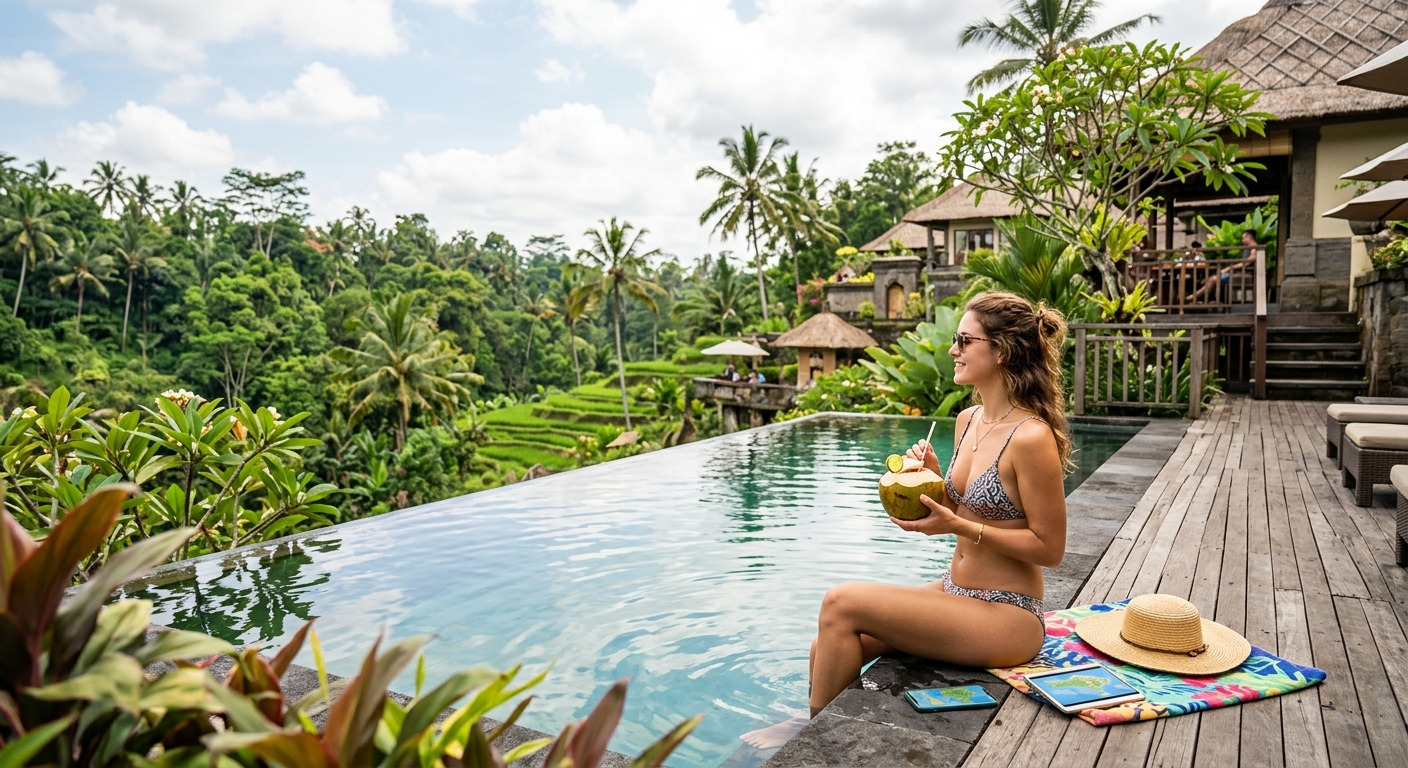
Choosing where to stay in Bali is easier when you stop thinking in just district names and start thinking in travel physics. The island’s mood changes dramatically from beach towns to jungle hills to quiet east-coast villages, and the driving time between them is often longer than the map suggests. In our experience, people who understand Bali’s geography before they book have a much better trip because they can align their accommodation with the activities they actually care about. This is especially important now, in 2026, because traffic, event demand, and hotel occupancy can turn a “central” location into a frustrating one if you choose poorly. The good news is that Bali rewards smart planners with a huge range of options.
The core decision is not just “Which area is best?” but “What atmosphere do I want to live in for the next few nights?” A beach base gives you sunsets, beach clubs, surfing, and easy day-of leisure, while a jungle base gives you slower mornings, cooler air, and a more restorative feeling. A town-center base gives you easier walkability and more dining choices, but often less serenity. If you’re traveling for a special reason, such as a honeymoon, family reunion, surf trip, or remote-work block, your base should serve that purpose rather than simply look nice on social media. That’s why we recommend using itinerary first, district second.
Beach vs jungle vs town center: what each feels like
Beach areas like Seminyak, Canggu, Sanur, Nusa Dua, Jimbaran, and Uluwatu tend to make vacation logistics easier because dining, beach time, and sunsets are immediately available. You can often step out of your hotel and be in the right mood without a long drive. Jungle or inland areas like Ubud, Sidemen, and Munduk feel more immersive and slow, which is fantastic for travelers who want scenery, yoga, wellness, and a break from the coast. Town-center or mixed areas like Legian and parts of Canggu prioritize convenience and social life, though they can be busier and louder. The best choice depends on whether you want your surroundings to energize you or calm you down. Many travelers find that the right answer is actually one beach area and one inland area.
How traffic changes the decision more than distance
On paper, Bali looks compact, but the roads and traffic patterns can turn short distances into big travel commitments. A 10-kilometer ride can be quick at one hour and painful at another, especially around sunset, weekend brunch time, or beach-club peak hours. That is why staying “central” does not always mean staying efficient. If you are planning to visit Ubud’s temples, Canggu cafés, and Uluwatu sunsets all in one short trip, you will spend a lot of time in cars unless you split stays. We strongly suggest checking your day plans against actual transfer times rather than just looking at map pins. This one detail changes almost everything about where to stay in Bali.
Why your itinerary matters more than one “best” area
There is no single best Bali base for all travelers because the island supports so many different trip styles. A couple coming for spas and fine dining does not need the same neighborhood as a group of friends who want beach clubs and late nights. A family with small kids needs easy pathways, calmer beaches, and predictable meals, while a solo traveler may prioritize social cafés and quick access to activities. If you already know what your trip will look like day to day, your accommodation choice becomes much more obvious. The wrong base can make even a great itinerary feel tiring, while the right one can make a simple trip feel luxurious. That’s why itinerary matching is the smartest way to book Bali.
When a split stay is better than one home base
A split stay is usually worth it if your trip is longer than five nights, if you want both beach and culture, or if you care about avoiding long transfers. A classic example is three nights in Ubud followed by three nights in Seminyak or Canggu. Another strong version is two nights in Uluwatu and three nights in Sanur if you want romance plus a calmer final base before flying out. Split stays also help you manage energy levels; you can do active sightseeing in one part of the trip and pure relaxation in another. The only time we’d avoid split stays is if you have a very short trip, a lot of heavy luggage, or a family group that hates moving hotels. Otherwise, they’re one of the best travel hacks in Bali.
How season and weather affect where to stay
Season matters more than many first-time visitors realize. In the dry season, beach stays in Seminyak, Canggu, Uluwatu, Sanur, and Nusa Dua feel especially easy because outdoor time is more reliable and sunsets are more predictable. In the rainy season, Ubud and other inland areas can become especially atmospheric, though you should be ready for wetter roads and more humidity. If you visit during peak holiday periods, pricing and availability can shift sharply, especially in the south. For wellness trips, cooler inland zones can feel better, while for swim-and-sun trips the beach areas usually win. Current-year planning is important because Bali’s booking behavior increasingly rewards early reservations, especially for villas and boutique stays.
Bali Area Comparison Table — Vibe, Price, Best For, and Tradeoffs
If you want a fast decision on where to stay in Bali, a comparison table makes the tradeoffs easier to see. The island’s neighborhoods are not just different in price; they differ in walkability, beach quality, nightlife, and how much “travel effort” they require. We built this comparison from the perspective of real trip planning, not just postcard aesthetics. It includes the main southern hubs plus quieter alternatives in the east and north so you can see the full picture. Use it as a shortlist-builder before you dig into the area-by-area sections below.
One thing stands out immediately: many travelers over-focus on Canggu, Seminyak, and Ubud while missing areas like Sanur, Jimbaran, Sidemen, Munduk, and Amed that may fit their trip better. That’s especially true if you value calm, scenery, or lower stress over pure trendiness. Bali’s entertainment scene in 2026 is also increasingly distributed, which means nearby food, beach clubs, live music, and wellness venues can matter as much as the hotel itself. In other words, where you sleep should connect to what you want to do when you’re awake. The table below should help you narrow things down quickly.
| Area | Vibe | Best For | Typical Price |
|---|---|---|---|
| Ubud | Jungle, culture, wellness | Couples, wellness travelers, culture seekers | $50–$300+ |
| Canggu | Trendy, social, surf-forward | Digital nomads, friend groups, nightlife | $60–$400+ |
| Seminyak | Stylish, convenient, polished | First-timers, couples, shoppers | $70–$500+ |
| Uluwatu | Clifftop, scenic, surf-luxury | Honeymoons, surfers, luxury stays | $80–$700+ |
| Nusa Dua | Resort zone, calm, organized | Families, all-inclusive comfort | $90–$600+ |
| Sanur | Calm beach town, easygoing | Families, older travelers, ferries | $40–$350+ |
| Kuta/Legian | Busy, practical, budget-friendly | Budget stays, short trips, transit | $25–$180+ |
| Jimbaran | Beachfront calm, seafood, easy access | Couples, airport stays, relaxed luxury | $70–$500+ |
| Amed | Quiet coast, diving, sunrise | Divers, slow travelers, adventurers | $30–$250+ |
| Sidemen | Countryside, scenic, tranquil | Romance, retreats, off-grid calm | $35–$250+ |
| Munduk | Cool mountains, waterfalls, nature | Nature lovers, hikers, cooler weather | $30–$220+ |
| Pemuteran | Quiet northwest coast, diving | Snorkeling, eco-stays, relaxation | $35–$200+ |
| Nusa Islands | Adventure, cliffs, turquoise bays | Day trippers, adventure travelers | $30–$300+ |
Best area by travel goal
If your goal is to maximize culture and wellness, Ubud should be high on your list. If your goal is to be in the center of Bali’s social and dining scene, Canggu and Seminyak are the strongest fits. If your goal is a low-stress family holiday, Sanur and Nusa Dua are much easier than chasing the trendiest neighborhoods. For scenic romance, Uluwatu and Sidemen deliver very different kinds of magic, one dramatic and coastal, the other quiet and pastoral. If your trip is built around diving or snorkeling, Amed and Pemuteran are better than forcing yourself to stay in the south and day-trip everywhere. Matching the area to the goal gives you a better trip almost every time.
Best area by budget level
Budget travelers usually get the best value in Kuta, Legian, parts of Sanur, and certain guesthouse pockets in Ubud and Amed. Mid-range travelers can find excellent boutique hotels in Ubud, Seminyak, Canggu, and Jimbaran, though prices rise quickly in peak season. Luxury travelers should look at Uluwatu, Nusa Dua, high-end Seminyak, and premium villa stays in Ubud or Sidemen. The key is understanding that Bali’s price differences reflect both location and service level. A great-value villa in Ubud might be much better than a mediocre beach hotel in a crowded area. Prices in 2026 are also more dynamic than many visitors expect, so flexible dates can save meaningful money.
Best area by nightlife vs relaxation
For nightlife, Canggu and Seminyak are still the primary hubs, with Kuta/Legian offering a more budget-friendly and old-school alternative. Uluwatu has a more curated social scene, often centered on sunset venues, live DJ sets, and clifftop bars rather than all-night club hopping. For relaxation, Sanur, Nusa Dua, Sidemen, Munduk, and parts of Ubud are much more restorative. The important distinction is that nightlife in Bali doesn’t always mean traditional clubs; it can also mean beach clubs, sunset dinners, and live music nights. If you want entertainment adjacency without chaos, Seminyak and Sanur are very balanced choices.
Best area by accessibility and airport transfer
For easy airport access, Jimbaran, Kuta/Legian, and parts of Seminyak are the most convenient. Nusa Dua is also relatively straightforward, though it feels more secluded once you’re inside the resort zone. Ubud, Canggu, and Uluwatu usually require longer transfers, especially during heavy traffic. Sanur sits in a good middle zone and can be especially practical if you plan to take a ferry to the Nusa Islands. If your first and last nights need to be easy, book them near the airport and make your more remote base the middle of the trip. That small strategy can remove a surprising amount of stress.
Ubud — Best for Culture, Wellness, Jungle Views, and Slow Travel
Ubud is the answer for travelers who want Bali to feel restorative, cultural, and a little more soulfully paced. This is the island’s classic inland base, surrounded by rice terraces, ravines, temples, yoga studios, and a very strong café and spa scene. If you’re asking where to stay in Bali for a wellness reset, a romantic retreat, or a trip with art and nature at the center, Ubud deserves serious attention. It is not the best beach base, and that is exactly why many people love it. The area also works very well in 2026 because travelers are increasingly looking for experiences, not just pools and ocean views.
At the same time, Ubud is not one giant neighborhood; it has multiple pockets with very different personalities. Staying right in central Ubud puts you close to restaurants, shops, and performance venues, while areas like Penestanan, Sayan, Nyuh Kuning, and the Tegallalang edge feel quieter and more scenic. That micro-location decision matters more than people think because traffic and hills can add time between a beautiful villa and the activities you actually want to do. If you want easy evenings and walkable dining, central Ubud is stronger. If you want calm and views, the outer edges often win. Ubud is best when you embrace its rhythm rather than trying to make it behave like a beach town.
Who should stay in Ubud
Ubud is ideal for couples, solo travelers, wellness-focused visitors, and anyone who wants culture plus a slower pace. It is also one of the best bases for travelers who care about yoga, meditation, holistic spa treatments, cooking classes, or scenic cafés. If your perfect vacation includes morning temple visits, long lunches, and sunset massages rather than beach clubs, Ubud will likely fit. Families with older children can also enjoy it, especially if they like nature and educational activities, though very young kids may be less enthusiastic about the steep terrain and slower-moving day plan. People who want a lot of nightlife should usually stay elsewhere unless they only need light evening entertainment.
Best parts of Ubud to stay in
Central Ubud gives you the most convenient access to restaurants, shops, cultural performances, and everyday essentials. Penestanan is a favorite among repeat visitors because it feels a bit more residential and creative while still being close to the center. Sayan is excellent for luxury villas and sweeping valley views, though it can feel more isolated depending on where you book. Nyuh Kuning is quieter and greener, often appealing to travelers who want a more local-feeling village atmosphere. The Tegallalang edge works well for rice terrace scenery and more spacious stays, but you should expect more driving to reach the center. Choosing the right pocket can make a huge difference in your daily experience.
What to do near your hotel
Ubud’s biggest advantage is that there is always something meaningful nearby. You can visit rice terraces, temples, art galleries, craft markets, and wellness studios without needing a beach-or-nothing mindset. Popular nearby experiences include the Sacred Monkey Forest area, Campuhan Ridge Walk, Tirta Empul temple visits, spa circuits, and cooking classes focused on Balinese cuisine. For travelers using Gidly to plan their days, Ubud is especially good because you can stack daytime experiences with dinner reservations and evening performances. In other words, it’s not just where you sleep; it’s a base for a very full itinerary. If you like slow mornings and active afternoons, Ubud is easy to love.
Pros, cons, and common mistakes
The biggest pros of Ubud are beauty, variety, and a calmer atmosphere. You can feel far from the coast while still having access to excellent dining and experiences. The cons are traffic, hills, occasional humidity, and the fact that there is no beach lifestyle here. A common mistake is booking too far out from the center and then spending a lot of time and money getting in and out for every meal. Another is assuming all Ubud stays are peaceful; some central hotels can be surprisingly busy or noisy at peak times. We recommend checking road access, stair count, and exact location before you book.
Hotel and villa style recommendations
Ubud is best for boutique hotels, jungle villas, retreat-style properties, and wellness resorts with strong views. If you want a luxury stay, look for properties around Sayan or on the higher ridges where valley views are strongest. Mid-range travelers can find excellent value in smaller guesthouses and design-focused hotels in Penestanan or Nyuh Kuning. Families should prioritize easy access, pool safety, and fewer stairs, because many Ubud properties are built into slopes. If you want the trip to feel special, choose a stay that offers breakfast, spa access, and shuttle service into town. That combination makes Ubud much easier to enjoy.
Canggu — Best for Digital Nomads, Trendy Cafés, Surf, and Social Stays
Canggu is Bali’s social magnet, especially for travelers who want cafés, surf, coworking, fitness, and nightlife within one trip. If you’re wondering where to stay in Bali for a lively scene, this is usually one of the first places people consider. The area has matured over the years from a relatively sleepy surf strip into a dense, high-demand neighborhood with constant movement. In 2026, it remains one of the top choices for digital nomads and friend groups because it offers a highly flexible lifestyle. The tradeoff is that Canggu can be crowded, traffic-heavy, and a little chaotic if you’re not prepared.
The vibe is spread across several micro-areas, and choosing well can save you a lot of annoyance. Batu Bolong is the most walkable and social, Berawa feels a bit more polished with a mix of cafés and beach club energy, Pererenan has become a favorite for travelers who want slightly calmer surroundings, and Echo Beach appeals to surfers and sunset chasers. Seseh edge is one of the quieter options for those who like Canggu’s broader convenience but not its busiest core. If you want to be in the middle of Bali’s modern “see and be seen” scene, Canggu delivers. If you want sleep and silence, it may not be the best place.
Who should stay in Canggu
Canggu suits digital nomads, younger couples, solo travelers who like meeting people, and friend groups planning a social trip. It’s also strong for surfers because the beach breaks are nearby and the day naturally revolves around surf, breakfast, and working or relaxing afterward. If your ideal Bali day includes a specialty coffee, a gym session, a laptop-friendly workspace, a beach sunset, and dinner with friends, Canggu is a natural fit. Travelers who want a very polished, curated stay with easy access to dining and entertainment often enjoy it too. The area is less ideal for people who want quiet nights or a truly traditional feel.
Best micro-areas: Batu Bolong, Berawa, Pererenan, Echo Beach, Seseh edge
Batu Bolong is the most famous and walkable pocket, which means it is also the busiest. If you want to be near the action, this is where many of the cafés, bars, and social venues cluster. Berawa is a little more upscale and often works well for travelers who like a stylish, slightly more refined vibe. Pererenan has been the sleeper favorite for repeat visitors because it retains some breathing room while still keeping access to all the core Canggu conveniences. Echo Beach is best for surfers and sunset views, though it can be active at peak times. The Seseh edge is the best choice for people who want the Canggu label without sleeping in the most congested blocks.
Nightlife, coworking, beach clubs, and fitness scene
Canggu’s biggest selling point is that everything social is close by. There are beach clubs, rooftop bars, live music nights, coworking spaces, Pilates studios, yoga classes, boxing gyms, and a constant rotation of restaurant openings. That makes it fantastic for travelers who want a trip with built-in entertainment without having to plan every evening from scratch. It also means there is always something happening near your hotel, which is great for some travelers and exhausting for others. If you use Gidly to search for nearby things to do, Canggu is one of the easiest places in Bali to build spontaneous plans. Just remember that peak-hour traffic can turn a short ride into a long one.
Traffic realities and how to avoid the worst bottlenecks
The main issue in Canggu is not distance but congestion. Popular streets can back up at brunch time, sunset time, and evenings when people are moving between restaurants, beach clubs, and bars. The best way to reduce frustration is to stay in the pocket that matches your schedule instead of assuming a central pin solves everything. If you plan to spend time mostly in Batu Bolong, book there or close enough to walk. If you care more about a calmer experience, choose Pererenan or the quieter edges. Scooters can help with flexibility, but only for riders who are fully comfortable with Bali road conditions. If you are not, use private drivers or ride-hailing services and plan extra time.
Hotel, villa, and apartment recommendations
Canggu works well for villa compounds, boutique hotels, and apartment-style stays with kitchens and long-stay features. Digital nomads often prefer properties that combine fast Wi-Fi, quiet workspaces, and easy access to cafés or coworking spots. Friend groups usually do best in villas with private pools and enough bedrooms to avoid constant shuffling. Couples can find excellent design-forward boutique stays, though many high-demand options book out early during peak seasons. When choosing a property, check for soundproofing, air conditioning, and road access because these details matter a lot in Canggu. The area’s popularity means the best stays disappear quickly, so early booking pays off.
Seminyak — Best for First-Timers, Shopping, Dining, and Easy Nightlife
Seminyak is the “easy yes” answer for many travelers asking where to stay in Bali. It offers a polished, convenient, and broadly appealing introduction to the island, with high-end dining, good shopping, spa options, beach clubs, and a hotel inventory that ranges from chic boutique stays to full luxury resorts. The area is also one of the most practical bases for first-time visitors because you can experience plenty without having to navigate complicated logistics every day. If you want something stylish but not too wild, Seminyak often hits the sweet spot. In 2026, it remains one of the most dependable areas for travelers who want comfort with plenty to do.
Seminyak’s layout is more mature than Canggu’s in many ways, with a stronger sense of established dining and retail streets. The beach zone is good for sunset walks, and the restaurant corridors make it easy to build a great evening without hopping around too much. You also get easy access to neighboring Legian, Kuta, and parts of Canggu if you want to expand your options. For many couples and first-timers, Seminyak simply removes stress. It’s less about being the trendiest place and more about being a smart, balanced base.
Who should stay in Seminyak
Seminyak is ideal for first-time visitors, couples, shoppers, food lovers, and travelers who want nightlife without a chaotic party zone. It works especially well if you like to walk to dinner, get a massage nearby, shop a little, and still have beach access in the same day. It also suits travelers who want a polished atmosphere and a lot of choice, rather than a highly specialized vibe. If you’re coming for a honeymoon and want convenience more than seclusion, Seminyak is a strong contender. It may not be the most authentic-feeling area, but it’s one of the easiest places to enjoy.
Best streets and zones near the beach and restaurants
Staying near the main beach access points gives you easier sunset routines and shorter walks to the sand. Areas closer to the restaurant corridors are best if you prefer evening dining on foot, while slightly quieter side streets can offer better sleep and fewer crowds. Seminyak’s best zones are often those that balance access with a little distance from the busiest traffic corridors. If you want to be close to both dining and the beach, look carefully at your map and avoid assuming every “Seminyak” listing is equally convenient. A well-placed hotel here can make the whole trip feel smoother.
Date-night appeal, beach clubs, and walkability
Seminyak excels at date-night logistics. You can start with a beach walk, move into cocktails, dine at a polished restaurant, and finish with a relaxed lounge or live-music bar without a long ride. This is exactly why couples and celebratory travelers often like it. The area also has excellent beach clubs and a dependable entertainment layer, which means you can plan a special night without crossing half the island. For travelers using Gidly to map nearby nightlife and dining, Seminyak is one of the simplest neighborhoods to build an evening around. It does not feel as raw or bohemian as Ubud or Canggu, but it is undeniably efficient and enjoyable.
Pros and cons vs Canggu
Compared with Canggu, Seminyak is generally more polished, more established, and a bit easier for first-timers. Canggu feels younger, more energetic, and more surf-and-café driven, while Seminyak feels slightly more refined and mixed-use. Seminyak is usually better if you value convenience and a wide selection of mainstream amenities, while Canggu is better if you want a more trend-forward, social atmosphere. The downside of Seminyak is that it can feel less fresh to travelers seeking the newest Bali scene. The upside is that it tends to be easier to navigate, especially if you want entertainment without the volume turned up to eleven.
Hotel and luxury resort recommendations
Seminyak is one of the best places in Bali for upscale boutique hotels and luxury resorts that emphasize service, design, and location. If you want a hotel that feels sophisticated and convenient, this is an excellent area to search. Couples often appreciate properties with spa services, pool suites, and easy walking access to restaurants. Families can also find good stays here, though they should look carefully at pool safety and road access. When booking in Seminyak, prioritize the exact block rather than the area name alone, because the difference between a smooth stay and a noisy one can come down to a few streets.
Typical price bands by area and accommodation type
Seminyak’s pricing spans from solid mid-range hotels to high-end luxury villas and resorts. Budget-friendly guesthouses can still be found, but the sweet spot for many travelers is the mid-range boutique tier. In peak season, the best-value inventory goes quickly, especially for rooms with good walkability. If you’re seeking value, book earlier than you think you need to, and be flexible on exact arrival dates. Compared with Canggu, Seminyak often has a slightly more predictable hotel experience, which is helpful if you want fewer surprises. Compared with Ubud, you’re paying more for convenience and coastal access.
Uluwatu — Best for Clifftop Views, Surf, Honeymoons, and Sunset Dining
Uluwatu has become one of Bali’s most desirable areas for travelers who want scenery, surf, and a more elevated sense of escape. This is where you go if you want cliffs, dramatic sunsets, stylish beach clubs, and a romantic atmosphere that feels distinctly different from the busier south Bali hubs. In recent years, Uluwatu has evolved from a niche surf region into a major luxury and lifestyle destination, and that evolution is still going strong in 2026. For travelers asking where to stay in Bali for a honeymoon or special occasion, Uluwatu is often near the top of the list. It’s not the easiest base, but it can be one of the most memorable.
What makes Uluwatu special is its landscape. Instead of flat beach towns and crowded central streets, you get dramatic cliff roads, scattered resort pockets, and access to beaches that often feel more tucked away. That means the experience depends heavily on where you stay within the wider region. Bingin has a very different feel from Pecatu or Ungasan, and Padang Padang has its own beach-adjacent energy. If you choose Uluwatu, you’re not just booking a hotel; you’re choosing a terrain and pace of trip. The right property can feel magical, while the wrong one can be inconvenient.
Who should stay in Uluwatu
Uluwatu is excellent for couples, honeymooners, surfers, luxury travelers, and anyone who wants sunset dining with a view. It works especially well for people who want a slower, more destination-style holiday rather than a walk-everywhere neighborhood stay. Surf travelers appreciate the proximity to iconic breaks, while couples love the privacy and atmosphere. It can also work for solo travelers who want quiet luxury and scenic downtime, though it is less social than Canggu. Families can stay here too, but they should choose carefully because some spots are more practical than others.
Best areas around Bingin, Padang Padang, Pecatu, and Ungasan
Bingin is often the favorite pocket for travelers who want a stylish surf-town feel with boutique stays and relaxed dining. Padang Padang gives you one of the classic Uluwatu beach experiences and easy access to the wider cliffside scene. Pecatu is broader and can include a mix of resort, villa, and local-feeling options, though the roads and distances vary. Ungasan tends to be good for private villas and some of the most impressive luxury properties. The right choice depends on whether you want beach access, cliff views, or total seclusion. In Uluwatu, micro-location is everything.
What makes Uluwatu different from Seminyak and Canggu
Compared with Seminyak and Canggu, Uluwatu feels more scenic and less walkable. You’re trading convenience for atmosphere, and many travelers happily make that trade because the views are so strong. While Seminyak and Canggu are easier for spontaneous café-hopping and nightlife, Uluwatu is better for long lunches, sunset rituals, and secluded luxury. It also has a stronger identity as a destination rather than an all-purpose neighborhood. If your Bali dream includes a jaw-dropping base, Uluwatu likely beats the more urban southern areas.
Beach access, cliff roads, and transportation realities
Transportation is the main thing to understand before booking Uluwatu. Many properties are spread along cliff roads and require scooter, taxi, or private driver access because you won’t simply walk everywhere. Some beaches are reached by stairs or winding roads, so check accessibility if you have mobility concerns or are traveling with kids. A beachfront-looking property may still be several minutes from actual sand access. This is one reason Uluwatu is best for travelers who do not mind planning their movement a bit more carefully. Once you accept that, the rewards are huge.
Resort and villa recommendations
Uluwatu offers some of Bali’s most beautiful resorts and villas, especially for those seeking privacy and views. If you want a special stay, prioritize a property with sunset orientation, on-site dining, and transport support. Villas can be excellent if you’re with friends or traveling as a couple and want a private pool with room to breathe. For a honeymoon, a clifftop suite or ocean-view villa can be unforgettable. As always, check whether the property is actually close to the beach you want, because the Uluwatu map can be deceptive. A great property here should feel like an experience, not just a bed.
Nusa Dua — Best for Families, Resorts, Calm Beaches, and All-Inclusive Comfort
Nusa Dua is Bali’s most reliably polished resort zone, and that’s exactly why many families and comfort-focused travelers love it. If you want calm beaches, predictable service, broad lawns, and a lower-stress holiday where everything feels organized, this area is one of the best answers to where to stay in Bali. It is not the place for a wildly spontaneous or bohemian trip, but it is excellent for travelers who want to feel looked after. In 2026, Nusa Dua remains a strong option for families, multigenerational trips, and travelers who prefer large-scale resort ease. It is quieter and more contained than most other south Bali hubs.
The area’s layout is mostly resort-driven, which means you often get cleaner infrastructure, more controlled beachfronts, and easier movement inside hotel grounds. That matters a lot for parents, older travelers, and anyone who wants a holiday where the small things are handled. Nusa Dua can also work for business events, retreats, and couples who want a classic luxury escape without the energy of Canggu or Seminyak. The tradeoff is that it can feel too quiet for some travelers. If you need walkable nightlife or a bustling café scene, this is probably not your best match.
Who should stay in Nusa Dua
Nusa Dua is best for families with kids, multigenerational groups, resort lovers, and travelers who value predictable comfort. It is also good for people who want a smoother, more controlled beachfront environment without a lot of traffic drama. Couples who want a peaceful, resort-style trip can enjoy it too, especially if they plan to spend most of their time on-property. Travelers with very young children often appreciate the easy pool-and-beach rhythm. If your vacation is about relaxing, not chasing scenes, Nusa Dua is a smart base.
Best for kids, multigenerational trips, and low-stress holidays
The biggest advantage for families is simplicity. There are wide resorts, quieter roads, and a lower likelihood of being overwhelmed by noisy nightlife or dense café traffic. Kids can often enjoy the pools and beach areas without parents needing to navigate a lot of urban activity. Grandparents or less mobile travelers also tend to prefer the calmer pace and organized layout. If you want to keep the trip easy and low risk, Nusa Dua usually delivers. It’s not exciting in a flashy way, but that is exactly the point for many families.
Resort district layout and beach conditions
Nusa Dua is known for its planned resort district, which means the hotels are often spread along a cleaner, more orderly beachfront strip. Beach conditions can be calmer and easier to manage than in more surf-focused areas, though they vary by season and exact location. Because the area is more developed for resort guests, you’ll often find better on-site amenities than in more scattered beach towns. That said, the experience can feel less organic and more enclosed. For travelers who want to stay within a comfort bubble, that’s a strength rather than a weakness.
Pros, cons, and who may find it too quiet
The pros are peace, convenience, and a very polished resort experience. The cons are limited nightlife, less neighborhood texture, and a feeling that you may be a little removed from the broader Bali scene. Some travelers worry Nusa Dua is “boring,” but a better way to say it is that it is deliberately relaxed. If you want to leave the hotel every night and discover a different bar or café scene, you may get frustrated. If you want to unwind in a controlled setting, it can be ideal. This is a “stay and relax” zone more than a “wander and explore” zone.
Hotel recommendations and resort-style stays
Nusa Dua is one of the strongest places in Bali for large resorts, branded properties, and full-service stays. When booking, prioritize beachfront access, family facilities, and dining variety if you plan to spend a lot of time on the property. Good resort layouts can make the entire trip feel effortless, especially with children. If you’re doing a longer holiday and want a dependable home base, Nusa Dua is one of the easiest choices on the island. For luxury seekers who want less scene and more service, it delivers.
Sanur — Best for Calm Beaches, Sunrise Walks, Families, and Easy Island Access
Sanur is one of the most underrated answers to where to stay in Bali, especially for travelers who want easy beach access without the chaos of the trendiest southern areas. It has a calm, lived-in feel that many families, older travelers, and repeat visitors appreciate. The beachfront promenade is a major plus because it makes walking, morning runs, and relaxed sunrise routines simple. If you want a base that feels friendly, practical, and low-stress, Sanur deserves more attention than it usually gets. In 2026, it remains especially relevant because of island transfer convenience and the growing value travelers place on a calmer stay.
Sanur sits in a useful middle position: it is peaceful without being isolated, and convenient without being hectic. You can eat well, walk the beachfront, and catch ferries to the Nusa Islands more easily than from many other neighborhoods. It is also a solid choice for travelers who don’t need big nightlife or trend-chasing energy. Sanur is not trying to impress you with flash; it is trying to make your vacation easier. For many people, that is exactly what they need.
Who should stay in Sanur
Sanur is excellent for families, older travelers, couples who want calm, and long-stay visitors who prefer a softer pace. It is also great for travelers who plan to use the Nusa Islands as part of their itinerary because the ferry connections are a major advantage. If you want a beach base but dislike loud nightlife or overbuilt party zones, Sanur is a refreshing option. It works well for travelers who enjoy morning walks, simple beach days, and a more residential atmosphere. It’s also a common “first Bali” base for people who want less stress.
Best for older travelers, families, and relaxed long stays
Sanur’s appeal grows when comfort matters more than trendiness. Families appreciate the promenade, calmer roads, and generally easier logistics. Older travelers often prefer Sanur because it feels more manageable and less intense than Canggu or parts of Seminyak. Long-stay guests also enjoy the balance of cafés, services, and a walkable beachfront that makes everyday life feel practical. If you are staying more than a week and want a place that feels livable, Sanur is a very strong candidate. It may not be the loudest or most glamorous, but it is one of the most easygoing.
Ferry connections to Nusa Penida and nearby islands
Sanur is one of the best mainland bases if you plan to visit Nusa Penida, Nusa Lembongan, or Nusa Ceningan. That makes it especially useful for travelers who want one or more nights on the islands without committing to staying there the entire time. The ferry convenience can save time and reduce transfer stress compared with starting from farther west. If your itinerary includes boat trips, diving excursions, or island hopping, Sanur is highly practical. Many travelers only realize this after they have already booked elsewhere, which is why it’s worth considering early.
Dining, beach promenade, and low-key nightlife
Sanur’s dining scene is more relaxed than Bali’s trendiest neighborhoods, but you still get a solid range of restaurants, cafés, and beach-facing spots. The promenade is a major part of the experience and makes the area ideal for slower, scenic routines. Nightlife exists, but it is generally low-key rather than high-energy. That can be a huge advantage if you value good sleep and simple evenings. For travelers using Gidly to find nearby things to do, Sanur offers plenty of soft-landing entertainment without the sensory overload.
Hotel and beachfront stay recommendations
Sanur offers a wide range of hotels, from budget-friendly stays to beachfront resorts and boutique properties. The most important booking detail is proximity to the beach promenade and whether the property has easy access on foot. If you want to maximize convenience, choose a hotel that makes sunrise walks and casual dinners easy. Families should prioritize room size and pool access, while solo travelers may want a location close to cafés and transport. Sanur works best when you treat it as a comfortable home base rather than a nightlife destination.
Kuta & Legian — Best for Budget, Convenience, and Short Stays Near the Airport
Kuta and Legian are not the flashiest answers to where to stay in Bali, but they still matter for certain traveler types. These areas remain useful for budget-minded visitors, short stays, and people who want quick airport access without paying premium rates. They also provide a familiar, transit-friendly side of Bali that can be helpful for arrivals, departures, or quick turnaround trips. In 2026, they are less about trend and more about practicality. If you know what you’re booking, they can still make sense.
The vibe here is busier, more commercial, and in some places more old-school than the rest of the southern strip. That means you should expect crowds, more traffic, and a stronger “tourist district” feeling. For some travelers, that is a drawback; for others, it means simple access to shopping, transport, and budget accommodation. The key is being honest about what you want. If you want the lowest-friction place to land for a night or two, Kuta/Legian can be useful. If you want romantic atmosphere or a tranquil beach holiday, this is probably not your best choice.
Who should stay in Kuta or Legian
Kuta and Legian are best for budget travelers, short-stay visitors, transit-focused guests, and people who want to be near the airport. They can also work for groups that prioritize convenience over atmosphere. If you’re arriving late, leaving early, or need a temporary base before moving to Ubud, Sanur, or Uluwatu, these areas are practical. Travelers who want a lot of shops and easy access to transport also find them useful. You should choose this area because it solves a logistics problem, not because it is the most beautiful part of the island.
Nightlife, shopping, and transit convenience
Kuta still has nightlife and shopping energy, though it’s different from Canggu or Seminyak. Legian often feels slightly more manageable than Kuta itself, with a mix of hotels, restaurants, and access points that can work well for travelers who want a simple base. The airport proximity is a huge advantage if you are on a short trip or have awkward flight times. It’s also one of the more budget-friendly zones for travelers who need to keep costs under control. If your priority is “arrive, sleep, move on,” this area can do the job well.
What type of traveler still benefits from this area
Backpackers, bargain hunters, overnight transits, and travelers on very short stays can still get value here. It can also work for people who want to save money on lodging and spend more on experiences elsewhere. If you’re planning a lot of day trips and don’t need your accommodation to be a destination in itself, Kuta/Legian can serve as a functional base. The area is less attractive for travelers seeking polished design, quiet nights, or a strong sense of place. It is a utility choice, and there’s nothing wrong with that.
Safety, noise, and crowds: what to expect
Kuta and some parts of Legian can be noisy and crowded, especially in busier zones near nightlife and main roads. That means you should read hotel reviews carefully, especially regarding soundproofing and room placement. Safety is generally manageable with normal travel awareness, but the density and nightlife energy require more attention than in quieter areas. If you do stay here, choose a hotel that feels clean, secure, and well-reviewed rather than just cheap. The right property can make this area surprisingly workable.
Budget hotel and transit-friendly recommendations
Look for clean, well-located hotels with reliable air conditioning, airport transfer options, and easy road access. For a quick stopover, staying close to the airport or on a straightforward route to your next destination can save you time and money. Budget stays here are often best used as practical sleep bases rather than full holiday experiences. If you need a simple and inexpensive launch pad for the rest of Bali, Kuta/Legian can be useful. Just keep expectations aligned with the area’s role.
Jimbaran — Best for Seafood Dinners, Beachfront Calm, and Easy Airport Access
Jimbaran is one of the most attractive areas in Bali for travelers who want a calm beachfront setting, easy access to the airport, and memorable seafood dinners. It has a relaxed pace that appeals to couples, families, and guests who want a softer south Bali experience without the busyness of Seminyak or Canggu. If you’re asking where to stay in Bali for a romantic dinner-focused trip or a simple luxury stop near the airport, Jimbaran is a smart option. It is less about nightlife and more about comfort, water, and easy logistics. In 2026, it remains a reliable “quiet luxury” choice.
Jimbaran Bay is especially known for its beachfront dining, where you can sit near the sand and enjoy seafood at sunset. That experience alone is enough reason for many travelers to book at least a night or two here. The area also works well if you’re arriving late or flying out early because the transfer is short and simple compared with staying farther inland or farther north. If you want to begin or end your Bali trip with minimal stress, Jimbaran deserves a look. It is more subdued than the big resort districts, but that’s part of its charm.
Who should stay in Jimbaran
Jimbaran is best for couples, early-flight travelers, families who want a calm beach base, and people looking for gentle luxury. It works well if you want beachfront dining and a quieter environment rather than a dense entertainment scene. If you are honeymooning but want less drama than Uluwatu, Jimbaran is a good compromise. It also suits travelers who plan to combine a few beach days with easy access to the airport. Those wanting late-night energy, major shopping, or a bohemian social scene will probably prefer another district.
Best for couples, early flights, and relaxed luxury
Couples often like Jimbaran because it feels intimate without being isolated. The atmosphere is calmer than many south Bali neighborhoods, and the beach dinner tradition makes for an easy romantic evening. For travelers with early flights, the airport proximity is a real advantage that reduces end-of-trip stress. The area also has a number of upscale resorts and villas that emphasize service and tranquility. If you want a softer landing at the beginning or end of your trip, Jimbaran is one of the easiest places to recommend.
What to do around Jimbaran Bay
Beyond the famous seafood dinners, Jimbaran gives you beach time, resort relaxation, and access to the wider Bukit Peninsula. You can use it as a calm base while still day-tripping to Uluwatu, Nusa Dua, or even farther afield depending on your energy level. The bay itself is the star attraction, especially around sunset. If you enjoy a slower day-to-evening rhythm, Jimbaran can feel very satisfying. It is not overloaded with activity, but that simplicity is often what travelers want after a busy itinerary elsewhere.
Pros and cons compared with Nusa Dua and Uluwatu
Compared with Nusa Dua, Jimbaran feels more local and less resort-contained. Compared with Uluwatu, it is easier and flatter, but less dramatic. That makes Jimbaran a balanced middle ground for travelers who want coastal calm without the cliff-road logistics. The main con is that it can feel like an in-between option rather than a destination that dominates your entire trip. Still, that middle ground is often exactly what people need for their first or last nights. It is especially useful as part of a split stay.
Resort and villa recommendations
Jimbaran offers a good mix of beachfront resorts and villas, many of which emphasize comfort, dining, and convenience. If you want to use the area as a landing point or departure point, look for properties with airport transfer service. Families may want larger rooms and easy pool access, while couples can look for ocean-facing stays with dinner options nearby. Jimbaran works well when you want a simple luxury experience with a low-friction schedule. It is less about packed itineraries and more about smooth living.
Amed — Best for Diving, Quiet Beaches, and Authentic East Bali Stays
Amed is one of the best places in Bali for diving, snorkeling, and travelers who want a slower, more authentic east-coast experience. If your idea of where to stay in Bali includes quiet beaches, sunrise views, and a real sense of stepping away from the south’s busier scene, Amed is excellent. It feels very different from the polished resort zones and trendy café belts, which is exactly why many repeat travelers love it. In 2026, Amed continues to attract divers, long-stay visitors, and those who want more space and less noise. It is not a “quick city break” base; it’s a slow-travel base.
The east coast’s pace is gentler, the driving is longer, and the reward is a calmer version of the island that many short-stay visitors never see. Amed is especially good if you want to spend real time in the water rather than simply look at the ocean from a resort deck. It’s also one of the places where sunrise routines feel meaningful, not just Instagram-friendly. If you have five or more nights and want something different, Amed can be a fantastic choice. It just requires a willingness to travel farther from the airport and south Bali nightlife.
Who should stay in Amed
Amed is ideal for divers, snorkelers, slow travelers, and anyone who wants a quiet beach base with a more local feeling. It’s a strong match for travelers who plan to spend time in the water and do not need lots of shopping or nightlife. Couples who like low-key romance and scenic mornings may also enjoy it. Families can stay here if they are comfortable with a slower pace and longer transfers. It is less suitable for travelers who want quick access to restaurants, beach clubs, and major social hubs.
Snorkeling, diving, and sunrise beach days
The underwater activities are the main reason Amed stands out. Divers and snorkelers come for easy access to marine life and a more specialized experience than the southern beach towns can usually offer. Sunrise is a big part of the appeal, with quiet mornings and views that feel unhurried. If you love the idea of starting your day on the beach before most travelers have even opened their curtains, Amed is special. The area encourages a rhythm that is about water, rest, and repetition rather than constant movement.
Why Amed suits slow travel better than short city-style trips
Amed works best when you give it time. Because it is far from the central south and more spread out, short trips can feel rushed if you try to cram too much into the area. Slow travelers get the reward: more immersion, fewer crowds, and a strong sense of place. It is one of the better choices for travelers who want to unwind and stay put. If you only have a few nights in Bali, you might prefer to keep Amed for a longer, more focused trip or use it as one part of a broader itinerary. Patience pays off here.
Practical access and travel time from the south
Getting to Amed takes time, so plan accordingly. It is not the place to book if you expect quick airport transfers or frequent south Bali outings. That distance is part of the charm, but it means you should arrive ready to settle in. If you are connecting Amed with Ubud or Sidemen, the route can make more sense than forcing it into a short south Bali-only vacation. This is one of the clearest examples of why split stays can improve a Bali trip. The farther east you go, the more important it is to choose a stay that aligns with your actual goals.
Guesthouse, villa, and dive resort recommendations
Amed has a strong selection of guesthouses, villa-style stays, and dive-oriented accommodations. You’ll find options that emphasize direct beach access, quiet surroundings, and practical service for snorkeling or diving guests. If you care about water activities, prioritize properties that can help with gear, boat arrangements, or easy access to the shoreline. Couples may prefer a more scenic villa, while budget travelers can often find solid guesthouses with excellent value. Amed is best when the property supports your slow rhythm instead of trying to turn the area into a nightlife hub.
Sidemen — Best for Scenic Countryside, Quiet Romance, and Off-the-Beaten-Path Stays
Sidemen is one of Bali’s most beautiful quiet bases, especially for travelers who want a countryside escape with mountain views, rice fields, and a slower emotional tempo. It is a favorite for couples, wellness travelers, and anyone who wants Bali to feel less commercial and more restorative. If you’re deciding where to stay in Bali and craving privacy, scenery, and space to breathe, Sidemen should be on your shortlist. It is not close to the action in the south, which is both the downside and the charm. In 2026, it continues to stand out for travelers seeking a more thoughtful, less crowded experience.
The atmosphere here is gentle and rural, with boutique stays often set against wide landscape views. You come to Sidemen to disconnect in a good way, not to fill every hour with activity. That makes it especially appealing for honeymooners, retreat travelers, and people who want beautiful mornings and unhurried afternoons. It also works well as a restorative stop between more active destinations. If you value quiet and scenic calm, Sidemen is a standout.
Who should stay in Sidemen
Sidemen is ideal for couples, honeymooners, wellness travelers, and repeat visitors who want a deeper, quieter Bali. It appeals to travelers who are less interested in beach clubs and more interested in views, nature, and reflective downtime. It’s also a strong choice for people who enjoy boutique hospitality and a more personal travel feel. Families can stay here if they appreciate the calm, but there is less built-in entertainment than in south Bali. If your trip is about resetting rather than maximizing nightlife, Sidemen is a great fit.
Rice fields, mountain views, and wellness retreats
Sidemen shines because of its scenery. The landscape feels open and restorative, making it a prime location for yoga, writing, spa days, and long breakfasts with a view. Many boutique properties focus on wellness, intimate hospitality, and outdoor relaxation. If you want a setting that naturally slows you down, Sidemen delivers that in a way few other parts of Bali can. It’s especially good for travelers who want a romantic trip without the bustle of the busier coastal hubs. The scenery alone can make the trip feel special.
Couples, retreats, and travelers who want fewer crowds
For couples, Sidemen offers a sense of privacy that is hard to match in more popular southern areas. Retreat groups also like it because the environment supports reflection and shared calm. Travelers who dislike crowds often find Sidemen surprisingly comforting because it feels spacious and unhurried. It’s a strong match for people who want a meaningful stay rather than a packed social agenda. If you’re looking for a base where you can actually hear the birds and enjoy a slower pace, this is a top contender.
Tradeoffs: distance, dining, and transport needs
The tradeoffs are straightforward. Sidemen is farther from major beach zones, so it is not ideal if your trip is mostly about coastal dining or nightlife. Dining choices are more limited than in the south, and transport planning matters more because you can’t simply walk into a dense entertainment district. If you want to explore widely, you will need a driver or a scooter if you are skilled and comfortable. This is a place where the destination experience matters more than convenience. For many travelers, that is exactly the appeal.
Boutique stay recommendations
Sidemen is particularly strong for boutique hotels, scenic villas, and retreat-style accommodations with terrace views. When booking, look for properties that highlight the landscape, because that is the point of staying here. Ask about transport, meals, and activity options so you understand how self-contained your stay will be. A well-chosen stay in Sidemen can feel luxurious even without a flashy resort identity. It is the kind of place where simple quality and quiet beauty matter more than size or brand recognition.
Munduk and Pemuteran — Best for Nature, Waterfalls, Diving, and Northern Bali Escapes
Munduk and Pemuteran are excellent choices for travelers who want to explore a quieter, cooler, more nature-driven side of Bali. These areas are far less crowded than the south and offer a very different mood from places like Canggu or Seminyak. If you’re wondering where to stay in Bali and you care more about waterfalls, trekking, snorkeling, or eco-stays than beach clubs and nightlife, the north is worth your attention. Munduk is mountain-forward and cooler, while Pemuteran is coast-forward and calm. Together, they represent a more peaceful, exploratory version of the island.
These destinations are especially good when included as part of a multi-stop itinerary rather than as a short standalone trip. The longer travel time means you want enough nights to actually enjoy the slower pace. In 2026, more travelers are mixing the south with one nature-focused stop, and these two areas fit that trend nicely. If your Bali trip is meant to feel balanced, north Bali can provide the contrast that the busy south cannot. It’s not the fastest route to every attraction, but it may be the most rewarding for nature lovers.
Who should stay in Munduk
Munduk is ideal for hikers, waterfall seekers, couples, and travelers who love cooler mountain weather. It is a great choice if you want a quieter, greener, more refreshing environment. People who enjoy scenic drives and nature walks often love it. It also suits travelers who want a change of pace from the heat and traffic of the south. If your version of Bali includes misty mornings and beautiful overlooks, Munduk is a strong fit.
Who should stay in Pemuteran
Pemuteran is best for snorkeling, diving, eco-conscious travelers, and anyone who wants a quiet northwest coast experience. It feels relaxed and less developed than the major tourist hubs, which appeals to guests who value peace. If you want to base yourself near the water without joining the more crowded southern scene, Pemuteran is a compelling option. It is also a nice choice for travelers who appreciate small-scale hospitality and a slower village rhythm. Think of it as a low-key coastal retreat rather than a social hotspot.
Nature-first itineraries and cooler mountain climate
Munduk is one of the few places in Bali where the climate can feel noticeably cooler, especially compared with the south. That makes it particularly appealing for travelers who want to hike, explore waterfalls, or simply enjoy a more refreshing setting. Pemuteran, meanwhile, provides a calmer coast with access to marine activities and eco-oriented stays. If you’re crafting a nature-first itinerary, these locations can give your trip a completely different texture. They are especially strong for travelers who prefer scenery over scene.
When these areas are better as part of a multi-stop trip
These areas shine most when you pair them with other parts of Bali. For example, a south Bali beach stay plus a Munduk or Pemuteran escape can create a very well-rounded trip. They are not always the best choice for a short five-night holiday if you want to stay close to the island’s main entertainment clusters. But for longer trips, they offer a valuable contrast. They also help reduce the feeling that Bali is only about beach clubs and traffic. If you want a richer view of the island, make room for one of these quieter regions.
Lodge, eco-stay, and resort recommendations
Munduk and Pemuteran are great places to look for lodges, eco-stays, and smaller resorts that emphasize nature. In Munduk, prioritize properties with views and access to walks or waterfalls. In Pemuteran, look for stays close to the beach with snorkeling support or sustainability credentials. These are areas where the accommodation itself can be part of the experience. If you care about environmental impact and low-key travel, both places deserve a close look.
Nusa Islands — Best for Day Trips, Short Stays, and Adventure Add-Ons
The Nusa Islands are some of the most talked-about add-ons to a Bali trip, and for good reason. If you want dramatic coastlines, turquoise water, snorkeling, and an adventure-oriented extension to your stay, they are excellent. But they are not always the best full-trip base, especially for first-timers who still need easy mainland access. If you’re deciding where to stay in Bali and whether the islands should be part of your plan, the answer usually depends on your trip length and tolerance for logistics. In 2026, they remain very popular for day trips and short overnight stays.
Nusa Penida is the most dramatic and rugged, while Nusa Lembongan is more laid-back and manageable, and Nusa Ceningan is the tiny connector with a more intimate feel. They each serve a different traveler profile. Many people use Sanur as a mainland base and visit the islands on day trips or for one or two nights. That is often the smartest approach because it keeps the logistics manageable while still letting you enjoy the scenery. If you want a short adventure add-on, the islands can be a highlight.
Nusa Penida vs Nusa Lembongan vs Nusa Ceningan
Nusa Penida is the most famous for jaw-dropping viewpoints, but it can also be the most demanding in terms of roads and travel comfort. Nusa Lembongan is easier for relaxed stays, water activities, and a softer island experience. Nusa Ceningan is smaller and more connected to Lembongan, often appealing to travelers who want a quieter island feel with direct access to scenic spots. If you only have limited time, Lembongan is often the easiest island stay. If you want dramatic sightseeing and don’t mind rougher roads, Penida is the headline grabber. Ceningan is best if you want intimacy and simplicity.
Who should stay overnight on the islands
Overnight stays make sense if you want to catch sunrise spots, avoid rushing, or enjoy a slower island rhythm. They are especially good for photographers, adventure travelers, and people who want to experience the islands after the day-trippers leave. A night or two on Lembongan or Penida can add real value if you dislike early ferry pressure. If you’re sensitive to logistics, however, too much island moving can create stress. Keep your plans modest and choose a stay that simplifies transport from the harbor.
When to use Sanur as your mainland base instead
Sanur is often the better choice if you only want a ferry connection without committing to island accommodation. It gives you easier access to the boats, a calmer pre- or post-island base, and more comfort if weather disrupts plans. For many travelers, that is the perfect compromise. You can do a day trip or one overnight in the Nusas while keeping the main trip on the mainland. This is especially useful for families or travelers who want to avoid repeated packing and unpacking. Sanur plus a Nusa trip is a smart combination.
Dangers, logistics, and boat transfer tips
Boat and road logistics can be more demanding than they look, so plan conservatively. Check departure times, weather conditions, and baggage limitations before you book. On the islands, road quality and driving comfort can vary a lot, so decide in advance whether you want to self-drive, hire transport, or keep your plans simple. It’s also worth booking reputable transfers, especially during busy travel periods. If you want the adventure without the headaches, structure the trip carefully. The islands reward preparation.
Hotel and bungalow recommendations
For island stays, prioritize simple comfort, reliable transport support, and easy access to your chosen activities. In Penida, location near the harbor or your main sightseeing route can reduce stress significantly. On Lembongan and Ceningan, look for bungalows or boutique stays that keep the island vibe relaxed and practical. If your main goal is photography or snorkeling, make sure your stay is close enough to the water to avoid losing time in transit. The islands are best when the accommodation serves the adventure, not the other way around.
Best Areas in Bali by Traveler Type
If you still feel torn about where to stay in Bali, matching the area to your traveler type is one of the fastest ways to decide. Bali works best when your base fits the rhythm of your day, your budget, and your expectations. That’s why a traveler who wants calm mornings and spa time should not book the same area as someone who wants café-hopping and nightlife. Below, we break down the best areas by traveler type so you can narrow your options without overthinking it. These recommendations are based on real-world trip patterns we see all the time.
Think of this section as a shortcut. If you already know whether you’re a couple, family, surfer, digital nomad, budget traveler, luxury seeker, or nightlife traveler, you can jump straight to your likely best fit. You’ll still want to read the area breakdowns above, but this section makes the decision process faster. We also include a comparison table to make AI extraction easier and help you scan the top picks at a glance.
| Traveler Type | Best Area | Why It Works |
|---|---|---|
| Couples / Honeymooners | Uluwatu, Seminyak, Sidemen | Scenery, privacy, date nights |
| Families | Sanur, Nusa Dua | Calm beaches, easy logistics |
| Surfers | Canggu, Uluwatu, Amed | Breaks, surf culture, access |
| Digital Nomads | Canggu, Ubud | Coworking, cafés, long stays |
| Budget Travelers | Kuta/Legian, Sanur, Ubud | Lower rates, practical base |
| Luxury Travelers | Uluwatu, Nusa Dua, Seminyak | High-end resorts, service, views |
| Nightlife Travelers | Canggu, Seminyak | Bars, clubs, beach clubs |
Best area for couples and honeymooners
Couples usually do best in Uluwatu, Seminyak, or Sidemen depending on whether they want drama, convenience, or quiet romance. Uluwatu is the most scenic and romantic, especially for sunset lovers and privacy seekers. Seminyak is ideal if couples want easy access to dinner, shopping, and spa time without a complicated schedule. Sidemen is perfect for couples who want to slow down and enjoy a more contemplative, scenic stay. If you can split your stay, combining two of these areas can create a more memorable honeymoon-style trip.
Best area for families with kids
Families usually benefit most from Sanur or Nusa Dua because they reduce friction. The beach conditions are calmer, the layout is easier, and there is less pressure to manage nightlife or heavy traffic every evening. Sanur is great for walkable routines and island access, while Nusa Dua offers resort comfort and a more controlled environment. Families with older kids who enjoy more activity might also consider a split stay with Ubud for culture and Sanur for the beach. The key is minimizing stress and maximizing predictability.
Best area for surfers
Surfers generally choose Canggu, Uluwatu, or Amed. Canggu is best for surf-plus-social energy and easy access to cafés and nightlife. Uluwatu is stronger for dramatic surf settings and a premium, destination-style experience. Amed is better for travelers who want a quieter base with water-focused days and less crowding. If surfing is your top priority, choose the area that fits the waves and the lifestyle you want around them. You’ll enjoy Bali more if the surf base matches your post-surf preferences too.
Best area for digital nomads
Digital nomads usually prefer Canggu or Ubud because both areas offer strong café culture, coworking options, and long-stay-friendly accommodation. Canggu is more social and active, while Ubud is calmer and more wellness-oriented. If you want to balance productivity with downtime, either can work well depending on your energy. In 2026, long-stay demand remains strong in both areas, so booking ahead is wise. Choose based on whether you want beach breaks or jungle breaks between work sessions.
Best area for budget travelers
Budget travelers should look at Kuta/Legian, Sanur, Ubud, and parts of Amed. These areas often deliver better value than the most sought-after luxury zones while still giving you enough convenience. Kuta and Legian are best for practicality and short stays, Sanur for calm and comfort, Ubud for scenic value, and Amed for a quieter coastal option. A low nightly rate is only a good deal if the area still fits your trip. Budget works best when you don’t have to spend all your savings on transport.
Best area for luxury travelers
Luxury travelers should prioritize Uluwatu, Nusa Dua, Seminyak, and select high-end properties in Ubud or Sidemen. Uluwatu offers the most dramatic scenery, Nusa Dua provides polished resort service, Seminyak gives you dining and convenience, and Ubud or Sidemen offer immersive luxury with views and serenity. The best luxury stays in Bali are often about environment as much as service. Pick the area that matches the kind of luxury you want, whether that means glamorous, relaxed, or secluded.
Best area for nightlife and social travelers
Canggu and Seminyak remain the strongest nightlife and social bases. Canggu is more youthful, beach-club-heavy, and flexible, while Seminyak feels more polished and dinner-forward. Kuta/Legian can still work if you want a more budget or classic party environment. If your evening plans are central to the trip, book near the venues you actually want to visit rather than assuming you’ll happily Uber across the island every night. In Bali, proximity matters more than it does in many cities.
Best Areas in Bali by Scenario
Scenario planning is one of the most useful ways to answer where to stay in Bali because it mirrors how people actually travel. A Bali trip is rarely just “beach” or “culture”; it is usually a mix of mood, logistics, and timing. That means the best area changes depending on whether you’re planning a date night, a friends’ weekend, a solo work escape, or a family beach vacation. We often see travelers choose a base that looks good on paper but does not fit their actual day-to-day behavior. This section helps you avoid that mistake by matching areas to real-life trip scenarios.
Whether you’re chasing sunset dinners, a quiet remote-work rhythm, or easy pool-and-beach family days, the right neighborhood can make or break the trip. Bali is especially sensitive to context because traffic, hills, and road quality shape your experience more than many visitors expect. That’s why this part goes beyond broad labels and gives you practical answers based on what you’ll actually do there. Use it like a planning cheat sheet before you book.
Date night and romantic escapes
For date nights, Uluwatu and Seminyak are the strongest choices, with Jimbaran and Sidemen as more niche romantic options. Uluwatu is best when you want dramatic views, sunset cocktails, and a special-occasion feel. Seminyak is better when you want variety and walkability, especially if you like pairing dinner with a spa treatment or a lounge bar. Jimbaran is a lovely option for seafood dinners by the bay, while Sidemen is for couples who want quiet and intimacy instead of nightlife. If romance is your main goal, pick the area that matches your pace, not just the prettiest photo.
Weekend with friends and group trips
For friends and group trips, Canggu is often the top pick because it offers social energy, beach clubs, cafés, fitness options, and lots of villa inventory. Seminyak is a strong alternative if your group wants a slightly more polished, easier-to-navigate base. Uluwatu can work beautifully for a more upscale and scenic group getaway, especially if everyone is okay with more driving. If you are splitting costs, villas in Canggu or Seminyak can be excellent value when shared. Just make sure your group’s expectations match the area’s noise level and traffic realities.
Solo travel and remote work
Solo travelers and remote workers often choose Canggu or Ubud because both offer a good mix of cafés, activities, and community. Canggu is better if you want social opportunities and beach access, while Ubud is better if you want quiet focus and wellness-oriented downtime. Sanur can also work for solo travelers who prefer calm and easy walks. The best solo base is one where you feel comfortable moving around, eating alone, and finding things to do without overplanning. If work is part of the trip, reliable Wi-Fi and workspace comfort should be non-negotiable.
Rainy day / indoor-friendly stays
During rainy season or on days when you want to stay inside, Ubud and Seminyak often feel the most comfortable because they have strong indoor dining, spa, and shopping options. Ubud is especially good if you want wellness, reading, classes, and scenic views even when the weather turns. Seminyak is ideal when you want to move between restaurants, massages, and boutiques with minimal hassle. Nusa Dua also works if you enjoy resort amenities and a self-contained atmosphere. On wetter days, choose a base that still feels rich even when you are not outside all day.
Family-friendly beach vacations
For family beach vacations, Sanur and Nusa Dua are the easiest and most reliable choices. Sanur offers a pleasant promenade and calm beach access, while Nusa Dua provides the resort framework that helps families relax. Jimbaran can also work if your family wants a quieter beach and easy airport access. Avoid placing a young family in a highly traffic-heavy area unless you’re confident everyone can handle the pace. A family trip is usually more enjoyable when the base lowers stress rather than adding it.
Team-building and corporate retreats
For team-building or corporate retreats, Ubud, Nusa Dua, and Seminyak are the most logical options depending on the goal. Ubud is better for wellness, workshops, and reflective sessions. Nusa Dua works well for structured resort events and higher-control logistics. Seminyak offers a nice balance of dining, accessibility, and entertainment for groups that want both work and play. If your group schedule is packed, choose an area that keeps the logistics simple so the agenda can stay flexible. Bali works especially well for retreats when the venue supports the program, not just the scenery.
Split-Stay Itineraries — The Smartest Way to Stay in Bali
Split stays are one of the smartest ways to answer where to stay in Bali because they help you handle the island’s geography honestly. Bali is beautiful but spread out enough that a single base often forces you to choose between convenience and variety. If you split your trip, you can enjoy multiple moods without turning every day into a road trip. This is especially useful in 2026, when traffic, accommodation pricing, and activity clusters all make “one base for everything” less efficient than it sounds. We usually recommend split stays for trips longer than five nights.
The ideal split depends on your travel style. A culture-and-beach pairing is the classic route, but you can also do surf plus luxury, honeymoon plus relaxation, or family beach plus island ferry access. The aim is to reduce unnecessary driving and let each area do the job it does best. If you’ve never done a split stay in Bali, this section will show you why so many experienced travelers swear by it.
5-night first-timer split stay
A strong five-night first-timer split is three nights in Ubud and two nights in Seminyak. That gives you culture, food, and wellness first, followed by a more convenient beach-adjacent base for shopping, dining, and a relaxed final couple of days. Another option is three nights in Seminyak and two nights in Uluwatu if your priority is coast, sunsets, and a more romantic finish. Keep the split simple on a short trip so you don’t waste too much time moving luggage. The key is choosing a pair that complements, not overlaps.
7-10 night culture + beach itinerary
For a longer trip, a Ubud plus Uluwatu or Ubud plus Seminyak pairing is one of the best combinations in Bali. Ubud gives you the inland cultural and wellness layer, while Uluwatu gives you scenery and beach drama or Seminyak gives you convenience and dining. You can also pair Sanur with Ubud if you want a calmer and more practical overall trip. Longer trips benefit from variety because they let you see more of Bali without feeling rushed. This is where split stays really shine.
Honeymoon split stay
A honeymoon split stay often works best as Ubud plus Uluwatu, or Seminyak plus Uluwatu if you want more dining convenience. Ubud gives the romantic jungle and wellness mood, while Uluwatu offers dramatic views and special sunset moments. If your style is quieter and more scenic, Sidemen can replace or supplement Ubud. Honeymoons are usually better when the trip feels layered rather than repetitive, and split stays create that naturally. Just plan transfers carefully so the move feels seamless.
Surf + luxury split stay
Surf travelers who also want luxury often pair Uluwatu with Seminyak or Canggu with Uluwatu. That gives you the surf access and scenic stays of the Bukit Peninsula plus a more social or polished base for recovery and nightlife. If your group mixes serious surfers with non-surfing companions, this approach makes the trip more balanced. You can surf in the morning, relax in the afternoon, and still have enough dining and entertainment options in the second area. It’s one of the most flexible ways to travel Bali well.
Family-friendly split stay
Families often do well with Sanur plus Ubud or Nusa Dua plus Sanur. Sanur gives calm beach access and ferry convenience, while Ubud adds culture and scenic inland time. Nusa Dua plus Sanur creates a quieter, lower-stress rhythm that works well with kids. The trick is not to overpack the schedule. Family split stays should simplify the trip, not turn it into a checklist. If you keep transitions minimal, the experience gets much easier.
When not to split stay
Do not split stay if your trip is very short, if you hate packing and unpacking, or if your accommodation style is highly fixed. Some travelers also prefer to settle into one resort and never move, which can be a perfectly valid choice. If you only have three or four nights, a single well-chosen base often works better than trying to see too much. The same is true if you’re traveling with young children and want maximum simplicity. Split stays are a tool, not a rule, so use them when they improve the trip, not just because they sound sophisticated.
Transport, Airport Transfers, and Getting Around Bali
Transport is one of the biggest reasons where you stay in Bali matters so much. The island is not difficult to navigate in theory, but traffic, road quality, and the difference between scooter and car travel can dramatically shape your trip. If you pick the wrong base, even short sightseeing plans can become tiring. That’s why we always tell travelers to think of accommodation and transport as one combined decision. In 2026, this is more important than ever because busy periods and popular entertainment zones keep travel times variable.
There are a few ways to move around Bali: ride-hailing apps, private drivers, taxis, and scooters. Each has a different comfort level, safety profile, and flexibility. Your area choice should match the transport style you’re willing to use. A remote villa can be wonderful if you have a driver, but frustrating if you expected to walk everywhere. A central hotel is useful if you like spontaneous movement and minimal planning. The best location is one that reduces the need to “solve” transport every time you leave the room.
Driving times from the airport and key hubs
Airport transfer time can be deceptively variable. Jimbaran and Kuta/Legian are usually among the easiest for quick transfers, while Seminyak is also convenient though traffic can still slow things down. Sanur is practical, especially if you’re connecting to the islands, and Nusa Dua is straightforward despite feeling tucked away. Ubud, Canggu, and Uluwatu generally take longer and can become much slower during peak traffic periods. Always check current traffic estimates rather than relying on old blog posts. Bali’s road reality is the kind of detail that can improve or ruin a first night.
Ride-hailing, private drivers, and scooter considerations
Ride-hailing is often the easiest choice for short hops in more developed areas, but availability can vary by neighborhood. Private drivers are excellent for airport runs, day trips, and split-stay transfers, especially if you’re carrying luggage or traveling in a group. Scooters provide the most flexibility but only if you are a confident and experienced rider. We strongly advise against treating Bali like a beginner scooter destination; road conditions and traffic behavior require caution. If you are unsure, choose drivers and short rides over trying to save a little money on transport. Safety and comfort are worth the extra cost.
Parking, road conditions, and traffic patterns
Parking can be limited in busier neighborhoods and difficult in the most crowded entertainment zones. Road conditions vary widely, especially when you move from major hubs to hillside or rural areas. Traffic patterns often peak around brunch, sunset, and dinner times in south Bali. This means that staying “near” a hotspot is not the same as staying efficient. A hotel a little too far from your target area may cost you more time than you saved in room rate. When possible, book a place that reduces your dependency on daily driving.
How location affects day trips and event attendance
Accommodation location becomes even more important if you want to attend dinner reservations, live music nights, beach club events, or cultural performances. For example, staying in Seminyak makes evening plans much easier if the restaurant or venue is in the same area. Ubud is great for cultural events and wellness activities but less practical for late-night south Bali outings. Canggu is useful for social events but can be a headache if you’re trying to reach multiple far-apart places in one evening. If events matter to your trip, choose a base close to the venues you’ll actually use. Gidly-style planning works best when the hotel and the activity map are aligned.
Booking tips for stress-free transfers
Book airport transfers in advance if you’re arriving late, traveling with children, or staying in a more remote area. Confirm whether your hotel offers pickup and ask about luggage, waiting time, and tolls if applicable. For split stays, try to transfer in the daytime rather than at peak sunset traffic. Keep your arrival day simple by choosing a base that requires less effort after a long flight. If you want a smoother Bali experience, the transfer plan should be part of the hotel decision, not an afterthought.
Practical Booking Tips — Prices, Seasons, and What to Check Before You Reserve
Booking the right stay in Bali is as much about checking the fine print as it is about choosing the right area. In 2026, pricing is still highly seasonal and quality varies a lot between properties that look similar online. One villa can be fantastic, while another nearby can have poor access, noisy roads, or weak Wi-Fi. To avoid disappointment, travelers should look beyond the headline rate and understand the total experience. The right booking habits save money and prevent most of the common Bali regrets.
The best approach is to compare area, season, property type, and amenities together. A slightly more expensive hotel in the right location can be worth far more than a “cheap” stay that forces you into daily transport hassles. This section covers price bands, seasonal patterns, and the specific things to verify before you book. If you’re planning your 2026 trip now, these details matter a lot.
Typical price bands by area and accommodation type
Prices in Bali vary dramatically by area and property type. Budget guesthouses in Kuta, Legian, Sanur, Ubud, and Amed can start relatively low, while boutique hotels and villas in Seminyak, Canggu, Uluwatu, and Nusa Dua climb quickly. Luxury properties in the best pockets of Uluwatu and Seminyak can be very expensive, especially during peak season. The “best value” is often not the cheapest room but the stay that saves you transport money and improves your daily experience. Always compare total trip value, not just nightly rate.
High season vs shoulder season vs rainy season
Dry season generally increases demand for beach-focused areas like Seminyak, Canggu, Uluwatu, Jimbaran, Sanur, and Nusa Dua. Shoulder season can offer better prices and still good weather, making it one of the smartest times to book. Rainy season can make inland areas like Ubud and Sidemen feel especially atmospheric, though outdoor plans may need flexibility. In 2026, booking earlier remains wise for popular periods, holidays, and villas with strong design or views. If you have flexible dates, they can unlock better value across the island.
What to verify before booking: beach access, noise, AC, pool, Wi-Fi, stairs
Before reserving, check the exact distance to the beach or center, not just the neighborhood label. Confirm whether the property has air conditioning, especially if you are sensitive to heat or humidity. Read reviews for noise levels, because some “quiet” areas still have road noise or nearby construction. Ask about Wi-Fi if you’ll be working, and about stairs if mobility is a concern. Pools matter a lot in Bali, but not all pools are equally practical for families or long stays. These small details separate an average stay from a great one.
Safety and comfort checks for first-time visitors
First-time visitors should pay close attention to road access, lighting, and how easy it is to get to food and transport. A beautiful stay that is hard to reach can become tiring fast. Check cancellation policies and arrival procedures, especially if you land late at night. If you’re new to Bali, it helps to choose a property with clear front-desk support or reliable host communication. Comfort and predictability go a long way on a first trip. Don’t let a good photo replace practical research.
Sustainability and responsible travel considerations
Responsible travel in Bali includes respecting local communities, reducing unnecessary scooter use if you’re inexperienced, and choosing stays that manage waste and water carefully. In quieter inland and nature-first areas like Sidemen, Munduk, Amed, and Pemuteran, the way you stay can have a noticeable impact on local rhythm. Supporting smaller properties and local services can be a meaningful part of the trip. Be mindful of how your accommodation choice affects traffic, noise, and resource use. Traveling thoughtfully helps preserve the very places that make Bali special.
How Bali’s Accommodation Scene Has Evolved for 2025-2026
Bali’s accommodation scene has changed noticeably in recent years, and those changes matter when deciding where to stay in Bali. The island has become even more experience-led, with travelers increasingly choosing properties based on lifestyle needs rather than just location labels. Villas, boutique hotels, wellness retreats, and long-stay apartments have all grown in popularity, especially in the south and in select inland areas. In 2026, this trend continues because more visitors want a trip that feels tailored to how they actually travel. That affects both pricing and neighborhood choice.
It also means that some areas now function as lifestyle ecosystems. Canggu is as much about cafés and coworking as it is about surfing, while Ubud mixes culture, wellness, and remote-work appeal. Seminyak remains the polished convenience zone, and Uluwatu keeps growing as a luxury and destination-sunset hub. Elsewhere, Sidemen, Amed, Munduk, and Pemuteran offer deeper contrast for travelers who want less urban energy. The island’s accommodation map is broader and more specialized than it used to be. That’s good news if you know what you want.
Rise of villa stays, wellness resorts, and boutique hotels
Villa inventory and boutique hospitality have expanded as more travelers seek privacy and design-forward stays. Wellness resorts are increasingly common in Ubud, Uluwatu, and Sidemen, while stylish boutique hotels continue to proliferate in Seminyak and Canggu. This gives travelers more choice, but it also raises the importance of checking actual location and service quality. A beautiful design does not automatically mean good road access or restful sleep. In 2026, the best stays are the ones that combine aesthetics with practical convenience.
Digital nomad-friendly neighborhoods and long-stay demand
Canggu and Ubud continue to benefit from long-stay demand, with more work-friendly accommodation and lifestyle infrastructure than many other areas. Travelers staying weeks or months need reliable internet, dining variety, and enough comfort to make daily life sustainable. This has pushed those neighborhoods to evolve quickly. If you’re planning a longer stay, you’ll want to book earlier and compare long-stay suitability carefully. The nomad effect is a major part of Bali’s current accommodation market.
Food, beach clubs, and entertainment influencing hotel choice
One of the biggest changes is how much nearby food and entertainment influence where people stay. Travelers increasingly choose lodging near beach clubs, live music, dining streets, and nightlife corridors rather than basing the decision solely on beach proximity. That’s why Seminyak and Canggu remain strong, and why Uluwatu’s sunset dining has become so powerful. If you’re using Gidly to find nearby things to do, the hotel should act as the anchor for your evening plans. In Bali now, location is part of entertainment planning.
Seasonal pricing and booking behavior trends
Seasonality still matters, but booking behavior has become more dynamic, with popular dates selling out earlier and many travelers extending stay lengths. This means good-value inventory disappears fast around peak periods. If you’re traveling in the dry season or around major holidays, book early and watch cancellation terms carefully. Flexibility helps, but early research matters even more. In 2026, the best places to stay are often the ones travelers book before everyone else catches on.
Why fresh 2025-2026 advice matters
Old Bali advice can be misleading because the island evolves quickly. A neighborhood that felt quiet a few years ago may now be heavily trafficked, while a once-overlooked area may be rising in value. New cafés, beach clubs, road changes, and accommodation trends can alter the balance between areas. That’s why current guidance matters when deciding where to stay in Bali now. Fresh planning helps you avoid outdated assumptions and choose a base that reflects how the island actually works today.
Common Mistakes When Choosing Where to Stay in Bali
Most Bali accommodation mistakes are surprisingly avoidable. They usually happen when travelers book based on a pretty photo, a vague neighborhood name, or someone else’s travel style rather than their own. Because Bali has such different micro-areas, a poor choice can affect everything from sleep quality to transportation costs. If you want a smoother trip, it helps to know the common mistakes before you book. We’ve seen these patterns often enough to say with confidence that they are the biggest trip killers.
The good news is that almost every mistake has a simple fix. The key is to prioritize your actual travel habits, not just your fantasy version of the trip. If you are honest about what you want to do, the right area usually becomes obvious. Here are the errors to avoid.
Staying too far from the activities you actually want
Many travelers book a quiet inland stay and then realize they want beach clubs, shopping, or nightlife every day. Others book a lively beach area and then want silence and long spa mornings. Bali’s traffic makes those mismatches more expensive and tiring than they would be in a compact city. Before you book, write down the top three things you want to do each day. Then choose a base that makes those activities easy, not merely possible. This one step solves a lot of problems.
Choosing based only on Instagram aesthetics
Instagram can hide a lot: steep roads, poor access, noisy surroundings, and long transfer times. A beautiful villa in the wrong place can create daily friction. A less photogenic hotel in a better location may actually produce a better trip. Bali rewards practical beauty, not just visual beauty. If the listing feels too good to be true, check the exact location and recent reviews before committing.
Underestimating traffic and transfer times
Traffic is one of Bali’s most important realities. What looks like a quick ride on the map can take much longer during rush periods. This becomes especially important if you’re trying to catch dinners, events, or boats. Plan conservatively and choose neighborhoods that reduce the need for cross-island movement. It is better to be pleasantly near your plans than theoretically central and actually stuck.
Booking a “cheap” area that adds hidden costs
A cheaper room can be a false bargain if it forces you to spend more on transport, convenience, or time. If you are far from the restaurant or activity clusters you’ll use, the total cost of the trip goes up. This is common in areas where the room rate is low but the taxi volume is high. Always think of accommodation as part of your full travel budget. The cheapest nightly price is not always the smartest booking.
Not matching the area to your travel style
Some travelers genuinely want a party-heavy social trip, while others want quiet wellness or family ease. If you book the wrong neighborhood, you will likely feel either bored or overwhelmed. Bali has enough range to support almost any style, but only if you choose intentionally. Use the area breakdowns in this guide as a filter, not a suggestion list. The closer the match, the better your trip will feel.
FAQ — Where to Stay in Bali
These are the most common questions travelers ask when deciding where to stay in Bali. We’ve kept the answers practical, conversational, and easy to scan, because that’s how real trip planning happens. If you only remember one thing, remember this: the best area depends on your trip style, not just the island’s most famous neighborhood. A split stay often solves more problems than forcing one base to do everything. Use the answers below as a quick decision tool before you book.
Where should I stay in Bali for the first time?
For most first-time visitors, Seminyak is the easiest all-around base because it balances dining, shopping, beach access, and convenience. If you want a calmer first trip, Sanur is another excellent option. Both areas keep logistics simple while giving you a comfortable introduction to the island.
Is Ubud or Seminyak better for couples?
It depends on the kind of couple trip you want. Ubud is better for wellness, jungle views, and a slower romantic pace, while Seminyak is better for date nights, walkability, and dining variety. If you want a more scenic honeymoon feel, Ubud or Uluwatu is usually the stronger pick.
Is Canggu worth staying in?
Yes, if you want surf, café culture, coworking, and social energy. Canggu is one of the best areas for younger travelers, digital nomads, and friend groups, but it can be busy and traffic-heavy. If you prefer quieter nights, Pererenan or a different area may suit you better.
What is the best area in Bali for families?
Sanur and Nusa Dua are the best family-friendly choices for most travelers. Both areas offer calmer beaches, easier logistics, and a lower-stress environment than the busier social hubs. If your kids are older and you want culture too, a split stay with Ubud can work well.
Where should I stay in Bali for surfing?
Canggu, Uluwatu, and Amed are the strongest surf-friendly bases. Canggu is best for surf plus social life, Uluwatu is best for dramatic surf scenery and higher-end stays, and Amed is best for a quieter water-focused trip. Choose the one that matches both your wave goals and your lifestyle.
What is the quietest area to stay in Bali?
Sidemen, Munduk, Amed, and Pemuteran are among the quietest choices. They offer a slower pace, fewer crowds, and a more nature-driven experience than the major south Bali hubs. If you want calm more than convenience, these areas are excellent.
Should I split my stay in Bali?
Yes, if your trip is longer than five nights or you want both beach and culture. A split stay helps reduce long transfers and lets each area do what it does best. Common combinations include Ubud plus Seminyak, Ubud plus Uluwatu, or Sanur plus the Nusa Islands.
Is Nusa Dua boring or just relaxed?
It is mostly just relaxed. Nusa Dua is designed for resort comfort, calm beaches, and low-stress stays, so it can feel boring only if you want nightlife or a lively neighborhood scene. For families and resort lovers, that quiet is usually a feature, not a flaw.
Is Sanur good for day trips and ferries?
Yes, Sanur is one of the best mainland bases for day trips and ferry access to the Nusa Islands. It is calm, practical, and easy to move around, which makes it a smart choice for travelers who want a lower-stress itinerary. It also works well as a first or last stop in Bali.
Which area is best for budget travelers?
Kuta/Legian, Sanur, Ubud, and Amed usually offer the best value. Kuta and Legian are best for convenience, Sanur for calm, Ubud for culture, and Amed for a quiet coastal base. The best budget choice depends on what you want to do once you arrive.
Where should I stay near the airport?
Jimbaran, Kuta/Legian, and parts of Seminyak are the most practical choices near the airport. Jimbaran is especially good for a calm first or last night, while Kuta/Legian works well for budget and transit convenience. Seminyak is a good middle-ground choice if you still want dining and nightlife nearby.
Which Bali area is best for nightlife?
Canggu and Seminyak are the top nightlife bases in Bali. Canggu is more youthful and social, while Seminyak is more polished and dinner-friendly. If you want nightlife without a huge scene, Seminyak is usually the easier option.
Resources, Official Links, and Booking Checks
Before you finalize where to stay in Bali, it’s worth checking a few official and practical sources. Bali’s most useful planning decisions often depend on current transport conditions, local rules, and the exact location of your accommodation. We recommend verifying your hotel on a map, checking recent reviews, and confirming ferry or driver details if your itinerary includes island trips. That extra step can prevent a lot of problems later. It also helps you stay up to date with changes that blog posts may not capture.
If you want to combine accommodation with things to do, food, nightlife, or events, Gidly is the easiest place to start building your plan. You can search nearby activities, compare options, and connect your stay to your evening or weekend plans instead of leaving everything to chance. That is especially useful in Bali, where choosing the right base can save you time and unlock better experiences. Use the links below as a practical planning shortlist.
Official tourism and transport sources to verify before booking
Check Bali’s official tourism pages, airport transfer guidance, and ferry/operator websites before you book if your trip includes islands or timed arrivals. For regional event or transport updates, use official venue pages, hotel sites, or transport providers directly whenever possible. If you are visiting a specific beach club, restaurant, or resort, the official website is usually the best source for opening hours and reservation rules. Travel conditions can change, so current information is always better than a stale listing. This is especially useful for 2026 planning.
Hotel map, neighborhood, and beach access checks
Always verify the exact map pin before booking. A property can be labeled “Seminyak” or “Ubud” while actually sitting far from the part of town you want. Check whether the hotel is truly beachfront, whether it requires stairs, and whether nearby roads are easy for cars or scooters. Recent guest photos often reveal more than marketing images do. If a stay looks perfect but the access seems unclear, take the extra minute to investigate.
How to use Gidly for nearby activities and event planning
If you’re planning your Bali stay around dining, nightlife, beach clubs, or cultural events, Gidly can help you find what’s near your hotel. That matters because the best area is often the one that makes your favorite activities easiest to reach. A Seminyak hotel near restaurants can save your evening, just like a Sanur stay near the promenade can make family time smoother. The more your accommodation matches your plans, the more enjoyable the whole trip becomes. Start with the area, then build your things-to-do list around it.
Final checklist before confirming your stay
- Check the exact neighborhood and distance to the beach, center, or ferry terminal.
- Confirm air conditioning, Wi-Fi, pool access, and noise level from recent reviews.
- Review transfer time from the airport and whether the hotel offers pickup.
- Ask about stairs, road access, and mobility if anyone in your group needs easier movement.
- Compare accommodation with your actual activities, not just your dream vibe.
For a quick starting point, explore nearby outings, dining, and entertainment options through Gidly's full events catalog. It’s a practical way to connect your hotel choice with what you’ll actually do once you arrive.
Final Thoughts
When it comes to where to stay in Bali, the best answer is the one that matches your trip style, not the most famous neighborhood. Ubud is the winner for culture and wellness, Canggu for surf and social energy, Seminyak for convenience and dining, Uluwatu for scenic romance, Sanur and Nusa Dua for families and calm, and the quieter areas like Sidemen, Munduk, Pemuteran, and Amed for travelers who want a slower, more immersive escape. If you’re still unsure, remember that split stays are often the smartest strategy in Bali because they let you enjoy both the coast and the inland without spending too much time in traffic.
From our experience, the happiest Bali travelers are the ones who book with intention. They choose a base that supports their real plans, verify the exact micro-location, and leave room for a little spontaneity once they arrive. That approach works especially well in 2026, when Bali’s best stays are more specialized and more in demand than ever. Whether you want date nights, family days, surf sessions, wellness time, or weekend plans with friends, the right area makes the island feel easy. Explore the full lineup at gidly.app and find your perfect outing on Gidly.