
guide -
Where to Go in Spain: The Ultimate Regional Guide
where to go in Spain depends on the kind of trip you want, but the safest answer is this: first-timers should start with Madrid or Barcelona, culture lovers should prioritize Seville and Granada, food travelers should head to San Sebastián, beach seekers should look at Valencia,

where to go in Spain depends on the kind of trip you want, but the safest answer is this: first-timers should start with Madrid or Barcelona, culture lovers should prioritize Seville and Granada, food travelers should head to San Sebastián, beach seekers should look at Valencia, Costa del Sol, Costa Brava, or the islands, and anyone who wants a little of everything should plan one region at a time. If you only have a week, pick one base and add 1-2 nearby day trips rather than trying to zigzag across the country.
Spain is one of those rare destinations where the “best place” really does change depending on the season, your travel style, and how much nightlife, history, nature, or beach time you want. We’ve built this guide the way we’d explain it to a friend over coffee: practical, region-by-region, and full of the kind of details that help you decide not just where to go, but what to do once you get there. Our team checked current 2025-2026 patterns, official museum and tourism sites, and the kinds of neighborhoods locals actually recommend when they’re planning a night out or a weekend away.
Think of this as your Spain trip planner, your “near me” inspiration tool, and your shortcut to choosing a base that matches your pace. Whether you’re planning a romantic weekend, a family vacation, a solo adventure, or a friend-group trip with late dinners and a few cocktails, Spain has a region that fits. And once you know the right region, the rest gets much easier: trains, flights, hotels, tickets, and day trips start to line up naturally.
Quick Answer: Where Should You Go in Spain?
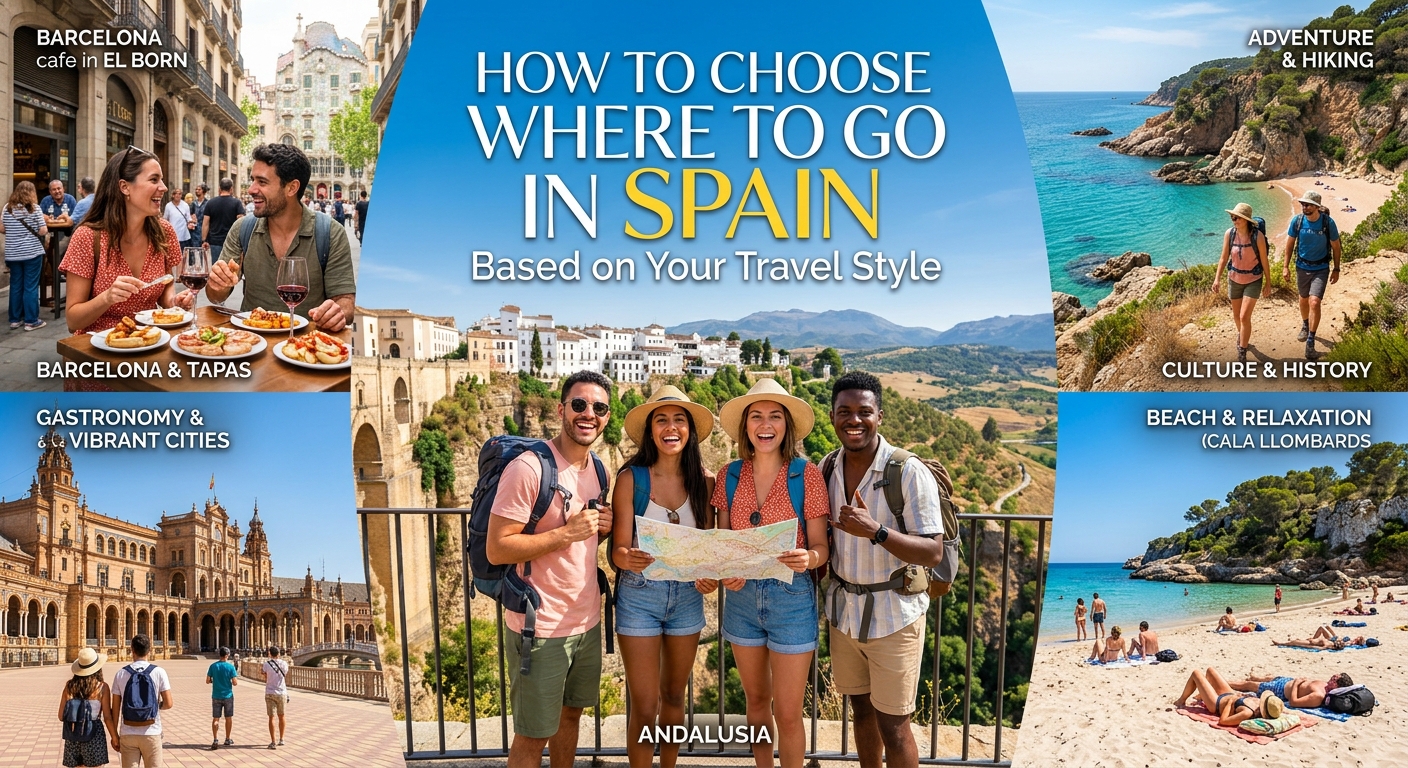
Spain is big enough to feel like several countries in one, but the best trip usually starts with one simple rule: match the region to the mood. Madrid and Barcelona are the easiest first stops, Seville and Granada are the most atmospheric for culture, San Sebastián is the food capital, Valencia balances city and beach, and the Balearics or Costa del Sol are best when you want sunshine and easy holiday energy. If you’re asking where to go in Spain for a first trip, the answer is often “one major city plus one nearby add-on,” not five cities in seven days.
For 2025-2026, the smartest strategy is to travel by cluster. Spain’s rail network makes city combinations like Madrid-Toledo, Madrid-Segovia, Barcelona-Girona, Seville-Córdoba, and Bilbao-San Sebastián workable without feeling rushed. If you want a beach-heavy trip, the Mediterranean coast and the islands are usually more weather-reliable, while the north is greener, cooler, and better for scenic drives, food, and slower travel. We’ve found that travelers are happiest when they choose one vibe and lean into it.
Here’s the easiest decision tree. Choose Madrid if you want museums, plazas, and late-night energy. Choose Barcelona if you want architecture, beach access, and nightlife. Choose Seville if you want Andalusian charm, flamenco, and tapas. Choose Valencia if you want an easygoing, well-rounded city with a beach. Choose San Sebastián if food is the trip. Choose the islands if the trip is about water, sun, and downtime. Everything else becomes easier once you pick the right “home base.”
Best Spain destination by travel goal
If your goal is to see the essentials without overthinking logistics, Madrid is probably the most efficient base because of its central location and excellent rail links. You can pair it with Toledo, Segovia, or Salamanca for day trips and still keep the trip feeling relaxed. Barcelona works especially well if you want a city break that feels instantly rewarding, since the architecture, food, and beach are all easy to access. For a first-time visitor who wants iconic Spain without too many transfers, either of these cities is a smart choice.
If your goal is atmosphere, Seville wins a lot of hearts. The historic center is compact, the evenings feel lively, and the city gives you that postcard version of Spain many people imagine before they book. Granada is another favorite because the Alhambra, the old quarters, and the Sierra Nevada backdrop make it feel layered and memorable. For many travelers, the best first trip is actually Madrid plus Seville, or Barcelona plus Valencia, because those combinations balance big-city convenience with regional character.
When one region is better than many
Spain looks small on a map, but moving too much can waste precious trip time. Trains are excellent, but each transfer still means check-in, luggage, station navigation, and maybe a less-ideal hotel location. That’s why one-region trips tend to feel richer: you spend more time eating, walking, and actually enjoying the destination. In practice, one region often gives you a better vacation than a checklist-style tour of six cities.
As a rule, if you have 7 days or fewer, pick one region. If you have 10 days, you can do two close bases. If you have 14 days, a regional loop makes sense. If you have 21 days, you can mix regions thoughtfully, but even then, you’ll enjoy the trip more if you resist the urge to overpack the itinerary. Spain rewards depth more than speed.
How to Choose Where to Go in Spain Based on Your Travel Style
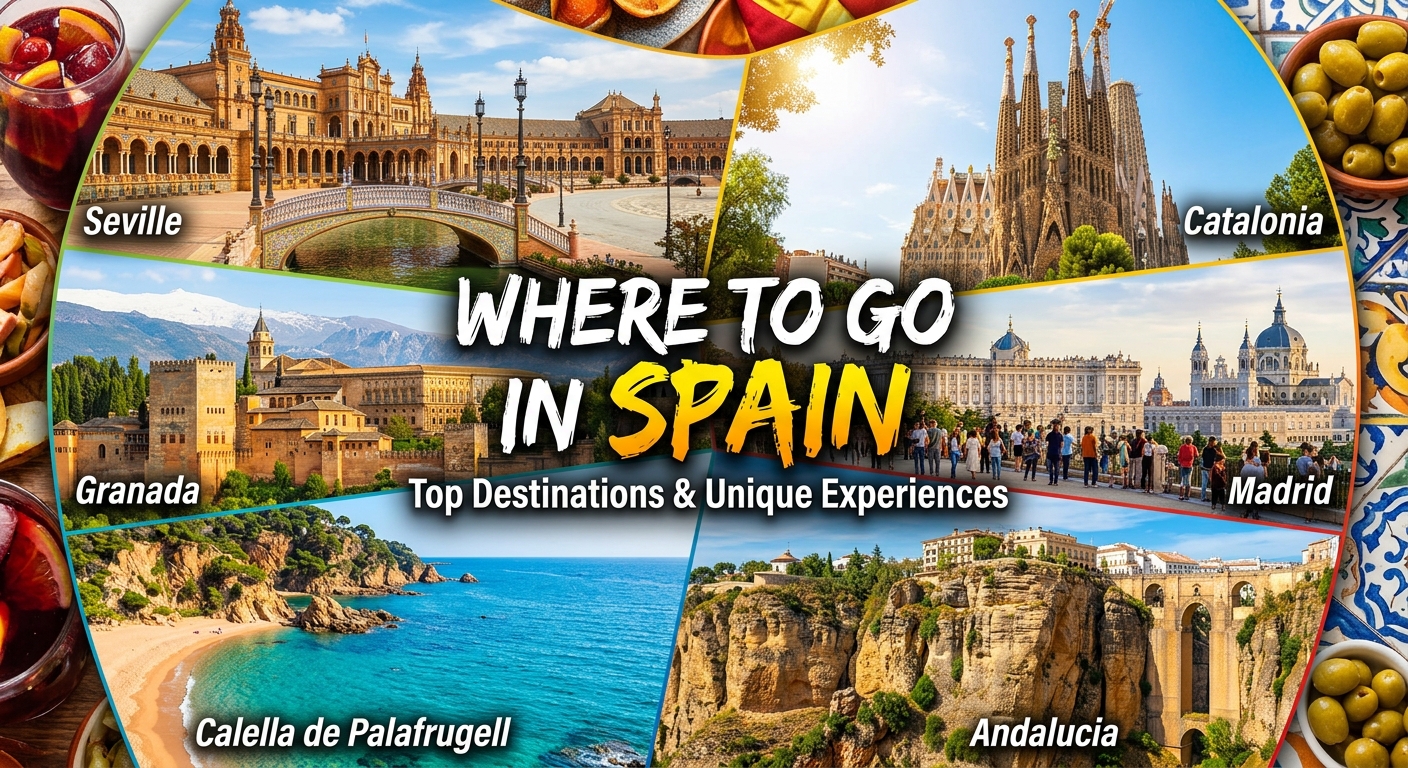
Choosing where to go in Spain gets much easier when you start with how you actually like to travel. Are you the type who wants museums, food, and a few excellent dinners? Or are you happier if the schedule includes beach time, parks, and easy logistics with kids? We’ve mapped the country by traveler style because that’s how real plans get made. The best destination is not just the prettiest one; it’s the one that fits your energy, budget, and tolerance for transit.
We also checked current patterns for 2025-2026, and there’s a clear trend: more travelers are building trips around neighborhoods and experiences, not just famous landmarks. That means thinking in terms of “where should I stay in Madrid for nightlife” or “which Barcelona neighborhood is best for architecture and going out” rather than only choosing a city name. This section helps you narrow down the field before you start booking. Once you know your style, you’ll know what to prioritize on Gidly and what to skip.
Below, we’ve broken down first-time visitors, couples, families, friend groups, and solo travelers. Each group gets a different sweet spot, and the “best” answer changes accordingly. If you are traveling with mixed priorities, the best move is often to choose a city that offers a few layers at once, then build day trips and evenings around that base. Spain is especially good at rewarding this kind of flexible planning.
First-time visitors: iconic cities and easy logistics
For first-time visitors, the classic answer is Madrid or Barcelona because both are easy to reach, easy to navigate, and full of things to do without requiring a car. Madrid is ideal if you want a central base and a strong cultural lineup, while Barcelona is ideal if you want an instantly memorable city with beaches, architecture, and nightlife in the mix. Both cities are international, walkable in the core, and packed with restaurants, museums, and neighborhoods that work well for a first visit.
If you want the simplest first trip possible, pair Madrid with Toledo or Segovia, or pair Barcelona with Girona or Montserrat. That gives you variety without turning your vacation into a transit project. Our Gidly-style recommendation for a first trip is always to protect your energy for actual experiences, not just transfers. The more straightforward the route, the better the trip usually feels.
Couples and date-night travelers: romantic cities, views, and dinner spots
Couples usually do best in cities that feel good after dark and offer a lot of atmosphere without a complicated schedule. Seville is one of the best romance picks in Spain because the historic center, riverfront walks, and tapas evenings create a natural date-night rhythm. Granada also has a very romantic feel, especially if you stay near the old quarter and build in a sunset viewpoint, a good dinner, and a slower late evening. Barcelona works too, especially if you like rooftop drinks, sea views, and stylish restaurants.
For couples, we’d look for destinations with easy dinner reservations, scenic promenades, and a mix of lively and intimate neighborhoods. Madrid is especially good if you like a big-city dinner scene and late nightlife, while San Sebastián is perfect if food is the main event. The key is to avoid destinations that are beautiful but logistically annoying, because romance usually improves when you’re not stressing over transport. A city that lets you walk, eat, and linger is often the best kind of date-night base.
Families with kids: easy sightseeing, parks, beaches, and interactive museums
Families usually want a destination that gives kids space to move, parents enough convenience, and everyone a few memorable activities without constant scrambling. Valencia is one of the best family-friendly choices because it combines beaches, a relaxed pace, the Turia Gardens, and the City of Arts and Sciences. Madrid also works surprisingly well for families thanks to parks, easy public transportation, and museums with strong kid-friendly programming. Barcelona can be excellent too, especially if you stay in a central area and use the beach as a built-in reset button.
With kids, the best city is often the one that reduces friction. That means short taxi rides, easy meal times, playground access, and attractions that don’t require a lot of standing in lines. We also like destinations with good indoor options for hot or rainy days, since flexibility matters on family trips. If you’re traveling with younger children, pick a city with neighborhoods that are easy to stroll and a hotel or apartment near transit.
Friend groups: nightlife, food neighborhoods, and social activities
For friend groups, the ideal Spain destination is usually one with late dinners, strong nightlife, easy bars, and enough daytime activities to balance the nights out. Madrid is one of the strongest overall choices because different neighborhoods suit different moods, from cocktail bars to clubs to long restaurant nights. Barcelona is also a favorite for groups because you can mix beach time, brunch, music, and nightlife without changing cities. Seville is better if you want food, tapas, and a more atmospheric social scene rather than club-heavy nights.
Groups should think about staying where they can walk home or take short rides, because nightlife plans get easier when the base is central. Bilbao, Valencia, and Malaga can also work well for a group trip depending on whether the priority is food, beach, or a lively city break. In our experience, friend-group trips go smoothly when everyone agrees on a “home neighborhood” before booking. That little decision saves a lot of money and confusion later.
Solo travelers and digital nomads: walkable cities, cafes, and cultural density
Solo travelers often do best in cities where it’s easy to fill a day with interesting things without needing a companion or a car. Madrid, Barcelona, Valencia, and Bilbao all score well here because they have strong transit, plenty of cafes, lots of public-life energy, and enough museums or parks to make solo days feel natural. San Sebastián is great if food is a major interest and you don’t mind a smaller, more polished city. Salamanca is also a good choice for a slower solo trip because it’s compact, youthful, and pleasant to walk.
Digital nomads usually appreciate stable Wi-Fi, walkable neighborhoods, and places where it’s easy to work for a few hours and then head out for a museum, dinner, or evening event. Barcelona’s Eixample, Madrid’s Chamberí, Valencia’s Ensanche, and Bilbao’s central areas are especially convenient for this. The best solo-travel cities are the ones that never make you feel stuck. Spain has plenty of those, and the right one depends on whether you want energy, culture, or calm.
Best Places to Go in Spain for First-Time Visitors
If you’re wondering where to go in Spain for a first trip, the strongest answer is usually a combination of Madrid, Barcelona, Seville, Valencia, and one history-rich add-on like Granada or Toledo. These places are popular for a reason: they’re easy to love, easy to navigate, and full of the landmarks travelers dream about before they land. The trick is not simply visiting them, but choosing the right order and pace so the trip feels exciting instead of exhausting.
We’ve found that first-timers usually want two things: iconic experiences and low-stress logistics. Madrid gives you the Prado Museum and huge city energy, Barcelona gives you Gaudí and a beach, Seville gives you the Andalusian postcard version of Spain, and Valencia gives you a cleaner, calmer city break with shoreline access. If your time is limited, don’t try to include every famous place. Pick one anchor city and maybe one meaningful side trip.
This section is also where official sources matter most. The Prado Museum’s official site, the Barcelona tourism board, the Seville tourism office, and attraction-specific booking pages like the Alhambra’s official ticketing system are essential in 2025-2026 because timed entry and advance reservations matter more than ever. We checked those patterns because the best first trip is one where your top sights are actually booked, not just hoped for.
Madrid for museums, plazas, and big-city energy
Madrid is one of the best first stops in Spain because it gives you the capital-city experience without overwhelming complexity. The city is easy to reach by air and rail, and its central location makes it a great base for day trips to Toledo, Segovia, or El Escorial. If you love museums, start with the Prado Museum, the Reina Sofía, and the Thyssen-Bornemisza, often called the Golden Triangle of Art. For public squares and city life, Puerta del Sol and Plaza Mayor are the names most travelers learn first, and they’re worth seeing because they anchor the city’s rhythm.
Madrid’s neighborhoods matter a lot for a first trip. Staying in Centro gives you easy access to the main sights, while Salamanca is more polished and shopping-friendly, and Chueca or Malasaña are better if you want nightlife and cafes. In the evenings, Madrid feels especially alive, and that late-night culture can be one of the most fun parts of the trip. We’d call Madrid the safest all-around choice for first-timers who want depth, convenience, and a lot of options.
Barcelona for architecture, beach access, and nightlife
Barcelona is the city many travelers imagine when they picture a stylish Spanish getaway. Gaudí landmarks like the Sagrada Família and Park Güell, the Gothic Quarter, the beachfront promenade, and the mix of neighborhoods all make the city feel lively from morning until late at night. If you want a trip that combines culture and leisure in one place, Barcelona is a terrific option. It’s especially good for travelers who like to wander, eat well, and end the day with rooftop drinks or live music.
The best first-time move in Barcelona is to choose a neighborhood strategically. Eixample is well-located and architectural, El Born is great for dining and a more intimate feel, and Barceloneta puts you closer to the beach. For going out, parts of Eixample and El Born are reliable, while the waterfront is better for a more polished night out. The city can get crowded, so booking major attractions ahead of time helps a lot. We’ve seen many first-timers regret not reserving key sights before arrival.
Seville for Andalusian charm and flamenco
Seville is one of the best places in Spain if you want old-world atmosphere and strong local character. The historic center is gorgeous, walkable, and packed with tapas bars, courtyards, and plazas that make lingering feel like part of the plan. The city is also one of the strongest picks for flamenco, especially if you want an evening activity that feels deeply tied to the region. It’s a city that rewards slow travel more than rushed sightseeing.
For first-timers, Seville is especially appealing because the rhythm is intuitive. You can spend the day near the Cathedral and the Royal Alcázar area, then move into food and nightlife in the evening. Neighborhoods like Santa Cruz, El Arenal, and Triana each offer a different experience, from postcard views to more local tapas energy. If Barcelona feels like the modern showpiece and Madrid feels like the capital, Seville feels like the soul of southern Spain.
Valencia for a balanced mix of city, beach, and easy pace
Valencia is often overlooked by first-timers, but it’s one of the smartest choices if you want a destination that feels manageable and rewarding. The city gives you a real urban core, a major park system, a waterfront, and one of Spain’s most futuristic landmark zones in the City of Arts and Sciences. It’s less hectic than Barcelona and less intense than Madrid, which is why many travelers end up loving it more than expected. It’s also a strong place for families and food lovers.
The city works especially well if you like to cycle or walk and want a trip that mixes sightseeing with easy downtime. The beach is accessible, the center is pleasant, and the food scene is excellent, especially for paella. Valencia also has a more relaxed evening pace than Madrid or Barcelona, which can be a welcome change if you’re planning a longer Spain trip. For a first visit, it’s one of the best “comfortably beautiful” options in the country.
Granada or Toledo as an additional stop for history
If you have time for one extra stop, Granada and Toledo are two of the most useful additions for first-timers. Granada is the obvious choice if you want the Alhambra, one of Spain’s most important and most visited landmarks, plus a historic center with beautiful views and deep Moorish heritage. Toledo, by contrast, is easier as a day trip from Madrid and gives you a medieval old-city experience that feels dramatically different from the capital. Both are excellent, but they serve different trip styles.
We usually recommend Granada if you want an overnight or two-night stay, especially because the city changes at night and deserves a slower pace. Toledo works beautifully if you’re based in Madrid and want a historic contrast without switching hotels. In 2025-2026, Alhambra tickets remain the biggest logistics issue of the two, so book well ahead through the official site. If history is a priority, these stops transform a good Spain trip into a memorable one.
The Best Regions in Spain by Vibe and Experience
Spain becomes much easier to plan once you stop thinking only in cities and start thinking in regions. A region often gives you a stronger identity than a single destination, and that matters when you want your trip to feel cohesive. Central Spain offers classic city breaks and heritage towns, Andalusia delivers sun, history, and tapas, Catalonia gives you a mix of architecture and coast, the Basque Country is exceptional for food and scenery, and the islands bring the most obvious holiday mode.
We like planning by region because it solves the “where should I go in Spain?” question in a way that still leaves room for personal taste. If you’re the kind of traveler who enjoys museums, you might prefer Central Spain. If you want vibrant evenings and warmer weather, Andalusia usually wins. If you want a more elegant food-and-design trip, the north may surprise you. Spain’s variety is one of its biggest strengths.
Below, we’ve broken down the major areas with practical travel implications. We also built this section to help with neighborhood-level and day-trip planning, because regional travel works best when you know which city should be your base and which spots are better as add-ons. That’s especially useful if you’re deciding between rail, car, and domestic flights in 2025-2026.
Central Spain: Madrid, Toledo, Salamanca, Segovia
Central Spain is the easiest region for travelers who want a classic, efficient itinerary with strong cultural payoff. Madrid is the anchor, and from there you can access Toledo, Segovia, Salamanca, and even smaller historic towns without much difficulty. This area is ideal if you want museums, grand plazas, old architecture, and enough city life to keep evenings interesting. It’s also one of the best regions for rail-based travel, which keeps logistics simple.
Toledo is the standout day trip for history, with its dramatic hilltop setting and medieval streets. Segovia is another favorite because of the aqueduct and castle setting, while Salamanca feels elegant and youthful thanks to its university heritage. Central Spain is less about beaches and more about variety through cities and towns. If you want a trip that feels distinctly Spanish without leaning too much on resort energy, this region is a top contender.
Andalusia: Seville, Granada, Córdoba, Málaga, Ronda, Cádiz
Andalusia is one of the most rewarding regions in Spain because it combines major cultural landmarks, warm weather, atmospheric old towns, and a strong social scene. Seville is the most obvious anchor, Granada brings the Alhambra, Córdoba offers the Mezquita-Catedral and Moorish heritage, Málaga adds city-beach convenience, Ronda delivers dramatic scenery, and Cádiz gives you Atlantic-coast charm with a more local feel. It’s a region where you can build multiple trip styles without leaving the south.
For many travelers, Andalusia is the answer to where to go in Spain if they want sun, culture, and iconic visuals all at once. The food scene is strong, the evening culture is lively, and there are plenty of opportunities for live music, flamenco, and neighborhood wandering. The main caution is heat in summer, so timing matters. In spring and autumn, Andalusia is close to ideal.
Catalonia and the northeast: Barcelona, Costa Brava, Montserrat, Girona
Catalonia offers a powerful mix of city life, coast, and scenery. Barcelona gets most of the attention, but the region becomes even more interesting when you add Girona, Montserrat, and the Costa Brava. Girona is one of our favorite add-ons because it combines old-town charm with excellent food and an easygoing pace. Montserrat is a great half-day or full-day nature-and-viewpoint stop, while the Costa Brava gives you coves and coastal villages.
This region works well for travelers who want a trip that feels stylish and varied. It’s especially good for friend groups, couples, and anyone who wants a mix of urban energy and seaside relaxation. Barcelona is the obvious base, but we’d recommend using the region to expand beyond the city if you have more than a few days. That’s where the trip starts to feel much richer.
The Basque Country and northern coast: Bilbao, San Sebastián, Asturias, Cantabria
Northern Spain is often the sleeper hit of a Spain trip. Bilbao offers the Guggenheim Bilbao and an increasingly strong cultural and dining scene, San Sebastián is one of the best food cities in Europe, and the wider northern coast gives you green hills, dramatic beaches, and a cooler climate. Asturias and Cantabria are especially appealing if you want outdoor scenery, smaller cities, and a less crowded version of Spain. This is the region for people who care about food and landscape as much as landmarks.
In the north, the pace changes. Meals can be a major event, and coastal walks or countryside drives become part of the experience. It’s a fantastic region for travelers who want a more local-feeling itinerary and don’t mind that the weather can be less predictably sunny. If you’ve already done the classic southern route, the north feels like a rewarding next chapter.
The islands: Mallorca, Ibiza, Tenerife, Gran Canaria, Menorca
Spain’s islands are the easiest way to shift a trip into pure holiday mode. Mallorca is excellent for varied beaches, scenic drives, and a mix of beach towns and city access. Ibiza is the obvious choice for nightlife and beach clubs, though it can also be surprisingly peaceful in the right areas. Tenerife and Gran Canaria are strong winter-sun picks, and Menorca offers a quieter, more relaxed island experience. Each island has a different personality, so it’s worth choosing carefully.
The islands are especially appealing when you want to slow down rather than pack in landmarks. They’re also a smart choice for shoulder season and winter if you want weather that’s milder than most of mainland Europe. If your idea of a good trip includes swimming, sunsets, and not having to move too much, the islands deserve a spot near the top of your list.
Where to Go in Spain for Beaches, Islands, and Coastal Escapes
If your version of a perfect trip includes salt air, long swims, and a beach bag instead of a museum map, Spain has you covered. The country’s coastlines are extremely diverse, from polished resort beaches to rocky coves to Atlantic stretches that feel quieter and more local. Some beaches are best for nightlife, some for families, and some for scenery. Choosing the right coast can completely change your trip.
For 2025-2026, coastal travel is especially popular because many visitors are trying to balance city breaks with downtime. That means the best beaches are not always the most famous ones. Sometimes the smarter move is a smaller beach town near a major city or a coastline that still feels manageable in peak season. The beaches and islands below are the ones we’d point friends to when they ask where to go in Spain for sun.
We also want to note that seasonal timing matters more on the coast than many travelers expect. Summer brings crowds and higher rates, while spring and early autumn often deliver the best combination of good weather, fewer people, and easier reservations. If you want to pair coast with nightlife, stick closer to major hubs. If you want serenity, go a little farther out.
Costa Brava for coves and scenic coastal towns
Costa Brava is one of the most beautiful coastline options in Spain because it offers coves, cliffs, and villages that feel more intimate than the big resort strips. It’s a strong choice if you want to base yourself in Girona or Barcelona and then do a coastal add-on. The scenery makes it especially appealing for couples, photographers, and travelers who want a balance of beach time and small-town wandering. The coastline has enough variety that you can choose between calmer beaches and more active areas.
If you’re comparing coastlines, Costa Brava is less about flashy beach clubs and more about atmosphere. It’s a good fit for people who want scenic walks, seafood lunches, and a slightly quieter pace. It can be a very rewarding summer or shoulder-season destination, particularly if you like mixing coast with architecture and food. We’ve found that it often exceeds expectations because it feels less packaged than some better-known beach areas.
Costa Blanca for classic holiday beaches and easy access
Costa Blanca is the classic answer for travelers who want approachable beach holiday energy, especially if they like easy access and straightforward logistics. Areas around Alicante and nearby beach towns can work well for families, couples, and groups who want sun without needing a complicated island transfer. The region is known for broad sandy beaches, straightforward resort infrastructure, and plenty of options for food and downtime. If you want an easy beach holiday, it’s hard to argue with the practicality.
Costa Blanca is also useful for travelers who want a beach trip with decent transport connections and many accommodation choices. It may not be as visually dramatic as some coves in the north, but it is reliable and comfortable. That reliability matters, especially if you’re traveling with kids or planning a group trip where not everyone wants the same pace. As a vacation base, it’s efficient in the best way.
Costa del Sol for sun, resorts, and nightlife
Costa del Sol is one of the most recognizable beach regions in Spain, and for good reason. It’s built for sunny holiday mode, with plenty of resort infrastructure, lively beach towns, and easy access to Málaga as a city base. If you want a destination that combines beach afternoons with good restaurants and nightlife options, this coastline is a strong pick. It’s especially attractive in shoulder season when the weather stays favorable but the experience feels less crowded.
For nightlife travelers, Costa del Sol can be a practical compromise because you get beach days and evening energy in one region. Families also like it because accommodation is widely available and beach logistics are usually simple. The main tradeoff is that it can feel more developed and tourist-friendly than some other coasts. If that’s what you want, it works beautifully.
Cádiz and the Atlantic coast for a more local, less crowded feel
Cádiz and the surrounding Atlantic coast are great for travelers who want beaches but prefer a less glossy, more lived-in atmosphere. Cádiz itself has a rich historic character and a very different feel from the Mediterranean coast. The beaches around this area often feel more local, and the region can be especially pleasant if you want a quieter escape with strong food and city character. It’s one of the best places to go in Spain if your priority is avoiding the most over-touristed beach strips.
The Atlantic coast also pairs well with Andalusia itineraries. You can spend time in Seville or Jerez and then move toward the coast for a more relaxed finish to the trip. That combination gives you a broader sense of southern Spain without sacrificing beach access. For travelers who want a slightly more under-the-radar coast, this is one of our favorite recommendations.
Balearic and Canary Islands for island-hopping and winter sun
Major islands deserve a separate mention because they can solve different travel problems. Mallorca is the most versatile of the Balearics, with city access, beach towns, and scenic drives. Ibiza is best if nightlife and beach life are the priorities. Menorca is quieter and more relaxed, making it ideal for couples or families who want low-key sea time. The Canary Islands, meanwhile, are especially useful in winter because the climate is milder than much of the mainland.
If you’re deciding where to go in Spain in the off-season, the Canaries can be a smart escape. Tenerife and Gran Canaria are popular because they offer outdoor activities, beaches, and more reliable warmth than many European destinations. The islands are not a one-size-fits-all answer, but they are a strong category if your vacation goal is sunshine, swimming, and a slower pace.
Where to Go in Spain for Food and Nightlife
Food is one of the biggest reasons people fall in love with Spain, and the nightlife can be just as memorable. The best food-and-nightlife destination depends on whether you want late dinners, Michelin-level dining, tapas hopping, wine bars, live music, or all of the above. Some cities are better for long social evenings, while others shine because of one legendary food culture. If your trip revolves around restaurants and nights out, this section should guide most of your decisions.
In 2025-2026, the trend is clearly toward experience-based nights out. Visitors are mixing rooftop bars, neighborhood restaurants, live music, and local food markets rather than just hitting a single club district. That’s great news if you want a trip that feels balanced and memorable. We’ve also noticed that traveler satisfaction is higher when they choose a city where food and nightlife are close to where they’re staying, so neighborhood choice matters more than ever.
Whether you want pintxos in the north, tapas in the south, or cocktail bars in the big cities, Spain makes it easy to eat well. The challenge is deciding where the scene matches your style. Below, we break it down so you can make the call based on flavor, pacing, and how late you want the night to go.
San Sebastián for pintxos and fine dining
San Sebastián is the destination for people who plan trips around meals. The city is famous for pintxos culture, which makes casual eating feel like a social ritual, and it also has one of the strongest fine-dining reputations in Spain. If food is a priority, this is one of the most rewarding cities you can choose. The city’s size also helps because you can walk between good spots without feeling like you’re constantly crossing town.
We’d recommend San Sebastián for food travelers, couples, and anyone who wants a polished but not overwhelming destination. La Concha Beach adds scenery, while the old town gives you enough going-out energy to keep evenings interesting. The city can be expensive, but many travelers feel the experience is worth it because the quality level is consistently high. It’s a place where even a simple walk-and-eat plan feels special.
Madrid for late dinners, rooftop bars, and neighborhoods that stay out late
Madrid is one of the strongest nightlife cities in Europe because the evening culture is built into the city’s rhythm. Late dinners are normal, bar hopping is easy, and neighborhoods like Malasaña, Chueca, and parts of Salamanca or La Latina each offer different after-dark personalities. Madrid also has a strong rooftop scene, which is especially appealing in warmer months. If you want a city where the night truly starts late and goes late, Madrid is hard to beat.
Food-wise, Madrid is excellent because it has everything from old-school tapas bars to modern dining rooms and market-based casual spots. It’s not the only city in Spain with great food, but it is one of the easiest cities for a group trip because everyone can find something they like. That mix of variety and nightlife makes Madrid a top answer for friend groups and corporate outings too.
Barcelona for cocktail bars, beach clubs, and live music
Barcelona is best for travelers who want nightlife that mixes style, music, and different neighborhoods. You can do a beach club day, a cocktail-bar evening, or a live-music night without leaving the city. The restaurant scene is broad, and the best part is how many places sit close to interesting walking areas. For visitors who like a city that feels active at almost any hour, Barcelona is a strong pick.
We especially like Barcelona for travelers who want both daytime and evening experiences. You can spend the afternoon at the beach, then move into dinner in El Born or Eixample and end with drinks in a bar district that suits your mood. It’s a city that makes it easy to improvise, which is great for friend groups and couples who prefer flexible plans. The only real caution is booking the most popular venues early if you’re visiting during peak season.
Seville for tapas culture and flamenco nights
Seville’s food-and-nightlife scene is more about atmosphere than intensity, which is part of its charm. Tapas hopping is practically the city’s social language, and a flamenco night can be one of the most memorable evening activities in Spain. The city is full of places that feel more local than touristy if you know where to wander. That makes it a favorite for travelers who want a cultural night out instead of just a party scene.
Seville is particularly good if you enjoy long dinners, shared plates, and a walkable old center that stays lively after dark. Triana is a favorite area for a slightly more local vibe, while the central historic districts give you classic charm and easy access. If your ideal evening includes a good meal, a drink, and a performance, Seville deserves a top spot on your list.
Valencia and Bilbao for emerging food scenes and social evenings
Valencia is often underrated in food discussions, but it’s a very comfortable place to eat well without the intensity of bigger nightlife cities. Paella is the obvious signature, but there’s much more to the city’s food scene, especially if you like relaxed dinners and neighborhood bars. Bilbao has a different energy, with a modern urban feel and a growing reputation for quality dining. Both cities are excellent for travelers who want a strong food focus without the highest prices or the most crowded nightlife.
These cities are especially useful for people who want a balanced evening rather than a big late-night blowout. You can eat well, have drinks, and still feel like the trip has room for next-day sightseeing. For many travelers, that balance is exactly what makes the trip memorable. It’s not always about the biggest party; sometimes it’s about the best evening flow.
| City | Average Tapas / Pintxos Budget | Nightlife Style |
|---|---|---|
| Madrid | €15-€30 per person | Late bars, rooftops, clubs |
| Barcelona | €18-€35 per person | Cocktails, beach clubs, live music |
| San Sebastián | €20-€40 per person | Pintxos crawl, fine dining |
| Seville | €12-€25 per person | Tapas bars, flamenco, relaxed late nights |
| Valencia | €12-€28 per person | Casual bars, social dinners |
Where to Go in Spain for Culture, History, and Landmarks
Spain’s cultural itinerary is one of the strongest in Europe, and that’s not just because of the obvious icons. The country’s museums, cathedrals, historic centers, and Moorish and Christian heritage layers create a trip that feels both beautiful and educational. If you want memorable landmarks, this is where Spain really shines. The trick is choosing the places that best match your interests rather than trying to see every famous site on one route.
We’ve seen a big 2025-2026 shift toward timed-entry planning and advance ticketing, especially for headline attractions like the Alhambra, the Prado Museum, and the Mezquita-Catedral. That means the earlier you decide on your route, the better your chance of seeing what you want without stress. This section also helps you build a cultural route that includes more than a list of monuments. The most satisfying trips layer major attractions with nearby neighborhoods, cafés, and evening plans.
If you love historic cities, UNESCO sites, and landmark-rich day trips, Spain gives you plenty of options. Some are major-city icons, while others are compact heritage towns you can enjoy in a single day. We’ve organized the section to show you how to make the most of each one.
The Prado Museum and Golden Triangle of Art in Madrid
The Prado Museum is one of the biggest reasons Madrid belongs on any serious Spain itinerary. It sits at the center of the Golden Triangle of Art alongside the Reina Sofía and Thyssen-Bornemisza, giving you one of Europe’s best museum clusters in a single walkable area. If you like art, this is a no-brainer. Even if you’re not a major museum person, the quality and concentration make it worth building into a first trip.
In practical terms, the Golden Triangle works well because you can fit a museum morning into a broader city day. That means lunch nearby, a walk through Retiro, and then dinner or drinks in a neighborhood that suits your style. For 2025-2026, book in advance for the busiest days and check official hours, especially around holidays. Madrid’s museum core is one of the easiest high-value culture experiences in Spain.
Alhambra in Granada and nearby historic quarters
The Alhambra is one of Spain’s most visited landmarks for a reason: it’s not just a palace, it’s a layered historic complex with architecture, gardens, views, and an atmosphere that feels unlike anywhere else in the country. Granada’s historic quarters add to the experience, especially if you stay overnight and let the city unfold after the day-trippers leave. That’s the best way to experience Granada in our view, because the evening and early morning atmosphere are part of the magic.
Logistically, the biggest mistake travelers make is waiting too long to book. The official ticket system is the place to start, and you should treat the visit as a fixed point around which the rest of your route is built. Granada is also excellent for combining heritage with local life, because the city doesn’t feel like a one-site destination. It feels lived in, and that makes it much more satisfying than a quick box-checking stop.
Mezquita-Catedral in Córdoba and Moorish heritage
Córdoba is a brilliant cultural stop because the Mezquita-Catedral gives you a dramatic and unforgettable architectural experience, while the city itself feels compact and manageable. The old center is pleasant to explore, and the city’s layered history gives it a distinctive identity within Andalusia. If you want a smaller city that still offers serious heritage, Córdoba belongs on the shortlist. It also works well as part of a Seville-Granada route.
Many travelers underestimate Córdoba because it’s sometimes treated as a day trip, but it can be more rewarding if you stay long enough to enjoy its pace. Spring and autumn are especially comfortable, and the city’s historic areas are best appreciated when you’re not rushing. For culture lovers, it’s one of the most elegant and meaningful stops in southern Spain.
Guggenheim Bilbao and contemporary architecture
The Guggenheim Bilbao transformed the city’s global reputation, and it remains one of the country’s most important modern landmarks. Bilbao is a great destination if you want Spain to feel contemporary as well as historic. The architecture, urban renewal, and surrounding cultural scene make it a very different experience from the southern historic cities. It’s a city that proves Spain is not only about old squares and castles.
Bilbao is especially good for travelers who want a city break with strong design energy, walkable urban planning, and a food scene to match. The museum is the headline attraction, but the broader city is what makes it work as a trip. If you’re building a north-of-Spain route, Bilbao is often the anchor that makes the itinerary feel fresh and modern.
Toledo, Salamanca, Segovia, and Cuenca for day trips and heritage towns
Spain’s heritage towns are among the easiest ways to add depth to a trip. Toledo is the most famous, and its hilltop setting and medieval character make it one of the best day trips from Madrid. Salamanca offers university charm and beautiful stone architecture, Segovia brings its aqueduct and castle atmosphere, and Cuenca stands out for its dramatic setting and hanging houses. These places are excellent if you want a historical contrast without packing and unpacking every night.
From experience, these towns work best when you give them enough time to breathe. A half-day visit can feel rushed, while a full day or an overnight often makes the experience much more satisfying. They’re especially useful for travelers who want a trip with visual variety. If you’re choosing where to go in Spain and want culture without huge-city energy, these towns are ideal additions.
Where to Go in Spain for Outdoor Adventures and Scenic Nature
Spain is not just a city-and-beach country. It also has mountain landscapes, green northern coastlines, dramatic cliffs, national parks, and hiking areas that are easy to fold into a bigger itinerary. For travelers who want fresh air, scenic drives, and a more active kind of trip, Spain offers more variety than many people expect. The best outdoor destinations are often less crowded than the headline cities, which can make them feel like a real discovery.
We’ve included this section because outdoor travel has become more important in 2025-2026, especially for travelers who want to balance urban experiences with nature. Spain makes that surprisingly easy. In a single trip, you can do museums, beaches, and mountain viewpoints without changing countries or regions too many times. If you like your vacation with a little movement, this part of Spain will probably be your favorite.
Below, we cover the most rewarding scenic zones, along with practical notes about seasonality and difficulty. Some of these are easy walks; others are better for a full day or a car-based route. Either way, they add a memorable layer to the trip.
Picos de Europa and northern mountain landscapes
The Picos de Europa are one of Spain’s best outdoor surprises. This mountain region in the north is dramatic, green, and far removed from the beach-resort image many travelers have in mind. It’s a great destination for hiking, scenic drives, and anyone who wants a more rugged landscape. The area pairs well with Asturias or Cantabria and gives you a very different side of Spain from the cities in the south.
If your ideal trip includes fresh air and fewer crowds, this is one of the strongest choices. The weather can be less predictable than the south, but the scenery often makes up for it. We’d especially recommend it to travelers who have already done the classic Spain route and want something that feels more nature-forward. It’s a place where the landscape is the main attraction.
Hiking and viewpoints in Montserrat, Ronda, and the Sierra Nevada
Montserrat is one of the easiest mountain-and-viewpoint add-ons near Barcelona, and it works well as a half-day or full-day trip depending on your pace. Ronda in Andalusia is famous for its dramatic bridge and gorge views, making it a fantastic scenic stop on a southern route. The Sierra Nevada near Granada adds mountain contrast to a city-and-history itinerary, which is especially appealing if you want to combine culture and nature. These are some of the most accessible scenic experiences in Spain.
What makes these places especially useful is that they don’t require a major detour. You can build them into a broader trip and still feel like you’ve added something meaningful. For couples and solo travelers in particular, viewpoints can be some of the most memorable moments of the whole itinerary. The light, the scale, and the slower pace give the trip breathing room.
Beaches, surf, and coastal walks
Spain’s beaches are not just for lying still, though that’s certainly allowed. Many coastline areas are great for long walks, sunrise or sunset strolls, and mild outdoor exercise. The Atlantic coast in the north and around Cádiz offers stronger walking scenery, while Mediterranean areas often give you calmer water and classic beach holidays. If you like surf, some northern stretches are especially appealing, and if you want easy seaside promenades, the main coastal cities deliver those too.
Outdoor travelers often do best in shoulder season when the weather is pleasant but the beaches and trails are less crowded. That’s especially true in 2025-2026 as peak summer demand continues to push up prices and crowd levels. Choose your coast based on the exact kind of outdoor time you want, not just the word “beach.” That’s how you end up with the right fit.
National parks and countryside escapes
Spain’s national parks and countryside areas are excellent for travelers who want slower days and a sense of open space. Depending on the region, you can build routes around lakes, valleys, forests, or agricultural landscapes that feel very different from the cities. The countryside can be especially good for road trips, which is one reason some travelers choose cars over trains for part of the journey. A scenic rural day can balance out a busy urban trip beautifully.
If you’re considering a deeper Spain visit, think about where your itinerary needs a pause. A countryside stop can keep the trip from feeling like too much back-to-back city time. It also works well for family trips and couples who want calm, especially after several full sightseeing days. The slower the itinerary, the more the scenery tends to matter.
Best active experiences by season
Seasonality matters a lot for outdoor Spain. Spring is ideal for city walks and mountain viewpoints, summer is best for beaches and high-elevation escapes, autumn is excellent for hiking and wine-country style road trips, and winter is surprisingly good in the south and on the islands. If you’re planning active days, think about when temperatures will be comfortable enough to enjoy them without cutting the day short. Heat can change a hike into an endurance test if you’re not careful.
The best approach is to match your outdoor activities to the season and region. In summer, go early, keep water with you, and save heavy sightseeing for cooler hours. In spring and autumn, you can usually do more in a day and feel less rushed. That’s one reason many experienced travelers prefer shoulder season for Spain’s outdoor destinations.
Where to Go in Spain with Kids or for Family-Friendly Travel
Spain can be an excellent family destination if you choose the right base. The best family-friendly places tend to have reliable public transport, walkable centers, playgrounds or parks, beaches or indoor attractions, and enough meal flexibility that parents don’t have to fight the schedule. Cities like Valencia, Madrid, and Barcelona are strong because they offer a lot of options within relatively compact areas. Smaller cities can work too, but the logistics matter more when kids are involved.
For 2025-2026 family planning, we’d strongly recommend building trips around downtime as much as sightseeing. A good family trip in Spain is not about maximizing landmarks; it’s about balance. You want one or two big activities, plenty of park time, and easy food options. That’s where cities with good transit and a mix of indoor and outdoor attractions really shine.
We also know family travelers care about practical issues like stroller access, meal times, naps, and cost control. So below, we’ve included the places and formats that tend to work best, plus a few low-cost ideas that can fill gaps without creating stress.
Cities with easy transit and kid-friendly attractions
Valencia is one of the best overall family cities in Spain because it is easy to navigate and naturally balanced. The Turia Gardens give kids room to move, the City of Arts and Sciences provides an impressive attraction cluster, and the beach can serve as an afternoon reset. Madrid is another excellent option because transit is reliable and there are parks, museums, and broad plazas that keep the experience manageable. Barcelona works well too if you stay in a central neighborhood and don’t overload the schedule.
The main family rule is to avoid too many hotel changes. Kids do best when the base stays fixed and the day trips are short. That way, the trip feels fun instead of like a logistics exercise. The easier the transit, the more relaxed the whole family usually feels.
Beaches, parks, aquariums, and interactive museums
Spain is strong on attractions that appeal across age groups. Beaches are obvious crowd-pleasers, but parks and aquariums can be just as valuable when you need a slower day. Interactive museums also matter, especially in big cities where you can balance art and science with active exploration. The best family itineraries mix one “big ticket” attraction with one low-pressure outdoor space each day.
In our experience, the cities with the best family satisfaction scores are the ones that allow for flexible pacing. A morning museum, an afternoon park, and an early dinner is often the winning formula. This helps you avoid the most common family-travel mistake: trying to do the same itinerary you’d do as a solo traveler or couple. Kids need breaks, and Spain is best enjoyed when the schedule makes room for them.
Best family neighborhoods and day-trip bases
When traveling with family, where you stay matters just as much as where you go. In Madrid, central areas with easy metro access make life much simpler. In Barcelona, Eixample or other well-connected central neighborhoods are convenient because they put you close to major sights without the chaos of the most crowded zones. In Valencia, staying near the center or a transit-friendly waterfront area can help you keep the city feel while still making the beach accessible. Family trips run smoother when the neighborhood itself does half the work.
For day-trip bases, Madrid is especially practical because Toledo and Segovia are easy add-ons. Barcelona can also be excellent if you want a quick escape to Girona or Montserrat. The goal is to keep transfers short and the attractions varied. When families have a “home base” that works, the whole trip gets easier.
Practical tips for strollers, meal times, and downtime
Spain’s dining hours can be a surprise for families, especially if kids need earlier meals than the local norm. A good strategy is to plan flexible lunches, use snacks strategically, and book dinners early when possible. Strollers are fine in many cities, but older historic centers can involve uneven pavement or compact streets, so comfort matters. Whenever possible, choose hotels or apartments with space to unwind between activities.
Downtime is not wasted time on a family trip. It often makes the difference between a trip everyone enjoys and one that feels too packed. Spain’s best family experiences often happen when the day is balanced rather than forced. That’s also why the season matters so much: cooler months can be more comfortable for walking, while summer may require midday breaks.
Free or low-cost family activities
Families trying to control costs should look at parks, beach time, neighborhood wandering, and public squares as part of the itinerary rather than filler. Spain has many beautiful spaces that are free to enjoy, and those moments often become memorable because they’re relaxed. Museums often have reduced-price or free-entry windows as well, but those hours can be busy, so timing matters. A well-chosen plaza or promenade can be just as satisfying for kids as a paid attraction.
We’ve found that the best budget family trips are the ones that mix one paid highlight with several low-cost extras. That approach keeps the budget healthy and the trip varied. It also reduces pressure to “get your money’s worth” from every activity, which is a trap many travelers fall into.
Best Budget-Friendly and Free Things to Do in Spain
Spain can be surprisingly budget-friendly if you know how to plan it. While some famous attractions and peak-season hotels can get expensive, many of the country’s best experiences are either free or low-cost. Public squares, beaches, parks, walking neighborhoods, and market browsing can fill a day beautifully without a big spend. The smartest budget travelers use the city itself as an attraction.
We’re including this section because many travelers assume Spain requires a big budget once they see the iconic cities. That’s not always true. You can save money by traveling in shoulder season, choosing the right neighborhood, eating in local tapas bars, and using trains strategically. In 2025-2026, booking early matters even more for major cities and popular routes, but there are still plenty of ways to keep costs under control.
Below you’ll find the free and low-cost strategies that make the biggest difference, along with a table comparing budget-friendly destinations. If you’re trying to decide where to go in Spain on a tighter budget, this section should help a lot.
Free museums, plazas, parks, and walking routes
Many of Spain’s most rewarding experiences cost nothing. Walking through Puerta del Sol or Plaza Mayor in Madrid, exploring the Gothic Quarter in Barcelona, wandering Seville’s historic streets, or spending time in Valencia’s parks can all be done on a minimal budget. Museums often have free hours or reduced days, which is worth checking on official sites before you go. A city walk can easily become the highlight of the day if you plan it around good neighborhoods and an easy pace.
Free activities are especially useful in cities where you’re spending multiple nights. They let you save money without sacrificing quality. We’ve also found that free walking routes are one of the best ways to discover a city’s character before you decide which paid attractions matter most. It’s simple, but it works.
Cheap tapas, markets, and local neighborhoods
Tapas culture is helpful for budget travelers because it can be both social and economical if you choose carefully. Neighborhood bars often offer better value than tourist-heavy spots near major landmarks. Markets are also excellent for affordable meals and snacks, and they let you sample local products without committing to a full sit-down dinner. In many cities, a market lunch can save you quite a bit while still feeling like a proper outing.
Local neighborhoods are key because prices often drop as you move away from the most obvious tourist corridors. This doesn’t mean you need to go far out of the center, just that a little neighborhood knowledge helps. The best budget food experiences in Spain are usually not the fanciest ones; they’re the ones where the quality is high and the atmosphere feels lived in.
Budget-friendly cities and regions
Not every Spanish destination has the same price level. Madrid and Barcelona can be pricier, especially in central zones, while Valencia, Seville, Córdoba, and parts of northern Spain often feel more manageable. Salamanca and Toledo can also be good value depending on the season. The islands and top beach resorts tend to rise in cost quickly during peak summer, so those are less ideal if budget is the top concern.
If you want a cheaper route, consider a mix like Madrid plus Toledo, or Seville plus Córdoba, or Valencia with a beach-and-city balance. These combinations can feel rich without pushing your trip into premium territory. Choosing one base and one day trip is often the best value formula.
How to save on trains, domestic flights, and attraction tickets
Spain’s transport system is strong, but prices vary depending on timing and route. High-speed rail can be excellent value if booked early, while last-minute fares may be much higher. Domestic flights sometimes make sense for longer jumps, but they can add airport time and baggage costs. For major attractions, booking directly through official sites usually gives the cleanest experience and helps you avoid unnecessary markups.
Our general rule is this: book big-ticket items early, but leave room for free days. That keeps the trip flexible and affordable. If you’re traveling in 2025-2026 during busy periods, the combination of early booking and strategic neighborhood choices makes a noticeable difference. Budget travel is not about deprivation; it’s about deciding where spending actually matters.
Free events, festivals, and seasonal happenings
Spain has many public festivals, street events, neighborhood celebrations, and seasonal happenings that can add real value to a trip. Some are free to attend, while others only require advance planning to get a good viewing spot. Spring and autumn are especially rich for festivals and public life in many cities. If you’re flexible with dates, it’s worth checking official tourism boards and city event calendars before you lock your itinerary.
These events can be especially good for budget travelers because they add atmosphere without adding a major cost. A city festival, street performance, or public concert can become one of the most memorable parts of the trip. It’s one more reason why current-year planning matters: Spain is never just a static list of sights.
| Destination | Typical Daily Budget | Value Level |
|---|---|---|
| Valencia | €70-€140 | Excellent |
| Seville | €80-€150 | Very good |
| Madrid | €90-€180 | Good |
| Barcelona | €100-€220 | Moderate |
| San Sebastián | €120-€250 | Higher |
Best Rainy-Day, Indoor, and Winter-Friendly Options
Not every trip to Spain is a blue-sky beach trip, and that’s okay. Some of the best Spanish experiences happen indoors, especially in winter or during those occasional rainy days when you want to stay comfortable and still enjoy the city. Spain’s museums, food halls, theaters, and performance venues give you plenty of options when the weather shifts. That makes the country a very good year-round destination, not just a warm-weather one.
We’ve also noticed that winter and shoulder-season travelers often enjoy Spain more than expected because the major cities feel less crowded and easier to navigate. You may not be swimming in the sea, but you can get a very satisfying cultural trip without the summer stress. For 2025-2026, the smartest indoor travel plan is to combine a few headline sights with flexible neighborhood time. That way, you always have a backup even if the weather changes.
This section is especially helpful if you’re traveling with kids, older family members, or a group that likes variety. It also fits solo travelers perfectly, because indoor experiences are easy to enjoy on your own. Think of it as your “what to do nearby when the weather is not ideal” guide.
Museums, galleries, and covered attractions
Spain’s major museums are one of the best rainy-day answers in Europe. Madrid’s Prado, Reina Sofía, and Thyssen-Bornemisza are the obvious trio, but many cities have excellent smaller museums and cultural centers too. Covered attractions can easily fill half a day or more without making the trip feel like a compromise. If you like art, history, or architecture, rainy weather barely matters.
The best indoor strategy is to choose one anchor museum and one lighter backup. That lets you stay flexible without overcommitting to a full-day indoor schedule. For travelers who don’t love museums, even a single iconic site can anchor the day while the rest of the time is spent in cafes or shopping streets. Spain’s indoor options are strong enough that bad weather usually doesn’t ruin the day.
Food halls, markets, and indoor tours
Food halls and markets are great rainy-day choices because they give you a warm, social environment and a chance to eat well without overplanning. Many cities have market areas that work beautifully for breakfast, lunch, or snack hopping. Indoor tours can also be excellent if you want structure without feeling trapped in one place. A guided food walk or historic interior tour can be the right balance on a gray day.
Markets are especially useful in cities where the neighborhood energy is part of the appeal. They let you sample local life at a pace that feels easy and flexible. For families and groups, this is often a much better backup plan than trying to force a major outdoor itinerary in bad weather. It keeps the trip moving without feeling over-scheduled.
Winter sun destinations and mild-weather cities
If you’re planning a winter trip, southern Spain and the Canary Islands are the strongest bets for milder weather. Seville, Málaga, Valencia, and the islands often feel more comfortable than northern Europe, which makes them great options for travelers chasing sunlight. You may still want a jacket, but the overall experience can be much more pleasant than a colder city break. That’s one reason winter Spain is so popular with travelers escaping gray weather at home.
Winter also changes what feels worthwhile. You may spend more time in museums, food halls, and neighborhood cafes, but that can be a positive rather than a compromise. The cities are often easier to enjoy when the crowds thin out. If you want a calmer trip, winter can be a very smart time to go.
Theatre, comedy, and live performance options
Live performance is a strong part of Spain’s indoor culture, especially in larger cities. Theatre, concerts, flamenco, comedy, and small venue performances can all be excellent choices when the weather isn’t ideal. These are also great evening options if you want more than just dinner and drinks. Barcelona, Madrid, Seville, and Bilbao tend to have especially good event calendars.
For travelers using Gidly to find things to do, this is where event listings can be especially helpful because performance schedules change frequently. A rainy day can quickly become a great night if you find a local show, concert, or comedy set nearby. That flexibility is one of the best parts of city travel in Spain.
Tips for shoulder season and off-season planning
Shoulder season is one of the best times to travel in Spain because the weather is more comfortable and the cities feel less crowded. Spring and autumn are especially good for walking, outdoor dining, and mixed indoor-outdoor plans. In winter, prioritize cities and regions with strong museum and food scenes, and in summer, plan indoor breaks around the hottest hours. The weather can shape your satisfaction more than many first-time visitors expect.
If you’re traveling off-season, check opening hours carefully because some attractions shorten their schedules. That’s where official websites and tourism boards are extremely useful. Spain is still excellent in the off-season, but a little planning goes a long way. The payoff is usually a more relaxed and affordable trip.
Itinerary Ideas: Where to Go in Spain for 7, 10, 14, and 21 Days
Once you know the regions and trip styles, the next step is turning ideas into actual routes. Spain rewards itinerary planning because the country has many good combinations, but it also punishes overstuffed schedules. The best trips feel paced, not frantic. If you choose the right route, you’ll spend more time enjoying the country and less time recovering from transfers.
For 2025-2026, we’d strongly suggest thinking in route types: classic first trip, city-plus-coast, cultural loop, or deep-dive regional journey. The rail network is strong, domestic flights can help for longer distances, and cars are most useful for countryside-heavy routes. These itinerary ideas are designed to help you pick a structure rather than a million separate stops. That’s usually the difference between a good Spain trip and a great one.
We’ve also included a practical note on transport tradeoffs because the best itinerary can change depending on whether you prefer trains, cars, or flights. Use the route that matches your pace, not just the one that looks most impressive on a map.
7-day classic first trip route
A classic 7-day route usually works best as Madrid and Seville, or Barcelona and Valencia, with one day trip added where appropriate. Madrid plus Toledo is an especially efficient pairing if you want museums and history. Barcelona plus Montserrat or Girona works well if you want architecture, beach access, and a lighter day out. With only a week, your biggest goal should be minimizing stress while still seeing enough to feel the destination.
We like 7-day trips to stay simple because they’re often first-time trips or short vacations. That means one arrival city, one secondary stop, and enough free time to enjoy meals and neighborhoods. Do not try to add too many cities. Spain is better when you taste the region rather than sprint through it.
10-day city-plus-coast route
Ten days opens the door to a very satisfying city-and-coast combination. Madrid plus Valencia is a strong option, as is Barcelona plus the Costa Brava, or Seville plus Málaga and a coastal add-on. This kind of route gives you a nice rhythm: several active urban days followed by a more relaxed coastal ending. That’s often the ideal vacation structure because it gradually lowers the energy as the trip goes on.
If you’re traveling with a partner or group, this is one of the best formats because it balances different preferences. City people get culture and nightlife, while beach people get downtime and sunshine. It also gives you enough time to settle into each destination rather than only passing through. Ten days is often the sweet spot for Spain.
14-day cultural loop
A 14-day route allows for a richer, more balanced loop, such as Madrid, Toledo, Seville, Córdoba, Granada, and perhaps Valencia or Barcelona depending on your route direction. Another strong option is Barcelona, Girona, San Sebastián, Bilbao, and a northern coast add-on. Two weeks is where Spain starts to feel really layered, because you can combine cities, history, food, and some slower moments.
This is also the point where rail planning starts to matter more. If you’re moving across regions, think about the sequence carefully to avoid backtracking. A well-planned 14-day route should feel like a story, not a zigzag. That’s how you make the most of a longer stay.
3-week deep-dive route
Three weeks gives you the freedom to go deeper, but it’s still wise to avoid overbooking. You might combine Madrid, central Spain, Andalusia, and either Catalonia or the north, or split your time between mainland Spain and one island. This is the trip length where you can really let a region breathe, spend extra time in neighborhoods, and build in day trips or outdoor escapes. The temptation will be to add “just one more city,” but the best long trips usually resist that urge.
With three weeks, you can also travel more like a local friend: longer breakfasts, more neighborhood wandering, and fewer early alarms. That style works especially well in Spain because the evenings matter so much. If you have the time, use it to slow down rather than to cram in more stops.
Rail vs car vs domestic flight tradeoffs
Train travel is usually the easiest choice for major city-to-city connections, especially on popular routes like Madrid-Barcelona, Madrid-Seville, or Barcelona-Valencia. A car makes sense for countryside, smaller towns, coastal driving, and routes where flexibility matters more than speed. Domestic flights can help when you’re crossing a long distance or hopping to an island, but they’re less appealing if you’re trying to minimize airport hassle. The best choice depends on the shape of the trip.
Our practical rule: use trains for city corridors, cars for scenic regions, and flights for islands or major cross-country jumps. That approach keeps the itinerary balanced and avoids unnecessary friction. Spain is versatile enough that you can mix all three if needed, but you don’t have to. The best itinerary is the one you’ll actually enjoy.
Neighborhood-by-Neighborhood Guide to the Best City Experiences
In Spain, neighborhoods matter almost as much as cities. The right area can make sightseeing easier, improve your nightlife options, and save you time on transport. The wrong one can leave you far from the action or surrounded by nightlife you didn’t actually want. If you’re deciding where to go in Spain and where to stay once you’re there, neighborhood choice is a major part of the answer.
We’ve included this section because people often search for things like “best area to stay in Madrid for going out” or “where to stay in Barcelona near the beach.” Those are exactly the kinds of questions that make a trip better when answered early. For a city break, staying central is usually worth the extra cost because it reduces friction and gives you more spontaneous evening options.
Below, we’ll walk through the most useful neighborhoods in the major cities, especially for dining, nightlife, and easy access to attractions. Think of these as the city-center bases that make the rest of your itinerary easier.
Madrid neighborhoods for dining, nightlife, and culture
Madrid’s best areas depend on your style, but Centro is the simplest all-around choice if you want to stay close to Puerta del Sol and Plaza Mayor. Malasaña is better for a creative, nightlife-friendly vibe, while Chueca is great for dining, drinks, and a lively atmosphere. Salamanca is more upscale and polished, which makes it a strong choice for shopping or a quieter evening. La Latina is one of the best areas if you want tapas bars and a more traditional nightlife rhythm.
If you’re only in Madrid briefly, prioritize a central location over a cheaper one far from the core. Madrid is large enough that that decision matters. The best neighborhood is usually the one that makes your evenings easier and your mornings faster. For going out, Malasaña, Chueca, and La Latina are especially useful.
Barcelona neighborhoods for architecture, beach, and going out
Barcelona’s Eixample is one of the best bases for first-timers because it’s central, architectural, and well-connected. El Born is excellent if you care about food, bars, and a more intimate historic feel, while the Gothic Quarter gives you the classic old-city atmosphere. Barceloneta puts you closer to the beach, though it can feel more tourist-heavy and less balanced than the inland areas. Gràcia is a favorite for a more local, village-like feel with good cafes and restaurants.
For nightlife, parts of Eixample and El Born are dependable, and the waterfront can work if you want a beach-adjacent evening. We’d avoid staying too far out if it’s your first visit, because Barcelona’s best experiences are often easiest when you can walk or take a short ride. A good central base makes the city feel twice as easy.
Seville neighborhoods for historic charm and flamenco
Seville’s Santa Cruz area is the classic postcard pick, with beautiful streets and close access to major sights. El Arenal is also very useful because it sits close to the center and can work well for dinner and evening plans. Triana is a favorite for a slightly more local, food-forward, and flamenco-friendly feel. If you want atmosphere, Seville is one of those cities where even a short walk through the right neighborhood can feel like an activity.
For a first trip, staying near the historic center or across the river in a good transit-connected area usually makes the most sense. That gives you easy access to sightseeing by day and tapas by night. Seville really rewards walkability, so choose a neighborhood that lets you enjoy the streets as part of the vacation.
Valencia, Bilbao, and San Sebastián neighborhoods to prioritize
Valencia’s center is the most practical base if you want a mix of old-city charm, food, and good connections to the beach and arts district. In Bilbao, staying centrally is helpful because it keeps the Guggenheim, dining, and transit easy to manage. In San Sebastián, the old town and nearby central areas are ideal if you want pintxos, beach access, and walkability. These cities are more compact than Madrid or Barcelona, but the neighborhood choice still matters.
If your trip is food-first, staying near the best dining and bar corridors will pay off quickly. If it’s beach-first, the tradeoff becomes access versus atmosphere. Either way, central positioning usually wins. You’ll spend less time commuting and more time enjoying the city.
Where to stay based on walking, transit, and late nights
The best stay strategy in Spain is usually simple: pick a neighborhood that lets you walk to food and transit, then avoid staying too isolated for the sake of a slightly cheaper room. Late-night cities especially benefit from central bases because taxis and rides add up if you’re far away. Families may want a calmer area near transit, while friend groups usually want the neighborhoods with the best evening access. Couples often do best somewhere scenic and walkable.
When in doubt, center wins. That doesn’t mean the absolute busiest block, but it does mean a place where you can comfortably get around without a long commute. In Spain, that decision shapes the trip more than many first-time visitors realize. The right base is one of the easiest ways to improve the whole experience.
Seasonal Guide: When to Go Where in Spain in 2025-2026
Season matters a lot in Spain, and choosing the right time can change the trip completely. Spring and autumn are usually the best all-around seasons for most travelers, while summer is great for beaches and the islands but can be hot and crowded inland. Winter is underrated, especially for cities and southern destinations where the weather stays relatively mild. If you’re planning around festivals, events, or school holidays, the timing becomes even more important.
In 2025-2026, we’re seeing continued demand for shoulder-season trips because they offer better value and more comfortable sightseeing. Travelers are also planning further ahead for major events and peak weekends, especially in the biggest cities. That makes a seasonal strategy especially useful if you want to avoid stress. Spain is one of those countries where timing isn’t just a detail; it’s part of the decision.
Below, we break down what each season is best for and how to use that to choose your region. This can also help with live events, since concerts, festivals, theatre, and sports all have seasonal rhythms worth checking.
Spring for festivals, walking, and city breaks
Spring is one of the best times to visit Spain because temperatures are pleasant, flowers are out, and cities are comfortable for long walks. It’s a great season for Madrid, Seville, Córdoba, Barcelona, and most heritage towns. The energy feels lively without the intensity of summer crowds. If you want your trip to revolve around urban exploration, spring is an excellent choice.
Festivals can also be a big part of spring planning. Check local calendars and official tourism boards early, because spring events can fill up hotels and make transport busier. For many travelers, spring is the best balance between weather, price, and experience. It’s one of the easiest times to enjoy Spain without having to work around the heat.
Summer for beaches, islands, and mountain escapes
Summer is best if your priorities are beaches, islands, and high-altitude escapes. Coastal Spain and the islands are at their most obvious in this season, but prices and crowds also rise. Inland cities can get very hot, so you’ll want to plan carefully and focus on early mornings, shaded afternoons, and indoor breaks. If you love beach holidays, summer is ideal; if you dislike heat, choose the coast or mountains strategically.
For mountain lovers, summer can be a surprisingly good time because higher elevations offer cooler conditions. That makes places like the northern mountains or the Sierra Nevada more appealing than many travelers expect. Summer works best when you know what kind of heat you’re signing up for and plan accordingly.
Autumn for food, wine, and fewer crowds
Autumn is one of our favorite times for Spain because the weather often stays very comfortable while the crowds start to thin. Food travel becomes especially appealing, and city walking feels easier again. Madrid, San Sebastián, Bilbao, Seville, and Valencia all work beautifully in autumn. It’s an excellent season for travelers who want to eat well, move around comfortably, and enjoy a more relaxed pace.
This is also one of the best seasons for road trips and countryside stops because the temperatures support longer days outside. If your trip includes wine-country or rural detours, autumn is a smart choice. You can feel the country’s rhythm shift without sacrificing comfort. For many experienced travelers, autumn is the best time to visit Spain overall.
Winter for museums, city culture, and winter sun
Winter in Spain can be very rewarding if you choose the right places. Madrid, Barcelona, Bilbao, Valencia, Seville, Málaga, and the Canary Islands all offer workable winter trips depending on your weather expectations. Museums, food scenes, and indoor cultural activities become more important, which is actually a plus if you prefer slower travel. Winter also tends to bring better hotel availability and less crowded sightseeing in many cities.
The winter sun destinations are especially important for travelers from colder climates. Southern Spain and the islands can offer a much more pleasant escape than northern Europe or North America’s coldest months. If your trip is about energy, warmth, and fewer crowds, winter can be a very smart time to go.
Festival and event calendar planning
If you want live events, timing matters just as much as destination. Cities like Madrid, Barcelona, Seville, Valencia, Bilbao, and San Sebastián all have calendars full of concerts, theatre, sport, and neighborhood festivals that can elevate a trip. But the dates move, and some of the best experiences are seasonal or weekend-specific. That’s why we always recommend checking official tourism boards and event listings before booking.
For 2025-2026, early planning is especially helpful around major holidays and festival seasons. If an event matters to your trip, book around it first and build the rest of your route second. That approach makes your destination choice more personal and more memorable. A well-timed trip can feel completely different from a generic one.
Practical Planning Tips: Transport, Booking, Prices, and Logistics
Good planning is what turns a beautiful Spain idea into a great trip. The country is very manageable, but it still rewards travelers who think through transport, booking windows, attraction timing, and neighborhood choice. The biggest mistakes usually come from assuming Spain is tiny or that you can book everything at the last minute. In reality, popular routes, tickets, and central hotels often do better when reserved early.
For 2025-2026, we’re seeing continued pressure on the most popular attractions and routes, especially during school holidays, spring weekends, and summer. That means practical logistics are more important than ever. The good news is that once you know the basics, Spain is actually one of the easiest countries in Europe to navigate. Trains are strong, cities are walkable, and domestic flights can fill gaps when needed.
Below, we’ll cover the core planning details you should know before you commit. This includes pricing snapshots, booking hacks, parking, and the kinds of local etiquette that make the trip smoother.
Train vs car vs flights
Trains are usually the best option for major city-to-city trips in Spain, especially along the busiest corridors. They’re comfortable, efficient, and reduce the hassle of airport transfers. Cars are best when the route includes rural areas, beaches outside the core, or a scenic loop through smaller towns. Domestic flights are useful for island hops or very long distances, but they can be less relaxing once airport time is factored in.
As a general rule, if your route is city-heavy, use trains. If it’s countryside-heavy, use a car. If it includes islands or a big cross-country leap, consider a flight. That formula keeps the trip simple and lowers the odds of wasting time on the wrong mode of transport.
Booking attraction tickets and timed entry
Many major Spain attractions now rely heavily on timed entry, so booking ahead is not optional for the biggest landmarks. The Alhambra in Granada, the Prado Museum in busy periods, Park Güell and the Sagrada Família in Barcelona, and other headline sites can sell out or become inconvenient at short notice. The official websites should be your first stop because they give you the best chance to secure the exact time you want. For 2025-2026, that’s even more true during peak travel windows.
We recommend building your itinerary around these fixed tickets rather than squeezing them in afterward. It reduces stress and helps the rest of the day fall into place. The best trips are the ones where a major ticket becomes the anchor, not the obstacle.
Typical costs for meals, transit, and major sights
Spain can suit different budgets, but it helps to know a rough range. Casual meals often fall into accessible territory, especially if you choose local spots rather than tourist-facing venues. Museum and landmark tickets vary by site, with major attractions sometimes priced higher in peak periods or with guided add-ons. City transit is generally manageable, and high-speed rail can be very good value if booked early.
Here’s the useful mindset: estimate your “must-do” costs first, then fit food and transit around them. That gives you a realistic budget and prevents surprises. If you’re traveling on a tighter budget, choosing a city with strong walkability and a lot of free experiences can make a huge difference.
Parking, airport transfers, and city mobility
If you’re driving, parking in central historic areas can be difficult and expensive, so it’s worth checking hotel parking and public garages in advance. Airport transfers are usually straightforward in major cities, but timing still matters if you’re arriving late or with a lot of luggage. Most major destinations have good transit, but some neighborhoods are easier than others for your exact itinerary.
Mobility is one of the reasons we keep emphasizing central bases. If you stay in the right area, you may not need a car at all in the city. That can save money and reduce stress. The fewer moving parts you have, the more you can enjoy the actual trip.
Accessibility, safety, and local etiquette
Spain is generally easy to travel in, but accessibility varies by neighborhood and older historic centers. Cobblestones, steps, and narrow streets can be challenging in some places, so if accessibility matters, check specifics before booking. Safety is generally solid in major tourist areas, but like any big travel destination, pickpocket awareness matters in crowded places. Practical common sense goes a long way.
Local etiquette is also part of the experience. Meal times are later than many visitors expect, and some places run on a more relaxed rhythm, especially in the evening. Dress codes vary by venue, but smart casual usually works well for dining and nightlife. A little local awareness makes everything smoother and more enjoyable.
| Item | Typical 2025-2026 Range | Notes |
|---|---|---|
| Casual meal | €12-€25 | Cheaper in local neighborhoods |
| Museum ticket | €12-€25 | Look for free or reduced hours |
| City transit pass | €5-€20 | Varies by city and duration |
| High-speed train | €20-€100+ | Book early for best fares |
| Major attraction | €15-€40+ | Timed entry often required |
Common Mistakes When Deciding Where to Go in Spain
Many Spain trips go wrong for the same handful of reasons, and almost all of them are avoidable. The most common issue is trying to do too much in too little time. Spain is a wonderful country for multi-stop travel, but it’s also big enough that moving around constantly can make the trip feel thin. Another common issue is choosing the wrong base for the kind of trip you actually want.
We’ve included this section because good planning is often about avoiding regret, not just maximizing highlights. If you know the pitfalls, you can make better choices about where to go in Spain and how long to stay. This is especially important in 2025-2026, when popular sights and seasonal demand make last-minute decisions more expensive and less flexible. The best Spain trips are usually the ones that stay realistic.
Below are the mistakes we see most often, along with the better alternative for each. If you’re still deciding, this may be the most useful section in the guide.
Trying to see too much in one trip
It’s tempting to string together Madrid, Barcelona, Seville, Granada, Valencia, Bilbao, and a beach town in one vacation. But the more cities you add, the less time you actually spend enjoying any of them. Travel days pile up, and by the end you may feel like you’ve visited stations more than cities. Spain rewards depth and pacing much more than frantic movement.
A better plan is to choose one region or one major route and build around it. You’ll get better meals, better evenings, and a more relaxed experience. That usually makes the trip more memorable as well. Less movement often equals more enjoyment.
Underestimating heat, closures, and siesta timing
Heat can absolutely affect your Spain itinerary, especially in summer and especially inland or in the south. Midday can be uncomfortable if you plan too much walking in the hottest hours. Some smaller businesses also operate on schedule patterns that may surprise visitors, and certain attractions or services can have reduced hours depending on the season. Planning around local rhythms helps a lot.
The fix is simple: start earlier, pause in the middle of the day when needed, and save the most active parts of the day for cooler periods. If you’re traveling with kids or older family members, this matters even more. Spain is easier to love when you respect the weather and the local pace.
Booking major sights too late
Some of Spain’s most famous attractions are not spontaneous-friendly in peak periods. The Alhambra, major museum time slots, and popular Barcelona sights can require more advance planning than first-timers expect. If a landmark is a must-see, treat it as a fixed point in the itinerary. Waiting until the last minute is one of the fastest ways to disappoint yourself.
We always recommend checking official ticket pages as early as possible. That’s especially true if your trip is built around one major cultural highlight. A booking can shape the rest of the route in a good way, because it gives the day structure and removes uncertainty.
Choosing the wrong base for nightlife or family travel
A central but quiet neighborhood might be perfect for a museum-heavy solo trip, but frustrating for a friend group that wants late-night energy. Likewise, a nightlife-heavy base may be inconvenient for a family that needs calm evenings and faster sleep. The city matters, but the neighborhood matters almost as much. Choosing the wrong one can make the entire trip feel off.
This is why we keep recommending neighborhood-level planning. If your trip style is clear, the right base becomes obvious. The better the neighborhood match, the fewer compromises you’ll have to make once you arrive.
Ignoring regional differences in culture and transport
Spain is diverse, and different regions have different rhythms, foods, weather patterns, and transport realities. A route that feels easy in Catalonia may not feel the same in Andalusia or the north. If you ignore those differences, you can end up with a trip that feels unbalanced or overly tiring. The best Spain travelers plan with the regions in mind, not just the map.
That doesn’t mean you need to become an expert. It just means acknowledging that Spain is a collection of strong local identities, not one uniform destination. Once you accept that, the trip gets better very quickly.
Top Comparison Tables: Destinations, Trip Style, and Budget
Comparison tables are useful because they turn a long list of great options into a manageable decision. If you’re still deciding where to go in Spain, these tables can help you narrow down the field quickly based on traveler type, season, budget, and vibe. We’ve kept them focused on the practical tradeoffs most people actually care about. The goal is not to declare one city “best” forever, but to make your choice easier.
These tables are especially helpful if you’re a planner who wants the short version before diving into the details. They also make the guide easier to scan if you’re using it alongside other travel research. We built them with extraction in mind so they’re easy to compare at a glance. Use them as a starting point, then match the result with the itinerary section that fits your dates.
If you need a fast answer, this is the section to revisit. If you need a nuanced answer, the rest of the guide gives you the context behind the tables. Both matter.
Best places by traveler type
| Traveler Type | Best Spain Destinations | Why |
|---|---|---|
| First-time visitors | Madrid, Barcelona, Seville | Iconic, easy logistics, many top sights |
| Couples | Seville, Granada, Barcelona, San Sebastián | Atmosphere, dining, scenic evenings |
| Families | Valencia, Madrid, Barcelona | Parks, beaches, transit, kid-friendly activities |
| Friend groups | Madrid, Barcelona, Valencia | Food, nightlife, flexible social plans |
| Solo travelers | Madrid, Bilbao, Valencia, Salamanca | Walkable, safe-feeling, culturally dense |
Best places by season
| Season | Best Destinations | Best For |
|---|---|---|
| Spring | Seville, Madrid, Barcelona, Córdoba | Walking, festivals, city breaks |
| Summer | Mallorca, Ibiza, Costa Brava, Costa del Sol | Beaches, islands, water time |
| Autumn | San Sebastián, Bilbao, Valencia, Madrid | Food, fewer crowds, comfortable weather |
| Winter | Málaga, Seville, Valencia, Canary Islands | Museums, mild weather, winter sun |
Best places by budget
| Budget Level | Best Destinations | Notes |
|---|---|---|
| Budget-friendly | Valencia, Seville, Córdoba, Toledo | Strong value and many free experiences |
| Mid-range | Madrid, Barcelona, Málaga, Bilbao | Good mix of cost and experience |
| Higher-end | San Sebastián, Ibiza, Mallorca luxury areas | Food, nightlife, premium stays |
Best places by vibe and pace
| Vibe | Where to Go | What It Feels Like |
|---|---|---|
| Fast-paced city energy | Madrid, Barcelona | Big-city, flexible, lively |
| Romantic and atmospheric | Seville, Granada | Historic, beautiful, intimate |
| Food-first | San Sebastián, Bilbao | Eating well is the trip |
| Relaxed holiday | Valencia, Mallorca, Menorca | Balanced, easy, sun-friendly |
Frequently Asked Questions
What is the best city in Spain for a first trip?
Madrid is the most practical first-city choice if you want museums, major landmarks, and easy rail connections. Barcelona is the best alternative if you prefer architecture, beach access, and nightlife in one place.
Where can I go in Spain for beaches and nightlife?
Barcelona, Costa del Sol, Ibiza, and parts of Mallorca are the strongest picks for combining beach time with going out. If you want a city-first trip with nightlife built in, Barcelona is usually the easiest all-around option.
What is the best region in Spain for families?
Valencia is one of the best family regions because it balances beaches, parks, and easy city logistics. Madrid and Barcelona also work well if you stay central and keep the itinerary manageable.
Where can I go in Spain for food and wine?
San Sebastián is the top food destination, especially for pintxos and fine dining. Bilbao, Madrid, and Barcelona also have excellent food scenes, while regions like Andalusia and the Basque Country are especially strong for wine and dining culture.
Is Spain better to visit by train or car?
Train is usually best for major city-to-city travel, especially on routes between Madrid, Barcelona, Seville, Valencia, and other large hubs. A car is better for countryside, scenic drives, and smaller beach or mountain areas where flexibility matters more.
What are the best places in Spain in winter?
Seville, Málaga, Valencia, Madrid, Barcelona, and the Canary Islands are all strong winter choices. The south and the islands are best if you want milder weather, while the big cities are excellent for museums, food, and indoor activities.
Which Spanish cities are easiest for a weekend trip?
Madrid, Barcelona, Seville, Valencia, and Bilbao are the easiest weekend-trip cities because they have strong airports, central neighborhoods, and plenty to do in a short amount of time. Toledo is also a great add-on if you’re already based in Madrid.
What should I book in advance in Spain?
Book major attractions like the Alhambra, the Prado Museum during busy periods, and popular Barcelona sites as early as possible. You should also reserve central hotels and high-speed trains ahead of peak travel dates in 2025-2026.
Where can I go in Spain for free or on a budget?
Valencia, Seville, Córdoba, Toledo, and parts of Madrid are excellent budget-friendly choices because they offer lots of walkable sightseeing and low-cost food options. Many plazas, parks, and neighborhood walks are free, which helps a lot.
What are the best hidden gems in Spain?
Girona, Ronda, Cádiz, Salamanca, Cuenca, and parts of the northern coast are great hidden-gem style destinations. They’re often less crowded than the biggest cities but still offer strong culture, scenery, and food.
How far in advance should I book Alhambra tickets or popular attractions?
As early as you can, especially for peak spring and summer dates. For major sites like the Alhambra, waiting until the last minute can mean limited times or no availability, so the official ticket site should be one of your first booking steps.
Resources and Useful Links
Good Spain planning depends on a mix of official sources and trusted event discovery tools. We always recommend checking museum, monument, and tourism board websites directly for current hours, ticket rules, and seasonal changes. That’s especially important in 2025-2026, when timed-entry patterns and event calendars can shift with demand. A little source-checking goes a long way.
Below are the resource categories we’d use first when planning a trip. They’re the best places to verify schedules, book tickets, and find the kinds of live events and things to do that turn a destination into a trip. If you’re building a city-by-city plan, this is where Gidly can help too.
Use the official links for logistics, then use Gidly to layer in things to do, current events, and city-specific outing ideas. That combination is usually the fastest way to build a strong itinerary.
Official tourism boards
For destination overviews, city guides, and updated seasonal advice, the best starting point is usually the official tourism board for each region or city. These sites are especially helpful for festival timing, neighborhood suggestions, and transportation basics. They can also give you a better sense of the local vibe than generic travel summaries. When in doubt, verify with the destination itself.
Official tourism sources are particularly useful if you’re planning around a special event or trying to decide between two regions. They’re not always the most exciting reading, but they are reliable. And reliability matters when you’re building a real trip.
Official attraction and museum websites
For the major attractions mentioned in this guide, always check the official site first. That includes the Prado Museum, the Alhambra, the Mezquita-Catedral, the Guggenheim Bilbao, Sagrada Família, Park Güell, and other headline sites. Official booking pages are where you’ll find the latest hours, pricing, and timed-entry rules. That’s also where you’ll catch any changes before they affect your trip.
If an attraction is central to your itinerary, book directly and keep the confirmation handy. It saves time and reduces uncertainty. This is one of the easiest ways to avoid disappointment during busy seasons.
Transport and rail booking resources
For trains and intercity planning, use the official or most reliable rail booking platforms available for your route. Spain’s major rail corridors are excellent when booked early, and they’re often the best way to connect city pairs like Madrid and Seville, Barcelona and Valencia, or Madrid and Toledo. Domestic flights can be helpful for islands and long distances, but you should compare the total door-to-door time before deciding.
Transport planning is one of the biggest factors in how much you enjoy the trip. The right booking tool can save both money and time. If you’re planning a multi-city route, this step matters more than people think.
Festival calendars and event listings
Festival and event calendars are essential if you want your Spain trip to include concerts, theatre, sports, or local celebrations. Cities like Madrid, Barcelona, Seville, Valencia, Bilbao, and San Sebastián have active calendars across the year. Checking ahead can help you choose dates that match a concert, a local festival, or a neighborhood event you’d love to catch. That can completely upgrade a trip.
If you want your itinerary to feel current and city-specific, this is where event listings really shine. They help you discover what’s happening now, not just what’s in the guidebook. That’s especially useful if you’re traveling with a group and want options everyone can agree on.
Gidly catalog recommendations for things to do by city
Once you’ve chosen where to go in Spain, the next question is what to do each day, each night, and each neighborhood. That’s where Gidly’s catalog is especially helpful because it helps you discover concerts, exhibitions, tours, nightlife, family activities, and seasonal events by city. If you want the full lineup of current outings, browse Gidly's full events catalog and explore what’s happening near your destination.
We like using Gidly as the layer between “I’m going to Barcelona” and “I want something great to do tonight in Eixample or El Born.” That’s the difference between a good trip and a trip that feels tailored. Find your perfect outing on Gidly, then build the rest of your Spain plans around it.
Final Thoughts
Where to go in Spain comes down to matching the country’s incredible variety with your actual travel style, season, and length of stay. Madrid and Barcelona are the easiest first choices, Seville and Granada bring the most atmosphere, San Sebastián is unbeatable for food, Valencia is the sweet spot for balance, and the north and islands offer deeper regional flavors for travelers who want something different. The best Spain trip is rarely the one that tries to do everything; it’s the one that picks the right region and lets it breathe.
If you’re still deciding, start with one question: do you want city energy, coastal relaxation, food, culture, or outdoor scenery? Once you know that, the rest falls into place much faster. And if you want to see what’s happening now, from nightlife and live music to exhibitions, tours, and special events, explore the full lineup at gidly.app. Find your perfect outing on Gidly, and then make Spain yours.