
guide -
The Ultimate Guide to Weekend Activities Near Me
Weekend activities near me usually means fast, local, up-to-date ideas for things to do this weekend that fit your budget, your weather, and who you’re going with. If you want the best options nearby right now, start by checking what’s open today, then narrow by vibe: free, cheap
Weekend activities near me usually means fast, local, up-to-date ideas for things to do this weekend that fit your budget, your weather, and who you’re going with. If you want the best options nearby right now, start by checking what’s open today, then narrow by vibe: free, cheap, family-friendly, date night, indoor, outdoor, or live events.
If you’ve ever stared at your phone on Friday afternoon and typed “weekend activities near me,” you’re not alone. Most of us want something fun, nearby, and not stressful to plan, especially when the clock is ticking and everyone in the group has different ideas. In 2026, the best weekend planning is all about speed, flexibility, and local discovery, which is exactly where a guide like this helps. We checked the kinds of outings people actually book and enjoy, from neighborhood walks and museum visits to live music, foodie experiences, and easy same-day plans. Whether you’re in a dense downtown, a quieter suburb, or just visiting a city for the weekend, this guide is designed to help you choose quickly without missing the hidden gems. And because weekend plans are always easier when they’re tailored to the moment, we’ve included scenario-based picks, pricing cues, weather backups, and insider tips throughout.
Quick answer: the best weekend activities near me right now

When people search weekend activities near me, they usually want a shortlist of nearby things they can actually do today or this weekend without spending an hour researching. The best quick answer is to pick based on three things: how much time you have, who you’re going with, and whether the weather is helping or ruining your plans. From experience, the easiest wins are local parks, free museum days, markets, live music, casual restaurants with a fun add-on, and event pages that show availability in real time. If you’re planning within 30 minutes of home, a neighborhood-first search is often better than a city-wide one because it surfaces more practical options like transit-friendly venues, local festivals, and restaurants with last-minute tables.
For the fastest decision, think in layers. If it’s sunny, outdoor events and scenic walks tend to deliver the most value with the least effort. If it’s rainy or cold, indoor experiences like museums, comedy shows, bowling, climbing gyms, and immersive exhibits become the smartest backup. If you’re on a budget, free public spaces, community events, and low-cost cultural outings are your best bet, while couples and friends often get the most mileage from food-focused plans or live entertainment. We always recommend checking current-day hours, ticket availability, and official venue pages before you head out, because weekend schedules can shift quickly in 2026.
Location-aware phrasing matters too, especially if you want something specific like “near downtown,” “near [neighborhood],” or “within 30 minutes.” That kind of search often leads to better results than generic city guides because it respects your actual starting point, parking reality, and transit options. Gidly’s catalog is especially helpful here because it surfaces nearby events and things to do with live filters you can use by date, type, and proximity. If you want a quick starting point, look for plans that are open now, within your preferred radius, and matched to your energy level rather than trying to force a big all-day outing every time.
What people usually mean by “weekend activities near me”
Most of the time, this search means “I want something fun, local, and not too hard to book.” That could be an event happening tonight, a Saturday brunch with a side of browsing, a family outing that burns energy, or a solo plan that gets you out of the house without turning into a major production. It also usually implies some kind of filtering, even if the searcher doesn’t say it out loud. People are often trying to decide between indoor and outdoor, free and paid, close to home or worth a drive, and relaxed versus high-energy. That’s why a good weekend guide should behave like a shortcut, not a lecture.
Another thing people want but don’t always say is confidence. They don’t just want ideas; they want ideas that feel realistic for the weather, the time of day, and the people involved. A “best” weekend plan for a couple might be very different from the “best” choice for parents with two kids and a stroller. In our experience, the best local plans are the ones that reduce friction: easy parking, simple dress code, clear opening hours, and enough variety that nobody in the group feels trapped. That’s the real meaning behind a great near-me search.
The fastest way to choose today’s best option
If you want to make a decision in under five minutes, start with budget, weather, and company. Budget narrows your list immediately, because free and under-$25 options behave very differently from ticketed events or reservation-only plans. Weather then tells you whether you should prioritize outdoors, indoors, or flexible hybrid options like a market, museum, brewery, or café district. Finally, company matters because the best activity for friends, kids, a date, or solo exploration is rarely the same.
We recommend using this quick mental shortcut. If it’s sunny and warm, choose something outdoor, social, and easy to extend if the group is having fun. If it’s cold or rainy, choose something that has a ticket, a time slot, or a clear indoor experience so you’re not improvising all day. If you’re going with mixed ages or mixed budgets, choose a plan with optional add-ons so people can split off naturally without ruining the outing. And if you’re still undecided, default to something with food built in, because almost every weekend gets better when nobody is hungry.
Location-aware phrasing that improves results
Searching “weekend activities near me” is a solid start, but the best results usually come from adding a location frame. Try “near downtown,” “near [neighborhood],” “within 30 minutes,” or “near transit” when you know what part of the city you want. That helps surface practical outings like concerts near a train line, family attractions with parking, or free events in a specific district. It also filters out destination-style activities that sound cool but are too far away for a real weekend plan.
For travelers, this matters even more. If you’re staying near a hotel or a central station, “near my hotel” or “walkable from downtown” can uncover a very different set of options than a broad city search. The trick is to plan around where you actually are, not the entire metro area. Gidly’s nearby discovery tools are useful here because they help you browse current events and activities by date and proximity instead of making you piece everything together manually.
Top weekend activities near me: the best all-around picks
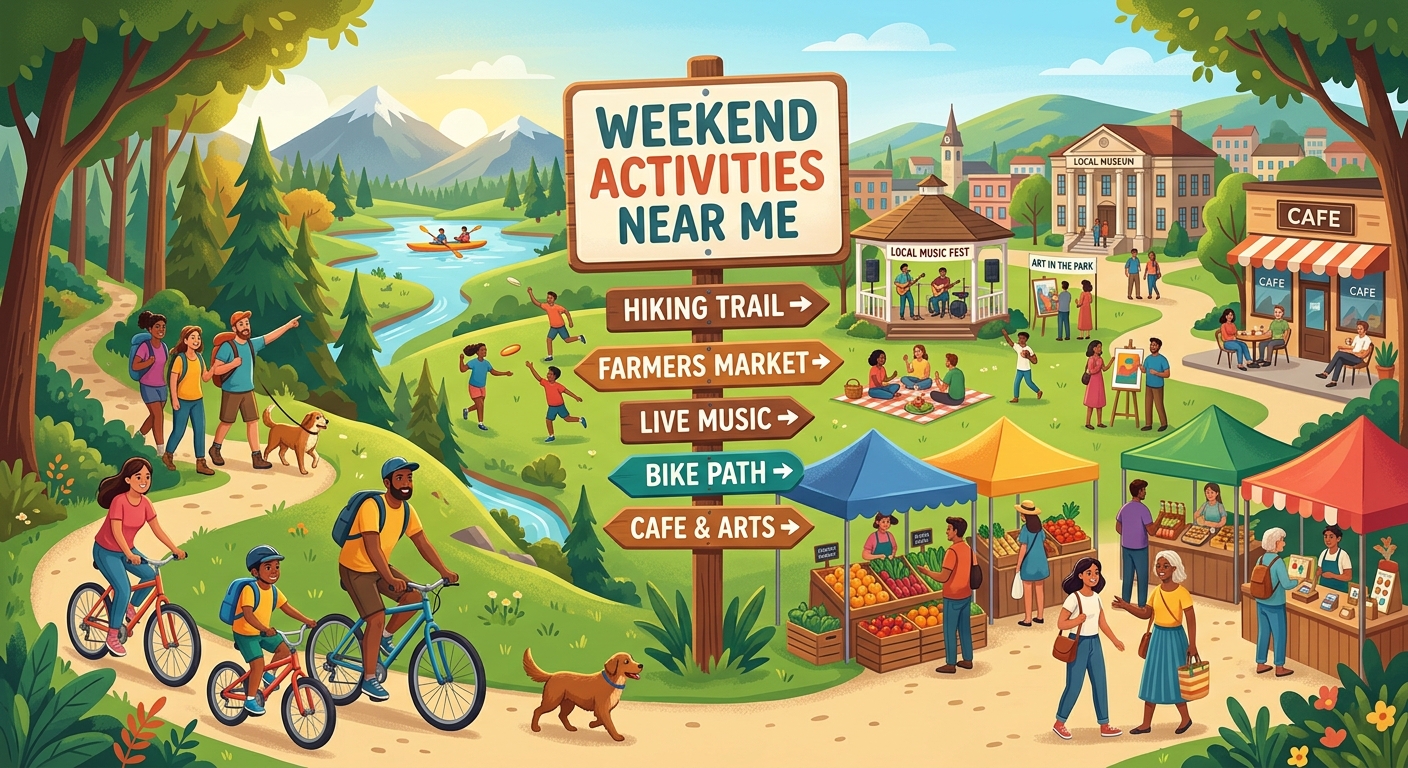
When in doubt, the best all-around weekend activities near me are the ones that work for a broad range of people and don’t require perfect planning. These are the outings we keep returning to because they are easy to understand, usually available, and flexible enough to fit different moods. Think public markets, museum afternoons, scenic walks, live music at smaller venues, neighborhood food crawls, bowling, comedy, or a local festival with multiple things to do in one place. These are the plans that often deliver the best ratio of effort to enjoyment, especially if you’re trying to make a weekend feel special without overcomplicating it.
The key advantage of all-around picks is that they reduce decision fatigue. You don’t have to know exactly what everyone wants as long as the plan has enough built-in variety to keep the group happy. In 2026, people are increasingly choosing “micro-adventures” over giant all-day trips, and that shift makes local weekend outings even more attractive. A short exhibit followed by coffee, a waterfront walk plus dinner, or a market with live music and snacks can feel like a full weekend experience without taking over the entire day. From experience, those are often the plans people remember most because they feel easy, social, and real.
For first-time planners, these options are also safer bets. They’re usually straightforward to book, easy to cancel or change, and not too dependent on perfect weather or perfect timing. If you’re building a weekend around a group that can’t agree, start here. Then use the more specialized sections in this guide to narrow by budget, weather, kids, date night, or vibe.
Best overall activities for mixed groups and first-time planners
Mixed groups are where all-around activities shine. If you have friends, a partner, or family members with different interests, the best plan is one where people can wander, snack, sit, explore, and split off for a bit if needed. Public markets, open-air festivals, museum campuses, waterfront promenades, and food halls work especially well because they naturally create multiple mini-experiences in one trip. You can talk, browse, people-watch, and still feel like you did something substantial.
For first-time planners, the advantage is simplicity. You don’t need a niche interest to enjoy an afternoon at a cultural festival, a scenic neighborhood, or a well-programmed public event. These outings also tend to have clear hours and location details, which makes them easier to trust. We checked several city calendars in recent seasons, and the best-performing events usually share the same traits: good signage, easy access, and enough variety to keep people engaged for one to three hours. That’s a sweet spot for most weekend plans.
Best low-effort plans when you want fun without overthinking
Low-effort doesn’t mean boring. It means the plan doesn’t require endless coordination, complex reservations, or a long travel time. Some of the best low-effort weekend ideas are neighborhood brunch, a movie, a local brewery patio, a park with a good walking loop, or an early evening comedy set. These plans work because they have a natural start and end point, and they don’t punish you if the group is running late. They also let you decide in real time how long to stay.
If you’re feeling mentally tired, prioritize places where the entertainment is built in and the logistics are simple. A small live music venue with a food menu, a museum with timed entry, or a neighborhood arcade bar can keep the energy up without making you plan every minute. Our team’s local pick for low-effort weekends is usually something close to home with a clear backup. That might mean a café, gallery, bookstore, or indoor market that can turn into dinner if everyone is having a good time.
Best high-value options for memorable weekends
High-value weekend activities are the ones that feel richer than their price tag. These are often not the most expensive outings; they’re the ones that deliver a lot of story-worthy moments. Examples include a sunset boat ride, a tasting menu, a special exhibit, an outdoor concert, a seasonal festival, or a guided walk in a historic district. These plans often become the “remember when we did that?” outings, which is why they’re worth considering when you want to make a normal weekend feel meaningful.
In our experience, high-value activities often combine several elements: atmosphere, novelty, and a strong sense of place. A rooftop jazz set, a waterfront dinner, or a day trip to a neighboring arts district can feel bigger than the actual time commitment. If you’re celebrating something or just want a weekend that stands out, this is where you should look first. Just be sure to check ticket release times and popular reservation windows, because the best high-value experiences are often the first to sell out.
Best same-day picks that usually have availability
Same-day plans are a lifesaver when the weekend arrives and nobody has committed to anything. The best same-day options are activities that accept walk-ins, have frequent start times, or spread people out naturally. Think museums, bowling alleys, casual live music bars, local parks, arcades, café districts, and markets. Some fitness and recreational activities, like climbing gyms or indoor sports centers, also work well because they typically have open slots or day passes. If you’re booking late, prioritizing flexibility matters more than chasing the “perfect” plan.
We’ve found that availability improves dramatically if you plan earlier in the day or choose a venue with multiple session times. Saturday afternoon is often the hardest window because demand is high and everyone wants the same thing. If your schedule is open, grab morning or late-evening slots for better odds. Gidly’s browsing tools are helpful here because they let you skim current listings, compare options, and move quickly when something good is still open.
Mini comparison of top picks by price, duration, and audience
Below is a quick snapshot of the most dependable all-around weekend picks. Use it to narrow your options before you dive deeper into the more specific sections later in this guide. This is especially useful when you’re planning for a group and need a compromise that still feels fun. A simple comparison can save a surprising amount of time.
| Activity | Typical Price | Typical Duration | Best For |
|---|---|---|---|
| Public market or food hall | Free entry; $10–$30 per person | 1–3 hours | Friends, couples, families |
| Museum or gallery | $0–$30 | 1.5–3 hours | Solo, date night, culture lovers |
| Local live music | $10–$50 | 2–4 hours | Couples, friends, nightlife |
| Park, trail, or waterfront walk | Free | 45 minutes–half day | Everyone, especially budget seekers |
| Comedy or entertainment venue | $15–$75 | 1.5–3 hours | Groups, date nights |
Free weekend activities near me
Free weekend activities near me are the backbone of smart local planning, especially when you want fun without spending much. The best free options are usually not “nothing to do” filler; they’re the kinds of outings people would happily pay for if they had to. Public parks, waterfronts, historic districts, community festivals, outdoor art, library events, and museum free hours can all fill a weekend with surprisingly little cost. The trick is knowing where to look and how to avoid the hidden expenses that can sneak in after parking, transit, or food.
In most cities, free activities are strongest in the daytime and in neighborhoods with active civic programming. Spring through fall tends to be especially good for markets, street fairs, live outdoor performances, and public garden visits. Winter still has plenty to offer if you know where to look, such as libraries, galleries, and certain museum days. The best free plans often work because they create a sense of discovery, not because they’re trying to entertain you nonstop. You get movement, people-watching, and enough novelty to feel like you did something worthwhile.
From experience, the biggest mistake people make is assuming “free” means “low value.” In reality, some of the most memorable weekends start with a free public event and end with a great meal or a spontaneous neighborhood walk. If you’re trying to stretch your budget, build around one free anchor activity and leave room for an optional add-on. That way, you enjoy the day without feeling boxed in by cost.
Free outdoor options: parks, trails, waterfronts, plazas, and public gardens
Free outdoor activities are often the easiest weekend win, especially if the weather is cooperating. A good park, trail, waterfront, or public plaza can turn into a full afternoon if the scenery is strong and the space has places to sit, snack, or people-watch. Public gardens are especially nice in spring and early summer, while waterfronts and riverside promenades become popular when temperatures rise. These spaces are also great for mixed groups because they can be as active or relaxed as people want them to be.
We like these options because they naturally scale. You can go for a 30-minute walk, or you can stay for a picnic, an outdoor workout, or a sunset. For city dwellers, the best free outdoor weekends are often the ones that reveal a neighborhood in a new way, like a hidden staircase, a scenic overlook, or a riverside path you’ve never tried. Add coffee, snacks, or a simple picnic and the outing starts feeling like a real plan rather than just a walk.
Free indoor options: museums on free days, galleries, libraries, and community centers
Free indoor activities are your best friends on rainy, snowy, or scorching weekends. Many cities offer museum free days, gallery openings, public lectures, library events, and community center programming that doesn’t cost anything to attend. These plans are especially valuable because they combine low cost with built-in comfort, which is exactly what you want when the weather turns. If you’re in a city with a strong cultural scene, you can often find a free exhibit or talk that feels more special than its price tag suggests.
Libraries are underrated weekend destinations, especially in 2026, because many now host author talks, workshops, film screenings, and family events. Community centers can also surprise you with classes, performances, and local gatherings. The key is to check official calendars early in the week, because free indoor events often fill up or require registration. If you’re hunting for value, these are among the easiest places to find it.
Free events: markets, street fairs, pop-ups, concerts, and open-air screenings
Free events are where weekend energy is often highest. Farmers markets, night markets, street fairs, neighborhood block parties, outdoor movie screenings, and pop-up performances can turn a regular weekend into something that feels locally rooted and social. These events are especially good if you want a casual outing where people can arrive and leave at different times. They’re also great if you want to pair a free activity with food, shopping, or music without committing to a full-ticket experience.
In our experience, the best free events have a clear theme and a strong location. A market in a lively district or a screening in a scenic public space is usually more enjoyable than a random pop-up with unclear logistics. Check the official event page before you go, because “free” often means free admission but not necessarily free parking or free concessions. Still, as weekend options go, these are some of the best for getting out into the city without draining your wallet.
How to find legit free options without hidden costs
The word “free” can be tricky. Some events are free to enter but charge for parking, seating upgrades, workshops, or food and drink. Others are technically free but require an RSVP, timed ticket, or donor registration that can sell out quickly. To avoid surprises, always check the event’s official page for parking fees, age limits, required sign-ins, and any “pay what you wish” wording. If an outing sounds too good to be true, there’s usually a catch, though it’s often small and manageable.
Our advice is to build a simple checklist. Confirm admission, parking or transit costs, opening hours, and whether you need to reserve a spot. If possible, read recent visitor reviews or city posts to see whether the event is still operating as advertised. Gidly’s listings can help because they are built for discovery, but we still recommend checking the source page for final details. That extra minute saves a lot of frustration later.
Best times to go for free activities to avoid crowds
If you want free weekend activities without the shoulder-to-shoulder crowds, timing matters a lot. Early morning is usually the quietest for parks, gardens, and popular public spaces, while weekday-free museum hours are often calmer than Saturday afternoons. If you’re heading to a market or street fair, getting there soon after opening can make a big difference in parking, browsing comfort, and how long you wait for food. Late afternoon can also be a sweet spot for open-air events because families with small kids have often started heading home.
The basic rule is simple: the more popular and free the activity, the earlier you should arrive. That is especially true in spring and during holiday weekends. If your schedule is flexible, choose off-peak hours and you’ll get a better experience with less stress. That’s one of the best “insider” secrets for making free weekend plans actually feel enjoyable instead of crowded and chaotic.
Cheap weekend activities near me
Cheap weekend activities near me are where planning gets practical, and honestly, where a lot of the best memories happen. You do not need an expensive ticket to have a great weekend, especially if you know how to stack low-cost experiences with a good neighborhood, a walkable area, or a place that offers a lot in one visit. In many cities, you can fill a satisfying Saturday for under $25 per person if you choose carefully. The key is to think in terms of total cost, not just admission, because transit, parking, snacks, and upgrades can change the real price fast.
Cheap doesn’t mean bare-bones. It can mean a museum with a suggested donation, a café crawl, a matinee movie, a low-cost workshop, a driving-range session, an arcade, a day pass at a climbing gym, or a food market where you share small plates. From experience, the best cheap outings are the ones with a clear time limit and a little novelty. They make the day feel special without forcing you into a big-ticket commitment. That’s why budget-friendly options are often the easiest to repeat too.
If you’re trying to stretch your money in 2026, the smartest move is to separate “activity cost” from “experience value.” A $15 event that lasts three hours and gives you something unique can beat a pricier alternative that feels generic. In other words, cheap is only a problem if it feels cheap. The best budget weekend plans feel intentional, social, and easy to enjoy.
Under-$25 ideas for individuals and couples
Under-$25 plans are ideal when you want something enjoyable without needing a big budget. For individuals, this might be a movie matinee, a museum with low admission, a self-guided neighborhood walk, a coffee and bookstore afternoon, or a casual live music set with a modest cover. For couples, the best budget plans often include one main activity and one small indulgence, like a park picnic followed by dessert or a gallery visit followed by drinks at a nearby bar. The combination matters because it gives the outing rhythm without raising the cost too much.
We’ve found that the most successful under-$25 plans are simple and location-efficient. If your activity and food are in the same neighborhood, you save on transport and keep the whole thing feeling cohesive. Another good move is to choose activities with flexible timing, such as drop-in exhibits or venues with no-reservation entry. That way, you can decide based on energy rather than worrying that you’re wasting a pre-paid slot.
Budget-friendly group activities that split well across friends
Groups are where budget planning gets interesting, because the best cheap plans are the ones that let everyone participate without awkward math. Bowling, trivia, mini golf, arcade bars, park hangouts, potluck picnics, or group museum visits can all work well if the bill splits cleanly. The most important factor is that everyone knows what they’re signing up for before the outing starts. Nobody likes the surprise of an activity that suddenly requires a ton of add-ons or separate purchases.
From experience, group budget success comes down to one rule: keep the core activity affordable and optional extras truly optional. If some people want food, drinks, or upgrades, that should not derail the whole outing. Pick a venue or event with clear pricing and simple payment structure, and you’ll avoid the classic “some people spent way more than others” problem. That’s how you make a cheap group outing still feel inclusive.
Cheap family outings with high entertainment value
Families can do a lot on a modest budget if the outing is built around movement and free play. Public parks, splash pads, playgrounds, petting zoos with low admission, affordable museums, model train exhibits, local festivals, and library programming are all strong contenders. The best family budget plans usually give kids enough to explore so the adults aren’t spending the whole day entertaining them one-on-one. If the outing also includes snacks and space to roam, even better.
Parents know the real issue is not always admission but the stack of small costs that follows. Parking, ice cream, souvenirs, and extra activities can add up fast. That’s why budget family outings work best when you set a total spend before you leave. It sounds simple, but it prevents the day from turning into a string of little purchases. A good cheap family weekend should feel fun first and financially calm second.
How to spot value: transit, parking, food, and add-on costs
Value is about the total experience. A low-cost ticket can become expensive if parking is $25, food is $18 a person, and the venue is far from transit. That’s why we always look at the full picture before recommending a cheap plan. Transit-friendly venues, free parking, or walkable districts can make a bigger difference than a $5 difference in admission. Add-on costs matter too, especially at places that rely on upsells like premium seating, rental gear, or mandatory refreshments.
To spot true value, ask four questions: Is there affordable entry? Is the location easy to get to? Will we need to spend extra just to stay there comfortably? And does the outing feel satisfying even if we don’t buy anything else? If the answer is yes to most of those, you’ve probably found a good weekend deal. That’s the kind of thinking that keeps cheap outings cheap.
Coupon, deal, and off-peak booking tips for savings
Deals are everywhere if you know where to look. Many venues offer weekday or early-evening pricing, student discounts, family passes, happy hour specials, or off-peak admission. Some events also release limited promo codes through newsletters or local partners. If you’re planning ahead, sign up for venue emails or check city event roundups early in the week. The best discounts often appear before the weekend rush kicks in.
Off-peak booking is one of the easiest ways to save. A Sunday morning class, a Friday early seating, or a late-afternoon museum entry can cost less and feel less crowded. We also recommend checking official websites before third-party ticket sites, because direct booking sometimes includes better pricing or more flexible cancellation terms. If you want to keep spending low while still doing something fun, this is one of the best habits to build.
| Budget Level | Typical Cost Per Person | Example Activities |
|---|---|---|
| Free | $0 | Parks, free museums, public events |
| Cheap | $5–$25 | Matinees, cafés, galleries, mini golf |
| Mid-range | $25–$75 | Concerts, classes, tastings, comedy |
| Premium | $75+ | Fine dining, special events, VIP tickets |
Weekend activities near me with kids / family-friendly plans
Family-friendly weekend activities near me work best when they match the ages, energy, and patience level of the kids in your group. A great family plan for toddlers is very different from a great plan for teens, and the wrong fit can turn a fun idea into a meltdown within the hour. The best family outings are usually the ones with movement, snacks, bathrooms, and a clear end point. That sounds basic, but it’s exactly why so many parents trust parks, aquariums, zoos, hands-on museums, and seasonal festivals. These activities give kids something to do while keeping the logistics manageable for adults.
In 2026, families are also looking for flexibility. You want places that don’t require a rigid schedule if nap time gets in the way or if one child loses interest early. Indoor options are essential for weather issues, but outdoor adventures are unbeatable when the goal is to burn energy. The smartest approach is to keep both types in your weekend toolkit. If the weather shifts, you can swap without losing the day.
From experience, the best family weekend plans are the ones that feel like a treat without becoming an all-day logistical project. A child-friendly museum followed by an ice cream stop can be just as memorable as a big-ticket attraction. The trick is to choose an outing that respects both the kids’ needs and the adults’ stamina.
Age-based ideas for toddlers, young kids, tweens, and teens
Age matters a lot when planning family weekends. Toddlers need open space, short travel times, and sensory-friendly environments like playgrounds, petting zoos, children’s museums, splash pads, or easy nature trails. Young kids tend to love interactive exhibits, train rides, aquarium visits, and simple scavenger hunts in parks or historic neighborhoods. Tweens often want slightly more independence, so climbing centers, creative workshops, arcade venues, or sports-based outings can hit the sweet spot. Teens usually prefer activities that feel social, cool, or slightly grown-up, like live music, mini golf, street food markets, escape rooms, or a movie plus dessert plan.
The best family-friendly weekend activities are the ones that give each age group something to latch onto. If you’re mixing ages, don’t force the outing to be too babyish or too advanced for one subset of the group. Instead, choose a place with layers. A zoo, public garden, or science museum is often ideal because toddlers can look and wander, older kids can learn and explore, and teens can stay engaged without feeling trapped. That flexibility is worth a lot on busy weekends.
Indoor family options for rainy or cold weekends
Rainy weekends do not have to be disappointing weekends. Indoor family options like children’s museums, aquariums, indoor play spaces, trampoline parks, roller rinks, bowling alleys, and interactive science centers can save the day quickly. The best ones offer a mix of movement and calm spaces, because some kids need to burn energy while others need a break. We also like library events, craft workshops, and theater performances for families because they add structure without requiring a giant time commitment.
When the weather is bad, the secret is timing. Arrive early to avoid the biggest crowds and bring snacks if the venue allows it. Check whether the activity needs timed entry, which is common for popular indoor attractions in 2026. If you’re planning around a stroller or younger child, verify elevator access and restrooms before you leave. A good rainy-day family plan should reduce stress, not add to it.
Outdoor family options for active weekends and energy burn
Outdoor family plans are great when the goal is to let everyone move freely and get tired in a good way. Parks with playgrounds, bike paths, botanical gardens, beach promenades, easy hikes, farms, and community sports spaces are all strong choices. If your kids are active, the best outings are often ones that let them alternate between structure and freedom. A nature trail followed by a picnic is a classic for a reason, and so is a day at a farm or seasonal festival with animals and open space.
Outdoor plans are especially effective in spring and fall, when temperatures are comfortable and crowds are manageable. Bring water, sunscreen, hats, and a backup layer because weather changes fast. If you’re going somewhere unfamiliar, look for bathrooms, stroller-friendly paths, shaded areas, and parking proximity before you leave. Those details often decide whether the day feels easy or exhausting.
Family events to prioritize: workshops, festivals, farms, zoos, aquariums
Not all family events are created equal. Workshops are great because kids get a hands-on takeaway, while festivals offer variety and movement. Farms and petting zoos are especially good for younger children, and aquariums or science centers work well across ages because they combine visual interest with learning. These are the kinds of weekend activities near me that tend to hold attention longer than a plain playground visit because they create a sense of discovery.
We checked current trends in family programming for 2026, and experiential events are still growing. That means more makers’ workshops, seasonal festivals, interactive exhibits, and local collaborations between museums and community groups. If you want an outing that feels fresh, scan official calendars for limited-time exhibits and weekend family programming. Those are often the best value because they’re educational, memorable, and easy to talk about afterward.
Practical parent checklist: toilets, strollers, snacks, naps, and parking
Parents know the success of a family outing often comes down to logistics, not the headline attraction. Toilets should be easy to find, especially with younger kids. Stroller access matters if your child is small or if the venue requires a lot of walking. Snacks can prevent meltdowns, and nap schedules can make or break the timing of the day. Parking also matters more than many guides admit, because a good parking setup can reduce the entire mental load of the outing.
We suggest making a checklist before you leave. Confirm restroom access, stroller rules, parking cost, and whether outside snacks are allowed. If the venue is large, ask whether there’s a quiet room, family restroom, or shaded area to take breaks. This is the difference between “that was fun” and “we are never doing that again.” Families deserve better than guesswork.
| Age Group | Best Activity Types | Planning Note |
|---|---|---|
| Toddlers | Playgrounds, petting zoos, children’s museums | Short visits, naps, stroller access |
| Young kids | Aquariums, farms, scavenger hunts, parks | Snacks, bathrooms, easy transit |
| Tweens | Climbing, workshops, arcades, sports | Give them some independence |
| Teens | Concerts, food halls, escape rooms, movies | Choose something social and not too childish |
Weekend activities near me for date night
Date night weekend activities near me are best when they feel intentional, easy to enjoy, and just a little bit special. You do not need a big production to make a great date work. In fact, some of the best date nights are simple: a scenic walk, a good meal, live music, a museum after hours, a movie, or a neighborhood bar with a great atmosphere. The key is making the outing feel like shared time, not an errand. Weekend date nights are also a chance to slow down, since weekday dates often get squeezed by work and routine.
We’ve noticed that couples in 2026 are leaning into experiences more than just reservations. They want something they can talk about afterward, whether that’s a tasting, a concert, a pop-up exhibit, or a late-night dessert stop. That means the most successful date plans often mix one anchor activity with one small surprise. A dinner reservation plus a stroll, or a show plus a cocktail bar, creates rhythm and keeps the night from feeling flat. Location matters too, because walkable districts make date nights feel smoother and more romantic.
If you’re planning a first date, keep the stakes low and the conversation easy. If it’s an established relationship, choose something that feels like a treat. Either way, the best date-night strategy is to pick an activity that leaves room for spontaneity. The best dates usually are not overplanned.
Easygoing first-date ideas near you
First dates are all about comfort, conversation, and a little bit of personality. Coffee shops, wine bars, casual galleries, food markets, low-key live music, and daytime walks are all excellent options because they give you something to talk about without locking you into a long commitment. These plans also make it easy to leave gracefully if the chemistry isn’t there, which is useful even when nobody says it out loud. On a first date, the best weekend activity near me is usually one that feels relaxed but not lazy.
We recommend choosing a place that naturally supports conversation. Loud clubs, complex sports events, or dinner-only plans can make first dates harder than they need to be. Instead, look for something with motion and breaks, like browsing a bookstore, visiting a market, or taking a short scenic walk after coffee. That structure helps the date feel memorable without feeling forced. If you’re nervous, keep it simple and local.
Romantic date-night ideas for established couples
For couples who already know each other well, the best date nights usually add atmosphere or novelty. That could mean an intimate concert, a tasting menu, a rooftop cocktail bar, a spa evening, a special exhibit, or a weekend theater performance. Established couples often do best with activities that feel like a small celebration rather than a test of compatibility. The trick is to choose something that creates shared experience and gives you a reason to focus on each other.
In our experience, the most romantic outings are often the ones where you don’t need to multitask. If you can put your phones away, sit down, and enjoy the moment, the plan is probably good. Consider timing too: sunset views, late-evening performances, and after-dinner dessert stops often turn a simple outing into a romantic memory. Small details matter more than price when it comes to date-night success.
Date night by vibe: active, artsy, food-focused, or low-key
It helps to plan date night by vibe instead of just by venue. Active dates include bowling, mini golf, ice skating, climbing, bike rides, or dancing. Artsy dates might mean galleries, theater, poetry nights, or live jazz. Food-focused plans can be brunch, a tasting tour, or a chef-led dinner. Low-key dates may be as simple as a café crawl, bookstore browsing, or a scenic neighborhood walk with a drink stop.
This vibe-first method works because it aligns with mood, not just logistics. If one person wants excitement and the other wants calm, pick a plan with both: an exhibit plus dinner, a walk plus dessert, or a show plus drinks. That kind of hybrid approach is often the easiest way to make both people happy. It also keeps weekend planning from becoming a debate over the “best” option.
Add-ons that turn a simple outing into a memorable night
Small add-ons make a huge difference on date night. A bouquet, a reserved window seat, a dessert stop, a scenic detour, or a playlist for the drive home can transform an ordinary outing into something that feels thought-through. The best add-ons are not expensive; they’re deliberate. Even just choosing a neighborhood with a nice walking route after dinner can change the whole mood of the evening.
Our favorite insider move is to plan one surprise. It doesn’t have to be elaborate. Maybe it’s a hidden dessert bar, a late-night bakery, or a nearby overlook. When the main plan is simple, a small extra creates the feeling that you put real care into the night. That’s what people remember.
Best backup plans if weather or reservations change
Date nights can fall apart quickly if the weather shifts or the reservation doesn’t land. The best backup plans are indoor venues with flexible timing: a museum, a wine bar, a movie, a comedy show, or a casual restaurant district where you can pivot easily. If your original plan was outdoors, choose a nearby indoor option so you don’t lose the whole evening to weather. It’s also smart to know which venues accept walk-ins, especially on weekends when cancellations happen.
Have one backup idea before you leave the house. That way you can change direction without stress. If you’re browsing Gidly, use it to compare nearby options and keep your second choice ready. Good planning is often just having the right fallback.
Weekend activities near me with friends or groups
Weekend activities near me with friends or groups should be social, flexible, and easy to coordinate. Group planning gets tricky because everyone has different budgets, energy levels, and tastes, so the best ideas are usually the ones that allow some freedom within a shared plan. Think trivia, bowling, live music, food halls, outdoor markets, sports bars, escape rooms, or a daytime festival where people can split off and regroup. These are the outings that work because they create a shared anchor without making every minute highly structured.
From experience, groups are happiest when the plan doesn’t rely on one person performing all the coordination. If the activity is walk-in friendly or easy to reserve, that’s ideal. It also helps when the location has food, drinks, and seating available so nobody is forced to solve multiple problems at once. In 2026, people are leaning into “one place, many options” formats for group weekends because they make scheduling easier and reduce friction. That’s especially true for birthdays, reunions, and casual catch-ups after a long stretch of busy weeks.
When choosing a group plan, the most important question is whether the outing is inclusive. Can people join late, leave early, or spend differently without making the experience awkward? If yes, you probably have a good group activity. If not, reconsider.
Social plans for small friend groups
Small groups tend to do well with activities that allow easy conversation and light competition. Trivia nights, karaoke, mini golf, board game cafés, casual brewery visits, and local live music are strong choices because they keep the energy up without requiring too much coordination. A small group can move faster, so you can be a little more adventurous if everyone’s on board. Still, the best plans usually leave room for food and a relaxed post-activity hang.
One advantage of small groups is that you can choose more specific experiences. A quirky museum, a themed bar, a tasting event, or a niche pop-up becomes more realistic because fewer people need to agree. We recommend choosing a venue that can handle conversation well, especially if it’s been a while since everyone last got together. The outing should feel like a reunion, not a logistics puzzle.
Bigger-group ideas that work for birthdays or reunions
Bigger groups need space, seating, and a low-friction payment setup. That’s why venues like beer gardens, food halls, outdoor patios, bowling alleys, and game centers work so well. They let people chat in different combinations and don’t require everyone to arrive at the exact same moment. For birthdays or reunions, the best setup is often a venue with a clear meeting point and multiple activity zones. That makes it easier to keep everyone together without making them feel trapped.
In our experience, bigger groups should avoid overly formal or highly timed events unless everyone truly wants that. A show or dinner can still work, but only if the RSVP list is tight and the timing is locked in. Otherwise, choose something more flexible. The best big-group weekends are the ones where the venue does part of the hosting work for you.
Competitive and interactive options: games, trivia, escape rooms, sports
If your group likes a little competition, interactive activities are usually the most fun. Trivia, escape rooms, darts, shuffleboard, bowling, arcade bars, indoor golf simulators, and amateur sports watching can create instant energy. These plans are especially good when the group wants something more engaging than just sitting at a table. They also work well for mixed friend groups because the shared objective gives people a reason to interact even if they don’t know each other well.
The main thing to watch is intensity. Escape rooms and sports can be fun, but they’re not always ideal if half the group wants to chill. A smart compromise is to choose a venue where competition is optional. That way, people can join in without feeling pressured. If you’re not sure the group will like it, look for venues with more than one thing to do.
Where to go when the group has different budgets and interests
This is where flexible venues shine. Food halls, markets, casual nightlife districts, museum campuses, and festival zones let people spend differently without splitting the group apart too much. Someone can get a coffee while another gets cocktails, or one person can browse while another heads to the bar. The trick is choosing a place with enough variety that everyone feels accommodated. That’s much easier than forcing every person into the exact same activity.
If budgets vary, avoid plans with mandatory high per-person costs. Instead, choose a venue where the base entry is free or inexpensive and purchases are optional. That keeps the outing social and avoids awkwardness. In group settings, accessibility of price is as important as accessibility of location.
Group planning shortcuts: reservations, split bills, transit, and timing
To save your sanity, keep group planning simple. Use reservations when needed, but don’t overbook if the plan is casual. Choose a place with clear transit or parking options. Agree on a rough arrival window so people aren’t waiting around forever. And if you’re paying separately, make sure the venue is comfortable with split checks or individual tabs. Those little logistics matter more than people realize.
Our best advice is to send a concise plan in the group chat: where, when, budget, and backup. That reduces confusion and gives people time to say yes or no. For larger gatherings, it’s worth checking the venue’s official page for party policies, group minimums, and cancellation rules. A little planning up front can prevent major frustration later.
Solo weekend activities near me
Solo weekend activities near me are some of the most underrated plans out there. Going alone lets you move at your own pace, follow your curiosity, and choose exactly what you want without compromise. That can be restorative if your week has been hectic or social overload has worn you out. It can also be exciting because you’re more likely to discover hidden corners of your city when you’re not trying to coordinate with anyone else. In many ways, solo weekends are the most flexible weekends of all.
The best solo plans usually balance comfort and novelty. You want enough structure to feel like you made a plan, but not so much structure that it feels heavy. Museums, bookstores, nature walks, cafés, cinema, classes, and food markets are all strong choices because they let you dip in and out at your own pace. From experience, solo outings become much more enjoyable when you choose a place where being alone looks normal, not awkward. That’s especially important in nightlife-heavy areas, where the vibe can otherwise feel overly social.
In 2026, solo exploration is increasingly common, especially among city dwellers who want more intentional downtime. If that sounds like you, treat your solo weekend like a reset, not a test. The goal is to leave feeling better than when you started.
Best solo activities for recharge and exploration
Recharging solo can look different for everyone. Some people want silence and a long walk, while others want stimulation without conversation. Parks, libraries, independent bookstores, museums, botanical gardens, and scenic neighborhoods all work well because they let you engage at your own speed. If your week has been loud and busy, a solo outing that includes movement and a little quiet can make a huge difference. You don’t need to “do the most” for it to count.
Exploration is often the biggest solo advantage. You can take the side street, linger at the exhibit, or stop in a café just because it looks interesting. That freedom turns a simple weekend into a small adventure. The best solo outings often feel serendipitous rather than optimized, and that’s part of the appeal.
Solo cultural plans: museums, bookstores, cinema, theater
Cultural outings are perfect solo activities because they don’t require conversation to be rewarding. A museum exhibit can hold your attention for an hour or two, a bookstore can turn into a full afternoon, and a film or theater performance gives you a structured experience with built-in atmosphere. If you want a meaningful weekend activity near me that still feels easy, these are among the best options.
We also like cultural outings because they tend to work in almost any weather. They’re good for rainy weekends, hot weekends, or days when you just want to feel a little more connected to your city. If you’re going alone, look for late openings or matinee times to avoid crowds. That often creates the most comfortable experience.
Solo active plans: walks, runs, classes, climbing, cycling
Active solo weekends can be incredibly refreshing, especially if you spend the week at a desk. A long walk, a bike ride, a fitness class, a climbing gym session, or an easy trail run can reset your energy quickly. These outings are great because they’re self-paced and easy to schedule around the rest of your day. You can make them as long or as short as you need.
If you’re new to solo fitness outings, choose places that are welcoming to drop-ins and have clear rules. Gyms, studios, and public trails usually offer the easiest start. Safety and comfort matter too, so choose routes and times that feel good to you. A solo active weekend should leave you feeling stronger, not more stressed.
Solo foodie plans: markets, cafes, tastings, hidden gems
Food is one of the best solo weekend categories because it doesn’t require a companion to be enjoyable. Farmers markets, specialty cafés, bakery crawls, tasting counters, and food halls can all become great solo experiences. You can sample, linger, people-watch, and move on whenever you feel ready. That flexibility makes food outings especially easy to recommend for solo explorers.
Hidden gems matter here. A small neighborhood café, a tucked-away bakery, or a quiet lunch counter can be more satisfying than a famous place with a long line. We like to suggest solo food plans that feel local rather than touristy, because they often produce the most genuine weekend experience. If you’re searching on Gidly, filter for nearby food events or culinary experiences to find something that fits your pace.
Safety and comfort tips for going out alone
Solo outings should feel empowering, not risky. Share your plans with someone if you’re going somewhere unfamiliar, especially at night. Check the venue’s hours before leaving, and pay attention to transit schedules if you’re relying on public transportation. If you’re comfortable, stick to neighborhoods that feel active and well-lit, especially for evening activities. Comfort tends to matter more than bravado when you’re deciding what to do alone.
Also think about practical comfort. Bring headphones, a charger, water, and a backup option in case your first stop is full. If you’re heading to a crowded event, arrive early so you can settle in. Solo weekends are best when they feel intentional and calm, with enough flexibility to change course if needed.
Indoor weekend activities near me for rainy days or bad weather
Indoor weekend activities near me are essential when the weather turns, and they’re often better than people expect. Rain, wind, extreme heat, or winter cold can all make indoor plans feel like a relief rather than a compromise. The best indoor activities give you structure, comfort, and something to talk about afterward. Museums, immersive exhibits, comedy clubs, bowling, cinemas, climbing gyms, indoor sports, and family entertainment centers all shine when the weather is bad outside. If you plan around the right indoor venue, you can still have an excellent weekend even when the forecast looks terrible.
One thing we’ve noticed in 2026 is that indoor experiences are becoming more varied and more social. Cities are investing in interactive exhibits, themed bars, multi-use arts spaces, and activity-driven venues that do more than just shelter you from rain. That’s good news for weekend planners, because it means your backup plan can actually become your main plan. A rainy weekend no longer has to feel like a canceled weekend.
The best indoor outings are also predictable in a good way. They usually have clear admission policies, operating hours, and climate control, which makes them less stressful to book. If the weather is uncertain, indoor plans give you confidence to go out anyway. That alone can save a weekend.
Indoor culture: museums, exhibitions, galleries, immersive experiences
Culture is one of the smartest rainy-day categories because it combines comfort and depth. Museums, galleries, and exhibitions are especially strong when you want a calm but interesting outing. Immersive experiences are also popular now because they add movement, visuals, and storytelling to the usual museum format. These activities can work for solo visitors, couples, or small groups, and they usually have enough variety to hold attention for one to three hours.
If you’re choosing between multiple indoor cultural options, look for recent exhibits or limited-time installations. These tend to feel fresher and more worth the trip. We also recommend checking official venue websites because opening hours and timed entry can change, especially on weekends. Indoor culture works best when you know exactly what you’re getting before you arrive.
Indoor entertainment: comedy, movies, bowling, arcades, live shows
Entertainment venues are ideal rainy-day picks because they create immediate atmosphere. Comedy clubs, cinemas, bowling alleys, arcades, and live show venues all give you a strong “we went out” feeling without depending on the weather. They’re also easy to pair with food or drinks, which makes them perfect for date nights and friend groups. If the forecast is ugly, these are the kinds of plans that still feel celebratory.
The best indoor entertainment choices are usually the ones with a clear start time and a natural ending point. That means you can plan your meals and transit without guessing. If you’re booking late, look for matinees or second-show options, since those are often more available. For a safe bet, pick a venue that has both activity and seating, so the group can relax between bursts of energy.
Indoor fitness and active fun: climbing gyms, trampolines, swim centers
Sometimes bad weather is the best excuse to get moving indoors. Climbing gyms, trampoline parks, indoor swimming centers, ice rinks, and fitness studios can turn a gloomy day into a high-energy one. These outings are especially good for groups or families who need to burn off steam. They also work well for people who don’t want the “sitting around indoors” vibe that can make rainy weekends feel stale.
Before you go, check whether you need a reservation, waiver, or specific gear. Many active indoor venues have age or shoe requirements, so it’s worth reading the rules in advance. If you like the idea of doing something physical but don’t want a full workout, choose an activity with beginner-friendly pacing. That keeps the outing fun rather than intimidating.
Family-friendly indoor rescue plans
Families need backup plans more than anyone when the weather turns. Indoor play spaces, aquariums, science centers, children’s museums, libraries, and roller rinks can all save the weekend. The best family indoor plans are the ones that spread kids out enough to avoid boredom while still keeping the adults sane. If the venue has food, seating, and restrooms, that’s a big win.
Parents should also think about timing. Arriving early can reduce crowd stress and make parking easier. For younger kids, bring familiar snacks and a change of clothes if there’s water play or active play involved. The right indoor family plan can feel just as satisfying as an outdoor one, especially when everyone else is stuck at home.
Weather-aware planning tips and last-minute swaps
Weather changes are one of the biggest reasons weekend plans fall apart. The best defense is to keep a flexible shortlist: one outdoor option, one indoor option, and one fully free backup. Check the forecast the night before and again the morning of your outing, especially in spring and fall when conditions can flip quickly. If you’re driving, also check whether roads, parking, or trail conditions may be affected.
Last-minute swaps work best when you’ve already narrowed your radius. If your original outdoor plan gets washed out, an indoor choice within the same neighborhood is easier to salvage. That’s why location-aware planning matters so much. Gidly’s near-me browsing makes those swaps easier because you can quickly move from one category to another without starting from scratch.
Outdoor weekend activities near me for good weather
Outdoor weekend activities near me are at their best when the weather is good and the city feels open. Sunlight changes everything, and even ordinary places start to feel worth exploring. Parks, hikes, bike rides, waterfronts, scenic walks, outdoor sports, beer gardens, rooftop patios, and outdoor markets all become top-tier weekend options when conditions are right. Outdoor plans also tend to be more affordable and easier to scale than ticketed indoor events, which is part of why they remain so popular.
In 2026, outdoor weekend discovery is more experience-driven than ever. People want a view, a vibe, and a place to linger, not just a route from point A to point B. That’s why neighborhoods with trails, waterfront access, public art, or strong patio culture often become weekend magnets. If you’re lucky enough to have good weather, use it. The best outdoor plans are often the simplest ones, as long as the setting is good.
We also like outdoor plans because they pair naturally with local food and social time. A walk can become coffee, a bike ride can become lunch, and a market can become an afternoon hang. If you want to make the most of a beautiful weekend, start outside.
Parks, hikes, bike rides, waterfronts, and scenic walks
These are the classic good-weather weekend anchors for a reason. A scenic walk or bike ride gives you movement, low cost, and a sense of place. Parks and waterfronts are especially good when they have multiple zones, like picnic areas, trails, viewpoints, and cafés nearby. If you’re in a city, the best outdoor plans often happen in neighborhoods where the sidewalks, parks, and cafés connect naturally.
For hikes and longer walks, check the trail difficulty, surface conditions, and total distance before you go. Not every scenic route is beginner-friendly, and that matters if your group has different fitness levels. We recommend picking loops or out-and-back routes that allow flexible turnaround points. That way, nobody feels stuck if they want to shorten the outing.
Sports and active adventures: kayaking, paddleboarding, golf, climbing
If you want something more active than a walk, outdoor sports can make the weekend feel exciting fast. Kayaking, paddleboarding, golf ranges, climbing walls, rowing, and casual open-air sports are all great options when the weather is stable. These activities are especially strong for friends or couples who want a little challenge and a memorable story. They also work well when you want to feel accomplished by the end of the day.
Before you book, check equipment requirements, skill level, and whether you need a lesson or pass. Outdoor active adventures usually depend more on weather and safety conditions than casual park plans do. If the forecast is mixed, choose something with easy cancellation or a venue that can reschedule. That keeps the outing fun instead of stressful.
Outdoor social spots: beer gardens, patios, markets, outdoor cinemas
Outdoor social spots are perfect when you want sunshine plus atmosphere. Beer gardens and patios are especially strong for groups and date nights because they combine food, drinks, and open-air comfort. Farmers markets, art markets, and outdoor cinemas also work well because they let you browse, snack, and linger. These spots often feel like the heartbeat of weekend city life in spring and summer.
The best ones are busy enough to feel alive but not so crowded that you can’t move. If you’re deciding between several options, choose the neighborhood with the best walkability and food nearby. That makes it easy to extend the outing naturally. Outdoor social plans are often the easiest way to turn a few hours into a whole afternoon.
What to check before you go: weather, trail conditions, sun, and access
Outdoor plans are only fun if the basics are covered. Check the weather by hour, not just by day, because wind and rain timing matter. Trail conditions, park closures, beach access, and event cancellations can change on short notice. Sun exposure also matters, especially in summer, so bring water, sunscreen, and a hat if you’ll be out for a while.
Access is another big one. Parking, transit, restroom availability, and trailhead entry can dramatically affect how smooth the day feels. If you’re going with kids or older adults, choose places with easy access and plenty of shade. The best outdoor weekend is one where the setup is as enjoyable as the destination.
Best times of day for outdoor activities
Morning is usually best for energy and crowds, especially on hot days. Early afternoon can work well if you want markets, sports, or a longer hangout, but it’s often the hottest and busiest window. Sunset is ideal for views, patios, and romantic walks, though popular spots can fill fast. If you’re trying to avoid crowds, get there early or choose a less obvious neighborhood location.
From experience, the best outdoor weekends often start with a walk or activity and end with a relaxed meal. That gives the day a natural rhythm. If you’re planning around weather, keep in mind that good outdoor timing can make an average activity feel much better. The right hour matters almost as much as the right place.
Live music, concerts, and nightlife this weekend near me
Live music, concerts, and nightlife near me are some of the most exciting weekend options because they turn an ordinary night into a memory. Whether it’s a major concert, a small club set, a DJ night, or a late bar with a playlist and a crowd, nightlife gives you energy that daytime plans can’t always match. The best options depend on how much you want to spend, how late you want to stay out, and whether you want something intimate or high-volume. In 2026, local nightlife is increasingly experience-based, with more themed events, ticketed showcases, and venue-specific atmospheres that make the choice feel personal.
From experience, live music is one of the easiest categories to recommend because it works for so many moods. A small jazz room can feel romantic, a neighborhood gig can be casual and social, and a bigger concert can feel like a full night out. Nightlife also matters because it gives weekends a distinct ending, which makes the whole outing feel complete. If your city has a strong music scene, this is one of the best places to start looking.
Be sure to check age limits, cover charges, and transport before committing. The best nightlife plan is one that matches your energy and your ride home.
Concerts and intimate live music venues
Concerts and smaller live music venues are great weekend anchors because they create a shared focus. Intimate venues tend to be especially enjoyable since the room feels alive without being overwhelming. You can usually hear the performance, talk before or after, and get closer to the music scene your city actually has. These are often better for first-timers than giant venues because they feel more manageable and local.
Look for venues with clear set times, easy entry rules, and nearby food or drinks. Smaller rooms can fill quickly, so official venue pages are worth checking before you go. In many cities, the best live music weekends happen in neighborhoods known for bars and creative spaces rather than in the biggest arenas. That’s where the hidden gems live.
Clubs, DJ nights, late-night lounges, and after-hours plans
If your idea of a weekend well spent includes dancing and staying out late, nightlife venues can be the right fit. Clubs, DJ nights, and late-night lounges give you a different kind of social experience, one that is more about energy and atmosphere than conversation. These spaces are ideal for friend groups or celebratory nights, especially when everyone wants to dress up a bit and make the evening feel special. The best ones tend to have a clear identity, so you know what kind of crowd and music to expect.
It’s smart to check dress code, age policy, and cover charges before heading out. Some venues are casual, while others are stricter than they look. Late-night plans also require transport planning, because ride availability and transit schedules can change later at night. That’s not glamorous, but it’s part of making nightlife enjoyable instead of stressful.
Open mics, jazz nights, comedy clubs, and local showcases
Local showcases are often the sweet spot between casual and memorable. Open mics, jazz nights, comedy clubs, and artist showcases tend to be affordable and full of personality. These events are especially good if you want something more interesting than a standard bar night but less demanding than a formal concert. They also support local creators, which adds a nice feel-good dimension to the outing.
Comedy clubs and jazz rooms are particularly strong for date nights and small groups because they give you something to talk about after. Open mics can be hit or miss, but when they’re good, they’re fantastic for discovery. These events are often best checked through local calendars or Gidly listings because they can be scattered and hard to find manually.
How to choose between tickets, cover charges, and venue vibe
Nightlife gets easier when you compare the real cost, not just the headline price. A ticketed concert may be worth more than a low-cover bar if the experience is stronger and more reliable. On the other hand, a great free or low-cover venue can beat a pricier option if the vibe is better for your group. The choice comes down to what you want from the night: music, dancing, conversation, or discovery.
We recommend checking three things before deciding: the crowd style, the sound level, and the timing. A venue that is too loud can ruin a date, while a quiet room can underwhelm a group that wants to party. The best nightlife choice is the one that matches your mood and your budget.
Safe late-night planning and transport tips
Night plans are better when you think ahead about how you’re getting home. Check transit times, parking rules, and ride-share availability before you go. If you’re meeting friends, set a backup meeting point in case the venue gets busy. And if you’re exploring a new neighborhood, stick to well-lit routes and active streets when leaving late. None of this is complicated, but it makes the night feel smoother and safer.
We also suggest carrying a phone charger and watching closing times. The best late-night plans are the ones where you can leave on a high note instead of rushing out because you missed the last train or parking window. Good nightlife is fun, but good planning makes it better.
Theater, comedy, exhibitions, and arts events near me
Theater, comedy, exhibitions, and arts events near me are excellent weekend choices when you want something smart, immersive, or culturally rich. These outings work well because they offer structure and content, which means you don’t have to make every minute of the day entertaining yourself. They also fit many scenarios: date night, solo outings, friends, and family-friendly evenings depending on the venue and show type. In 2026, arts programming is increasingly diverse, with more pop-up exhibitions, alternative theater, experimental performances, and hybrid event formats. That variety makes it easier to find something fresh nearby.
Arts events are often overlooked because people assume they’re expensive, formal, or hard to understand. In reality, many cities have accessible theater, comedy, gallery openings, and museum events that are affordable and welcoming. Some are even free or donation-based. If you want a weekend activity that feels different from your usual dinner-and-drinks routine, this is a great place to look.
The best arts weekends usually combine one anchor event with a neighborhood exploration afterward. That turns the outing into a fuller experience and gives you a chance to keep the conversation going.
Plays, musicals, touring productions, and fringe shows
Theater weekends can be surprisingly flexible. Big musicals and touring productions offer spectacle and polish, while fringe shows and smaller plays can feel more intimate and adventurous. If you’re trying to make your weekend feel elevated, theater is a strong choice because it creates a clear beginning, middle, and end. It’s especially good for date nights, special occasions, or cultural weekends with friends.
Check run times, age recommendations, and seating style before you buy. Some venues are more casual than others, and fringe or experimental work may be more rewarding if you enjoy trying something new. The best theater nights often happen when you pair the show with dinner or drinks nearby. That’s where the city-insider feel really comes in.
Comedy, improv, and variety nights
Comedy and improv are among the easiest arts-adjacent weekend activities because they’re social, lively, and usually more relaxed than formal theater. Comedy clubs are ideal for date nights and groups because laughter breaks the ice quickly. Variety nights and improv shows can be especially fun if you want something spontaneous and less scripted. They’re often great for people who want entertainment without too much commitment.
From experience, the best comedy nights are at venues that care about the room setup and timing. You want a place where sound, seating, and bar service all work together. Check whether the show is all-ages or 21+, because that can affect your plans. Comedy is one of the best “go out tonight” options if you want high return on a short time window.
Exhibitions, art fairs, installations, and museum late openings
Exhibitions and art fairs give weekend planning a more exploratory feel. They’re great for solo visitors, couples, and creative friend groups because they encourage conversation and curiosity. Museum late openings are especially useful if your weekend schedule is packed, because they let you do culture after work hours or later in the day. Installations and temporary exhibits are worth prioritizing because they feel time-sensitive and unique.
We recommend checking official museum calendars for special exhibitions, member nights, or late entry windows. Some of the best art experiences are not the biggest ones; they’re the smaller shows that feel carefully curated. If you want a hidden gem, follow local arts newsletters and neighborhood pages as well as city listings. That often surfaces the most interesting weekend ideas.
When arts events are the best weekend choice
Arts events are the right choice when you want depth, conversation, and a little more meaning than a typical outing. They’re especially good on rainy weekends, colder evenings, or times when you want to slow down. They also work beautifully when you’re celebrating with someone who values culture, creativity, or thoughtful experiences. If your group is tired of the same old restaurant routine, arts events are a strong reset.
They’re also practical. Many arts venues are centrally located, transit-friendly, and easy to pair with dinner or dessert. That makes them efficient as well as enriching. If you’re stuck deciding, arts often win because they’re both a plan and a conversation starter.
How to find hidden cultural gems nearby
Hidden gems usually live in neighborhood arts centers, independent theaters, local galleries, and community performance spaces. They don’t always rank at the top of broad search results, which is why local discovery tools are useful. Check arts calendars, neighborhood newsletters, and venue social pages for events that haven’t been blasted everywhere yet. Those are often the best values and the most memorable experiences.
We also recommend looking beyond the obvious weekend schedule. Preview nights, artist talks, gallery walks, and small showcase events often offer more intimacy than bigger productions. Gidly helps here because it organizes local event discovery in a way that makes these smaller finds easier to surface. If you love feeling ahead of the crowd, this is where to start.
Food and drink weekend activities near me
Food and drink weekend activities near me are some of the most reliable plans because they combine pleasure, social time, and a clear destination. Weekend food outings can be as simple as brunch or as elaborate as a tasting event, brewery tour, or chef-led experience. The best thing about food-based plans is that they work for nearly every group: couples, families, solo explorers, and friends all have an easy entry point. In cities with strong dining scenes, food and drink events often tell you a lot about the neighborhood too.
In 2026, culinary experiences are increasingly social and experience-driven. People are looking for markets, pop-ups, chef collaborations, themed brunches, and tastings that feel special without requiring a full fine-dining commitment. That’s good news for weekend planners because it means there are usually more options at different price points. It also means you can often pair food with another activity, like live music, a market, or a waterfront walk.
Food outings are especially good when you want a low-pressure plan that still feels like a treat. The right meal, market, or tasting can make the entire weekend feel organized and satisfying.
Food festivals, farmers markets, and night markets
Food festivals and markets are some of the best weekend activities near me because they pack a lot into one visit. You can sample different things, move at your own pace, and usually find an atmosphere that feels distinctly local. Farmers markets are especially strong in the morning, while night markets add more energy and often include music or performance. If you want a plan that combines browsing, food, and a bit of fun, these are hard to beat.
The main thing to watch is crowd size. Popular markets can get busy, so arriving early helps a lot. Check whether vendors accept cards or only cash, and consider bringing a reusable bag if you plan to shop. Some of the best weekend finds happen at the stalls you didn’t expect to love. That’s part of the appeal.
Tasting events, brewery visits, winery experiences, and distilleries
Tastings and beverage experiences are excellent for adults who want something a little more polished. Brewery visits, winery tastings, and distillery tours are popular because they feel both social and educational. They’re also easy to customize: some places are laid-back and casual, while others are more refined. If you’re planning a date, a small group outing, or a celebratory afternoon, these experiences are often a strong fit.
Check age requirements, reservation policies, and transport ahead of time, especially if alcohol is involved. Some venues include tasting flights in the price, while others charge separately. The best value comes from venues with good atmosphere and clear pricing. If the place also has food or a scenic outdoor area, even better.
Brunch, bottomless brunch, afternoon tea, and chef-led experiences
Brunch is practically a weekend ritual in many cities, and for good reason. It’s social, flexible, and easy to combine with a walk, shopping, or a gallery stop. Bottomless brunch is more of a celebratory choice, while afternoon tea offers a slower, more polished pace. Chef-led dinners or tasting menus are ideal when you want the meal itself to be the main event.
For food-focused weekends, think about the whole arc of the day. Brunch can anchor a Saturday morning, while a special dinner can cap off the evening after an afternoon event. The best food plans are the ones that leave you satisfied without making the day too heavy. That’s where timing and pacing matter.
Food-focused plans for couples, families, and friends
Couples often do best with a restaurant plus a short walk or dessert stop. Families often do best with casual markets, bakeries, or daytime food halls where kids can move around. Friends usually enjoy shared plates, tasting flights, or neighborhoods with lots of options so nobody gets stuck on one cuisine. The same category looks different depending on who’s going, which is why scenario-based planning matters so much.
If you’re unsure what to choose, start with the food, then build around it. A great meal can be the anchor for almost any weekend. Food is one of the easiest ways to make a local plan feel intentional, even if you booked it at the last minute.
How to budget for food-and-drink weekends
Food outings can stay affordable if you set boundaries. Decide whether you’re doing a light snack stop, a full meal, or a splurge experience. Be realistic about drinks, taxes, gratuity, and transportation. Budgeting this way prevents the all-too-common “we only went for brunch and somehow spent way more than planned” problem.
For lower-cost weekends, choose one food anchor and one inexpensive follow-up like coffee, dessert, or a walk. For mid-range weekends, tastings and chef experiences can feel worthwhile if they’re the highlight of the day. We always recommend checking menus and price ranges in advance when possible. It makes the outing much easier to enjoy.
| Food Activity | Typical Cost | Best For |
|---|---|---|
| Farmers market | Free entry; $5–$25 per person | Families, couples, solo |
| Brunch | $20–$50+ per person | Couples, friends |
| Brewery or winery tasting | $15–$45 | Adults, date night, groups |
| Chef-led experience | $60–$200+ | Special occasions |
Neighborhood-by-neighborhood guide to weekend activities near me
Neighborhood-level planning is one of the best ways to make weekend activities near me feel truly local. Instead of thinking only in city-wide terms, focus on where the action is concentrated: downtown, arts districts, waterfronts, nightlife corridors, family-friendly zones, or suburban areas with easier parking. This approach is more practical and often more enjoyable because it reduces travel time and helps you build a better outing around a specific area. A good neighborhood often has multiple things to do in one compact radius, which is exactly what weekend planners want.
We’ve found that location-aware planning is especially valuable in larger metro areas. A downtown neighborhood might be better for shows and bars, while an arts district gives you galleries and cafes, and a waterfront gives you walking paths and views. Suburban areas can be better for families or for anyone who wants stress-free parking. In 2026, “near me” discovery is increasingly about micro-locations, not just city names, and that’s a good thing. It means better matches and fewer wasted trips.
The real trick is to match the neighborhood to your plan, not the other way around. If you want brunch and shopping, go where the walkability is strong. If you want a relaxed family day, go where parking and open space are easier. If you want nightlife, focus on the district where venues cluster. That’s the city-insider way to plan.
How to choose activities in downtown/city center areas
Downtown areas are ideal when you want variety in a small radius. You can usually find museums, theaters, restaurants, nightlife, transit access, and event venues all within a short walk or ride. That makes downtown a smart choice for dates, solo outings, and mixed groups. It’s especially useful if you don’t want to spend the weekend driving around or coordinating multiple stops.
The tradeoff is parking and crowding. Downtown weekends can be busier and more expensive, so transit or rideshare may be the easiest route. If you’re planning a downtown outing, check whether there are public garages, validation deals, or weekend parking specials. The best downtown plans often revolve around one anchor activity plus a meal or drink nearby.
Best ideas in arts districts, waterfronts, and nightlife neighborhoods
Arts districts are fantastic for galleries, coffee, niche shops, and creative events. Waterfronts are better for walks, patios, sunset views, and casual outdoor time. Nightlife neighborhoods are the go-to for live music, bars, DJ nights, and late dinner plans. Each area has a different weekend personality, so choosing the right one makes a big difference in the kind of day you end up having.
If you want hidden gems, arts districts are often the most rewarding because they combine local businesses with lower-key crowds. Waterfronts win when weather is good, while nightlife neighborhoods are best after dark or on Saturday evenings. Use the district to shape the vibe, and you’ll find that even a simple outing feels more intentional.
Family-friendly neighborhoods and daytime districts
For families, daytime districts are usually the best bet. These are the neighborhoods with parks, museums, casual dining, and easy access to public spaces. They tend to be cleaner, quieter, and easier to navigate with strollers or kids who need breaks. If you’re planning with children, the neighborhood itself should be part of the decision, not just the venue.
We also recommend looking for areas with multiple kid-friendly options close together. That way, if one stop ends early, you can pivot without losing the day. Family-friendly districts often have the most forgiving logistics, which is a big win for parents.
Suburban or outer-area picks when you want easier parking
Sometimes the smartest weekend plan is not the trendiest one. Suburban or outer-area neighborhoods often provide easier parking, bigger venues, lower stress, and more space. This can be especially helpful for families, larger groups, or anyone who dislikes downtown congestion. You may not get the same density of options, but you often gain convenience and comfort.
If your priority is low-friction fun, look for suburban malls with entertainment, regional parks, food clusters, and event venues with abundant parking. These can be excellent weekend activities near me when you want value and ease rather than urban intensity. The best plan is the one you’ll actually enjoy getting to.
‘Near me’ location prompts: near [neighborhood], near transit, near my hotel
When you’re searching, use prompts that reflect where you are in real life. Try “near [neighborhood]” if you already know the district you want, “near transit” if you’re not driving, or “near my hotel” if you’re visiting a city. These small changes make a big difference in the quality of results because they narrow the search to places you can realistically reach. They also help you find neighborhood-specific events that broad city guides might miss.
Gidly’s location-aware browsing is built for this kind of planning. It helps you filter events and things to do by proximity, which is exactly what “near me” searchers need when time is tight. If you’re in an unfamiliar city, this is one of the best ways to discover nearby options quickly.
Seasonal weekend activities near me: what’s trending now
Seasonal planning matters more than most people realize. The best weekend activities near me in spring are not always the same as the best ones in winter, and the city changes with the weather. In warmer months, outdoor events, patios, waterfronts, and festivals tend to dominate. In colder or wetter months, indoor culture, live shows, food experiences, and cozy neighborhood plans become more appealing. The best weekend planners use the season as a filter, not just the date on the calendar.
In 2026, a few trends stand out. People are choosing more local-first experiences, which means neighborhood markets, nearby festivals, and community-driven events are getting more attention. Experiential outings are also strong, especially anything that combines social time with novelty, like immersive exhibits, pop-ups, and guided food or art experiences. And because people want flexibility, hybrid plans are thriving too: think indoor/outdoor venues, walkable districts, and activities that work whether the weather is perfect or not.
The smart move is to let the season guide the format. You’ll save time and have a better weekend if you do.
Spring, summer, fall, and winter weekend priorities
Spring is all about return-to-outdoor energy, flower blooms, and festival season beginning to ramp up. Summer favors waterfronts, outdoor concerts, patios, parks, and late sunsets that make evenings feel longer. Fall is perfect for harvest events, scenic walks, cultural outings, and cozy food plans. Winter is the season for indoor arts, theater, museums, hot drinks, and weatherproof social plans.
Each season has its own strengths, and the best plan depends on matching the weather to the mood. A sunny spring day is ideal for walking and markets. A summer evening is great for outdoor music. A fall afternoon pairs beautifully with food and art. Winter weekends do best when they’re comfortable, well-located, and warm.
Holiday weekends, school breaks, and long-weekend plans
Holiday weekends often come with crowded attractions, special programming, and higher demand for reservations. School breaks can make family attractions busier but also more entertaining, since many venues schedule extra activities. Long weekends are your best chance to do something slightly bigger, like a day trip, a festival, or a multi-stop neighborhood adventure. If you have more time, use it wisely rather than filling it with too many obligations.
For holiday and long weekends, book earlier than usual and build in buffer time. Popular activities can sell out fast, and traffic may be worse than normal. The best long-weekend plans combine one standout outing with room to rest or improvise. That keeps the weekend from feeling overpacked.
Weather-based seasonal swaps and event categories
Weather should directly shape your category choices. When it’s hot, choose shaded parks, indoor exhibits, swimming, or evening activities. When it’s cold, prioritize indoor entertainment, food, or cultural events. When it’s rainy, move to museums, cinemas, or activity-based indoor venues. If the weather is beautiful, take advantage of outdoor markets, waterfronts, and terraces before they disappear again.
Having a seasonal swap list is one of the most useful planning habits you can build. It prevents the disappointment of putting all your hopes into one weather-dependent activity. The best weekend planners always have a backup that still feels good.
What’s trending in 2025–2026: experiential, local-first, and social discovery
The big trends shaping weekend discovery in 2025 and 2026 are experiential activities, local-first planning, and social discovery. People are less interested in generic, one-size-fits-all lists and more interested in nearby events that feel current and specific. That’s why food festivals, pop-ups, live shows, interactive exhibits, and neighborhood events are all performing well. They give users a reason to get out now instead of bookmarking something for later.
Social discovery also matters. Friends want easy ways to coordinate; couples want a simple answer; families want a reliable plan. Platforms that make nearby browsing easier are succeeding because they reduce the gap between “I want to do something” and “I actually went out.” That’s the exact problem Gidly is built to solve.
How Gidly’s current catalog helps surface timely options
One of the biggest advantages of Gidly is that it’s designed around current listings and filters, so you can find what’s happening now rather than guessing from stale articles. That matters a lot for weekend planning because schedules, ticket availability, and seasonal events change constantly. When you browse a live catalog, you’re more likely to find something that is genuinely open, nearby, and relevant to your date range.
If you want the freshest version of “weekend activities near me,” start with Gidly and filter by date, proximity, and activity type. That gets you much closer to a real plan in less time. Then use this guide to narrow the vibe, budget, and scenario fit.
How to pick the right weekend activity near me
Choosing the right weekend activity near me gets much easier when you stop looking for the “best” thing in the abstract and start looking for the best thing for your situation. The right plan depends on budget, time, energy, distance, and the group you’re with. A high-energy group with a car and a full Saturday wants something different from a solo planner with only two free hours and a rainy forecast. When you make your decision this way, the whole process gets faster and more satisfying.
We like to think of weekend planning as a filter chain. Start with weather, then distance, then budget, then company, and finally vibe. That order works because it eliminates the biggest problems first. You don’t need to compare every activity in the city if you already know you need indoor, under $25, and within 20 minutes. Good planning is mostly about narrowing intelligently.
Many people also make the mistake of overcommitting. They choose an outing that sounds impressive but doesn’t fit their actual energy level. The best weekend is the one you’ll enjoy all the way through, not the one that looks best on paper.
Compare by budget, time available, energy level, and group type
Budget, time, energy, and group type should always be your first comparison points. A short and cheap outing might be ideal if you’re tired and want to keep things simple. A longer, more expensive outing may be worth it if you’re celebrating or have a rare free day. Group type matters because kids, couples, friends, and solo plans all have different tolerance levels for complexity.
As a practical rule, use your lowest available resource as the deciding constraint. If you only have two hours, don’t pick a half-day outing. If your budget is tight, don’t choose an activity that depends on add-ons. Matching the plan to your real limits makes the whole experience better.
Choose by distance: walking distance, transit-accessible, driveable, destination-worthy
Distance is one of the most underrated planning filters. Walking-distance plans are great for spontaneous weekends and neighborhood exploration. Transit-accessible plans are ideal if you want to avoid parking stress. Driveable outings make sense if you’re going with family, carrying gear, or heading to a suburban venue. Destination-worthy trips should be saved for when you actually want a bigger outing and have the time to enjoy it.
If you’re in a city, a walkable plan can often be more satisfying than a farther one because it gives you more flexibility and less transit fatigue. If you’re outside the core, driveable plans may be the best way to maximize convenience. The right radius depends on your patience, not just your map.
Compare indoor vs outdoor and free vs paid options
Indoor vs outdoor is really a weather and mood question. Indoor plans are safer when the forecast is uncertain, and outdoor plans are unbeatable when the weather is beautiful. Free vs paid is a value question. Free plans often have lower pressure and more flexibility, while paid plans usually offer structure, convenience, or a stronger experience. Neither is inherently better; it depends on what you need this weekend.
We recommend pairing these two comparisons. For example, free plus outdoor might mean a park or public event. Paid plus indoor might mean a show or museum. Cheap plus indoor might mean a matinee or gallery visit. Once you organize choices this way, decision-making becomes much less overwhelming.
Use a quick decision framework for same-day planning
If you need to decide right now, use this simple framework: What’s open? What’s nearby? What fits the budget? What works for the weather? What feels fun for the group? If an activity checks at least four of those five boxes, it’s probably worth doing. This is especially useful on Saturday mornings or Sunday afternoons when time is limited.
Another helpful method is to rank your top three priorities, then choose the option that satisfies the most important one. If you care most about being outdoors, that should drive the plan. If you care most about staying under budget, let that decide. The right weekend often comes from choosing clearly, not endlessly.
Common mistakes people make when choosing weekend plans
The biggest mistake is ignoring logistics. A great-sounding activity can become annoying if parking is impossible, the venue is too far, or the timing is off. Another common mistake is choosing a plan that doesn’t fit the group’s energy. A loud club night is not the same as a relaxed brunch, and a two-hour hike is not the same as a quick walk. Misreading that difference can ruin the mood fast.
People also underestimate weather, add-on costs, and opening hours. The fix is simple: check official sources, have a backup, and be honest about your budget and time. A little realism goes a long way. The best weekend plans are the ones that feel easy to enjoy from the moment you leave the house.
Practical tips for booking, prices, hours, and getting there
Practical planning is where good weekend ideas become actual weekend outings. If you want weekend activities near me to go smoothly, you need to know the price range, opening hours, booking rules, transport options, and any age or dress requirements. These details might not be glamorous, but they’re what separate a fun day from a stressful one. In 2026, more venues use timed entry, online reservations, and dynamic schedules, so checking the official source before you go is more important than ever.
We recommend thinking like a local planner, not just a browser. That means checking whether a venue has nearby parking, whether the event is on a transit line, and whether you need to reserve in advance. It also means understanding the practical differences between weekday and weekend operations, since some places extend hours while others shorten them. The best weekend experience starts before you arrive.
Our team’s rule is simple: if the outing is important to you, verify the details. It takes a minute and can save the whole plan.
Typical price ranges by activity type
Prices vary widely, but there are some useful general ranges. Free public spaces and events cost nothing to enter, though parking or food may still apply. Casual weekend activities like museums, movies, and simple entertainment often fall in the $10 to $30 range. Live music, comedy, and more immersive experiences can land around $20 to $75 per person. Premium dinners, special events, and exclusive experiences can climb above that quickly.
The key is to know what is included. A ticket may cover entry only, while other activities bundle in gear, food, or guided access. Before you book, compare the total cost, not just the base price. That’s the best way to avoid surprises.
Hours, time slots, and the best booking windows
Weekend hours can be deceptive. A venue may technically be open, but the best slots may already be gone. Popular attractions often require booking days in advance, while casual spots may be fine for same-day visits. The earlier you book for Saturday prime time, the better your chances. Sunday mornings and weekday-adjacent windows are often easier to grab.
If you’re flexible, consider off-peak times. They’re often less crowded and sometimes cheaper. Official venue websites are your best source for current hours, holiday changes, and special closures. That’s especially important during seasonal transitions and long weekends.
Transit, parking, rideshare, and walking access tips
Getting there can shape the whole experience. Transit-friendly venues are great if you want to avoid parking fees and city traffic. Parking-friendly venues are better if you’re carrying gear, traveling with kids, or going to an outer neighborhood. Rideshare is a good fallback for nightlife and special events, but it can become expensive during peak demand. Walking access is unbeatable if you’re already in the right district.
We suggest choosing the transport method first whenever possible. A good activity can become much more enjoyable if you don’t dread the trip. Check whether the venue has validated parking, street parking, garage options, or station proximity. Those details matter more than people think.
Accessibility, age limits, dress codes, and weather contingencies
Accessibility is a must-check, not an afterthought. Look for wheelchair access, elevator availability, restroom details, and seating if anyone in your group needs it. Age limits matter especially for nightlife, breweries, and some live events. Dress codes matter more at clubs, upscale restaurants, and certain performance venues. Weather contingencies matter most for outdoor activities, where cancellations or changes can happen quickly.
If you’re unsure, check the venue’s FAQ or policy page before you go. It’s faster than dealing with a problem on arrival. A good weekend plan should feel welcoming and clear from the start.
Official source checks: venue websites, event pages, and local calendars
Official sources are the gold standard for current details. Venue websites tell you hours, prices, age limits, and booking rules. Event pages tell you dates, special guests, ticket tiers, and cancellation terms. Local calendars help you compare multiple options in one place. If the plan matters to you, always cross-check with the source instead of relying on stale listings.
Gidly helps by bringing nearby listings together, but we still encourage you to verify final details through the venue or organizer. That’s the best way to stay current in a fast-changing weekend landscape. Accurate information is part of a better outing.
Comparison tables: the easiest weekend options side by side
Sometimes the fastest way to choose weekend activities near me is to compare them directly. Tables are useful because they turn a long list of ideas into something scannable and practical. If you’re deciding between free and paid, indoor and outdoor, or solo and group-friendly options, a comparison view can cut the decision time in half. Below, we’ve broken down the most useful side-by-side comparisons to help you pick quickly.
Use these tables as a starting point, then move into the scenario sections above if you need a more tailored fit. The best weekend choice is rarely the same for every person, but comparisons make the tradeoffs obvious. That’s exactly what you want when planning in a hurry.
We also recommend thinking of these tables as a planning shortcut, not a final answer. They’re designed to help you narrow the field fast, especially when you’re juggling weather, budget, and group preferences.
Free vs cheap vs premium weekend activities
| Type | Best For | Typical Cost |
|---|---|---|
| Free | Budget-conscious, casual plans, mixed ages | $0 admission, possible extras |
| Cheap | Low-stakes fun, easy date nights, friend outings | $5–$25 per person |
| Premium | Celebrations, special occasions, memorable weekends | $75+ per person |
Best activities by scenario: date night, family, friends, solo, team building
| Scenario | Best Picks | Why It Works |
|---|---|---|
| Date night | Dinner + show, live music, museum, scenic walk | Atmosphere, conversation, shared memory |
| Family | Zoo, aquarium, park, children’s museum | Movement, flexibility, kid-friendly facilities |
| Friends | Trivia, brewery, food hall, concert | Social, easy to coordinate, fun energy |
| Solo | Museum, bookstore, café, walk | Flexible, calm, self-paced |
| Team building | Escape room, games, cooking class | Interaction, collaboration, shared goals |
Indoor vs outdoor vs night-time options
| Format | Best Weather | Best Use Case |
|---|---|---|
| Indoor | Rainy, cold, hot, uncertain | Reliable backup, culture, entertainment |
| Outdoor | Sunny, mild, clear | Parks, markets, scenic walks |
| Night-time | Clear evenings, urban areas | Live music, bars, shows, date nights |
Short-duration vs half-day vs full-day experiences
| Duration | Examples | Best For |
|---|---|---|
| Short | Coffee, gallery, live set, park walk | Busy schedules, low-energy days |
| Half-day | Market, museum, brunch + walk | Balanced weekends, mixed groups |
| Full-day | Festival, day trip, multi-stop district visit | Big weekends, special occasions |
FAQ: weekend activities near me
What are the best weekend activities near me right now?
The best weekend activities near you right now are usually the ones that match your weather, budget, and company. Start with local markets, museums, live music, parks, food halls, or neighborhood events because they tend to have strong same-day availability and flexible timing.
What are the best free things to do this weekend near me?
Free parks, waterfronts, public gardens, library events, free museum days, and neighborhood street fairs are usually the strongest choices. Check official event pages for parking, RSVP requirements, or hidden costs before you go.
What can I do near me this weekend with kids?
Family-friendly options like aquariums, children’s museums, zoos, parks, farms, and indoor play spaces are usually the easiest wins. Match the outing to your kids’ ages and make sure bathrooms, snacks, and parking are part of the plan.
What are the best date night ideas near me this weekend?
For date night, choose a plan with atmosphere and conversation, like dinner plus a walk, live music, comedy, a museum, or a scenic neighborhood. The best date nights feel easy, a little special, and not too hard to book.
What are the best indoor weekend activities near me when it rains?
Museums, exhibitions, comedy clubs, cinemas, bowling, arcades, climbing gyms, and indoor family attractions are great rainy-day picks. Check hours and timed-entry rules before heading out, since indoor venues can still fill up on bad-weather weekends.
What are the best outdoor weekend activities near me in good weather?
Parks, hikes, bike rides, waterfront walks, patios, outdoor markets, and open-air concerts are among the best outdoor weekend options. Go early for the best parking and smaller crowds, especially in spring and summer.
Where can I find concerts, festivals, or events near me this weekend?
Check local event calendars, venue websites, tourism boards, and live listings like Gidly for current weekend events. Filter by date, neighborhood, and category to find concerts, festivals, and shows that are actually happening now.
What are the cheapest things to do near me this weekend?
The cheapest options are often free or low-cost outings like parks, library events, museums on free days, markets, neighborhood walks, and matinee movies. The real budget saver is choosing places with easy transit or parking so your total cost stays low.
What can I do near me this weekend if I’m alone?
Solo-friendly weekend plans include museums, bookstores, cafés, scenic walks, classes, markets, and daytime cultural events. Pick a place where being alone feels normal and comfortable, and keep your plan flexible so you can linger or leave whenever you want.
How do I know what is actually open today or tonight near me?
Always check the venue’s official website or event page for current hours, because weekend schedules can change quickly. Gidly is helpful for discovery, but final verification through the source page is the best way to confirm what’s open today or tonight.
What are the best team-building or group activities near me this weekend?
Escape rooms, trivia, bowling, cooking classes, game lounges, and interactive workshops are all strong group and team-building choices. Look for activities that are easy to book, simple to split, and fun for different personalities.
How do I find neighborhood-specific weekend activities near me?
Use location prompts like near downtown, near [neighborhood], within 30 minutes, or near transit to get more relevant results. Neighborhood-specific discovery works especially well on Gidly because you can filter by proximity and date instead of browsing the whole city.
Resources and useful links
When you’re planning weekend activities near me, the best resource stack is a mix of official sources, trusted local calendars, transit tools, and a current discovery platform. That combination helps you verify hours, compare options, and find things that are actually happening this weekend. We always recommend checking the venue website or event page first for final details, especially when you’re dealing with timed tickets, weather-sensitive events, or special holiday hours. Local tourism boards and city event calendars are also useful because they often highlight seasonal programming and neighborhood events that broader search engines miss.
For transport and accessibility, transit maps, parking apps, and weather sources can make or break the experience. If you’re heading to a new neighborhood, it’s worth checking station access, garage availability, and whether the venue is easy to reach on foot. For food and drink outings, menus and reservation systems are essential. For arts and culture, official calendars and box office pages are your best bet. The smarter your source stack, the better your weekend will go.
And if you want one place to browse nearby events and things to do, Gidly is built for that kind of local discovery. It’s especially useful when you’re trying to compare categories quickly, check what’s current, and find a plan that fits your time and budget. You can start here: Gidly's full events catalog.
Official venue, city, and tourism-board sources to verify schedules
Official venue websites are the first place to check for hours, ticketing, and closures. City websites and tourism boards are helpful for free events, festivals, and seasonal programming. When an event looks promising, verify it at the source before leaving the house. This is especially important for weekends, when schedules can change quickly.
Event calendars, local listings, and neighborhood guides to cross-check
Event calendars and local listings are good for comparing multiple options at once. Neighborhood guides can help you understand which district is best for your vibe, whether that’s artsy, family-friendly, nightlife-heavy, or food-focused. The best planners use these resources together so they’re not relying on just one source.
Accessibility, transport, and weather sources
Accessibility details usually live on the venue page, but transit and weather sources help fill in the gaps. Check route timing, parking availability, rain chances, and temperature before you go. That extra check is one of the easiest ways to avoid a bad weekend surprise.
How to use Gidly catalog pages for current listings and filters
Gidly is built for browsing current listings, which makes it ideal for weekend planning. Use filters for date, category, and proximity to narrow down what’s nearby and available now. If you want the freshest list of things happening this weekend, it’s a strong place to begin. Visit Gidly and start filtering by what matters most to you.
Suggested link destinations for discovery and booking
Good link destinations include venue homepages, ticketing pages, official event pages, maps, and local tourism calendars. If you’re booking food experiences or live shows, direct reservation links are often best. For discovery, Gidly helps you compare current options and move from browsing to planning faster.
Conclusion: your fastest path to a great weekend near me
The fastest way to find great weekend activities near me is to match the plan to your real life: your weather, your budget, your time, and your company. If you keep those four things in mind, the choice becomes much easier. Free outdoor plans are great when the weather is kind, indoor culture saves rainy days, food and drink outings work for almost everyone, and live events add excitement when you want the weekend to feel special. Neighborhood-first planning is the secret that makes everything smoother, because it helps you choose something close, practical, and actually enjoyable.
If you’re still deciding, start with the simplest filter: what’s open now, nearby, and likely to fit your mood? Then narrow from there. That’s how locals plan without overthinking it, and it’s exactly why current listings matter so much. Gidly makes that process easier by bringing nearby events and things to do into one place, so you can stop searching and start going out.
Find your perfect outing on Gidly, and explore what’s happening near you this weekend at Gidly's full events catalog.