
guide -
10 Epic Waterfalls in Iceland to Add to Your Bucket List
The best waterfalls in Iceland you must add to your bucket list include the mighty Gullfoss on the Golden Circle, the iconic Seljalandsfoss which you can walk behind on the South Coast, and Europe's most powerful waterfall, Dettifoss, in the north. These natural wonders are the h
The best waterfalls in Iceland you must add to your bucket list include the mighty Gullfoss on the Golden Circle, the iconic Seljalandsfoss which you can walk behind on the South Coast, and Europe's most powerful waterfall, Dettifoss, in the north. These natural wonders are the heart and soul of Iceland's otherworldly landscape, offering everything from gentle cascades to earth-shaking torrents of glacial water. Planning a trip to see these epic sights is the key to an unforgettable Icelandic adventure.
Welcome to the Land of Fire and Ice, where water, in its most dramatic form, has carved a landscape so breathtaking it feels like stepping onto another planet. With over 10,000 waterfalls scattered across the island, choosing which ones to visit can feel overwhelming. But that's where we come in. As your local guide to the best experiences, our team at Gidly has explored the misty trails, felt the spray on our faces, and stood in awe of these natural monuments to bring you the ultimate, most comprehensive guide to Iceland's waterfalls for your 2024 or 2025 journey. Forget generic lists; this is your practical playbook, packed with insider tips, logistical advice, and secrets we've learned from years of exploration. We'll take you from the world-famous icons to the hidden gems, ensuring your waterfall-chasing adventure is as seamless as it is spectacular. So grab your waterproof gear, charge your camera, and let's dive in.
Iceland’s Must-See Waterfalls: The Short Answer
For those short on time or in the initial stages of planning, here’s the essential rundown of Iceland's most unmissable waterfalls. These are the titans of the Icelandic landscape, each offering a unique and powerful experience that defines its respective region. From the sheer force that shakes the ground beneath your feet to the ethereal experience of walking behind a curtain of water, these falls are the absolute must-sees that form the backbone of any classic Icelandic itinerary. Think of this as your highlight reel before we dive deep into the details of each magnificent location and the hidden gems that surround them.
Quick summary of the top 5 waterfalls
If you only have time for a handful of waterfalls, these five provide the most diverse and memorable experiences Iceland has to offer. First, Gullfoss, the "Golden Falls," is the undisputed crown jewel of the Golden Circle. Its immense power is staggering as it thunders down two tiers into a rugged canyon. The viewing platforms are well-maintained, making it highly accessible, and the sheer volume of water, especially during the summer melt, is a humbling sight. It’s not just a waterfall; it’s a raw display of nature's force. Next, Seljalandsfoss on the South Coast offers a truly unique interactive experience. The ability to follow a path that leads directly behind the 60-meter cascade is a moment you will never forget. Feeling the spray and seeing the world through a shimmering curtain of water, especially at sunset, is pure magic and a quintessential Icelandic photo opportunity. It perfectly encapsulates the immersive nature of the country's attractions.
Moving north, you'll encounter the awe-inspiring power of Dettifoss. Known as the most powerful waterfall in Europe by volume, its raw, chaotic energy is palpable. The ground trembles as the grey, sediment-rich glacial water plummets into the Jökulsárgljúfur canyon. Visiting Dettifoss is less about serene beauty and more about confronting the untamed, primal forces of nature. Nearby, Goðafoss, the "Waterfall of the Gods," offers a compelling blend of beauty and history. Its elegant, semi-circular cascade is incredibly picturesque, and its connection to Iceland's conversion to Christianity in 1000 AD gives it a deep cultural significance. Finally, back on the South Coast, Skógafoss stands as a perfect, classical waterfall. This powerful, 60-meter-tall curtain of water is an icon for a reason. You can walk right up to its base to feel its immense spray or climb the 527 steps to a viewing platform above for a breathtaking perspective. Its accessibility and raw beauty make it a favorite for locals and travelers alike.
Interactive Map of Iceland's Best Waterfalls
To help you visualize your adventure and plan your routes, we've created a conceptual guide for the perfect interactive map. A tool like this is invaluable for piecing together your dream itinerary, whether you're tackling the full Ring Road or embarking on a targeted day trip from Reykjavik. Imagine a digital map where you can see all the waterfalls mentioned in this guide, neatly organized and color-coded for ultimate convenience. This visual approach transforms a list of names into a tangible travel plan, allowing you to see the proximity of falls to one another and plan your days with maximum efficiency and awe.
Embedded custom Google Map with pins for all mentioned waterfalls
Picture this: a custom Google Map embedded right here, a treasure map for the modern explorer. Our Gidly team envisions this map with distinct, color-coded pins to make your planning a breeze. Golden Circle falls (Gullfoss, Öxarárfoss, Brúarfoss) would be marked with gold pins. The world-famous South Coast waterfalls (Seljalandsfoss, Skógafoss, Svartifoss, etc.) would have vibrant blue pins. The powerful cascades of the North (Goðafoss, Dettifoss) would be marked in fiery orange. Finally, the off-the-beaten-path wonders of the West and Westfjords (Kirkjufellsfoss, Dynjandi) would be shown with serene green pins. Each pin, when clicked, would pop up with the waterfall's name, a stunning photo, and a direct link back to its detailed section in this very article. This allows for seamless toggling between the big-picture map and the in-depth information you need for each stop. We'd also include layers for practicalities like recommended restaurants, gas stations, and the Gidly-recommended tour starting points, making it a one-stop-shop for your travel planning needs.
How to use this map for your Ring Road or day trip planning
This powerful tool would be your best friend in crafting the perfect Icelandic journey. For a Ring Road adventure, you would simply follow the pins counter-clockwise from Reykjavik. You could see at a glance that Seljalandsfoss and Skógafoss are easy back-to-back stops, while the hike to Svartifoss requires a longer time commitment. As you plan your northern leg, the map would show you that Goðafoss is conveniently located on the main road between Akureyri and the turn-off for Dettifoss, helping you structure your day. For those planning day trips from Reykjavik, the map is equally essential. You can easily visualize the Golden Circle loop by focusing on the gold pins, calculating a comfortable route that takes in Gullfoss and its neighbors. Alternatively, you could trace the blue pins along the South Coast, deciding how far you can realistically travel and return in a day—perhaps aiming for Skógafoss as your turnaround point, or pushing on to Vík. By measuring distances between pins, you can estimate driving times (always add 20% for photo stops and unpredictable weather!) and build a realistic schedule that balances driving with quality time at each spectacular waterfall. This prevents the common mistake of over-scheduling, ensuring your trip is relaxing and enjoyable, not a frantic dash from one point to the next.
The South Coast Waterfalls: An Iconic Road Trip Route
The South Coast of Iceland is a waterfall chaser's dream, a veritable superstar lineup of cascades easily accessible from the Ring Road (Route 1). This stretch of road is arguably one of the most scenic drives on the planet, where every few kilometers reveals a new and dramatic landscape. From the waterfall you can walk behind to a hidden gem tucked inside a canyon, the South Coast packs an incredible variety of experiences into a single, manageable route. Our team has driven this road in every season, and the magic never fades. Whether you're on a day trip from Reykjavik or starting a multi-day Ring Road journey, these waterfalls are non-negotiable stops that will define your Icelandic adventure and fill your camera roll with iconic images.
Seljalandsfoss: The One You Can Walk Behind
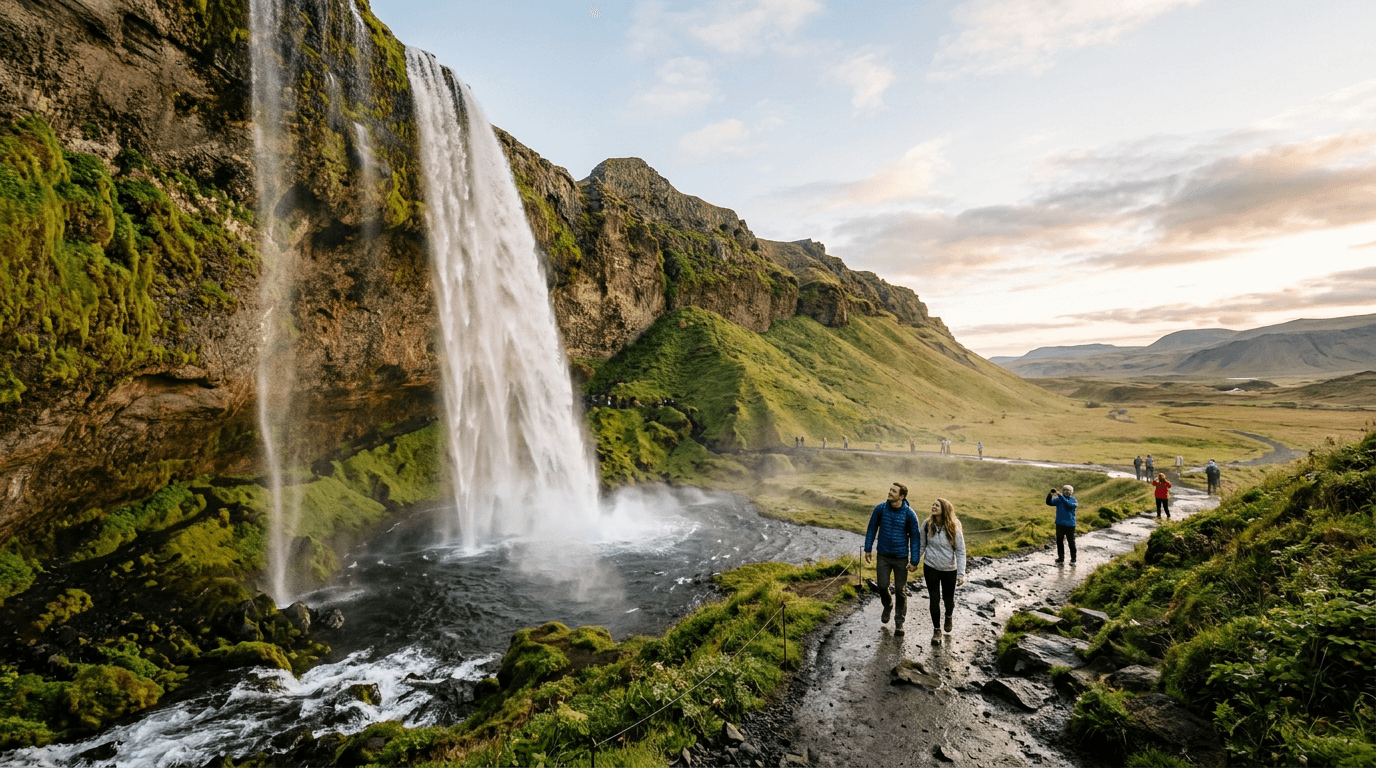
Seljalandsfoss is more than just a waterfall; it's an experience. Famous for the pathway that allows visitors to walk a full 360 degrees around it, this 60-meter (197-foot) tall cascade is a highlight for almost every traveler to Iceland. Located just off the Ring Road, its graceful plume is visible from a distance, beckoning you to come closer. The walk behind the falls is an exhilarating, multi-sensory adventure. You'll feel the thunderous vibration of the water, the cool, persistent spray on your face, and witness the landscape through a shimmering, liquid curtain. From experience, the path can be slippery and wet, so waterproof clothing and sturdy, non-slip shoes are not just recommended—they are essential. In winter, the path is often closed due to ice, but the waterfall itself, adorned with massive icicles, is a spectacular sight in its own right. There is a paid parking system in place (around 800 ISK), which supports the maintenance of the path and facilities. This is one of the most popular sites in Iceland, so expect crowds, especially midday.
Skógafoss: The Powerful Icon of the South
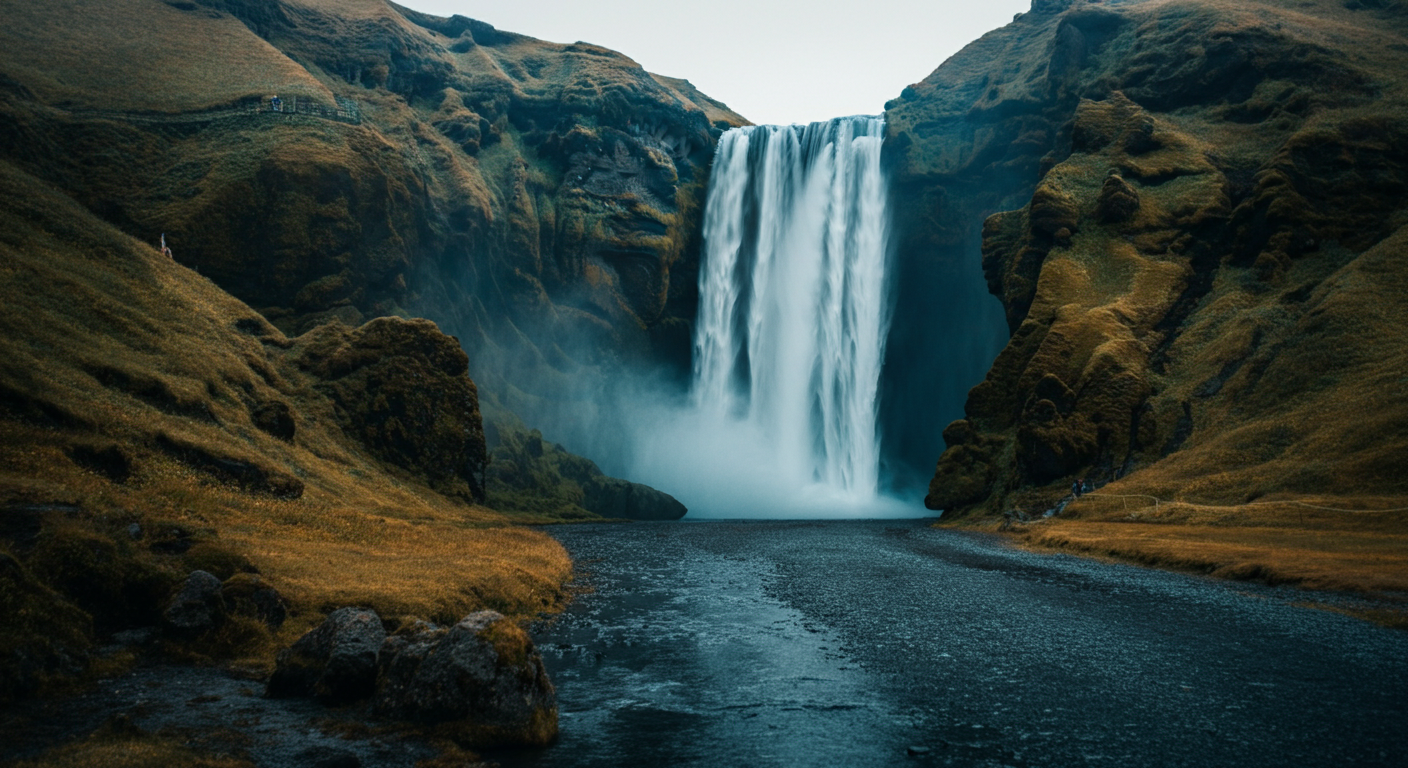
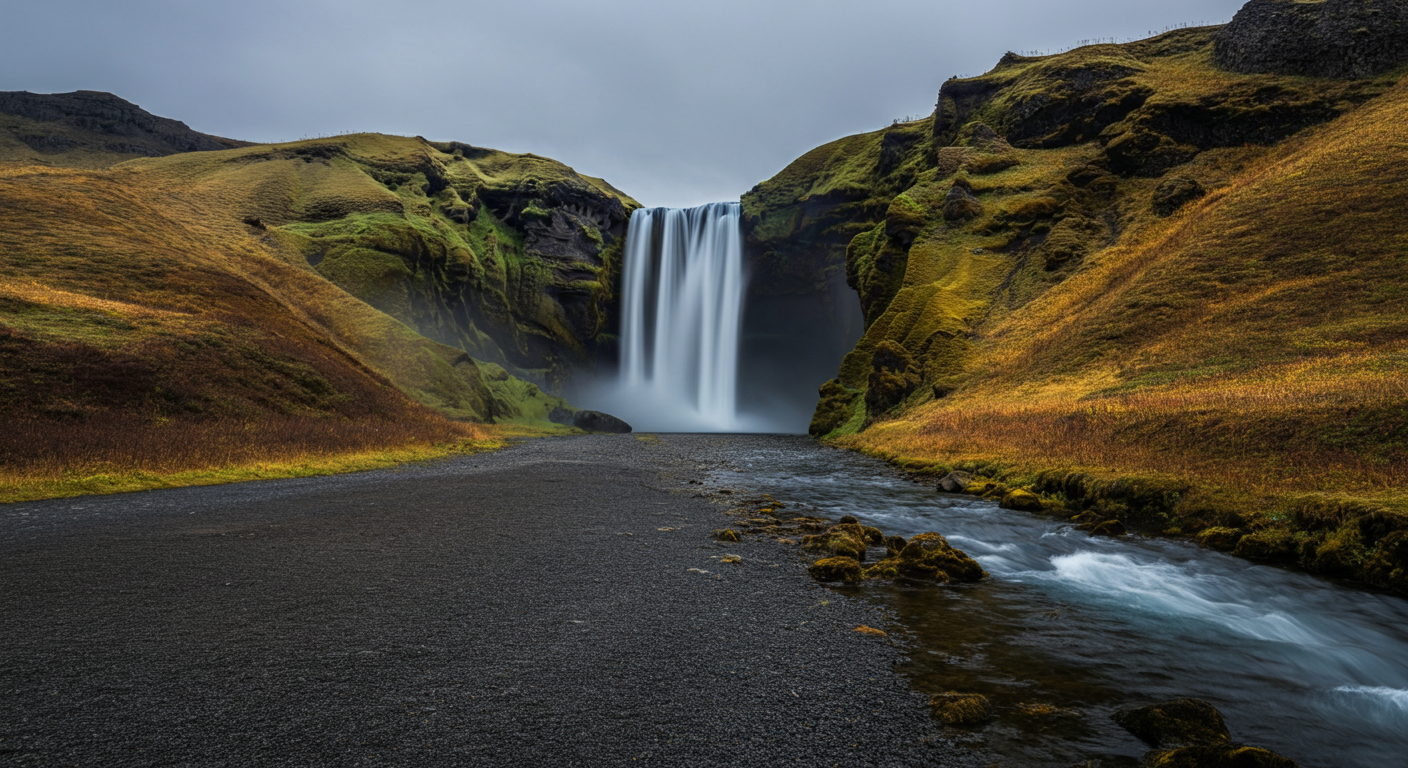
Just a short drive further east along the Ring Road, the mighty Skógafoss makes its presence known. A perfect "classical" waterfall, it drops 60 meters (197 feet) from ancient sea cliffs in a single, wide, and incredibly powerful sheet. The sheer force of the water creates a constant plume of mist, which often generates single or even double rainbows on sunny days, making for truly postcard-perfect photos. Unlike many other falls, you can walk right up to the base where the water crashes into a pool of black pebbles, a humbling experience that makes you feel incredibly small. For a different perspective, a steep staircase of 527 steps climbs the cliffside to the right of the falls. Our team can confirm the climb is a leg-burner, but the reward is a breathtaking bird's-eye view over the cascade and the coastline beyond. This platform is also the starting point for the famous Fimmvörðuháls trail, one of Iceland's most epic hikes. Parking and access to the waterfall are free, and there are facilities including restrooms and a nearby hotel and restaurant.
Gljúfrabúi: The Magical Hidden Gem Next Door
While crowds flock to its famous neighbor, Seljalandsfoss, a true hidden gem lies just a 10-minute walk to the north. Gljúfrabúi, which translates to "Canyon Dweller," is a magical waterfall concealed within a narrow canyon. To see it, you must wade a short distance through the stream that flows from its entrance, carefully balancing on stones. Your reward for getting your feet wet is an intimate, otherworldly chamber where the waterfall tumbles down into a moss-covered grotto. The light streams in from the opening above, illuminating the mist and creating an ethereal atmosphere that feels worlds away from the hustle and bustle just a few hundred meters away. Our team strongly recommends waterproof boots (or at least shoes you don't mind getting soaked) and a rain jacket, as you will get wet. The experience is intimate and powerful, a secret shared between you and the raw Icelandic nature. It's a perfect example of how a little exploration in Iceland can yield incredible, unforgettable rewards.
Svartifoss: The Dramatic Basalt Column Beauty
Located within the stunning Skaftafell Nature Reserve, part of the larger Vatnajökull National Park, Svartifoss ("Black Falls") is a masterpiece of natural architecture. What makes this 20-meter (66-foot) waterfall so unique are the dark, hexagonal basalt columns that frame it, resembling the pipes of a giant, ancient organ. These columns were formed as lava cooled slowly, and their stark, geometric beauty is so striking that they have inspired Icelandic architects for decades, most famously in the design of the Hallgrímskirkja church in Reykjavik. To reach Svartifoss, you must embark on a moderate 3-kilometer (1.8-mile) round-trip hike from the Skaftafell Visitor Centre. The trail is uphill on the way there but is well-maintained. The journey is as beautiful as the destination, offering panoramic views of the surrounding glaciers and plains. We've done this hike many times, and we recommend allowing at least 1.5 to 2 hours for the round trip to truly enjoy the scenery and the waterfall itself. There is a fee for parking at the Skaftafell Visitor Centre, which grants you access to all the hiking trails in the area.
Kvernufoss: Skógafoss's Secluded and Photogenic Sibling
If you're seeking the walk-behind experience of Seljalandsfoss and the powerful beauty of Skógafoss but without the crowds, Kvernufoss is your answer. This stunning 30-meter (98-foot) waterfall is tucked away in a gorge just a short hike from the Skógar Museum, a stone's throw from Skógafoss itself, yet it remains wonderfully off the main tourist radar. The 15-20 minute walk to reach it is part of the charm, leading you along the Kverná river into a serene, mossy canyon that feels like a hidden world. The path allows you to walk fully behind the curtain of water, offering incredible photo opportunities and a sense of peaceful solitude that's hard to find at the more famous sites. From our Gidly team's perspective, Kvernufoss is one of the South Coast's best-kept secrets. It provides a more intimate and adventurous feel, and on a quiet day, you might just have the entire majestic place to yourself. Remember to respect the private land you cross to access the trail and stick to the marked path.
The Golden Circle’s Trio of Unmissable Waterfalls
The Golden Circle is Iceland's most famous and accessible tourist route, a compact loop from Reykjavik that showcases a stunning cross-section of the country's geological marvels. While often celebrated for the erupting Strokkur geyser and the historic Þingvellir National Park, its waterfalls are equally spectacular and form a core part of the experience. This trio of falls offers remarkable diversity in a short distance: from the earth-shattering power of a two-tiered giant to a historically significant cascade between tectonic plates, and even a hidden treasure known for its impossibly blue water. For any visitor, but especially those on a shorter trip, the waterfalls of the Golden Circle are an essential and unforgettable introduction to Iceland's liquid soul.
Gullfoss: The Majestic Two-Tiered "Golden Falls"
Gullfoss is the undisputed heavyweight champion of the Golden Circle. Its name translates to "Golden Falls," possibly due to the golden hue the glacial water takes on a sunny day, or from a legend about hidden gold. This immense waterfall is fed by the Hvítá river, which originates from the Langjökull glacier. The water doesn't just drop; it thunders, first in a short 11-meter cascade and then, after turning sharply, in a spectacular 21-meter plunge into a deep, rugged canyon. The raw power is breathtaking, and the mist it generates can be seen from miles away. There are several viewing platforms connected by well-maintained paths. The upper platform near the visitor center provides a panoramic view, while a lower path takes you closer to the edge, where you can truly feel the vibrations and the spray. We were particularly impressed by the story of Sigríður Tómasdóttir, a local woman who campaigned tirelessly in the early 20th century to save the falls from being used for hydroelectric power, ensuring its preservation for all to enjoy. Her monument stands as a testament to the power of conservation.
Öxarárfoss: A Historic Fall in Þingvellir National Park
While not as large or powerful as Gullfoss, Öxarárfoss holds a unique place in Iceland's heart due to its historical and geological significance. Located within Þingvellir National Park, a UNESCO World Heritage site, the waterfall flows over the edge of the Almannagjá gorge, which marks the rift between the North American and Eurasian tectonic plates. You are literally standing between two continents when you visit. The waterfall is believed by many historians to have been partially man-made centuries ago, by diverting the river Öxará to provide water for the members of the Alþingi, the ancient Icelandic parliament that met here from 930 AD. The walk to the waterfall through the gorge is an experience in itself. From the main P1 parking area, a scenic path leads you through the dramatic rock walls. The waterfall, cascading into a rocky pool often filled with ice in winter, provides a stunning backdrop to this historically charged landscape. It’s a place of quiet contemplation, a fusion of natural beauty and profound human history that our team found deeply moving.
Brúarfoss: Chasing the Bluer-Than-Blue Water
Brúarfoss, which means "Bridge Falls," is a collection of cascades famous for the mesmerizing, almost unnaturally blue color of its water. This is not an illusion; the glacial water from the Hvítá river is filtered through underground lava rock, which removes the sediment and results in this striking azure hue. For years, Brúarfoss was a "secret" spot accessible via a muddy track through private land, but this has now changed. To preserve the area, there is now an official, designated parking area and a proper hiking trail. Be prepared: the new trail is a 7-kilometer (4.4-mile) round trip that takes about 2-3 hours to complete. Our team recently hiked the new path and can confirm it's a beautiful walk in itself, following the river and passing several smaller, equally blue rapids and falls—named Hlauptungufoss and Miðfoss—before you reach the main event. The main Brúarfoss waterfall is a unique, wide collection of thousands of tiny rivulets flowing into a central blue channel. While it requires more effort to see than it used to, the reward is a truly unique and beautiful waterfall, and the hike itself ensures a less crowded and more immersive experience.
North Iceland’s Powerhouses: Waterfalls of Gods and Giants
As you venture into North Iceland, the landscape takes on a more ancient, saga-steeped character. Here, the waterfalls are not just features of the land but central characters in the country's history and folklore. This region is home to cascades of immense power and legendary status, from the "Waterfall of the Gods" to the most voluminous waterfall in all of Europe. The journey north is a pilgrimage for those who want to feel the raw, untamed spirit of Iceland, where the water tells stories of pagan gods, geological upheaval, and the sheer, unbridled force of nature. Our Gidly explorers find that the northern falls offer a different flavor—grander, more remote, and deeply connected to the island's mythical past.
Goðafoss: The Legendary "Waterfall of the Gods"
Goðafoss is one of Iceland's most spectacular and historically significant waterfalls. Conveniently located right off the Ring Road between Akureyri and Lake Mývatn, it’s remarkably easy to access. This beautiful waterfall, which is 12 meters high and over 30 meters wide, is shaped like a majestic horseshoe. The name, "Waterfall of the Gods," is deeply rooted in Icelandic history. The story goes that in the year 1000, the lawspeaker Þorgeir Ljósvetningagoði was tasked with deciding whether Iceland should adopt Christianity. After a day and a night of deep meditation, he chose Christianity to avoid civil war. Upon returning home, he is said to have thrown his statues of the Norse gods into this very waterfall, symbolizing the country's conversion. You can view Goðafoss from both the east and west banks, which are connected by a pedestrian bridge. The west bank offers a great panoramic view from a platform, while the east bank allows you to get down closer to the water's edge. From our experience, visiting on a calm day allows for incredible reflections in the pools upstream.
Dettifoss: Feel the Power of Europe's Most Forceful Waterfall
Prepare to be humbled. Dettifoss is not about elegance; it's about pure, raw, earth-shaking power. With an average water flow of 193 cubic meters per second, it is the most powerful waterfall in Europe by volume. The sediment-rich glacial water from the Vatnajökull glacier thunders 44 meters (144 feet) down into the magnificent Jökulsárgljúfur canyon. The roar is deafening, and the spray can be seen from over a kilometer away. You can access Dettifoss from two sides. The west side is reached via the paved Road 862 and has better infrastructure, including viewing platforms and restrooms. This side gives you a fantastic overall view of the falls and canyon. The east side, reached via the gravel Road 864 (only open in summer), gets you much closer to the edge, offering a terrifyingly immediate and visceral experience of the fall's power. Our team recommends the east side for thrill-seekers (with caution!), and the west side for easier access and broader photographic views. Dettifoss was famously featured in the opening scene of the movie *Prometheus*, a fitting location for its otherworldly and formidable presence.
Selfoss: The Serene, Wide Curtain Upstream from Dettifoss
While Dettifoss gets all the attention for its brute force, a short and highly recommended 1-kilometer (0.6-mile) upstream hike will lead you to the beautiful and entirely different Selfoss. Don't confuse it with the town of the same name on the South Coast! This waterfall is a wide, elegant curtain of dozens of smaller cascades spread across the river, just before the water gathers its strength to become Dettifoss. It's about 11 meters (36 feet) high but incredibly wide. The contrast between the serene, almost delicate beauty of Selfoss and the chaotic violence of Dettifoss just downstream is striking. Standing between them, you can truly appreciate the river's dramatic transformation. Our team considers the short hike to Selfoss an essential part of the Dettifoss experience. It offers a moment of relative peace and a different kind of beauty, providing context to the raw power you've just witnessed or are about to see. It’s a perfect two-for-one deal from Mother Nature that many visitors unfortunately miss.
Aldeyjarfoss: A Remote Basalt-Framed Masterpiece
For those with a sense of adventure and a 4x4 vehicle, Aldeyjarfoss is a spectacular reward. Located in the highlands at the northern edge of the Sprengisandur highland road, this waterfall is more remote and challenging to reach, but utterly worth the effort. It is situated on the Skjálfandafljót river, the same river that feeds Goðafoss further downstream. Aldeyjarfoss drops about 20 meters into a circular basin, but what makes it truly breathtaking is its geological setting. It is framed by some of the most perfect and dramatic basalt columns in all of Iceland, a stark contrast of black rock and white, churning water. The journey to Aldeyjarfoss involves driving down a gravel road (Road 842) and then turning onto an F-road (F26), which requires a 4WD vehicle. From the parking area, it's a short walk down to the viewpoint. When our team visited, the sense of isolation and the raw, untouched beauty were palpable. It feels like a secret cathedral of nature, a powerful and pristine landscape that few get to witness.
West Iceland & The Westfjords: Off-the-Beaten-Path Wonders
For travelers looking to step away from the main tourist thoroughfares and discover a quieter, more rugged side of Iceland, the west is calling. West Iceland and the remote Westfjords peninsula are regions of deep fjords, dramatic coastlines, and waterfalls that are as unique as they are beautiful. From the most photographed mountain-and-waterfall combination in the country to cascades that seem to spring directly from lava fields, this area rewards those who venture off the Ring Road. Based on our Gidly team's explorations, this is where you'll find true solitude, unparalleled photographic opportunities, and a sense of discovery that can be harder to come by on the more popular routes.
Kirkjufellsfoss: The Most Photographed Scene in Iceland
On the north coast of the stunning Snæfellsnes Peninsula lies a scene so iconic it has graced countless postcards, calendars, and Instagram feeds: Kirkjufellsfoss with the cone-shaped Kirkjufell ("Church Mountain") rising majestically in the background. It's important to note that the waterfall itself, Kirkjufellsfoss, is relatively small. Its fame comes entirely from its perfect compositional harmony with the mountain behind it. A small parking lot across the road provides access, and a well-trodden path leads you to the classic viewpoint. Fans of HBO's *Game of Thrones* will recognize Kirkjufell as the "Arrowhead Mountain" from visions in the show. Our photographers advise visiting at sunrise or sunset, when the light on the mountain can be absolutely magical. In winter, the scene is transformed into a frozen wonderland, often with the Northern Lights dancing overhead, creating one of the most sought-after photo opportunities in the world. Be aware that this spot's fame means it can be surprisingly busy, so patience is key to getting your perfect shot.
Hraunfossar & Barnafoss: The Unique Lava and Children's Falls
Hraunfossar and Barnafoss are a pair of unique and fascinating waterfalls located a short walk from each other in West Iceland's Borgarfjörður region. They are a must-see stop and offer a completely different kind of waterfall experience. Hraunfossar, or "Lava Falls," is not a single cascade but a series of thousands of tiny rivulets emerging directly from the edge of the Hallmundarhraun lava field, stretching over 900 meters. The water, which has been filtered through the porous lava rock, is crystal clear and creates a delicate, ethereal effect as it trickles into the turquoise Hvítá river below. It is a mesmerizing and beautiful sight. Just a few hundred meters upstream lies Barnafoss, the "Children's Falls." This is a much more powerful and turbulent waterfall, where the river is forced through a narrow rocky canyon. Its name comes from a grim local legend about two children who fell to their deaths from a natural stone arch that once spanned the river. Viewing platforms and bridges provide safe and excellent views of both falls, and the contrast between the gentle Hraunfossar and the raging Barnafoss is captivating.
Dynjandi: The Breathtaking Jewel of the Westfjords
If there is one sight that defines the wild, remote beauty of the Westfjords, it is Dynjandi. Also known as Fjallfoss, this is not just a single waterfall but a series of seven cascades, with the main, uppermost fall being the undeniable star. Dynjandi is truly breathtaking, a magnificent trapezoidal veil of water that starts narrow at the top and fans out to a width of 60 meters (197 feet) at its base, tumbling a total of 100 meters (328 feet). Its distinctive shape has earned it comparisons to a bridal veil. To reach the base of the main fall, you must follow a scenic 15-minute hiking trail that winds its way up past the six smaller waterfalls below, each with its own name and charm. The climb builds anticipation, and when you finally stand at the foot of the main cascade, the scale and beauty are overwhelming. Our team agrees that Dynjandi is one of the most majestic and awe-inspiring waterfalls in all of Iceland, a worthy reward for making the long journey to the Westfjords. It's a place of pure, humbling beauty.
Planning Your Trip by Scenario: The Best Iceland Waterfalls For…
Every trip to Iceland is personal, and the "best" waterfall can depend entirely on what you're looking for. Are you planning a romantic getaway, an educational family adventure, or a soul-searching solo journey? To help you tailor your itinerary perfectly, we've broken down our top recommendations based on different travel scenarios. Our Gidly team has considered the atmosphere, accessibility, and overall experience at each location to help you find the waterfall that will create the perfect moment for your specific trip. Think of this as your personalized waterfall matchmaking service.
A Romantic Outing or Proposal Spot
For couples seeking a magical, romantic moment, Iceland's waterfalls provide an epic backdrop. Our top pick for a proposal or a special outing is Gljúfrabúi. The experience of discovering this hidden gem together, wading into the secluded grotto, and being enveloped in the misty, ethereal atmosphere is incredibly intimate and unforgettable. It feels like your own private world. Another fantastic option is Kirkjufellsfoss at sunset or sunrise. While it can be popular, finding a quiet spot to watch the golden light paint Kirkjufell mountain as the water rushes by is pure romance. For a more secluded walk-behind experience than Seljalandsfoss, consider Kvernufoss. Its relative obscurity means you're more likely to have the powerful cascade and lush canyon all to yourselves, creating a private, adventurous moment that feels straight out of a movie. The shared sense of discovery and the stunning natural beauty make it a deeply romantic choice.
A Family Adventure With Young Children
Traveling with kids requires a focus on accessibility, safety, and engagement. Skógafoss is a fantastic choice for families. The flat, gravelly area at the base is expansive and safe for children to run around on (at a distance from the spray!), and the sheer spectacle of the falls is captivating for all ages. The staircase to the top offers a great challenge for older kids with energy to burn. Another top contender is Gullfoss. Its well-paved, fenced paths make it very safe for families with strollers or young children. The sheer power is a great "wow" moment, and the large visitor center offers clean restrooms, food options, and a gift shop, which are practical godsends when traveling with little ones. We'd also recommend Goðafoss in the north; it's right by the road, with easy, flat paths and lots of space to view the falls without feeling crowded or precarious, making it a low-stress, high-reward stop for the whole family.
A Group Trip with Friends
When traveling with a group of friends, you want variety, great photo ops, and a shared sense of adventure. The South Coast waterfall combo is unbeatable for a group dynamic. You can start the day by daring each other to go behind Seljalandsfoss, capturing hilarious, drenched photos and videos. Then, regroup at Skógafoss for epic group shots at the base and a race to the top of the stairs. The proximity of these major sites, plus others like Gljúfrabúi and the black sand beach at Reynisfjara, makes for a packed, exciting day with minimal driving time between stops. The shared experiences—from the spray of the falls to the shared snacks in the car—are what build lasting travel memories. Booking a private minibus tour through Gidly can be a great, cost-effective option for a group, eliminating the stress of navigation and allowing everyone to relax and enjoy the scenery together.
Solo Travelers Seeking Awe and Solitude
For the solo traveler, Iceland's waterfalls can be places of profound reflection, solitude, and empowerment. The journey to Dynjandi in the Westfjords is a pilgrimage in itself. The long, scenic drive is meditative, and the reward is a waterfall so majestic and remote that it inspires a deep sense of awe and connection with nature. You can sit for hours watching it, undisturbed. The hike to Svartifoss is another excellent solo experience. The 90-minute round-trip journey provides time for quiet contemplation, and the unique beauty of the basalt columns feels like a personal discovery. For the truly adventurous solo traveler, making the trek to Aldeyjarfoss provides an unparalleled sense of accomplishment. Reaching this remote, powerful waterfall on your own is a testament to your capability and rewards you with a vision of raw, pristine Iceland that few ever see. These places offer the space to think, to feel, and to simply be in the presence of something magnificent.
Thrill-Seekers and Adventure Hikers
If your idea of travel involves lacing up your hiking boots and earning your views, Iceland has plenty of waterfalls to challenge and thrill you. While not on our top 10 list, the hike to Glymur, Iceland's second-tallest waterfall, is a top recommendation for adventurers. It's a challenging 3-4 hour round trip involving river crossings (one on a log in summer) and steep sections, but the reward is a spectacular view into a massive canyon. The trail to Brúarfoss, while tamer, is now a proper 7km hike that offers a satisfying sense of journey to a unique reward. For those at Dettifoss, hiking the trails along the Jökulsárgljúfur canyon rim provides heart-pounding perspectives of the raw power below. Finally, discovering and walking behind the secluded Kvernufoss gives a thrilling sense of being an explorer, finding a hidden wonder that feels more wild and untamed than its famous counterparts.
Iceland's Waterfalls on a Budget: How to Visit Without Breaking the Bank
Iceland has a reputation for being expensive, but experiencing its world-class natural beauty, especially its waterfalls, can be surprisingly affordable if you plan strategically. The vast majority of Iceland's natural attractions are, at their core, free for everyone to enjoy. The costs that do arise are typically related to access, parking, and maintenance, which are essential for preserving these delicate environments and ensuring visitor safety. With a little bit of insider knowledge, you can easily plan a waterfall-hopping adventure that is rich in experience but light on your wallet. Our Gidly team has gathered the best tips for seeing these wonders economically.
Answer Capsule: Are waterfalls in Iceland free to visit?
Yes, the entrance to the waterfalls themselves is almost universally free in Iceland. You do not need to buy a ticket to see Gullfoss or Skógafoss. However, at some of the most popular and highly trafficked sites, landowners or municipalities have implemented paid parking to manage the high volume of visitors and fund the maintenance of facilities like restrooms, pathways, and safety barriers. Think of it less as an entry fee and more as a contribution to the site's upkeep. Many other waterfalls, especially those that are more remote or less visited, remain completely free of any charges, including parking. Planning a mix of both types of sites is a great way to manage your budget.
Top 5 Completely Free Waterfalls (No Parking or Entry Fees)
You can build an incredible itinerary just by visiting waterfalls that are 100% free to access. As of our latest visits in 2024, these fantastic falls have no associated costs for parking or entry, though this can always change.
- Skógafoss: This South Coast giant has a large, free parking lot right at its base, making it one of the best value-for-awe attractions in the country.
- Goðafoss: Despite its fame and significance, there are free parking areas on both the east and west banks of this northern icon.
- Kirkjufellsfoss: The small parking area for the most photographed waterfall is free, though it can fill up quickly due to its popularity. Arrive early or late for the best chance at a spot.
- Hraunfossar & Barnafoss: This unique duo in West Iceland has a well-maintained parking lot and viewing area with no fee required.
- Dynjandi: The jewel of the Westfjords, despite its grandeur and well-kept trail, remains completely free to park at and enjoy, rewarding those who make the journey.
Understanding Parking Fees & Other Costs
When budgeting for your trip, it’s wise to account for the few waterfalls that do charge for parking. These fees are essential for preserving the sites for future generations. The funds go toward building and maintaining toilets (which are often free to use once you've paid for parking), repairing paths eroded by foot traffic, and ensuring safety measures are in place. These fees are typically paid at automated kiosks in the parking lot where you enter your license plate number and pay by credit card for a set period. It's a simple, efficient system. Here's a quick look at common sites and their approximate parking fees (as of late 2023/early 2024, check for current rates):
| Waterfall Location | Approx. Parking Fee (ISK) | Approx. Parking Fee (USD) | Notes |
|---|---|---|---|
| Seljalandsfoss & Gljúfrabúi | ~900 ISK | ~$6.50 | One fee covers both waterfalls. |
| Skaftafell Visitor Centre (for Svartifoss) | ~1000 ISK | ~$7.25 | Fee is for the national park, grants access to all trails. |
| Þingvellir National Park (for Öxarárfoss) | ~800 ISK | ~$5.75 | Fee covers parking at all lots in the park for the day. |
Saving Money on Food and Transport Between Waterfalls
The biggest expenses on an Icelandic road trip are often fuel and food. To save on transport, renting a smaller, fuel-efficient car is sufficient for visiting all the major waterfalls on the Ring Road and Golden Circle; a 4x4 is only necessary for F-roads. When it comes to food, the cafes and restaurants at major tourist sites can be pricey. The local's secret? Hit the grocery stores! Bónus (look for the pink pig logo), Krónan, and Nettó are affordable supermarkets where you can stock up on snacks, bread, cheese, and `skyr` (Icelandic yogurt). Our team always packs a cooler with sandwiches, snacks, and drinks for the day. This not only saves a significant amount of money but also allows you to have a picnic with a million-dollar view at a moment's notice. Finally, always carry a reusable water bottle. The tap water in Iceland is among the purest and best-tasting in the world, and it's completely free. There's no need to ever buy bottled water.
Accessibility at Icelandic Waterfalls: A Practical Guide for All Visitors
Iceland's raw and rugged nature is a huge part of its appeal, but it can also present challenges for visitors with mobility issues, families with strollers, or anyone who isn't up for a strenuous hike. At Gidly, we believe that everyone should have the chance to experience the awe of these natural wonders. That's why we've put together this practical guide to accessibility at Iceland's waterfalls. While many falls are wild and untamed, you'll be pleased to know that several of the most famous sites have made significant efforts to improve accessibility, with paved paths, ramps, and dedicated viewing areas ensuring that more people than ever can enjoy the view.
Answer Capsule: Which Icelandic waterfalls are wheelchair accessible?
The most wheelchair-accessible major waterfalls in Iceland are Gullfoss and Goðafoss. Both feature well-maintained, paved or hard-packed gravel paths leading from designated accessible parking spots to excellent, barrier-free viewing platforms. Seljalandsfoss and Skógafoss also offer good accessibility to view the falls from the front, though the paths to get closer or behind them are not suitable for wheelchairs. Many other waterfalls, due to their natural, rugged terrain, are not wheelchair accessible.
Best Waterfalls for Wheelchair Users & Strollers
For visitors using wheelchairs or pushing strollers, some of Iceland's most magnificent sights are well within reach. Gullfoss is a prime example of excellent accessibility. The upper-level path from the main parking lot and visitor center is wide, paved, and leads to a fantastic, expansive viewing deck that provides a full panorama of the two-tiered waterfall. You get the full, powerful experience from a safe and accessible vantage point. Similarly, Goðafoss is very accommodating. Parking areas on both sides of the river have flat, hard-packed gravel paths leading to multiple viewpoints. The east side, in particular, offers a fantastic, unobstructed view of the horseshoe-shaped falls with minimal effort. At Seljalandsfoss, a paved path runs from the parking lot along the front of the waterfall, allowing for wonderful views and photos, though the path behind the falls is a natural dirt track with steps and is not accessible. The path to the base of Skógafoss is flat, compacted gravel, making it easy to get a great view from a distance, though getting very close involves navigating over larger rocks and pebbles.
Waterfalls Requiring Significant Hiking or Uneven Terrain
Part of the adventure for many is the hike, but it's important to know which waterfalls require more physical exertion. Svartifoss is a prime example. Reaching it involves a 1.5 km (0.9 mi) uphill hike on a well-defined but sometimes steep and rocky trail. It is not suitable for wheelchairs or strollers and requires a moderate level of fitness. The new path to Brúarfoss is a 7 km (4.4 mi) round trip on a relatively flat but long trail that can be very muddy, making it difficult for those with mobility challenges. Reaching the upper base of Dynjandi in the Westfjords involves a 15-20 minute climb up a series of stone steps and dirt paths, which is a key part of the experience but would be impossible for a wheelchair. Likewise, getting to hidden gems like Kvernufoss or Gljúfrabúi involves navigating uneven terrain, rocks, and streams. Always wear sturdy, waterproof hiking boots for these adventures.
What to Expect: Parking, Pathways, and Restroom Facilities at Major Sites
The infrastructure at Icelandic waterfalls varies greatly depending on their popularity and location. The major players on the Golden Circle and South Coast (Gullfoss, Þingvellir, Seljalandsfoss, Skógafoss) have large, well-organized parking lots, often with designated accessible parking spaces. These sites typically feature modern visitor centers with clean restrooms (sometimes requiring a small fee of ~200 ISK if you haven't paid for parking), cafes, and souvenir shops. Pathways at these locations tend to be wider and better maintained, with some sections paved. As you move to more remote waterfalls like Dettifoss (west side) or Kirkjufellsfoss, the facilities become more basic—think gravel parking lots and perhaps a simple restroom block. At truly remote or hidden falls like Kvernufoss or Aldeyjarfoss, you should expect no facilities at all. It's crucial to plan accordingly: use the restroom when you have the chance and pack out everything you pack in, following the "leave no trace" principle to help preserve Iceland's pristine nature.
Summer vs. Winter: A Seasonal Guide to Visiting Iceland's Waterfalls
An Icelandic waterfall is not one static entity; it is a living, breathing spectacle that transforms dramatically with the seasons. Visiting Skógafoss surrounded by lush summer greens is a completely different experience from seeing it adorned with colossal ice formations under the glow of the Northern Lights. Each season offers its own unique magic, challenges, and rewards. Our team at Gidly has experienced these falls in every condition, from the 24-hour light of the midnight sun to the deep freeze of a January storm. Understanding these seasonal differences is key to planning the trip of your dreams and, crucially, to staying safe.
Summer (May-Aug): Midnight Sun, Lush Greenery, and Full Access
Summer is the most popular time to visit Iceland, and for good reason. The landscapes are bursting with vibrant green life, a stunning contrast to the white water and black volcanic rock. The snowmelt from the highlands and glaciers means the waterfalls are at their most powerful and voluminous, a truly awesome sight. The greatest advantage of summer is the midnight sun. With nearly 24 hours of daylight, your sightseeing opportunities are almost limitless. Our team loves visiting popular waterfalls like Seljalandsfoss and Skógafoss late at night (10 PM or later) or very early in the morning to enjoy them in beautiful, soft light without the midday crowds. Furthermore, all roads, including the highland F-roads, are typically open, granting access to remote wonders like Aldeyjarfoss and the highlands. The trade-offs are, of course, larger crowds at popular sites and higher prices for accommodation and car rentals. Wear layers and always have waterproofs, as summer rain is common.
Winter (Nov-Mar): Frozen Wonders, Ice Formations, and the Northern Lights
Winter transforms Iceland into a breathtaking, otherworldly ice kingdom. The waterfalls take on a completely new character, becoming natural ice sculptures. Cascades can freeze solid in parts, creating fantastical shapes and massive icicles, while the surrounding rocks are coated in a beautiful layer of frozen spray. The shorter daylight hours (as few as 4-5 hours in deep winter) mean you need to plan your days carefully. However, the long, dark nights bring the incredible opportunity to witness the Aurora Borealis. Seeing the Northern Lights dancing over a frozen Kirkjufellsfoss or Skógafoss is a bucket-list experience that our Gidly photographers chase every year. Winter travel requires more preparation. You MUST have a car with winter tires (studded tires are best), and access to some roads, especially in the North, East, and Westfjords, can be limited or closed by snow. The single most important piece of gear you can bring is a pair of microspikes (ice cleats) for your shoes. Paths around waterfalls become sheets of ice, and microspikes are essential for safety.
Spring & Autumn (Shoulder Seasons): Fewer Crowds, Lower Prices, Unpredictable Conditions
The shoulder seasons of April-May (Spring) and September-October (Autumn) can be fantastic times to visit for the savvy traveler. These months offer a sweet spot of fewer crowds and lower prices compared to the summer peak. In spring, you get to witness the land "waking up" as the snow melts, which can lead to incredibly powerful waterfalls. You'll see lingering snow at higher elevations mixed with emerging green, and the daylight hours are rapidly increasing. Autumn offers beautiful, rustic colors across the landscape and the return of darker nights, meaning the Northern Lights season officially kicks off in September. The main challenge of the shoulder seasons is unpredictability. You could have a week of glorious sunshine or encounter a sudden blizzard. You must be prepared for all four seasons in a single day. Roads are generally clear, but early or late snowfalls can cause temporary closures. This is the perfect time for flexible travelers who are happy to adapt their plans to the weather.
Essential Gear and Safety Differences Between Seasons
Your packing list will change dramatically depending on the season.
- All Seasons: The golden rule is layers and waterproofs. A non-negotiable is a waterproof jacket, waterproof pants, and sturdy, waterproof hiking boots. Even in summer, the spray from a powerful waterfall will soak you.
- Summer Additions: Lighter layers, sunglasses, and maybe an eye mask to help you sleep during the bright nights. Sunscreen is also important, as the sun can be surprisingly strong.
- Winter Essentials: This is where gear becomes critical for safety and comfort. You'll need thermal base layers (wool is best), a fleece or wool mid-layer, an insulated and waterproof outer layer (parka), a warm hat, gloves or mittens, a scarf or buff, and thick wool socks. The most crucial item, as mentioned, is a pair of microspikes or crampons for your boots. Do not visit in winter without them. A headlamp is also very useful for the long, dark hours.
Pro Photography Tips: How to Capture Postcard-Perfect Waterfall Shots
Iceland's waterfalls are so photogenic that it's hard to take a bad picture, but with a few pro techniques and the right gear, you can elevate your shots from simple snapshots to breathtaking, frame-worthy images. Capturing the power, scale, and ethereal beauty of these cascades is a rewarding challenge. Our Gidly photography experts have spent countless hours, in all weather and light, finding the best ways to shoot these natural wonders. Whether you're a seasoned photographer with a full kit or an enthusiast with a smartphone, these tips will help you bring home images that truly do justice to the incredible scenes you'll witness.
Essential Gear: Tripods, ND Filters, Rain Sleeves, and Wide-Angle Lenses
While any camera can capture the memory, some specific gear can make a world of difference for waterfall photography.
- Sturdy Tripod: This is the most important piece of gear for achieving high-quality waterfall shots, especially the popular "silky water" effect. It needs to be sturdy enough to withstand Iceland's notorious wind and stable on uneven, rocky ground.
- Neutral Density (ND) Filters: These are like sunglasses for your lens. They reduce the amount of light entering the camera, allowing you to use a slow shutter speed even in bright daylight. A 6-stop or 10-stop ND filter is perfect for creating that smooth, ethereal water look.
- Circular Polarizer (CPL): This filter is a game-changer. It works by cutting glare and reflections off the surface of the water and wet rocks, which dramatically boosts the natural color saturation and makes the scene 'pop'.
- Rain Sleeve/Cover: The mist and spray from Iceland's waterfalls are relentless. A simple plastic camera cover will protect your expensive gear from water damage and allow you to keep shooting even when you're getting soaked.
- Wide-Angle Lens: To capture the immense scale of falls like Skógafoss or Gullfoss and their surrounding landscapes, a wide-angle lens (in the 16-35mm range for full-frame cameras) is invaluable.
The Best Camera Settings for That "Silky Water" Effect
That dreamy, smooth look in waterfall photos is called a long exposure, and it's easier to achieve than you might think. Here’s the recipe our team uses:
- Mount your camera on a tripod. This is non-negotiable to prevent blur.
- Switch to Manual (M) or Shutter Priority (Tv/S) mode. This gives you control over the shutter speed.
- Set your ISO to the lowest native value, usually ISO 100 or 50. This maximizes image quality and helps reduce light.
- Choose a slow shutter speed. This is the key. For a silky effect, start with a shutter speed between 0.5 seconds and 2 seconds. For a mistier, more ethereal look, try even longer speeds, from 5 to 30 seconds.
- Attach your ND filter if it's bright outside. The slow shutter speed will let in a lot of light, so the ND filter is necessary to prevent a completely white, overexposed image.
- Set your aperture. In Manual mode, you'll need to set your aperture (f-stop). A good starting point is between f/8 and f/11 for a sharp focus throughout the scene.
- Use a remote shutter release or your camera's 2-second timer. This prevents the camera shake caused by physically pressing the shutter button.
Composition Secrets for Key Waterfalls
A great composition can turn a good photo into an amazing one. Instead of just pointing and shooting at the waterfall, think about the whole scene. At Kirkjufellsfoss, the classic shot is from the path on the hill, using the small cascades in the foreground as a leading line pointing towards Kirkjufell mountain. Try getting low to the ground to emphasize the foreground falls. For Skógafoss, include a person in your shot (from a safe distance) to give a sense of the waterfall's immense scale. Another great composition is to use the winding Skógá river as a leading line into the base of the falls. When shooting Seljalandsfoss from behind, frame the setting sun or the green landscape through the curtain of water. This creates a unique perspective and a strong sense of place. At Svartifoss, focus on the details. Get in close (safely) to highlight the texture and geometry of the basalt columns that frame the water.
Drone Photography: Know Before You Fly (Rules & No-Fly Zones)
Drones can offer a spectacular and unique perspective on Iceland's waterfalls, but it is absolutely critical to fly responsibly and legally. Icelandic drone regulations are strict, and respecting them is paramount for protecting nature and the experience of other visitors. The most important rule is that drones are strictly forbidden within all national parks. This means no flying at Þingvellir (Öxarárfoss), Skaftafell (Svartifoss), or the Jökulsárgljúfur canyon (Dettifoss, Selfoss). Many popular waterfalls, even outside national parks, have posted "No Drone" signs due to safety and noise concerns. Always look for signage and obey it. Never fly over crowds of people, and be considerate of other tourists—the loud buzzing of a drone can ruin the peaceful, natural experience many have traveled so far to find. The Icelandic Transport Authority's website and sites like drone.is are essential resources for the latest rules. Fines for illegal flying are substantial. Our advice: If in doubt, don't fly.
Insider Tips & Local Hacks for a Better Waterfall Experience
After countless trips along Iceland's roads and trails, our Gidly team has collected a treasure trove of insider tips and local hacks that go beyond the guidebooks. These are the small bits of advice that can transform a good trip into an extraordinary one. From avoiding the thickest crowds at blockbuster locations to using the same tools Icelandic locals use to navigate the notoriously fickle weather and road conditions, these secrets will help you travel smarter, safer, and get a more authentic experience out of your waterfall-chasing adventure. Think of us as your local friend letting you in on the secrets.
The Best Times of Day to Avoid Crowds at Seljalandsfoss and Skógafoss
Seljalandsfoss and Skógafoss are two of the most popular and easily accessible waterfalls in Iceland, meaning they are magnets for tour buses and crowds, especially between 10 AM and 4 PM. To experience these places with a bit more serenity, timing is everything. Our number one hack, especially in summer with the midnight sun, is to visit late in the evening. Arriving at Skógafoss at 9 PM means you'll likely share it with only a handful of other people, allowing you to appreciate its power in peace. The light is also often softer and more beautiful at this time. Similarly, walking behind Seljalandsfoss as the sun sets around 10 or 11 PM is a truly magical and far less crowded experience. The alternative is to go very early. Waking up to be at the falls by 8 AM, before the first buses from Reykjavik arrive, can give you a precious window of relative solitude. This "go late or go early" strategy is the key to enjoying Iceland's most famous spots.
Real-Time Resources: Using vedur.is (Weather) and road.is (Road Conditions) Like a Local
This is perhaps the most important tip for any trip to Iceland. The weather and road conditions can change in an instant, and being prepared is a matter of safety, not just convenience. Icelandic locals live by two websites:
- vedur.is: This is the official site of the Icelandic Met Office. Don't just look at the temperature; pay close attention to the wind speed forecast. A 20 m/s (45 mph) wind can make it dangerous to even open a car door and can turn a beautiful waterfall visit into a miserable, sandblasted experience. The site also has aurora forecasts and precipitation maps. Check it every morning before you set out.
- road.is: The Icelandic Road and Coastal Administration's website provides a real-time, color-coded map of the entire country's road network. Green means easily passable, yellow indicates spots of ice, blue means slippery, and red means closed. In winter, this site is not just useful, it's essential. It will save you from driving hours towards a road that is impassable. We check it before every single journey.
The "Reverse" Itinerary Hack for Popular Routes
Tour buses, especially on the Golden Circle and South Coast day trips from Reykjavik, tend to follow a predictable pattern. For the Golden Circle, the most common route is Þingvellir, then Geysir, then Gullfoss. To avoid moving with this massive wave of people, simply do the route in reverse. Start your day by driving straight to Gullfoss, then work your way back via Geysir and Þingvellir. You'll find yourself at each location when the crowds from the previous "wave" have just left, and the next one has yet to arrive. Our team has tested this, and it works surprisingly well. The same logic can be applied to the South Coast. Instead of stopping at Seljalandsfoss first, consider driving straight to Skógafoss or even further to Vík and then hitting the waterfalls on your way back to Reykjavik in the afternoon or evening. This simple shift in timing can dramatically improve your experience.
Underrated Gems: Discovering Falls Not on the Main Tourist Trail
While the famous waterfalls are popular for a reason, some of the most memorable moments in Iceland come from discovering a beautiful cascade all on your own. Keep your eyes peeled as you drive—the country is full of them! For those willing to venture a little further, there are some named gems that offer huge rewards. Haifoss, located in the Þjórsá valley, is Iceland's fourth tallest waterfall, and it plunges into a dramatic gorge next to a smaller companion fall, Granni. It requires a gravel road (and a short walk), but the view is breathtaking. Hjálparfoss, also in the same area, is a unique twin waterfall that joins in a beautiful pool surrounded by basalt formations. And as you drive the Eastfjords, the Ring Road itself winds past countless stunning waterfalls cascading down the mountainsides, each one an invitation to pull over for a moment of quiet appreciation away from any crowds.
Comparison Table: Iceland's Top 10 Waterfalls at a Glance
With so many incredible waterfalls to choose from, it can be helpful to see their key features side-by-side. This table is designed to give you a quick, at-a-glance comparison of our top 10 featured waterfalls, helping you make informed decisions based on what's most important to you—be it accessibility, photographic potential, or raw power. Use this as a cheat sheet to help build your perfect Icelandic waterfall itinerary. Our Gidly team has assigned an accessibility score from 1 (strenuous hike required) to 5 (paved, wheelchair-friendly path) based on our own experiences.
| Waterfall Name | Region | Height | Accessibility (1-5) | Best For | Walkable from Parking |
|---|---|---|---|---|---|
| Gullfoss | Golden Circle | 32 m (total) | 5 | Raw Power, Accessibility | Yes (2-5 min) |
| Seljalandsfoss | South Coast | 60 m | 4 | Unique Experience (Walk-behind) | Yes (2 min) |
| Skógafoss | South Coast | 60 m | 5 | Iconic Beauty, Photos | Yes (1 min) |
| Dettifoss | North Iceland | 44 m | 3 | Immense Force | Yes (10-15 min walk) |
| Goðafoss | North Iceland | 12 m | 5 | History & Elegance | Yes (2 min) |
| Kirkjufellsfoss | West Iceland | 16 m | 4 | Photography Composition | Yes (2 min walk across road) |
| Svartifoss | South Coast | 20 m | 2 | Unique Geology (Basalt) | No (30-40 min hike) |
| Dynjandi | Westfjords | 100 m | 2 | Majestic Scale, Remoteness | No (15 min uphill hike) |
| Brúarfoss | Golden Circle | ~3 m | 1 | Unique Blue Water, Hiking | No (45-60 min hike) |
| Gljúfrabúi | South Coast | 40 m | 2 | Hidden Gem Experience | Yes (10 min walk from Seljalandsfoss) |
The Legends and Lore: Stories Behind the Falls
In Iceland, waterfalls are more than just geological formations; they are living parts of the nation's history, culture, and soul. For centuries, these powerful places have inspired folklore, sagas, and legends that speak to the Icelandic character—a blend of resilience, poetry, and a deep respect for the forces of nature. To stand before these cascades is not just to witness a beautiful sight, but to connect with a story that has been told for generations. Understanding these legends adds a rich layer of meaning to your visit, transforming a simple photo op into a conversation with the past. Our team loves delving into these stories that bring the landscape to life.
The Pagan Gods at Goðafoss
The story of Goðafoss is central to one of the most pivotal moments in Icelandic history. As we mentioned earlier, around the year 1000 AD, Iceland was a nation divided between the traditional Norse paganism and the growing influence of Christianity from Europe. To avert a civil war, the Alþingi (parliament) gave the responsibility of the decision to one man: the lawspeaker Þorgeir Ljósvetningagoði, who was himself a pagan chieftain. After a day and a night of silent contemplation under a fur blanket, he emerged and declared that Iceland would officially become Christian, though pagans could still practice in private. To symbolize this monumental decision and his commitment to it, upon returning to his home in North Iceland, Þorgeir gathered the idols and statues of his Norse gods—Odin, Thor, Freya—and cast them into the beautiful waterfall near his farm. From that day forward, the waterfall was known as Goðafoss, the "Waterfall of the Gods." To stand there today is to witness the very spot where Iceland symbolically turned a new page in its history.
The Hidden Treasure of Skógafoss
The mighty Skógafoss is associated with a classic tale of Viking treasure. According to legend, the first Viking settler in the area, a man named Þrasi Þórólfsson, amassed a great fortune. Before he died, he is said to have filled a chest with gold and treasure and hidden it in a cave behind the immense curtain of water at Skógafoss. For centuries, many tried and failed to retrieve it. The legend says that years later, a young local man managed to get behind the falls and grasp the ring on the side of the chest. He pulled with all his might, but only the ring came off before the chest disappeared again. This ancient treasure chest ring was supposedly given to the local church, and today, a replica of it can allegedly be seen in the nearby Skógar Museum. Whether the story is true or not, it adds a layer of mystery and magic to the experience. And on sunny days, as the mist creates a vibrant rainbow, many joke that it's pointing to the location of Þrasi's lost gold.
How Sigríður Tómasdóttir Saved Gullfoss
The story of Gullfoss is a more modern, but no less powerful, legend of conservation and personal courage. In the early 20th century, foreign investors saw the immense power of Gullfoss and leased the rights to the waterfall from its owner, Tómas Tómasson, with the intention of building a hydroelectric power plant that would have destroyed the cascade forever. Tómas's daughter, Sigríður Tómasdóttir, grew up on the farm next to the falls and loved it deeply. Horrified by the plan, she launched a tireless campaign to save Gullfoss. She made numerous arduous treks to Reykjavik, walking over 100 kilometers on foot, to meet with lawyers and government officials, pleading her case. The legal battle dragged on for years. At one point, in desperation, Sigríður famously threatened to throw herself into the waterfall if construction began. Her passion and relentless determination drew public attention and support for her cause. Ultimately, the investors' contract expired and they were unable to make their payments, and the waterfall reverted to the Icelandic people. Sigríður is now celebrated as one of Iceland's first environmentalists, and a stone memorial in her honor stands at Gullfoss, a testament to how one person's passion can save a natural treasure for the world.
Frequently Asked Questions (FAQ) About Icelandic Waterfalls
What is the most beautiful waterfall in Iceland?
Beauty is subjective, but many travelers point to Kirkjufellsfoss for its perfect composition with Kirkjufell mountain, or Dynjandi in the Westfjords for its majestic, wedding-veil grandeur. Others might argue for the impossibly blue water of Brúarfoss or the unique basalt columns of Svartifoss.
Which waterfall in Iceland can you walk behind?
The most famous waterfall you can walk behind is Seljalandsfoss on the South Coast. A less crowded but equally spectacular walk-behind experience can be found at Kvernufoss, located near Skógafoss.
Are the waterfalls frozen in winter?
Most waterfalls in Iceland do not freeze completely due to the sheer volume of water, but they transform dramatically. They become adorned with massive icicles and beautiful ice sculptures, and the surrounding areas become frozen wonderlands. The water flow is reduced but still present.
Do I need a 4x4 to visit the waterfalls?
No, you do not need a 4x4 for the majority of famous waterfalls. All the main falls along the South Coast and Golden Circle (Gullfoss, Seljalandsfoss, Skógafoss) and North (Goðafoss, Dettifoss west side) are accessible with a standard 2WD car. A 4x4 is only required for F-roads and reaching remote falls like Aldeyjarfoss.
How much time should I spend at each waterfall?
For a quick photo stop at an easily accessible fall like Skógafoss, 30 minutes is enough. For an experience like walking behind Seljalandsfoss or climbing the stairs at Skógafoss, plan for 45-60 minutes. For falls requiring a hike, like Svartifoss or Brúarfoss, allow 1.5-3 hours.
Can I swim in any of the waterfalls in Iceland?
No, you absolutely should not swim in or near Icelandic waterfalls. The water is glacially cold (2-3°C / 35-37°F), posing a serious risk of hypothermia. Furthermore, the currents are incredibly powerful and dangerous, even in areas that look calm.
Are there tours that visit multiple waterfalls in one day?
Yes, absolutely! Day tours from Reykjavik are extremely popular. Golden Circle tours will take you to Gullfoss and Öxarárfoss, while South Coast tours typically cover Seljalandsfoss and Skógafoss. You can explore a wide variety of these tours on Gidly.
What should I wear when visiting Iceland's waterfalls?
Waterproof gear is essential in every season. You must have a waterproof jacket, waterproof pants, and sturdy, waterproof footwear. The spray from the falls will get you wet, and staying dry is key to staying warm and comfortable.
Are there restrooms and food available at the main waterfalls?
Yes, major sites like Gullfoss, Seljalandsfoss, and the Skaftafell Visitor Centre (for Svartifoss) have visitor centers with restrooms, cafes, and gift shops. Other large falls like Skógafoss and Goðafoss have nearby facilities. Remote waterfalls will have no facilities at all.
Which waterfalls were in Game of Thrones or other movies?
Kirkjufell and Kirkjufellsfoss were featured as the "Arrowhead Mountain" in Game of Thrones. Skógafoss also appeared briefly in the final season. Dettifoss had a starring role in the opening scene of the sci-fi movie *Prometheus*.
Plan Your Adventure: Recommended Waterfall Tours on Gidly
Feeling inspired? While driving yourself offers ultimate freedom, guided tours can be a fantastic, stress-free way to experience Iceland's waterfalls. Let an expert handle the navigation, driving (especially in winter!), and timing, so you can sit back, relax, and soak in the incredible views. Tours often bundle multiple sights and activities, providing great value and an efficient way to see the highlights. At Gidly, we've curated a selection of the best tours that put you front and center with Iceland's most magnificent cascades. Find your perfect outing and book your seat for an unforgettable adventure.
Best-Selling South Coast Day Tours from Reykjavik
The South Coast is the perfect destination for a packed day tour. Our most popular tours whisk you away from Reykjavik in a comfortable coach or minibus to witness the "big two": Seljalandsfoss and Skógafoss. You'll get the chance to walk behind the curtain of water at one and feel the power at the base of the other. These tours often include bonus stops at the dramatic black sand beach of Reynisfjara, with its basalt columns and powerful waves, and offer views of the Eyjafjallajökull volcano. It's a full day of iconic Icelandic landscapes, expertly guided and perfectly timed. It's the ideal choice for visitors who want to see these world-famous sights without the hassle of renting a car. Browse the full lineup on the Gidly app to find the right fit for you.
Golden Circle Tours Including Gullfoss & Secret Lagoon
The Golden Circle is the classic Iceland tour for a reason. Our curated Golden Circle experiences ensure you see the magnificent Gullfoss waterfall in all its glory. You'll stand on the viewing platforms and feel the mist from this two-tiered giant. But why stop there? Many of our recommended tours combine the "big three" (Gullfoss, Geysir, and Þingvellir National Park) with a relaxing stop at a geothermal spa like the Secret Lagoon or Fontana. After a day of epic sights, there's nothing better than soaking in naturally warm, mineral-rich water. It's the perfect blend of natural wonder and Icelandic wellness culture, all in one seamless day trip.
Multi-Day Ring Road Adventures to See Them All
For the ultimate waterfall enthusiast who wants to see it all, a multi-day Ring Road tour is the way to go. These comprehensive trips, typically ranging from 6 to 10 days, will take you on a complete circle of the island. You'll hit all the highlights: the South Coast gems, the powerful northern cascades of Goðafoss and Dettifoss, the unique lava falls in the west, and countless other hidden beauties along the way. These tours take all the logistical work out of a complex trip. Accommodation, transportation, and a planned itinerary are all included, led by a local guide who can share stories and insights you'd never find on your own. It's an epic journey of a lifetime, simplified.
Private & Customizable Waterfall Photography Tours
For the serious photographer, timing and light are everything. Standard tours don't always accommodate the "golden hour" chase. That's where private and customizable photography tours come in. We can connect you with specialized guides who are also professional photographers. They know the best spots, the secret compositions, and will build an itinerary around chasing the best light, whether that means being at Kirkjufellsfoss for sunset or Skógafoss for sunrise. These tours are tailored to your specific goals, whether it's mastering the silky water effect or capturing the Northern Lights over a frozen cascade. It's an investment in bringing home not just photos, but true works of art.
Conclusion: Your Icelandic Waterfall Adventure Begins Now
From the thunderous roar of Dettifoss to the delicate streams of Hraunfossar, Iceland's waterfalls are the lifeblood of its landscape and the soul of its identity. They are places of immense power, serene beauty, ancient legends, and personal reflection. We hope this comprehensive guide has not only inspired you but also equipped you with the practical knowledge to plan your own unforgettable journey. Remember to respect the raw power of nature, dress in layers, and take a moment at each stop to simply stand in awe. The memories you make while feeling the mist on your face and hearing the roar of the water will stay with you long after you've returned home.
Your epic Icelandic waterfall adventure is waiting. Whether you're planning a solo road trip, a romantic getaway, or a family holiday, the perfect experience is out there. Don't let the planning overwhelm you; let it excite you. This guide is your starting point, your trusted companion for the journey ahead. When you're ready to turn these dreams into reality, Gidly is here to help. Find your perfect waterfall adventure on Gidly! Explore all Iceland tours at gidly.app and book your unforgettable trip today.