
guide -
25 Best Things to Do in London: 2026 Travel Guide
Things to do in London in 2026 range from iconic first-timer sights like Westminster, the Tower of London, and the London Eye to free museums, neighborhood markets, rooftop views, world-class theatre, and nightlife that runs late in the best possible way. If you want the smartest
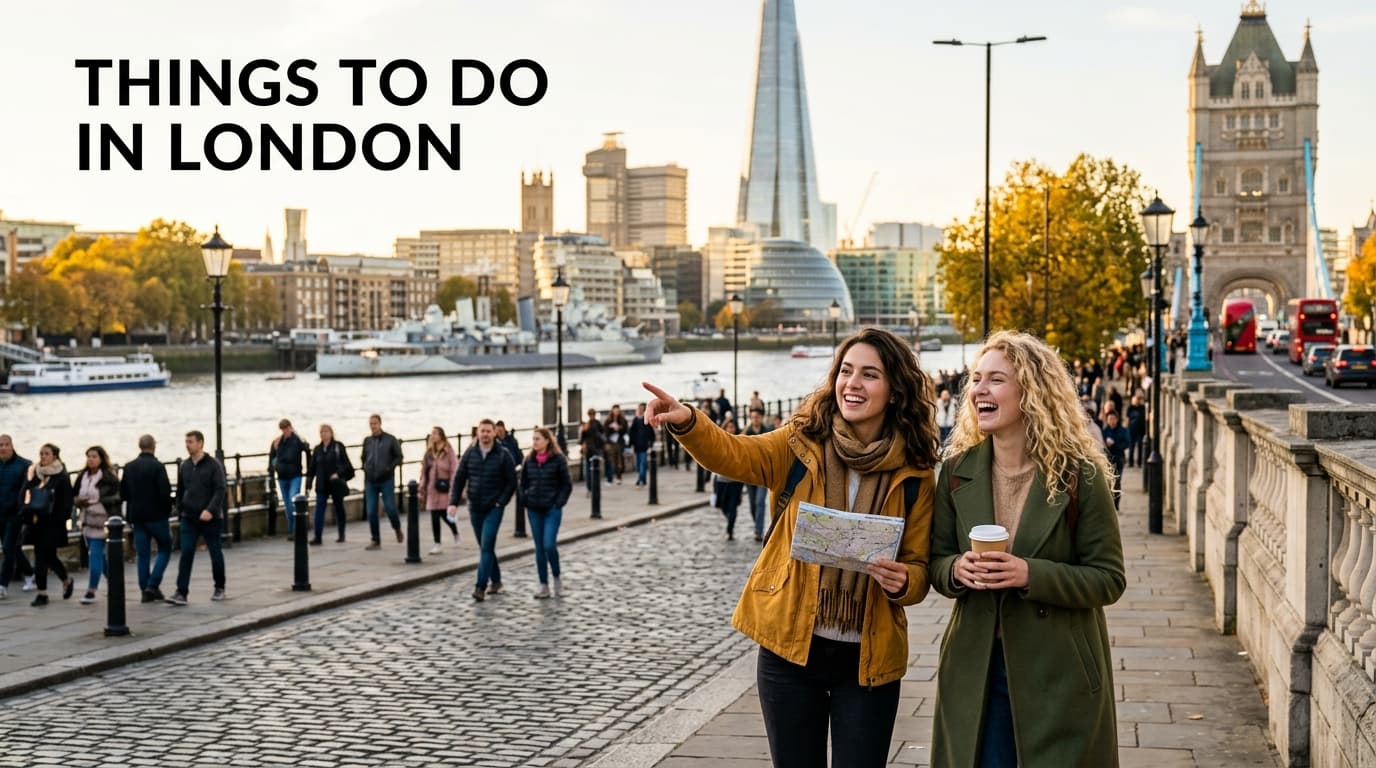
Things to do in London in 2026 range from iconic first-timer sights like Westminster, the Tower of London, and the London Eye to free museums, neighborhood markets, rooftop views, world-class theatre, and nightlife that runs late in the best possible way. If you want the smartest mix of classic, current, budget-friendly, family-friendly, date-night, and “what should we do tonight?” ideas, this guide covers it all.
London is one of those cities where you can build a perfect day in almost any direction, whether that means wandering through a royal park, eating your way through Borough Market, catching a West End show, or chasing a sunset view from a rooftop or riverbank. What makes London especially great in 2026 is how easy it has become to mix old-school landmarks with new experiential openings, seasonal events, and neighborhood-based outings that feel more local and less touristy. We checked the current city rhythm, looked at what still holds up, and grouped the best picks by mood, budget, area, and time of day so you can plan fast without missing the good stuff. If you want to discover current listings and nearby events as you plan, you can also browse Gidly's full events catalog.
Quick answer: the best things to do in London right now
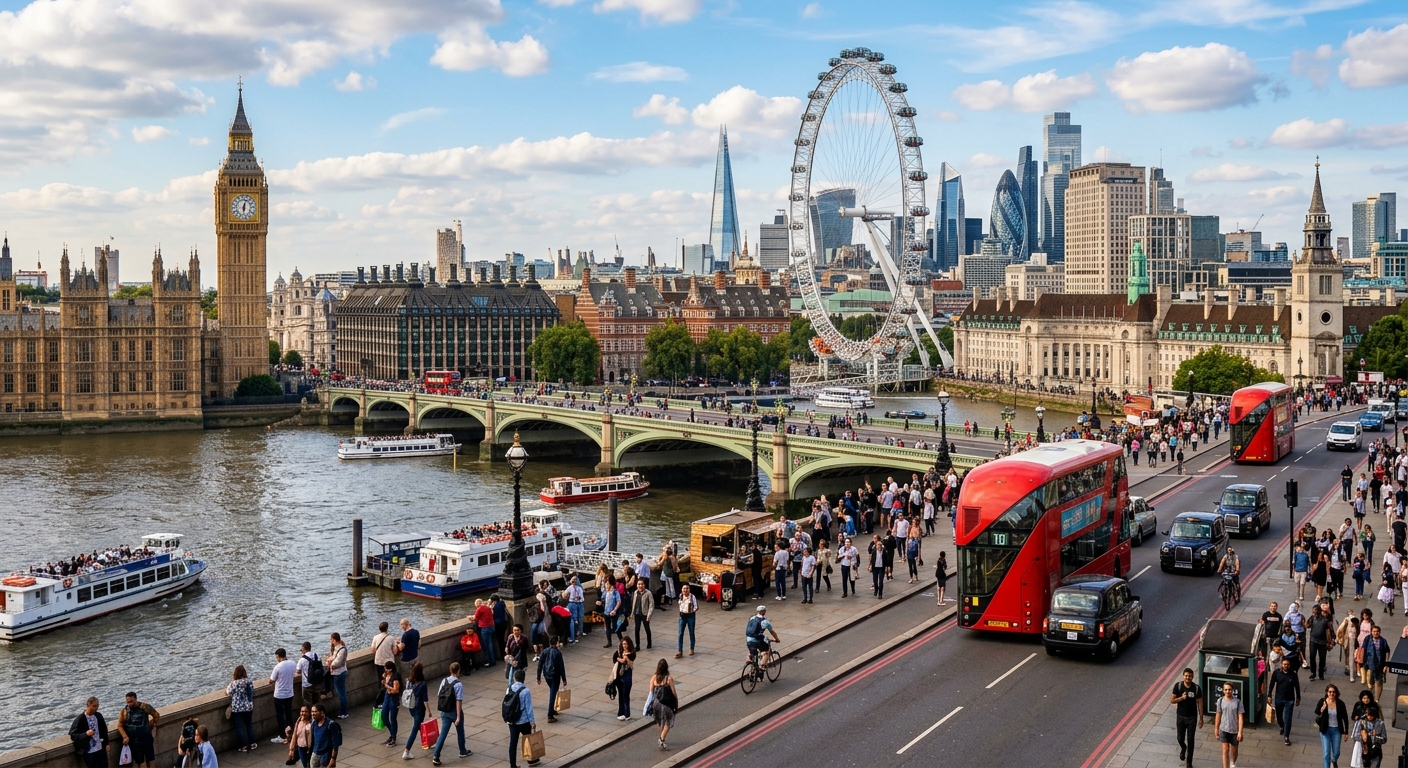
London rewards travelers who mix the obvious with the unexpected, and the best answer to “what should I do?” is usually a balanced day with one landmark, one neighborhood, one food stop, and one evening plan. The top all-around things to do in London right now include Westminster, the South Bank, the Tower of London, Covent Garden, a museum like the British Museum or Natural History Museum, and a sunset or night view from a rooftop or river walk.
That said, the real magic is in choosing based on your trip style. First-time visitors should anchor around the classic sights, while repeat visitors can lean into Camden, Shoreditch, Greenwich, Hampstead, or Richmond for a more local feel. Families usually get the best value from free museums and parks, couples do well with river views and theatre, and friends often want food markets, live music, and late-night neighborhoods.
If you’re short on time, the smartest way to use this list is to pair one “must-see” with one “vibe” pick. For example, do Westminster in the morning, a South Bank walk in the afternoon, and Soho or Covent Garden at night. That structure reduces travel time and gives you a fuller London experience without burning out.
Who this guide is for
This guide is built for a wide range of travelers because London is one of the rare cities that truly works for almost everyone. If you’re a first-time visitor, you’ll find the iconic essentials and the practical advice you need to avoid wasting time in queues or crisscrossing the city. If you live in or near London, you’ll find a few “actually worth it” reminders plus current event ideas that are better than the usual generic suggestions.
Families can use this to plan around stroller-friendly routes, free museums, parks, and kid-pleasing food stops. Couples can lean on date-night options that combine atmosphere, views, and dinner without feeling too scripted. Friend groups, solo travelers, and budget explorers will also find a solid spread of free, low-cost, and ticketed options that fit different energy levels and budgets.
We also wrote this with 2026 planning in mind, which means it’s not just a museum-and-monument checklist. The guide includes live entertainment, market culture, indoor rainy-day ideas, and ways to find current events when you’re deciding what to do today, tonight, or this weekend. That matters in London because the city’s entertainment scene changes fast, and the best outing is often the one that matches the moment.
How to use this list
The easiest way to use this guide is by filtering with your own trip logic: budget, neighborhood, weather, and time available. If you only have a few hours, focus on one cluster such as Westminster and the South Bank, or Covent Garden and Soho. If you have a full day, combine a major attraction with a park, market, or show so the trip feels layered rather than rushed.
Another smart approach is to choose based on mood. Want something classic? Go for the Tower of London or Westminster Abbey. Want something free? Spend the day in South Kensington museums and Hyde Park. Want something current and lively? Check the live event layer on Gidly and pair that with a nearby dinner reservation or pre-show drink.
If you’re planning with others, decide first whether the group wants history, food, nightlife, or a low-key outdoor day. London is huge, and the worst plan is often trying to satisfy everyone by moving too much. This guide will help you cluster experiences so you can spend more time enjoying and less time transferring between zones.
Fast snapshot of the top 10 picks
Here’s the quick version if you want the biggest hits without reading the full guide first. Westminster gives you the classic postcard London moment, while the South Bank delivers views, museums, and riverside atmosphere in one walkable stretch. The Tower of London brings the deep history, and Covent Garden gives you street performers, shopping, and dinner options that work day or night.
For free culture, the British Museum and the Natural History Museum remain essential, while Hyde Park and Regent’s Park are reliable if you want a break from the city pace. Camden and Shoreditch are better for edgy food, markets, and nightlife, and Greenwich is one of the best “slower” neighborhoods with great views and maritime history. If you want one premium wow-factor experience, book a sky-high viewpoint, a West End theatre night, or a special tasting-menu dinner.
The top 10, in no particular order, are: Westminster, South Bank, Tower of London, Covent Garden, British Museum, Hyde Park, Camden Market, Soho/Chinatown, Greenwich, and a theatre or rooftop viewpoint. Each of these works for a different kind of traveler, which is why they stay near the top year after year. London changes, but these experiences still define the city.
Why London never runs out of things to do
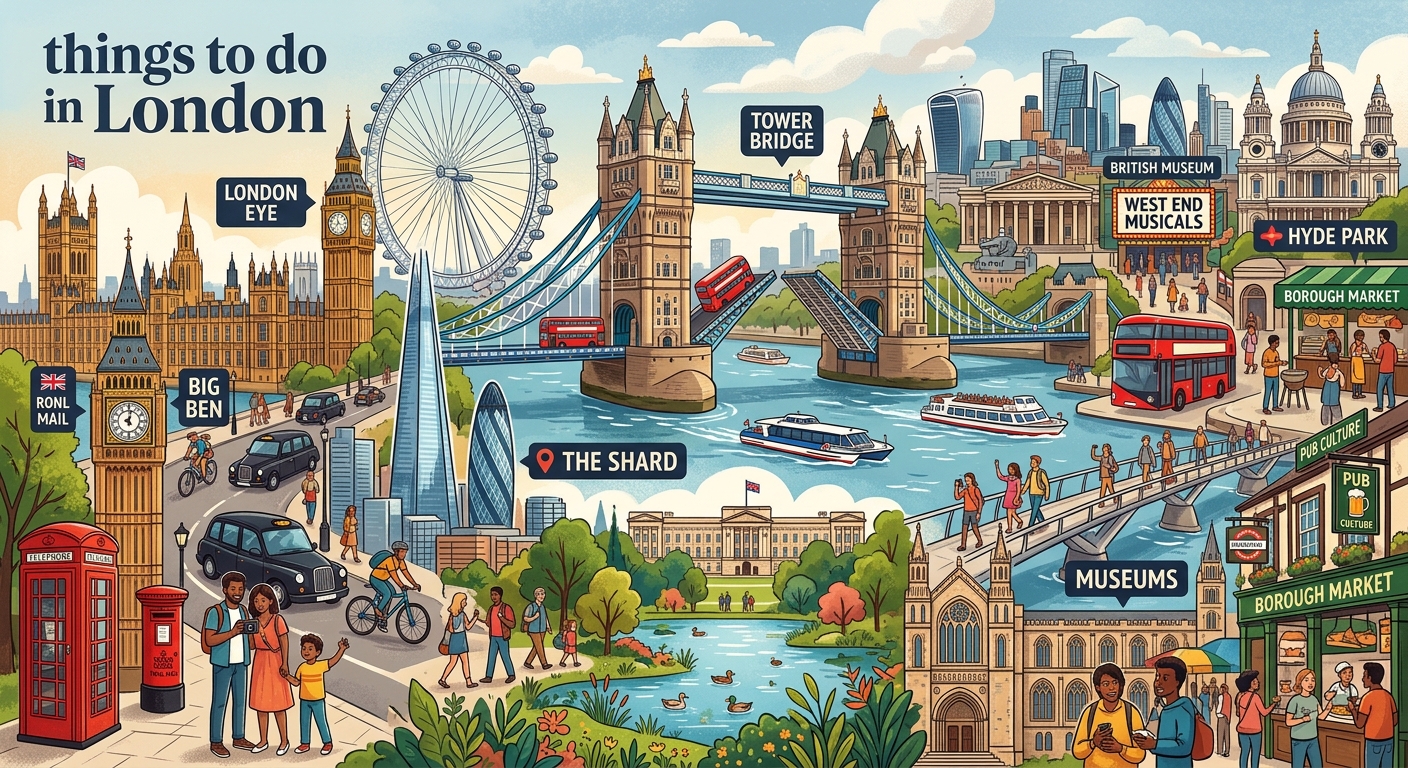
London never runs out of things to do because it isn’t one attraction city; it’s many cities stitched together by neighborhoods, transit, and a constant flow of culture. You can spend a day in world-famous museums, then eat street food at a market, then watch a play, and still feel like you’ve only sampled a tiny slice of the city. That layered structure is exactly why London stays strong for both repeat visitors and people who think they’ve “already seen it.”
The city’s best strength is that it works in different weather, budgets, and seasons. On a sunny day, the parks, river walks, canal paths, and market streets come alive. On a wet day, London’s museums, galleries, theatres, pubs, arcades, and indoor food halls keep the city fun instead of frustrating.
London also has one of the strongest event ecosystems in Europe, which means there is always something happening beyond the permanent attractions. That can be a major exhibition, a new immersive experience, a pop-up dining concept, a football match, a concert, a seasonal market, or a comedy run. If you’re planning a trip or even a single evening, the challenge isn’t finding an option; it’s choosing the right one.
Why the city works for every travel style and season
London works for nearly every travel style because its neighborhoods each have a distinct personality. A traveler who loves history can spend days in Westminster, the City, and South Kensington without getting bored. Someone who prefers food and nightlife can live happily between Soho, Shoreditch, Borough, and Camden, while nature lovers can bounce between parks, riverside paths, and suburban-feeling escapes like Richmond and Hampstead.
Seasonality matters, but London is unusually forgiving compared with cities that depend heavily on perfect weather. Spring brings gardens and outdoor terraces, summer brings festivals and long evenings, autumn is ideal for galleries and theatre, and winter makes the city feel cozy in a way that pairs perfectly with museums, pubs, and holiday lights. Even on rainy days, the city’s indoor options are so strong that “bad weather” often becomes a good excuse to do something better.
We’ve found from experience that visitors who treat London as a collection of neighborhoods, rather than a checklist of landmarks, enjoy themselves more. They also spend less on transport because they can stay in one area longer instead of zigzagging across the map. That neighborhood logic is one reason London continues to feel fresh, even if you’ve been before.
How London’s event, museum, theatre, and nightlife ecosystems interact
One of the cool things about London is that its cultural systems feed each other. You can visit a museum during the day, have dinner nearby, then catch a theatre show or live music set later that night. Many of the best dining and nightlife areas sit near major cultural zones, so it’s easy to build a whole day without dead time.
For example, South Kensington pairs museums with elegant restaurants and easy park access. Covent Garden and the West End give you shopping, street performance, dining, and theatre in one compact area. Shoreditch, Soho, and Camden mix bars, clubs, comedy, and late-night food, while Bankside and the South Bank blend river views with galleries, performance spaces, and skyline dinners.
This overlapping design is also why London is strong for mixed groups. A family can split up for a bit, a couple can add a show or cocktail stop, and friends can turn a casual outing into a full evening. Rather than forcing one “main event,” London gives you many small wins that stack together into a memorable day.
What’s trending in 2025–2026: experiential attractions, immersive exhibits, rooftop dining, neighborhood-based outings
In 2025 and 2026, the biggest shift in London has been the move toward experiences that feel participatory rather than passive. Immersive exhibits, interactive museums, audio-guided city walks, tasting experiences, and ticketed pop-ups continue to grow because travelers want memorable outings that feel worth the time and money. Rooftop dining and sky-view cocktails also remain popular, especially when paired with a sunset booking or an evening show.
Neighborhood-based outings are also having a major moment. Instead of racing around central London, many visitors are building a day around one area and then adding a restaurant, a market, and a live event nearby. That style feels more relaxed and more local, and it usually leads to better food and better pacing.
The other 2026 trend is a clearer split between “must-book” and “browse-and-go” experiences. High-demand attractions, theatres, and special exhibitions often need early booking, while markets, parks, museums, and some live music venues can stay flexible. Knowing which category you’re in saves you from last-minute disappointment, especially on weekends and holidays.
How Gidly helps you find current options by date, area, and vibe
Gidly is useful because London changes daily, and a static list can only get you so far. If you want to see what’s happening tonight, this weekend, or near a specific neighborhood, live event browsing is much more helpful than generic top-10 lists. That’s especially true if your plan depends on weather, transit, or a specific mood like date night, family fun, or solo exploring.
Our team’s recommendation is to use Gidly as the “current layer” on top of this guide. Use the guide to choose your area and category, then check Gidly for nearby events, pop-ups, concerts, comedy, and other time-sensitive options. That way you’re not just seeing London’s evergreen attractions; you’re also seeing what’s actually happening right now.
If you’re the kind of planner who likes options, this combination is ideal. The guide gives you structure, and Gidly gives you freshness. Together, they help you move from “I should do something in London” to “I already know what to book.”
The 25 best things to do in London: complete top picks
If you want the most complete list of things to do in London, this is the heart of the guide. These 25 picks cover the city’s greatest hits, but they’re written with a local’s eye so you know what’s actually worth your time, when to go, and what to pair nearby. We also include practical notes where they matter, because a good London day is often about timing as much as the attraction itself.
Some of these are classic “first trip” experiences, while others are better known to locals and repeat visitors. A few are free, several are low-cost, and a handful are premium splurges that feel worth it if you want a special view, meal, or night out. The key is not to try to do everything in one visit, but to choose a combination that fits your pace.
As you read, think in clusters. Westminster and the South Bank go together. Tower Bridge, the Tower of London, Borough Market, and the riverfront work as one day. Covent Garden, Soho, and Chinatown make another easy group. London feels much easier when you map it this way.
1. Westminster essentials: Big Ben, Parliament, Westminster Abbey
Westminster is the quintessential London postcard, and for good reason. Big Ben, the Houses of Parliament, and Westminster Abbey sit within a compact area that delivers the city’s political, religious, and architectural history in one sweep. If it’s your first time in London, this is one of the most efficient places to start because the visuals are instantly recognizable and the surrounding streets are easy to navigate.
Westminster Abbey is especially worth entering if you want the full experience, since the interior adds depth to the exterior wow-factor. Entry pricing varies by season and ticket type, so check the official site before you go; in recent seasons, adult tickets have typically been in the mid-20s GBP range, and opening hours often cluster around morning to late afternoon. Big Ben and the Parliament exterior are free to see from the outside, which makes this a strong budget-friendly start even if you skip the paid interiors.
From experience, the best move is to arrive early in the day or late afternoon when the crowds thin out slightly and the light is better for photos. Combine Westminster with a walk across Westminster Bridge, then continue toward St. James’s Park or the South Bank. If you want one of the city’s most complete “classic London” mornings, this is it.
2. South Bank icons: London Eye, Tate Modern, river walk
The South Bank is one of the most reliably enjoyable stretches in London because it combines views, culture, food, and people-watching in a walkable riverside strip. The London Eye is the headliner, but the experience really works because you can build an entire half-day around the river walk, street performances, galleries, and casual dining. Tate Modern adds a major art stop, while the Thames path keeps the whole outing moving.
The London Eye is located on the South Bank near County Hall, and official ticketing is usually tiered by date, time, and demand. Expect a ride that lasts roughly 30 minutes total, with the actual rotation taking about half an hour, though queue times can vary a lot by season and time of day. For the smoothest visit, book timed entry in advance and consider early morning or later afternoon slots if you want a less crowded experience.
What makes the South Bank such a strong London pick is that it works for almost every audience. Couples can make it romantic with sunset drinks, families can layer in the aquarium or nearby attractions, and solo visitors can simply stroll, watch the river, and stop where the mood strikes. If you only do one riverside area in London, make it this one.
3. Tower of London and Tower Bridge for history seekers
The Tower of London is one of the city’s most important historical attractions, and it remains compelling because it tells multiple stories at once: royal power, imprisonment, ceremony, and the Crown Jewels. It’s one of those rare places where history feels dramatic instead of dry, which is why it remains a top pick for first-timers and repeat visitors alike. The Tower Bridge nearby adds the iconic London skyline moment you probably want in your camera roll.
Tickets for the Tower of London are typically best bought in advance through the official site, especially during school holidays and summer. Prices vary, but it’s generally a premium attraction rather than a budget stop, so plan accordingly. Opening hours usually run from morning through late afternoon, though times can vary by season, and you’ll want to check the official page before traveling.
We recommend pairing the Tower with the nearby riverfront and a food stop at Borough Market or a pub near the City. If you like immersive history and don’t mind spending a few hours, this is one of the most rewarding things to do in London. It also works well as a half-day anchor before heading to an evening show or dinner reservation.
4. Buckingham Palace and the Changing of the Guard
Buckingham Palace remains a classic because it delivers the royal-London fantasy in a way almost everyone recognizes. The exterior is the main draw for many visitors, but the area around St. James’s Park gives you an elegant walking route that makes the whole visit feel more complete. If your timing is right, the Changing of the Guard adds extra ceremony, though the schedule can vary depending on the season and royal events.
The best advice here is simple: check the official Household Division schedule before you go, because not every day includes the same ceremony. It’s also smart to arrive early if you want a decent viewing spot, since the best angles fill up quickly. The palace itself has limited public opening windows, so many travelers focus on the exterior, the guards, and the surrounding park rather than expecting a full interior visit.
From a planning perspective, Buckingham Palace works best when paired with Westminster, St. James’s Park, and perhaps a walk to Trafalgar Square or Green Park. That lets you keep the royal and ceremonial part of the day together instead of treating it as a stand-alone stop. If you like London’s formal side, this area is still one of the city’s signature experiences.
5. British Museum and the classic museum circuit
The British Museum is one of the strongest free things to do in London, and it remains essential because the collections are broad enough to interest history lovers, families, and casual visitors. The building itself is impressive, and the range of artifacts means you can spend an hour or spend half a day without feeling like you’ve run out of material. For first-time visitors, it’s hard to beat the combination of scale, accessibility, and no admission fee.
Because the British Museum is free, it is still wise to check timed-entry policies or special exhibition ticketing on the official site, especially in busier travel periods. The museum generally opens daily with hours that extend into the late afternoon, though exact times can shift by day. If you want the best experience, focus on a few highlights instead of trying to see everything, since the place is enormous.
Pair it with nearby Bloomsbury bookstores, cafés, or a lunch stop for an easy cultural half-day. From experience, this museum is especially good on rainy days, on jet-lagged mornings, or when you need something impressive that won’t wreck your budget. It’s one of those London institutions that stays valuable no matter how many times you return.
6. Covent Garden for street performance, shopping, and dining
Covent Garden is one of the best all-around neighborhoods in central London because it balances atmosphere and convenience so well. Street performers, boutique shopping, casual dining, and a polished-but-not-too-stuffy energy make it work for almost any kind of outing. It’s especially good if your group can’t decide between lunch, shopping, culture, and a drink, because you can easily do all four here.
The best time to visit is usually late morning through early evening, when the piazza feels lively and the performers are active. Many restaurants and venues here are mid- to high-priced, but you can still keep costs moderate by choosing a casual lunch or dessert stop. The market hall and surrounding lanes also make this a good place for browsing gifts or finding something last-minute before a show.
Covent Garden is also one of the easiest places to build into a West End night out. You can eat nearby, walk to a theatre, and then continue to Soho or the Strand afterward. It’s a true London “connector” neighborhood, which makes it a smart anchor for people who want entertainment without too much logistics.
7. Sky Garden, The Shard, and other city viewpoints
If you want a big city view, London gives you several excellent options, each with a different price and vibe. Sky Garden remains a favorite because it can be very good value when you book free or low-cost timed entry in advance, while The Shard is the more premium, polished option with a higher-price feel. There are also smaller rooftop bars and viewpoints that can be easier to book if you’re mainly after a sunset drink rather than a full observation-deck visit.
Sky Garden’s official reservations can fill quickly, especially for sunset slots, so plan ahead if the view is important to your trip. The Shard is usually a paid ticketed experience with prices that vary by date and package, and it works best when you want a special-occasion atmosphere. Both are strongest on clear days, though London’s skyline can still be atmospheric in softer weather.
From experience, the best strategy is to choose one viewpoint and make it part of another plan, such as dinner, a river walk, or a nearby market visit. That way the view feels like a reward rather than a separate errand. If you love skyline photos or want a memorable date-night setting, this category should be high on your list.
8. Camden Market and canal walks for alternative London
Camden is London’s alternative heartbeat, and Camden Market is the easiest way to sample it. The area mixes food stalls, vintage shopping, music history, canal paths, and a lively street scene that feels more chaotic than polished in the best possible way. If you want something less formal than Westminster or Covent Garden, Camden is one of the city’s most distinctive day-out options.
The market works best on a leisurely visit where you can browse, snack, and wander without a strict schedule. Food prices vary widely, but there are usually enough budget-friendly choices to keep costs reasonable. The canal walk toward Regent’s Canal and King’s Cross is a great add-on if you want a more relaxed break from the market energy.
Camden is especially good for friend groups, teens, and travelers who prefer a less touristy feel. It’s also a strong spot for live music and nightlife if you stay into the evening. Just remember that the area can get crowded, so going earlier in the day often feels more comfortable.
9. Notting Hill and Portobello Road for colorful streets and markets
Notting Hill has a very specific charm: pastel townhouses, leafy side streets, and the famously browsable Portobello Road Market. The neighborhood is photogenic in a way that feels almost unfair, but it’s not just about pictures. The market and surrounding shops create a relaxing, wandering-friendly outing that’s especially nice when you want a slower day in London.
Portobello Road is best on market days when you can really feel the energy of the area, though the streets are still appealing outside those peak times. Prices depend on whether you’re shopping for antiques, fashion, or food, but the neighborhood itself is free to enjoy. A walk here pairs well with nearby cafés and a later stop in Kensington or Holland Park.
We like Notting Hill for couples, solo walkers, and anyone who wants an elegant but not overdone London day. It’s less about rushing and more about enjoying a neighborhood with personality. If Westminster is the formal face of London, Notting Hill is one of its prettiest casual days out.
10. Natural History Museum and Science Museum for all-ages appeal
The Natural History Museum and Science Museum are two of London’s best indoor attractions because they work for kids, teens, adults, and mixed-age groups at the same time. They’re especially helpful on rainy days or when you need a predictable, high-value outing without paying top attraction prices. The Natural History Museum’s building is a major draw on its own, and the Science Museum offers plenty of hands-on material that keeps younger visitors engaged.
Both museums are generally free for permanent collections, though special exhibitions often require paid tickets and may need advance booking. That combination makes them among the best budget-friendly things to do in London, especially if you’re traveling as a family. Hours typically run from morning to late afternoon or early evening depending on the museum and day of the week, so check the official websites before you go.
One practical tip: don’t try to “do” both fully in one visit unless your group has lots of energy. Instead, choose a primary museum and then pop into the other for a targeted section or café break. That gives you the best experience without museum fatigue.
11. Hyde Park, Regent’s Park, and Kensington Gardens for open-air downtime
London’s big parks are not just filler between attractions; they are attractions in their own right. Hyde Park, Regent’s Park, and Kensington Gardens are some of the best places to slow down, picnic, rent a pedal boat in season, or simply reset after a busy museum or shopping day. These parks are especially valuable because they give you open space without leaving central London.
Hyde Park is the most famous and often the most flexible, while Regent’s Park is a favorite for gardens and pleasant walks. Kensington Gardens feels slightly more elegant and is easy to combine with nearby museums in South Kensington. All three are free to enter, though certain seasonal activities or boating experiences may be paid.
For a low-stress London day, we often recommend a park-based midday break between two more structured activities. You can grab coffee, walk, sit, and people-watch without spending much money. This is one of the easiest ways to make London feel less intense and more livable.
12. West End theatre for classic night-out entertainment
The West End is one of the world’s most famous theatre districts, and seeing a show here still feels like a major London ritual. Whether you want a musical, play, revival, or splashy long-run production, there’s usually something on that fits your mood and budget. For visitors, this is one of the most reliable “special night” choices in the city.
Ticket prices vary dramatically depending on the production, seat location, and date, so it’s smart to compare official theatre websites, reputable ticket platforms, and day-of options if your dates are flexible. Prime seats can be expensive, but there are often cheaper upper-circle or weekday options. If you’re hoping for a specific show, book early; if you’re open-minded, you may find better value by staying flexible.
We like pairing a theatre night with Covent Garden, Soho, or a pre-show dinner nearby. That turns one ticket into a full evening. The West End is also one of the best date-night categories in London because it gives you built-in structure without making the night feel too formal.
13. Soho and Chinatown for food, nightlife, and late-night energy
Soho and Chinatown are where London’s late-night energy gets especially concentrated. This area is excellent for dinner, drinks, dessert, live entertainment, and general wandering when you don’t want the night to end too early. It’s one of the best zones in London if your plan is simple: eat well, have fun, and keep options open.
Food ranges from casual to upscale, and the neighborhood is full of small bars, hidden cocktail spots, and convenient theatre-adjacent restaurants. Chinatown is especially useful if you want to eat before or after a show, while Soho has the broader nightlife and entertainment mix. Depending on the venue, age restrictions and dress codes may apply, so it’s worth checking ahead if you’re planning a specific bar or club.
From experience, Soho is most fun when you treat it like a “wander and choose” neighborhood rather than overplanning every stop. That keeps the night spontaneous and lets you follow the energy. If you want one part of London that reliably feels alive after dark, this is it.
14. St. Paul’s Cathedral and the Millennium Bridge area
St. Paul’s Cathedral is one of London’s defining architectural landmarks, and the area around it gives you an elegant mix of history and modern city energy. The cathedral itself is worth entering if you want a more complete experience, but the exterior and surroundings already make the area compelling. The Millennium Bridge connecting St. Paul’s to Bankside adds one of the city’s most recognizable walking routes.
Opening hours and ticket prices for St. Paul’s can vary, so check the official site before visiting. It’s best paired with a walk across the bridge toward Tate Modern or the South Bank. That route gives you one of the best contrast moments in London: old stone cathedral on one side, contemporary culture on the other.
This is a strong choice for architecture lovers, photographers, and visitors who enjoy a slightly more polished cityscape. It can also be a calmer alternative to the busier Westminster area. If you like your London with a bit of grandeur and a good skyline angle, add this to your list.
15. Borough Market and London Bridge food stops
Borough Market is one of London’s most beloved food destinations, and it earns the reputation by being genuinely useful, not just trendy. You can sample excellent street food, browse high-quality produce, grab cheese, pastries, coffee, and lunch, or simply enjoy the atmosphere under and around the rail arches. It’s one of the best places in the city for a food-focused outing that feels both casual and curated.
Because it’s so popular, timing matters. Arriving earlier in the day usually means better access and a less cramped browsing experience, especially on weekends. Prices range from reasonable snacks to premium specialty items, so you can spend as much or as little as you want. This is also a strong pairing with London Bridge, the Tower area, or a South Bank walk.
We’ve found Borough Market works especially well for mixed groups because everyone can choose their own food without negotiating one restaurant. That makes it excellent for friend outings, families, and solo travelers who just want a good lunch. If you like food as part of the plan rather than a stop after the plan, Borough should be on your list.
16. Greenwich for views, maritime history, and a slower pace
Greenwich feels like a break from central London without actually leaving the city’s cultural orbit. It’s one of the best areas for a more relaxed day because you get maritime history, riverside scenery, a famous market, and excellent views. The Royal Observatory and Greenwich Park are especially rewarding if you want a mix of nature and history.
Getting there can involve rail, DLR, bus, or river services depending on where you start, and that journey is part of the charm. Greenwich is ideal when you want something less hectic than central London. The market and local cafés give you plenty of eating options, while the park and observatory make the visit feel substantial.
We recommend Greenwich for slower-paced travelers, couples, and families who want room to breathe. It’s also a good “second-trip” London area because it feels local without being obscure. If you’ve already done the central postcard sights, Greenwich gives you a softer, more scenic version of the city.
17. Richmond, Hampstead, or other local-feel escapes
Richmond and Hampstead are among the best London areas when you want the city to feel almost village-like. Richmond offers riverside walking, big skies, and easy access to green space, while Hampstead gives you a charming neighborhood feel with the bonus of Hampstead Heath. Both are excellent if your ideal day is less about landmark density and more about atmosphere.
These areas are especially strong for repeat visitors who want a break from central London intensity. There’s usually less pressure, fewer giant queues, and more room to enjoy cafés, bookstores, and casual meals. They also tend to appeal to locals, which is a sign you’re in the right place for a slower day.
If you’re building a trip around “how London feels” rather than “what London is famous for,” include one of these neighborhoods. They’re ideal for solo wandering, low-key date days, and anyone who enjoys taking it a little easier. Sometimes the best things to do in London are the ones that don’t feel like tourist attractions at all.
18. A rotating “current events” slot for what to do this week/weekend using Gidly
London’s live-events layer changes constantly, which is exactly why a rotating current-events slot belongs in any serious guide. What’s happening this week may include a comedy night, a pop-up exhibition, a food festival, a concert, a one-off performance, or a seasonal market that won’t be around next month. That’s why current listings are so useful when you’re deciding what to do today, tonight, or this weekend.
Our team’s best advice is to treat Gidly as your live decision tool. If you already know your neighborhood or vibe, you can use it to find nearby events without redoing your whole itinerary. This is especially useful for last-minute plans, rainy evenings, or days when you want to swap a standard attraction for something more current.
If you’re visiting London for more than a weekend, it’s worth checking the events layer more than once. You may find a better dinner-and-show combo, a neighborhood market, or a unique outing you wouldn’t have found through standard search alone. In a city this big, “what’s on now” often beats “what’s famous.”
Best things to do in London by scenario
The smartest way to choose things to do in London is by scenario, because different trips need different pacing, budgets, and energy levels. A date night should feel a little more atmospheric, while a family day needs flexibility and toilets nearby. A solo outing might prioritize ease and freedom, while a group outing usually needs something that gives everyone a win.
London is excellent at scenario-based planning because its neighborhoods and venues are so varied. You can make almost any kind of day work if you match the right area to the right mood. That’s especially helpful in 2026, when travelers are less interested in generic sightseeing and more interested in making each outing feel personal and efficient.
Below, we’ve broken down the best options by use case so you can match your plan to the people you’re with and the time you have. That’s also the easiest way to keep costs under control and avoid the classic “we spent the whole day on the Tube” mistake.
Date night in London: romantic walks, views, dinner, theatre, cocktails
For date night, London gives you an enviable mix of atmosphere and choice. A classic option is to start with a sunset river walk on the South Bank, book dinner near Covent Garden or Soho, and finish with a West End show or a cocktail bar. If you want something more luxurious, a rooftop view or a tasting-menu dinner can turn an ordinary night into a special occasion.
What makes London good for couples is that it offers variety at every price point. You can do a low-cost but memorable date with a park walk and pub dinner, or splurge on theatre and a skyline cocktail. The key is making sure your plan feels connected instead of random, which is why clustering nearby neighborhoods matters so much.
For a more intimate vibe, consider Greenwich, Hampstead, or Richmond for a slower daytime date, then move into the city for dinner. If you want a city-glamour version, choose St. Paul’s, a bridge walk, a premium restaurant, and a show. Either way, London makes it easy to build a date night that feels thoughtful without being overcomplicated.
With kids: interactive museums, parks, animals, and hands-on activities
Families usually do best in London when they choose one or two major activities and leave room for breaks. The Natural History Museum and Science Museum are strong anchors because they combine big visual appeal with enough hands-on material to keep children engaged. Add Hyde Park, Regent’s Park, or a playground stop, and you’ve got a very workable family day.
Animal encounters and child-friendly exhibits also help, especially on rainy days when everyone needs an indoor backup. Many of London’s major museums are free for permanent collections, which is excellent for family budgets, though special exhibits may charge. Just remember that kids get tired faster than adults, so a plan with fewer transitions usually goes better.
We always recommend checking food options, toilets, and stroller access before you go. That sounds basic, but it makes a huge difference in how relaxed the day feels. The best family outings in London are rarely the most ambitious ones; they’re the ones that are easy, engaging, and close together.
With friends: bars, live music, games, group dining, rooftop spots
Friend groups tend to have the most fun in London when there’s a built-in social anchor, such as food, a live show, or a games-based activity. Soho, Shoreditch, Camden, and parts of South Bank are especially good because they offer group dining, late-night bars, and enough variety that no one feels stuck. If your group likes a little planning and a little spontaneity, these neighborhoods are ideal.
Live music and comedy work especially well for group outings because they create shared energy without requiring constant conversation. Rooftop drinks or a market-food crawl can also be a strong friend-day format because everyone can choose their own pace. If your group has mixed interests, pick one central meeting point and then build the rest of the night around that.
From experience, the biggest mistake friend groups make is choosing a venue that sounds cool but doesn’t match the group’s actual vibe. Loud clubs are not always the right answer, and neither are overly formal restaurants. London gives you enough options to get the mood right if you’re honest about what kind of group you are.
Solo in London: museums, cafes, bookshops, walking routes, comedy
London is one of the easiest cities for solo exploration because you can fill a day without ever feeling awkward. Museums, bookshops, cafés, markets, and self-guided walks all work beautifully alone. If you want a full but low-pressure day, start in Bloomsbury, walk to the British Museum, break for coffee, then head to the South Bank or a neighbourhood like Notting Hill.
Solo outings are strongest when you allow flexibility. You don’t need to negotiate lunch, timing, or route changes, so it’s easy to follow your own interest. Comedy nights and live events also work well solo in London because the audience energy makes the night feel lively even if you came alone.
For a comfortable solo day, choose areas with good transit, plenty of cafés, and multiple things within walking distance. That gives you the freedom to stop early or keep going. London is a great city for being alone in public without being lonely, which is part of its charm.
Budget-friendly and free: the best no-cost or low-cost experiences
London can be expensive, but it does not have to be a budget killer if you plan well. Some of the city’s best museums are free, many parks cost nothing, and walking along the Thames or through neighborhoods like Notting Hill and Covent Garden can be as satisfying as paid attractions. That makes London a surprisingly strong city for low-cost travel.
The best budget strategy is to combine a free anchor with one paid highlight. For example, do the British Museum, walk through Bloomsbury, eat a cheap lunch, and then pay for one special activity in the evening. This keeps the trip memorable without stacking multiple big ticket items in one day.
Use off-peak travel, midweek visits, and online booking discounts where possible. Many attractions and shows are cheaper outside peak times, and some venues offer last-minute deals. If you stay flexible, London’s budget options go much further than people expect.
Team building and corporate outings: private rooms, group activities, immersive experiences
For team-building in London, the best experiences are usually interactive rather than passive. Think food workshops, escape rooms, immersive attractions, private dining rooms, guided group activities, or social games that get people talking. London’s corporate-friendly entertainment scene has grown a lot, and in 2026 it’s easier than ever to book curated experiences for groups.
The key for work groups is to balance structure and fun. You want enough organization that the event feels purposeful, but not so much that it turns into a meeting in disguise. Neighborhoods like Shoreditch, Soho, and South Bank are especially good because they have a lot of group-friendly venues close together.
One practical tip: check age limits, dress codes, private-space policies, and minimum group sizes before you book. That saves awkward surprises and helps the event feel polished. For corporate outings, London’s best advantage is volume—you have a lot of choices, so you can actually match the activity to the team.
Rainy day and indoor picks: museums, arcades, shows, indoor attractions
London rain doesn’t have to ruin your plans, because the city is built for indoor flexibility. Museums, shopping arcades, theatres, comedy clubs, indoor markets, and immersive attractions all make excellent backup options. In many cases, the rainy-day version of London is actually better because you’re pushed toward the city’s strongest indoor culture.
When it pours, we usually recommend staying neighborhood-based and not trying to do too much walking between zones. A museum plus lunch plus a show or market is far better than crossing the city in wet weather. If you want to keep costs down, the free museum circuit is still one of the best rainy-day strategies in Europe.
Rain also makes London’s cozy side shine. A pub lunch, bookshop browse, afternoon tea, or indoor food hall can feel more rewarding when the weather is bad outside. In other words, rainy days are not a problem here; they’re a nudge toward the parts of London that are already great.
Best things to do in London by category
Category-based planning is helpful when you already know what kind of outing you want but haven’t chosen the exact venue yet. London’s strength is breadth, so if you want music, art, outdoor time, theatre, or food, there are multiple strong ways to do it well. The trick is understanding which parts of the city are strongest for each category.
Each category below includes both iconic and more current options, because London’s entertainment scene changes quickly. We’ve also tried to include venue types rather than just names so you can use the guide whether you’re booking a show, choosing a market, or building a casual day around a theme.
If you’re browsing with other people, category filters are also a great way to keep everyone on the same page. Someone wants food, someone wants culture, and someone wants nightlife? London can do all three—if you cluster wisely.
Live music and concerts: venues, genres, and how to choose
London’s live music scene is one of the city’s most reliable nighttime draws, and it spans everything from intimate jazz rooms to major arena shows. The best choice depends on whether you want a big concert, a discovery night, or something in between. Soho, Camden, Shoreditch, and Southbank are among the most useful areas for finding venues with different sizes and genres.
When choosing a live music night, think about sound, crowd size, and transport home. Smaller rooms can be more atmospheric, while larger venues can feel more polished and easier to manage if you’re going with a group. If you’re after current listings, Gidly is especially useful for seeing what’s on by date and area instead of starting from scratch.
From experience, the best music nights in London often happen when you pair the gig with a nearby dinner or late drink. That makes the whole evening feel cohesive. If you like improvisation, jazz and live-session venues can be an excellent choice, while bigger concerts are better for planned special nights.
Art, museums, and exhibitions: major institutions and smaller galleries
London’s museum and gallery scene is one of the city’s biggest strengths, and it works because there’s both scale and specialization. The British Museum, National Gallery, Tate Modern, Tate Britain, Natural History Museum, and Science Museum are the anchor names, but there are also smaller galleries and temporary exhibition spaces that offer fresher, more focused experiences. This mix means you can go as grand or as niche as you want.
For visitors, the key is not to try to see everything. Pick one major institution and one smaller stop if you want a more satisfying day. Many exhibitions require timed entry, so book ahead when the topic is especially popular or seasonal. Free permanent collections make London a standout city for art and culture on a budget.
In 2026, experiential and interactive exhibitions continue to be especially popular, so keep an eye out for current installations rather than just permanent collections. If you want a calmer pace, gallery hopping in areas like South Kensington, the West End, and Bankside can be very rewarding. Art is one of the best reasons to slow down in London.
Outdoor and active: parks, canal walks, cycling, boat rides, sports
London can be surprisingly active if you want it to be. The city’s parks, river paths, and canal networks make walking and cycling practical and enjoyable, while boat rides add a fun shift in perspective. Hyde Park, Regent’s Park, the Thames path, Regent’s Canal, and Greenwich Park are all strong outdoor options.
If you want a low-effort active day, choose a scenic route and pair it with cafés or market stops. If you want something more intentional, rent a bike or plan a longer riverside walk. Boat services and seasonal rides can be a good choice when you want movement without too much physical effort.
Sports fans also have plenty to do, from major football matches to tennis, cricket, and race-day experiences depending on the season. If you’re traveling with a mix of interests, even a simple park day can work because London’s outdoor spaces are layered with food, play areas, and landmark views. The city is denser than it looks on a map, which makes active outings easier to fit into a day.
Theatre, comedy, and shows: West End, fringe, improv, stand-up
London’s theatre scene is a major reason people keep coming back, and it goes far beyond the most famous West End productions. You can find blockbuster musicals, dramatic revivals, fringe performances, improv, and stand-up throughout the city. That variety means there is usually something on for every budget and taste.
Theater pricing varies widely, with premium seats and popular shows costing a lot more than smaller venues or off-peak performances. If you’re flexible, midweek and less central seats often give much better value. Comedy is also a strong option if you want a lighter, more casual night out that doesn’t require prior theater knowledge.
One of the nicest things about London shows is how well they connect to dinner and drinks. A pre-show meal in Covent Garden or Soho, followed by a theatre outing, feels very “London in one night.” If you’re deciding between theater and nightlife, it’s often best to do both in sequence.
Food and drink experiences: markets, afternoon tea, tasting menus, pub culture
Food in London has become a full attraction category, not just a necessity between sightseeing stops. Borough Market, Camden, and various neighborhood food halls give you casual variety, while afternoon tea, cocktail bars, gastropubs, and tasting menus add a more formal experience. The city now handles food tourism extremely well, which is great news for anyone who likes planning around meals.
Prices can range from budget street food to premium tasting menus, so it helps to decide in advance whether the meal is part of the experience or the experience itself. Afternoon tea is still one of the classic London splurges, while a great pub lunch can give you local atmosphere at a lower cost. For groups, markets are often easier than sit-down restaurants because everyone can choose differently.
From experience, the best food days in London usually happen when the meal and the neighborhood match. Don’t force a high-end dining room if your trip mood is casual, and don’t miss the opportunity to turn a market crawl into lunch. Food is one of the easiest ways to make a London day memorable.
Nightlife and late-night: clubs, late bars, jazz, drag, speakeasies
London nightlife is broad enough that you can choose between high-energy club nights, intimate speakeasies, live jazz, drag shows, and late bars that are more about conversation than dancing. Soho, Shoreditch, Camden, and parts of the South Bank are especially strong for late-night flexibility. The best area depends on whether you want music, cocktails, crowds, or something more curated.
Nightlife planning should always include transport and timing. London is well connected, but late-night options can narrow depending on the day of the week, and some venues have age limits or dress codes. If you’re booking a special night, check the venue’s official page first, then build a dinner or pre-drink plan nearby.
The strongest nightlife nights usually combine one main venue with one backup option. That keeps you from wasting energy wandering without a plan. If you want a night that feels current, use Gidly to see what’s actually happening in the area you plan to be in, because the best choice is often the one closest to where you already are.
The best free things to do in London
London is one of the best cities in the world for free entertainment if you know where to look. Free museums, parks, river walks, public viewpoints, markets, and seasonal celebrations make it possible to have a rich day without spending on entry fees. That’s especially useful in a city where transport and meals can already add up quickly.
The best free experiences are usually the ones that combine atmosphere with flexibility. You can wander through a museum without paying for the permanent collection, picnic in a park, or walk through a neighborhood market without buying anything. The value is not just in saving money; it’s in keeping your schedule open and your stress level low.
Below are the best free picks to prioritize if you want a London day that feels full without feeling expensive. Many of them are also ideal as fillers between paid attractions, which makes them even more useful for itinerary planning.
Free museums and galleries you should prioritize
The most famous free museums in London include the British Museum, the National Gallery, Tate Modern’s permanent collections, the Natural History Museum, and the Science Museum. These institutions are popular because they combine major collections with no entry fee for standard access. That makes them some of the highest-value activities in the city, especially for families and budget travelers.
Even though the permanent collections are free, special exhibitions may cost extra, and some venues now use or encourage timed entry systems. Check the official websites before you go, especially on weekends and during school holidays. If you don’t have much energy, pick one museum rather than trying to do museum-hopping as a sport.
These institutions also sit in useful neighborhoods, which means you can pair them with lunch, a park, or a short walk. That’s important because a free museum becomes even better when it helps structure a broader day. For a strong no-cost outing, the museum plus neighborhood combo is hard to beat.
Free parks, river walks, and viewpoints
London’s parks are a huge part of the city’s identity and one of the easiest ways to enjoy it for free. Hyde Park, Regent’s Park, St. James’s Park, Kensington Gardens, and Hampstead Heath all provide a different flavor of open-air London. If you want city views without paying for a deck, some of the best vantage points come from parks, bridge crossings, or hilltop walks.
River walks along the Thames are another strong no-cost option. The South Bank path, the stretch near Tower Bridge, and the areas around Greenwich all let you enjoy the water, skyline, and city movement without an admission ticket. These routes are especially good on clear days, though they can still be pleasant in cooler weather with the right layers.
One of our favorite budget habits is to use these spaces as “reset buttons” between paid stops. You can save money, avoid burnout, and still feel like you’re actively seeing the city. London’s free outdoor spaces are not an afterthought; they’re part of the experience.
Free markets, street performance, and window-shopping districts
Markets are a great free experience because they give you atmosphere without forcing you to buy. Covent Garden, Camden, Portobello Road, and parts of South Bank all offer street life, browsing, and people-watching that can be entertaining on their own. Even if you don’t spend anything, you still get a strong sense of London’s local rhythm.
Street performance is another underrated part of free London. When the performers are active, the experience feels dynamic and very city-specific. That’s one reason Covent Garden remains such a dependable choice—it’s not just shopping, it’s a live public-space experience.
If you enjoy window shopping, London is unusually good at it because so many neighborhoods have architectural charm and layered storefronts. Notting Hill, Soho, Marylebone, and Chelsea can all be browsed casually. A walk without a purchase is still a good outing here.
Free seasonal events, parades, and public celebrations
London’s public calendar includes a surprising number of free or low-cost seasonal events, from holiday lights and parades to cultural festivals and community celebrations. The exact lineup changes by year, which is why live listings matter so much in 2026. If you’re in town during a major holiday period, there is usually something happening in a public space.
Some of the best free events are the ones that are easy to overlook because they don’t look like formal attractions. A fireworks display, a seasonal market, a public performance, or a neighborhood parade can be just as memorable as a ticketed attraction. The trick is to know what’s on when you’re in the city.
For current picks, it’s worth checking Gidly alongside official city and venue pages. That helps you catch things like one-night performances or weekend pop-ups. Free events are often the best value in London because they give you the sense that you stumbled into something special.
How to build a free London day by neighborhood
The easiest way to build a free day is to choose one neighborhood cluster and stay there. For example, you could do South Kensington museums, a walk through Hyde Park, and a low-cost dinner nearby. Or you could build a South Bank day around the river walk, Tate Modern, and street performances.
Another strong option is Westminster plus St. James’s Park plus Trafalgar Square, which gives you classic scenery without much spending. If you want a more alternative route, Camden Market and the canal path can keep you occupied for hours at little or no cost. The more you cluster, the more free time you preserve.
We’ve found that free London days are best when you don’t treat them like second-best options. They can be every bit as memorable as premium outings if you choose the right area and pace. In fact, some of the city’s most loved experiences are free because they’re simply well designed and easy to enjoy.
Best family-friendly and kid-friendly things to do in London
London is a very strong city for families because it offers a rare combination of educational attractions, free museums, green space, and transport options that make logistics manageable. Kids can get a lot out of the city without every outing turning into a long, expensive day. Parents benefit from knowing that there are usually bathrooms, food stops, and indoor backups not far away.
The best family outings are the ones that combine engagement and flexibility. London’s museums are great, but parks and hands-on exhibits are often what save the day when attention spans run short. That balance is especially important if you’re traveling with younger children or teens who need more variety.
Below are the best family-friendly approaches, plus a few practical tips that make the city easier with kids. We’ve also included ways to reduce queue time and avoid overcommitting, because the most successful family days are usually the simplest.
Best museum picks for children and teens
The Natural History Museum is one of the obvious family winners because kids love the building, the dinosaur sections, and the overall spectacle. The Science Museum is also excellent thanks to its more interactive style, which appeals to teens and younger children who like hands-on learning. The British Museum can work for families too, but it often suits older children better unless you’re focusing on a few highlights.
Many of these museums are free for general entry, which makes it easier to keep the day affordable. Special exhibitions may cost extra, and some interactive experiences need advance booking, so check ahead. If your kids get overwhelmed quickly, pick one museum and a lunch break rather than trying to chain multiple institutions together.
From experience, the most successful family museum visits include a clear “must-see” target and an exit plan. That way the kids don’t feel trapped and the adults don’t feel like they’re playing catch-up all day. London is full of options, but fewer, better-chosen stops often win.
Parks, playgrounds, and animal encounters
London’s parks are a gift to families because they allow for decompression between more structured activities. Hyde Park, Regent’s Park, Kensington Gardens, and St. James’s Park all have family-friendly paths, open space, and in some cases playgrounds or nearby animal features. They’re perfect for burning off energy before lunch or after a museum visit.
Animal encounters can add a lot of excitement to a family day, especially if children are not naturally museum-focused. Depending on season and location, you may want to consider a zoo visit, wildlife-focused park walk, or waterfowl spotting near the city’s green spaces. Even simple duck-spotting can count when you’re traveling with small children.
These open-air spaces also help parents manage the day’s rhythm. If you can plan a park break before the crankiness starts, the whole outing becomes easier. London’s parks are not just pretty; they are one of the city’s best family logistics tools.
Rainy-day family options
Rainy days can actually be better for family sightseeing in London because the city’s indoor offerings are so strong. Museums, indoor markets, theatres, aquarium-style attractions, and hands-on exhibits give you plenty of backup. The trick is choosing something with enough movement or visual interest to hold kids’ attention.
We recommend avoiding overly ambitious multi-stop schedules when the weather is bad. Instead, choose one major indoor attraction, one food stop, and maybe one short walk if the rain clears. Trying to “make up” for the weather by overplanning usually backfires.
Another useful family move is to keep a snack plan in place. Kids often care less about the attraction than whether they’re hungry or tired. London has plenty of cafés and casual food options, but it helps to know where they are before you need them.
Stroller-friendly routes, toilets, and food stops
Logistics matter a lot when you’re out with kids, and London is easier if you think in terms of route quality instead of just attractions. Areas like South Bank, Kensington, Hyde Park, and Covent Garden can be stroller-friendly in parts, but pavements, crowds, and stairs still matter. Planning around accessible entrances and nearby toilets is worth the extra minute of research.
Food stops should also be part of the plan. A sit-down café, museum café, or market lunch can save the day better than a hurried snack while walking. If you’re with younger kids, consider using the visit as a chance to break the day into manageable chunks rather than pushing through a mega-itinerary.
Families often enjoy London more when they accept that a “successful” day does not mean seeing everything. A good park, a strong museum, and a nice meal are enough. That’s especially true if you want the trip to feel fun rather than exhausting.
How to avoid queues and overtired kids
The best queue-avoidance strategy is to book timed-entry attractions in advance whenever possible and arrive early. This is particularly important for the London Eye, the Tower of London, and popular family exhibitions. Early time slots tend to be easier with children because energy is higher and crowds are lower.
Another useful tactic is to group your day by geography. If your museum, lunch, and park are all in the same area, you minimize transit stress. This simple clustering technique often makes more difference than the specific attractions you choose.
Finally, don’t underestimate the value of a flexible exit. If kids are done, be done. London will still be there, and there’s almost always another good outing nearby for the next day. The most memorable family trips are usually the ones that stayed humane.
Best neighborhoods in London for things to do
Neighborhood planning is one of the smartest ways to handle London because the city is large enough that the wrong cross-town hop can waste a huge amount of time. The good news is that many of the city’s best things to do cluster naturally, which means you can often see more by moving less. When you choose a neighborhood well, the whole day feels easier.
Below we break down the strongest areas for sightseeing, food, nightlife, and slower local experiences. Each one has its own rhythm, and knowing those rhythms helps you decide where to base yourself or where to spend a specific day.
If you’re visiting for a short time, you do not need to cover all of these. In fact, you’ll probably enjoy London more if you pick two or three clusters and leave the rest for a future trip. The city rewards focus.
South Bank and Waterloo
South Bank and Waterloo are among the best areas for first-timers because they combine riverside walking, iconic views, theatre, museums, and easy transit. You can see the London Eye, walk along the Thames, stop at Tate Modern, and still feel like you’ve had a varied day without traveling far. This cluster is one of London’s most efficient.
The area is especially good for people who like to keep things open-ended. You can choose a paid attraction or simply enjoy the river path and atmosphere. Restaurants, bars, and casual food options are plentiful, so it’s easy to transition from day to night without relocating.
If you want a practical London base, South Bank and Waterloo are hard to beat. You get strong connectivity, lots of food, and easy access to major sights. For mixed groups, this is one of the safest bets in the city.
Westminster and St James’s
Westminster and St James’s are the classic London-center combo, and they’re ideal if you want royalty, politics, and polished scenery in one day. Big Ben, Parliament, Westminster Abbey, Buckingham Palace, and St. James’s Park all sit close enough together to create a seamless route. It’s a very elegant part of the city, but it also feels practical because so many attractions are nearby.
This area works best early in the day when the light is good and the crowds are not at their highest. You can then continue to Trafalgar Square, Green Park, or the West End. If you like the idea of a formal London day that still leaves room for lunch and a show, this is an excellent area to focus on.
We often recommend this zone to first-timers because it’s where many people mentally picture London, and the reality is still strong. It’s iconic without being fake. That’s why it remains one of the city’s most reliable sightseeing bases.
Covent Garden and the West End
Covent Garden and the West End give you one of the most entertainment-rich zones in London. You have shopping, street performance, theatres, restaurants, and bars all within a very compact area. If your goal is to be entertained without doing much transit, this is one of the best places to be.
The area works particularly well for date nights and show nights. You can eat before a performance, browse afterward, and keep the evening going in nearby Soho if you want to extend it. Even without a ticketed event, the neighborhood itself has enough energy to feel like an outing.
One thing to keep in mind is that this area can get crowded, especially on weekends and evenings. That’s not necessarily a problem, but it does mean reservations help. If you like buzz and convenience, though, Covent Garden and the West End are very hard to beat.
Soho and Chinatown
Soho and Chinatown are one of London’s most dependable combinations for food and nightlife. They’re great for late dining, cocktails, drag, comedy, and general energy after dark. If you want a neighborhood that feels like it’s doing something at almost any hour, this is the place.
What makes this area especially useful is its flexibility. You can come here for a quick meal, a full night out, or a pre-theatre dinner. The streets are busy enough to feel lively, but the density of options means you can pivot if a spot is full.
For visitors, Soho and Chinatown are ideal when the night should feel fun and slightly unpredictable. For locals, they’re a dependable choice when the group wants many options without a lot of planning. Just remember that some venues have age restrictions, especially later at night.
Shoreditch and East London
Shoreditch and wider East London are where you go for creative energy, street art, indie bars, coffee culture, and a younger nightlife vibe. The area has evolved a lot, but it still holds onto a slightly experimental feel that makes it fun for friend groups and repeat visitors. If you want something less polished than central tourist zones, this is a strong bet.
There are also plenty of food and drink options, from casual bites to design-forward venues. Live music and comedy can be very strong here, and the street art alone is enough to justify some wandering time. It’s a good area to visit with a loosely planned itinerary rather than a strict checklist.
If you’re someone who likes neighborhood character, Shoreditch rewards curiosity. It’s less about monuments and more about modern city texture. That makes it one of the best “feels current” parts of London.
Camden and King’s Cross
Camden and King’s Cross create a useful north-London pairing because they offer a mix of markets, music history, transport access, and canal-side walking. Camden is the more eclectic and market-driven side, while King’s Cross has become much stronger for food, architecture, and transit convenience. Together, they make a very practical and fun area to spend time in.
Camden is especially good for browsing and street energy, while King’s Cross is better if you want a cleaner, more organized base with easy connections. The canal path between these areas is also a lovely walk when the weather cooperates. If you’re arriving or departing via rail, this cluster is especially useful.
This area is strong for teens, friend groups, and travelers who want a more contemporary London feel. It also gives you a nice contrast to the formal central districts. In London, that contrast is part of the fun.
South Kensington and Knightsbridge
South Kensington and Knightsbridge are a polished museum-and-shopping cluster that works beautifully for families, culture lovers, and travelers who enjoy a more elegant environment. The Natural History Museum, Science Museum, and V&A are major draws, while nearby dining and shopping give the area a high-value half-day feel. If you want culture with a little glamour, this is a perfect zone.
The area is especially useful on rainy days because the museums are so strong and so close together. You can move from one to another, then stop for lunch nearby without needing a long transit hop. Knightsbridge adds a luxury-shopping angle if that’s part of your travel style.
For travelers who want a classic but not chaotic London day, South Kensington is one of the easiest neighborhoods to recommend. It’s orderly, beautiful, and packed with useful options. That combination is harder to find than it sounds.
Notting Hill and Kensington
Notting Hill and Kensington are among the prettiest parts of London for a slower-paced day. Notting Hill gives you market energy, colorful streets, and a more residential vibe, while Kensington offers museums, parks, and upscale calm. Together, they make a nice mix of beauty and practicality.
This area is particularly strong for visitors who want a relaxed day with good photo opportunities and enough cafés to linger in. It’s less frantic than the central theatre districts and often feels more breathable. If you prefer neighborhoods you can stroll rather than sprint through, this cluster is ideal.
Kensington also connects easily to museums and parks, which makes it useful for families and couples. Notting Hill is a little more playful and browse-friendly. Both are excellent if you like your London with a bit of elegance.
London Bridge, Borough, and Bankside
London Bridge, Borough, and Bankside form one of the city’s best mixed-use areas because you get history, food, skyline views, and riverside access all close together. The Tower of London, Borough Market, Tate Modern, Shakespeare’s Globe, and the riverfront can all fit into one productive day. It’s one of the most efficient parts of London for travelers who like to combine experiences.
Food is a major draw here, but the area also works for culture and scenery. Bankside’s art and theatre options are great for a more curated outing, while Borough Market gives you an easy lunch anchor. If you like the idea of walking from one major stop to another without complicated transit, this area is excellent.
We often recommend this cluster to travelers who want “a lot of London” in a single day. It’s one of the city’s most rewarding neighborhoods for first-timers and returning visitors alike. You can do a lot here without feeling rushed.
Greenwich, Richmond, and Hampstead for local escapes
Greenwich, Richmond, and Hampstead are three of the best options when you want to feel like you’ve stepped into a more local or relaxed side of London. Greenwich has maritime history and river views, Richmond has greenery and a calmer riverside feel, and Hampstead brings village-like charm plus the Heath. Each gives you a different kind of break from central London intensity.
These are great for second-day or repeat-trip planning, especially if you’ve already done the big landmarks. They tend to feel slower, more residential, and more comfortable for wandering. If your ideal day involves fewer crowds and more atmosphere, add one of these to your list.
Because London is so large, these kinds of escapes are often what make the city feel livable instead of just visitable. They remind you that London is not only a collection of famous sights; it’s also a city with neighborhoods people actually enjoy spending time in. That matters a lot when choosing the best things to do in London.
Seasonal guide: what to do in London in 2026 by time of year
Seasonality makes a bigger difference in London than many visitors expect, even though the city is good year-round. The vibe changes with daylight, weather, school holidays, and the city’s event calendar, which means the same activity can feel very different depending on when you go. Planning with the season in mind helps you get more out of your time.
Spring and summer are great for parks, river walks, outdoor dining, and longer evening plans. Autumn is ideal for museums, theatre, and cozy food spots, while winter brings holiday markets, lights, and a very inviting indoor culture. No matter when you visit, there’s usually a version of London that suits the weather.
We also include a quick guide for today, tonight, this weekend, and bank holidays because those searches are increasingly common. In a city like London, current timing is often just as important as season.
Spring in London
Spring is one of the prettiest times to be in London because the parks, gardens, and street trees start to wake up. It’s a great season for Hyde Park, Kensington Gardens, Regent’s Park, and riverside walks because you get pleasant temperatures without the full summer crowds. Spring also works well for museum days and low-key neighborhood exploring.
If you like photography or outdoor café stops, spring gives you a lot to work with. It’s also a strong time for first-time visitors because the city feels active but not overwhelming. From a planning perspective, it’s smart to mix one or two outdoor outings with indoor backups in case the weather swings.
Seasonal events can also begin to pick up in spring, so check live listings for exhibitions, festivals, and weekend programming. Spring in London is all about flexibility and layering. You want enough structure to keep moving, but enough openness to enjoy the weather when it cooperates.
Summer in London
Summer is one of the easiest times to enjoy London’s outdoor side, with longer days, more active events, and a stronger terrace culture. The South Bank, parks, outdoor markets, river walks, and rooftop bars are especially appealing in this season. It’s also when the city feels most social after work and into the evening.
Because summer is busy, advance booking becomes more important. Popular attractions, dining spots, and shows can sell out faster, and queues are more likely. If you’re visiting in summer, start your day earlier than you might think, especially for ticketed attractions.
This is also a good season for festivals, concerts, and neighborhood events. If you want to do something current, Gidly’s live listings are particularly useful in summer because the event layer is so active. Just remember that the best summer day is often the one that includes a break in a park or by the river.
Autumn in London
Autumn may be London’s most underrated season because the weather cools, the leaves turn, and the city’s indoor strengths come back into focus. Museums, galleries, theatre, comedy, food halls, and cozy pubs all become especially appealing. This is a great time to enjoy London in a more relaxed, less holiday-driven way.
Autumn also suits neighborhood-based planning very well. You can choose a district, spend the day walking, then finish with dinner and a show. The pace feels manageable and the city’s cultural side is in full swing.
If you’re visiting in autumn, we recommend keeping an eye on special exhibitions and seasonal programming. Many of the city’s best “current” experiences tend to cluster in this period. It’s a great season for people who like London with a bit more texture and less rush.
Winter and holiday season in London
Winter in London has a cozy, festive energy that makes the city feel especially inviting after dark. Holiday lights, seasonal markets, indoor attractions, and theatre all become stronger draws. The short daylight hours can be a downside, but they also make evening plans feel more atmospheric.
This is the time of year to lean into museums, shows, afternoon tea, and warm food stops. It’s also a smart season to use transport efficiently and avoid trying to do too much across long distances. Winter works best when your plan is compact and well-paced.
Holiday travel can get busy, so book popular attractions and restaurants early if you’re in town in December. If you want festive things to do, check current listings and official seasonal pages. London in winter is very good at making a simple night out feel special.
What to do today, tonight, this weekend, and on bank holidays
For “today” and “tonight” decisions, the best approach is to look at neighborhood density and live listings rather than trying to rebuild an itinerary from scratch. If you’re in central London, you can usually find a museum, show, food market, or cocktail bar nearby. If you’re in East London or Camden, you may find more nightlife, concerts, or casual entertainment options.
For this weekend, build around timed-ticket attractions in the morning and leave one afternoon or evening slot open for whatever’s current. That’s where Gidly helps the most, because it lets you see what is actually on in the city right now. Bank holidays are especially important to check in advance, since hours and crowd levels can change.
The easiest way to avoid disappointment is to keep one “must-do” and one “flex” option. If the queue is too long or weather turns, you can swap without losing the whole day. In London, flexibility is a superpower.
Practical tips for planning your London trip
London is easy to enjoy when you get the practical basics right. The city has excellent transport, but it’s also large enough that bad planning can lead to unnecessary stress. Knowing how to move around, pay for transit, and book major attractions saves time and money.
This section covers the main logistics: getting around, ticketing, prices, opening hours, accessibility, and weather prep. If you’re only skimming one practical section, make it this one. A smoother day usually starts with a few smart decisions before you even leave the hotel.
We also recommend always checking official sources for the latest hours and pricing, since London attractions can change seasonally. That matters more in 2026 than ever because many venues continue to refine timed entry, capacity, and event scheduling.
How to get around: Tube, bus, walking, taxis, river transport
The Tube is the fastest way to cover longer distances, while buses can be better for scenic or above-ground travel. Walking is often the best option once you’re within a neighborhood cluster, because many of London’s best experiences are closer together than they seem on a map. Taxis and rideshares can be useful late at night or when traveling with luggage, but they are usually not the most efficient everyday option.
River transport can be a fun bonus rather than a default, especially if you want to enjoy the Thames as part of the experience. It’s not always the quickest method, but it can make a trip feel more memorable. For most visitors, the best combo is Tube for distance and walking for the last mile.
Don’t underestimate how much travel time affects the quality of your day. In London, one fewer cross-city hop can make the difference between a relaxed itinerary and a tiring one. Think in clusters, not just destinations.
Transport payment: Oyster, contactless, travel cards, daily caps
London’s transport payment system is refreshingly straightforward once you know the basics. Contactless bank cards and mobile wallets are widely accepted on the Tube, buses, and many rail journeys in the city, while Oyster cards remain a common option for visitors. The system generally applies daily and weekly caps, which helps keep fares predictable when you’re moving around a lot.
Travel cards may still be useful in some cases, but for many visitors, contactless is the simplest and most flexible choice. If you’re arriving from Heathrow, the Tube, Elizabeth line, Heathrow Express, and other services each have different price and speed tradeoffs. Choose based on whether you care more about budget, speed, or convenience.
Our practical advice is to plan your route before you leave the airport and confirm payment compatibility. That prevents a lot of first-day confusion. Once you have transport sorted, London becomes significantly easier to enjoy.
Prices, opening hours, and how to check official sources
London prices vary widely depending on the attraction, time of year, and whether you book in advance. Some attractions are free, some are mid-range, and some are premium. Because of that spread, it’s best to verify current prices on official venue websites before you commit.
Opening hours also change seasonally, especially around holidays and special events. Museums may have one set of hours, cathedrals another, and observation decks another still. If an attraction matters to your trip, check the official site the day before and again the morning of your visit.
This matters most for timed-entry attractions and popular shows. Booking early can save you money and frustration. If you treat official pages as your final source, you’ll avoid a lot of outdated third-party information.
Booking tickets, skip-the-line, and timed entry tips
Timed-entry booking is worth it for London’s busiest attractions because it reduces uncertainty and often shortens your wait. That’s especially true for the London Eye, the Tower of London, special museum exhibitions, and theatre. Booking in advance can also sometimes unlock better pricing or package options.
Skip-the-line products can be useful, but they’re not always necessary. Sometimes the real win is simply choosing an early or late slot, or visiting on a weekday. Before paying extra for priority access, ask whether timing alone would solve the problem.
The best booking habit is to reserve the hardest-to-replace part of your day first. Once that is secure, you can keep the rest flexible. That approach reduces stress and lets you adapt if plans change.
Accessibility, family logistics, and weather prep
Accessibility varies by venue, so check official pages for step-free access, elevator availability, restroom details, and seating policies. Many major London attractions are workable for visitors with mobility needs, but not every older building is equally easy. Family logistics matter too: toilet access, stroller routes, snack stops, and heat or rain planning all make a big difference.
Weather prep is especially important because London can shift from dry to wet quickly. Layers, comfortable shoes, and a compact umbrella are worth carrying. If you’re traveling with kids or planning a long outdoor day, having a weather backup can save the outing.
A little practical planning makes London much more enjoyable. The city rewards those who arrive prepared without overpacking the day. That balance is exactly what most good trips need.
Insider tips and local hacks for London
If you want to experience London more like a local and less like a rushed tourist, a few simple hacks go a long way. The city is huge, busy, and often more expensive than visitors expect, so knowing where to save time, money, and energy makes a real difference. A few smart choices can turn an average day into a genuinely good one.
The best insider advice is usually about timing and clustering. Arrive early, book selectively, and don’t make the city work harder than it needs to. London is full of great experiences, but the easy ones are often the best ones.
We’ve included both value tips and etiquette reminders here because the city is more enjoyable when you avoid the common friction points. Think of these as the practical shortcuts locals use without making a big deal about them.
Best times to visit popular attractions to avoid crowds
Early mornings and late afternoons are usually the best times to visit major attractions if you want fewer crowds. This is particularly true for Westminster-area landmarks, the Tower of London, the London Eye, and the most popular museums on weekend days. If you have flexibility, midweek often feels calmer than Saturday or Sunday.
For markets, earlier often means easier browsing, while later can mean more atmosphere but also more congestion. For observation decks or skyline spots, sunset booking is popular but tends to sell out faster. If you’re prioritizing comfort over Instagram timing, choose the less obvious slot.
One of the simplest crowd-avoidance hacks is to build your day around one big attraction and one quieter neighborhood stop. That keeps your overall experience balanced. In London, pacing matters just as much as the destination.
Where locals go for better value and fewer queues
Locals often head to neighborhoods like Richmond, Hampstead, Marylebone, and parts of East London when they want a good day without the highest tourist density. These areas still offer good food, parks, and atmosphere, but they usually feel a little less overwhelming. That makes them great when you want to breathe a bit.
Another local move is to choose less obvious museum paths or slightly off-peak dining times. Lunch slightly earlier or later than the standard rush can improve the experience a lot. The same is true for theatre and late-night dining—moving your schedule a bit off the busiest window can make things feel smoother and cheaper.
If you’re hunting for value, don’t skip neighborhood pubs, local cafés, and parks. Many of London’s best memories happen in these lower-key settings. The city’s charm is not only in the famous headline attractions.
Hidden-gem swaps for overhyped attractions
Not every famous attraction is the best use of your time, especially if the line is long or the experience is more expensive than it needs to be. Sometimes a neighborhood viewpoint, a park, or a market gives you a better London feeling than a heavily marketed stop. That doesn’t mean skipping the icons entirely, but it does mean making space for alternatives.
For example, if a sky deck is fully booked, a rooftop bar or bridge walk may give you a more relaxed view. If a huge lunch market is too crowded, a smaller neighborhood food hall can work just as well. If a major museum feels overwhelming, a smaller gallery can be more satisfying.
This swap mindset is useful because London’s strength is abundance. There’s almost always a second-best option that is still excellent. Being willing to pivot is one of the best ways to enjoy the city.
Discount and deal strategies: passes, off-peak, midweek, combos
Discount strategies in London often come down to timing, bundling, and knowing what actually needs a ticket. Off-peak travel and midweek visits can reduce costs, while combo tickets may help if you already know you want multiple paid attractions. Attraction passes can be helpful for some itineraries, but they only make sense if you will genuinely use them.
Many visitors save money by mixing free attractions with one or two paid highlights. That approach often works better than trying to maximize every paid ticket. If you’re booking theatre or special exhibitions, look for weekday or less popular seating options to improve value.
Our advice is to calculate the day’s total experience, not just the headline ticket price. Sometimes a slightly more expensive attraction is worth it because it saves time or replaces two smaller purchases. Value in London is often about the full package, not the sticker price alone.
Safety, etiquette, and common tourist mistakes
London is generally straightforward for visitors, but basic city awareness still matters. Keep an eye on your belongings in crowded places, especially on public transport and in busy market areas. For etiquette, stand on the right on escalators, move efficiently through station gates, and avoid blocking walkways when you stop to look at maps or take photos.
Common tourist mistakes include trying to do too much in one day, underestimating travel times, and not checking whether attractions need advance booking. Another big mistake is forgetting that some areas are best at certain times of day; for example, markets and nightlife districts have very different energies in the morning versus the evening.
London is easier when you act like someone who expects the city to be busy. If you prepare a little and stay flexible, the city feels much more generous. That’s one reason so many people fall in love with it.
Comparison tables: how to choose the right thing to do in London
Comparison tables are useful in London because the city offers so many options that decision fatigue becomes the real problem. A good table can quickly show you what works for your budget, who you’re with, where you are, and how much time you actually have. That’s often more useful than a long description when you’re actively planning.
Below are five practical tables to help you narrow things down quickly. We’ve included price bands, audience fit, neighborhood logic, indoor/outdoor balance, and trip length. Use them as a filter before you book or set your route.
Keep in mind that prices and hours can change, so treat these as planning ranges rather than absolute numbers. Always verify official pricing before finalizing a booking, especially for seasonal attractions and shows.
| Activity | Budget Level | Typical Price |
|---|---|---|
| British Museum | Free | £0 standard entry |
| Hyde Park walk | Free | £0 |
| Borough Market lunch | Low to mid | £8–£25 per person |
| London Eye | Mid to premium | Varies by date/time |
| West End show | Mid to premium | Varies widely |
| Scenario | Best Picks | Why It Works |
|---|---|---|
| Couples | South Bank, West End, rooftop views, Greenwich | Romantic atmosphere and easy dinner-plus-activity planning |
| Families | Natural History Museum, Hyde Park, Science Museum | Free or low-cost, flexible, kid-friendly |
| Friends | Shoreditch, Soho, Camden, live music | Food, nightlife, and social energy |
| Solo | Museums, parks, bookshops, comedy | Flexible and low-pressure |
| Budget | Free museums, parks, river walks, markets | Maximum value with low spend |
| Neighborhood | Best For | Transport Ease |
|---|---|---|
| South Bank / Waterloo | Views, museums, river walk | Excellent |
| Westminster / St James’s | Classic sights, royal London | Excellent |
| Covent Garden / West End | Dining, shopping, theatre | Excellent |
| Soho / Chinatown | Nightlife, food, late evenings | Very good |
| Greenwich | Slower pace, views, history | Good |
| Type | Best Options | Best Time |
|---|---|---|
| Indoor | Museums, theatre, comedy, food halls | Rainy days, winter, evenings |
| Outdoor | Parks, riversides, markets, canal walks | Spring, summer, mild days |
| Paid | London Eye, Tower of London, theatre | Planned trips |
| Free | Museums, parks, river walks | Anytime |
| Night out | Soho, West End, live music, rooftop bars | Evenings, weekends |
| Time Available | Best Plan | Example |
|---|---|---|
| 2–3 hours | One landmark + one nearby walk | Westminster + St. James’s Park |
| Half day | One attraction + food + neighborhood | Tower of London + Borough Market |
| Full day | Clustered area with day-to-night flow | South Bank + Covent Garden + Soho |
| Weekend | Iconic + local + event layer | Westminster, Camden, Greenwich, live show |
Common mistakes when choosing things to do in London
Most London trip frustrations come from planning mistakes rather than bad attractions. The city is so full of options that it’s easy to overreach, pick the wrong neighborhood mix, or underestimate the time it takes to move between places. Avoiding a few common errors can make your trip feel much smoother.
The biggest mistake is often trying to “win” London in one day. That almost always leads to transit fatigue and rushed experiences. A better approach is to cluster and simplify, especially if you’re only here for a short time.
Below are the errors we see most often and how to sidestep them. If you can avoid these, you’ll already be ahead of many visitors.
Trying to see too much in one day
London looks manageable on a map, but travel time adds up quickly once you account for stations, crowds, walking, and waiting. Trying to hit too many landmarks in one day usually means you remember the Tube more than the city. That’s not the outcome anyone wants.
It’s better to choose one core area and one secondary stop than to chase five scattered attractions. You’ll eat better, move less, and enjoy the places you actually visit. This is especially important for families and anyone traveling in bad weather.
From experience, the “less but better” approach almost always wins in London. You come home with a stronger memory because you actually had time to absorb the place. That is more valuable than a box-checking marathon.
Ignoring neighborhood clustering
One of the smartest things you can do in London is group attractions by geography. Westminster pairs with St. James’s Park and the West End. Borough pairs with the Tower area and Bankside. Covent Garden pairs with Soho. When you ignore these clusters, the city starts to feel harder than it is.
Planning by neighborhood also helps you choose food and transit more effectively. You can make reservations close to your attraction and avoid unnecessary cross-town travel. That means less stress and more flexibility if something changes.
This is one of the simplest planning improvements and one of the most effective. If you remember nothing else, remember this: London is easier when you stay put longer.
Not booking timed-entry attractions early enough
Some London attractions are simply too popular to leave to chance, especially on weekends, holidays, and peak travel periods. The London Eye, the Tower of London, major exhibitions, and many shows can book out or become inconveniently expensive at the last minute. That’s why advance booking matters.
Timed-entry also helps with crowds and pacing. You don’t want to spend half the day waiting if your goal is a relaxed outing. Booking early gives you more control and often better time slots.
The safe rule is: if it’s a must-do, book it. Flexibility is great for markets and parks, but less great for headline attractions.
Underestimating travel time and weather
Weather in London can change quickly, and so can the speed of your day. A route that looks efficient on paper may feel very different when it’s raining, crowded, or delayed. That’s why it helps to leave room between bookings and to keep a weather backup.
Travel time is another hidden cost. Even if two places are “close,” transfers can still eat time and energy. If you plan a slightly slower schedule, you’re more likely to enjoy each stop instead of sprinting through it.
London rewards travelers who build in margin. That margin is what lets you grab coffee, change plans, or simply enjoy being in the city.
Missing free options and local events
Many visitors focus too much on paid attractions and miss the free cultural backbone of the city. London’s museums, parks, river walks, and public spaces are not filler; they are some of the best experiences available. Skipping them usually means paying more for less variety.
Another common miss is ignoring current events. London’s event calendar changes constantly, and the best outing might be a live show, pop-up, or neighborhood market that wasn’t on your original radar. That’s where Gidly becomes especially useful.
If you balance famous sights with free and current options, your trip gets richer and usually cheaper. That’s the London sweet spot.
FAQ: things to do in London
The questions below are the ones people ask most when planning things to do in London. We’ve kept the answers concise but practical, so they work well for search, voice assistants, and quick trip planning. If you need deeper details, you can always jump back to the relevant section above.
These answers are meant to help with first-time visits, repeat trips, family planning, budget decisions, and “what should we do today?” moments. We’ve also included practical transport and booking questions because those often affect the final choice.
If you’re still deciding, start with one scenario, one neighborhood, and one backup option. That’s often enough to turn a vague idea into a great day.
What are the best things to do in London for first-time visitors?
For first-time visitors, start with Westminster, the South Bank, the Tower of London, Covent Garden, and one major museum like the British Museum or Natural History Museum. That mix gives you classic London, a river view, cultural depth, and an easy food or theatre stop.
What are the best free things to do in London?
The best free things to do in London include the British Museum, the Natural History Museum, the Science Museum, Hyde Park, Regent’s Park, river walks, and public market areas like Covent Garden and Camden. These give you culture and atmosphere without admission fees.
What are unique and fun things to do in London?
Unique London picks include Camden Market, Greenwich, Hampstead Heath, Shoreditch street art walks, rooftop views, live music nights, and current pop-up experiences. The most fun options often come from neighborhood-based plans rather than only the most famous landmarks.
Where can I go in London today or tonight?
For today or tonight, check a live event listing tool like Gidly and focus on neighborhoods that already match your mood, such as Soho for nightlife, South Bank for views and shows, or Camden and Shoreditch for music and casual fun. London’s best current plans are usually the ones near where you already are.
What are the best things to do in London with kids?
The best kid-friendly things to do in London are the Natural History Museum, Science Museum, Hyde Park, Regent’s Park, and easy river or market walks with plenty of snack stops. These options are flexible, engaging, and often free or low cost.
What are the best date night ideas in London?
Great London date nights include a South Bank sunset walk, dinner in Covent Garden or Soho, a West End show, and a rooftop or skyline drink afterward. Greenwich, Richmond, and Hampstead also work well if you want a quieter, more romantic pace.
What are the best rainy-day things to do in London?
The best rainy-day things to do in London are museums, theatres, comedy clubs, food halls, indoor markets, and shopping areas like Covent Garden. London’s indoor culture is strong enough that bad weather usually just changes the plan, not the quality of the day.
Which London neighborhoods are best for sightseeing?
The best sightseeing neighborhoods are Westminster, the South Bank, Covent Garden, the West End, Borough and Bankside, and South Kensington. These areas offer dense clusters of attractions so you can see more without spending all day in transit.
How do I get cheap tickets for London attractions?
To get cheaper tickets, book early, compare official websites, choose off-peak or weekday slots, and look for combo deals only when they genuinely fit your itinerary. Many of London’s best experiences are also free, so mixing free and paid options is often the smartest savings strategy.
What should I book in advance in London?
Book the London Eye, Tower of London, special exhibitions, West End shows, and high-demand restaurants or rooftop venues in advance. For popular attractions, advance booking helps with both price and availability, especially on weekends and holidays.
How long should I spend at major attractions like the London Eye or Tower of London?
Plan about one hour to two hours for the London Eye including waiting time, and two to three hours for the Tower of London if you want to see it properly. Add extra time if you’re visiting during a busy season or pairing the attraction with nearby meals or walks.
What’s the best way to find current events and entertainment in London?
The best way is to use live event listings like Gidly, then cross-check official venue pages for ticketing and hours. That combination helps you find what’s happening today, tonight, or this weekend without relying on stale recommendations.
Resources and useful links
Good planning in London usually means checking a few official sources before you leave. That’s especially important for opening hours, timed tickets, transport updates, and weather-sensitive plans. The city is large enough that a little research can save a lot of time later.
We recommend using official venue pages for hours and booking, transit tools for route planning, and live event platforms for what’s happening now. This is especially useful in 2026, when many outings are still scheduled around reservations, special exhibitions, and limited-run events.
Below are the types of resources we suggest keeping handy. The more current your trip decisions are, the easier London becomes to enjoy.
Official attraction websites and ticket pages
For major attractions like the London Eye, Tower of London, Westminster Abbey, St. Paul’s Cathedral, and Sky Garden, official websites are the best source for current prices, hours, and booking policies. They also usually have the most reliable information on timed entry, accessibility, and special closures.
When in doubt, use the official source first and then compare it with a trusted ticket platform if you want to see alternatives. That approach is especially helpful for premium attractions and seasonal experiences. It also reduces the odds of booking the wrong time slot.
If an attraction matters to your itinerary, treat the official page as final confirmation rather than a suggestion. London changes often enough that outdated info can otherwise cause avoidable headaches.
Transport for London and journey planning tools
Transport for London is the most important planning resource for navigating the city. It helps with Tube routes, buses, service updates, and broader transport guidance. If you’re arriving via Heathrow or traveling across zones, checking routes in advance saves a lot of confusion.
Journey planning tools are also helpful for choosing whether to walk, ride, or take public transport. In a city this large, the “best” way to travel depends on the weather, time of day, and where you’re going. Planning tools make that tradeoff much easier to see.
If you’re only in London briefly, this is one of the first tabs worth opening. Transport is often the difference between a good day and a stressful one.
Museum, theatre, and venue calendars
Calendar pages for museums, theatres, concert halls, and comedy clubs are essential if you want current programming. London’s event scene changes quickly, and the biggest surprises are often special exhibitions or limited-run shows. Venue calendars can also help you spot matinee options, late openings, and family-friendly programming.
If you’re planning around nightlife or entertainment, these calendars are especially useful when paired with a live discovery platform. That way you can see both the official details and the current local mix. For theater nights, it’s also the best way to understand seat availability and performance times.
Using calendars instead of only general search results makes your plan more accurate. It’s a simple habit with a big payoff.
Gidly browse links for current events and things to do
For current, date-specific recommendations, Gidly is one of the easiest ways to browse what’s happening now in London. You can use it to find events by neighborhood, vibe, time of day, or trip type, which is especially helpful for “today,” “tonight,” and “this weekend” searches. That live layer is what turns general inspiration into a real plan.
The best use case is pairing Gidly with this guide. First decide whether you want history, food, nightlife, family fun, or a budget day, then check current listings nearby. That gives you a plan that is both editorially strong and operationally current.
Start here: Explore the full lineup at gidly.app.
Weather, accessibility, and neighborhood guides
London weather forecasts matter more than people think, especially if your day depends on walking, market browsing, or park time. Check the forecast before you leave and be ready to swap outdoor plans for indoor ones if needed. A little flexibility goes a long way here.
Accessibility and neighborhood guides are useful when traveling with family members, mobility needs, or simply a desire to avoid unnecessary stairs and long walks. London can be very manageable if you choose the right routes and venues. It can also be frustrating if you assume every place is equally easy to access.
Neighborhood guides are especially helpful if you want to understand the feel of an area before you commit. That’s another reason this guide clusters things by zone. The more you understand the neighborhood, the better your choices will be.
Final thoughts: build your perfect London itinerary with Gidly
London is at its best when you combine the iconic with the local, the free with the special-occasion, and the daytime classic with the nighttime energy. The city offers enough variety that almost anyone can build a trip that feels personal, whether that means museums and parks, theatre and cocktails, markets and live music, or a family day built around easy wins.
If there’s one takeaway from this guide, it’s that the best things to do in London are usually clustered by neighborhood and matched to your mood. You do not need to see everything. You just need a plan that fits your budget, your timing, and the kind of experience you want today.
For the freshest options—especially if you want what’s happening tonight, this weekend, or near a specific part of town—pair this guide with live browsing on Gidly. Find your perfect outing on Gidly and turn London’s endless choices into a plan that feels easy, current, and worth your time. Start exploring at Gidly's full events catalog.