
guide -
The Ultimate Guide to Surfing in Bali for Beginners
Surfing in Bali is exceptionally good for beginners, making it one of the premier destinations worldwide to learn. The island offers a perfect storm of ideal learning conditions: warm tropical water, an abundance of gentle, sandy-bottom surf breaks, and a dense concentration of p

Surfing in Bali is exceptionally good for beginners, making it one of the premier destinations worldwide to learn. The island offers a perfect storm of ideal learning conditions: warm tropical water, an abundance of gentle, sandy-bottom surf breaks, and a dense concentration of professional, affordable surf schools and camps designed to get you standing on a board with a smile on your face.
Imagine paddling out into turquoise water that feels like a warm bath, with a patient instructor by your side, ready to give you a gentle push into your very first wave. This is the quintessential Bali surf experience. For decades, the "Island of the Gods" has served as a mecca not just for professional surfers chasing world-class barrels, but for the legions of curious travelers who've always dreamed of trying. The infrastructure for learning here is unparalleled. From the bustling shores of Kuta to the chic breaks of Canggu, Bali is a veritable university of surfing, with a course for every skill level and budget. In this guide, we'll dive deep into everything you need to know to plan the ultimate beginner surf trip, ensuring your first wave is just the beginning of an unforgettable adventure.
Why Bali is a Paradise for First-Time Surfers (And What No One Tells You)
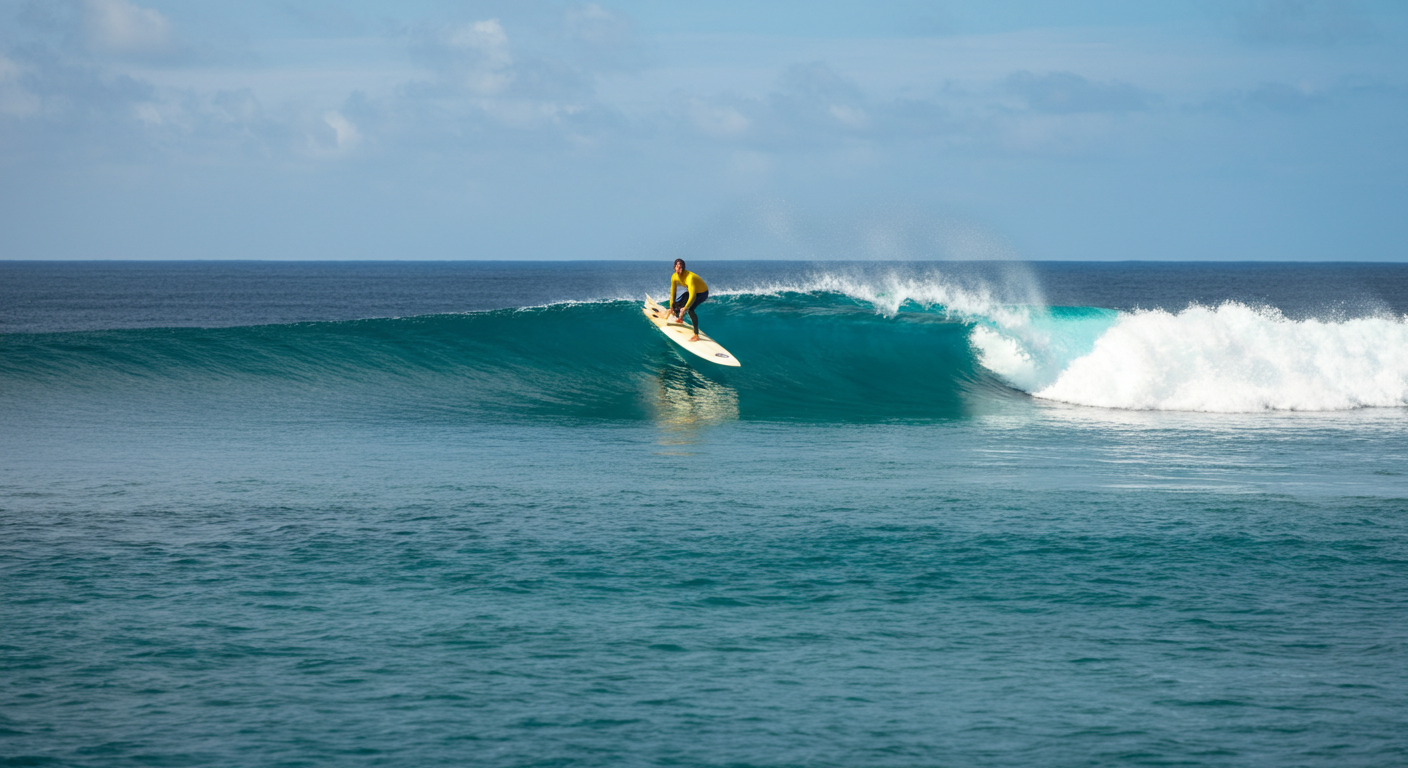
Bali's reputation as a surf paradise is well-earned, especially for those just starting their journey. It's a unique combination of perfect natural conditions and a highly developed surf culture that creates an environment where learning is not just possible, but incredibly fun and accessible. The island’s geography, particularly its southern Bukit Peninsula, acts like a magnet for swell from the Indian Ocean, which then wraps around and filters into a variety of bays and beaches, creating waves of all shapes and sizes. For beginners, this means a consistent supply of manageable whitewater waves, which are the broken, foamy waves that are perfect for your first rides. You don't have to worry about a lack of practice opportunities; the waves are almost always "on" somewhere on the island. This consistency removes a major barrier to entry that many other surf destinations face, where you might show up and find the ocean completely flat for days. In Bali, a surfable wave for a beginner is never far away.
But the island’s appeal goes far beyond its wave mechanics. It's the whole package. The sensory experience of a Bali surf trip is what truly cements it in your memory. It's the scent of frangipani flowers and clove cigarettes in the air, the taste of a post-surf Bintang beer or a fresh coconut, and the vibrant social scene that revolves around the ocean. You're not just learning a sport; you're immersing yourself in a lifestyle. Our team at Gidly has spent countless hours exploring these breaks, and we can attest that the welcoming spirit of the local community, combined with the energy of travelers from all over the world, creates a supportive and exhilarating atmosphere. However, it's also important to have a realistic perspective. The paradise you see on Instagram comes with real-world challenges, like traffic and crowds, which we'll cover to ensure you're fully prepared for the authentic Bali experience, warts and all.
The Perfect Learning Environment: Warm Water & Consistent Waves
The single greatest advantage of learning to surf in Bali is the water temperature. Hovering between a balmy 27-29°C (80-84°F) year-round, the ocean feels more like a swimming pool than a daunting expanse of cold water. This completely removes the need for a wetsuit, which is often a cumbersome and uncomfortable barrier for beginners in colder climates. Without the restriction of thick neoprene, you feel freer, more flexible, and more connected to the board and the water. This comfort factor cannot be overstated; it allows you to stay in the water for longer, practice more, and focus solely on the mechanics of surfing without shivering or feeling restricted. From our experience, a simple rash guard for sun protection is all you'll ever need. This warm water environment also makes wipeouts—an inevitable and frequent part of learning—far less intimidating and much more enjoyable. Falling into warm, clear water is a refreshing part of the process, not a shocking jolt to the system.
Equally important is the consistency and type of waves found at Bali's beginner spots. Beaches like Kuta, Legian, and Seminyak are predominantly sand-bottom beach breaks. This is crucial for safety. A sandy bottom means that when you fall, you’re landing in a forgiving environment, free from the dangers of sharp reefs or rocks. These beaches typically produce long, rolling lines of whitewater, which are the foamy remnants of a wave after it has broken. This is the ideal training ground. You don't need to worry about paddling out "to the back" to catch unbroken "green" waves. Instead, your instructor will have you in waist-deep water, pushing you into these gentle whitewater waves, allowing you to focus 100% on the single most important skill: popping up to your feet. The consistency, driven by the Indian Ocean's powerful swell engine, ensures that there are waves to practice on nearly every single day of the year, especially during the dry season.
More Than Just Surfing: The Culture, Food, and Vibe
While the waves are the main draw, what truly elevates a Bali surf trip is the incredible world that exists just beyond the sand. Bali offers a rich cultural tapestry that provides the perfect counterbalance to the physical exertion of surfing. Your rest days and post-surf evenings can be filled with exploring ancient temples like Tanah Lot or Uluwatu, witnessing traditional Balinese dance performances, or simply observing the daily offerings (canang sari) that adorn every street corner. This spiritual and artistic side of the island provides a sense of peace and perspective, reminding you that you're in a place with deep history and tradition. This immersion makes the trip feel more meaningful than a simple beach holiday; it becomes a holistic experience that engages your mind and spirit as much as your body.
And then there's the food. Bali's culinary scene is a universe unto itself and is inextricably linked to the surf lifestyle. After a two-hour lesson, there is no greater satisfaction than refueling at a local "warung" (a small, family-owned eatery). For just a few dollars, you can feast on a heaping plate of Nasi Campur (mixed rice with various small dishes) or a delicious bowl of Mie Goreng (fried noodles). On the other end of the spectrum, the rise of surf hubs like Canggu and Uluwatu has brought with it a world-class cafe and restaurant scene. You can find everything from vibrant smoothie bowls and specialty coffee to gourmet vegan burgers and fine dining. This diversity means you can tailor your culinary journey to your budget and tastes, making every meal an adventure in itself. The vibe is casual, social, and centered around wellness and enjoyment, perfectly complementing the rhythm of a day spent in the ocean.
World-Class Instruction at Unbeatable Prices
Bali has become a global hub for surf education, and the quality of instruction available is remarkably high. Many surf schools are founded and run by experienced international and local surfers, and a large number of instructors hold certifications from respected bodies like the International Surfing Association (ISA). This professionalization ensures that lessons are not just about pushing you into waves; they are structured, safe, and based on proven teaching methodologies. Your first lesson will always begin on the sand with a thorough safety briefing, covering topics like how to handle your board, understanding ocean conditions, and the all-important "pop-up" technique. This foundational knowledge is key to building confidence and ensuring a safe experience in the water. Our Gidly team has vetted numerous schools, and we're consistently impressed by the professionalism and patience of the instructors.
What makes this world-class instruction so compelling is its affordability. Compared to learning in destinations like Australia, Hawaii, or California, Bali offers incredible value. A private, two-hour one-on-one lesson with a certified instructor can cost as little as $25-$50 (around 400,000 - 800,000 IDR). In contrast, a similar lesson in a Western country could easily cost two to three times that amount. This price point makes quality instruction accessible to almost everyone, from backpackers on a shoestring budget to families on holiday. It means you can afford to take multiple lessons, which is the key to real progression. Instead of a single, expensive "taster" session, you can book a package of three or five lessons, allowing you to build muscle memory and truly start to develop your skills over the course of a week.
The "Been There, Done That" Reality: It's Not Just Paradise
To give you the full, honest picture, it's crucial to acknowledge that Bali isn't just serene sunsets and perfect waves. The island's immense popularity has brought with it some significant challenges, and being aware of them will help you manage your expectations and have a much smoother trip. The most talked-about issue is traffic. In popular areas like Kuta, Seminyak, and especially Canggu, the narrow roads are often choked with scooters and cars, particularly during rush hour and around sunset. A journey that looks like 15 minutes on a map can easily take an hour. This is a real factor to consider when planning your day. If you have a surf lesson booked, always leave significantly more time than you think you'll need to get there. Using scooter-taxis like Gojek or Grab can help you weave through traffic faster than a car, but it's still a chaotic experience.
The other reality of popular surf spots is crowds. The very same waves that are perfect for beginners attract hundreds of other learners, especially at famous breaks like Kuta Beach or Canggu's Batu Bolong. During peak hours, the whitewater can feel like a human bowling alley, with boards and bodies going in every direction. While this can be part of the fun and energy, it can also be frustrating. This is where our local hacks come in handy—going for an early morning session is the single best way to beat the crowds and enjoy more space in the water. It’s also worth noting that with popularity comes commercialization. Be prepared for friendly but persistent vendors on the main beaches selling everything from sarongs to surf lessons. A polite "no, thank you" ("tidak, terima kasih") is usually all that's needed. Understanding these realities doesn't detract from the magic of Bali; it simply makes you a smarter, more prepared traveler.
The Top 5 Beginner Surf Spots in Bali: A Detailed Breakdown
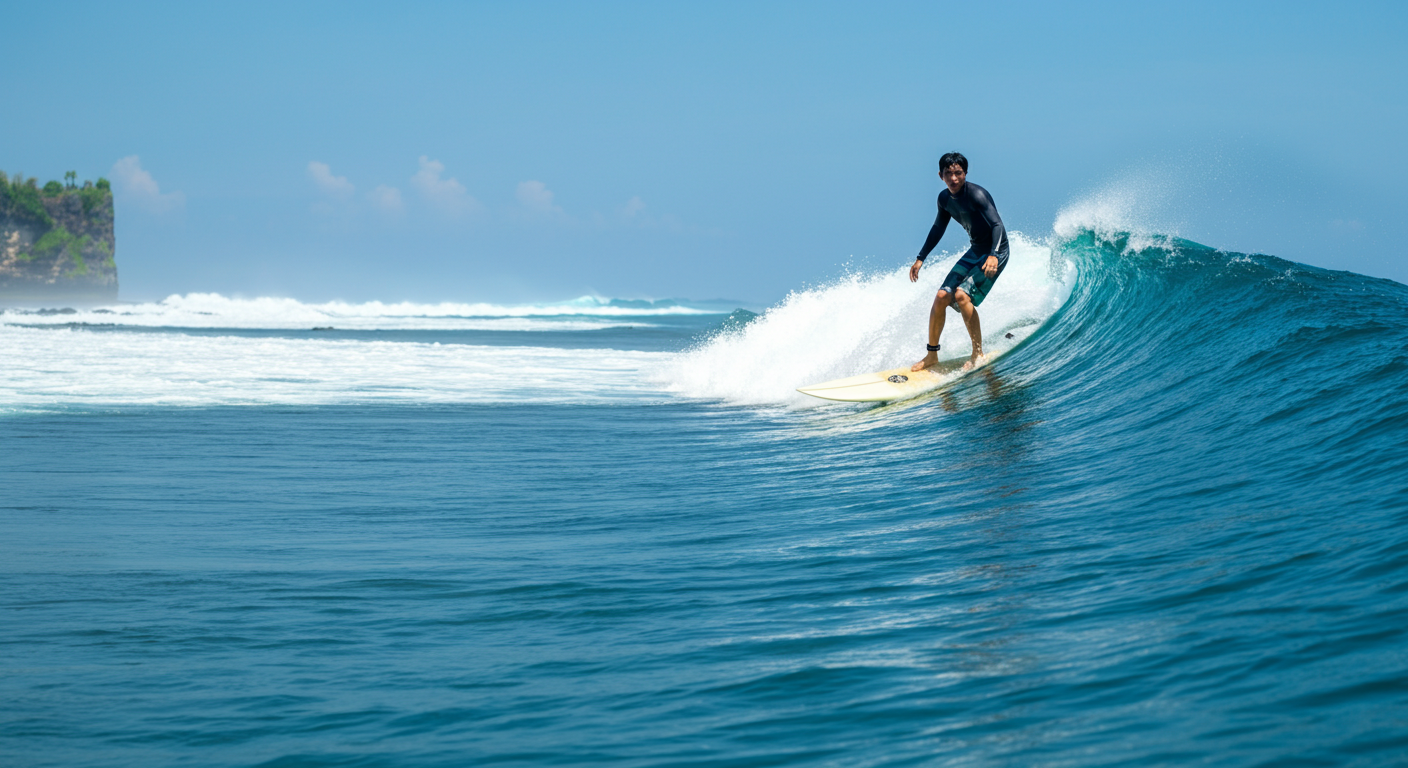
Choosing the right spot for your first surf experience is the most critical decision you'll make. Bali offers a fantastic menu of beginner-friendly waves, but each has its own distinct character, wave type, and social scene. Your ideal beach might depend on whether you're a complete first-timer needing the gentlest possible introduction, or an advancing beginner looking for a slightly more challenging wave with a vibrant après-surf scene. The "Big Three" on the west coast—Kuta, Legian, and Seminyak—form a long, continuous stretch of sand offering similar wave dynamics but vastly different atmospheres. A bit further up the coast, Canggu presents a different style of wave and a trendier vibe, while Jimbaran Bay provides a sheltered nursery perfect for the most apprehensive learners. Our team has spent countless hours surfing and observing each of these spots to give you a true insider's perspective on where you should paddle out.
Kuta Beach: The Original & Most Famous Learning Ground
Kuta Beach is, without a doubt, the cradle of surfing in Bali and remains one of the best places on earth for a complete novice to catch their first wave. The beach itself is a long, wide expanse of sand that faces directly into the Indian Ocean swell. This geography works like a magic wave machine, transforming powerful ocean swells into soft, manageable, rolling lines of whitewater. The bottom is pure sand, which means you can fall, tumble, and get tossed around with little more than a bruised ego. The waves break far offshore and then roll consistently towards the beach, providing a massive, predictable playing field for hundreds of learners at a time. The sheer volume of gentle whitewater means you'll get dozens of opportunities to practice your pop-up in a single session.
The vibe in Kuta is energetic, bustling, and unapologetically tourist-focused. The beachfront is lined with an endless array of surf schools, board rental stands, and local instructors vying for your business. This competition keeps prices low and availability high; you can almost always walk up and book a lesson on the spot. It's the perfect place for someone who wants to dive headfirst into a social, high-energy environment. After your surf, you're just steps away from countless warungs, bars, and the shops of Poppies Lane. It’s ideal for absolute first-timers who want to build confidence in a controlled, if chaotic, environment. The instructors here have taught thousands of beginners and have the process down to a science. They know exactly where to position you and when to push you to maximize your chances of success.
Legian Beach: Kuta’s Slightly More Relaxed Sibling
Nestled directly between the intensity of Kuta and the sophistication of Seminyak, Legian Beach offers a fantastic middle ground for beginner surfers. The wave mechanics here are virtually identical to Kuta's—it's the same long stretch of sand, so you get the same reliable, sand-bottom beach break with long, rolling lines of whitewater. This makes it an equally safe and effective place to learn the fundamentals of paddling, board control, and popping up. The key difference isn't in the water, but on the sand. Legian has a noticeably more relaxed and slightly more grown-up atmosphere than its southern neighbor. While still busy, it lacks the frenetic, party-centric energy of Kuta.
The vibe in Legian is more geared towards families and couples staying in the area's mid-range resorts. The beachfront is dotted with casual beanbag bars and local warungs, providing a perfect spot to relax and watch the sunset after your lesson without the overwhelming chaos of Kuta. You'll find plenty of local surf instructors set up under umbrellas along the beach, offering lessons and board rentals. These are often small, family-run operations that provide a very personal and friendly touch. It’s an excellent choice for beginners who want the perfect learning waves of Kuta but in a setting that feels a bit less hectic and more laid-back. You get all the benefits of the ideal wave conditions with a little more breathing room on the beach.
Canggu (Batu Bolong): The Hipster Hub with a Longboard Wave
Canggu, and specifically Batu Bolong beach, has exploded in popularity to become the epicenter of Bali's trendy surf scene. The wave here is fundamentally different from Kuta or Legian. It's a much slower, fatter, and mushier wave that breaks over a mix of sand and smooth volcanic rock. This lack of steepness and power makes it an absolute dream for learning on a longboard. The wave peels slowly and predictably for a very long distance, giving you ample time to get to your feet and even attempt your first turns. It's the reason you'll see a flotilla of 9-foot soft-tops cruising along the lineup from sunrise to sunset. This spot is best for "advancing beginners"—those who have had a few lessons in the whitewater and are ready to try paddling for and catching unbroken, "green" waves on their own.
The vibe in Canggu is undeniably cool, and it's as much about the scene on the shore as it is about the waves. The area is a global hub for digital nomads, yogis, and influencers, and the beachfront is packed with bohemian-chic bars like The Lawn and Old Man's. The food scene is arguably the best on the island. However, this popularity comes at a price: Batu Bolong is one of the most crowded surf spots on the planet. The lineup can be chaotic, and you'll need to have your wits about you to navigate the sheer number of other surfers. Despite the crowds, the atmosphere in the water is generally friendly and geared towards learners, as long as you respect the basic rules of etiquette.
Seminyak Beach: The Upscale Wave
Seminyak represents the more polished, upscale end of the Kuta-Legian-Seminyak beach strip. While it's part of the same continuous sand-bottom break, the waves here can often have a bit more power and shape than in Kuta. This makes it a great progression spot for beginners who have mastered the whitewater and are feeling confident. You can still practice in the whitewater, but Seminyak also offers well-defined sandbars that create gentler green waves, perfect for your first attempts at trimming along the face of a wave. It’s a step up in challenge, but still within the realm of a confident beginner, especially with an instructor.
The atmosphere in Seminyak is defined by its high-end resorts, chic boutiques, and world-famous beach clubs like Potato Head and Ku De Ta. The scene is more sophisticated and less overtly backpacker-oriented. This means the beach itself can feel a bit more spacious and less cluttered with lesson providers than Kuta. You'll find more established surf schools affiliated with the hotels, as well as independent instructors. It's the perfect choice for the traveler who wants to combine their surf education with a touch of luxury, enjoying a quality lesson before retreating to a comfortable sun lounger with a craft cocktail. The vibe is stylish, relaxed, and photogenic, especially during the golden hour of sunset.
Jimbaran Bay: The Nursery Slope
If Kuta is the main learning ground, Jimbaran Bay is the ultimate nursery slope. Located on the western side of the Bukit Peninsula, the bay is naturally sheltered from the full force of the open ocean swells. This results in the most gentle, timid, and user-friendly waves you'll find anywhere on this list. The waves here are often tiny, barely-breaking ripples that are absolutely perfect for the most nervous of first-timers, young children, and families who want to have fun in the water together in a very safe environment. The bottom is soft sand, and the bay is long and shallow, allowing you to learn in waist-deep water with zero intimidation factor.
The vibe in Jimbaran is calm and centered around two things: the placid beach and the legendary sunset seafood barbecues. The beach is lined with luxury resorts like the Four Seasons and the InterContinental, but the main attraction for many is the string of local restaurants that set up tables and chairs directly on the sand each evening. The pace of life here is slower and more tranquil compared to the hustle of the Kuta-Canggu corridor. There aren't as many dedicated surf schools, but instructors can be found, often associated with the hotels or by asking at the local rental shacks. It’s the ideal spot to build fundamental confidence on a board in the calmest possible setting.
Bali Surf Seasons Explained for Beginners: When to Go
Understanding Bali's two distinct seasons is fundamental to planning a successful beginner surf trip. The island's weather is dictated by monsoonal winds, which create a "Dry Season" and a "Wet Season." These seasons determine not only the weather but, more importantly for surfers, the wind direction. Wind is a critical factor in wave quality: "offshore" winds (blowing from the land to the sea) groom the waves, making them clean and smooth, while "onshore" winds (blowing from the sea to the land) make them choppy and messy. In Bali, the winds reliably switch direction between these two seasons, meaning one side of the island is always offering clean conditions. Knowing this allows you to find great beginner waves no matter what time of year you visit, as long as you know where to look. From our Gidly team's year-round observations, both seasons have their unique charms and advantages for a learner.
The Dry Season, roughly from April to October, is considered the "prime time" for surfing in Bali and is when the vast majority of tourists visit. During these months, the trade winds blow from the southeast, creating perfect offshore conditions for the famous west coast breaks like Kuta, Legian, Canggu, and Uluwatu. This is when you'll see Bali at its postcard-best: consistent swells, clear blue skies, and perfectly groomed waves. Conversely, the Wet Season, from about November to March, sees the winds switch to come from the west. This makes the west coast breaks choppy and undesirable. However, it's a blessing for the east coast, as these same winds become offshore for spots like Sanur, Nusa Dua, and Keramas, turning them into clean, fun surf zones. This "secret season" offers a fantastic alternative with the added bonus of fewer crowds.
The Main Event: Dry Season (April - October) on the West Coast
The dry season is Bali's high season for a reason. This period, from late spring to early autumn in the northern hemisphere, offers the most idyllic conditions for a classic Bali surf holiday. The dominant weather pattern brings consistent southeast trade winds that blow directly offshore on the entire west coast. This natural grooming effect holds the waves up, makes them break more cleanly, and creates the smooth, glassy faces you see in magazines. For beginners at spots like Kuta and Seminyak, this means the whitewater is more organized and predictable, making it easier to time your pop-up. The swell is also at its most consistent during these months, with waves generated by distant storms in the southern Indian Ocean arriving as perfectly spaced lines. You can practically guarantee there will be surfable waves every single day.
The trade-off for these perfect conditions is, of course, the crowds. July and August are the absolute peak of the tourist season, coinciding with European and Australian school holidays. The beginner breaks can get extremely congested, and accommodation prices are at their highest. Our experience suggests that the "shoulder" months of the dry season—April, May, June, and September—are the true sweet spot. You get all the benefits of the dry season's weather and wave quality, but with noticeably fewer people in the water and on the roads. The weather is fantastic, with low humidity, abundant sunshine, and cooler evenings. It's the Bali you've been dreaming of, a vibrant and sun-drenched playground perfect for your first foray into surfing.
The Secret Season: Wet Season (November - March) on the East Coast
Many potential visitors are put off by the term "wet season," envisioning non-stop torrential rain. The reality is quite different and presents a unique opportunity for the savvy traveler. During these months, the winds switch and blow from the west/northwest, rendering the popular west coast spots choppy and messy. However, this is when the east coast of Bali comes alive. Breaks like Sanur, Serangan (Turtle Island), and the various reef breaks in Nusa Dua, which are dormant during the dry season, suddenly have perfect offshore winds. Sanur, in particular, has a gentle, sand-covered reef that produces a slow, peeling wave perfect for advancing beginners and longboarders. It offers a completely different vibe—much quieter and more local than the bustling west coast.
As for the rain, it's typically not an all-day affair. You can expect higher humidity and overcast skies, with rain usually coming in short, intense tropical downpours in the afternoon or evening, which can be quite refreshing. Mornings are often clear and sunny. The major advantages of visiting during the wet season are significantly smaller crowds and lower prices. You’ll find great deals on flights and accommodation, and the surf spots will be a fraction as crowded as their west coast counterparts in July. For a beginner, a spot like Sanur during this time can be a godsend, offering plenty of space to learn without the pressure of a huge crowd. Don't rule out the wet season; it's Bali's best-kept secret for surfers in the know.
What is the best month to learn to surf in Bali?
For the ideal combination of perfect weather, consistent beginner-friendly waves, and manageable crowd levels, the best months to learn to surf in Bali are May, June, and September. These months fall within the prime dry season, guaranteeing offshore winds and clean conditions on the popular west coast learning beaches like Kuta and Canggu. However, they sit just outside the peak holiday crush of July and August, meaning you'll have a bit more space in the water and on the sand, and you may find slightly better deals on accommodation. This is the time when Bali truly shines, offering a perfect balance for a first-time visitor wanting the classic, sun-drenched surf experience.
Bali Surf Weather & Swell: A Month-by-Month Snapshot
To help you visualize the year, our Gidly team has compiled a quick-reference table. This is a general guide, as conditions can always vary, but it provides a reliable overview for planning your trip.
| Month | Season | Primary Surf Coast | Conditions & Crowd Level |
|---|---|---|---|
| Jan-Feb | Wet | East Coast (Sanur, Nusa Dua) | Humid, afternoon rain. West coast is choppy. East coast is clean. Low crowds. |
| March | Transition | Variable | Winds can be unpredictable. A good time to find empty waves if you're flexible. Low crowds. |
| April-May | Dry | West Coast (Kuta, Canggu) | Excellent conditions, sunny, low humidity. Swell building. Moderate crowds. Gidly's pick. |
| June | Dry | West Coast (Kuta, Canggu) | Prime conditions, consistent large swells. Crowds increasing. Great month to go. |
| July-Aug | Peak Dry | West Coast (Kuta, Canggu) | Best and most consistent waves of the year. Very crowded, peak prices. Hot and sunny. |
| September | Dry | West Coast (Kuta, Canggu) | Still great conditions, but crowds start to thin out. Gidly's pick for a balance of waves and space. |
| October | Transition | West Coast / Variable | Winds start to become less predictable. Still good surf on the west coast. Humidity starts to rise. |
| Nov-Dec | Wet | East Coast (Sanur, Nusa Dua) | West coast becomes messy. East coast lights up. Crowds are low, except for Christmas/NYE. |
Choosing Your Learning Path: Surf Camps vs. Private Lessons vs. DIY
Once you've decided on Bali as your destination, the next big question is *how* you want to learn. There are three primary paths, each offering a distinct experience with its own set of pros, cons, and costs. The most immersive option is the all-inclusive surf camp, where you live, eat, and breathe surfing for a week. A more flexible approach is to book individual lessons with a surf school, giving you control over your schedule and accommodation. Finally, there's the do-it-yourself (DIY) route of renting a board and figuring it out on your own—an option we strongly advise against for true beginners. Choosing the right path depends entirely on your personality, budget, travel style, and how quickly you want to progress. Let's break down each option so you can make an informed decision.
The Full Immersion: Bali Surf Camps
A surf camp is a turn-key solution for a surf holiday. These are typically week-long (or longer) packages that bundle accommodation, most meals, daily surf lessons, board rental, and transport to the surf spots into one price. The main appeal of a surf camp is the immersive, structured environment designed for rapid progression. You'll be surfing every day, often twice a day, with the same group of instructors and fellow students. This creates a strong sense of camaraderie and a supportive group dynamic. After your surf, the camp will often organize other activities like video analysis of your surfing, yoga sessions, or group dinners. It’s an incredible way to make new friends from around the world who share your goal of learning to surf.
The pros are undeniable: it's a hassle-free way to organize your trip, and the focused, high-frequency learning leads to fast improvement. However, there are a few downsides to consider. Surf camps can be less flexible; your schedule is largely dictated by the camp's program. You might also find yourself in a "surf camp bubble," spending most of your time with other foreigners and missing out on some of the more authentic, local Bali experiences. Costs vary dramatically, from budget-friendly dorm-style camps starting around $500/week to luxury villa camps that can exceed $1,500/week. They are an excellent choice for solo travelers looking to meet people and anyone who wants to dedicate their trip entirely to surfing without any logistical headaches.
One-on-One Attention: Private Surf Lessons & Schools
The most popular and flexible option for learning to surf in Bali is to book lessons with one of the hundreds of surf schools dotted along the beaches. You can book lessons individually or in small packages (e.g., 3 or 5 lessons), and you have the choice between group lessons (usually a maximum of 3-4 students per instructor) or private one-on-one lessons. A private lesson offers the highest degree of personal attention. Your instructor is 100% focused on you, providing instant feedback, selecting the perfect waves for your ability, and ensuring your safety. This personalized coaching can accelerate your learning curve significantly in the early stages.
The main advantage of this approach is flexibility. You are in complete control of your holiday. You can choose your own accommodation—whether it's a $15/night homestay or a $300/night villa—and eat wherever you please. You can take a lesson in the morning and spend the afternoon exploring a temple or relaxing by the pool. This "à la carte" model allows you to mix and match your activities and fully customize your trip. The primary con is that it requires more self-organization. You'll need to book your own place to stay, figure out your meals, and get yourself to and from your surf lesson. The cost for a 2-hour private lesson typically ranges from $25 to $50, making it a very cost-effective way to get high-quality instruction.
The DIY Approach: Renting a Board and Going Solo
Walk onto any beginner beach in Bali, and you'll see dozens of soft-top boards available to rent for about $5-$10 per day. The temptation to grab one and just "give it a go" is strong, especially for those on a tight budget. However, for a complete beginner with zero prior experience, we at Gidly strongly advise against this path. While it may seem like a cheap option, it can be ineffective and, more importantly, unsafe. Surfing involves much more than just standing on a board. A proper lesson teaches you crucial safety knowledge: how to read the ocean, how to spot dangerous rip currents, how to fall safely, and the unwritten rules of surf etiquette to avoid colliding with others.
Without an instructor, you'll likely spend hours struggling ineffectively, building bad habits, and potentially putting yourself and others in danger. An instructor's value isn't just in the push they give you; it's in their ability to keep you safe and provide the technical corrections that turn flailing into surfing. The DIY approach is really only suitable for someone who has already had several lessons, understands the basics of ocean safety and etiquette, and is comfortable handling their board in whitewater. For those individuals, renting a board can be a great way to practice and build on what they've already learned. But for a true day-one beginner, investing in at least one or two professional lessons is the best and safest money you'll spend on your trip.
Comparison Table: Camp vs. Lessons vs. DIY
| Factor | Surf Camp | Private Lessons | DIY (Board Rental) |
|---|---|---|---|
| Best For | Solo travelers, those wanting total immersion and to make friends. | Everyone, especially those who value flexibility and personalized feedback. | NOT for beginners. Only for those with prior lesson experience. |
| Cost | High (all-inclusive) - $500-$1500+/week. | Medium (per lesson) - $25-$50/lesson. | Low (per day) - $5-$10/day. |
| Learning Speed | Fastest - due to high frequency and structure. | Fast - due to personalized attention. | Slowest - risk of building bad habits. |
| Flexibility | Low - schedule is mostly fixed. | High - you control your entire schedule. | Highest - complete freedom. |
| Social Aspect | Excellent - built-in community. | Good - can meet people at your hotel or in the water. | Low - you're on your own. |
| Safety | Very High - constant supervision and structured lessons. | Very High - one-on-one supervision with an expert. | Low - no guidance on rips, etiquette, or technique. |
What to Expect from Your First Surf Lesson in Bali
The prospect of your first surf lesson can be a mix of excitement and nervousness. What will it be like? Will I be able to stand up? The great news is that Bali's surf schools have refined the introductory lesson into a fun, safe, and highly effective process. The goal of the first lesson isn't to have you carving up waves like a pro; it's to give you a successful and positive first experience in the ocean, teach you the fundamental safety rules, and, with any luck, get you to your feet for a few glorious seconds. The standard beginner lesson lasts about two hours and follows a well-defined structure that takes you from the sand to the sea. Our team has taken these lessons countless times, and the structure is remarkably consistent across all reputable schools because it works. Let's walk through the key stages of what you can expect.
The Meet & Greet: Safety Briefing and Land Lesson (The "Pop-Up")
Your lesson will begin on the beach, not in the water. You'll meet your instructor, who will give you a rash guard and find the right size soft-top surfboard for you (longer and wider is better for beginners). The first 15-20 minutes are dedicated to a crucial land-based lesson. Your instructor will start with a safety briefing, explaining how to handle the large board without hurting yourself or others, what the different colored flags on the beach mean (e.g., red and yellow flags indicate a safe swimming/surfing area), and how to identify a rip current. They will also teach you the "surfer's salute"—covering your head with your arms whenever you fall to protect yourself from the board.
Next comes the most important part of the land lesson: practicing the "pop-up." This is the core movement of surfing—going from lying on your stomach to standing on your feet in one fluid motion. Your instructor will break it down into simple, manageable steps on the sand. You'll practice this movement over and over again, building the muscle memory you'll need once you're on an unstable wave. Pay close attention here! Mastering the pop-up on the sand is 90% of the battle. Your instructor will correct your form, ensuring your foot placement is right and your body position is balanced. This dry run is invaluable and sets the foundation for everything that follows.
Hitting the Water: Paddling and Whitewater Practice
Once you've drilled the pop-up on the sand, it's time to get wet. Your instructor will lead you into the ocean, usually to about waist-deep water. This is where you'll be practicing, in the whitewater. For the first few minutes, your instructor will have you simply lie on the board correctly to get a feel for its balance. They'll show you the "sweet spot" to lie on—too far back and the nose will point to the sky, too far forward and you'll "pearl" (the nose will dive underwater). They'll also teach you the basic paddling technique, using your arms to propel the board forward. You'll practice paddling around in the shallows to understand how the board moves and responds.
This phase is all about acclimatization and getting comfortable. Your instructor will stay right beside you, holding the tail of your board. As a suitable line of whitewater approaches, they will turn your board towards the shore. They'll tell you when to start paddling and then, at the perfect moment, give the tail a firm push to help you match the speed of the wave. This push is the "secret sauce" of a first lesson; it guarantees you'll catch the wave, allowing you to focus entirely on the next step. This is a crucial confidence builder and removes the difficult task of catching waves on your own.
The Moment of Truth: Catching Your First Wave (and Wiping Out!)
With your instructor's push, you'll feel the wave's energy pick up your board and propel you forward. This is the moment! As the board glides, you'll hear your instructor shout "Up, up, up!" This is your cue to execute the pop-up you practiced on the sand. The first few attempts will likely be wobbly, uncoordinated, and end in a splash. This is completely normal and part of the fun. Don't be discouraged! Wiping out is a fundamental part of learning to surf. The warm Bali water makes it a refreshing and often hilarious experience. Remember to protect your head with your arms as you fall. Your instructor will be right there to help you, give you immediate feedback ("You looked at your feet," "You need to pop up faster"), and get you ready for the next wave.
Then, it will happen. You'll catch a wave, execute the pop-up, and for a few incredible seconds, you'll be standing, riding a wave all the way to the shore. The feeling is pure exhilaration and a massive shot of adrenaline. It's a moment of triumph that gets surfers hooked for life. Most people who take a lesson are able to stand up at least once or twice in their first two-hour session, thanks to the ideal conditions and expert guidance. The goal is not perfection, but to experience that amazing feeling of gliding on water. It's a moment you will never forget, and it's what will have you coming back for more.
How Many Lessons Do You Need? Setting Realistic Goals
A single two-hour lesson is a fantastic introduction and will almost certainly get you standing on the board in the whitewater. However, surfing is a complex sport with a long learning curve. To see real, lasting progression, you need to invest a bit more time. Our Gidly team recommends a package of at least three lessons for a beginner on a week-long trip. This allows you to build on your skills day after day, reinforcing the muscle memory and techniques you learn. Here's a realistic progression timeline:
- Lesson 1: Focus on safety, board control, and standing up in the whitewater with the instructor's push. Goal: Experience the feeling of riding a wave.
- Lessons 2-3: Refine your pop-up to be faster and more consistent. Start to learn how to catch whitewater waves on your own and begin to get a feel for basic turning by shifting your weight.
- Lessons 4-5: Gain more independence in the whitewater. Your instructor might start to introduce you to the concept of paddling out through the waves and positioning yourself to catch small, unbroken "green" waves.
- Lessons 5+: This is where you start to transition from a pure beginner to a novice. You'll be working on catching green waves consistently, learning how to "trim" (ride along the face of the wave), and understanding lineup positioning and etiquette more deeply.
The key is consistency. Surfing every day, even for just an hour or two, will yield much faster results than surfing once a week. Booking a multi-lesson package is the best investment you can make in your new hobby.
Surf Etiquette 101: The Unwritten Rules of Bali's Lineups
As soon as you progress beyond the whitewater and paddle out to the "lineup" where surfers wait for unbroken waves, you enter a new social world governed by a strict, unwritten code of conduct: surf etiquette. These rules are not about being elitist; they are first and foremost about safety and ensuring everyone gets a fair chance to catch waves. The lineups in Bali, especially at popular spots like Canggu or Uluwatu, can be incredibly crowded. Understanding and respecting these rules is non-negotiable. Ignoring them is not only disrespectful but can also be dangerous, leading to collisions and broken boards. Learning this code is just as important as learning to pop up. As a guest in Bali's surf breaks, making the effort to surf with awareness and respect will go a long way.
Right of Way: Who Owns the Wave?
This is the most fundamental rule in surfing. The surfer who has the right of way is the one who is positioned closest to the "peak" of the breaking wave. The peak is the highest point of the wave, where it starts to break first. If a wave is peeling to the right (from the surfer's perspective), the surfer furthest to the left has priority. If it's peeling to the left, the surfer furthest to the right has priority. If the wave is an "A-frame" (peeling both left and right from a central peak), two surfers can potentially ride it in opposite directions. Before you paddle for a wave, always look to your side—in the direction the wave is breaking—to see if someone is already on it or in a better position than you. If they are, that's their wave. Pull back and wait for the next one.
This concept can be tricky at first, especially in a crowded and messy lineup. As a beginner, it's best to be cautious and give way if you're ever in doubt. Sit on the inside or the shoulder of the wave, away from the main peak, and watch how the more experienced surfers navigate the lineup. Observe who takes off where. Your instructor will be crucial in teaching you this. They will help you position yourself correctly and tell you when it's your turn to go. Following this rule prevents multiple people from riding the same wave, which is the primary cause of collisions and arguments in the water.
Don’t Drop In: The #1 Sin in Surfing
Dropping in is the cardinal sin of surfing and a direct violation of the right-of-way rule. It occurs when a surfer catches a wave that another surfer with priority is already riding. Essentially, you are "dropping in" on their line. This is extremely dangerous as it can lead to direct collisions, with boards and fins flying. It's also incredibly disrespectful, as you've just stolen a wave from someone who had the right to it. In most surf spots around the world, dropping in will, at best, get you some angry looks; at worst, it will get you yelled at and told to leave the water. Bali's lineups are often crowded with people from all over the world, and tensions can sometimes run high. Accidentally dropping in can happen, especially when you're learning.
To avoid this, always, always, always look before you take off. A quick glance to your left and right (towards the peak) is all it takes. If you see someone up and riding, or even just paddling for the same wave from a better position, pull back immediately. If you do accidentally drop in on someone—and it will happen at some point in your surf journey—the correct response is to immediately and safely exit the wave and find the person to offer a sincere and immediate apology. Acknowledging your mistake and showing respect can defuse almost any situation. It shows that you are aware of the rules and your mistake was unintentional.
Paddling Out: Stay Out of the Way
The lineup has a flow and a traffic pattern. Surfers are riding waves *in* towards the beach, and other surfers are paddling *out* to get back to the lineup. Your responsibility when paddling out is to stay out of the way of anyone riding a wave. The person on the wave has the right of way, and it's up to you to avoid them. Never try to paddle over the front of a wave that someone is riding. This will cause them to crash into you or force them to straighten out, ruining their wave. Instead, you should paddle "wide" or through the "channel."
Often, there's a channel next to the main surf break where the waves are smaller and the water is deeper, providing an easier path back out. If you get caught "inside" (in the impact zone where the waves are breaking) and see someone riding towards you, you have two options. The best option is to paddle towards the broken, whitewater part of the wave, allowing the surfer to continue on the clean, open face. It might mean you take a wave on the head, but that's your duty. Your second option, if a collision is imminent, is to stay put and let the surfer on the wave navigate around you. Do not make any sudden moves. Communication is key; a quick shout or a hand signal can help.
Apologize When You’re Wrong: A Smile Goes a Long Way
As a beginner, you will make mistakes. You will get in the way, you might accidentally drop in, and you will breach etiquette without realizing it. It's an inevitable part of the learning process. The single most important thing you can do in these situations is to apologize quickly, sincerely, and with a smile. The surf community, especially in a place as international as Bali, is generally very understanding of learners, as long as it's clear you're trying to learn the rules and be respectful. A simple "Oh man, I'm so sorry, my mistake!" is usually all it takes to smooth things over.
Arrogance and ignorance are what cause problems. If you make a mistake and then act like you did nothing wrong, you will quickly lose the goodwill of the other surfers in the water. Remember that you are a guest here. The local Balinese surfers are incredibly skilled and are sharing their home breaks with thousands of tourists. Showing them respect is paramount. A smile, a nod, and a humble attitude will earn you far more respect than trying to act like you own the place. This simple act of acknowledging your error and showing humility is the key to peacefully coexisting in Bali's crowded but magical lineups.
Respect the Locals: You Are a Guest
This rule extends beyond just the lineup and applies to your entire experience in Bali. The local Indonesian and Balinese surfers have been surfing these waves long before they became global tourist attractions. They possess a deep understanding of the ocean and an incredible level of skill. Show them the utmost respect. This means giving them priority on waves, especially if it's crowded. It means greeting them with a smile and a nod. And it means surfing with a humble attitude. You are a visitor in their home, and your behavior reflects on all tourists. The "localism" (hostility towards outsiders) that can be present at some surf breaks around the world is relatively mild in Bali's main tourist areas, largely because tourism is so vital to the economy.
However, this friendly atmosphere relies on tourists being respectful guests. Don't be loud, aggressive, or demanding in the water. Don't snake waves (paddling around someone to steal priority). If a local surfer gives you advice, listen to it. They know the spot better than you ever will. By surfing with respect and a positive attitude, you contribute to the welcoming vibe that makes Bali such a special place to surf. Remember, a little respect goes a very long way, both in and out of the water. It’s a privilege to share these waves, not a right.
Beyond the Reef: The Real Dangers of a Bali Surf Trip (And How to Avoid Them)
While the thought of sharks or massive waves might be what first comes to mind when thinking about surf dangers, the reality of a beginner's surf trip to Bali is that the most significant risks are often found on dry land. The beginner surf spots are overwhelmingly safe, with sandy bottoms and manageable waves. When you're under the guidance of a professional instructor, the risks in the water are minimized. However, Bali is a developing island with its own unique set of challenges that every visitor should be aware of. From navigating the chaotic traffic to staying healthy and protecting yourself from the powerful tropical sun, being prepared for these "real world" dangers is just as important as your surf lesson. Our Gidly team has navigated these challenges for years, and these are our top tips for a safe and trouble-free trip.
Is surfing in Bali safe for beginners?
Yes, surfing in Bali is overwhelmingly safe for beginners, provided you take sensible precautions. Sticking to designated beginner surf spots like Kuta, Legian, or Jimbaran, which have sandy bottoms and gentle waves, is the most important step. Always learn with a reputable, certified surf school or instructor who will prioritize your safety, teach you about ocean conditions, and keep you in a controlled environment. The biggest dangers for a tourist in Bali are often unrelated to surfing itself, such as scooter accidents and foodborne illnesses.
The #1 Hazard: Navigating Traffic on a Scooter
The single greatest risk to your well-being in Bali is not a reef or a rip current; it's the traffic. Renting a scooter (or "motor") is the most common way to get around and offers an incredible sense of freedom. However, the roads are chaotic, rules are loosely followed, and many tourists with little to no riding experience get into serious accidents. If you are not an experienced and confident scooter rider at home, Bali is not the place to learn. The risk of an accident is extremely high. If you do decide to rent, always wear a helmet (it's the law, though loosely enforced), make sure you have an International Driving Permit, and thoroughly check the scooter's brakes, tires, and lights before you rent it.
A much safer and still very affordable alternative is to use the ride-hailing apps Gojek and Grab. For just a few dollars, you can summon a scooter taxi (known as GoRide or GrabBike) to take you anywhere. You get the benefit of weaving through traffic on the back of a bike driven by an experienced local who knows the roads. For longer distances, or if you're traveling with boards or in a group, ordering a car (GoCar or GrabCar) is a comfortable and safe option. From our experience, relying on these apps is the smartest way for most visitors to navigate Bali, removing the stress and significant risk of driving yourself.
Dodging "Bali Belly": A Surfer’s Guide to Staying Healthy
"Bali Belly" is the colloquial term for traveler's diarrhea, an unpleasant but common ailment for first-time visitors. It's typically caused by consuming food or water contaminated with different bacteria than your stomach is used to. Nothing will ruin a surf trip faster than being stuck in your hotel room. Fortunately, avoiding it is relatively straightforward with a few key precautions. First and foremost: do not drink the tap water. Ever. Only drink bottled or filtered water, and use it for brushing your teeth as well. Be cautious with ice in cheaper warungs or street stalls; in established restaurants and cafes, the ice is usually made from filtered water and is safe.
When it comes to food, use your common sense. Eat at places that are busy, especially with locals, as this indicates fresh food and high turnover. Street food can be delicious, but be selective. Make sure it's being cooked fresh to order in front of you. A good rule of thumb is "boil it, cook it, peel it, or forget it." Many surfers swear by taking a daily probiotic supplement starting a week before their trip to help build up good gut bacteria. It's also wise to carry hand sanitizer and use it frequently, especially before eating. If you do get a mild case of Bali Belly, stay hydrated with bottled water and electrolyte drinks, and rest up. For anything severe or lasting more than a couple of days, see a doctor.
Sun, Dehydration, and Reef Cuts: Protecting Your Body
The tropical sun in Bali, located just 8 degrees south of the equator, is incredibly powerful. A 30-minute surf session without protection can result in a severe sunburn that can sideline you for days. Sunscreen is not optional; it's essential. For your face, standard sunscreen will wash off in minutes. You need to use a thick, waterproof zinc paste, which you'll see on the faces of every experienced surfer. For your body, a long-sleeved rash guard is your best friend. It provides total sun protection for your torso and arms and also prevents a painful rash on your chest from the surfboard's wax. Reapply sunscreen frequently, especially after getting out of the water.
Dehydration is another major issue. You will sweat profusely in the heat and humidity, and you'll lose even more fluids while exercising in the salt water. You need to drink far more water than you think. Carry a large water bottle with you at all times and sip it constantly throughout the day. Aim for at least 3-4 liters of water daily. Finally, while beginner spots are sandy, as you progress you may surf near reefs. Coral reef is incredibly sharp and cuts can get infected easily in the tropical environment. If you do get a cut, no matter how small, clean it thoroughly with fresh water and antiseptic as soon as you get out of the water. For more advanced breaks, wearing reef booties is a wise precaution to protect your feet.
The Beginner’s Packing List: What You Actually Need for a Bali Surf Trip
Packing for a Bali surf trip is an exercise in minimalism. The warm weather means you can leave all the heavy clothing at home. The focus should be on practical, lightweight items for both in and out of the water. The good news is that almost anything you forget can be easily and cheaply purchased in Bali, from surf wax to sunglasses. However, bringing a few key items from home will ensure you're comfortable and prepared from the moment you land. Our Gidly team, after many trips, has perfected the art of packing light for the island. The key is to prioritize sun protection, comfort, and items that serve multiple purposes. Here's a breakdown of what you actually need to bring versus what you can rent or buy on the island.
In the Water: Swimwear, Rash Guard, High-SPF Sunscreen (Zinc!)
These are your non-negotiable essentials for time spent in the ocean. For swimwear, choose something secure and comfortable that you know will stay on during a wipeout. For women, a one-piece swimsuit or a well-fitting athletic-style bikini top is a much better choice than a string bikini. For men, a good pair of boardshorts is perfect. The single most important piece of apparel is a rash guard, or "rashie." We strongly recommend a long-sleeved one. Its primary purpose is sun protection for your back, chest, and arms, which are constantly exposed to the sun while paddling. Secondly, it prevents a painful friction rash that develops on your chest and stomach from rubbing against the waxed surfboard. While you can buy them in Bali, bringing one you know fits well is a good idea.
Sunscreen is the next critical item. While you can buy standard lotion sunscreen everywhere, we highly recommend bringing a high-quality, reef-safe, waterproof sunscreen (SPF 50+) from home. For your face, nose, and lips, you absolutely must use a thick zinc oxide paste. This is the only thing that will stay on your face for a full two-hour surf session. It acts as a physical block against the sun. You'll see surfers of all levels caked in white, brown, or brightly colored zinc. It might look silly, but it's the mark of a smart surfer in the tropics. Don't skip the zinc!
Out of the Water: Light clothing, a sarong, mosquito repellent
When you're not surfing, your wardrobe should be all about staying cool and comfortable. Pack lightweight, breathable clothing: think cotton t-shirts, tank tops, shorts, and light dresses or skirts. You do not need jeans, jackets, or sweaters. The evenings can sometimes be slightly cooler, especially in areas like Ubud, but a light long-sleeved shirt is more than sufficient. A sarong is perhaps the most useful item you can pack. It's a beach towel, a changing room, a cover-up after surfing, a skirt, a dress, and even a light blanket. You can buy them for a few dollars all over Bali, and they make great souvenirs.
Flat, comfortable footwear is key. A pair of flip-flops (thongs) and perhaps a pair of more sturdy sandals for walking are all you need. Unless you plan on doing serious hiking, you can leave the bulky sneakers at home. Another essential is mosquito repellent. Dengue fever, transmitted by mosquitoes, is present in Bali, and while the risk isn't huge, it's real. The mosquitoes are most active during dawn and dusk. A good repellent containing DEET or Picaridin is a wise investment for your health and comfort. Also, don't forget a hat and a good pair of polarized sunglasses for sun protection when you're exploring.
Do you need a wetsuit? (Spoiler: No, but a vest can be nice)
This is a question many first-timers ask, especially if they come from colder climates. The answer is an emphatic no. You do not need a wetsuit for surfing in Bali. The water temperature is consistently warm year-round, ranging from 27-29°C (80-84°F). A full wetsuit would be unbearably hot and cumbersome. The only piece of neoprene you might consider is a thin (1-2mm) neoprene vest or "wetsuit top." This isn't for warmth but can serve a few useful purposes. It offers a bit more sun protection and can prevent chest rash better than a standard rash guard. Some people also find that it provides a little extra padding and confidence, slightly softening the impact of falling on the board or water. It's a personal preference, not a necessity, but something to consider if you tend to get cold easily or want extra protection.
What to Rent vs. What to Bring from Home
Knowing what to pack versus what to acquire in Bali can save you a lot of luggage space and hassle. Here's a simple breakdown:
- Rent in Bali: Your surfboard. There is absolutely no reason for a beginner to bring a surfboard to Bali. Every beginner beach has an endless supply of soft-top boards for rent at very low prices ($5-10/day). Your lessons will always include the board.
- Bring from Home:
- Your favorite secure swimwear.
- A well-fitting long-sleeved rash guard.
- High-quality, reef-safe SPF 50+ sunscreen and a good zinc paste.
- Any prescription medications and a basic first-aid kit (band-aids, antiseptic wipes, pain relievers).
- A good hat and polarized sunglasses.
- Your specific brand of mosquito repellent if you have a preference.
- Buy in Bali: Almost everything else. If you forget something, you can find it in the myriad of shops and pharmacies in any tourist area. Things like sarongs, extra t-shirts, flip-flops, and even surf wax are cheap and plentiful. Don't overpack; embrace the simplicity of island life.
A Beginner’s Budget: How Much Does a Bali Surf Trip Really Cost?
One of the most appealing aspects of a Bali surf trip is that it can be tailored to almost any budget. It's a destination where you can live like a king on a relatively modest sum or exist happily on a shoestring budget. Your daily expenditure will depend almost entirely on your choices for accommodation, food, and activities. You can stay in a simple fan-cooled guesthouse room for under $20 a night, or a private pool villa for over $200. You can eat delicious, filling local meals for $2, or have a gourmet dinner for $50. This incredible range is what makes Bali so accessible. To help you plan, we've broken down what a typical day of surfing, eating, and sleeping might cost across three different budget styles. All prices are estimates in USD and can fluctuate based on season and location.
The Shoestring Surfer: ($30-50/day)
This is the classic backpacker approach to Bali. It's entirely possible to have an amazing surf trip on a very tight budget. Your accommodation would be a basic room in a "losmen" or guesthouse, likely with a fan instead of air conditioning, for about $15-25 per night. For food, you'll be eating almost exclusively at local warungs. A huge plate of Nasi Campur or a satisfying Mie Goreng will only set you back $2-3 per meal. A large Bintang beer from a convenience store costs about $2. In this scenario, you've likely had a lesson or two already and are now just renting a board for practice, which costs about $5-7 for a few hours or $10 for the full day. Your transportation would be a rented scooter (around $5/day plus fuel) or using the super-cheap Gojek bike taxis. On this budget, you can comfortably surf, eat well, and sleep soundly for well under $50 a day.
A typical day might look like this: Wake up in your guesthouse, grab a cheap local coffee and pastry ($2), rent a board for half the day ($5), have a big Nasi Campur for lunch ($3), explore on your scooter or relax, then grab another warung dinner ($3) and a couple of beers with new friends ($4). Total: around $32 for the day, plus accommodation. It's a simple, authentic, and incredibly rewarding way to experience the island's surf culture.
The Comfort Seeker: ($75-150/day)
This budget level offers a significant step up in comfort and convenience without breaking the bank. You'll be staying in a comfortable private room in a mid-range hotel or a nicer guesthouse, with air conditioning and likely a shared pool, for about $40-80 per night. For your surfing, you're taking a daily private or small-group lesson to maximize your progression, which will cost around $30-50. Your food choices are much broader; you can mix it up between delicious, cheap warung lunches and dinners at some of Bali's famed mid-range restaurants and cafes, where a main course might cost $7-15. You might treat yourself to a fancy coffee or a sunset cocktail at a beach bar ($5-10). For transport, you're probably still using a scooter for convenience, or opting for the comfort of Grab/Gojek cars for longer trips or evening outings. This budget allows for a very comfortable holiday with plenty of flexibility.
A day in the life of a comfort seeker: Enjoy a smoothie bowl and a flat white at a trendy cafe ($8). Head to your pre-booked private surf lesson ($40). Have a delicious lunch at a healthy cafe or a nicer warung ($10). Spend the afternoon relaxing by the hotel pool. In the evening, take a Grab car ($5) to a nice restaurant for dinner ($20) and have a sunset cocktail at a beach club ($10). This day totals around $93, plus accommodation, offering a perfect blend of focused learning, comfort, and culinary exploration.
The All-Inclusive Camper: ($100-250+/day)
This approach prioritizes convenience, community, and rapid surf progression above all else. By booking into a surf camp, your daily costs are largely pre-paid. The price of a surf camp varies wildly depending on its level of luxury, from budget dorm-based camps at the lower end of this scale to high-end boutique camps at the top. A mid-range camp might cost around $150/day ($1,050/week). This price typically includes your accommodation, breakfast and sometimes lunch or dinner, daily surf lessons (often two per day), board rental, transport to the breaks, and often extras like yoga classes or video analysis. The main benefit is that you don't have to think about logistics or budget for individual items each day. Your only extra costs will be for some meals, drinks, and any activities outside the camp's schedule.
This budget is less of a daily calculation and more of a single upfront investment in a comprehensive experience. It's perfect for solo travelers who want a built-in social scene or anyone who wants to dedicate their entire trip to improving their surfing in a structured environment. While it appears more expensive on a per-day basis, when you factor in the cost of two lessons per day plus all the inclusions, it can often represent good value for the serious learner.
Detailed Cost Breakdown Table
| Item | Shoestring Cost (USD) | Comfort Cost (USD) | Notes |
|---|---|---|---|
| Accommodation (per night) | $15 - $25 | $40 - $80 | Guesthouse vs. Mid-range hotel with AC/pool. |
| Food (per day) | $10 - $15 | $30 - $50 | Local warungs vs. Mix of warungs and Western-style cafes. |
| Surf Lesson (2-hour private) | N/A (Renting board instead) | $25 - $50 | Group lessons are cheaper, around $20. |
| Board Rental (per day) | $7 - $10 | N/A (Included in lesson) | Cheaper if rented by the hour or for multiple days. |
| Scooter Rental (per day) | $5 - $7 | $5 - $7 or use ride-hailing | Excludes fuel. Prices lower for weekly/monthly rentals. |
| Local Beer (Large Bintang) | $2 (Convenience store) | $3 - $4 (Bar/Restaurant) | Cocktails at beach clubs can be $10+. |
| Daily Total (Estimate) | $30 - $50 + accomm. | $75 - $150 + accomm. | Excludes shopping, big nights out, or other activities. |
Beyond the Breaks: 10 Epic Things to Do on Your Rest Days
Surfing is physically demanding, especially when you're a beginner using muscles you never knew you had. Taking rest days is not just a good idea; it's essential for your body to recover and to avoid burnout. Fortunately, you're in Bali, an island bursting with so many incredible experiences that your "down days" from surfing might just become the highlights of your trip. Whether you're an adventure seeker, a culture vulture, a foodie, or someone just looking to relax and rejuvenate, Bali has an endless menu of options. Stepping away from the main surf hubs of the south allows you to see the incredible diversity of the island's landscapes and culture. From the lush green jungles of the interior to the dramatic cliffs of the Bukit Peninsula, there's a whole other world to explore when you're not in the water. Here are some of our Gidly team's favorite ways to spend a well-earned rest day.
For the Explorer: Chase Waterfalls in the North
Bali's volcanic interior is a lush, tropical paradise crisscrossed by rivers and ravines, resulting in dozens of spectacular waterfalls. Taking a day trip to explore some of them is a must-do for any nature lover. One of the most accessible from the south is Tegenungan Waterfall near Ubud, a powerful cascade with a great swimming spot at the base. For those willing to venture further north, you'll be rewarded with even more stunning sights like Sekumpul, a collection of seven falls that feels like something out of a movie, or the majestic Gitgit Waterfall. The journey itself is part of the adventure, taking you through scenic rice paddies and traditional villages. You can hire a private driver for the day (around $40-50) who will act as your guide, or for the more adventurous, rent a scooter and make your own way. It's a refreshing, invigorating way to spend a day away from the salt and sand.
For the Zen Seeker: Yoga and Meditation in Ubud
Ubud is the spiritual and cultural heart of Bali, a world away from the beachy vibes of the coast. It's a global epicenter for yoga, wellness, and holistic health. Spending a day here is the perfect antidote to sore paddling muscles. You can drop in for a class at one of the world-famous yoga studios like The Yoga Barn or Radiantly Alive, which offer a huge schedule of classes for all levels, from dynamic Vinyasa flows to restorative Yin yoga. The shalas (studios) themselves are often beautiful open-air bamboo structures overlooking the jungle, adding to the serene experience. Beyond yoga, Ubud is the perfect place to try a meditation class, get a traditional Balinese massage, or simply wander through the town's art galleries and craft markets. The town has a palpable sense of peace and creativity that provides a perfect mental and physical reset.
For the Foodie: Take a Balinese Cooking Class
Balinese cuisine is a complex and fragrant symphony of flavors, and one of the best ways to appreciate it is to learn how to make it yourself. A cooking class is a fantastic, hands-on cultural experience. Most classes, particularly those around Ubud, begin with a morning tour of a local market where your guide will introduce you to the exotic fruits, vegetables, and spices that form the foundation of Balinese food—things like galangal, turmeric root, and lemon grass. You'll then head to an open-air kitchen, often in a beautiful traditional family compound, where you'll learn to prepare a full menu of classic dishes from scratch. You'll grind spices to make your own 'basa gede' (spice paste) and learn the secrets behind dishes like Gado-Gado, Sate Lilit, and the famous Lawar. At the end, you get to feast on the incredible meal you've just created. It's a delicious and memorable way to spend a day.
For the Party Animal: Beach Clubs and Nightlife in Seminyak & Canggu
If your idea of a rest day involves less zen and more fun, Bali's beach club and nightlife scene is world-class. Seminyak and Canggu are the main hubs for this. You can spend the entire day at a sprawling beach club like Finns in Canggu or Potato Head in Seminyak. For an entrance fee or minimum spend, you get access to stunning infinity pools, comfortable daybeds, swim-up bars, and a soundtrack of chilled-out tunes from international DJs. It's the ultimate place to see and be seen, sipping cocktails while watching the sunset over the ocean. As night falls, these areas come alive with countless bars and clubs. From the rustic charm of La Favela in Seminyak, a multi-story bar that feels like a vintage Brazilian favela, to the beachfront parties at The Lawn or Old Man's in Canggu, there's a party for every taste, every night of the week.
For the Culture Vulture: Explore Uluwatu Temple (at sunset!)
Perched dramatically on a cliff edge 70 meters above the crashing waves, Pura Luhur Uluwatu is one of Bali's most iconic and important sea temples. A visit here is a breathtaking experience, combining stunning natural beauty with deep cultural significance. The temple itself is a beautiful example of Balinese architecture, but the main draw is its incredible location. You can walk along the cliff-top paths, with monkeys chattering in the trees and panoramic views of the Indian Ocean. The best time to visit is in the late afternoon. Find a spot to watch the sun sink below the horizon, painting the sky in fiery colors. The experience is made even more magical by the daily performance of the Kecak Fire Dance, which takes place in a cliff-side amphitheater as dusk falls. The rhythmic chanting of a hundred men telling the Ramayana story against the backdrop of the setting sun is an unforgettable cultural spectacle.