
guide -
How Many Days in Rome Do You Really Need?
How many days in Rome you need really depends on your travel style, but for most first-time visitors, 4 days is the sweet spot. Three days works for the major highlights if you plan well, while 5+ days gives you time for neighborhoods, slower meals, museums, and a day trip withou
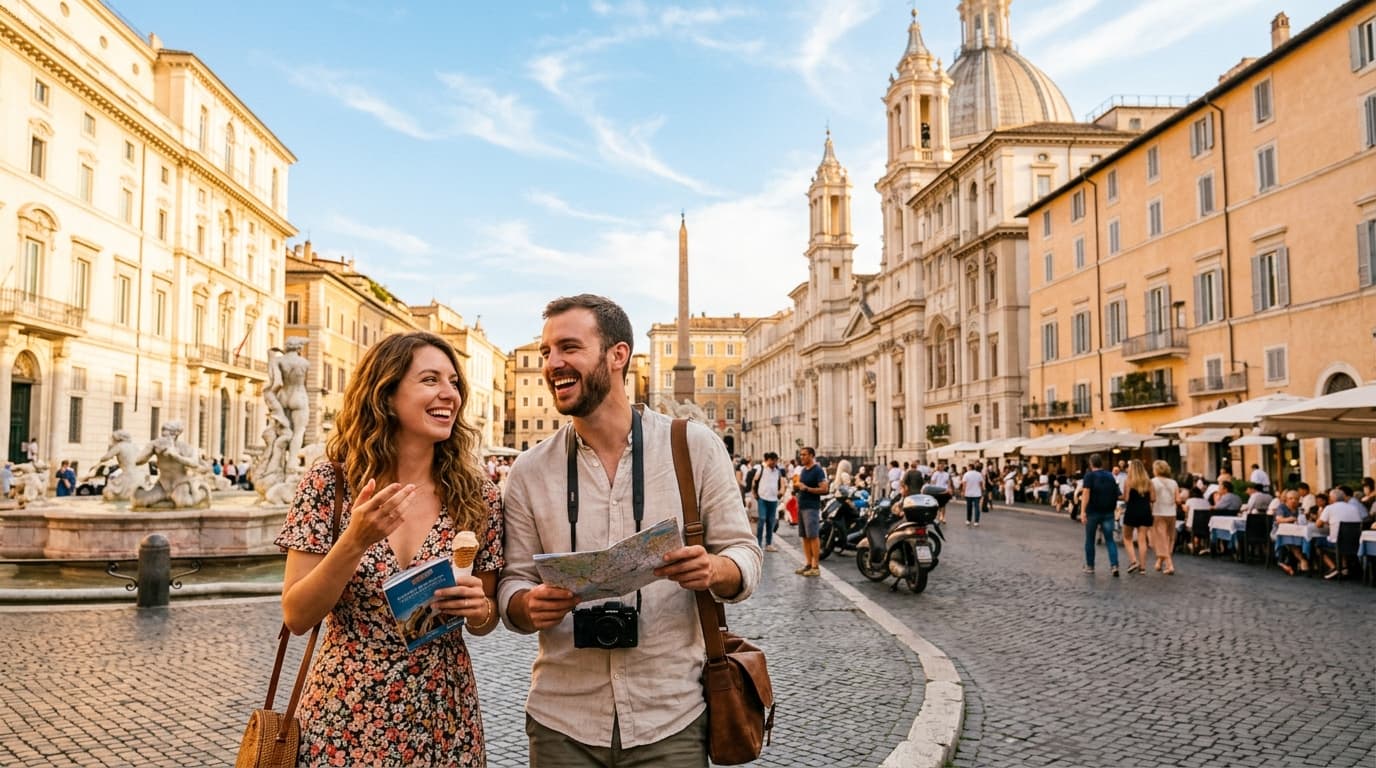
How many days in Rome you need really depends on your travel style, but for most first-time visitors, 4 days is the sweet spot. Three days works for the major highlights if you plan well, while 5+ days gives you time for neighborhoods, slower meals, museums, and a day trip without feeling rushed.
Rome is one of those cities that rewards extra time, because the magic is not just in the big-ticket sights like the Colosseum and the Vatican. It’s also in the side streets, long lunches, late dinners, hidden churches, evening passeggiate, and the way the city shifts from ancient grandeur to lively neighborhood hangout in just a few blocks. We’ve checked the pacing, the walking distances, the reservation reality, and the current 2025-2026 crowd patterns, and the answer is clear: if you want to enjoy Rome instead of just ticking it off, give yourself enough days to breathe.
In this guide, we’ll break down exactly how many days you need for Rome by trip length, travel style, and budget, plus where to stay, what to prioritize, when to add a day trip, and how to avoid the biggest planning mistakes. We’ll also go beyond sightseeing and cover live music, food experiences, nightlife, family outings, date-night ideas, and the best ways to discover local events with Gidly's full events catalog.
Quick Answer — How Many Days Do You Really Need in Rome?
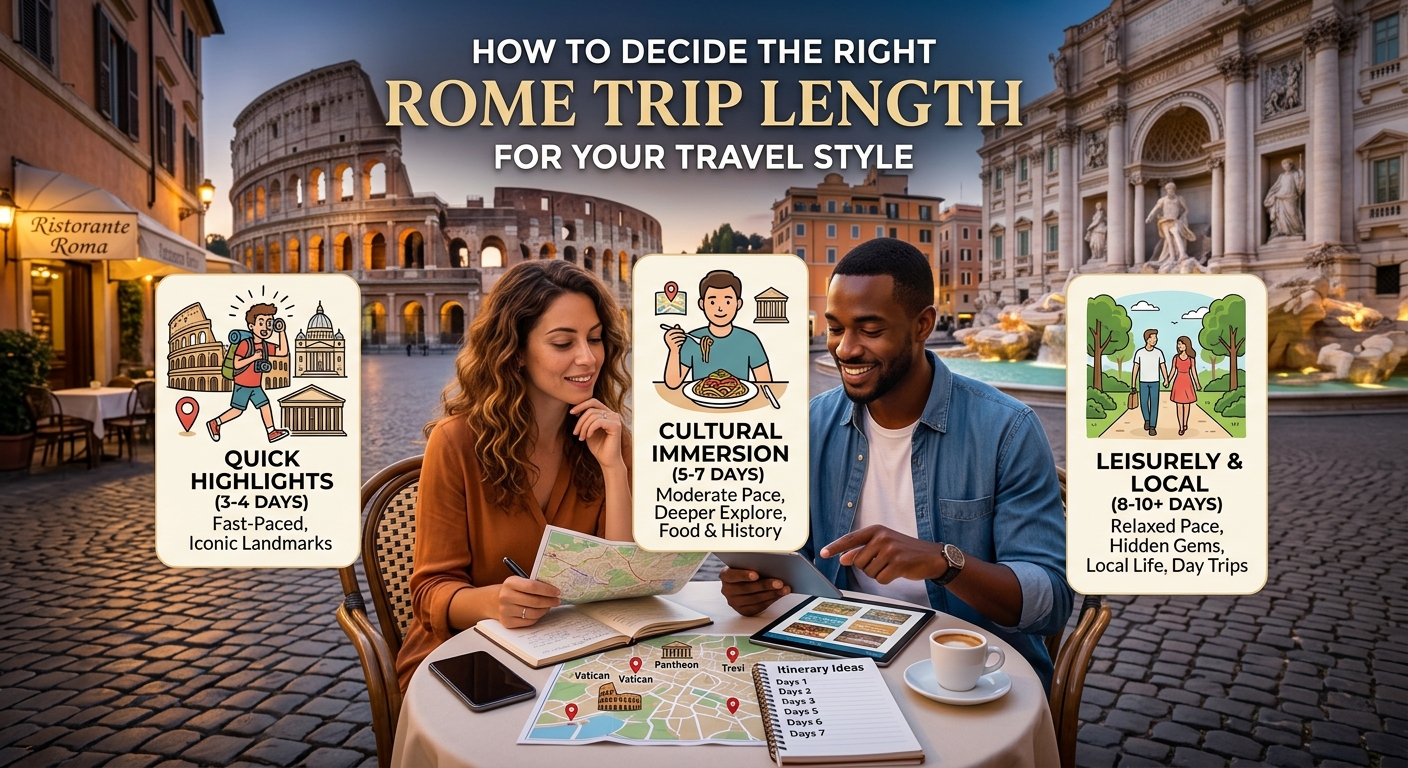
When people ask how many days in Rome are enough, the honest answer is that the city can be “seen” in one or two days, but it takes 3 to 5 days to actually enjoy it. If you only have a short stopover, you can still hit the essentials, but the experience will be compressed and you’ll need a strict plan. For most travelers, especially first-timers, four days is the best balance of iconic landmarks, neighborhood wandering, meals, and downtime.
Rome is a city where transit time, ticket lines, and walking fatigue all matter more than they do on a map. The Colosseum, Roman Forum, Pantheon, Trevi Fountain, Vatican City, and St. Peter’s Basilica are all manageable in a few days, but only if you group them sensibly and book timed-entry tickets early. If you try to do all of Rome in 48 hours, you’ll spend more time rushing than absorbing the atmosphere.
From experience, the most satisfying Rome trips are the ones that include at least one “open” half-day with no major reservation, so you can linger over coffee, step into a church that catches your eye, browse a market, or sit in a piazza with a gelato. That’s why the sweet spot is usually 3 to 5 days, with 4 days being the most universally recommended length for a first visit. If you love museums, food, architecture, or nightlife, adding a fifth day can make a huge difference.
The Short Version for First-Time Visitors
If this is your first trip to Rome, aim for 4 days if you can. That gives you time to see the ancient core, the Vatican, the historic center, and one livelier neighborhood like Trastevere or Monti without feeling like your entire trip is one long sprint. You’ll be able to cover the landmarks everyone wants to see while still leaving room for the things that make Rome feel like Rome, including dinner reservations, evening strolls, and a bit of people-watching.
With 3 days, you can absolutely have a great first visit, but the trip needs structure. You’ll want to divide the city into logical chunks, typically ancient Rome on one day, the Vatican and Prati on another, and the historic center plus Trastevere on a third. That plan works well if you travel light and book your must-see sites in advance.
With only 1 or 2 days, Rome becomes more of a highlights reel than a full trip. That’s okay for a stopover or a cruise extension, but it is not the best way to experience the city’s full rhythm. If you can stretch even a little, you’ll feel the difference immediately.
The Sweet Spot for Most Travelers
For most travelers, 4 days in Rome is the practical sweet spot because it balances iconic sightseeing with the kind of slow moments that make a trip memorable. You can cover the major landmarks without turning every morning into a race to beat the queue. You also have enough flexibility for one museum, one neighborhood-focused afternoon, and one evening dedicated to food or entertainment rather than only monuments.
That extra day matters more than people expect. Rome has a lot of compact “clusters” of things to do, but the city still demands walking, breaks, and occasional transport. If you schedule too much, you’ll end up exhausted by day 2 or 3, which is why so many visitors feel like they “didn’t really see Rome” even though they technically checked off the big attractions.
A 4-day trip also makes it easier to adapt to seasonality. In 2025-2026, crowd management and timed-entry systems are still a big part of visiting Rome, especially in peak spring and fall. With four days, you can move things around if the weather changes or if a major attraction books out. That flexibility is worth a lot, especially for travelers who want a smoother experience.
When Fewer or More Days Make Sense
Choose 1 to 2 days only if you’re on a very tight itinerary, connecting through Rome, or prioritizing a second city like Florence, Naples, or Venice. In that case, keep expectations realistic and focus on the one or two experiences that matter most to you. For example, art lovers may prefer the Vatican Museums, while history lovers may prioritize the Colosseum and Forum.
Choose 5 or more days if you want a slower pace, if you’re traveling with kids, if you enjoy museum-heavy trips, or if you want to add a day trip without sacrificing the city itself. Longer stays also work beautifully for repeat visitors, solo travelers, and people who like discovering neighborhoods beyond the tourist center. Rome is a city that opens up as you stay longer.
The best answer is not just “how many days do you need?” but “what do you want Rome to feel like?” If you want an efficient, iconic introduction, 3 days is enough. If you want comfort and a bit of depth, 4 days is best. If you want layers, food, and breathing room, go for 5+ days.
| Trip Length | Best For | What You Can Realistically Do |
|---|---|---|
| 1 day | Stopovers, cruise passengers, very short business trips | Colosseum area, Pantheon, Trevi Fountain, one neighborhood meal |
| 2 days | Fast city breaks, first-timers on a tight schedule | Ancient Rome, Vatican, historic center highlights |
| 3 days | Most first-time visitors | Top landmarks plus Trastevere or Monti |
| 4 days | Best overall balance | Major sights, neighborhood time, food, evening outing |
| 5+ days | Relaxed travelers, families, repeat visitors, day trips | Deep exploration, museums, nightlife, and nearby excursions |
How to Decide the Right Rome Trip Length for Your Travel Style
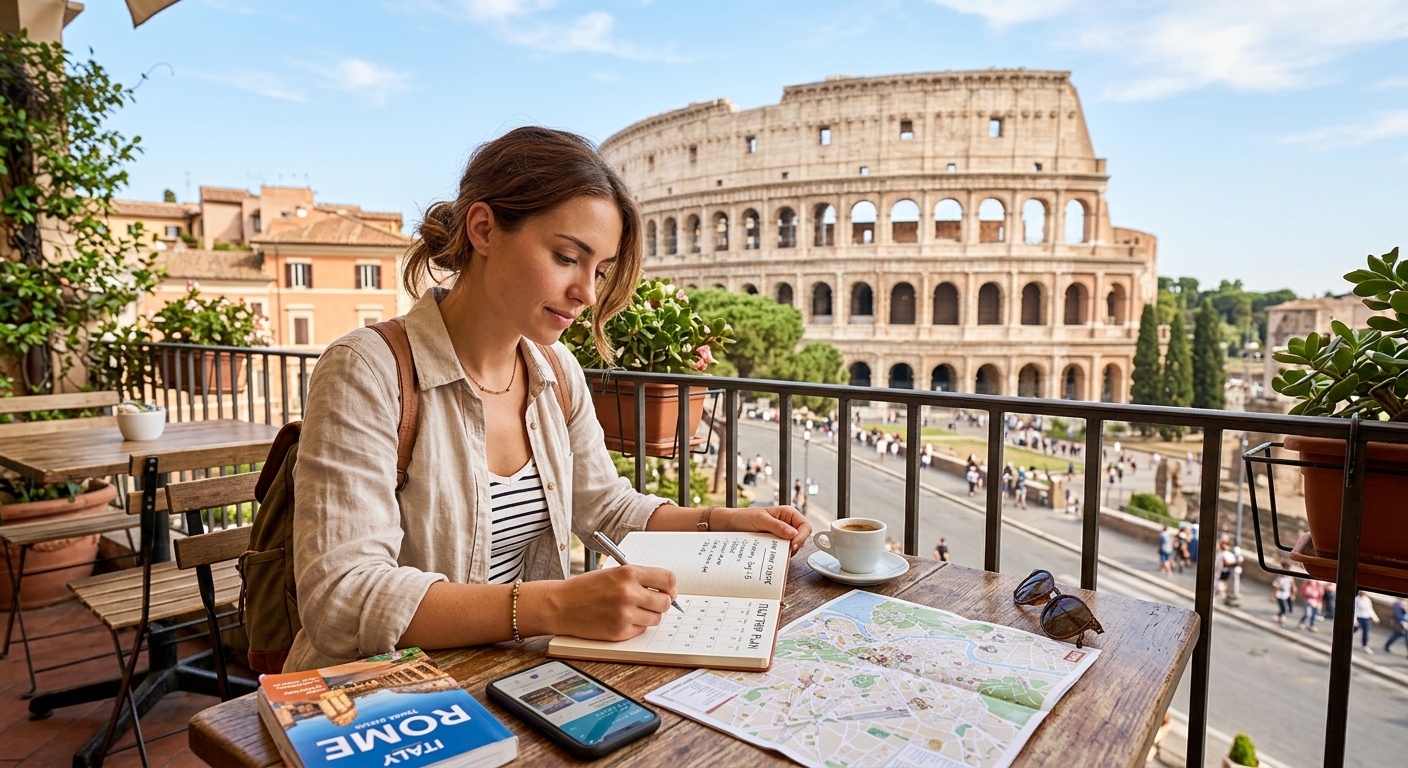
There is no one-size-fits-all answer to how many days in Rome you need, because the right length depends on how you like to travel. Some people are energized by a full itinerary and want to see as much as possible, while others prefer one landmark in the morning and a long lunch in the afternoon. Rome accommodates both styles, but the city becomes much more enjoyable when your schedule matches your pace.
We’ve found that first-time visitors often underestimate how long even “close together” sights can take once you factor in queues, security checks, and the time it takes to move between neighborhoods. Repeat visitors, by contrast, usually benefit from fewer monuments and more neighborhood immersion. Families need more flexibility. Couples often want a better mix of day and evening plans. Solo travelers may appreciate built-in time for wandering and people-watching.
Budget also plays a role, because in Rome, more days can actually lower the pressure to overspend on packed tours and taxis. On the other hand, a shorter trip may force more paid fast-track experiences to make the most of limited time. The ideal stay length is therefore a blend of curiosity, stamina, and what you want your days to feel like once you’re there.
First-Time Visitor vs. Repeat Visitor
First-time visitors usually need more time because everything is new and they want the headline experiences. If that’s you, aim for at least 3 days, and ideally 4, so you can cover the classics without turning the trip into a checklist. The first visit should include the ancient core, Vatican City, and at least one neighborhood where you can experience Rome beyond the monuments.
Repeat visitors can often get more out of 2 to 3 days because they already know the major landmarks and can focus on themed experiences. That might mean spending a morning in lesser-known churches, a long lunch in Testaccio, or an evening at a concert or theater performance. If you’ve already seen the Colosseum and Vatican, you can spend your time like a local rather than a tourist.
If this is your second or third trip, add at least one slow block of time for wandering. Rome’s charm is in the layers, and repeat visitors are usually the ones who fall in love with the city’s neighborhoods, markets, and café culture. That’s where a longer stay starts to feel less like sightseeing and more like living the city for a few days.
Fast-Paced Sightseeing vs. Slow Travel
Fast-paced travelers can squeeze a lot into a short stay, but there is a limit before the trip starts feeling like work. If you like moving efficiently from landmark to landmark, then 2 or 3 days may be enough, provided you book timed-entry tickets and avoid overpacking the schedule. This style works best for travelers who enjoy structure and don’t mind early starts.
Slow travelers should not try to “win” Rome by seeing everything. Rome is better when you let a few things happen naturally: a spontaneous church visit, a long coffee break, or an unplanned gelato stop after sunset. If that sounds like your style, 4 or 5 days is the better choice. You’ll still hit the major attractions, but you’ll have enough slack to enjoy the city’s atmosphere.
Our team visited on both tight and loose schedules, and the difference in enjoyment was obvious. The more rushed the itinerary, the more the city becomes about logistics. The more breathing room you have, the more it becomes about discovery. In Rome, that distinction matters.
Families, Couples, Friends, and Solo Travelers
Families usually need extra time because kids need breaks, snacks, and a shorter daily walking load. A 4- or 5-day trip is usually more realistic than a 2-day sprint, especially if you want to balance museums with parks, gelato, and casual meals. Rome can be surprisingly family-friendly if you plan the days well and leave room for downtime.
Couples tend to benefit from 4 or 5 days because the extra time supports a mix of sightseeing and date-night moments. One afternoon can be devoted to a museum or guided tour, while the evening can be saved for dinner, aperitivo, and a neighborhood stroll. That pacing makes the trip feel romantic rather than exhausting.
Friends’ trips are often most fun at 3 to 4 days, especially if you want a combination of sightseeing, drinks, and nightlife. Solo travelers can do well with 2 to 4 days depending on appetite for museums and independent wandering. Solo trips are often smoother in Rome because the city is full of cafés, public spaces, and easy transport between districts.
Budget, Season, and Opening Hours
Budget matters because Rome is not expensive in the same way every day of the week, but the attraction tickets, guided tours, and premium hotel rates add up quickly. A longer stay can spread out sightseeing and allow for more free activities, while a shorter stay may push you toward convenience purchases. If you’re budget-conscious, 3 or 4 days often offers the best value.
Season changes the equation too. In spring and fall, when Rome is at its most popular, timed-entry windows and hotel availability can determine your pacing. In the hottest summer weeks, fewer, slower days may actually be better because you’ll want mid-day breaks. In winter, you can often cover more in less time thanks to lighter crowds, though daylight is shorter.
Opening hours also matter more than people think. Churches may close for lunch, some museums have limited evening availability, and the Vatican has its own schedule. If you want the best use of your time, plan around hours rather than just distance. The right trip length is one that fits the city’s rhythm.
Is 1 Day in Rome Enough?
One day in Rome is not enough to truly experience the city, but it can still be a worthwhile stop if you choose wisely. If you only have 24 hours, your goal should be to see one historic area well, enjoy one great meal, and leave with a reason to come back. The biggest mistake is trying to do too much and ending the day feeling like you’ve merely rushed between monuments.
For a one-day visit, the key is ruthless prioritization. You won’t have time to do full museum visits plus neighborhood wandering plus a proper food break unless you keep expectations very focused. In practice, one day works best as a preview of Rome rather than a full introduction. You can still get a strong sense of the city’s beauty and scale, but not its depth.
If you’re asking whether a day is “worth it,” the answer is yes if Rome is part of a longer rail trip, a cruise stop, or an international connection. It is not ideal as your only Roman experience, but it can still be memorable if you structure it carefully. Think of it as a sampler, not a feast.
What You Can Realistically See in One Day
With one day, you can comfortably manage the Colosseum exterior or interior, a walk through the Roman Forum area, a quick visit to the Pantheon or Trevi Fountain, and an evening in a central neighborhood. You might also fit in a church or piazza if you skip a full museum experience. This is the absolute minimum version of Rome.
The trick is to group sights that sit close together. For example, the Colosseum, Palatine Hill, and Roman Forum make sense together, while the Pantheon, Piazza Navona, and Trevi Fountain form another compact cluster. Trying to bounce between those groups all day wastes precious time. In a one-day itinerary, transport efficiency is everything.
If you want a single standout moment, choose the Colosseum in the morning and the historic center at sunset. That gives you both the archaeological and atmospheric sides of Rome. It is not comprehensive, but it is balanced enough to feel like a real visit.
Best Use Case for a One-Day Stopover
One day is best when Rome is a layover city, not the centerpiece of your trip. If you’re arriving by train, on a cruise, or connecting through the city, one well-planned day can deliver the essence of Rome without overcommitting. That’s especially true if you already have another Italian base, such as Florence or Naples.
For a stopover, choose a hotel near the center or near Termini so you waste less time on transit. A centrally located base gives you the best odds of doing the city justice in a short time. If you stay too far out, your available sightseeing window gets eaten by logistics very quickly.
We’d also recommend a guided tour on a one-day visit, because it eliminates decision fatigue. One expert-led route can carry you through the essential layers of the city more efficiently than trying to self-navigate everything. For a short stop, structure beats spontaneity.
How to Avoid Wasting Time
Book timed-entry tickets before you arrive, especially for the Colosseum or Vatican if you are planning to squeeze them in. A one-day trip lives or dies by how little time you spend waiting. Even an hour lost to a line can mean losing an entire meal or landmark.
Keep luggage movement to a minimum. If you are arriving and departing the same day, use luggage storage near Termini or your hotel, and keep your route looped so you are not backtracking. Walking with bags through central Rome is a fast way to drain energy.
Finally, don’t try to have three full meals and five attractions in one day. In Rome, one proper lunch or dinner matters more than a rushed checklist. Your memory of the city will improve dramatically if you leave room for a seated meal and one slow walk after dark.
Is 2 Days in Rome Enough?
Two days in Rome is enough for a meaningful first look, but only if you’re comfortable with a brisk pace. You can cover the essentials, sample the food scene, and still have one or two beautiful “Rome moments,” but you will need to stay organized. This is the shortest trip length that begins to feel like a real city break rather than a stopover.
The biggest advantage of two days is that you can split Rome into two clean halves: ancient Rome on one day and Vatican/historic center on the other. That makes planning easier and reduces the chance that you waste time zigzagging across the city. Still, this is a minimalist approach, and you should expect some tradeoffs.
If your travel style is highly efficient and you don’t mind skipping a few things, two days can work well. If you want a relaxed trip with café time, longer meals, and neighborhood exploration, it will feel tight. We’d usually recommend 3 or 4 days instead, but 2 days is still workable for disciplined travelers.
The Best Two-Day Rome Highlights Plan
Day one should focus on ancient Rome: the Colosseum, Roman Forum, and Palatine Hill, followed by a historic center walk that includes the Pantheon, Piazza Navona, and Trevi Fountain. That gives you a strong mix of imperial history and classic street life. You’ll want to start early and stay close to the route you’ve chosen.
Day two should shift to Vatican City and nearby Prati, with St. Peter’s Basilica and, if time allows, the Vatican Museums. If you’re not a museum person, you can trim that half of the day and instead add a relaxed neighborhood lunch or a scenic evening walk. The goal is to avoid overstuffing the day with back-to-back indoor visits.
This framework works because it reduces transit friction. You will still be busy, but your movement will be logical. In Rome, that simple planning principle can save you hours.
What to Prioritize and What to Skip
With just two days, prioritize the landmarks that define Rome globally: the Colosseum, the Forum, the Pantheon, the Vatican, and St. Peter’s Basilica. If you have strong interest in art, the Vatican Museums become more important; if you care more about atmosphere, the neighborhoods may matter more. Choose based on your interests, not on a generic list.
What should you skip? Usually, you should skip trying to squeeze in multiple museums, more than one major neighborhood dinner, and any distant day trip. You also shouldn’t expect to do slow shopping or long aperitivo sessions unless you’re willing to reduce sightseeing. The city is full of tempting extras, but two days requires discipline.
A useful rule is to choose one “wow” moment per half-day. That keeps the trip from becoming an exhausting blur. The rest of the time can be spent walking, eating, and taking in the atmosphere between the headline sights.
Sample Pace for a Short City Break
A realistic two-day pace might begin with an early Colosseum booking, continue through the Forum and nearby ruins, then move to the center for lunch and a late afternoon stroll. The evening can be reserved for Trastevere or Monti, where you can have dinner and see a different side of the city. That makes the day feel complete without crossing too much ground.
On day two, start at the Vatican or St. Peter’s, then leave yourself room for a slower afternoon. If you are museum-sensitive, avoid scheduling a massive second indoor site right after the Vatican Museums. Instead, use the afternoon for a café stop, shopping, or a scenic walk along the Tiber.
Two-day visitors often regret not having a little more breathing space, but they rarely regret seeing the key sights. That’s the tradeoff. If you can only do 48 hours, focus on quality over quantity and let the city’s atmosphere do the rest.
Is 3 Days in Rome Enough?
Three days in Rome is enough for a classic first visit, and it may be the shortest trip length that still feels satisfying for a wide range of travelers. You can see the big landmarks, enjoy at least one neighborhood evening, and avoid the worst of the rush if you plan with care. For many people, 3 days is the minimum that turns Rome from a list of sites into a memorable city break.
This is the itinerary length we’d recommend most often for travelers who want a strong overview and can’t stretch to four days. It gives you room for the Colosseum, Vatican City, the historic center, and one neighborhood like Trastevere or Monti. You’ll still need to make choices, but the pace is much more humane than a 2-day blitz.
Three days also works well because Rome naturally splits into three usable zones: ancient Rome, the Vatican side, and the lively central neighborhoods. That makes it possible to design an itinerary that feels coherent instead of scattered. If you’re efficient, 3 days can be surprisingly rich.
The Classic 3-Day Itinerary Framework
The most reliable 3-day structure starts with ancient Rome and nearby classics. Day one covers the Colosseum, Roman Forum, Palatine Hill, and perhaps the Capitoline area or a quick stop at the Mouth of Truth if you’re moving efficiently. Day two moves to Vatican City and Prati, with St. Peter’s Basilica and, if your energy allows, the Vatican Museums. Day three can be the historic center and a neighborhood evening in Trastevere or Monti.
This format works because it keeps each day geographically focused. You won’t spend the whole trip on taxis or metro transfers. You’ll also be able to fit meals into each day without feeling like you’re sacrificing a major sight just to eat lunch.
The key is to resist the temptation to add every famous place to every day. Three days is enough if you keep the scope tight. It is not enough if you insist on mixing too many museums, churches, and excursions into the same schedule.
Day 1 Ancient Rome and the Historic Center
Start with the Colosseum as early as possible, ideally with timed entry to reduce waiting. From there, move through the Roman Forum and Palatine Hill, which give you the best sense of Rome’s ancient scale and political heart. This is the most “must-do” day of the trip, and it can easily absorb a morning and early afternoon.
After the ruins, head toward the historic center for a slower pace. The Pantheon, Piazza Navona, and Trevi Fountain create a compact walking circuit that feels like a reward after the archaeological intensity of the morning. If you have energy left, linger for dinner near Campo de’ Fiori or in the lanes around Via del Governo Vecchio.
In our experience, day one is best when you front-load the highest-demand sight, because by the end of the trip you’ll be tired. The ancient sites are also the hardest to improvise if tickets are sold out. Get them locked in first.
Day 2 Vatican City and Prati
Dedicate day two to Vatican City and the surrounding Prati district. If you want the full museum experience, the Vatican Museums and Sistine Chapel can take several hours, so book early and leave your afternoon lighter. If museums are not your thing, prioritize St. Peter’s Basilica and the square, then enjoy lunch in Prati, which is calmer and more residential than the historic core.
Prati is also a smart area for a leisurely Roman lunch because the restaurants often feel less tourist-saturated than the immediate Vatican perimeter. This is the day to slow down a little and let the city’s more elegant side show itself. A post-Vatican walk along the river or toward Castel Sant’Angelo can be a pleasant finish.
Day two is the most sensitive to timing because Vatican-related queues and security checks can affect your schedule significantly. Book ahead and avoid trying to pack too much into the afternoon. A relaxed lunch and a single extra stop are usually enough.
Day 3 Trastevere, Monti, and Local Neighborhoods
Day three should feel like a reward, not another marathon. Trastevere and Monti are the best neighborhoods for that, because they each offer a different flavor of local life. Monti is excellent for boutique shopping, compact wandering, and a food-forward vibe, while Trastevere gives you atmospheric lanes, casual bars, and one of the city’s most iconic dinner settings.
This is also the day to visit a smaller museum, a church, or a market if you want more than the headline monuments. For many travelers, the final day is where Rome becomes personal, because you’re no longer just checking off sites. You’re deciding where to sit, what to eat, and which streets to wander again after sunset.
Three days is best for travelers who want the essential Rome experience without a lot of optional extras. If you can already tell you’ll want a slower pace, choose 4 days instead. But if your schedule stops at 72 hours, you can still have a very good trip.
Who 3 Days Is Best For
Three days is ideal for first-time visitors with limited vacation time, couples on a city break, and travelers who are comfortable with a little structure. It also works for people who want the classic highlights and a touch of neighborhood life, but who do not need to add a day trip. If you like efficient sightseeing and don’t mind early starts, 3 days is enough.
It is less ideal for families with young children, slow travelers, and museum-heavy visitors who prefer to linger. Those travelers usually benefit more from 4 or 5 days. The difference is not just comfort; it changes what you can do after 4 p.m., which is when Rome becomes especially enjoyable.
If you choose 3 days, prioritize the big three: ancient Rome, Vatican City, and a neighborhood evening. That formula never fails. It’s compact, clear, and still feels like Rome.
Is 4 Days in Rome the Ideal Trip Length?
Yes, 4 days is the most recommended sweet spot for Rome, especially for first-time visitors. It gives you enough time to cover the major sights, enjoy the neighborhoods, and still leave breathing room for meals, rest, and spontaneous discoveries. If you’re asking how many days in Rome you need for the best overall experience, four is usually the answer.
The reason 4 days works so well is that it fits the city’s natural rhythm. You can do a major site each morning, a slower afternoon, and an enjoyable evening without feeling crushed by logistics. It also gives you space for one reservation that doesn’t have to be squeezed into a day already overloaded with sightseeing.
We checked the current travel pace in 2025-2026, and the difference between a 3-day and 4-day Rome trip is more significant than it looks on paper. That fourth day absorbs the “fatigue tax” that hits after walking, queuing, and navigating busy streets. In Rome, that matters a lot.
Why 4 Days Is the Most Recommended Sweet Spot
Four days gives you something most short city breaks lack: margin. Margin means if the Vatican Museums run long, you can still enjoy your evening. If a church closes mid-day, you can revisit later. If it’s hot, rainy, or especially crowded, you have room to pivot instead of forcing a bad schedule.
It also creates a better food experience. Rome deserves real meals, not just snack breaks between attractions. With four days, you can have an aperitivo, a proper pasta lunch, a relaxed dinner, and maybe a gelato walk without making every meal part of the race.
For first-time travelers, four days also helps the city feel less intimidating. Rome is large, but its best areas are highly walkable in clusters. Once you relax into those clusters, the city becomes much easier to enjoy.
How to Add Depth Without Rushing
The trick to a 4-day trip is not to add more headline sights than you can handle, but to add more quality time around them. That means a longer lunch in Monti, a museum that doesn’t dominate the day, or an evening in Trastevere rather than just a quick look. Depth often comes from pacing rather than from additional attractions.
You should also use day four to include things that feel hard to fit into shorter trips: a food tour, a neighborhood market, a smaller church, or a performance. This is where Rome’s cultural side shines. A great itinerary should include both the “postcard Rome” and the “real-life Rome.”
That balanced approach is what most travelers remember best. Years later, people often forget the exact order of monuments, but they remember the dinner table, the music drifting from a square, or the neighborhood they wandered after dark. Four days gives you the room to create those memories.
A Balanced 4-Day Sample Itinerary
Day one: Colosseum, Roman Forum, Palatine Hill, and a historic center evening. Day two: Vatican Museums or St. Peter’s Basilica, plus Prati lunch and a relaxed riverside walk. Day three: Monti and nearby sights, with time for shopping or a smaller museum in the afternoon. Day four: Trastevere, Testaccio, or a food-and-entertainment day that ends with dinner and drinks.
This itinerary keeps each day partly thematic and partly flexible. You get the major landmarks early, then use the final day to experience Rome as a living city. That final mix is what many shorter trips miss.
If you want one more layer, make day four your “Rome after dark” day. Book a show, live music, or a dinner reservation in a lively district. That gives your trip a memorable finish beyond sightseeing.
What Extra Experiences Fit Well on Day 4
Day four is perfect for the experiences that are easy to skip but very rewarding: a food market visit, a long lunch, a cooking class, a concert, a performance, or a leisurely neighborhood walk. If you’re traveling as a couple, it can become your date-night day. If you’re with friends, it can become your drinks-and-dinner day. If you’re solo, it can become your museum-and-café day.
You can also use day four to revisit a favorite area without pressure. Rome often reveals more on the second pass. Maybe you want another hour by the Pantheon, or you want to sit longer in Trastevere because the evening light is especially beautiful. That kind of flexibility is exactly why four days feels so good.
If you are choosing between 3 and 4 days and your schedule allows it, choose 4. In Rome, the additional day almost always pays off.
Is 5 Days in Rome Worth It?
Yes, 5 days in Rome is absolutely worth it if you value depth, comfort, and a more local rhythm. The city doesn’t just become easier with an extra day; it becomes richer. You can slow the mornings down, include more cultural experiences, and add either a meaningful day trip or a second layer of neighborhood time without turning the trip into a blur.
Five days is especially useful for travelers who like to pair sightseeing with food, art, shopping, and evening plans. You can explore the famous sites at a reasonable pace, then spend the remaining time on smaller but memorable experiences. That may include a museum, a church trail, an aperitivo crawl, a live performance, or simply more time in the neighborhoods you enjoy most.
From a planning perspective, 5 days is where Rome starts to feel like a city you can really inhabit for a short while. You’re no longer choosing between “see everything” and “enjoy nothing.” You can do both in a balanced way if you plan well.
What a 5-Day Itinerary Unlocks
With 5 days, you can stop treating every attraction as a nonnegotiable. That change alone makes the trip more pleasant. You can visit the Vatican Museums and still have time for St. Peter’s Square later. You can see the Colosseum and still enjoy a long dinner without checking the time every ten minutes.
You also gain room for variety. Rome has excellent archaeology, but it also has contemporary art, open-air life, neighborhood bars, and food culture. Five days lets you sample those layers in a way that a shorter trip cannot. That makes the city feel broader and less repetitive.
Many travelers find that day 5 is when their favorite memories happen, because the urgency is gone. They’re not chasing the list anymore; they’re choosing what feels right. That’s a very good way to experience Rome.
Museums, Churches, Food Tours, and Slower Mornings
Five days makes it realistic to build in one or two smaller indoor experiences without sacrificing the headline sights. You might choose a museum like the Capitoline Museums or Galleria Borghese, spend time in churches such as Santa Maria Maggiore, or book a food tour through a neighborhood market. These experiences add texture to the trip.
Slower mornings are another major advantage. If you’re in Rome for five days, you can afford to start a little later after a long dinner the night before. That makes the trip feel much more sustainable, especially for couples and families. A rested traveler enjoys Rome more than a rushed one.
Food tours and tastings are particularly strong in Rome because they help you understand the city beyond the monuments. From experience, travelers often remember where they ate as vividly as what they saw. Five days is enough time to make food a real part of the itinerary, not just a between-sights necessity.
Best 5-Day Pacing for Couples and Families
For couples, five days gives you the luxury of dividing the trip between sightseeing and romance. You can have one classic sightseeing day, one museum-heavy day, one neighborhood dinner night, and one slower day with drinks or live music. That balance tends to create a more memorable and less stressful trip.
For families, the extra day is often what makes Rome manageable. Children need breaks, and adults need to avoid becoming too tired to enjoy themselves. With five days, you can shorten the sightseeing load each day and still cover the essentials. That often means happier kids and better memories for everyone.
Five days is also a smart minimum if your family wants to do a day trip and still keep the city trip intact. Without that extra day, the excursion starts to compete with your core Rome experience. With five days, it becomes an enhancement instead of a sacrifice.
Where the Extra Day Makes the Biggest Difference
The biggest difference is not in the number of monuments you see, but in the quality of the trip. A fifth day lets you make choices based on interest rather than necessity. You can return to a neighborhood you liked, book a special dinner, or simply take the pressure off the first four days.
This matters even more in busy seasons. When the city is crowded, having an extra day is like having insurance against the unexpected. A delayed entry, a sold-out time slot, or a weather shift is much easier to handle if your schedule isn’t packed edge to edge.
If you’re debating between 4 and 5 days, ask yourself whether you’d rather go home having “done Rome” or having really enjoyed it. Five days is for the second version.
When Should You Stay 6 Days or Longer in Rome?
Stay 6 days or longer if you want Rome to feel less like a trip and more like a temporary home base. Longer stays are ideal for slow travelers, repeat visitors, architecture lovers, food obsessives, and anyone who wants to add one or two day trips without compressing the city experience. The longer you stay, the more Rome rewards you with its layers.
Once you cross the five-day mark, the city changes from a highlight itinerary into a neighborhood experience. You can spend one day on major sites, another on museums, another on food and drinks, and another on simply wandering. That’s a very different rhythm from the usual short city break, and it’s especially satisfying if you dislike feeling rushed.
In 2025-2026, longer stays are also becoming more popular among travelers who are reserving fewer attractions per day and choosing curated outings instead. That trend makes sense in Rome, because the city’s best moments often happen between major stops. Six days gives you room to let those moments happen.
Slow Travel and Neighborhood Immersion
Slow travel in Rome is about learning the difference between districts, not just visiting sights. A longer stay lets you compare Centro Storico, Monti, Trastevere, Prati, Testaccio, and even more local-feeling areas without rushing between them. You start to notice which neighborhoods are best for breakfast, which feel better at night, and which are most practical for your travel style.
This is the point where the city begins to feel personal. You may find your favorite coffee bar, your preferred evening walk, or the restaurant where you keep returning because it feels right. Those are the things that make a long Rome stay so satisfying.
For people who enjoy urban exploration, six days is often the minimum for a truly immersive experience. It lets you discover not only the famous landmarks but also the everyday rhythms of the city.
Art, Architecture, and Lesser-Known Sites
Extra days are perfect for Rome’s lesser-known treasures, which often require more time and a calmer pace. That could mean the Capitoline Museums, the Baths of Caracalla, Basilica di San Clemente, the Aventine Hill, or a more contemplative church circuit. These places are not always the first things people book, but they often become favorites.
Architecture fans especially benefit from extra days because Rome’s built environment is layered and complex. You can move from ancient ruins to Renaissance palaces to baroque churches to modern cafes in a single day, but you need time to appreciate each shift. Six days gives that appreciation some space.
These quieter sights also tend to balance the crowds around the major icons. If you are visiting in peak season, having a few lower-pressure options can preserve your energy and keep the trip enjoyable.
Adding a Day Trip or Two Without Burnout
If you want to add Tivoli, Ostia Antica, Florence, or Naples as a day trip, longer Rome stays become much more practical. Without extra days, the day trip can dominate your trip. With six days or more, it becomes an additional highlight rather than a replacement for Rome itself.
A good rule is to add day trips only after you’ve protected enough city time. If you love Rome itself, don’t cut it too short just to squeeze in more geography. The best trips often are the ones where you keep Rome as the anchor and treat day trips as optional bonuses.
In our view, 6+ days makes sense when Rome is your base city, not just one stop in Italy. It is the right choice if you want comfort, flexibility, and a more layered travel story.
Must-See Attractions to Include in Any Rome Itinerary
Regardless of how many days you have, some sights belong on almost every Rome itinerary. The challenge is not deciding whether they matter, but deciding how to group them so you can enjoy them without wasting time. Rome’s essentials are spread across a few compact zones, which makes smart sequencing especially important.
For most travelers, the core attractions include the Colosseum, Roman Forum, Palatine Hill, Pantheon, Trevi Fountain, St. Peter’s Basilica, and the Vatican Museums. These are the places that define the city for first-timers, and they all deserve at least some attention. The real question is how deeply to experience each one.
We recommend thinking of Rome in clusters: ancient Rome, the historic center, and Vatican City. Then add neighborhoods like Trastevere or Monti to round out the experience. That approach keeps your itinerary realistic and lets you enjoy the city rather than just run through it.
Ancient Rome Essentials
The Colosseum, Roman Forum, and Palatine Hill should be treated as one combined experience whenever possible. They tell the story of Rome’s imperial heart and are best understood together. If you only do one archaeological area, this is the one to choose.
The Colosseum is the most famous symbol, but the Forum and Palatine Hill often provide the more immersive walk. They let you see ruins in context and understand how the city functioned at its peak. Plan several hours here, especially if you want to enjoy the site instead of rushing through it.
Consider visiting early in the day when temperatures and crowds are lower. That makes a huge difference in energy, particularly in spring and summer.
The Vatican Essentials
St. Peter’s Basilica is one of the most important religious and architectural sites in the world, and the Vatican Museums are a major cultural draw. If you have limited time, pick the option that fits your interests best. Museum lovers should prioritize the Vatican Museums; architecture and atmosphere lovers may prefer the basilica and square.
The Vatican area also deserves planning because security checks and crowd flow can affect your timing. In 2025-2026, advance booking remains important if you want a smooth visit. This is not the kind of place where you want to show up on a whim during peak season.
The area around the Vatican is also a good place to pause for lunch, especially if you continue into Prati. That helps break up a dense sightseeing morning.
Historic Center Icons
The Pantheon, Trevi Fountain, Piazza Navona, and Campo de’ Fiori area form the essential historic center experience. This is where Rome feels cinematic, walkable, and social all at once. It’s a great place to schedule a less formal part of the day because you can weave between sites at your own pace.
The Pantheon is especially useful because it anchors a compact walking route, and the surrounding lanes are full of cafés and shops. Trevi Fountain is often crowded, so it’s best approached either early or later in the day if you want a more comfortable visit. Piazza Navona is ideal for slowing down and people-watching.
These sights are especially good on a shorter trip because they cluster naturally. That means less transit and more time actually enjoying the city.
Neighborhood Experiences Worth Prioritizing
Trastevere, Monti, Testaccio, and Prati are not “extras” if you want to understand Rome properly. They show you how the city lives, eats, and relaxes. Even a short stroll in one of these neighborhoods can add more to your trip than another rushed monument.
Trastevere is known for atmosphere and nightlife, Monti for stylish central energy, Testaccio for food, and Prati for a calmer, more residential pace near the Vatican. Each one offers a different version of Rome. The right choice depends on whether you want dinner, drinks, shopping, or a quieter neighborhood feel.
If you’re short on time, prioritize at least one of these neighborhoods after dark. Rome changes noticeably in the evening, and that is part of the experience.
Best Neighborhoods to Stay in Rome by Trip Length
Where you stay in Rome matters almost as much as how many days you have. The city is large enough that your base can save or waste a surprising amount of time. The best neighborhood depends on your trip length, your budget, and the type of experience you want when you step outside your hotel.
For short trips, location matters more than ambiance because you need efficiency. For longer trips, neighborhood personality starts to matter more because you’ll actually have time to enjoy the area. In Rome, staying in the right district can improve your entire pace of travel.
We’ve compared the main tourist-friendly areas and focused on how they work in real life, not just on a map. The short version: Centro Storico is best for first-timers, Monti is excellent for food and easy sightseeing, Trastevere is great for nightlife, Termini is the budget and transport choice, and Prati is ideal for Vatican access and quieter stays.
Centro Storico for First-Timers
Centro Storico is the most convenient area for first-time visitors who want to be close to the city’s headline sights. You’re within walking distance of the Pantheon, Piazza Navona, Trevi Fountain, and many restaurants and shops. If your trip is only 3 or 4 days, this centrality can save you a lot of time.
The downside is that it can be pricier and more tourist-heavy than other districts. Still, for a short first trip, convenience often beats variety. You’ll spend less time figuring out transit and more time enjoying the city.
If your priority is seeing classic Rome quickly and comfortably, Centro Storico is hard to beat.
Monti for Food and Easy Sightseeing
Monti is one of our favorite neighborhoods for travelers who want a local-feeling base without sacrificing location. It sits near the Colosseum and has a mix of cafés, bars, boutiques, and restaurants that make it easy to enjoy day and night. For a 3- to 5-day itinerary, Monti is a very smart choice.
It’s especially good if you like to walk out the door and have something interesting nearby. You can reach major attractions quickly, but you also have the pleasure of returning to a neighborhood that feels alive and manageable. That balance is part of Monti’s charm.
If food matters to you, Monti often feels like an ideal compromise between tourist convenience and everyday Roman energy.
Trastevere for Nightlife and Atmosphere
Trastevere is the go-to district for atmosphere, nightlife, and romantic evening walks. It’s not as centrally efficient for every sightseeing plan, but it is one of the best places to stay if you want your trip to feel lively after dark. For couples and friends, it is a strong choice.
The neighborhood has narrow lanes, buzzy restaurants, and a more playful late-evening mood. It’s perfect if your ideal Rome memory includes dinner, drinks, and a stroll under warm lights. It can get busy, so book popular restaurants in advance.
For shorter trips, Trastevere is best if you want your evenings to be the highlight. For longer trips, it works well as one part of a broader stay.
Termini for Budget and Transport
Termini is the practical choice for budget travelers and anyone who wants easy rail and airport access. It’s the area around Rome’s main train station, which means it is highly connected and often more affordable than central neighborhoods. If you’re in Rome for a very short time or arriving late, this can be a smart base.
The tradeoff is that the atmosphere is less charming than Centro Storico, Monti, or Trastevere. You’ll probably rely more on transit or walking to reach the main sites. That said, for travelers prioritizing price and logistics, Termini can be very useful.
It’s especially appealing if you plan to arrive by train and depart early, or if you are using Rome as a rail hub for other Italian cities.
Prati for Vatican Access and Quieter Stays
Prati is a polished, calmer area close to the Vatican and useful for travelers who want a more residential feel. It’s especially good if your itinerary is Vatican-heavy or if you prefer quieter evenings. Restaurants here can feel less tourist-focused, and the streets are easier to navigate than some parts of the historic center.
This neighborhood works very well for couples, families, and visitors who don’t need to be in the center of the nightlife. It’s also a smart choice if you want easy access to St. Peter’s Basilica and the Vatican Museums. If you value sleep and convenience, Prati deserves a close look.
For 4- to 5-day trips, Prati offers a nice contrast to the busier central areas.
| Neighborhood | Best For | Tradeoff |
|---|---|---|
| Centro Storico | First-timers, short stays | Higher prices, busy tourist flow |
| Monti | Food lovers, easy sightseeing | Can book up fast |
| Trastevere | Nightlife, couples, atmosphere | Less efficient for some major sights |
| Termini | Budget, rail access | Less scenic, more logistics |
| Prati | Vatican access, quiet stays | Fewer classic Rome vibes at night |
Where to Stay in Rome Based on Your Itinerary Goals
Choosing where to stay should follow your itinerary, not the other way around. If you know how many days in Rome you have and what kind of trip you want, the neighborhood choice becomes much easier. The goal is to reduce friction so your energy goes to the city, not to transit.
For short stays, every neighborhood you avoid backtracking through is time saved. For longer stays, a slightly less central but more comfortable base may be worth it. Think about how often you’ll return to the hotel during the day, whether you want nightlife nearby, and how much you care about walking versus taking transit.
Here’s the simplest rule: 3 days calls for the most central location possible, 4 to 5 days opens up more neighborhood personality, and 6+ days can support a base that feels more local or relaxed. That’s the framework we’d use if we were planning our own trip.
Best Area for 3 Days in Rome
For 3 days, the best area is usually Centro Storico or Monti, because both let you cover the essentials quickly. Centro Storico is more polished and postcard-perfect, while Monti is a little more neighborhood-like and food-focused. Either way, you want to minimize transport and maximize walking flexibility.
Being central matters because your itinerary will be dense. You don’t want to spend half your limited time getting from your hotel to the Colosseum or Vatican. The closer you stay to the action, the easier it is to keep the trip enjoyable.
If you’re only in town for 72 hours, location is your luxury.
Best Area for 4-5 Days in Rome
For 4 to 5 days, Monti, Trastevere, Centro Storico, and Prati all become realistic depending on your style. Monti is arguably the best all-around option because it sits well for sightseeing and food. Trastevere is better if evenings matter most, while Prati is great if you prefer quieter nights and Vatican access.
At this trip length, you have enough time to explore beyond the immediate hotel area, so your base can reflect more of your personality. If you love restaurants and cafés, choose Monti or Trastevere. If you want sleep and ease, choose Prati. If you want the classic central experience, choose Centro Storico.
Four to five days also gives you a chance to appreciate your neighborhood rather than just use it as a sleep location. That’s a nice upgrade.
Best Area for Families
Families generally do best in areas that are central but not chaotic, with easy taxi or transit access and comfortable apartment-style accommodations. Prati and Monti are both excellent, while Centro Storico can be great if the property is family-friendly and well located. The main concern is reducing daily stress, especially when kids are involved.
Families should prioritize elevator access, air conditioning, and nearby dining options that work for different ages. A quiet street is often more valuable than a very famous address. The best stay is the one that helps everyone recover between sightseeing blocks.
If your family is spending more than 4 days in Rome, slightly calmer neighborhoods become even more appealing.
Best Area for Couples and Date Nights
Couples often enjoy Trastevere for its romantic evening energy and Monti for its stylish but relaxed vibe. Centro Storico can also be excellent if you want iconic Rome within walking distance of dinner and drinks. The best choice depends on whether you want classic scenery or a more local dining scene.
If date nights matter, think about what happens after sunset. Trastevere is lively and atmospheric, while Monti feels a touch more intimate and less obviously tourist-centered. Both are strong bases for a couples’ trip.
For a honeymoon or anniversary trip, we’d lean toward a central area with a strong evening scene so you can keep the pace flexible.
| Trip Length | Best Stay Area | Why |
|---|---|---|
| 1-2 days | Centro Storico or near Termini | Fast access and minimum transit |
| 3 days | Centro Storico or Monti | Best for dense sightseeing |
| 4-5 days | Monti, Trastevere, Prati | Balance of atmosphere and convenience |
| 6+ days | Prati, Trastevere, or a local residential area | Comfort and neighborhood immersion |
Day Trips from Rome That Are Worth Adding
Day trips can be excellent from Rome, but they should be added thoughtfully. The city itself is rich enough that you should protect enough time for it first. Once you’ve covered your core Rome days, though, the surrounding area opens up beautifully and gives you a different kind of travel experience.
Not every day trip is worth it for every traveler. Some people want more ruins and countryside, while others want another major city, even if it means a longer rail day. The right choice depends on your energy, your trip length, and whether you’re adding to or subtracting from the quality of your stay in Rome.
If you only have 3 days in Rome, we usually would not recommend a day trip. If you have 4 or 5, one short excursion can work. If you have 6 or more, day trips become much easier to justify.
Tivoli and Villa d’Este/Villa Adriana
Tivoli is one of the best day trips from Rome because it offers a rewarding change of pace without feeling too far away. Villa d’Este and Villa Adriana are especially attractive if you like history, gardens, and architecture. They make for a satisfying trip when you want something quieter than central Rome.
This is a particularly good option for repeat visitors or travelers who already know the headline Roman sites. You get UNESCO-level history and a more relaxed landscape. The gardens at Villa d’Este are especially lovely in spring and early summer.
If you’re looking for a Rome day trip that feels “worth it” without overcomplicating your itinerary, Tivoli is one of the strongest picks.
Ostia Antica for Ruins Without the Crowds
Ostia Antica is a smart alternative for travelers who love archaeology but want less congestion than the central city sites. It’s easy to appreciate if you’ve already done the Colosseum and Forum and want another layer of ancient history. The setting is more open and calmer, which can be a welcome contrast.
Because it is relatively close, Ostia Antica fits best on a trip that includes 4 or 5+ days. It feels like an extension of your Roman history day rather than a huge separate excursion. That makes it especially useful for museum and history lovers.
If your Rome trip is already heavily packed, you can skip this. But if you want a quieter archaeological day, it’s a strong option.
Florence or Naples as Rail Extensions
Florence and Naples are technically possible as day trips from Rome by high-speed train, but they are long days and should be treated carefully. Florence is the more commonly attempted option, but it works best if your main goal is a taste, not depth. Naples can be wonderful too, especially for food lovers, but the day can feel demanding if you’re not prepared for a long rail schedule.
These trips are best when Rome is one base city in a larger Italy itinerary and you’re comfortable with early departures and late returns. They are not the best choice if your goal is to fully enjoy Rome. In most cases, we’d rather see you spend an extra day in Rome than use that day as a train marathon.
If you want to combine cities, do it with intention, not on impulse.
How to Decide if a Day Trip Is Worth It
Ask yourself three questions: Have I given Rome enough time already? Does the day trip add something different, not just more of the same? Am I willing to give up a full city day for it? If the answer to the first two is yes and the third feels acceptable, the trip may be worth it.
The best day trips usually complement Rome rather than compete with it. Tivoli adds gardens and villas, Ostia Antica adds quieter ruins, while Florence and Naples add another city entirely. Each has a different effect on your itinerary.
If your schedule is tight, our advice is simple: protect Rome first, then add a day trip only if your total trip length can absorb it comfortably.
| Day Trip | Travel Time | Worth It If You Want... |
|---|---|---|
| Tivoli | About 1 hour each way by car/train + transfer | Gardens, villas, quiet history |
| Ostia Antica | About 30-45 minutes each way | Ruins without major crowds |
| Florence | About 1.5 hours each way by high-speed train | Art and a famous city sampler |
| Naples | About 1 hour 10 minutes each way by high-speed train | Food and energetic urban contrast |
Rome by Scenario: Date Night, Family, Friends, Solo, Budget
One of the best ways to decide how many days in Rome you need is to plan by scenario. Different travel styles create very different pacing needs, and Rome can support all of them if you set the trip up properly. A couple on a romantic escape, a family with kids, a group of friends, a solo traveler, and a budget-conscious visitor will not experience the city the same way.
That’s a good thing. Rome is flexible enough to offer a classic sightseeing trip, a food-and-drinks getaway, a family adventure, or a low-cost wander through public spaces and museums. But the number of days you need changes with the type of trip you’re after. This section is designed to help you match your days to your style.
We also think this is where planning gets more fun, because Rome is not only about monuments. The city has late-night energy, cultural events, casual dining, and tons of ways to tailor a trip around interests rather than just landmarks. That’s where Gidly-style discovery really fits in.
Date Night Ideas in Rome
Rome is excellent for date nights because it naturally combines beauty, walkability, and dinner culture. A couple can easily build an itinerary around a sunset view, aperitivo, a relaxed meal, and a neighborhood stroll. If romance is a priority, 4 or 5 days is ideal because it leaves space for a special evening without sacrificing sightseeing.
Trastevere is the obvious romantic neighborhood, but Monti and parts of Centro Storico can be equally good depending on the mood you want. The key is to avoid over-scheduling the day so that the evening feels like a reward rather than another task. A good Rome date night should feel effortless.
For couples, the extra day also helps because you can have one “tourist” day and one “Rome by night” day. That mix usually creates the strongest memories.
Family-Friendly Rome Itinerary Choices
Families do best with 4 or 5 days because children need a lighter pace and more flexibility. Rome is a great family destination if you mix the big sights with open spaces, sweet stops, and manageable transport. Don’t try to force museum marathons if your kids are not into them.
The best family plan usually includes the Colosseum, a fountain or piazza walk, one Vatican highlight, and one easy neighborhood or park-based afternoon. That gives kids a mix of history and movement. It also leaves room for meals and breaks, which are crucial for a successful trip.
If you’re traveling with younger children, choose a central hotel and build your days around nap times or early evenings. That’s much easier with 5 days than with 2 or 3.
Things to Do with Friends or a Group
Friends’ trips often work best at 3 or 4 days because you can combine sightseeing with group dinners, drinks, and a few flexible plans. Rome is fun with friends because it’s social by nature. There are plenty of piazzas, restaurants, bars, and nighttime streets where a group can hang out without needing a strict itinerary.
If you’re with friends, Monti and Trastevere are especially attractive because they make it easy to move from day plans to evening plans. You can keep the mood casual and still see the city. A slightly longer stay also helps because groups often move more slowly than solo travelers.
Our suggestion is to choose one anchor activity per day and leave the rest open. Rome works better when group trips feel loose but not directionless.
Solo Traveler-Friendly Experiences
Solo travel in Rome is very rewarding because the city is built for independent wandering. A solo traveler can enjoy museums, long walks, coffee bars, and neighborhood exploration without relying on a group consensus. For many solo visitors, 3 to 4 days is plenty, though 5 days can be wonderful if you enjoy slower exploration.
Solo travelers often benefit from a slightly more central stay and a few pre-booked highlights so they can focus on the experience rather than logistics. Rome is easy to navigate once you’ve got your plan in place. It’s also a great city for eating alone comfortably, especially in cafés and casual trattorias.
If you’re solo and love culture, add at least one performance, exhibit, or walking tour. That gives you a social touchpoint without compromising freedom.
Free and Low-Cost Things to Do
Rome is a strong city for budget travelers because many of its best experiences are free or low cost. Walking through Centro Storico, watching the light change at the Pantheon, strolling to the Trevi Fountain, crossing into Trastevere, and lingering in public squares cost nothing. Churches, piazzas, and neighborhood walks can fill a day beautifully.
Budget travelers should consider 3 or 4 days ideal because the city rewards slow observation more than expensive consumption. You can choose one or two paid attractions and fill the rest of the itinerary with scenic, free, or low-cost experiences. That gives you a balanced trip without overspending.
If you’re trying to keep costs down, avoid too many taxis and focus on walkable clusters. That alone can make a major difference.
- Free things to do: walk Piazza Navona, visit the Pantheon area, cross the Tiber on foot, explore Trastevere at night.
- Low-cost ideas: church visits, self-guided neighborhood walks, piazza picnics, budget aperitivo hours.
- Smart savings: book major attractions early, stay centrally, and eat lunch in less tourist-heavy streets a few blocks off the main squares.
Rome Entertainment Beyond the Monuments
One of the biggest mistakes travelers make is treating Rome like a museum instead of a living city. Yes, the monuments matter, but Rome also has strong food culture, music, theater, exhibitions, and nightlife. If you want the trip to feel modern as well as historic, you need to leave room for entertainment beyond the obvious sights.
This matters even more if you’re deciding between 3, 4, or 5 days. The extra time often goes not into more landmarks but into richer evenings and more immersive cultural outings. That’s where Rome really proves it is not frozen in the past.
We strongly recommend planning at least one non-monument experience, especially if you’re staying 4 days or longer. It can transform the trip from “I saw Rome” to “I experienced Rome.”
Live Music, Concerts, and Opera
Rome has a surprisingly strong live music and performance scene, from classical concerts to small live sets. Depending on the season, you can find performances in historic venues, church spaces, and purpose-built theaters. If you enjoy music, this is one of the easiest ways to make an evening in Rome feel special.
Opera and classical programming are especially good fits for travelers who want something elegant after a day of walking. Even if you’re not a huge classical fan, the setting alone can be memorable. These outings are often best booked in advance, particularly during high season and holidays.
For a 4- or 5-day trip, one music night is a perfect addition because it adds variety without exhausting you.
Theater, Comedy, and Performance Venues
Rome’s theater and performance scene includes everything from traditional productions to contemporary pieces and smaller experimental spaces. If you want a more local and less tourist-facing evening, this can be a great way to spend a night. It also works well for rainy days or when you need a break from walking.
Comedy and performance events can be excellent for couples or friends because they give the trip a social energy that dining alone cannot replicate. In 2025-2026, curated nightlife and event discovery are increasingly useful because listings can change often. That’s why checking current event calendars matters.
If you’re looking for a trip with more than sightseeing, Rome’s stage scene is a nice surprise.
Art Museums, Exhibitions, and Cultural Nights
Rome’s museums are not just for rainy mornings. They can be part of a broader cultural night if you choose an exhibition or gallery and pair it with dinner nearby. Larger institutions often have rotating shows, and smaller spaces can provide a more contemporary view of the city.
If your main interests are art and architecture, 5 days becomes very appealing because you can mix the Vatican, one or two museums, and a cultural evening. That combination is much more satisfying than sprinting through only the most obvious sites.
When possible, check the official websites for current exhibitions, since the scene changes constantly and seasonal shows can be excellent reasons to extend your trip.
Food and Drink Experiences
Rome’s food scene is one of its greatest entertainment assets. That includes proper trattorias, aperitivo bars, wine-focused evenings, pasta tastings, markets, and cooking classes. For many travelers, food is where the city becomes truly memorable.
A food-based evening works especially well on a 4- or 5-day itinerary because it lets you slow down and enjoy local rhythm. You can turn dinner into an event rather than an afterthought. That’s one of the best reasons to stay longer in Rome.
We especially like building one “food first” day into an itinerary, where lunch or dinner is part of the plan instead of something squeezed between landmarks.
Nightlife and Late-Night Districts
Rome’s nightlife is not as frantic as some other European capitals, but it is lively, social, and neighborhood-driven. Trastevere is the best-known area for evening energy, while parts of Monti and Centro Storico can also work well depending on the bar and restaurant scene. If you want late-night fun, you need at least 3 days, and ideally 4 or more.
Nightlife is also one of the reasons some travelers choose to stay closer to the center. If your evenings matter, a neighborhood that lets you walk home comfortably is a big plus. That’s especially true if you don’t want to rely on taxis late at night.
For friends’ trips and couples, one planned nightlife night can be a great way to make Rome feel more current and less purely historical.
Seasonal Guide — When Rome Feels Best and Why
The best time to visit Rome changes the answer to how many days in Rome you need. In cooler months, you may be able to move more efficiently and fit more into the day. In hot summer months, you may need extra time for breaks, shade, and slower pacing. Season influences crowd levels, hotel prices, and even how much you enjoy walking.
In 2025-2026, travel seasonality remains a major factor because popular sites continue to draw strong crowds, especially in spring and fall. Rome is enjoyable year-round, but each season has a different feel. Your itinerary length should account for that feel rather than ignoring it.
Here’s how to think about each season so your planning matches reality instead of just the weather forecast.
Spring in Rome
Spring is one of the best seasons for Rome because temperatures are pleasant and the city feels alive without being overwhelmingly hot. This is also a high-demand season, so reservations and hotel planning matter more. A 4-day stay is especially smart in spring because it lets you navigate crowdier conditions with less pressure.
Spring is ideal for walking-heavy itineraries, outdoor cafés, and neighborhood exploration. It is also a very good time for day trips to Tivoli or other scenic areas. If your trip falls in spring, book key attractions early and expect the city to feel popular.
This is the season when Rome looks especially photogenic, but it also rewards early starts.
Summer in Rome
Summer in Rome can be beautiful, but it is hot and crowded, especially around major attractions. In this season, longer trips can actually feel easier because you can spread sightseeing across more mornings and include more indoor or shaded breaks. A 4- to 5-day trip is often better than a packed 2-day visit in peak heat.
In summer, plan for early starts, long lunches, and less ambitious afternoons. Museums, churches, and evening outings become especially valuable because they help you avoid the hottest hours. If you’re coming in summer, do not underestimate how much the heat affects walking and concentration.
Nighttime Rome is especially appealing in summer, so leave room for evening strolls and dinner after dark.
Autumn in Rome
Autumn is another superb season, often with comfortable temperatures and a lively cultural calendar. It can be an excellent time for 3 to 4 days if you want a balanced sightseeing trip. Fall is a popular choice for travelers who prefer a more comfortable walking experience without the intensity of midsummer heat.
This season is also strong for food and cultural events, which makes it attractive for longer stays. A 4- or 5-day trip in autumn can combine sightseeing with exhibitions, concerts, and neighborhood dining. It’s one of the most versatile times to visit.
If you travel in autumn, the city often feels especially suited to a full, comfortable itinerary.
Winter in Rome
Winter is underrated in Rome, especially if you dislike extreme crowds. The city is cooler, calmer, and often easier to navigate. You can sometimes see a lot in 3 days because lines are shorter and walking temperatures are more comfortable than in the summer heat.
That said, daylight is shorter, so planning becomes more important. You’ll want to group outdoor sites efficiently and save at least one indoor activity for the later part of the day. Winter also works well for travelers who enjoy Christmas season atmosphere or quieter museum visits.
If you want the best value and the least stress, winter can be a very smart time to visit.
Practical Planning Tips for the Perfect Rome Trip
Good planning matters in Rome because the city is rewarding but not forgiving of poor timing. Timed-entry attractions, long walking distances, and seasonal crowds can all affect how many days you actually need. If you plan smartly, you can do more in fewer days without losing your sanity.
This section covers the logistics that most travelers only learn after they arrive. The goal is not to make Rome feel complicated, but to keep it enjoyable. A well-planned trip is usually a better trip, especially if you only have 3 or 4 days.
We’ll focus on tickets, transport, walking, parking, taxis, and airport transfers, because these practical details often determine whether your itinerary feels smooth or stressful.
Tickets, Reservations, and Skip-the-Line Strategy
Book popular attractions in advance whenever possible, especially the Colosseum, Vatican Museums, and any highly demanded exhibitions or special access tours. In 2025-2026, advance booking culture is not optional for many top sites. It is the difference between a clean itinerary and a day spent reacting to sold-out slots.
Timed-entry reservations are especially important if you are only staying 3 days or less. They help you lock the day around fixed anchor points, which makes the rest of the schedule much easier. You can then build meals and neighborhoods around those reservations.
Skip-the-line options can be worth it if your trip is very short or if you value time more than cost. They are not always necessary, but they can be smart for peak seasons or limited itineraries.
Getting Around Rome Efficiently
Rome is walkable in the sense that many major sights are clustered together, but it is not a tiny city. You will still use transit, taxis, or rides between some zones. The best strategy is to cluster your days geographically so you walk as much as possible within each zone and minimize cross-city movement.
The metro is useful for some connections, but it does not cover everything you’ll want to see. Taxis and ride-hailing can help, especially in hot weather or if you’re tired. That said, many of the best moments happen when you simply walk.
If you stay central, you’ll likely find that walking plus occasional taxis is the simplest approach. If you stay farther out, you’ll need to rely more heavily on transport.
Walking Distances and Realistic Daily Pacing
Rome looks compact on a map, but the real walking load can be substantial once you factor in detours, hills, crowds, and long museum days. A realistic sightseeing day often means 8,000 to 15,000 steps, sometimes more. That’s another reason 4 days often feels better than 2 or 3.
Do not schedule too many major sites back-to-back unless you are used to that level of travel. A morning of ruins followed by an afternoon of walking through the historic center can be enough for one day. If you add a major museum on top of that, you may run out of energy before dinner.
The best Rome itineraries build in pauses. A coffee stop or long lunch is not a luxury; it’s part of the pacing strategy.
Parking, Taxis, and Airport Transfers
If you are driving, parking in central Rome can be difficult and expensive, so most visitors are better off without a car. Taxis are usually the better choice for moving between districts if walking is too much. Airport transfers should also be planned in advance, especially if you arrive late or depart early.
For most city travelers, staying near public transport or in a highly walkable neighborhood is the cleanest solution. That reduces the need for parking entirely. If you plan to do a day trip, consider rail options rather than renting a car unless you have a specific reason to drive.
The overall rule in Rome is simple: the less you depend on a car, the easier your trip becomes.
| Logistics Item | Best Practice | Why It Matters |
|---|---|---|
| Major tickets | Book early | Prevents sold-out headaches |
| Daily pacing | One major anchor per half-day | Reduces burnout |
| Getting around | Walk, then taxi when needed | Best mix of efficiency and experience |
| Airport transfers | Pre-plan timing | Avoids first/last-day stress |
Common Mistakes When Planning How Many Days in Rome
The most common mistakes in Rome are not really about what to see, but about how to pace the trip. People often arrive with a long list of must-dos and assume they can simply string them together. Rome does not reward that approach. It rewards planning, clustering, and leaving breathing room.
If you want the city to feel memorable instead of exhausting, avoid these planning errors. They’re especially important in 2025-2026, when crowd patterns, timed-entry reservations, and travel demand continue to shape the experience. A little foresight goes a long way here.
We’ve seen these mistakes happen again and again, so we’re calling them out clearly. If you avoid them, your trip will feel much smoother regardless of whether you stay 2 days or 5.
Trying to Do Too Much in Too Few Days
This is the biggest mistake by far. Visitors often assume that because Rome’s headline sights are famous and geographically identifiable, they can be covered quickly. In reality, you need time for security checks, walking, tickets, meals, and unexpected delays. Packing the Colosseum, Vatican, Trastevere, multiple museums, and a day trip into a 2-day stay is a recipe for frustration.
The solution is to accept tradeoffs early. If your trip is short, choose the experiences that matter most and skip the rest without guilt. Rome is not a city where you “get it all” in one pass. It is a city where you get the best version of your priorities.
Short trips can be great, but only if they are curated, not crammed.
Ignoring Neighborhood Time and Food Breaks
Many travelers underestimate how much of Rome’s charm lives outside the major monuments. If you skip neighborhood time, you may technically see the famous places but still feel like you missed the city. That’s because Rome is as much about atmosphere and meals as it is about landmarks.
Food breaks are not wasted time. They are part of the experience and part of the pacing strategy. A good lunch can reset the whole day, especially if you’ve been walking since morning. Without those pauses, the trip can become more draining than enjoyable.
We always recommend building in at least one unstructured meal block each day. That gives the city room to surprise you.
Not Booking Timed-Entry Attractions Early
In a city as popular as Rome, spontaneity can be expensive in terms of time. The Colosseum and Vatican are obvious examples, but even smaller special-access or exhibit-based experiences can book out. If your trip is short, the cost of waiting is much higher.
Book early so your itinerary is anchored. That one step can prevent a lot of stress, especially if you’re trying to fit Rome into a tight itinerary. It also helps you decide where to stay and how to build your route.
For 2025-2026 travelers, reservation culture is simply part of the experience.
Mixing Too Many Day Trips Into One Trip
Day trips are tempting, but they can crowd out the city that you came to see. Florence, Naples, Tivoli, and Ostia Antica are all appealing in different ways, yet each one takes time and energy. If you add too many, Rome itself becomes a transit point instead of your destination.
The best approach is to choose one day trip, if any, and only after you’ve protected enough city time. That keeps the trip balanced. It also prevents the classic mistake of returning from a day trip too tired to enjoy the evening in Rome.
More is not always better. In Rome, depth usually beats quantity.
How the Rome Travel Scene Is Evolving in 2025-2026
Rome has always been busy, but the way people travel here is changing. In 2025-2026, travelers are more reservation-conscious, more interested in curated experiences, and more likely to plan around local events and neighborhoods instead of only landmarks. That shift is good news if you want a richer trip, because Rome responds well to thoughtful planning.
Crowding patterns are also part of the modern reality. The most popular attractions remain high-demand, and timed-entry systems are central to getting around them smoothly. Travelers who adapt to that system have a much better experience than those who expect the old walk-up approach to work everywhere.
The biggest trend, though, is a move toward more local, layered experiences. People want to know where to eat, where to listen to music, what’s on in the city, and how to find the best neighborhood vibe. That’s where curated discovery platforms like Gidly become very useful.
Crowding Patterns and Reservation Culture
Rome’s crowding is not random. It follows seasons, school calendars, weekends, and event schedules. The busiest periods still tend to be spring and early fall, with summer also very active. If you’re traveling then, early bookings are essential and staying 4 or 5 days can help soften the crowd pressure.
Reservation culture means travelers now need to think less about “showing up” and more about “locking in.” This changes trip planning in a positive way if you embrace it early. You can shape the whole day around confirmed entry times rather than waiting until you arrive.
In practical terms, the best Rome trips in 2025-2026 are the ones that blend fixed anchors with flexible exploration.
What’s Trending in Rome Now
More travelers are looking beyond the classic must-sees to neighborhood-led trips, food experiences, and evening outings. That means the city’s restaurants, bars, live music spots, exhibitions, and guided local experiences are getting more attention. Rome is not just an ancient capital; it’s an active cultural city.
There is also more interest in slower, more curated itineraries. Rather than filling every hour, people want a mix of famous places and authentic atmosphere. That makes 4- and 5-day stays particularly attractive because they support a more balanced pace.
If you love discovering things to do by neighborhood or mood, Rome is having a very good moment.
Why Local Experiences and Curated Outings Matter
Local experiences help balance the heavy tourism around the major monuments. They give you context, variety, and a better sense of the city’s actual rhythm. That can be a live music night, a food walk, a performance, or a lesser-known exhibition. These outings are increasingly valuable because they make your trip feel more personal.
That is also why we recommend using a discovery tool like Gidly when planning. It helps you find what’s happening now, not just what has always been famous. In a city like Rome, that distinction matters a lot.
The more local the experience, the more likely you are to remember the trip for the right reasons.
Comparison Table — 1 vs 2 vs 3 vs 4 vs 5+ Days in Rome
If you’re still deciding how many days in Rome you should book, this comparison will make the tradeoffs clearer. Each trip length has a different rhythm, cost profile, and kind of traveler it suits best. The right answer is the one that matches your priorities and your tolerance for pace.
The table below is designed to be a quick decision tool. It helps you compare what each length actually delivers in real life. That way, you can choose based on more than just the number of attractions you hope to fit in.
Use it as a planning shortcut, then read the scenario sections and neighborhood recommendations to refine your choice.
| Days in Rome | Pace | Best For | Main Tradeoff |
|---|---|---|---|
| 1 day | Very fast | Stopovers, cruise stops, layovers | Very little room for depth |
| 2 days | Fast | Highlights-focused city breaks | Meals and extras get squeezed |
| 3 days | Moderately fast | Most first-time visitors | Limited flexibility |
| 4 days | Balanced | Best overall sweet spot | Still not enough for everything |
| 5+ days | Relaxed | Deep exploration, families, day trips | Higher overall budget |
| Trip Length | What You’ll See | Cost Pressure |
|---|---|---|
| 1 day | A few landmarks and one district | Low time, high convenience spend |
| 2 days | Ancient Rome + Vatican basics | Moderate |
| 3 days | Core highlights + one neighborhood | Balanced |
| 4 days | Major sights, food, and slower exploring | Efficient value |
| 5+ days | Fuller city immersion and possibly a day trip | Highest total spend, best comfort |
FAQ — How Many Days in Rome and Related Planning Questions
Here are the questions travelers ask most often when deciding how many days in Rome they need. These answers are short, practical, and written in the way people actually ask them when planning a trip. If you’re still on the fence, this section should help you lock in your decision.
We’ve also aimed these answers at the most common planning concerns: first-time visits, family trips, museums, neighborhoods, and day trips. If you need a quick voice-search-friendly reference, this is the right place.
Use these as a final sanity check before booking flights, hotels, and major tickets.
How many days do I need in Rome?
For most travelers, 4 days is the best answer. Three days is enough for the main highlights, but 4 days gives you a better balance of sights, neighborhoods, meals, and downtime.
Is 3 days enough for Rome?
Yes, 3 days is enough for a classic first trip if you plan carefully. You can cover ancient Rome, Vatican City, and one neighborhood like Trastevere or Monti, but the pace will be fairly full.
Is 4 days enough for Rome?
Yes, 4 days is the ideal length for most first-time visitors. It gives you enough time for the major landmarks, a relaxed meal schedule, and one or two neighborhood experiences without feeling rushed.
Is 5 days in Rome too much?
No, 5 days is not too much at all. It’s a great length if you like slower mornings, museums, food experiences, or want to add a day trip without sacrificing your time in the city.
What can I see in Rome in one day?
In one day, focus on the Colosseum area, the Roman Forum, and one historic center circuit such as the Pantheon and Trevi Fountain. You can also fit in one good meal and a short evening walk.
What is the best itinerary length for a first trip to Rome?
The best itinerary length for a first trip is usually 4 days. That gives you enough time to see the iconic sites, enjoy the neighborhoods, and keep the pace comfortable.
How many days should I spend in Rome if I like museums and history?
If you love museums and history, aim for 5 days or more. That gives you room for the Colosseum, Vatican Museums, smaller churches, and at least one slower cultural day.
How many days do I need in Rome with kids?
With kids, 4 to 5 days is usually best. The extra time helps you build in breaks, shorter walking blocks, and family-friendly meals without rushing every attraction.
What is the best area to stay in Rome for 3 days?
For 3 days, Centro Storico or Monti are the best choices. Both are central and make it easier to reach the main attractions quickly.
Should I stay in Trastevere, Monti, Centro Storico, Termini, or Prati?
Choose Centro Storico for the most central first-time base, Monti for food and easy sightseeing, Trastevere for nightlife, Termini for budget and transport, and Prati for Vatican access and quieter nights. The best option depends on your itinerary length and priorities.
What day trips are worth taking from Rome?
Tivoli and Ostia Antica are the most natural day trips if you want something close and worthwhile. Florence and Naples are possible by train, but they work best if your trip is long enough to handle a full day away from Rome.
What should I book in advance in Rome?
Book the Colosseum, Vatican Museums, and any special exhibitions or popular tours in advance. In peak season, advance reservations can save you a lot of waiting and help you build a better itinerary.
Resources and Useful Links for Planning Rome
Rome is easiest to enjoy when you plan with reliable sources. That means checking official attraction pages for the latest hours, ticket rules, and reservation systems, especially in 2025-2026. It also means using rail and transport resources if you’re adding a day trip or coming through Italy by train.
We always recommend confirming current details close to your travel date, since museums, churches, and transport schedules can change seasonally. This is particularly important during holidays, major events, and high-demand months. Official sources are the safest way to avoid surprises.
Below are the kinds of resources we’d check ourselves before going to Rome.
Official Attraction and Museum Websites
Use official sites for the Colosseum Archaeological Park, Vatican Museums, St. Peter’s Basilica, Capitoline Museums, and major exhibition spaces. These pages usually give the most accurate opening hours, ticket availability, and special notices. They’re especially useful for timed-entry planning.
For smaller churches, sites, and museums, check the venue’s own page or the official tourism office when possible. That keeps your itinerary up to date and prevents unnecessary waiting.
If you’re visiting during a busy season, official sources are the best way to verify whether a slot is actually available before you build the rest of your day around it.
Transport and Rail Resources
If you plan to use trains for day trips or airport transfers, check official rail operators and station information before you leave. That helps with timing, platform changes, and booking higher-speed services if you’re going farther afield. It is especially helpful if you are pairing Rome with Florence or Naples.
Public transport information is also worth checking for strike notices, schedule changes, or holiday service variations. These do happen, and they can affect how many days you feel you need if you’re planning a tight trip.
The smoother your transport planning, the more enjoyable your Rome stay will be.
Gidly Discovery Resources for Events and Things to Do
If you want to go beyond static sightseeing and find current happenings, curated outings, and local entertainment, Gidly's full events catalog is a great place to start. It’s especially useful for finding things to do by mood or scenario, whether you’re planning a date night, a family outing, a friends’ night out, or a solo evening.
In a city like Rome, that kind of discovery is valuable because the best trip isn’t only about the landmarks. It’s also about what’s happening while you’re there. Gidly helps you think about the city like a local who wants to do more than check boxes.
Use it to round out your itinerary with live music, exhibitions, food experiences, nightlife, and other current options that make the trip feel fresh.
Conclusion — Choose the Right Pace and Book Smarter with Gidly
If you’ve been wondering how many days in Rome you need, the most honest answer is that 4 days is the best overall choice for most travelers, 3 days is the minimum for a satisfying first visit, and 5+ days is ideal if you want depth, comfort, or a day trip. Rome is not a city to rush. It is a city to pace well, cluster wisely, and enjoy in layers.
For first-timers, the smartest strategy is to protect the essentials and leave room for neighborhood life. For repeat visitors, the best trip may be slower and more local. For families, couples, friends, solo travelers, and budget travelers, the ideal length shifts a little, but the same rule holds: more breathing room usually means a better trip.
As you finalize your plans, think less about “how much can I fit?” and more about “what kind of Rome do I want to remember?” Then build your itinerary around that answer. And when you want the latest local ideas, event picks, and curated outings, find your perfect outing on Gidly and explore the full lineup at gidly.app.
Summary of the Best Trip Length by Traveler Type
If you want the shortest practical visit, choose 2 to 3 days and focus on the major icons. If you want the most balanced introduction, choose 4 days. If you want to slow down, add a day trip, or enjoy more food and entertainment, choose 5 days or more.
That’s the easiest way to match the city to your style without overthinking it. Rome will still be Rome whether you stay two nights or six, but the quality of your experience changes a lot with pacing.
The biggest win is choosing the trip length that lets you enjoy the city instead of just documenting it.
Final Planning Reminder and CTA
Book the headline attractions early, stay in a neighborhood that matches your itinerary, and leave time for at least one meal or evening outing that isn’t just another sight. If you do that, your Rome trip will feel much smoother, richer, and more memorable.
For current happenings, local ideas, and curated outings that go beyond the usual guidebook list, explore the full lineup at gidly.app. Find your perfect outing on Gidly.