
guide -
The Ultimate Guide to Historical Places in Rome
Historical places in Rome are the reason so many travelers come here with a short list and leave feeling like they only scratched the surface. If you want the best mix of iconic landmarks, hidden ruins, free sights, and practical planning advice, this guide gives you the full loc
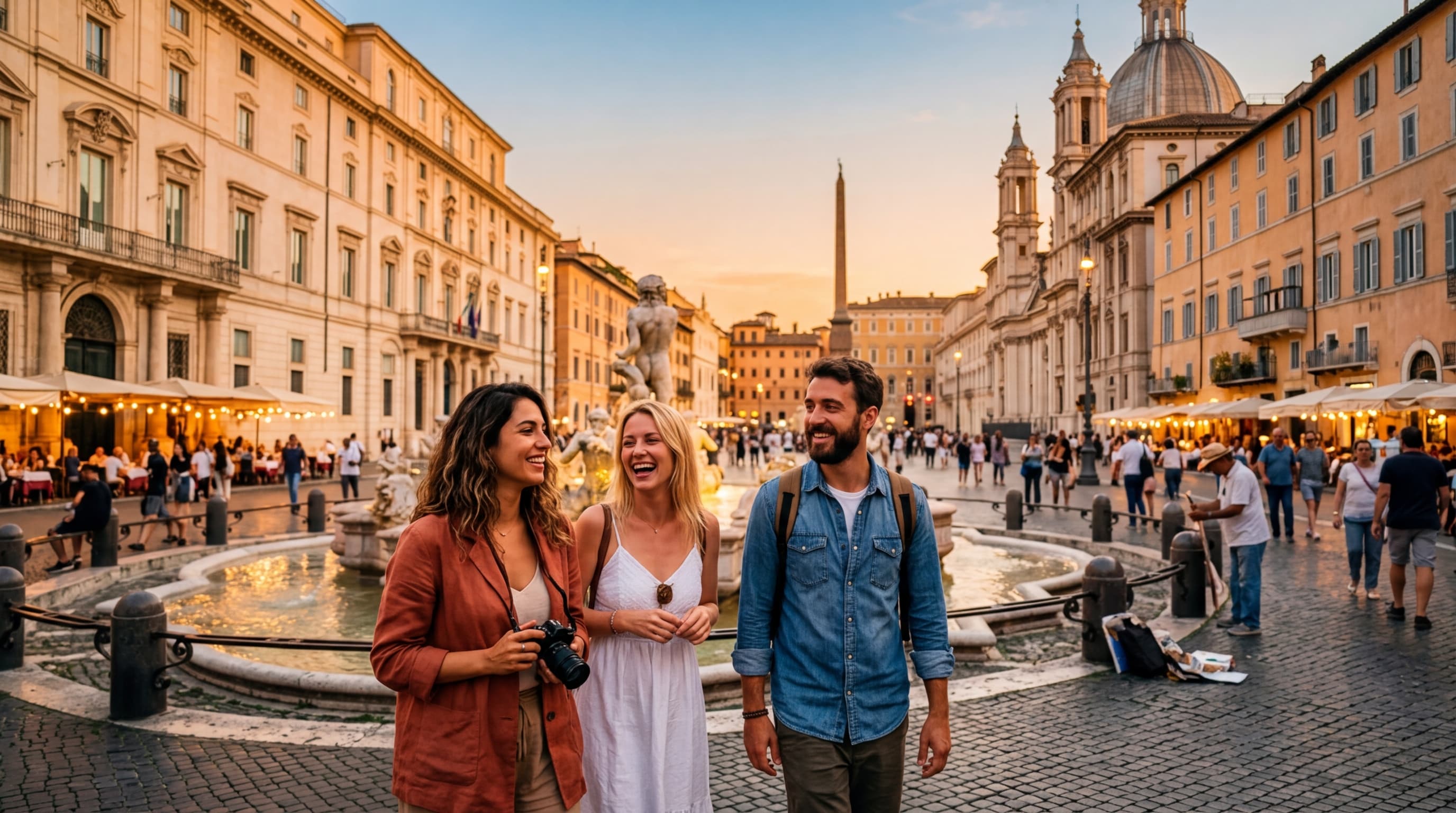
Historical places in Rome are the reason so many travelers come here with a short list and leave feeling like they only scratched the surface. If you want the best mix of iconic landmarks, hidden ruins, free sights, and practical planning advice, this guide gives you the full local roadmap for 2026. We checked the city as it actually works today, so you can plan smarter whether you have one day, a weekend, or a full Roman vacation.
Rome is not a city where history sits behind ropes and glass in just one district. It’s a layered, living place where ancient ruins, Christian pilgrimage sites, Renaissance piazzas, and neighborhood streets all overlap in the same walkable map. That is what makes Rome so special, but it also makes planning tricky if you do not know where to start. From experience, the best approach is to mix one or two headline landmarks with a few quieter stops, then build your route around neighborhoods so you spend more time exploring and less time backtracking. In this guide, we’ll show you exactly how to do that, with the best options for couples, families, solo travelers, friends, rainy days, and budget days out. We’ll also include official sources, ticket notes, and Gidly-style planning tips so you can turn sightseeing into a real outing, not just a checklist.
Quick Answer: The Best Historical Places in Rome Right Now
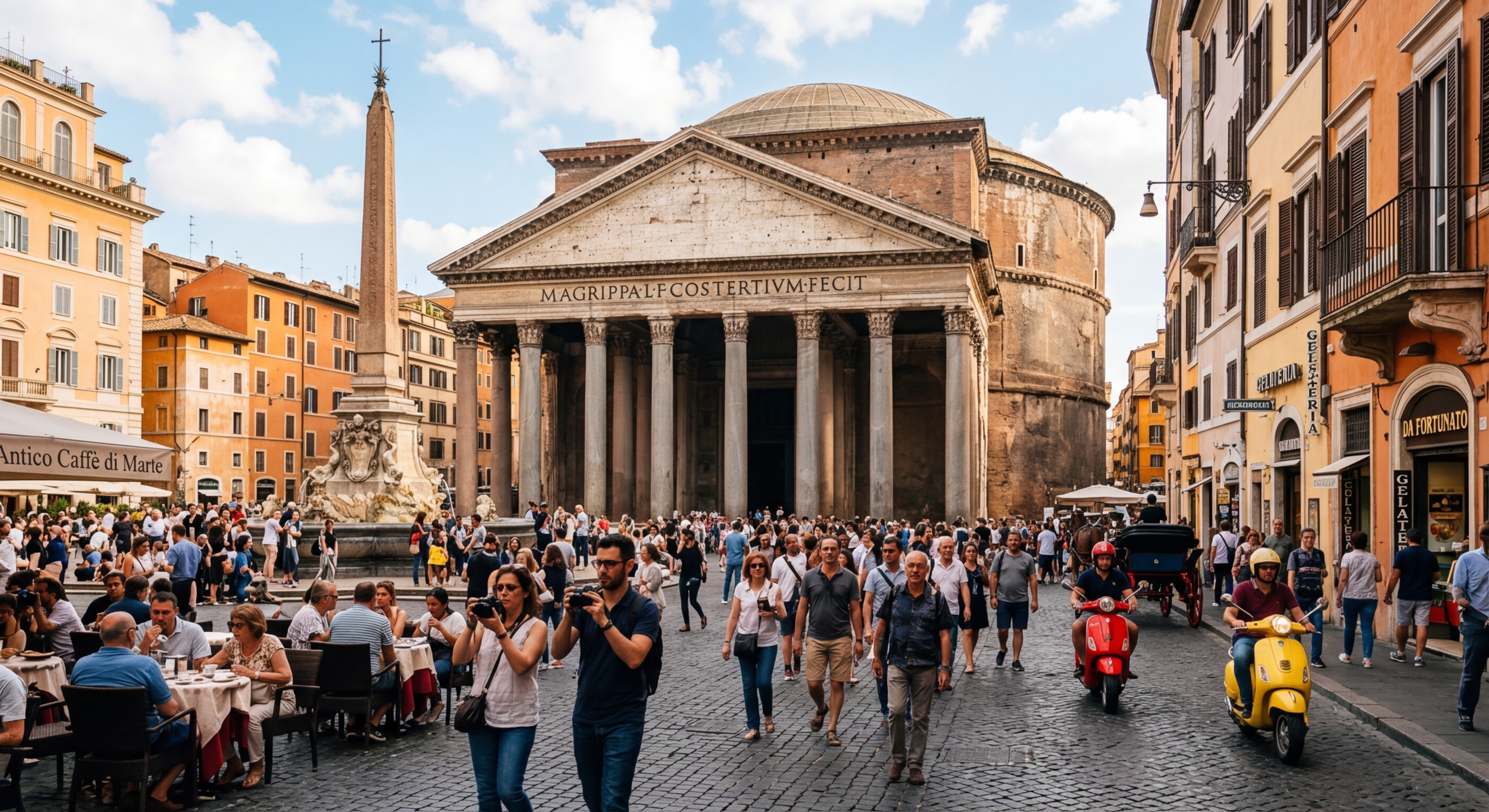
When people ask for the best historical places in Rome, the short answer is that you should prioritize the Colosseum, Roman Forum, Palatine Hill, Pantheon, Trevi Fountain, St. Peter’s Basilica, Castel Sant’Angelo, and either the Capitoline Museums or a hidden-ruins stop like Baths of Caracalla or Ostia Antica. That gives you the strongest mix of ancient Roman power, Christian history, and beautifully preserved city layers. If you only have one day, focus on the Colosseum-Forum-Palatine cluster plus one central stop like the Pantheon or Trevi Fountain, because those sites give you the biggest historical payoff in the least amount of time. If you have more than a day, add the Vatican area, a neighborhood walk in Trastevere or Monti, and one deeper-dive archaeological site.
Who is this guide for? Basically anyone who wants a smart, local-friendly way to experience Rome’s history without wasting time on the wrong routes or overpaying for weak tours. If you are traveling with kids, we’ll point you to places with easier pacing and big visual impact. If you’re planning date night, we’ll show you the best historical places in Rome that also feel atmospheric in the evening. If you’re on a budget, you’ll find free sights, low-cost routes, and the best ways to line up free entry or lower-crowd hours. And if you’re the kind of traveler who loves details, we’ve packed in the practical stuff: booking windows, opening hours, crowd patterns, and neighborhood tips.
Answer capsule: Rome’s must-see historical places in one short list
If you only want the essentials, start with the Colosseum, Roman Forum, Palatine Hill, Pantheon, Trevi Fountain, St. Peter’s Basilica, and Castel Sant’Angelo. Then add one wildcard like the Baths of Caracalla, Trajan’s Market, or Ostia Antica if you have time. That mix gives you Rome’s biggest historical story in a single trip.
We like this list because it works for first-time visitors and repeat travelers alike. It balances famous names with places that are worth your time in the real world, not just in guidebook theory. It also helps you move around the city logically, which matters a lot in Rome.
Who this guide is for and how to use it
This guide is built for people who want both inspiration and execution. You may already know Rome is historic, but you want to know which sites are actually worth the queue, which ones are better at certain times of day, and which neighborhoods combine best into efficient walking routes. That is exactly how we structured it. Start with the quick answer, then jump to the scenario section that matches your trip style, and finally use the neighborhood guide and comparison tables to tighten your plan. If you are searching “historical places near me in Rome” on the go, use the neighborhood sections to anchor yourself in the city.
We also wrote this for different levels of history interest. Some travelers want only the headline ruins; others want underground chambers, early Christian basilicas, or archaeology that most tourists skip. You’ll find both. That way, whether you’re making a one-afternoon plan or trying to fill several days, you can choose the right depth without overloading your itinerary.
What makes Rome unique among historic cities
Rome is not just old; it is continuously layered. The same walk can take you from ancient republican temples to imperial forums, from medieval churches to Baroque fountains and modern streets packed with cafes. Few cities on earth let you see so many eras in one compact area, and fewer still let you do it on foot. That is why Rome feels alive rather than frozen, even when you are standing in the middle of 2,000-year-old stones. The city is also unusually generous with public history, meaning some of the most famous places are right there in the urban fabric rather than isolated in a museum district.
From a planning point of view, Rome’s uniqueness also creates a challenge: the city’s history is spread across overlapping zones rather than one tidy route. The best strategy is to think in layers and neighborhoods, not just attractions. Once you understand that, the city starts to open up in a much easier way.
The 5-7 places you should prioritize if you only have one day
If one day is all you have, we recommend the Colosseum, Roman Forum, Palatine Hill, Pantheon, Trevi Fountain, Piazza Navona, and either Castel Sant’Angelo or St. Peter’s Square depending on your energy level. That route gives you Rome’s “greatest hits” without forcing you into too many transit hops. The Colosseum and Forum are the must-book anchors, while the Pantheon and Trevi are easier to slot into a flexible afternoon. If you love views, replace one of the piazzas with Capitoline Hill or a terrace stop.
Our team’s honest take: do not try to force every famous site into one day. Rome rewards pacing, not speed. You’ll enjoy it more if you choose a compact plan and leave room for food, rest, and one spontaneous detour.
Fast planning note: tickets, timing, and season
In 2026, timed entry and advance booking still matter a lot for the biggest sites, especially the Colosseum and Vatican Museums. Spring and early fall remain the best seasons because the weather is pleasant and the crowds, while busy, are more manageable than in peak summer. Summer evenings can be wonderful for atmosphere, but daytime heat can make the ancient sites feel exhausting if you don’t plan shade and breaks. Many museums and archaeological sites also have shorter or altered hours on certain holidays, so we strongly recommend checking official websites before you go.
As a rule, book early for headline attractions, aim for morning arrivals, and build in walking time between clusters. Rome is more enjoyable when you move like a local: one major stop, one scenic stroll, one good lunch, then another stop later. That rhythm saves energy and keeps the day feeling like an outing rather than a marathon.
Why Rome Is Packed With History (And Why It Still Feels Alive)
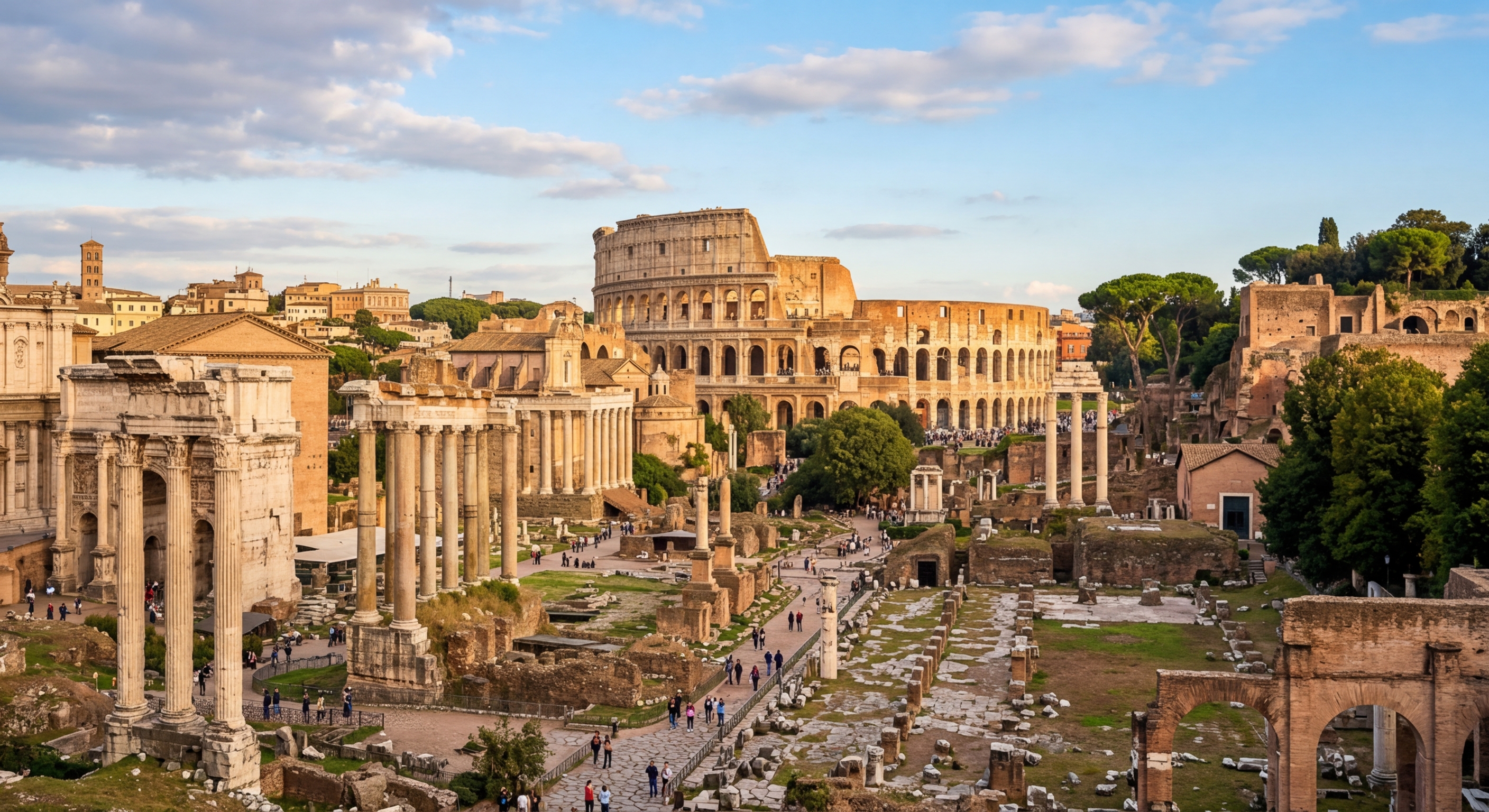
Rome’s history is not confined to museums; it is the city itself. Every district carries traces of a different era, and those layers are what make Rome feel so unusually rich for sightseeing. If you understand the timeline—ancient Rome, Christian Rome, Renaissance Rome, Baroque Rome, and the modern city—you can plan a much better trip. This is also why some historical places in Rome are giant monuments while others are entire neighborhoods, plazas, or even street alignments that still follow old roads.
The easiest way to think about Rome is as a living timeline. Ancient civic buildings, imperial residences, basilicas, fortifications, and aristocratic squares all sit within a relatively compact urban core. From experience, that means visitors can get more “history per step” here than almost anywhere else in Europe. It also means you should plan by era as much as by geography, because each layer tells a different part of the story. We’ll break that down in practical terms so your sightseeing feels connected instead of random.
Ancient Rome, the Republic, the Empire, and modern layers
The ancient city is where the big names come from: the Colosseum, Forum, Palatine Hill, Pantheon, and Trajan’s Market all connect to Rome’s republican and imperial eras. These places are not just ruins; they are evidence of how power, engineering, religion, and public life worked at the center of the ancient world. When you stand in the Forum, you are literally looking at the stage where Roman political and civic life played out. That’s why it remains such a powerful place to visit, even if you are not usually a “ruins person.”
But Rome did not stop after the empire. Medieval, Renaissance, and modern periods all added new layers on top of the old ones. Churches were built over temples, fortresses rose beside tombs, and new streets cut around ancient remains. That layering is part of the city’s appeal, and it’s why a good Rome itinerary should never stop at antiquity alone. The city’s history is broad, and the best trips show that breadth.
Christian, Renaissance, Baroque, and 19th-century history in one city
Rome is also one of the most important Christian cities in the world. St. Peter’s Basilica, the major basilicas, early pilgrimage routes, catacombs, and papal fortifications all matter deeply whether or not you are religious. Then the Renaissance and Baroque eras changed the city again, giving us some of the world’s most beautiful piazzas, fountains, and churches. Trevi Fountain and Piazza Navona are not ancient, but they are absolutely historical in the way they shape Rome’s identity today. They are part of the city’s long conversation with art, power, and public space.
The 19th century and later also left a mark, especially as Rome became the capital of unified Italy. That political shift changed the city’s institutions, streets, and national identity. So when you explore Rome, you are not just seeing old stones; you are seeing a city that kept reinventing itself without erasing what came before.
How Rome’s neighborhoods preserve different eras
Some neighborhoods feel ancient, some feel papal, and some feel like a mix of all three. Monti is where many visitors feel the ancient core most clearly, partly because it sits near the Colosseum and partly because its streets preserve a compact, walkable atmosphere. Trastevere feels more medieval and local, with religious history and old lanes that still read as neighborhood life rather than monument territory. Vatican and Prati reflect the Christian and papal world, while Appio-Latino and Ostiense open the door to archaeology, industrial history, and less polished but very rewarding history stops.
This matters because you do not experience Rome best by zigzagging blindly across the city. It is smarter to choose a neighborhood and let its era guide your route. That approach saves time, helps with food planning, and makes the history feel more alive.
Why some historic places are monuments and others are entire districts
Rome’s genius is that history appears at different scales. Some places are grand monuments with tickets and timed entry, like the Colosseum or Vatican Museums. Others are open-air layers in the city center, like Piazza Navona or the Trevi district, where history is visible but not boxed up. Then there are whole districts and road systems like the Appian Way, which turn the journey itself into part of the experience. That means your trip can be varied in a way that feels more like a story than a list.
For visitors, the best results usually come from mixing those scales. Pair a ticketed anchor with a free walk, or a museum-heavy stop with an atmospheric district. That is how locals and repeat travelers tend to experience the city.
Answer capsule: the best way to think about Rome’s history map
Think of Rome as a series of historical zones rather than a single “old town.” Ancient Rome sits around the Colosseum and Forum, papal and Christian history clusters around the Vatican and major basilicas, and Baroque beauty spreads across the center in fountains, piazzas, and churches. If you organize your days by zone, you’ll see more and tire less.
That simple mental map is the key to planning well. It also makes the city feel more coherent, which is exactly what you want when choosing historical places in Rome for a short trip or a longer stay.
The Iconic Ancient Landmarks You Cannot Miss
The ancient landmarks are the backbone of any Rome itinerary, and they deserve proper time rather than quick photo stops. This is the cluster most travelers picture first, and for good reason: these sites give you the strongest sense of Rome’s imperial scale and ambition. They also tend to be the places where booking strategy matters most, especially in high season. We checked current visiting patterns for 2026, and the biggest takeaway is simple: arrive early, book ahead when possible, and do not underestimate how much walking is involved between these sites.
These attractions are all close enough to connect logically, but they each have a different personality. The Colosseum is dramatic and iconic, the Forum is dense and interpretive, Palatine Hill offers views and imperial context, the Pantheon is engineering at its most elegant, and Capitoline Hill gives you civic history with excellent viewpoints. If you only have time for one major ancient circuit, this is the one to do.
Colosseum: what it is, why it matters, and best visit times
The Colosseum, officially the Flavian Amphitheatre, is Rome’s most famous ancient landmark and one of the most recognizable buildings in the world. Built in the first century CE, it hosted gladiatorial contests, public spectacles, and imperial displays of power. Today, it remains one of the best historical places in Rome because it instantly communicates the scale of Roman engineering and spectacle. You do not need to be a classics expert to appreciate it; the building speaks for itself. But it helps to know that the visit is even better when paired with the Forum and Palatine Hill as one unified archaeological experience.
In 2026, the best times to visit are early morning and later afternoon, especially in spring and fall when the light is beautiful and the temperatures are manageable. Summer midday visits can be punishing because there is limited shade nearby. Official booking through the Colosseum Archaeological Park is still the safest route, and guided-entry options can be worth it if you want deeper context or want to avoid the headache of piecing things together on the fly. Expect ticket prices to vary by access level, but basic entry is still relatively affordable compared with many major European landmarks. If you’re using a smartphone and searching “historical places near me in Rome,” the Colosseum is usually the clearest first anchor.
From experience, the exterior photo moment is often better than the rushed “just inside” experience if you are short on time, so plan the visit rather than treating it as a drive-by stop. The best approach is to book the exact slot you can realistically make and then enjoy the surrounding area before or after. Nearby Monti also gives you good coffee, lunch, and aperitivo options, which makes the whole outing feel more balanced.
Roman Forum: main ruins, what to look for, and how long to stay
The Roman Forum is where ancient Rome’s political, religious, and commercial life converged. It is one of the most important historical places in Rome because it reveals the city’s actual functioning core, not just a decorative façade. Visitors often underestimate the Forum because ruins can look abstract at first glance, but the site rewards attention. Look for the Temple of Saturn, Arch of Titus, Basilica of Maxentius, House of the Vestals, and the remains that map the old civic spine of the city. When you know what you’re seeing, the place becomes much more vivid.
Plan to stay at least 60 to 90 minutes if you want a meaningful visit, and longer if you enjoy history deeply. A guided tour can help tremendously here because it provides the narrative glue that the site itself no longer offers through intact walls. Self-guided visits are still worthwhile, especially if you read a little beforehand or use an audio guide. We’d say the Forum is less about spectacle and more about slow reveal, so don’t rush it. If you have one big ancient-Rome block of time, combine it with the Colosseum and Palatine Hill and treat the three as one itinerary.
Palatine Hill: imperial palaces, views, and route pairing
Palatine Hill is the most underrated part of the ancient core for many first-time visitors. According to Roman tradition, this is where Rome was founded, and it later became the elite residential zone of emperors and aristocrats. Today, it offers a blend of archaeology, green space, and some of the best views over the Forum and Circus Maximus area. It is one of those historical places in Rome that feels quieter than the headline attractions but can actually become your favorite stop if you like atmosphere and perspective.
We recommend visiting Palatine Hill as part of the Colosseum and Forum combo rather than separately. The route makes sense physically and historically, and it helps you see how the city’s center evolved. You’ll want comfortable shoes because the paths and elevation changes matter more than people expect. The best route is usually to enter the archaeological park as a three-part sequence, then pause on the hill for a view-heavy break before heading back into the city center. That pause is where the visit often becomes memorable.
Pantheon: engineering, transformation, and visitor basics
The Pantheon is one of Rome’s most astonishing buildings because it combines ancient Roman engineering with a later Christian transformation. Originally a temple, it became a church and survived because it remained in active use. Its dome, oculus, and proportions still impress even modern architects, and the interior has a calm, monumental atmosphere that feels very different from the rougher texture of the Forum. If you want a single building that tells a long story about continuity in Rome, this is it.
Today, the Pantheon is one of the easiest famous sites to fit into a central Rome walk, and it works well with Piazza della Rotonda, the nearby coffee stops, and other centro storico landmarks. It is a place where a short stop can still feel meaningful. From experience, it’s best to go earlier in the day or just before sunset when the light inside is especially beautiful. Check the official site or current state run-museum listing for the latest ticket and visiting rules, since Rome has been moving more sites into timed and regulated entry structures in recent years. Even when lines form, the turnaround is usually faster than at the Colosseum.
Capitoline Hill and the surrounding ancient civic center
Capitoline Hill is one of the best places to understand Rome as a civic power rather than just a set of ruins. The hill sits above the ancient Forum area and connects you to the city’s political identity, while the Capitoline Museums give you a museum-quality way to read the ancient world. If you like art, sculpture, and sweeping views, this is one of the smartest historical stops in Rome. It is also more comfortable than many open-air ruins on hot days because you can move between indoor and outdoor spaces.
The surrounding area gives you a strong sense of how Rome’s history has been curated across time. You are not just standing on a hill; you are standing in a place that shaped the city’s symbolism for centuries. We like this stop for travelers who want depth but do not want to spend all day on uneven archaeological ground. It also pairs beautifully with the Forum, which is why locals and experienced visitors often treat the whole area as one historical district.
More Must-See Historical Places in Central Rome
The center of Rome is where history becomes atmospheric rather than purely archaeological. In these streets, the city’s ancient past blends with Baroque beauty, church façades, and everyday urban life. This is where you can wander without a strict plan and still keep stumbling into important landmarks. For many travelers, the central cluster is the easiest way to enjoy historical places in Rome because it combines spectacle, walkability, and food options. It is also where you’ll find some of the best free or low-cost history stops.
What makes this part of the city special is that you can move from one era to another in just a few minutes on foot. That makes it ideal for travelers who want a history-heavy day without committing to a museum marathon. It also works well for evenings, when the fountains and piazzas feel especially alive. We’d recommend treating this zone as a flexible add-on to your ancient-Rome or Vatican plan.
Trevi Fountain and the surrounding Baroque city center
Trevi Fountain is one of the most famous historical places in Rome, even though it belongs to the Baroque era rather than the ancient world. The fountain is monumental, theatrical, and deeply tied to the image of Rome as a city of art and public drama. It attracts crowds at nearly all hours, so the best strategy is to visit early in the morning or later at night when the area feels less compressed. The fountain itself is free, which makes it one of the easiest historic stops to add to any plan.
What people sometimes miss is the surrounding neighborhood texture. The nearby streets contain layers of architecture, small churches, and classic Roman storefronts that make the area worth more than a quick selfie. If you want the fountain at its best, arrive before the tour groups, take your time, and then move on into the central district for coffee or lunch. That flow makes the stop feel elegant rather than chaotic. For families, it is also a low-effort way to give kids a memorable landmark without a complicated ticket process.
Piazza Navona and the ancient Stadium of Domitian layer
Piazza Navona is one of Rome’s most beautiful public spaces, and it sits on the footprint of the ancient Stadium of Domitian. That hidden layer is what makes the piazza especially compelling for history-minded visitors. On the surface, you see Bernini fountains, baroque church fronts, artists, and outdoor life. Underneath, you’re looking at a place where Roman sport and spectacle once unfolded. That kind of historical layering is classic Rome, and Piazza Navona shows it well.
We like this stop because it is both scenic and intellectually satisfying. You do not need a ticket to enjoy the square, and it works brilliantly as part of a walking route through the center. If you’re planning a romantic evening or a relaxed daytime stroll, this is one of the most flexible stops in the city. It also gives you a natural place to pause for gelato, drinks, or an unhurried dinner after sightseeing. The surrounding lanes make it easy to keep the historical mood going for another hour or two.
Largo di Torre Argentina and its temple/assassination history
Largo di Torre Argentina is one of the most intriguing historical places in Rome because it combines ancient temple remains, urban excavation, and modern historical memory. It is famously associated with the assassination of Julius Caesar, but it is also important as an archaeological zone that sits unexpectedly below street level. The site is partially open and has been updated in recent years to improve viewing access, making it more rewarding than many casual visitors expect. It’s one of those places that reminds you how much ancient Rome is still embedded in the modern city.
From a planning perspective, this is a great “surprise stop” between larger landmarks. It does not require the same time commitment as the Colosseum, but it gives you a strong sense of historical continuity. It also has the bonus of nearby dining options, so it works well in a lunch break or pre-dinner slot. If you enjoy the idea of seeing archaeological layers without leaving the city center, this stop belongs on your shortlist.
Castel Sant’Angelo: tomb, fortress, papal refuge, museum
Castel Sant’Angelo is one of the most versatile historical sites in Rome because it has served so many roles over time. Built originally as a mausoleum for Emperor Hadrian, it later became a fortress, papal refuge, and museum. That means the building tells a long story of shifting power in the city. It also offers one of the best skyline views in central Rome, especially along the approach from the bridge and river area. If you want a site that combines architecture, military history, and great vistas, this is a strong pick.
The castle works especially well when paired with a Vatican area walk. We recommend it to travelers who want something historic but slightly less overwhelming than the Colosseum complex. The interiors can take a while to explore, so don’t rush the visit if you buy a ticket. It is also a great evening-area stop because the surrounding streets and river views become very atmospheric at sunset.
Trajan’s Market and Trajan’s Forum as a deeper-dive stop
Trajan’s Market is one of the best historical places in Rome for visitors who already know the basics and want something more specialized. Often described as one of the world’s earliest shopping complexes, it gives you a strong sense of imperial urban planning and commercial life. The nearby Trajan’s Forum adds even more context, especially if you enjoy connecting archaeology to the city’s political and civic ambitions. This is the kind of stop that feels especially rewarding when you slow down and read the site as an urban system, not just as a ruin.
We suggest Trajan’s Market to repeat visitors, architecture fans, and travelers who appreciate less crowded historical places in Rome. It also works well with the Capitoline area if you want a dense history day. Because it is slightly off the main tourist radar compared with the Colosseum, it can feel more relaxed and easier to enjoy. If you like uncovering places that most people rush past, this is a smart detour.
| Central Rome Site | Typical Price | Best For |
|---|---|---|
| Trevi Fountain | Free | Quick landmark stop, families, budget travelers |
| Piazza Navona | Free | Evening strolls, couples, people-watching |
| Largo di Torre Argentina | Low-cost / some viewing areas free | History buffs, short visits, city-center exploration |
| Castel Sant’Angelo | From about €16–€20 | Views, fortress history, museum visitors |
| Trajan’s Market | From about €10–€15 | Deeper-dive archaeology, repeat visitors |
Vatican Area Historical Places and Christian Heritage Sites
The Vatican area is essential because Rome’s history is not only ancient; it is also one of the most important Christian histories in the world. Even if you are not religious, the Vatican district helps you understand how Rome became the center of papal power, art patronage, and pilgrimage culture. This area gives you a very different feel from the ancient ruins zone, with grand processional spaces, sacred interiors, and collections that span centuries. For many visitors, it is one of the most meaningful parts of the trip.
We recommend treating the Vatican as a historical district rather than a single sight. That means looking at St. Peter’s Basilica, the Vatican Museums, nearby squares, and the walk toward Castel Sant’Angelo as one connected experience. It also means planning extra time, because the area can be crowded and the security lines can be long. If you time it well, though, it can become one of the best historical outings in the city.
St. Peter’s Basilica and the history behind the site
St. Peter’s Basilica is one of the most important Christian historic sites in Rome, built on a site traditionally associated with the apostle Peter’s burial. The current basilica is a monumental Renaissance and Baroque achievement, and it remains one of the largest and most significant churches in the world. Even if you only spend an hour here, the scale and artistic richness are overwhelming in the best way. The square outside is part of the experience too, creating one of Rome’s most iconic historical public spaces.
In practical terms, the basilica is free to enter, but lines and security checks mean you should plan accordingly. Dress modestly, arrive early if possible, and be prepared for a serious amount of foot traffic. If you want to pair it with other sites, the walk to Castel Sant’Angelo is particularly rewarding. This is one of those historical places in Rome where the emotional effect matters as much as the factual one. Visitors often leave with a deeper sense of Rome as a spiritual and cultural capital, not just an ancient city.
Vatican Museums: historical collections worth prioritizing
The Vatican Museums house one of the world’s great art and history collections, and they are worth the effort if you choose the right priorities. You do not need to see everything to have a great visit. In fact, we usually recommend focusing on the specific galleries and highlights that match your interests, whether that is classical sculpture, Renaissance frescoes, or papal apartments. The Sistine Chapel is the famous payoff, but the route there includes a lot of historical material that deserves attention too.
Book ahead through the official Vatican Museums website, especially in 2026 when timed admission remains essential for a smooth experience. Early morning slots are often the best if you want to minimize fatigue and crowd pressure. For visitors who are not natural museum people, a guided tour can help keep the visit focused and meaningful. This is also a strong rainy-day option because much of the experience is indoors. If your trip includes multiple museums, this is the one that tends to justify the most advance planning.
Castel Sant’Angelo to Vatican walking route for history fans
The walking route from Castel Sant’Angelo to St. Peter’s Square is one of the best short history walks in Rome. It lets you move from imperial Roman tomb and fortress history into the papal world in a single continuous stroll. That transition captures a major theme in Rome: the city always repurposes its past. You also get river views, bridge sculpture, and a gentle approach to one of the city’s most important religious centers. For many travelers, it is one of the most satisfying ways to connect two major landmarks.
We recommend this route if you want history without the intensity of the ancient-ruins circuit. It is scenic, flexible, and easy to pair with lunch or aperitivo in the Prati area. It also works well late in the day, when the light is good and the foot traffic is a little less chaotic than midmorning. From experience, this is one of the most elegant and underrated historical walks in the city.
Early Christian basilicas and pilgrimage landmarks
Rome’s Christian history goes far beyond the Vatican. Early basilicas and pilgrimage landmarks across the city tell the story of how Christianity took shape in the old imperial capital. Places like San Giovanni in Laterano, Santa Maria Maggiore, San Clemente, and other major church sites reveal layers of early Christian, medieval, and later art history. Some of these are free to enter, making them especially appealing for budget travelers who still want depth. They are also good options when major monuments feel too crowded.
If you are interested in Rome as a spiritual city or as a history of continuity, these sites are essential. They also help broaden your idea of what historical places in Rome can be. Instead of focusing only on famous ruins, you begin to see the city as a living sacred landscape. That perspective is one of the reasons repeat visitors often come away with a much richer view of Rome than first-timers do.
Why the Vatican area is essential even for secular travelers
Even if you are not religious, the Vatican area matters because it explains a huge part of Rome’s identity. The papacy shaped art, politics, diplomacy, architecture, and the city’s visual language for centuries. That influence can be seen everywhere from basilicas to processional squares to museum collections. In other words, skipping the Vatican area leaves a gap in your understanding of Rome’s historical arc.
For secular travelers, the key is to frame the area as cultural history rather than a faith-only destination. That approach makes the visit feel more accessible and less intimidating. It also helps you appreciate how the city continues to function as both a spiritual center and a tourist destination. This dual identity is one of the most fascinating things about Rome.
Hidden Historical Gems and Lesser-Known Ruins
Once you have seen the big landmarks, Rome opens up in a different way. The hidden gems are where the city often feels most surprising, because you get bigger atmospheric rewards with fewer crowds. These places are especially valuable for repeat visitors, history lovers, and travelers who like the feeling of discovering something a little unexpected. They also make Rome feel less like a museum circuit and more like an archaeological treasure hunt.
We recommend adding at least one of these sites to any trip longer than a day or two. They deepen the experience, balance the busier landmarks, and often fit better into a local-style itinerary. Some are partially underground, some are open-air, and some are far enough from the center to feel like proper half-day escapes. Here’s where Rome gets especially interesting.
Domus Aurea: Nero’s hidden palace and how visits work
The Domus Aurea, or Golden House of Nero, is one of Rome’s most fascinating archaeological sites because it reveals imperial luxury on a massive scale. Built after the great fire of 64 CE, it was once a vast palace complex, much of which lies underground today. The visit experience is distinctive and more limited than many visitors expect, often requiring timed entry and sometimes guided or specialized access depending on restoration work and conditions. That makes it feel more like a special event than a standard museum stop.
We think the Domus Aurea is especially rewarding for travelers who like hidden history and reconstructed spaces. It is not the easiest site to visit, but that is part of its appeal. Check the official site before going, because access rules and opening schedules can change with conservation work. This is one of those historical places in Rome where booking ahead is not optional if you want a smooth experience. If you can make it work, the payoff is strong.
Baths of Caracalla: scale, atmosphere, and best audiences
The Baths of Caracalla are among the most spectacular and underrated ancient sites in the city. They show the immense scale of Roman public bathing culture and give visitors a spacious, almost cinematic archaeological setting. Unlike more tightly packed ruins, the baths have room to breathe, which is why many people find them easier to enjoy. The atmosphere is especially compelling in warm weather and late afternoon light, when the ruins feel vast and almost stage-like.
This is a fantastic site for travelers who want history without the crush of the most famous landmarks. It is also a strong pick for photography, architecture appreciation, and open-air wandering. If you’re deciding between one crowded monument and one more relaxed experience, the Baths of Caracalla often win on comfort and ambiance. They are also good to combine with a quieter local lunch nearby before or after the visit.
Appian Way and the Catacombs: the ultimate ancient escape
The Appian Way is one of the most rewarding historical routes in Rome because it is not just a place to see; it is a place to travel. This ancient road takes you out of the urban core and into a more open archaeological landscape where tombs, ruins, and greenery create a very different mood from central Rome. The catacombs add another layer, offering a powerful window into early Christian burial and memory practices. Together, they create one of the city’s best history-led half-day outings.
From experience, this route is especially strong in spring and fall when walking conditions are pleasant. You can explore by bike, bus, or a mix of transport and walking, depending on your energy level. If you are looking for a near-me style historical outing beyond the city center, this is one of the top choices. It is also one of the best options for travelers who have already seen the main landmarks and want something quieter and more immersive.
Ostia Antica: Rome’s port city and half-day trip value
Ostia Antica is one of the best historical places near Rome for travelers who want a deeper ancient experience without the intensity of the central core. This was Rome’s port city, and its ruins are extensive, walkable, and wonderfully atmospheric. Streets, baths, houses, mosaics, and public spaces all survive in a way that lets you imagine daily life more easily than in some of the city center ruins. It feels less like a quick stop and more like a real archaeological day out.
If you only have a short trip, Ostia may be too time-consuming. But if you have more than two days and you love history, it is absolutely worth considering. The site is often less crowded than the headline attractions, which is a major plus. It also helps balance a Rome trip that otherwise stays concentrated in the center. We consider it one of the smartest “worth the detour” options for repeat visitors.
Lesser-known sites for repeat visitors and history buffs
Some of Rome’s most satisfying historical experiences come from smaller or more specialized sites. Examples include San Clemente, where you can explore layered underground history; the Case Romane del Celio, which offer intimate ancient domestic remains; and various small museums or church crypts that reveal history in concentrated form. These sites do not always appear on first-time top-ten lists, but they often delight travelers who want something quieter and more specific. They also make Rome feel much more local, since you are moving beyond the obvious postcard circuit.
We suggest these places when you want to avoid overtouristed pressure or when the weather makes long outdoor routes less appealing. They are also helpful if you’re planning a second or third day in the city and need fresh material. For history lovers, they are the difference between “I saw Rome” and “I actually got to know Rome.”
| Hidden Gem | Price | Visit Length |
|---|---|---|
| Domus Aurea | From about €12–€18 | 1–2 hours |
| Baths of Caracalla | From about €12 | 1–2 hours |
| Appian Way + Catacombs | Varies by site; some catacombs from about €10 | Half day |
| Ostia Antica | From about €18 | Half day to full day |
| San Clemente / layered church sites | From about €5–€10+ | 45–90 minutes |
Best Historical Places in Rome by Scenario
The best historical places in Rome depend on how you travel, not just what looks famous on Instagram. A date night needs a different rhythm than a family outing, and solo travel rewards different kinds of sites than a friends’ trip. In Rome, this matters even more because some landmarks are crowded and intense while others are relaxed and atmospheric. This section helps you choose based on real-world use cases so you can enjoy the city in the way that fits your trip best.
We checked these suggestions against actual visitor behavior in the city, and the pattern is clear: the most satisfying plans are the ones that match the site to the moment. If you are tired, choose a compact route. If you want romance, choose an evening piazza. If you have kids, choose big visual impact with manageable walking. That mindset makes historical sightseeing feel easier and more fun.
Best historical places in Rome for date night
For date night, Rome works best when history and atmosphere overlap. The strongest picks are Piazza Navona, Castel Sant’Angelo at sunset, the Pantheon area, and a quiet evening walk near the Forum viewpoints or along the Tiber. These places give you beautiful settings without demanding a full museum-style commitment. If you want something more dramatic, a twilight visit near the Colosseum exterior can be surprisingly romantic, especially when paired with dinner in Monti or a drink in the centro storico.
The trick for a good date-night history outing is to keep it flexible. You want one or two landmarks, not five. Add a good restaurant or aperitivo stop, and the experience becomes memorable without feeling rushed. We like date-night Rome because history is literally the backdrop, but it still feels intimate if you choose the right time of day. Evening is generally better than midday for mood and comfort.
Best historical places in Rome with kids and family
Families do best with sites that are visually strong, easy to explain, and not too logistically stressful. The Colosseum, Trevi Fountain, Vatican Square, Castel Sant’Angelo, and the Baths of Caracalla are all solid choices. Kids tend to enjoy places with big scale and open space, while parents appreciate routes that do not require too many transfers. The Roman Forum can be great if children are already into history, but it works better when paired with a guide or a good audio explanation.
If you’re traveling with younger kids, try to avoid overstuffing the day. One major site plus a walk and a meal is often enough. We also recommend early starts, snack breaks, and stroller planning if applicable. Rome is family-friendly in spirit, but the cobblestones and crowds can make even simple distances feel longer than expected.
Best historical places in Rome with friends or a group
Groups usually want places that create conversation and variety. The best options are the Colosseum-Forum circuit, the Appian Way and catacombs, Ostia Antica, and the center-city piazzas like Navona and Trevi. These give you enough historical depth to feel worthwhile while still leaving room for food, photos, and social time. If your group has mixed interests, combine one ticketed anchor with a free walking route so everyone gets a win.
For friends, Rome is at its best when the day includes a shared highlight and a social break. You might do a morning archaeological site, then lunch, then a relaxed square or viewpoint in the afternoon. That balance keeps the group from feeling tired or overly scripted. It also gives you good photos without turning the outing into a tour-only experience.
Best historical places in Rome on a budget or for free
Rome is surprisingly friendly for budget travelers because several major historical places are free to see from the outside or free to enter in their public areas. Trevi Fountain, Piazza Navona, the exterior of the Pantheon area, St. Peter’s Square, many churches, and parts of the Tiber riverwalk all cost nothing. Some basilicas are also free and highly rewarding. Add in the Appian Way’s free walking segments and certain neighborhood ruins, and you can fill a full historical day without spending much on admission.
The best budget strategy is to pair free sites with one paid anchor. That gives structure without blowing the budget. We also recommend checking for first Sunday free-entry opportunities and special museum days, though you should always verify current rules with official sources before you plan around them. Rome is one of the best cities in Europe for high-quality low-cost sightseeing if you know where to look.
Best historical places in Rome for solo travelers
Solo travelers often do best with flexible, walkable, and visually rewarding sites. The Pantheon, Capitoline area, Piazza Navona, Trajan’s Market, Baths of Caracalla, and well-paced museum visits work especially well because you can move at your own rhythm. The Vatican Museums can also be great solo if you like to linger and look closely. The key is to choose places where being alone feels like freedom rather than inefficiency.
Rome is an excellent solo city because so much of the historical core is easy to explore independently. You can stop for coffee, take detours, and decide on the fly. If you prefer quiet reflection, early mornings are ideal. If you want more social energy, choose the busiest plazas and pairing them with a meal or aperitivo afterward.
Best historical places in Rome on a rainy day or indoors
Rainy days are actually a good excuse to focus on indoor history. The Vatican Museums, Capitoline Museums, Domus Aurea when open, San Clemente, and some church interiors are excellent choices. Castel Sant’Angelo also works well because much of the visit is indoors. Rain can make outdoor ruins less comfortable, so this is your chance to switch to collections, basilicas, and underground sites.
We always suggest keeping one indoor backup in your Rome plan, especially in shoulder season. That way, if the weather changes, your day does not fall apart. A rainy Rome day can be beautiful and even cinematic if you choose the right interiors and move between them in a smart route.
| Scenario | Top Pick | Why It Works |
|---|---|---|
| Date night | Piazza Navona + Castel Sant’Angelo | Beautiful, walkable, atmospheric |
| Kids / family | Colosseum + Vatican Square | Big visual impact, easy to understand |
| Friends | Forum + Piazza Navona | History plus social breaks |
| Budget | Free churches + Trevi + squares | Low-cost, high payoff |
| Solo | Pantheon + Capitoline + Trajan’s Market | Flexible and reflective |
| Rainy day | Vatican Museums + basilicas | Indoor, extensive, and historic |
Best Historical Routes and Itineraries by Time Available
Rome is a city where route planning matters almost as much as attraction choice. You can absolutely have a great time by wandering, but the city rewards a little structure because distances, crowds, and heat can add up fast. The best itineraries cluster history by neighborhood or era so you move naturally from one stop to the next. That approach also leaves room for meals, photos, and the spontaneous little discoveries that make Rome feel special.
Below are route ideas for different time windows, from a short history walk to a full two-day exploration. These are not rigid scripts; they are practical templates that you can adjust based on your energy level and interests. If you’re using Gidly to plan an outing, think of these as ready-made starting points for turning “I want to see historic Rome” into a real plan.
2-hour route: one essential history walk
If you only have two hours, choose one compact route rather than trying to “see everything.” The best quick option is the Pantheon to Piazza Navona to Trevi Fountain loop, or the Colosseum exterior to a Forum viewpoint if you already have tickets later. The center-city route is especially good if you want a relaxed introduction, while the Colosseum-area route is better if you want a true ancient-Rome snapshot. Either way, keep the pace gentle and leave room for a coffee stop.
This route works well for layovers, first-day arrivals, or evenings when you want a historical walk without committing to a full excursion. The main idea is to choose one cluster and enjoy it properly. Rome’s charm often comes from the space between sites, not just the sites themselves.
Half-day route: ancient Rome sampler
For a half-day, the Colosseum, Roman Forum, and Palatine Hill remain the best ancient-Rome sampler. Start early, use a prebooked ticket, and treat the three sites as a single connected archaeological experience. If you have extra time, finish with Capitoline Hill or a short walk to Trajan’s Market. This gives you a strong ancient narrative without overcomplicating the day.
We recommend this route for first-timers and history-focused travelers. It is the single most efficient way to understand Rome’s imperial core. Add lunch in Monti afterward and you have a very complete day without needing transit across the city.
Full-day route: iconic landmarks plus hidden gems
A full day opens up more creativity. One of our favorite combos is the Colosseum, Forum, and Palatine in the morning, lunch in Monti, then the Pantheon, Piazza Navona, and Castel Sant’Angelo in the afternoon or evening. If you prefer fewer crowds and more archaeology, swap the afternoon for Baths of Caracalla or Trajan’s Market. That balance gives you both the famous and the less obvious sides of Rome.
The key to a full day is not just more sites, but better transitions. Use the city’s neighborhoods to move logically, and do not forget to build in at least one scenic break. Rome is not a race; it’s a sequence of impressions.
Two-day route: ancient, Christian, and underground Rome
With two days, you can finally separate the city into meaningful layers. Day one can be ancient Rome: Colosseum, Forum, Palatine, Capitoline, and perhaps Trajan’s Market. Day two can focus on Christian and Baroque Rome: Vatican Museums, St. Peter’s Basilica, Castel Sant’Angelo, Pantheon, Piazza Navona, and Trevi Fountain. If you want to add something more intimate, use the second afternoon for San Clemente, a basilica loop, or a small underground site.
This is the most balanced way to experience the city because it shows how Rome changed across time. It also keeps each day from becoming too physically demanding. For many travelers, this is the sweet spot between ambition and comfort.
How to combine routes by neighborhood efficiently
Rome’s neighborhoods can simplify your planning if you let them. Monti and the Colosseum cluster naturally together, Centro Storico links the Pantheon, Trevi, and Piazza Navona, and Vatican/Prati pairs St. Peter’s with Castel Sant’Angelo and river walks. If you love archaeology, Appio-Latino and Ostiense create their own route universe. By grouping the city this way, you reduce transit stress and gain more time on foot.
That neighborhood-based logic is one of the smartest ways to search for historical places in Rome near me while you are actually in the city. It also helps if you’re deciding where to eat, because each district has its own rhythm and price range. Think route first, then attraction, then food. That is the local way.
Neighborhood-by-Neighborhood Guide to Rome’s Historical Places
Rome becomes much easier to enjoy when you think neighborhood by neighborhood. Each area has its own historical personality, crowd pattern, and dining style. That is especially helpful if you are planning things to do in Rome by location rather than by landmark list. It also makes it easier to choose where to stay, where to walk, and where to spend your limited sightseeing energy. In practical terms, the city rewards people who cluster their visits.
We’ve broken the city into the zones most travelers actually use. Some are perfect for first-timers, while others are better for repeat visits or deeper history exploration. Use this section to figure out not only what to see, but where your time is best spent in each part of the city.
Centro Storico: fountains, piazzas, and layered ruins
Centro Storico is where many visitors naturally spend the most time, and for good reason. This is the area around the Pantheon, Trevi Fountain, Piazza Navona, and the maze of streets connecting them. It is the easiest neighborhood for a classic Rome walk because the historical density is so high. You can see Baroque beauty, ancient layers, churches, and street life in one compact area. For first-time visitors, it is often the most comfortable and rewarding place to get a feel for Rome.
The downside is crowds, especially around Trevi and key intersections. The upside is that even when it is busy, you still get a lot of visual history without needing a ticket. If you are choosing where to spend a slow morning or early evening, Centro Storico is hard to beat. It is also one of the easiest neighborhoods for finding a café, gelato stop, or dinner afterward.
Monti and the ancient core near the Colosseum
Monti is one of our favorite neighborhoods for historical sightseeing because it sits right next to the ancient core but feels more lived-in than tourist-heavy zones. Its narrow streets make it a great base if you want to be close to the Colosseum, Forum, and Capitoline without staying in a giant hotel corridor. You’ll find a mix of ancient sights, local eateries, and a neighborhood feel that helps the area stay appealing after the day-trippers leave. If you like walking, Monti is a natural choice.
This area is ideal for breakfast before an archaeological visit or aperitivo after one. It also works well for people who want historical places in Rome with a slightly softer, less monumental transition between sites. In other words, Monti helps the ancient city feel more human and more manageable.
Trastevere and its medieval, religious, and local history
Trastevere is often described as charming, but it is also historically rich. The area’s old lanes, churches, and neighborhood character make it a strong place to understand Rome beyond the imperial center. It is especially good for travelers who want a mix of history and evening life. Churches like Santa Maria in Trastevere show how religious history and neighborhood identity intertwine here, while the streets themselves preserve a more medieval-feeling urban texture.
Trastevere works beautifully in the late afternoon and evening. It is not primarily an ancient-ruins zone, but it is absolutely one of the historical places in Rome worth your time. If you want dinner after sightseeing, this is one of the easiest neighborhoods to build into your plan. It gives you a softer, more local finish to a historical day.
Vatican and Prati for Christian and papal history
The Vatican and nearby Prati district are the best zones for Christian and papal history. St. Peter’s Basilica, the Vatican Museums, and the route to Castel Sant’Angelo create a very coherent historical corridor. Prati itself is less ancient than other districts, but it is extremely useful for dining, transport, and staying near the Vatican without being swallowed by the busiest tourist crush. This is a smart area for travelers who want organized access to major religious sites.
If you are planning a history-heavy day here, start early and work outward. That strategy helps you avoid peak congestion and keeps the experience calmer. The area is also excellent for travelers who want an easier, more orderly part of Rome after a packed day in the center.
Appio-Latino, Ostiense, and beyond for archaeology and ruins
Appio-Latino and Ostiense are where Rome gets a little more expansive and less polished, which can be a very good thing. The Appian Way, catacombs, Baths of Caracalla, and other archaeological sites make this zone ideal for people who already know the major landmarks. Ostiense adds a different texture, with industrial history and a more contemporary urban feel layered over its own historical significance. These areas are especially good if you want to see Rome beyond the postcard core.
Because these zones are farther from the main tourist routes, they reward better planning. They also tend to be more appealing in spring and fall when walking and transit are easier. If you love archaeology, they may become your favorite part of the city.
| Neighborhood | Best Historical Stops | Why Go |
|---|---|---|
| Centro Storico | Pantheon, Trevi, Navona | Highest density of famous sights |
| Monti | Colosseum, Forum, Capitoline | Best base for ancient Rome |
| Trastevere | Santa Maria in Trastevere, medieval lanes | Evening atmosphere and local history |
| Vatican / Prati | St. Peter’s, Museums, Castel Sant’Angelo | Christian history and efficient planning |
| Appio-Latino / Ostiense | Appian Way, Catacombs, Baths of Caracalla | Hidden archaeology and open space |
Practical Planning Tips: Tickets, Hours, Crowds, Transport, and Booking
Rome’s historical sites are much easier to enjoy when you understand the practical side before you go. Ticketing, opening hours, crowd flow, and transit can make the difference between a smooth day and a frustrating one. We’ve seen too many visitors lose time because they assumed Rome worked like a single museum with one easy entry system. In reality, each site has its own rules, and the smartest trips are the ones where booking and timing are handled early.
For 2026, timed tickets remain the best way to manage your schedule at major attractions. The Colosseum, Vatican Museums, Domus Aurea, and several special access sites are especially likely to require advance planning. Summer and holiday periods bring extra pressure, so it pays to think ahead. Below is the practical guide we’d give a friend who wants to see Rome without stress.
Skip-the-line vs guided tours vs self-guided visits
Skip-the-line tickets can save time, but they do not automatically make a visit better. If you enjoy moving independently, a self-guided visit with prebooked timed entry may be enough for many sites. Guided tours are most useful when the site is historically dense and less self-explanatory, like the Roman Forum, Vatican Museums, or catacombs. They can also help if you are short on time and want a stronger narrative without doing your own research.
We generally recommend guided tours for visitors who want context and skip-the-line for those who value flexibility. If you are traveling with a group, the convenience factor increases. The key is to match the format to the site and your personality. Not every landmark needs a guide, but some absolutely benefit from one.
Ticket prices, free-entry days, and what to book early
Prices in Rome vary by site, but major attractions generally range from free to around €10–€25 depending on access and extras. The Colosseum complex and Vatican Museums are among the most important to book in advance, especially in spring and summer. Free-entry opportunities exist, including some churches, squares, and certain museum days or first-Sunday schemes, but the rules can change and often involve large crowds. Always confirm on the official website before building your itinerary around a free day.
Book the headline sites early, and then keep the rest of your schedule flexible. That is the most effective Rome strategy. It protects the one thing you cannot buy back on vacation: your time.
Best times of day and best seasons to visit
Early morning is usually the sweet spot for major historical places in Rome, especially the Colosseum area, Trevi, and the Vatican. Late afternoon can be excellent for photos and comfort, but daylight and opening hours may limit what you can do. Seasonally, spring and fall are the best balance of weather and crowd intensity. Summer is still good if you plan around heat and take advantage of evening openings, while winter can be lovely for lower crowds and clearer access in some areas.
If you are choosing between two potential days, pick the one with better weather and slightly earlier starts. Rome is a walking city, and comfort matters more than people think. A good time window can dramatically improve your experience.
Metro, bus, walking routes, taxis, and parking reality
Rome is a city where walking is often the best way to connect historical places, but not every route is equally pleasant. The metro helps for certain major zones, while buses are useful but can be slower than expected. Taxis and rideshares can be helpful when you are crossing large distances or traveling at the end of a long day, but central traffic can make short rides feel inefficient. Parking is generally not something we recommend for visitors trying to do a history-heavy itinerary in the center, because ZTL restrictions and congestion can create hassle fast.
If you are planning to search for historical places near me in Rome while on the move, walking plus public transit is usually the best combo. Keep your route compact when possible. It saves both energy and decision fatigue.
Accessibility, dress codes, and family logistics
Accessibility in Rome varies significantly by site. Some major attractions and museums offer better access than others, but ancient ruins often include uneven surfaces, stairs, and rough paths. If you need smoother logistics, prioritize museums, basilicas, and sites with more controlled visitor routes. Dress codes matter at religious sites, especially in the Vatican area and major churches, so cover shoulders and knees where required. Planning for this in advance prevents awkward delays at entry.
Families should also think in terms of pace, hydration, snacks, and bathroom access. Rome is wonderful with kids, but not if you overpack the day. A realistic plan is the difference between a memorable outing and a meltdown. That’s true whether you’re traveling with children or simply want a less stressful day yourself.
Comparison Tables: Which Historical Places Are Best for You?
Comparison tables are the fastest way to narrow down what to see in Rome because they turn a huge city into a set of practical choices. Instead of asking, “What is the best historical place in Rome?” you can ask, “What is best for my budget, mood, and time?” That is how smart planning works here. We’ve organized these tables so they are easy to scan on mobile and useful for itinerary building.
Use them to compare iconic sites with hidden gems, free options with paid entries, and short visits with all-day experiences. If you are traveling with other people, these tables can also help you agree on a plan quickly. In Rome, decision-making gets easier when you see the options side by side.
Table: iconic vs hidden gem vs free vs ticketed
| Type | Examples | Best For |
|---|---|---|
| Iconic | Colosseum, Pantheon, Trevi Fountain | First-time visitors, must-see lists |
| Hidden gem | Domus Aurea, Baths of Caracalla, Trajan’s Market | Repeat visitors, history fans |
| Free | Trevi, Navona, St. Peter’s Square, many churches | Budget trips, quick walks |
| Ticketed | Colosseum, Vatican Museums, Ostia Antica | Deeper experiences, planning ahead |
Table: best for kids, couples, groups, and solo travelers
| Audience | Best Sites | Why |
|---|---|---|
| Kids | Colosseum, St. Peter’s Square, Baths of Caracalla | Big scale, open space, easy visuals |
| Couples | Piazza Navona, Castel Sant’Angelo, Pantheon area | Atmosphere and evening appeal |
| Groups | Forum, Appian Way, Ostia Antica | Shared discovery and flexible pacing |
| Solo | Pantheon, Capitoline, Trajan’s Market | Reflective, easy to navigate |
Table: indoor vs outdoor and rainy-day friendly options
| Format | Sites | Notes |
|---|---|---|
| Indoor | Vatican Museums, Capitoline Museums, Domus Aurea | Best for rain, heat, and deeper interpretation |
| Outdoor | Forum, Palatine, Trevi, Navona, Appian Way | Best in spring and fall |
| Mixed | Castel Sant’Angelo, Colosseum complex, Vatican area | Good balance of comfort and openness |
Table: shortest visit vs longest visit vs best views
| Goal | Best Match | Typical Time |
|---|---|---|
| Shortest visit | Trevi Fountain, Piazza Navona, St. Peter’s Square | 15–45 minutes each |
| Longest visit | Colosseum complex, Vatican Museums, Ostia Antica | 2–4+ hours |
| Best views | Palatine Hill, Capitoline Hill, Castel Sant’Angelo | 30–90 minutes |
Table: by neighborhood and metro access
| Area | Metro / Transit | Good For |
|---|---|---|
| Colosseum / Monti | Metro B, walkable core | Ancient Rome cluster |
| Centro Storico | Bus and walking | Pantheon, Trevi, Navona |
| Vatican / Prati | Metro A, buses, walkable river approach | St. Peter’s, Museums, Castel Sant’Angelo |
| Appio-Latino | Metro A, buses | Catacombs, Appian Way, Caracalla |
Insider Tips, Local Hacks, and Common Mistakes to Avoid
One of the easiest ways to enjoy Rome more is to avoid the mistakes that first-time visitors make. The city rewards pacing, planning, and a little local awareness. It also rewards flexibility, because not every great historical place in Rome needs the same level of commitment. Some sites are better at dawn, some at dusk, and some are much better with a guide than with a rushed solo walkthrough. We want you to have the kind of trip that feels smooth instead of scrambled.
Here are the practical local hacks we rely on most: arrive early at headline sites, use neighborhood planning instead of cross-city jumping, and pair heavy history with good food breaks. Those are simple ideas, but they make a big difference in a city where walking, heat, and crowds can affect your mood quickly. Keep these notes in mind as you decide what to prioritize.
Best times to avoid crowds at major landmarks
The quietest times are usually early morning, especially before tour groups gather, and later in the day near closing, depending on the site. The Colosseum, Trevi Fountain, and Vatican area are especially sensitive to crowd pressure. If you can visit major sites right at opening, you will feel the difference immediately. It is also worth remembering that weekday timing can be better than weekend timing, though Rome is busy most of the year.
For photo-heavy stops, sunrise and evening often give the best atmosphere. For indoor sites, slightly off-peak afternoon windows can sometimes be calmer than the first rush of the day. The exact pattern varies, so treat timing as a strategic tool rather than an afterthought.
How locals pair history with nearby food and drinks
One of the best ways to enjoy historical places in Rome is to build food into the route naturally. After the Colosseum, Monti is a strong lunch or aperitivo zone. After the Vatican, Prati gives you more orderly dining options and an easier post-museum reset. Around Centro Storico, a coffee stop near the Pantheon or a long dinner around Piazza Navona helps you enjoy the architecture without trying to “power through” the day. Food turns sightseeing into a proper outing, which is very much the Roman way.
If you are planning a day out with Gidly-style energy, think of the meal as part of the itinerary, not a break from it. That mindset makes the day feel richer and less mechanical. It also gives you a chance to sit and absorb everything you’ve seen.
Common mistakes first-time visitors make in Rome
One common mistake is trying to see too much in a single day. Rome is dense, and overpacking the schedule leads to fatigue. Another mistake is treating every site as equally important; instead, prioritize one or two major anchors and let the rest support them. Visitors also sometimes underestimate the distance between landmarks because the map looks compact. In practice, walking on Roman streets takes longer than many people think, especially with stops and crowds.
A fourth mistake is skipping the food or break rhythm. Rome is not a city where you should be standing in line for six hours and then wondering why you are exhausted. The best days are balanced days.
How to spot overpriced tours and weak itineraries
Overpriced tours often promise “everything in one day” or rely on vague descriptions without clear site access. A strong itinerary should name the sites, estimate time realistically, and explain why the route makes sense geographically. If a tour seems to zip across the city without breaks or context, it is probably trying to maximize sales rather than the experience. Watch for itineraries that put the Colosseum, Vatican, and outer ruins into one rushed block without acknowledging transit and crowd conditions.
Good tours and good plans are specific. They should also mention official site access and timing. When in doubt, compare the proposed route with the neighborhood logic in this guide.
Lesser-known ways to save money and time
To save money, focus on free monuments, churches, piazzas, and scenic walks between ticketed anchors. To save time, book timed entry and choose nearby neighborhoods for meals. Another smart move is to combine paid and free sites in the same area, which keeps transport costs down. For example, you can pair the Pantheon area with Trevi and Navona, or the Colosseum with Monti and Capitoline.
Also, if you are flexible, look out for temporary exhibitions or special openings that can give extra value without requiring an entirely new day. Rome often rewards travelers who pay attention to the current season rather than relying on a generic list.
What’s Trending in Rome’s History Scene for 2025-2026
Rome’s history scene is always evolving, and 2025-2026 continues that trend with restoration work, digital ticketing, special openings, and a growing interest in less obvious archaeological stories. The city has become more organized in some ways, especially around the biggest landmarks, but it is also more dynamic because evening visits and temporary programming are increasingly common. That means there are more ways to experience historical places in Rome than there were a few years ago.
For travelers, the biggest change is not that the monuments are different, but that the visit experience itself is changing. Timed entry, online booking, conservation-driven closures, and event-style museum programming are becoming part of the norm. That can feel annoying if you are unprepared, but it also creates opportunities if you know what to look for. This section keeps you current.
New restoration, reopening, and conservation buzz
Rome constantly cycles through restoration projects, and these can affect how you visit important sites. A monument might open new viewing areas, improve visitor access, or temporarily close sections for conservation. This is especially relevant at archaeological sites, underground spaces, and older churches. Checking the official venue site before your visit is more important now than it used to be because even small changes can affect your plans.
The upside is that restoration often improves the long-term experience. Better access, clearer interpretation, and safer movement are all benefits travelers can enjoy. If a site is partly under work, that doesn’t always mean you should avoid it; it may just mean you need the latest information before going.
Night openings, special exhibits, and event-style visits
Night openings are one of the best ways to experience Rome differently. The city’s historical places often feel more dramatic after dark, especially the Colosseum exterior, Castel Sant’Angelo, and the piazzas in the center. Museums and archaeological parks occasionally host evening access or special exhibition programming, which can feel much more like an event than a standard sightseeing stop. If you enjoy atmospheric outings, these are the experiences to watch for in 2026.
For travelers using Gidly, this is where the city becomes very event-friendly. A historical outing is not just a sightseeing choice; it can be a date, a solo evening plan, or a flexible add-on to dinner. That is a big reason Rome remains such a strong city for culture-led experiences.
How digital booking and timed entry are changing visits
Digital booking has become central to the modern Rome experience. It has helped reduce some chaos at the major attractions, but it also means you need to plan earlier than last-minute travelers used to. Timed entry helps site managers and can improve your own pace if you use it correctly. It also allows you to organize a neighborhood-based day with more precision, which is especially useful when the city is busy.
If you are traveling in peak season, think of digital booking as part of the itinerary itself. The more organized your reservations, the easier the day will feel. That is particularly true for the Colosseum, Vatican Museums, and special-access archaeological sites.
Growing interest in underground Rome, women in Roman history, and hidden archaeology
One of the most interesting shifts in 2025-2026 is the growing appetite for deeper, more specialized historical stories. Travelers are increasingly interested in underground Rome, catacombs, Domus Aurea, layered churches, and sites that reveal daily life rather than just imperial grandeur. There is also more interest in women in Roman history, urban life, and underrepresented narratives. That is a healthy trend because Rome is more than emperors and gladiators.
If you want a richer visit, this is the direction to lean. Seek out layered sites, specialized tours, and places that help you understand how ordinary and extraordinary Roman lives intersected. Those are often the places that stay with you longest.
How Gidly helps users discover history-led outings
Gidly is especially useful for turning a history plan into something you can actually go do. Instead of only reading about landmarks, you can discover history-led outings, neighborhood-based ideas, and context-rich things to do that fit your time and mood. That matters in Rome because the city’s best experiences are often about combining a site with a route, a meal, or an evening plan. Gidly helps you think in outing mode, not just attraction mode.
If you want to build a day around historical places in Rome, use Gidly to compare options, check what’s nearby, and choose the plan that matches your schedule. That is the easiest way to move from inspiration to action.
Frequently Asked Questions
What are the most famous historical places in Rome?
The most famous historical places in Rome are the Colosseum, Roman Forum, Palatine Hill, Pantheon, Trevi Fountain, St. Peter’s Basilica, and Castel Sant’Angelo. If you only have a short visit, those are the names that deliver the strongest mix of ancient, Christian, and Baroque history. They are also the easiest to build into a first-time itinerary.
What hidden historical gems are worth visiting in Rome?
Domus Aurea, the Baths of Caracalla, Trajan’s Market, San Clemente, and Ostia Antica are some of the best hidden historical places in Rome. These sites are especially rewarding if you have already seen the major landmarks and want something quieter or more immersive. They often feel less rushed and more memorable.
Which historic sites in Rome are free to visit?
Trevi Fountain, Piazza Navona, St. Peter’s Square, many churches, and several scenic walking areas are free to visit. Some archaeological views and exterior monuments are also free from the outside, which makes Rome surprisingly budget-friendly. Always check current rules for churches and museums before you go.
Do I need to book Colosseum tickets in advance?
Yes, you should book Colosseum tickets in advance, especially in peak season and on weekends. Timed entry is the safest way to avoid disappointment and long waits. If you want to include the Roman Forum and Palatine Hill, advance booking becomes even more important.
How much time should I spend at the Roman Forum and Palatine Hill?
Plan at least 60 to 90 minutes for the Roman Forum and another 45 to 60 minutes for Palatine Hill if you want a meaningful visit. If you love history or are taking a guided tour, you may want longer. The sites work best when they are treated as part of the Colosseum complex rather than as a quick add-on.
What historic places in Rome are best for a short trip?
For a short trip, prioritize the Colosseum, Roman Forum, Pantheon, Trevi Fountain, Piazza Navona, and St. Peter’s Square. That mix gives you the biggest historical payoff in the least amount of time. If you can add one extra stop, Castel Sant’Angelo is a great choice.
What are the best historical places in Rome for kids?
The Colosseum, St. Peter’s Square, Castel Sant’Angelo, and the Baths of Caracalla are all good options for kids because they are visually impressive and easier to understand. Keep the day simple and avoid overloading younger travelers with too many stops. A paced plan works much better than a packed one.
Are there guided tours for Rome’s ancient sites?
Yes, there are many guided tours for the Colosseum, Roman Forum, Palatine Hill, catacombs, Vatican Museums, and other ancient sites. Guided tours are especially useful when a site has a lot of layered history or when you want to save time. They are also a strong choice for first-time visitors who want more context.
What Christian historic sites should I visit in Rome?
St. Peter’s Basilica, the Vatican Museums, San Giovanni in Laterano, Santa Maria Maggiore, and San Clemente are key Christian historical places in Rome. The catacombs and major pilgrimage landmarks also add depth if you want to understand the city’s religious history. Even secular travelers usually find this side of Rome essential.
What are the best historical places in Rome at night or in the evening?
Piazza Navona, Castel Sant’Angelo, Trevi Fountain, and the Colosseum exterior are especially beautiful in the evening. The Vatican area and central piazzas also feel atmospheric after dark. If you want a relaxed evening outing, pair one landmark with dinner or drinks nearby.
What is the best area to stay for historical sightseeing in Rome?
Monti is one of the best bases for ancient Rome, while Centro Storico works well for the Pantheon, Trevi, and Piazza Navona. If your focus is the Vatican, Prati is very practical. The best area depends on which historical cluster you want to walk to most easily.
What are the best views of Rome’s historical landmarks?
Palatine Hill, Capitoline Hill, and Castel Sant’Angelo offer some of the best views in the city. You can also get beautiful perspective from the area around the Colosseum and from elevated points near the Forum. For skyline and river views, sunset is especially good.
Resources, Official Links, and How to Plan Your Next Outing
Good Rome planning starts with checking official sources, especially for opening hours, ticket releases, and special closures. The city’s historic places are wonderful, but they are also active sites with changing rules, restoration work, and seasonal schedules. That is why we always recommend verifying details before locking in your itinerary. The same is true whether you are planning a big trip or just looking for historical places near me in Rome on a given afternoon.
This final section gives you the resources we trust and the best way to turn your list into an actual outing. If you want to go from reading to doing, this is the place to start. Use official sources for facts, then use Gidly for discovery and planning momentum.
Official venue and museum websites to check before you go
Before visiting major sites, check the official pages for the Colosseum Archaeological Park, Vatican Museums, St. Peter’s Basilica, Castel Sant’Angelo, Capitoline Museums, and any site-specific archaeological authority pages. These official sources are the best place to confirm current hours, ticket categories, guided access, and any special closure notices. Rome changes constantly, especially around holidays and conservation work, so fresh information matters.
If you want the most accurate experience, verify the site listing the day before and again the morning of your visit. That small habit prevents a lot of avoidable stress. It also helps you adapt if a site is busier or more limited than expected.
Transit, neighborhood, and visitor-info resources
For practical getting-around information, city transit maps, neighborhood guides, and walking routes are your best friends. Rome’s historical core is highly walkable, but transit becomes important when you add sites like the Appian Way, catacombs, or Ostia Antica. A good route plan combines walking with just enough transit to preserve your energy. We also recommend checking neighborhood maps before you book food or lodging so your route stays compact.
Visitor info resources are especially useful when you want to search historical places near me in Rome and quickly decide what fits your current location. That mobile-first mindset is exactly how many people actually explore the city once they arrive.
Why current schedules and prices matter in Rome
Rome’s schedules and prices matter because the city is both historic and operational. A site can be magnificent and still have limited access, different pricing tiers, or variable opening patterns based on season and restoration. If you plan ahead, you can avoid missing the one slot you wanted or paying for a format that doesn’t fit your trip. This is especially important for time-sensitive landmarks like the Colosseum complex and Vatican Museums.
Budgeting also becomes easier when you know which historical places are free and which ones require a ticket. That lets you create a smarter itinerary that mixes high-value paid experiences with free sightseeing. In Rome, that balance is one of the best ways to enjoy the city without overspending.
How to use Gidly to find history-themed events and outings
Use Gidly when you want to turn historical sightseeing into a plan you can actually follow. It is especially helpful for discovering nearby outings, comparing options by neighborhood, and finding the kind of history-led experience that fits your day. Whether you want a date-night route, a family outing, or a solo afternoon of ruins and museums, Gidly helps you move from “what should I do?” to “I know exactly where I’m going.”
If you are planning your next Rome outing, start with one anchor site, then add a nearby food stop and a scenic walk. That formula works nearly every time. And if you want to keep discovering, explore the full lineup at Gidly's full events catalog.
Answer capsule: the best next step after reading this guide
The best next step is to choose your route by neighborhood, book the must-see ticketed sites early, and pair each paid attraction with one free or low-cost historical stop nearby. That gives you a more balanced, enjoyable Rome day and keeps you from overplanning. If you want help discovering more things to do, start with Gidly and build from there.
Find your perfect outing on Gidly, then use this guide as your historical roadmap. Rome is too layered to rush, but with the right plan, it becomes one of the most rewarding cities in the world to explore.
Final Thoughts
Historical places in Rome are not just tourist stops; they are the foundation of the city’s identity, and the best way to experience them is with a plan that respects both the scale and the pacing of the place. If you focus only on the most famous sites, you will still have a great trip, but if you add a few hidden gems, neighborhood walks, and the right timing, Rome becomes much richer. That is the approach we use ourselves: one major anchor, one meaningful route, and one or two surprises that make the day feel personal. From the Colosseum to the Vatican, from Trevi Fountain to Ostia Antica, Rome rewards travelers who want both the headline story and the quieter layers underneath it.
As you plan your visit, remember that Rome is best experienced as a sequence of moods rather than a giant checklist. Morning ruins, midday church interiors, afternoon piazzas, and evening views can all belong to the same day if you build them thoughtfully. If you want help turning that plan into real-world outing ideas, explore the full lineup at Gidly's full events catalog. Find your perfect outing on Gidly and enjoy Rome the way locals and repeat visitors do: one beautiful stop at a time.