
guide -
15 Fun Things to Do Near Me This Weekend
Fun things to do near me usually means the best mix of what’s happening right now, what fits your budget, and what actually sounds good for your mood. If you want a fast answer: start with live events, walkable neighborhoods, parks, food halls, and indoor backups, then filter by
Fun things to do near me usually means the best mix of what’s happening right now, what fits your budget, and what actually sounds good for your mood. If you want a fast answer: start with live events, walkable neighborhoods, parks, food halls, and indoor backups, then filter by today, tonight, this weekend, free, cheap, family-friendly, or date-night friendly on Gidly.
If you’re trying to decide quickly without opening ten tabs, you’re in the right place. We built this guide like a local friend would: practical, current-year, and focused on how people really choose outings in 2025. That means you’ll find scenario-based picks, neighborhood ideas, indoor and outdoor options, budget strategies, and smart ways to compare what’s worth your time. We also keep an eye on live availability, because the best plan is the one you can actually book and enjoy. Throughout the guide, we’ll point you toward official venue pages and Gidly’s discovery tools so you can go from “what should we do?” to “we’re in” much faster.
Quick Answer: The Best Fun Things To Do Near Me This Weekend
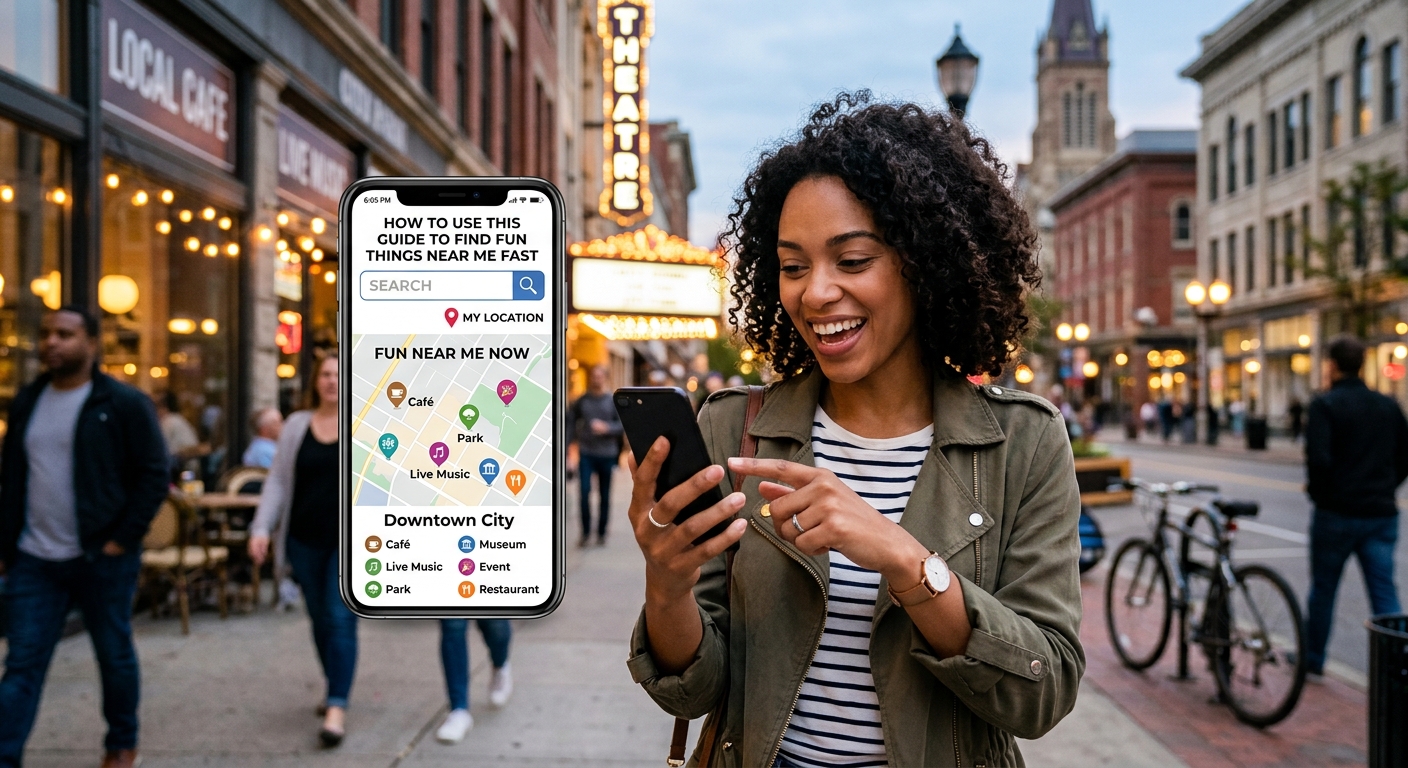
When people search for fun things to do near me, they usually want two things at once: a good idea and a fast decision. The best move this weekend is to pick one anchor experience, then build the rest of your day around it with a café, walk, meal, or backup indoor plan. In most cities, that means checking live events first, then comparing parks, museums, markets, and nightlife by time, budget, and weather.
We checked how people actually browse outing ideas, and the winning formula is simple: choose something close, choose something open when you can go, and choose something that matches your energy level. For a lot of city dwellers, that means a live concert, comedy show, food hall, gallery, waterfront walk, or neighborhood festival. If you’re traveling with family, pair a kid-friendly attraction with an outdoor stop. If it’s just you and one other person, keep it low-pressure and reserve only the parts that matter.
In 2025, the biggest shift is how local discovery works. More venues have last-minute tickets, more events sell out earlier, and more people rely on mobile-first lists to decide quickly. That’s why a guide like this matters: it helps you compare the best options in one place instead of bouncing between maps, ticket sites, and social posts. Gidly is especially useful here because it brings live events and “things to do” into one catalog view, which is exactly what near-me searchers need.
Fast decision filters: today, this weekend, tonight, free, cheap, family-friendly
If you only have a minute, use these filters like a shortcut. For tonight, look at live music, comedy, bar events, and late museum hours. For this weekend, consider markets, neighborhood festivals, brunch spots, parks, or one big ticketed event that gives the day structure. For free or cheap plans, public art, hikes, waterfronts, library events, and happy hour specials are usually the best value.
Families should filter by age fit before anything else, because toddlers, tweens, and teens need different pacing. Couples often want atmosphere more than activity count, so a dinner-plus-show combo or a scenic walk with dessert works beautifully. Friends usually do best with something social and flexible, like trivia, bowling, arcade bars, or a food hall with multiple choices. Solo outings are easiest when they have built-in comfort, such as museums, bookstores, spas, coffee walks, or a scenic neighborhood route.
The key is not to overcomplicate the search. The right activity is the one you can reach easily, afford comfortably, and enjoy without a lot of friction. If you’re stuck, pick one indoor and one outdoor option, then see which one the weather and your mood support.
Where to check live local options on Gidly before you go
We always recommend checking live availability before heading out, especially on Fridays, Saturdays, and holiday weekends. On Gidly, you can browse current listings, compare event types, and find options that match your timing, budget, and group size. That matters because a lot of great outings are no longer “show up and hope” experiences; they’re book-ahead, timed-entry, or limited-capacity.
For example, if you want a same-day concert or comedy show, Gidly can help you spot what’s still available without searching venue by venue. If you want something family-friendly, you can scan for matinees, museum events, seasonal activities, and all-ages experiences. If you’re hunting for cheap things to do, it’s helpful to compare free listings, discounted time slots, and recurring community events in one feed. Gidly’s catalog makes that kind of comparison much faster.
Explore Gidly’s full events catalog before you head out, especially if your plan depends on real-time openings or tickets. It’s one of the easiest ways to avoid the classic “We should’ve checked that earlier” problem. A quick browse can turn a vague weekend into a solid plan in less than five minutes.
How to Use This Guide to Find Fun Things Near Me Fast
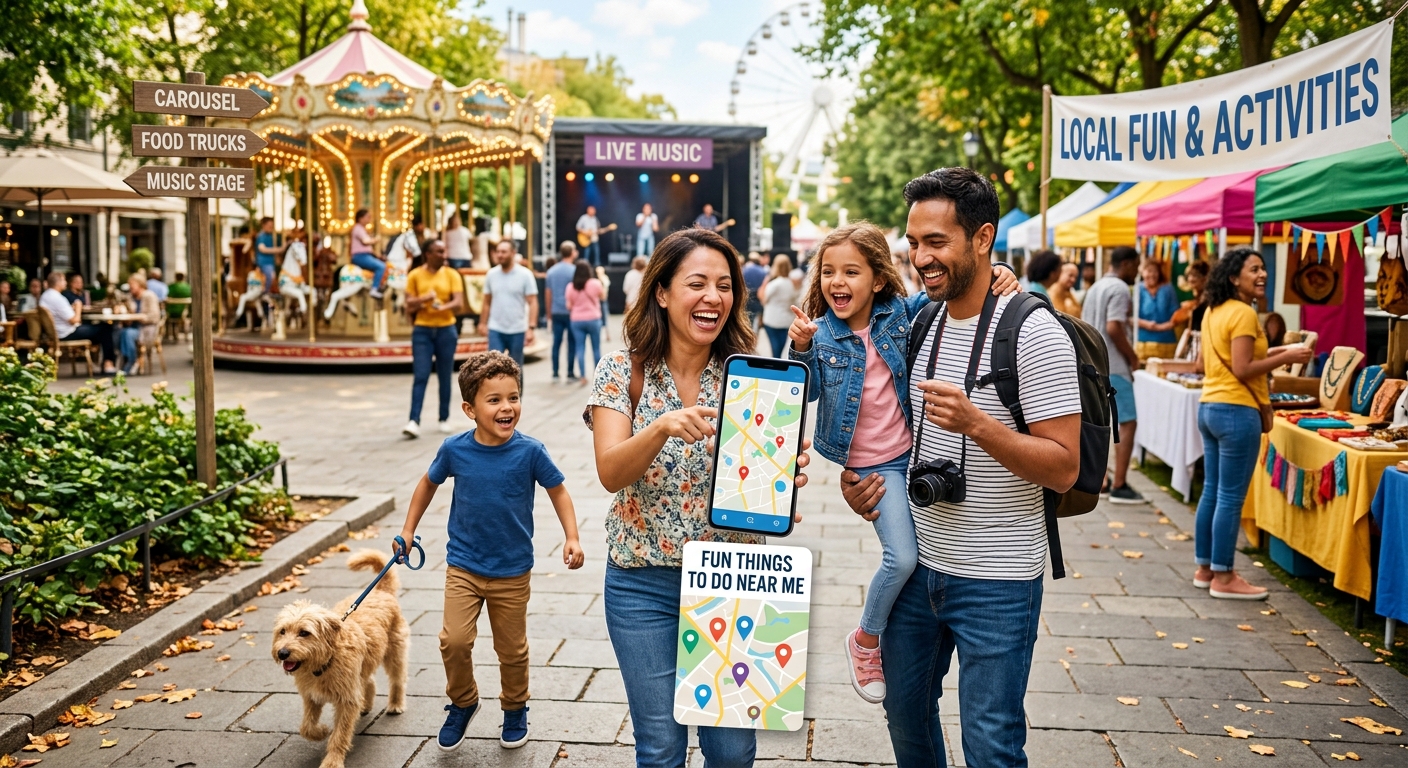
This guide is designed to help you make a decision, not just collect ideas. The easiest way to use it is to start with your mood, then layer in time, budget, and weather. If you do that, you’ll land on something enjoyable instead of defaulting to the nearest random option. That’s especially helpful when you’re searching on your phone and don’t want to overthink every possibility.
We’ve organized the guide by real-life situations because that’s how people actually plan outings. Some days call for active fun, while others call for quiet culture or a low-key dinner. Some weekends are built around kids’ schedules, while others are built around date night or a spontaneous friend hangout. The good news is that most cities have something good within reach if you know what to prioritize.
Think of this as your decision map. If you only have an hour, don’t look at all-day experiences. If the weather is bad, don’t waste time scrolling outdoor lists. If you’re trying to save money, focus on free and low-cost categories first. The sections below show you how to filter smarter so you can get from search to outing faster.
Match your mood: active, social, relaxed, cultural, or spontaneous
Start by asking what kind of energy you want from the outing. Active days usually fit parks, walking tours, pickup sports, climbing gyms, bike rides, or paddle sports. Social days work best with trivia, bars with games, festivals, food halls, and live shows where you can talk before or after the main event. Relaxed days pair well with bookstores, spas, cafés, gardens, museums, or scenic waterfront walks.
Cultural moods often call for exhibitions, galleries, theater, neighborhood history spots, or immersive installations. Spontaneous moods are the easiest because they’re usually about nearby flexibility, like open mics, happy hour, night markets, or late-night dessert. The trick is to avoid choosing an activity that fights your mood. A high-energy climb session is great when you’re motivated, but not when you want to decompress after a long week.
If you’re going out with other people, let the most neutral mood win. That usually means a flexible plan with optional add-ons. You can always extend a good outing, but it’s hard to rescue a bad one once everyone’s tired or hungry.
Choose by time available: 1 hour, half-day, full day, evening
Time is one of the fastest ways to narrow the field. If you only have an hour, choose a walk, café stop, gallery, park loop, or a quick exhibit. Half-day plans can handle a market, museum, brunch, neighborhood crawl, or a daytime show. Full-day outings make sense when you want a ticketed anchor event plus meals and a scenic add-on.
Evening plans deserve their own category because city life changes after dark. A concert, comedy set, rooftop drink, late museum program, or movie night can feel very different from a daytime outing. If you’re short on time, don’t choose an activity with a lot of travel or a long wait. The most enjoyable local plans often leave room for one spontaneous stop, not six.
We’ve seen many people underestimate transition time, which is one of the biggest mistakes in local planning. If the event starts at 7:30, don’t forget parking, check-in, lines, and food. Build in a cushion so your outing feels smooth instead of rushed.
Choose by budget: free, under $25, under $50, splurge
Budget filtering is where “fun things to do near me” becomes much more manageable. Free options usually include parks, public art, festivals, library events, scenic drives, and some museum days. Under $25 can cover matinees, coffee-and-walk outings, small attraction tickets, local markets, and happy hour snacks. Under $50 opens the door to most casual entertainment, including bowling, comedy, escape rooms, casual tours, and many museum visits.
Splurge outings are worth it when the experience itself is the point. That might mean a chef’s tasting menu, premium concert seats, a spa day, a special exhibit with timed entry, or a unique immersive experience. The best value isn’t always the cheapest option; sometimes it’s the outing that gives you the most satisfaction per hour. That’s especially true for date nights and celebratory plans.
When in doubt, compare price against how memorable the outing is likely to be. A $30 event that you’ll remember for months is often better value than a free activity that feels like filler. That’s why our team likes mixing one anchor ticket with one inexpensive supporting stop.
Choose by weather: sunny, hot, cold, rainy, windy
Weather is a major decision factor, especially in cities with fast-changing conditions. Sunny weather points you toward parks, markets, patios, waterfronts, gardens, and outdoor performances. Hot weather favors shaded walks, indoor attractions, pools, splash areas, ice cream stops, and evening plans once temperatures drop. Cold weather makes museums, theaters, saunas, indoor sports, and cozy food spots especially appealing.
Rainy days should not derail your fun; they just change the category. Indoor play spaces, aquariums, climbing gyms, movie theaters, arcades, and libraries can rescue the day quickly. Windy days can make waterfronts and open rooftops less pleasant, so look for sheltered places or street-level walks with nearby cafés. If the forecast is uncertain, it helps to choose a neighborhood with both indoor and outdoor options so you can switch plans on the fly.
Good planning means respecting the season instead of fighting it. The right weather-based plan feels easy, not forced. If you build around conditions, your outing will almost always feel better.
Best Overall Fun Things To Do Near Me Right Now
When you want a shortlist that works almost anywhere, the best overall options are the ones with broad appeal and low friction. Live events, walkable districts, museums, food halls, and late-night venues consistently rank high because they’re easy to customize around your mood. These are the kinds of outings that still feel good whether you’re going alone, with a date, or with a group. They also tend to have live availability, which makes them especially useful for near-me searchers.
In most cities, the strongest options are clustered in entertainment districts, downtown cores, waterfront neighborhoods, and arts corridors. That means you can often combine multiple ideas in one trip without crossing the entire city. We checked current patterns for 2025 and found that people are leaning into flexible, mixed-use outings: one part event, one part food, one part walk. That combination is popular because it balances novelty and convenience.
If you want the safest “I’ll probably enjoy this” pick, start with a live event or a neighborhood with several backup options. That way, if one thing doesn’t land, you’re not stuck. The sections below break down the most reliable categories for broad appeal.
Live events and pop-ups
Live events are one of the best answers to “fun things to do near me” because they create momentum. A concert, pop-up market, seasonal festival, food tasting, or art activation gives your outing a clear center. That’s especially useful when you don’t want to spend your whole evening deciding what to do next. In 2025, pop-ups are still strong because they feel special, and many are posted with limited windows or small-capacity runs.
We’ve noticed that people increasingly prefer shorter commitments with high payoff. A two-hour experience can be perfect if it’s well curated, especially when paired with dinner or drinks. Check official event pages for venue hours, age limits, bag policies, and ticket availability. If you want live discovery without hunting across multiple websites, Gidly is a helpful first stop because it surfaces what’s currently happening around you.
For last-minute outings, aim for events with same-day tickets or walk-up possibilities. Those often include open-air performances, gallery openings, neighborhood fairs, and community events. When possible, choose venues with nearby restaurants so the night can continue naturally after the event ends.
Parks, promenades, and walkable districts
Parks and promenades are underrated because they give you flexibility, space, and low cost all at once. A scenic walk can be surprisingly satisfying when the weather is good and the route includes water, public art, architecture, or people-watching. Walkable districts are especially useful because they let you pivot from a coffee stop to shopping to dinner without needing another plan. They’re also easy to do with kids, friends, or solo.
From experience, the best walking areas are the ones with multiple layers: a central park, a nearby café strip, a small gallery cluster, or a waterfront path with food nearby. That way your outing doesn’t feel like exercise disguised as entertainment. Many cities also host weekend pop-ups, farmers’ markets, and live music in these areas, which boosts the value of a simple walk. Always check parking and transit if the area gets crowded, because the fun can quickly disappear if you spend 30 minutes circling for a spot.
If you only have an hour or two, this is one of the smartest categories to choose. It’s adaptable, inexpensive, and easy to pair with almost anything else.
Museums, galleries, and immersive exhibits
Museums and galleries give you a calm, meaningful outing that still feels special. They work well when you want something indoors, climate-controlled, and conversation-friendly. Immersive exhibits have also grown in popularity because they’re visually exciting and often social-media friendly, but they can book up quickly. If you’re planning a weekend outing, checking hours and timed-entry slots in advance is a smart move.
In many cities, the best museum day includes one main institution plus a nearby café or bookstore. That keeps the experience from feeling too formal and gives you room to linger. Free or discounted museum days can be excellent value, but they can also be crowded, so it helps to arrive early. Many museums now post current exhibitions and special programs on their official websites, which is the best place to verify freshness.
If you’re choosing between a museum and an outdoor walk, let the weather decide. Museums shine when it’s too hot, too cold, or rainy, and they’re also great for solo outings because you can move at your own pace. If you like structure but don’t want a loud scene, this is a strong pick.
Food halls, markets, and tasting experiences
Food halls and markets are one of the easiest ways to make a local outing feel satisfying. They work because they solve a common planning problem: everyone wants something different, but the group still wants to stay together. A food hall lets you mix snacks, full meals, desserts, and drinks without committing to one restaurant. Markets also add a sense of exploration, especially when local vendors, seasonal produce, and live music are involved.
From our experience, tasting experiences are most fun when they’re paired with a neighborhood walk or event. That could mean brunch before a museum visit, drinks after a concert, or dessert after a waterfront stroll. If you’re on a budget, share plates and go during off-peak hours. If you’re with friends, the social energy of a market can be the main event. Keep in mind that some vendor stalls close earlier than the overall venue, so check current hours before you go.
Food-based outings are especially useful when you want “something fun” without a huge time commitment. They’re easy to personalize, easy to photograph, and easy to extend if everyone is having a good time.
Late-night entertainment and live shows
Late-night entertainment is ideal when you want the evening to feel more alive than a standard dinner. That could mean a concert, comedy club, jazz set, DJ night, karaoke, or a theater performance with a late finish. The best part is that nighttime naturally makes ordinary spaces feel more memorable. A rooftop bar or small venue can turn a basic Friday into a real night out.
Late-night plans do require a little more logistics. Check age limits, dress codes, public transit schedules, and rideshare demand before you commit. In 2025, more venues are using timed ticketing and digital entry, which means arriving on time matters more than it used to. If you want a smoother night, choose a venue with food nearby so you can avoid getting hungry mid-show.
This is a great category for adults who want a distinct “going out” feeling. It’s also one of the best ways to turn a simple “near me” search into a memorable weekend story.
Fun Things To Do Near Me This Weekend
Weekend planning works best when you think in blocks instead of trying to cram everything into one perfect day. Saturday usually supports bigger, more social plans, while Sunday often feels better for slower, lower-pressure outings. If you’re looking for fun things to do near me this weekend, the best choice is usually an activity that gives you a clear reason to leave the house but still leaves room for flexibility. That’s why markets, parks, exhibits, brunches, and live events keep showing up as weekend favorites.
The beauty of weekend outings is that they can be shaped around one anchor. That anchor might be a concert, festival, brunch reservation, or museum exhibition. Once you have that, it becomes much easier to layer in smaller pieces like coffee, a neighborhood walk, or an early dinner. The trick is to avoid turning the whole weekend into a marathon of commuting and reservations.
We also recommend looking at weather and crowd patterns before choosing. Saturdays tend to fill up faster, especially in downtown and entertainment districts. Sundays are often better for relaxed routes, family activities, and anything that benefits from a slightly slower pace. The next sections help you build a plan that feels easy and local.
Saturday plans that work for groups
Saturday is usually the best day for bigger group energy because people are more available and less rushed. It’s the perfect time for a brunch-to-evening plan, a festival crawl, a brewery visit, a day market, or a sports event. Group outings work best when they have a clear meeting point and an optional extension, because not everyone wants to stay for the exact same length of time. Food halls and walkable districts are especially strong here because they offer multiple ways to participate.
If your group includes different personalities, choose something with variety built in. A neighborhood with shopping, food, public art, and one ticketed attraction is much easier than a single-purpose outing. Saturday is also the day to book ahead if you can, especially for popular restaurants, comedy shows, and escape rooms. In many cities, even casual spots can fill up fast by mid-afternoon.
Our team finds that Saturday plans usually succeed when they start earlier than people expect. A 2 p.m. or 4 p.m. kickoff leaves more room for dinner and spontaneous late-night fun. It also helps you avoid the “What now?” lull that can happen if everyone shows up too late.
Sunday plans that feel low-stress and flexible
Sunday is often the best day for activities that don’t need a lot of adrenaline. Think museum mornings, scenic walks, brunch, coffee crawls, garden visits, farmers’ markets, or casual family plans. Sundays tend to reward slower pacing, which means you can choose something that feels restorative instead of crowded and hectic. This is also a great day for solo outings because the vibe is usually quieter.
If you’re worried about Sunday scaries, the ideal outing gives you energy without wiping out the rest of your day. A short cultural visit, park picnic, or neighborhood browse can do that nicely. Many venues also offer Sunday specials or less crowded hours, so it’s worth checking official calendars. Late afternoon is often the sweet spot for a relaxed but still fun outing.
When Sunday is your only free day, avoid overbooking it. One good activity, one meal, and one low-effort backup plan are usually enough. The goal is to leave the weekend feeling like you did something enjoyable, not like you ran a personal festival production company.
Best weekend getaway add-ons within driving distance
If your local scene feels too familiar, a short drive can unlock a completely different weekend without requiring a full trip. Popular add-ons include beach towns, winery regions, mountain overlooks, historic districts, lakefront areas, and nearby small cities with strong arts scenes. These kinds of day trips work especially well when you can pair one destination with a food stop or scenic route. The best add-ons are close enough to feel easy but different enough to feel fresh.
Before you go, check fuel costs, tolls, parking, and opening hours. The hidden cost of a “quick drive” is usually time, not money, so make sure the destination is actually worth the commute. If you’re traveling on a weekend, leave early to avoid traffic. It’s also smart to look for official tourism pages or venue calendars, since seasonal hours can change quickly.
Day-trip add-ons are one of the easiest ways to refresh your local routine. They’re especially good for couples, friends, and anyone who feels bored by the same neighborhood loop every week.
How to build a weekend itinerary around one anchor event
The best weekend plans usually start with one anchor event and then grow outward. That anchor could be a concert, a sports game, a special exhibit, a themed market, or a dinner reservation you already know you want. Once that’s in place, you can add a pre-event coffee, an after-event drink, or a nearby walk. That structure keeps the day from feeling random.
In practice, the best anchor events are the ones with a defined start time or limited run. Those are easier to build around than open-ended plans. If you’re not sure what to pick, use Gidly to see what’s live, then choose the event that gives you the best combination of interest, timing, and location. That makes it easier to stay in one neighborhood and avoid unnecessary transit.
We checked how local planners do this well, and the answer is simple: they don’t try to maximize activity count. They maximize momentum. One strong anchor plus one or two easy add-ons is usually enough for a very good weekend.
| Weekend Plan | Best For | Typical Cost |
|---|---|---|
| Festival + food hall | Groups, friends | $20-$75 |
| Museum + café walk | Couples, solo, culture lovers | $15-$50 |
| Park + brunch + market | Families, low-key plans | $0-$60 |
| Concert + late dinner | Date night, friends | $40-$180 |
Fun Things To Do Near Me Tonight
Tonight’s best plans are the ones that are easy to execute quickly. If you need fun things to do near me tonight, focus on events and venues that already have live hours, fast entry, and minimal pre-planning. That usually means comedy clubs, concerts, bars with live music, open mics, late restaurants, movie theaters, and indoor activities that take walk-ins or same-day bookings. The strongest evening plans are the ones you can commit to in under 15 minutes.
One thing we’ve learned from local outing behavior is that people often want an “I’m going out” feeling without a huge production. That’s why evening plans with one main activity and one small add-on are so popular. A show plus dessert, a drink plus a walk, or a game night plus dinner can feel complete without being exhausting. On weeknights, this matters even more because people still have tomorrow to think about.
Tonight is also the best time to use live discovery tools. Availability changes fast, and many places release last-minute openings or same-day tickets. If you’re spontaneous, Gidly can help you spot what’s happening nearby before it disappears.
Last-minute concert, comedy, or open-mic options
Concerts and comedy shows are ideal when you want the night to feel special. Small venues often have the best last-minute energy because tickets can remain available closer to showtime, and the setting feels intimate. Open-mic nights are a great fallback if you want something low-cost and casual. They’re especially good for solo outings, first dates, or friend meetups where conversation matters.
Check official venue calendars for start times, age restrictions, and any cover charges. Some venues offer free early shows or discounted industry nights, while others have higher prices on weekends. If you want the best chance of getting in, arrive early and check whether tickets are digital or box-office only. A lot of people miss out simply because they assumed they could buy at the door after dinner.
The best part about these options is the built-in atmosphere. You don’t have to manufacture entertainment; it’s already there. That makes it much easier to enjoy the night without overthinking the details.
Bars, rooftops, lounges, and nightlife picks
Bars and lounges are the classic answer for an easy night out, but the best ones are neighborhood-specific. Rooftops are great when the weather is mild and the view matters, while lounges work well when you want a more polished vibe. Some cities have themed cocktail bars, listening rooms, or late-night food menus that make the outing feel more complete. The right venue depends on whether you want conversation, music, dancing, or just a nice place to sit.
From experience, nightlife gets better when you keep logistics simple. Choose a district with multiple nearby options so you can pivot if one place is too crowded. Also check dress codes and minimum age policies, because some venues are stricter than others. If you’re planning to stay out late, look up transit or rideshare availability in advance so you’re not stranded at closing time.
Nightlife does not have to mean loud clubs. It can be a calm cocktail spot, a jazz bar, or a late patio with good dessert. The best venue is the one that matches your actual mood, not your imagined one.
Indoor evening ideas when you do not want a big commitment
Not every night needs to turn into a full production. If you want an easy evening, choose a movie, a dessert café, a bookstore event, a gallery opening, a spa session, or a casual indoor game spot. These kinds of outings let you leave the house and still keep your evening manageable. They also work well when the weather is bad or your energy is low.
Indoor evening plans are especially good for people who want to socialize without loud noise or long waits. You can talk more easily, spend less, and decide on the fly whether to extend the night. Many cities now have board game cafés, arts-and-crafts workshops, and nontraditional evening classes that fit this category well. If you want something different without a giant commitment, this is the sweet spot.
Sometimes the best plan is simply to get out of the routine. A small indoor outing can do that better than a big event if it feels easy and local.
Planning tips for same-day booking and transit
Same-day plans can be great, but they reward fast decision-making. Check whether tickets are mobile-only, whether doors open earlier than showtime, and whether there’s a grace period for late arrivals. For transit, don’t rely on vague memory; check current schedules and service alerts. If you’re driving, estimate parking costs before you leave so the experience doesn’t become annoying the second you arrive.
We recommend choosing neighborhoods with dense activity for same-day outings. If one venue is sold out, you want restaurants, bars, or another show nearby. That flexibility is a major reason downtown entertainment districts remain popular. It’s also why last-minute discovery tools are so helpful: they let you compare multiple options in one search instead of improvising blindly.
When you’re deciding tonight, speed matters, but so does fit. Choose the thing you’ll enjoy most with the least friction. That’s how a random evening becomes a good one.
Free and Cheap Fun Things To Do Near Me
Budget-friendly outings are often the most satisfying because they feel clever, not costly. When people search for free or cheap fun things to do near me, they’re usually looking for value without sacrificing quality. That could mean a scenic park, public art trail, library event, market browsing, community festival, or discounted museum admission. In the right city, you can have a full, memorable day for very little money.
The best part about cheap outings is that they’re usually flexible. You don’t need to commit to an expensive reservation or a long ticketed schedule. You can build a plan around your budget and still leave room for food or transit. In 2025, many venues are offering timed discounts, resident pricing, and weekday specials to fill off-peak hours, so it pays to check official sites.
If you’re trying to save money, don’t just search “free.” Search by time of day, neighborhood, and event type too. You’ll uncover more useful options that way. Gidly is a strong starting point because it can help you see free listings and paid events side by side, which makes comparison easier.
Free parks, trails, public art, and waterfronts
Free outdoor spaces are still some of the best answers to “fun things to do near me.” Parks, trails, gardens with free entry hours, riverwalks, boardwalks, and waterfront promenades can all feel like a real outing when you choose a scenic route. Public art districts and mural walks add an extra layer of discovery without costing anything. These options are especially strong for solo days, low-energy days, and family outings.
To make a free outing feel intentional, add structure. Choose a loop, a landmark, a coffee stop, or a sunset timing window. That turns a simple walk into a proper experience. If your city has an official parks department or tourism board, check for seasonal events, outdoor yoga, music series, or guided walks. Those freebies can be surprisingly good.
The biggest mistake people make with free outings is underestimating them. A good park or waterfront with the right weather can feel better than a paid activity that’s crowded and stressful. Value is about experience, not just price.
Cheap museums, student nights, and city passes
Museums often have much better pricing than people expect, especially if you plan around discount hours. Student nights, senior rates, local resident pricing, and pay-what-you-wish options can make a cultural day very affordable. City passes can also be useful if you’re hitting multiple attractions in one trip, though they’re only worth it if you’ll actually use them. The key is to compare the pass price against your real itinerary.
Cheap culture outings work best when you combine one paid stop with one free nearby activity. That might mean a museum in the morning, then a park walk or public square visit in the afternoon. The pairing gives the day more texture and makes the spend feel more worthwhile. Always verify current exhibit pricing on official websites, since special shows sometimes have separate admission.
If you want to stretch your budget, go on less crowded days or during off-peak hours. The experience is often calmer and the wait times are shorter. That alone can make a budget outing feel premium.
Happy hour, combo tickets, and bundle deals
Happy hour is one of the easiest ways to make a local night feel special without overspending. You can often get reduced drinks, small plates, or special combo pricing during early evening windows. Combo tickets are another strong value play, especially for attractions that pair a show, exhibit, or activity with admission. When used thoughtfully, bundles reduce both cost and planning time.
Look for deals that match your actual behavior. If you only want one drink and a snack, don’t buy a giant package. If you’re planning to visit two attractions in the same district, a combo may be perfect. The best savings are the ones you actually use. This is another reason to check official event pages and venue sites before booking through a third party.
Bundle logic also helps with group outings. If everyone is splitting cost, one shared booking can be easier than multiple separate purchases. Just be sure to confirm cancellation policies and time limits.
Hidden freebies: markets, festivals, demos, and community events
Some of the best free outings are the ones people overlook because they sound too simple. Community markets, store demos, library talks, gallery openings, street fairs, and neighborhood festivals often have no entry fee. Even when some vendors charge, the event itself can still be free to explore. These outings are especially good when you want something local and low-pressure.
We’ve found that hidden freebies often show up in city calendars, tourism pages, neighborhood associations, and Gidly’s live event listings. That’s why it helps to search broadly rather than only looking at paid attractions. Community programming also changes by season, so what’s free in spring may not exist in winter. The official source is always the best place to check current hours and costs.
If you’re trying to save money and still have a good time, these events are your best friend. They can feel spontaneous, social, and very local without draining your wallet.
| Budget Level | Best Activities | Typical Spend |
|---|---|---|
| Free | Parks, public art, festivals, markets | $0 |
| Cheap | Museums, cafés, matinees, happy hour | $5-$25 |
| Mid-range | Bowling, comedy, escape rooms, casual events | $25-$60 |
| Splurge | Premium tickets, tastings, spa, fine dining | $60+ |
Fun Things To Do Near Me With Kids and Family
Family outings work best when they solve for three things at once: energy, comfort, and logistics. If you’re searching for fun things to do near me with kids, the best options usually include room to move, manageable costs, bathrooms nearby, and food within reach. The right outing depends a lot on age, because toddlers, elementary kids, tweens, and teens all need something different. A great family plan makes parents’ lives easier too.
We’ve seen that the most successful family outings are usually not the most complicated. They’re the ones with a clear beginning and a smooth exit. Zoos, aquariums, children’s museums, parks, seasonal festivals, playgrounds, and family-friendly performances are popular for good reason. They’re structured enough to feel worth the trip, but flexible enough that if kids get tired early, the day doesn’t collapse.
For 2025, family entertainment is leaning more toward interactive experiences, timed-entry exhibits, and multi-use venues. That means families benefit from planning ahead a little more than they used to. The sections below help you pick the right fit by age, weather, and energy level.
Age-based picks: toddlers, elementary, tweens, teens
Toddlers need short distances, stroller-friendly layouts, and quick wins. Playgrounds, splash pads, petting farms, and children’s museums are usually the safest bets. Elementary-aged kids often enjoy science centers, interactive exhibits, mini golf, and train or ferry rides. Tweens and teens tend to want more independence and novelty, so escape rooms, trampoline parks, climbing gyms, arcades, sports events, and immersive attractions usually work better.
Age fit matters because a “fun” place can become exhausting if it’s too young or too old for the group. The best family outing meets the youngest child’s needs without boring the older ones too much. If you’re mixing ages, look for venues with layered experiences, like parks with playgrounds plus walking paths, or museums with kid zones plus adult-friendly exhibits. Those are usually the sweet spot.
If you’re not sure what to choose, go for venues that let children move at their own pace. That tends to reduce friction and makes it easier for adults to enjoy the outing too.
Rainy-day family fun indoors
Rainy days are when family planning becomes most valuable. Indoor play centers, science museums, aquariums, libraries, indoor climbing walls, and family-friendly theaters can save the day. These venues work because they keep energy up without needing perfect weather. They also provide a lot of structure, which helps when kids are tired or bored.
We recommend checking for timed-entry tickets, snack options, and stroller access before you go. Some places have amazing exhibits but not enough seating or food nearby, which matters more than people realize when kids are involved. In some cities, children’s museums and public libraries host weekend activities that are both free and surprisingly good. Those are great backup plans when weather changes at the last minute.
One smart trick is to keep a rainy-day list ready before you need it. That way you can decide fast instead of trying to search from scratch while everyone is already restless.
Outdoor family activities with space to burn energy
Outdoor family activities are best when they include room to move and something for adults too. Parks with playgrounds, nature trails, picnic areas, waterfront paths, botanical gardens, and seasonal festivals are strong choices. They allow kids to burn energy while adults still feel like they’re having a real outing. If possible, choose places with bathrooms and food within easy reach.
Outdoor family plans also work well with timing. Morning and late afternoon are usually more comfortable, especially in hot weather. In the summer, shade and water access matter a lot; in colder months, shorter outings with a warm-up stop nearby are better. Families often enjoy these plans more when they don’t try to do too much in one trip.
For birthday weekends or school-break days, pair an outdoor activity with one easy reward, like ice cream, a treat shop, or a family-friendly restaurant. That gives the outing a finish line kids can understand.
Safety, bathrooms, food, and stroller/access tips
The practical details matter more for family outings than almost anything else. Bathrooms should be easy to find, food should be accessible, and stroller routes should be straightforward if you’re bringing younger children. If a venue is known for crowds, check whether it has timed entry, security screening, or bag restrictions. Those details can affect the entire experience.
Accessibility is another important factor. Look for elevators, ramps, seating areas, and sensory-friendly programming if needed. The official venue website is the best place to verify this information, and many now publish accessibility guides. Parking can also become a major issue if you arrive at peak hours, so it’s better to plan ahead than to circle with tired kids in the back seat.
Family outings go more smoothly when adults plan for comfort, not just entertainment. Pack water, snacks, backup layers, and a small activity to keep kids occupied in line. That little bit of prep can make a huge difference.
Fun Things To Do Near Me for Couples and Date Night
Couples searching for fun things to do near me usually want a plan that feels easy, a little special, and not too awkward. That’s why date-night outings work best when they have a built-in conversation flow or a shared activity. A great date can be dinner plus a show, drinks plus a scenic walk, mini golf plus dessert, or a museum followed by a cozy bar. The point is to create momentum without making it feel like a test.
In 2025, couples are leaning into experiences more than just meals. Interactive dates, tasting menus, live music, rooftop drinks, and short events are especially popular because they give the night structure. A strong date night should feel relaxed enough for conversation but interesting enough that you’re not staring at your phones. That’s why activity-plus-food combinations are so reliable.
If you’re choosing for a first date, keep things simple and low-pressure. If you’re planning a special night, book the thing that’s hardest to replace, then fill the rest in later. That’s how you create a night that feels intentional without becoming overengineered.
Low-pressure first-date ideas
First dates are usually better when they’re short, flexible, and easy to exit. Coffee, dessert, a museum, a walk through a lively neighborhood, or a casual happy hour are all strong options. These choices reduce pressure because there’s a natural end point and a built-in topic of conversation. They also let both people show up comfortably without pretending to be someone they’re not.
The best first-date ideas are the ones that allow for chemistry instead of forcing it. A shared experience helps, but you don’t need something extreme. In fact, too much intensity can make a first date feel awkward. Choose a place with decent lighting, manageable noise, and enough activity to avoid dead silence.
When in doubt, make it easy to extend but equally easy to end. That balance is one of the secrets to a good date night.
Romantic dinner-plus-activity combinations
Dinner plus an activity is one of the most dependable date formulas. You can start with a restaurant, then go to a nearby show, lounge, rooftop, or walkable scenic area. Or flip it and use a movie, gallery, or concert as the starter before dinner. This formula works because it gives you two moods in one night: shared experience and quiet time.
Look for neighborhoods where both parts are close together. That keeps the transition smooth and reduces the chance that the night gets derailed by transit or parking. Restaurant reservations are especially important on weekends, so it’s smart to book earlier than you think you need to. If the plan is special, choose one anchor reservation and keep the rest flexible.
Some of the best date nights we’ve seen are not extravagant. They’re just well-sequenced. A thoughtful meal, a short activity, and a good finish can feel much better than a complicated all-night itinerary.
Active date nights: bowling, mini golf, paddle sports, arcade bars
Active dates are great when you want a little competition and a lot of laughter. Bowling, mini golf, arcade bars, ice skating, paddle sports, and climbing gyms all create natural interactions. These outings are especially useful for couples who don’t want to sit and interview each other across a table. They also make memorable double dates.
What makes active dates work is the shared challenge. You get a built-in story, a reason to encourage each other, and something to point at besides yourselves. Many cities now have upgraded versions of these classics, too, like stylish bowling lanes or arcade bars with good food. Check age limits and dress code where relevant, especially for nighttime venues.
If you want your date to feel fun instead of forced, choose an activity you both can enjoy without being experts. The goal is connection, not winning.
Special-occasion upgrades and reservation tips
For anniversaries, birthdays, or “we just want a really good night,” upgrades can make a big difference. Think better seats, a chef’s tasting, a sunset rooftop table, VIP ticket access, or a premium dessert stop after the main event. Special occasions are also a good reason to book slightly ahead rather than relying on whatever is available last-minute. The right upgrade should elevate the night without making it feel rigid.
Reservation strategy matters because the best places often fill up first on Fridays and Saturdays. If you’re planning around a show, make sure the dining reservation leaves enough buffer time. If you’re choosing a rooftop or lounge, check if there’s a minimum spend or dress code. Those small details can affect the whole experience.
Romantic outings usually feel best when they’re polished but not stuffy. A little intention goes a long way. You don’t need the most expensive option; you need the one that fits the moment.
Fun Things To Do Near Me With Friends or a Group
Group outings work best when they’re social, easy to coordinate, and forgiving if people arrive at different times. If you’re looking for fun things to do near me with friends, prioritize activities with built-in conversation and multiple participation levels. Trivia nights, bowling, live music, food halls, sports bars, karaoke, and escape rooms are popular because they give everyone a role. They also create memories without needing a huge amount of planning.
For groups, the biggest challenge is usually not the activity itself but the logistics. Someone will be late, someone will want food first, and someone will have a budget concern. The smartest plans allow people to join at different points without ruining the flow. That’s why flexible venues and mixed-use districts perform so well.
In 2025, more friend groups are also prioritizing split-pay and easy ticketing. That makes planning faster and reduces friction. You’ll see this reflected in how venues package group-friendly experiences and how discovery platforms like Gidly make it easier to compare them.
Social activities that do not require a lot of planning
Low-planning group activities are the backbone of a successful friend outing. A casual bar with games, a park picnic, a market stroll, or a patio reservation can all work well. The point is to keep the structure loose so nobody feels trapped by the plan. If the group likes flexibility, choose a neighborhood with multiple options within walking distance.
Activities that don’t require advanced skills or full group coordination usually go over best. That means a shared meal, a casual show, or a daytime browse can be more successful than something elaborate. You don’t always need a formal reservation; sometimes a meet-up point and a start time are enough. That said, if the venue is small or popular, booking ahead is still wise.
Friend outings often succeed because they create room for different personalities. Not everyone needs to be loud or high-energy. A good social outing lets extroverts connect and introverts participate comfortably.
Competitive group outings: trivia, escape rooms, games, sports
When your friends like a little competition, trivia nights, escape rooms, darts, bowling, pickleball, and game bars are excellent choices. These activities create easy banter and natural teamwork. They’re especially useful for birthdays, reunions, or meetups where people don’t know each other equally well. A little competition can make the whole group more engaged.
From experience, the best competitive outings are the ones with low embarrassment and clear rules. You want friendly tension, not stress. Escape rooms, for example, are fun when the group size is right and the difficulty is not too extreme. Trivia works best when the team can laugh at wrong answers and still have a good time. Sports-based options are ideal if your group likes movement and doesn’t mind a little sweating.
If you’re organizing for a group, check capacity, booking policies, and whether venues can seat you together. Those details are often the difference between a smooth night and a scattered one.
Birthday-friendly ideas and celebration venues
Birthday outings should feel celebratory without becoming chaotic. Good birthday venues usually offer a clear vibe, group-friendly seating, and food or drink options that make everyone happy. That could mean a private karaoke room, a stylish rooftop, a brewery, a dinner spot with a back room, or a fun activity venue like mini golf or arcade bars. The best birthday plan is one where the guest of honor feels special but not overmanaged.
It helps to think in terms of phases: arrival, main activity, food, and optional after-party. That lets the night grow naturally. If you’re expecting a crowd, ask the venue about group minimums, deposits, or split bills. Some places are very accommodating; others are not. Official venue websites usually explain this clearly, and it’s worth checking before inviting everyone.
Celebrations are more successful when the logistics are invisible. The more your group can focus on fun, the better the night will feel.
Group booking, split-pay, and coordination tips
For groups, the easiest planning hack is to reduce decisions. Pick one venue, one start time, and one backup plan. Use shared calendars, group chats, and payment tools to keep everyone aligned. If you’re booking something that requires deposits, make that clear early so there are no surprises later.
Many outings now support digital ticketing and split payments, which helps a lot. Still, the burden of coordination usually falls on one person, so it’s smart to choose venues that are responsive and well organized. Confirm seating, arrival windows, cancellation terms, and whether the venue can hold your reservation if someone is late. Those little details matter more in groups than anywhere else.
In our experience, the best friend outings are the ones that feel easy to join. If the plan is too complicated, people start dropping off. Simplicity is a feature, not a compromise.
Fun Things To Do Near Me Alone
Solo outings are underrated because they let you set the pace, the budget, and the vibe. If you’re searching for fun things to do near me alone, the best options are usually the ones that feel satisfying even without conversation. Museums, bookstores, coffee walks, spas, scenic neighborhoods, galleries, and self-guided food stops all work well. The goal is to enjoy your own time, not to “make it productive.”
Many people feel hesitant about going out alone, but in city life it’s one of the easiest ways to discover your own preferences. You can skip the debate, choose what you like, and leave when you want. Solo outings are also great for mental reset days because they’re quiet enough to think but interesting enough to feel like you did something. We’ve found that the best solo plans are usually low-pressure and close by.
For 2025, solo-friendly experiences are getting more mainstream. More venues offer lunch hours, quiet seating, and flexible tickets, which makes it easier to go alone without feeling awkward. That’s a very good thing for people who want a little time out without full social coordination.
Solo-friendly cultural outings
Cultural outings are one of the most natural solo activities because they don’t require you to entertain anyone else. Museums, galleries, historic sites, and installations let you move at your own speed. You can linger, skip sections, or leave early without needing consensus. That makes them especially good for introverts and curious people who like to explore.
A solo culture day feels best when paired with one or two comfort stops. A café before the museum or a bookstore after the gallery can make the day feel more rounded. If you’re planning a longer outing, check whether the venue has lockers, seating, and food nearby. Those things matter more when you’re on your own.
From a practical standpoint, solo culture is one of the best values in city entertainment. You get quiet, stimulation, and flexibility in one outing. That’s a rare combination.
Self-guided walking, café, and bookstore routes
Self-guided routes are a great way to turn ordinary neighborhoods into a personal adventure. Pick a street, district, or waterfront path and build a loop that includes a café, bookstore, bakery, or public art stop. This kind of outing works well when you want fresh air and light structure without needing a ticket. It’s especially useful on days when you want to get out but don’t want a packed schedule.
We recommend pairing a route with a theme. Maybe it’s independent bookstores, pastries, record shops, murals, or architecture. A theme gives the outing shape and makes it feel intentional. If your city has a walkable downtown or arts corridor, this is one of the best ways to explore it like a local. It’s also inexpensive and easy to scale up or down.
These routes are very mobile-friendly, too. You can adjust as you go, stop when something catches your eye, and head home whenever you’re done. That freedom is the whole point.
Wellness and reset activities: spa, sauna, yoga, nature
Some solo days are about recovery rather than excitement. That’s where spa visits, sauna sessions, yoga classes, nature walks, and meditation spaces come in. These activities help you slow down without feeling bored. They’re especially useful if your week has been noisy, social, or stressful.
If you’re using a wellness outing to reset, make comfort your priority. Check whether the venue provides towels, lockers, water, or mat rentals. If you’re going somewhere nature-based, plan your route so it feels safe and easy to exit if needed. Wellness doesn’t have to be elaborate; it just has to feel restorative.
In a city context, wellness is often best when it’s paired with something small and enjoyable afterward, like tea, lunch, or a quiet browse. That prevents the outing from feeling too clinical.
Staying safe and comfortable when going out solo
Solo comfort is mostly about preparation. Choose well-lit areas, tell someone where you’re going if it’s late, and keep your phone charged. If you’re planning to stay out after dark, check transit, rideshare, and venue exit points in advance. These steps are simple, but they make a big difference in how relaxed you feel.
Also consider what kind of solo environment makes you comfortable. Some people like being in busy places where they blend in, while others prefer quieter settings. There’s no wrong answer. The best solo outing is the one where you feel at ease and not self-conscious.
If you’re new to going out alone, start with daytime plans or busy neighborhoods. They’re usually the easiest to enjoy and help you build confidence for longer solo outings later.
Rainy Day and Indoor Fun Things To Do Near Me
Bad weather should never ruin a good weekend. When it rains, turns cold, or gets too windy, indoor activities become the smartest answer to fun things to do near me. The best indoor plans are the ones that feel like real outings, not just placeholders. Museums, aquariums, science centers, theaters, indoor sports, escape rooms, bowling alleys, and family play spaces are all strong options. They give you a destination and a reason to leave the house.
Indoor plans are especially important in cities where weather changes quickly. You can’t always count on a sunny forecast, and last-minute pivoting is part of urban life. The best backup plan is something you actually like, not something you tolerate. That way the weather becomes a trigger for a different kind of fun, not a setback.
In 2025, many indoor attractions are improving timed entry, ticketing, and bundled experiences to make visits smoother. That means a little planning can go a long way. If you’re looking for live availability, Gidly is useful here too because it helps you spot indoor events and activities quickly.
Museums, aquariums, science centers, and libraries
These are the classic indoor rescue options because they work for almost every age group. Museums and aquariums give you a structured, immersive experience, while science centers and libraries often add interactive or family-friendly programming. They’re excellent when the weather is unpleasant and you still want to feel like you did something meaningful. A good indoor cultural stop can easily become the highlight of the day.
Before you go, check current exhibit schedules, timed-entry policies, and whether special shows cost extra. Many institutions post the latest information on their official websites, which is the best source for accuracy. If you want to avoid crowds, go early or on less obvious days. Some institutions also offer late hours or evening programs, which can be ideal for adults.
These venues are especially good when you want a peaceful outing. They let you move at your own speed and stay out of the rain without feeling trapped indoors.
Indoor active fun: climbing, skating, bowling, trampolines
If being cooped up makes you restless, choose an indoor activity that gets you moving. Climbing gyms, indoor skating rinks, bowling lanes, trampoline parks, and indoor sports centers solve the cabin-fever problem fast. These are great options for friends, families, couples, and even solo visitors who want a workout disguised as fun. They’re also a good way to burn energy on a rainy day without needing perfect weather.
Active indoor venues often have better pacing than outdoor sports when conditions are bad. You don’t need to worry about mud, wind, or temperature swings. Still, it’s worth checking shoe requirements, age limits, and whether rentals are included. Some places are very beginner-friendly, while others are geared toward regulars.
This category works best when paired with food nearby, since physical activities tend to make people hungry. A snack or casual meal afterward helps the outing feel complete.
Performance spaces, theaters, and comedy clubs
Rainy nights are perfect for performance-based entertainment. Theater, comedy, cabaret, spoken word, and intimate music rooms give you a reason to be out even when the weather is miserable. These venues are especially appealing because they create a clear experience: you arrive, enjoy the show, and leave feeling like the evening had a point. That’s a strong antidote to gloomy weather.
Check official calendars for set times, seating types, and age restrictions. Some clubs allow late arrivals, but others are strict about door times. If you’re planning dinner too, make sure the restaurant is nearby so the weather doesn’t become a problem. Many cities also have discounted weekday shows or early performances, which can be great value.
When people say they want indoor fun, what they usually mean is “I want atmosphere.” These venues deliver exactly that.
Indoor backup plans for unpredictable weather
The smartest way to plan is to have an indoor backup that you genuinely like. That could mean a museum, arcade, movie, spa, bookstore, food hall, or class. If the weather changes, you’ll already know what to switch to. This is especially useful on weekends when outdoor plans can get spoiled by rain or heat.
We recommend keeping one nearby indoor option in every search. That reduces stress and helps you decide faster. If you’re heading somewhere with mixed indoor/outdoor access, even better. A neighborhood with cafés, galleries, and restaurants gives you multiple ways to recover from bad weather without giving up on the outing entirely.
Good planning doesn’t eliminate weather surprises; it just makes them manageable. With one solid indoor fallback, your day can still be fun.
Outdoor and Active Fun Things To Do Near Me
When the weather cooperates, outdoor activities are often the most enjoyable and affordable option. Parks, gardens, hikes, bike paths, waterfronts, sports courts, and adventure activities can all turn a regular weekend into something memorable. If you’re searching for fun things to do near me and the forecast looks good, outdoor plans usually offer the best mix of movement, scenery, and value. They’re also easy to pair with food or coffee afterward.
The biggest advantage of outdoor fun is variety. You can keep it gentle with a walk or make it more intense with a hike, paddle, or recreational league game. Cities with strong park systems and waterfront access are especially good at this. In 2025, outdoor experiences are still in high demand because people want fresh air, social time, and flexible schedules. That trend isn’t going away anytime soon.
To get the best experience, time your outdoor outing for comfort. Early mornings, late afternoons, and golden hour usually feel best, especially in summer. In spring and fall, outdoor plans are often at their peak because the weather is ideal. The next sections help you choose a plan based on activity level and conditions.
Parks, gardens, hikes, bike paths, and waterfronts
Parks and waterfronts are the backbone of outdoor city life. They give you space to walk, sit, bike, picnic, or just look around. Botanical gardens and scenic trails add a little more structure, which can make the outing feel more intentional. Bike paths are especially useful if you want movement without paying much, and many cities now have rental programs that make access easy.
The best outdoor routes usually have a clear destination or loop. That makes it easier to gauge how much time you’ll need and whether you’ll want a food stop. If you’re going on the weekend, check parking availability and avoid peak heat if possible. A scenic place can become frustrating if it’s overrun with traffic or too crowded to enjoy.
Outdoor spaces are also excellent for different moods. You can go alone, bring a date, meet friends, or take the family. That versatility is why they show up in so many “near me” searches.
Sports, pickup games, and recreational leagues
If your ideal outing includes movement and social energy, sports are one of the best options. Pickup basketball, soccer, tennis, volleyball, pickleball, or recreational leagues can turn a weekend into something more active and community-driven. Many parks and recreation departments publish schedules online, and some venues host drop-in play. That makes it easier to participate without joining a long-term commitment.
Sports outings are especially good for people who want to spend time with others but don’t want to sit still. They’re also a great repeat activity if you’re trying to build a routine. Keep in mind that equipment, court availability, and skill level can matter a lot. If you’re new to a sport, choose a beginner-friendly venue or casual open play.
For groups, sports are excellent because they naturally create teamwork. Just make sure everyone’s on the same page about intensity, so it stays fun instead of turning competitive in the wrong way.
Adventure activities: kayaking, paddleboarding, ziplining, ropes courses
Adventure outings are the right move when you want something a little more memorable. Kayaking, paddleboarding, ziplining, ropes courses, and adventure parks give you an experience you’re likely to talk about afterward. They’re best when you have a bit of time and decent weather, because these activities often require travel, preparation, and sometimes reservations. In many places, weekends are the busiest period, so booking ahead helps.
The fun of adventure activities is that they feel more like an event than a casual outing. That’s why they work well for birthdays, dates, and friend weekends. They also provide great photo opportunities and a sense of accomplishment. If you’re not sure whether you’re up for something intense, check the difficulty level and duration before booking.
These experiences are worth it when you want the day to feel different from routine. They aren’t always the cheapest, but they tend to deliver strong memories per hour.
Best times to go for comfort, views, and parking
For outdoor outings, timing can make or break the experience. Early mornings tend to be quieter and cooler, which is ideal for walks and hikes. Late afternoons and sunset hours are great for views, but they can be busier. Midday may work in spring and fall, but in summer it can be too hot for comfort. If you want a peaceful experience, avoid the most obvious peak windows.
Parking is another reason to plan carefully. Popular parks, waterfronts, and event-adjacent outdoor areas can fill quickly on weekends. Public transit or rideshare may be easier if the destination is highly trafficked. If you’re biking or walking, that can remove the parking issue entirely and make the outing more enjoyable.
Good outdoor planning is about matching comfort to location. If you get the timing right, even a simple park visit can feel like the best part of your week.
Live Music, Concerts, and Nightlife Near Me
Live music and nightlife are among the best answers when you want fun things to do near me that feel immediately engaging. A good live set, a small venue show, or a lively bar can change the whole mood of a night. These outings are especially strong when you want atmosphere more than structure. They also tend to be more memorable than a random dinner or bar visit because there’s a built-in focal point.
In 2025, nightlife is still evolving toward more curated, experience-driven formats. That means listening rooms, genre-specific nights, rooftop sets, and hybrid venues are getting more attention. People want something social, but they also want quality sound, safer transport, and better food options. If you know how to choose the right venue, nightlife can be one of the best parts of local city life.
The best strategy is to match the venue to the type of night you want. Small venues are intimate; clubs are high energy; bars with live music are easygoing; and late food spots make the evening feel complete. A little planning goes a long way here.
Small venues, clubs, and touring acts
Small venues are often the best place to see touring acts because they create a close, immediate connection. The sound is usually better than people expect, and the crowd energy can be excellent. Clubs are a better fit if you want a more high-energy, late-night experience. Either way, checking the official venue page is important for door times, age requirements, and set order.
These shows are great for date nights and friend groups because they don’t require constant conversation. You get a shared event and the night takes care of itself. If tickets are limited, buy earlier rather than hoping for the door. Many shows now sell best in the final days before the event, but sellouts still happen fast for popular acts.
The most fun live music nights often happen when you go with curiosity, not certainty. Sometimes the opening act or smaller venue becomes the highlight of the night.
Jazz, indie, EDM, hip-hop, and local scenes
Every city has scene-specific pockets, and the best nights often depend on genre. Jazz clubs usually offer a more intimate, conversation-friendly atmosphere. Indie venues tend to draw discovery-minded crowds. EDM and dance nights are better if you want movement and late energy. Hip-hop shows and local showcases often provide strong crowd connection and a distinctly city feel.
To find the right fit, pay attention to neighborhood reputation and venue programming. Some districts are known for live music, while others lean more toward nightlife or art. If you want the local version, support venues that regularly book homegrown artists alongside touring acts. That’s where you’ll feel the city’s personality most clearly.
Genre matters because it sets expectations. A good night starts with picking the atmosphere you actually want, not the one you think you should want.
Bars with live music, DJs, and late-night food
Bars with live music or DJs are useful because they combine multiple needs in one place. You can have a drink, listen to music, and maybe get food without moving venues. This is ideal for groups and spontaneous nights. Some of the best spots are neighborhood bars that quietly become nightlife destinations after 9 p.m.
Late-night food is a major bonus because it extends the evening without forcing another commute. Check whether the kitchen stays open later than the main dining room, and see if there’s a minimum spend on busy nights. Rooftop bars can be especially popular in spring and summer, but they may be weather-sensitive. Always verify official hours if the forecast looks questionable.
These venues are one of the easiest ways to turn a regular evening into a real night out. They’re approachable, social, and usually more flexible than ticketed events.
How to find age-appropriate nightlife and safe late transport
Age rules matter more than many people realize. Some venues are 18+, some are 21+, and some are all-ages for early shows only. If you’re planning with younger adults or mixed-age groups, verify policies in advance to avoid disappointment. Dress codes can also vary, especially for clubs and upscale lounges.
Safe transport is just as important. Check transit schedules, parking fees, rideshare pickup zones, and whether your area has late-night service. A great outing can become stressful if the ride home is uncertain. If possible, choose a nightlife district with several transport options and good lighting.
Late-night fun is better when you can enjoy it without worrying about the practical details. That’s why the planning matters.
Arts, Museums, Exhibitions, and Culture Near Me
Cultural outings are some of the best “fun things to do near me” options because they feel enriching without being exhausting. Museums, galleries, exhibitions, installations, and neighborhood art walks offer something for almost every mood. They’re especially useful when you want a daytime activity that still feels special. For many locals, culture is the perfect mix of learning, conversation, and calm.
The cultural scene in 2025 is more interactive than it used to be. Institutions are leaning into immersive exhibits, late-night programming, partnerships with local artists, and seasonal installations. That makes culture more accessible and more entertaining for a broader audience. If you’ve been avoiding museums because they felt too formal, it might be time to revisit them.
Use cultural outings when you want a slower pace, a climate-controlled environment, or a date that encourages conversation. They’re also excellent solo activities because they don’t require anyone else’s approval to be enjoyable. Below are the best ways to approach the category.
Major museums and landmark institutions
Major museums are usually the safest bet when you want a reliable outing. They tend to have the deepest collections, the most polished visitor experience, and the clearest official information. Many publish their latest exhibitions, hours, and ticket details on their websites, which is useful for planning. If you’re new to a city, these institutions are often the first cultural stops worth visiting.
What makes them work is the range. You can spend an hour or spend half a day depending on your interest. They’re also easy to pair with food and shopping nearby. Check for special exhibits, late hours, and resident discounts because those can significantly change the value.
If you’re choosing for a group, a major museum is a strong neutral option. It satisfies multiple interests without being too niche.
Free galleries, art walks, and artist studios
Free galleries and studio visits are one of the best-value cultural experiences available. They often provide direct access to working artists, which makes the outing feel more personal than a large institution. Art walks are especially appealing in neighborhoods with clusters of galleries, murals, and creative spaces. These events can be a great way to discover hidden gems while supporting the local scene.
Because many of these venues are small, hours can vary a lot. Always check official listings or the artist’s current schedule before you go. Some gallery openings include refreshments and social energy, which makes them more like a community event than a formal visit. That’s a great fit for people who like culture but don’t want a stiff environment.
These outings are also a smart choice for budget-conscious planners. They give you real substance without necessarily requiring a big spend.
Immersive exhibits, pop culture events, and installations
Immersive exhibits have become a major part of 2025 entertainment because they’re interactive, photogenic, and often limited run. These can include projection shows, themed rooms, pop culture installations, and experiential events tied to films, artists, or seasonal moments. They’re especially popular with couples, friends, and younger audiences looking for something new. The downside is that they can sell out or use timed slots.
If you’re planning one of these, check whether tickets are assigned by entry window, whether photos are allowed, and whether there are add-on experiences. Some installations are lighter on substance than others, so it helps to read official descriptions carefully. When done well, though, immersive exhibits can be a standout weekend pick.
This category is one of the best examples of how entertainment has evolved. People want more than passive viewing; they want participation and memory-making.
Culture-first itineraries for first-time visitors and locals
A culture-first itinerary is simple: one big institution, one neighborhood walk, and one food stop. That’s enough to create a well-rounded day without overstuffing it. For visitors, this is a great way to see the city’s personality quickly. For locals, it’s a good way to rediscover your own city with fresh eyes.
The smartest culture itineraries often use geography to reduce transit. If a museum is near a park, café, or historic district, pair them together. That creates a stronger experience than trying to cram too many stops into a long commute. Keep an eye on opening hours and special closures, especially during holidays or installation changeovers.
Cultural days feel best when they have a clear flow. That way you leave energized instead of drained.
Theater, Comedy, and Live Shows Near Me
Theater, comedy, and live performances are reliable answers when you want fun things to do near me that feel more elevated than a casual night out. These outings create shared attention, which is one reason they work so well for dates, friends, and even solo plans. A live show gives the night structure and often creates a better memory than a standard dinner. It also gives you something to talk about afterward.
In current-year city life, live shows are benefiting from a broader appetite for small, high-quality experiences. People want cultural value, but they also want convenience and late availability. That’s why touring productions, indie theaters, improv rooms, and comedy clubs continue to do well. The best part is that there’s something for every budget if you know where to look.
To choose well, consider format, seat quality, and schedule. A great show can still be frustrating if the venue is too noisy, too far away, or too hard to book. The sections below help you avoid those pitfalls.
Broadway-style productions, touring shows, and local theater
Big productions and touring shows are ideal when you want a polished experience. They’re usually the easiest to trust because the production value is high and the event is clearly structured. Local theater, meanwhile, often feels more intimate and community-driven. Both can be excellent, depending on what kind of night you want.
Check the official venue or theater website for run dates, matinee options, and seat maps. Theater outings often reward early booking because the best seats can disappear quickly. If you’re choosing between a major production and a small local show, think about whether you want spectacle or discovery. Both have value; they just serve different moods.
Theater is especially strong when paired with a nearby dinner or dessert stop. That combination makes the night feel complete and elegant without being overdone.
Stand-up, improv, and variety nights
Comedy is one of the easiest ways to have a fun night because the format is low effort and high reward. Stand-up clubs, improv theaters, and variety nights all deliver different energy. Stand-up is best for punchy laughs and recognizable performers. Improv is more unpredictable and often more interactive. Variety shows can be great if you want a little surprise in the mix.
If you’re picking comedy for a group, make sure the room fits the vibe. Smaller rooms feel intimate; bigger clubs can be louder and more energetic. Check age restrictions, especially for late shows or venues with bar service. Some clubs also require minimum purchases or have ticketing windows that open early, so official booking pages are important.
Comedy is one of the best last-minute options when you’re undecided. It’s usually easy to enjoy, easy to explain, and easy to extend into dinner or drinks afterward.
Family shows and all-ages performances
Family performances are important because they give kids a real entertainment experience without requiring an adult-only setting. Matinees, puppet shows, children’s theater, and all-ages music performances can be excellent weekend options. They also give parents a chance to introduce kids to live performance in a manageable setting. The key is choosing a runtime and format that match the kids’ attention spans.
Many family shows are posted on official theater calendars well in advance, which makes planning easier. Some also offer concessions, booster seats, or sensory-friendly performances. Those details matter a lot, especially for younger children or kids with sensory sensitivities. It’s worth checking all of that ahead of time rather than assuming the venue is set up for families.
If you want a family outing that feels special but not overwhelming, this is a strong category to choose from.
Buying last-minute tickets and finding discounts
Last-minute tickets can be a good value if you’re flexible. Many theaters and comedy clubs release same-day inventory, rush tickets, student deals, or weekday discounts. If you’re trying to save money, check official websites first, then compare with trusted event listings. Venues sometimes post discount policies more clearly than third-party sellers do.
One good strategy is to target off-peak shows. Wednesday or Thursday performances, early matinees, and lesser-known acts often cost less and have better seat selection. If you’re booking on the fly, make sure you understand cancellation terms and digital entry requirements. Those details matter more than people think, especially when the night is already in motion.
Discount hunting is worth it, but only if it doesn’t kill the experience. The goal is a good night, not just the cheapest possible ticket.
Food and Drink Experiences Near Me
Food and drink are among the easiest ways to make a local outing feel enjoyable because they combine pleasure, flexibility, and social energy. If you’re searching for fun things to do near me, food halls, markets, breweries, wineries, distilleries, brunch spots, dessert cafés, and tasting events are all strong options. These experiences can stand alone or serve as the backbone of a bigger plan. They’re also easy to tailor to the budget and the group.
In 2025, people are increasingly choosing food experiences over traditional dining because they want variety. A food hall lets each person choose differently without splitting up. A tasting room can feel like a mini event. A dessert stop can turn an ordinary evening into something more memorable. If you plan well, food becomes the fun instead of just the fuel.
The sections below show how to use food and drink outings strategically. That means knowing when to go, what to book, and which venues tend to work best for different occasions.
Food halls, markets, and chef-driven casual spots
Food halls are excellent because they solve group indecision. One person wants tacos, another wants ramen, and someone else wants dessert; a food hall says yes to all of it. Markets are similar, especially when they combine local vendors, casual seating, and occasional live programming. Chef-driven casual spots can also be a great middle ground when you want better food without a formal fine-dining experience.
Check vendor hours carefully because not every stall stays open all day. Some of the best food hall experiences happen during lunch or early evening, not at the very end of service. If you’re going with friends or family, a food hall is one of the easiest social setups because people can wander and reconvene naturally.
These outings are particularly strong for mixed groups. They let everyone choose what suits them without the group splitting apart completely.
Brewery, winery, distillery, and tasting-room outings
Brewery and tasting-room outings are popular because they feel both relaxed and slightly special. Breweries often have casual seating, outdoor patios, and food trucks or menus, which makes them easy for groups. Wineries and distilleries can feel more refined, especially for date nights or celebrations. Tasting rooms also tend to offer structured experiences that give the outing a clear purpose.
It’s worth checking whether the venue offers tours, flights, reserved seating, or live programming. Some are family-friendly early in the day, while others are clearly adult-focused. Transportation matters here too, especially if you’re sampling multiple drinks. Plan rideshares or designate a safe return method before you start.
The best tasting outings feel leisurely. They’re not about consuming a lot; they’re about enjoying a place with good ambiance and local flavor.
Brunch, dessert, and late-night bites
Brunch is one of the most reliable social activities because it combines food, conversation, and a relaxed time window. Dessert outings can be even easier if you don’t want a full meal, and late-night bites are perfect after shows or nightlife. These categories are helpful when your group can’t agree on a big plan but still wants to go out. They’re also very budget-friendly if you keep portions reasonable.
For brunch, reservations are often wise on weekends. For dessert and late-night snacks, check opening hours carefully because not every place stays open late. Some neighborhoods are much better for this than others, especially entertainment districts with strong after-hours traffic. You can often build a full evening around food alone if the neighborhood supports it.
Food can be the main event. It doesn’t always need to be an add-on, especially when the venue or neighborhood is strong enough on its own.
Food tours, tasting events, and reservation strategy
Food tours and tasting events are excellent when you want a guided, curated experience. They’re especially good for visitors, couples, and friend groups that want something more structured than a random meal. Reservation strategy matters a lot here because popular tasting events can sell out, especially on weekends or holidays. If the event is seasonal, book sooner rather than later.
We recommend checking official event pages for included items, duration, dietary accommodations, and group size. Those details can change the value significantly. If you’re choosing between a tour and a self-guided food crawl, think about whether you want structure or freedom. Both can be great, but they serve different moods.
Food tours are one of the best ways to make a neighborhood feel new. They turn eating into exploration.
| Food/Drink Option | Best For | Booking Needed? |
|---|---|---|
| Food hall | Groups, families | Usually no |
| Brunch | Couples, friends | Often yes on weekends |
| Brewery tasting | Adults, groups | Sometimes |
| Food tour | Visitors, hidden-gem seekers | Yes |
Neighborhood-by-Neighborhood Guide to Fun Things To Do Near Me
One of the fastest ways to find good local plans is to think neighborhood first. If you search fun things to do near me, the best results are often clustered in districts that already have a strong entertainment identity. Downtown cores, arts districts, waterfronts, and suburban entertainment hubs each offer different advantages. Knowing the neighborhood helps you choose faster and with more confidence.
That approach also makes planning easier because you can match the neighborhood to the mood. Want nightlife? Head downtown or to a live-music corridor. Want a relaxed browse? Choose an arts district or walkable main street. Need family-friendly convenience? Suburban hubs usually offer easier parking and predictable layouts. The city is not one giant menu; it’s a collection of little zones with their own personality.
We’ve included these area-style recommendations to help broad metro readers narrow down what “near me” means in practice. Even if your city isn’t the same as the examples, the logic still applies. Find the district that fits your plan, then compare live events and opening hours nearby.
Downtown and central business district ideas
Downtown is usually the most efficient place to find concentrated entertainment. You’ll often get theaters, restaurants, bars, museums, hotels, and transit all in one area. That makes it ideal for dates, concerts, and same-day plans. Downtown is also the best place to look when you want the highest density of things happening at once.
The tradeoff is cost and parking. Downtown can be more expensive and more crowded, especially on weekends or during major events. That’s why it helps to book ahead if you’re planning something specific. If you’re flexible, though, downtown offers more backup options than almost anywhere else.
For “near me” searchers, downtown is often the most reliable answer when you want instant choice. It’s where the city’s energy is easiest to feel.
Arts district and creative corridor ideas
Arts districts are great for culture, hidden gems, and a more local-feeling outing. You’ll usually find galleries, studios, indie cafés, record shops, bookstores, and smaller performance spaces. These neighborhoods are excellent for solo adventures, casual dates, and low-budget afternoons. They also tend to have a stronger sense of place than generic commercial strips.
Because creative corridors often host events, openings, and pop-ups, the official neighborhood calendars can be surprisingly useful. Some of the best experiences are also user-recommended, such as a favorite mural alley, independent café, or tucked-away venue. That’s part of the fun: the area rewards curiosity.
If you want to avoid the touristy version of a city, arts districts are often your best bet. They feel lived-in and discoverable.
Waterfront, park, and recreation-area ideas
Waterfront districts and big park zones are ideal when you want fresh air and flexibility. They’re usually better for daytime plans, casual dates, family outings, and exercise. Depending on the city, they may also have ferries, bike paths, boat rentals, or outdoor dining. That makes them excellent for weather-friendly weekends.
These areas often work best when paired with one other stop, like a market or museum nearby. The natural scenery is the main draw, but a nearby café or activity helps round out the visit. If the weather is excellent, these neighborhoods can become the heart of your weekend. If it’s windy or rainy, they may be less appealing.
Use waterfronts when you want to slow down a bit. They’re often the easiest place to remember you’re actually in a city that has room to breathe.
Suburban, family, and mall-adjacent entertainment hubs
Suburban entertainment zones can be unexpectedly useful because they usually offer easier parking, larger venues, and family-friendly options. Mall-adjacent areas often include arcades, movie theaters, chain restaurants, bowling, and big indoor attractions. These are especially good for families, teens, birthday groups, and bad-weather days. They’re practical, and sometimes practicality is exactly what you need.
The downside is that they can feel less distinctive than central neighborhoods. The upside is that they’re often easier to execute. If you have a group with mixed ages or accessibility needs, this kind of area can be much more comfortable. Many of these hubs also host seasonal events, so they’re worth checking on Gidly or local event calendars.
Sometimes the best outing is the one that makes the logistics easy. That’s where these hubs shine.
Seasonal Fun Things To Do Near Me in 2025-2026
Seasonality matters more than people think when they search for fun things to do near me. A great spring outing may not work in summer, and a winter plan may be perfect in cold weather but unappealing once it warms up. In 2025-2026, local entertainment is increasingly organized around the season, with festivals, pop-ups, outdoor programming, and holiday experiences shaping the calendar. The smartest planners use the season to their advantage instead of fighting it.
Each season has its own strengths. Spring brings patios and festivals, summer offers long evenings and outdoor energy, fall leans into foliage and harvest events, and winter shines with cozy indoor plans and holiday lights. If you want the best experience, use the season as the first filter and then layer in budget, weather, and group type. That makes the search much easier.
We also recommend checking official calendars often because seasonal programming changes fast. What’s live this month may not be around next month. That’s one reason Gidly is helpful: it keeps current listings in a form that’s easier to browse than static city blog posts.
Spring festivals, outdoor markets, and patio season
Spring is one of the easiest times to find fun local outings because the weather starts to cooperate and the city comes outside again. Outdoor markets, art fairs, food festivals, flower events, and patio openings all become more common. This is a great season for casual dates, group plans, and family outings because everything feels a little lighter and more energetic. It’s also a good time for walking neighborhoods that were less appealing in winter.
Spring weekends often fill up quickly, especially if a city has a strong festival calendar. That means timing matters. Arrive early for popular events and check whether ticketed activities have timed entry. If you want the best atmosphere, spring afternoons and early evenings usually offer the strongest mix of daylight and comfort.
This season is all about variety and momentum. You can do more without feeling rushed because the weather is doing some of the work for you.
Summer concerts, pools, beaches, and long-day activities
Summer is the season for longer outings and later sunsets. Outdoor concerts, rooftop bars, beaches, pools, amusement areas, and evening festivals all make sense now. Because daylight lasts longer, you can fit in a lot without feeling crunched. That’s also why summer is such a good time for day trips and after-work plans.
The main challenge is heat and crowding. To beat both, go early, choose shaded spaces, and have a cool indoor backup nearby. In some cities, the best summer plans are actually evening plans because the temperature is more manageable and the vibe is better. If you’re going with kids, water access and shade become essential.
Summer fun often means high energy, but it doesn’t have to be expensive. Plenty of cities have free outdoor programming if you know where to look.
Fall foliage, harvest events, and spooky season
Fall is a great season for scenic walks, harvest markets, apple-picking day trips, brewery visits, and spooky-season events. It’s a particularly strong time for cozy date nights and group outings because the weather is usually comfortable and the calendar is full. Haunted attractions, themed pop-ups, and fall festivals also make this a fun time for adults and families alike.
Many fall activities are outdoors but not too physically demanding, which makes them appealing to a wide range of people. The key is to book earlier for the most popular seasonal events, especially around Halloween and peak foliage weekends. If you like photo-worthy outings, fall is one of the best times of the year to be out.
This season offers some of the easiest “feel local” experiences because the city itself often looks its best.
Winter holiday lights, markets, and cozy indoor plans
Winter shifts the focus indoors, but that doesn’t mean fun disappears. Holiday lights, winter markets, skating rinks, theater, cozy bars, museums, and special indoor exhibits all become especially appealing. This is a strong season for date nights, family activities, and low-stress plans that feel festive without needing a warm forecast. In many cities, winter also brings the best indoor programming of the year.
Because the weather can be less predictable, backup plans matter more in winter than at any other time. Look for neighborhoods where you can move between venues without too much time outside. Holiday events and limited-run installations can be very popular, so official calendars and advance booking become especially important.
Winter fun is often about atmosphere. If you choose well, it can feel magical rather than cold.
Best Types of Fun Things To Do by Scenario
The fastest way to choose a fun outing is to think in scenarios instead of categories. A good solo plan is not the same as a good family plan. A fun first date is not the same as a fun birthday night. If you search fun things to do near me by scenario, you’ll usually make a better decision faster. That’s because your actual need becomes the filter.
This section is where the guide gets especially practical. We’re not just listing ideas; we’re matching them to the situations where they perform best. That’s useful when you’re short on time and don’t want to scroll through every possible category. It’s also the kind of structure that works well for AI Overviews and voice search because the answer is clear and immediate.
Use the scenario that best matches your day. If you’re in a low-energy mood, don’t pretend you want a high-intensity outing. The best entertainment is the one that fits your real life.
For introverts and low-energy days
Low-energy days call for outings that are calming, not draining. Good choices include museums, bookstores, coffee shops, scenic walks, gardens, libraries, and quiet theaters. These activities let you leave the house without requiring constant conversation or high stimulation. They’re especially good when you want to reset without staying home all day.
Introverts often enjoy outings with a built-in purpose because it removes social pressure. A planned exhibit, a peaceful route, or a good café gives you enough structure to feel grounded. The key is keeping the plan simple and not overloading the day with too many stops. One or two good things are enough.
These outings also work well solo. If you want space and clarity, choose something that supports both.
For tourists who want the ‘local’ version
If you want the local version of a city, avoid only the biggest attractions and go where residents actually spend time. That usually means markets, neighborhood food, independent galleries, waterfront promenades, and smaller venues. The “local” version is often less expensive and more interesting because it reflects how people live rather than just how visitors consume. It can also feel more relaxed and authentic.
Ask yourself where a resident would go on a normal Saturday. That question usually leads you to better choices than a generic top-10 list. Neighborhood calendars, official tourism boards, and Gidly’s live listings can all help you see what’s active beyond the obvious landmarks. If you’re short on time, pick one local neighborhood and explore it deeply instead of spreading yourself thin.
The local version is often the one you’ll remember most because it gives you a stronger sense of place.
For tourists who want the iconic must-see version
Sometimes you do want the classic version, and that’s fine. Iconic museums, landmark viewpoints, famous food districts, major theater venues, and well-known markets have their place. They’re popular because they often deliver exactly what visitors want: a clear sense of the city. If it’s your first visit, these can be smart anchor choices.
The trick is to pair the iconic stop with something less obvious. That way the day feels balanced instead of tourist-heavy. A landmark museum plus a local café, or a famous sight plus a nearby neighborhood walk, can create a better outing than the landmark alone. Booking ahead is especially important for iconic spots because crowds can be intense.
Iconic does not have to mean generic. With the right add-on, it can still feel personal.
For people who want unique or hidden-gem outings
Hidden gems are often the most satisfying because they feel discovered rather than assigned. These can include small galleries, niche museums, neighborhood theaters, indie music rooms, local markets, and quirky attractions. You’ll often find them through user recommendations, community calendars, or discovery tools like Gidly. The best hidden gems are the ones with personality, not just obscurity.
To avoid disappointment, look for signs of real local traction: regular programming, good reviews, active official updates, and a steady event calendar. A place isn’t hidden-gem-worthy just because it’s hard to find. It should still be good. That’s why official websites and current listings matter.
Unique outings work best when you’re curious rather than rigid. The fun is in the surprise.
Practical Tips Before You Go
Even the best outing can get derailed by poor planning. Before you go, check prices, hours, ticket rules, parking, transit, dress codes, and accessibility details. Those practical considerations might not be glamorous, but they’re often what separates a great day from a frustrating one. This matters even more in 2025 because many venues use timed entry or dynamic event schedules.
We’ve seen a lot of people make avoidable mistakes by assuming that hours are stable or that walk-ins are always possible. Local entertainment is more flexible than it used to be in some ways, but also more organized in others. If you want to avoid stress, verify the basics before you leave. That’s especially true for weekends and holiday periods.
This section is your quick pre-departure checklist. Treat it like an insurance policy for fun.
Prices, hours, tickets, reservations, and walk-in strategy
Always check the latest price before you head out because rates can change by day, time, and season. Many attractions now use timed admission, weekend surcharges, or reservation-only entry. Walk-ins are still possible at plenty of places, but they’re less predictable than they used to be. If the outing matters to you, reserve the part that’s hardest to replace.
Official venue websites are usually the best source for accurate hours and ticket policies. Third-party listings can be helpful, but they may lag behind current updates. If you’re trying to keep things spontaneous, look for venues that mention same-day booking or flexible entry windows. Those are usually the easiest to use last-minute.
Good strategy is about reducing uncertainty. If you know the price and entry rules, you’ll feel much more relaxed once you arrive.
Parking, public transit, rideshare, and walking safety
Transit and parking can affect the mood of the whole outing, so don’t treat them as afterthoughts. For busy downtown or event-heavy areas, public transit may be faster and cheaper than driving. If you’re parking, verify garage hours, rates, and whether the lot closes early. Rideshare is convenient, but prices can spike after events, so it’s smart to plan for that too.
Walking safety matters more at night and in unfamiliar areas. Choose well-lit routes, know your pickup point, and avoid unnecessary detours after a late show. If you’re going out with kids or a group, decide on a meeting point in advance. These small habits make the evening smoother.
The goal is to arrive with energy left for the fun part, not spend it all on logistics.
What to bring: weather, comfort, and accessibility essentials
What you bring depends on the outing, but some basics help almost everywhere. Water, a portable charger, weather-appropriate layers, comfortable shoes, and a small bag can all make the experience better. For outdoor outings, consider sunscreen, hats, or rain gear. For indoor events, bring any required ID or digital tickets.
Accessibility is worth thinking about before you go. Check for elevator access, seating, restrooms, noise levels, and sensory-friendly accommodations when relevant. Many official sites now publish accessibility notes, which are worth reading carefully. That information can change whether a venue is a good fit.
A little preparation prevents a lot of avoidable discomfort. That’s especially true on longer weekends or when you’re bringing kids.
How to verify live hours and event status on official sources
Before leaving, confirm that the event is still happening and the venue is actually open. Official event pages, venue calendars, and city tourism boards are the best sources for this. Social media can help with atmosphere, but it’s not always reliable for basic logistics. If something is seasonal or weather-dependent, check the day-of post before you go.
This matters a lot for pop-ups, outdoor programming, and smaller venues with shifting schedules. You don’t want to arrive for a closed exhibit or canceled outdoor concert. When in doubt, a quick official check saves time and frustration. It’s one of the easiest planning habits to build.
If the outing is ticketed, save the confirmation to your phone before heading out. That one habit can save a lot of stress.
Insider Tips and Local Hacks for Better Outings
Local life gets easier when you know a few insider tricks. If you want the best fun things to do near me, timing, discounts, and neighborhood choice matter more than most people realize. The same city can feel expensive, crowded, or surprisingly easy depending on when you go and how you plan. That’s why a local perspective is so useful: it helps you choose smarter instead of merely choosing faster.
We checked current patterns across events and entertainment, and the best hack is still simplicity with good timing. The second-best hack is knowing where to look for current offers and hidden gems. Finally, the fastest way to improve your outing is to compare options side by side before you commit. Gidly helps with that by putting live events and outing ideas in one place.
These tips are the difference between a decent outing and one that feels like you really knew what you were doing.
Best times to avoid crowds and save money
Off-peak hours are your best friend. Weekdays, early matinees, late lunches, and early evening reservations often mean better availability and lower prices. Popular places can be much cheaper or calmer when you avoid the obvious rush times. If your schedule is flexible, use it to your advantage.
In many cities, the sweet spots are Tuesday through Thursday for indoor attractions and Sunday mornings for slower cultural outings. Late afternoon can also be a smart window for outdoor spaces before dinner. If you’re crowd-averse, choose the hour right after opening or the hour before closing. You’ll often get a better experience without the chaos.
Timing is one of the easiest ways to upgrade your outing without spending more money.
How to find discounts, memberships, and resident rates
Discounts are often hiding in plain sight. Check official websites for resident pricing, student rates, membership benefits, and special days. Many venues also run seasonal promotions or bundled offers that don’t always show up in third-party listings. If you visit attractions more than once a year, memberships can pay off quickly.
It also helps to compare discounts against your actual behavior. A membership is only valuable if you use it. Resident rates are often excellent for locals who want to explore their city more often without overspending. This is especially useful for museums, gardens, zoos, and recurring event spaces.
The best savings strategy is not hunting every coupon; it’s finding the right discount for the right outing.
How to spot the real hidden gems versus overhyped stops
Hidden gems are worth finding, but not every obscure place is actually good. Look for signs of repeat local use: steady reviews, frequent programming, active social updates, and a clear identity. If a spot only looks good in a single viral post, be cautious. A real hidden gem usually has consistent quality and a strong niche.
The best hidden gems are often neighborhood-specific and slightly under-marketed. Independent cafés, small performance rooms, local markets, and boutique museums often fit the bill. User-generated recommendations are helpful, but it’s smart to cross-check with official hours and current event info. That way you get both authenticity and reliability.
The real goal isn’t secret knowledge; it’s finding places that fit your taste before everyone else crowds them out.
Using Gidly catalog insights to compare options quickly
One of the easiest ways to choose is to compare live options in one place. Gidly makes that easier by bringing events, outings, and nearby ideas into a catalog-style view. That saves time when you’re trying to balance budget, timing, and mood. Instead of jumping between event pages, you can see what’s available and what fits your situation faster.
That matters for last-minute plans, weekend searches, and “I just want something fun” moments. If you’re deciding between a live show, a market, or a museum program, catalog-style browsing helps you narrow things down quickly. It’s also useful for hidden gems because smaller events are easier to spot in a live feed than in static blog content.
For local discovery in 2025, speed and clarity are everything. That’s where Gidly earns its keep.
How the Local Entertainment Scene Has Evolved in 2025-2026
The local entertainment scene has changed a lot in the last few years, and 2025-2026 is all about convenience, interactivity, and live availability. People still want great food, great music, and great culture, but they also want faster discovery and more flexible booking. That’s why searches for fun things to do near me now span today, tonight, this weekend, free, cheap, kids, couples, and friends all at once. The modern outing is less about one giant event and more about a smart, easy-to-fit experience.
We’re also seeing more hybrid experiences: events that combine art, music, food, and social time in one format. Venues are more responsive to mobile-first behavior and shorter attention spans, which means discovery tools matter more than ever. People want to know what’s live now, not just what exists in theory. That’s where current, location-aware guides become useful.
This section explains the bigger trends behind the guide, because understanding them helps you make better choices now and next season.
What is trending now in events and experiences
Current trends favor short, high-quality, low-friction experiences. That includes pop-ups, intimate live shows, immersive exhibits, curated tasting events, and mixed-use neighborhoods where multiple activities are walkable. People want more than a static reservation; they want a little story around the outing. That’s part of why local events are getting more attention than ever.
Seasonal programming is also more important. Cities are leaning into spring markets, summer outdoor series, fall festivals, and winter holiday experiences. The result is a calendar that changes constantly. If you’re not checking live listings, you can miss some of the best options.
Trending now is not just a style choice; it’s a planning strategy. The fastest-moving events tend to be the most relevant to today’s search behavior.
Growth of immersive, interactive, and social experiences
Interactive experiences are booming because they’re easier to share and easier to remember. Whether it’s a projection exhibit, a cooking class, a themed bar, or a hands-on museum show, people want to participate, not just observe. This shift is especially visible among younger city dwellers and groups looking for something more engaging than dinner alone.
The social element matters too. Many outings now give you something to do while you’re there, which reduces awkwardness and increases enjoyment. That’s one reason escape rooms, arcade bars, and immersive installations continue to grow. They create the sense that you did something, not just sat somewhere.
For planners, this means a good outing often combines a social activity with a practical one. It’s not a trend; it’s the new standard.
Why mobile-first discovery and instant booking matter
People plan on their phones now, often at the last minute. That means discovery needs to be fast, clear, and current. Mobile-first browsing rewards pages that answer the question immediately and let users compare options without friction. If a venue or guide is slow, vague, or outdated, users move on.
Instant booking is equally important because many experiences now have limited capacity. The quicker you can see what’s available, the better your odds of actually going. That’s one reason platforms that combine discovery and booking are winning attention. They match how people already plan.
For near-me searches, speed is not a luxury. It’s part of the experience.
How AI-friendly local guides help people decide faster
AI-friendly guides work because they’re structured around real questions and quick answers. People want to know what’s best now, what’s cheap, what’s good for kids, and what works tonight. A guide that separates those needs into clear sections saves time and reduces decision fatigue. It also helps voice assistants and search summaries surface the right answer.
That’s why this article uses scenario-based sections, comparison tables, and direct answer capsules. It makes the content easier to understand for humans and easier to extract for search systems. For users, the result is a faster path to a real plan. That’s the whole point.
When local content is structured well, decision-making becomes much easier. That’s a big win for everyone.
Common Mistakes When Choosing Fun Things To Do Near Me
Even experienced planners make the same mistakes when they search for fun things to do near me. The most common problems are mismatching the activity to the mood, ignoring travel reality, and forgetting practical constraints like age limits or weather. These mistakes are easy to avoid once you know what to watch for. The best outings are usually the ones that fit the moment cleanly.
We’ve learned that people often overvalue the idea of a “perfect” activity and undervalue fit. A simpler outing that matches your time and energy often feels better than a more ambitious one that becomes stressful. That’s especially true on weekends, when crowds and logistics can change the experience dramatically. It’s better to be realistic than aspirational.
This section will save you from the most common planning regrets. Use it before you book anything.
Overplanning instead of matching mood and time
One of the biggest mistakes is trying to pack too much into one outing. A great plan does not need six stops. It needs one strong reason to go out and maybe one or two easy add-ons. Overplanning makes people tired before the fun even starts. It can also create friction if the group has different energy levels.
If you only have two hours, choose one meaningful thing. If you’re doing a full day, leave room for breaks. Matching the outing to your actual time is one of the simplest ways to improve the experience. The more realistic you are, the more likely the outing is to feel easy and enjoyable.
Simplicity is often the secret to a really good time.
Ignoring weather, travel time, and parking reality
Weather can change an outdoor plan instantly, and travel time can turn a good idea into a tiring one. Parking, in particular, is frequently underestimated. A venue might look close on a map and still feel inconvenient in real life. If the weather is uncertain or traffic is bad, choose a closer option or a neighborhood with multiple backup choices.
We recommend checking conditions before leaving and having a second option ready. That does not mean being pessimistic; it means being practical. When you account for real-world conditions, you enjoy the outing more because you’re not fighting the environment.
A little reality check goes a long way.
Picking an activity without checking age fit or accessibility
Age fit matters for families, mixed-age groups, and nightlife alike. A place that’s perfect for adults may be wrong for kids, and vice versa. Accessibility matters just as much if anyone in your group needs elevators, ramps, seating, or sensory-friendly space. The official venue website is usually the best place to verify that information.
These details are not extras; they’re part of the experience. A venue might look great in photos but still be a bad fit if it’s hard to navigate. By checking in advance, you protect the outing from preventable discomfort.
Smart planning always includes the people who are actually going.
Forgetting backup plans and reservation windows
Backup plans are essential in modern local life because so many good spots book up or sell out. If you don’t have a second option, a sold-out event can end the night before it starts. Reservation windows matter too because some venues hold spots for only a short time, especially on weekends. If you’re running late, that matters.
A strong backup plan should be close by and easy to pivot to. It doesn’t need to be fancy; it just needs to be good enough if the first option disappears. This is one of the main reasons live discovery tools are so useful. They let you move fast when the situation changes.
Preparation is not the enemy of spontaneity. It’s what makes spontaneity work.
Comparison Tables: Best Fun Things To Do By Budget, Mood, and Group Type
Comparison tables are one of the fastest ways to decide what to do next because they reduce the whole search to a few clear variables. If you’re comparing fun things to do near me, budget, mood, group type, weather, and time of day are usually the best filters. The tables below are designed to help you match the outing to the moment without scrolling endlessly. They also make it easier to see where a paid experience may actually be worth it.
We included these tables because people make better decisions when options are visible side by side. That’s especially true for mobile users and last-minute planners. If you’re trying to choose quickly, focus on the row that best matches your situation, then use the rest of the guide for specifics. Comparison is one of the simplest forms of clarity.
If you’re using this article as a planning tool, these tables are your cheat sheet.
Budget comparison table
| Budget | Best Options | Ideal For | Booking Urgency |
|---|---|---|---|
| Free | Parks, public art, markets, community events | Solo, families, budget days | Low |
| Under $25 | Museums, cafés, matinees, happy hour | Couples, friends | Medium |
| Under $50 | Bowling, comedy, arcade bars, tours | Groups, date night | Medium-High |
| Splurge | Premium tickets, tastings, spa, fine dining | Special occasions | High |
Group type comparison table
| Group Type | Best Fit | Why It Works |
|---|---|---|
| Couples | Dinner + show, rooftop, museum, scenic walk | Balances conversation and shared experience |
| Families | Zoo, museum, park, indoor play, festival | Supports mixed ages and logistics |
| Friends | Trivia, bowling, food hall, concert, games | Social, flexible, easy to coordinate |
| Solo | Museum, café, bookstore, spa, self-guided walk | Low pressure and highly customizable |
Weather and time-of-day comparison table
| Condition | Best Picks | Notes |
|---|---|---|
| Sunny day | Parks, waterfronts, markets, patios | Best for relaxed outdoor time |
| Rainy day | Museums, aquariums, theaters, indoor sports | Bring backup transit plan |
| Nighttime | Comedy, live music, rooftops, lounges | Check age limits and rideshare |
| Limited time | Coffee walk, small exhibit, quick event | Keep logistics minimal |
Best use-case comparison for AI extraction
| Use Case | Best Thing to Do | Why |
|---|---|---|
| Best overall | Live event + food stop | Flexible and memorable |
| Best free | Park, public art, market | Low cost and easy |
| Best rainy day | Museum or indoor active venue | Weather-proof fun |
| Best date night | Dinner + show | Romantic and easy to plan |
FAQ: Fun Things To Do Near Me
Here are the most common questions people ask when they search for fun things to do near me. We wrote these answers in a natural, direct way so they’re easy to scan, and we kept them focused on what people usually need in the moment. If you’re deciding quickly, this section may be all you need. For live options, compare the answers here with Gidly’s current listings and official venue pages.
What are the best fun things to do near me right now?
The best options right now are usually live events, walkable neighborhoods, parks, food halls, museums, and late-night entertainment. If you want the fastest answer, choose whatever matches your weather, budget, and time available, then check live availability before you go.
What can I do near me today or this weekend?
For today or this weekend, look at concerts, comedy, markets, brunch, parks, exhibits, and local festivals. Weekend plans work best when you pick one anchor activity and add a nearby meal or walk around it.
What are the best free things to do near me?
Great free options include public parks, trails, waterfronts, murals, library events, community festivals, and some gallery openings. To find the best ones, check city calendars, neighborhood pages, and live event listings like Gidly.
What are the best cheap things to do near me?
Cheap outings often include museums with discount days, happy hour, matinees, food halls, coffee walks, and low-cost live shows. Many cities also offer resident rates, student pricing, and weekday specials that make culture and nightlife more affordable.
What fun things can I do near me with kids?
With kids, the best choices are usually zoos, aquariums, children’s museums, parks, playgrounds, indoor play centers, and family festivals. Match the activity to the child’s age and check for bathrooms, food, and stroller access before you go.
What are good fun things to do near me at night?
At night, the best choices are usually live music, comedy clubs, rooftops, lounges, late restaurants, and special evening museum programs. Check age limits, transport, and closing times so the night stays easy and safe.
What are the best indoor things to do near me when it rains?
When it rains, museums, aquariums, theaters, bowling, climbing gyms, arcades, and libraries are usually the best backup plans. Choose something with a real destination and check current hours or timed-entry rules before heading out.
What are some unique or hidden-gem things to do near me?
Hidden gems often include small galleries, indie venues, neighborhood food markets, artist studios, local walking routes, and niche museums. The best way to find them is through user recommendations, city calendars, and live local discovery tools like Gidly.
How do I find events near me fast?
The fastest way is to use a live discovery tool that shows current events by location and type. Start with Gidly, then verify the official venue page for hours, pricing, and booking details before you leave.
What should I book in advance versus do last-minute?
Book in advance for popular restaurants, special exhibits, theaters, big concerts, and weekend group activities. Last-minute works better for parks, casual bars, museums with walk-in access, and smaller events with same-day tickets.
What is the best way to choose something based on budget, time, and weather?
Start with your budget, then filter by the amount of time you have, and finally adjust for weather. If the weather is bad, choose indoor options; if you’re short on time, keep it local and simple; if you want value, focus on free or discounted activities.
Resources and Useful Links
Good planning starts with reliable sources. When you’re looking for fun things to do near me, it helps to have a short list of places to verify hours, prices, weather, transit, and event status. Official websites are the most trustworthy for live updates, while tourism pages and transit apps help you handle the rest. Gidly ties the whole process together by making discovery faster and more local.
Use this section as your planning toolkit. It’s especially useful for same-day outings, seasonal events, and anything with a reservation window. The more current your sources are, the less likely you are to get surprised by closures or changes.
We’ve kept the list practical so you can actually use it the next time you’re deciding where to go.
Official venue and event calendars
Always check the official calendar for theaters, museums, concert venues, parks, zoos, aquariums, and attractions before you go. These pages usually have the most accurate hours, ticket availability, and policy updates. If an event is seasonal or weather-dependent, the official page should be your first stop. It’s also the best place to confirm age limits, parking, and accessibility info.
If a venue has a newsletter or social feed, that can be useful too, but the website is still the main source of truth. For high-demand events, official ticketing pages will tell you much more clearly than a general search result whether there’s still room. That’s one of the simplest ways to avoid disappointment.
When in doubt, official always beats outdated summary pages.
Tourism boards and city event pages
Tourism boards and city event calendars are excellent for broad discovery. They often collect seasonal festivals, neighborhood events, free programming, and cultural highlights in one place. That makes them particularly useful when you want a whole weekend idea rather than a single venue. They also tend to surface community events that might not appear on mainstream ticket sites.
If you’re new in town or visiting, these pages help you understand which neighborhoods are active and what’s happening now. They can be a good bridge between the iconic version of the city and the local one. That’s helpful when you want to avoid generic tourist traps.
Think of city calendars as your macro view and venue calendars as your micro view.
Transit, parking, weather, and accessibility resources
Transit apps, parking maps, weather forecasts, and accessibility guides are essential for smooth outings. A great event can be ruined by bad timing or a parking headache, so check logistics before you leave. Weather apps are especially important for outdoor plans and seasonal events. Accessibility pages are equally important if anyone in your group needs specific accommodations.
These resources are not glamorous, but they’re incredibly useful. They help you avoid unnecessary stress and make the outing actually enjoyable. The best planning habit is to verify the basics in advance so you can focus on fun once you arrive.
That little bit of prep is often what makes a plan feel easy instead of risky.
Gidly discovery and planning tools
Gidly is built for people who want to find something fun without wasting time. It brings live events and things to do into one place, which is especially helpful when you’re comparing options across categories like tonight, this weekend, free, cheap, family-friendly, or date-night friendly. Instead of searching all over the web, you can start with one mobile-friendly catalog and narrow down quickly.
If you’re trying to decide fast, Gidly’s full events catalog is a smart place to begin. It’s especially useful for near-me discovery because it helps you see what’s current rather than what’s merely possible. That live-awareness makes a big difference when booking windows are short.
For modern city outings, discovery should be easy. That’s exactly what Gidly is for.
Conclusion: Find Your Next Outing on Gidly
The best way to choose fun things to do near me is to match the outing to your mood, budget, time, and weather, then check live availability before you commit. Whether you want something free, cheap, indoor, outdoor, family-friendly, romantic, social, or solo, the city almost always has a solid option if you know where to look. The trick is not to chase the perfect plan; it’s to find the right one for today.
That’s why this guide leans so hard on scenario-based decisions, neighborhood logic, and live event awareness. In 2025, the best outings are the ones that are easy to discover and easy to execute. Gidly helps with exactly that by making local event discovery faster and more practical. If you want to stop scrolling and start doing, you’re ready.
Find your perfect outing on Gidly and explore the full lineup of events, experiences, and things to do near you. Whether it’s tonight, this weekend, or a future plan you want to lock in, the right idea is probably closer than you think. Go make the most of it.