
guide -
10 Best Family Resorts in the Maldives
Family resorts in Maldives are absolutely worth it if you want turquoise water, easy snorkeling, and a vacation that feels special for every age group in your crew. The best picks balance kids clubs, villa size, transfer convenience, dining flexibility, and age policies so you’re
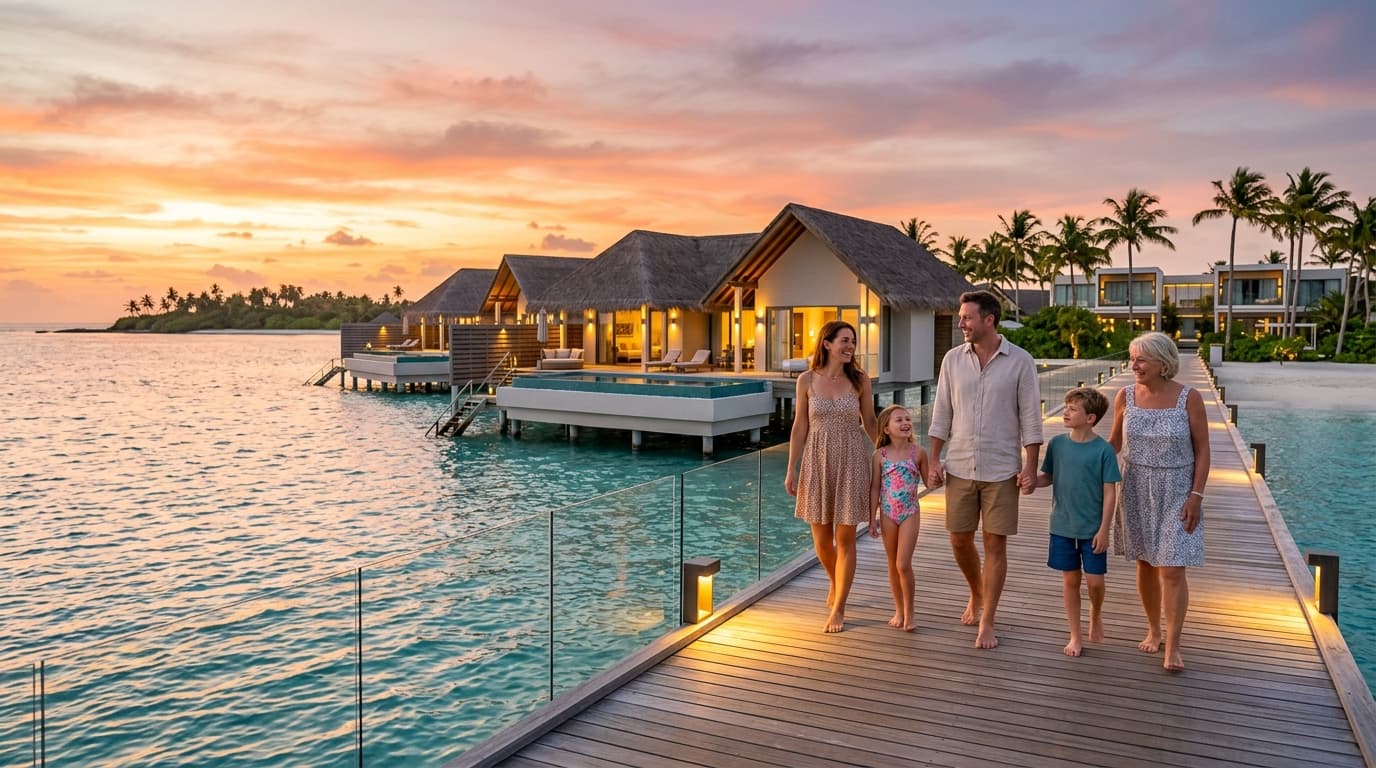
Family resorts in Maldives are absolutely worth it if you want turquoise water, easy snorkeling, and a vacation that feels special for every age group in your crew. The best picks balance kids clubs, villa size, transfer convenience, dining flexibility, and age policies so you’re not guessing after a long-haul flight.
If you’re planning a family trip in 2026, the smartest approach is to match the resort to your children’s ages, your tolerance for transfers, and how much structure you want from the property. We checked the current family-friendly offerings, official resort pages, and the on-the-ground traveler patterns that matter most, then built this guide to help you compare the top options side by side.
The Maldives can be dreamy for families, but it’s not one-size-fits-all. Some islands are perfect for babies and toddlers because they’re close to Malé and easy to reach by speedboat, while others are better for teens, multi-generational groups, or parents who want an all-inclusive setup with fewer surprise costs. This guide walks you through the best family resorts in the Maldives with practical advice, pricing context, and insider tips so you can book with confidence.
Quick Answer — The best family resorts in the Maldives at a glance
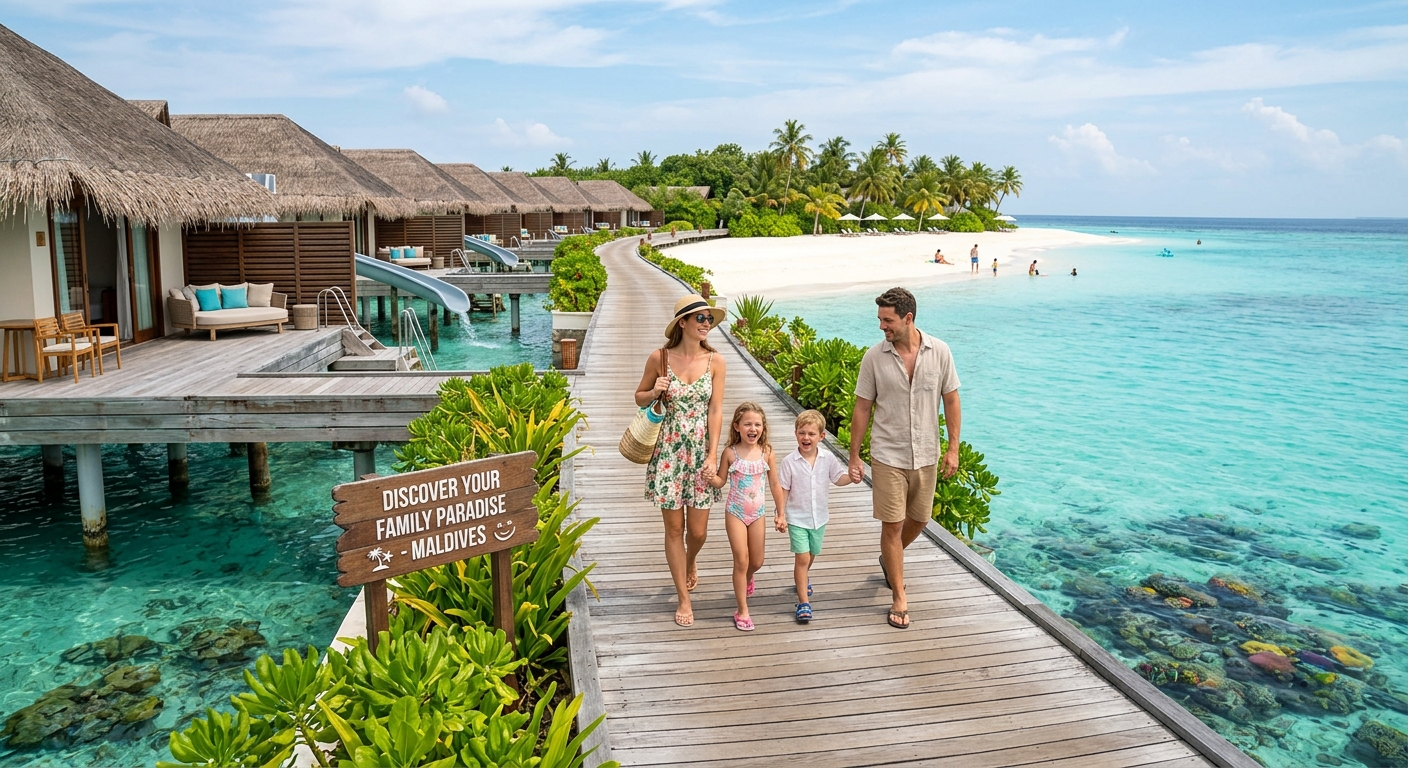
If you want the short version, Soneva Fushi, Four Seasons Resort Maldives at Kuda Huraa, and OZEN Reserve Bolifushi are among the strongest family resorts in Maldives for overall quality, service, and family programming. For speedboat convenience and easier logistics with young kids, Kurumba Maldives, Villa Nautica, and Centara Grand Island Resort & Spa Maldives are especially practical, while Niyama Private Islands and Shangri-La’s Villingili stand out for active teens and larger families.
The tradeoff is simple: the more remote the island, the more magical and private it feels, but the more complicated and expensive the transfer can be. If your children are little, or if you’re traveling with grandparents, a speedboat resort often makes the whole trip smoother. If your family wants premium experiences, larger villas, and a destination that feels like a full holiday ecosystem, the premium islands are worth the extra planning.
| Resort | Best For | Transfer | Price Band |
|---|---|---|---|
| Soneva Fushi | Standout kids programming, luxury families | Seaplane | Ultra-luxury |
| Four Seasons Kuda Huraa | Classic service, multi-age families | Speedboat | Luxury |
| OZEN Reserve Bolifushi | All-inclusive value at premium level | Speedboat | Upper luxury |
| Kurumba Maldives | First-time families, short stays | Speedboat | Upper-midrange |
| Centara Grand Island Resort & Spa Maldives | Family all-inclusive value | Seaplane + speedboat combo | Midrange value |
How to choose the right family resort in the Maldives
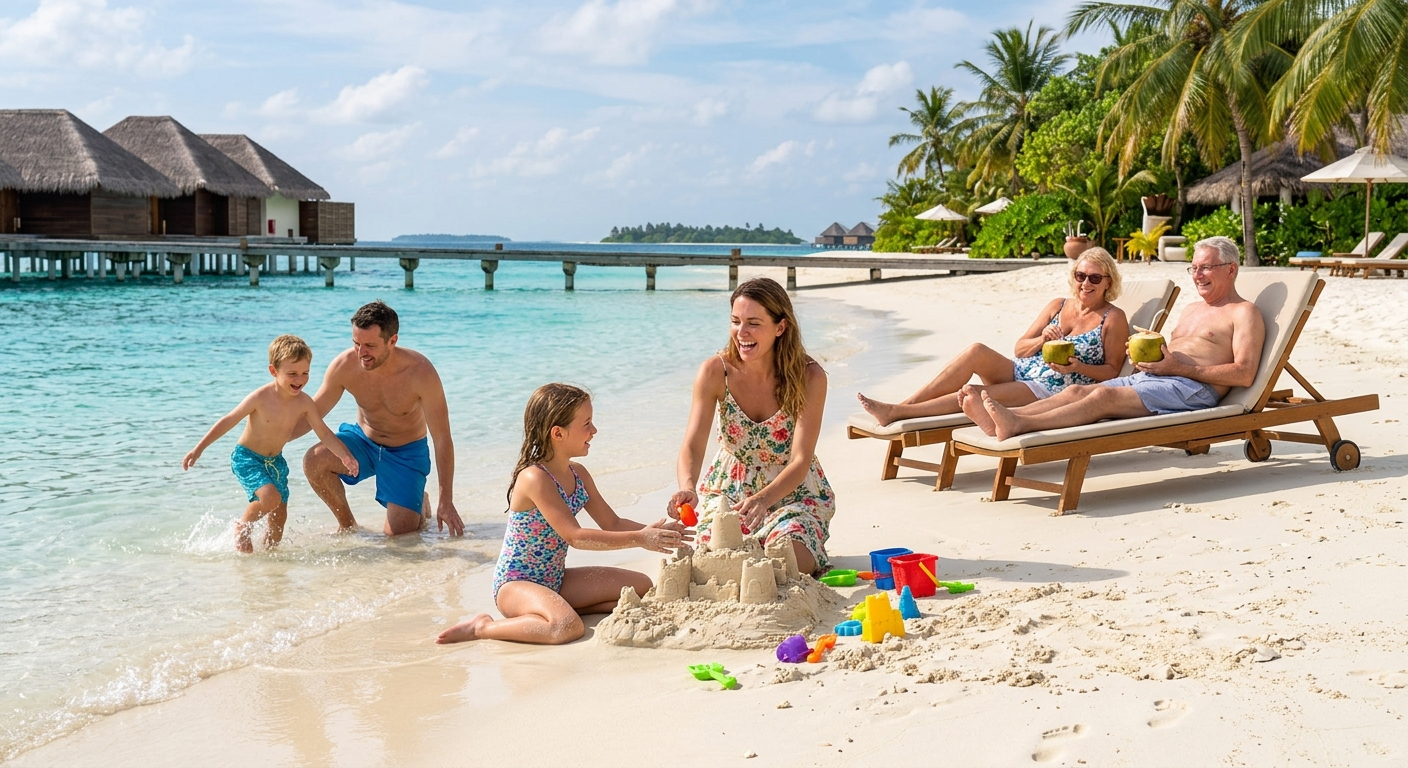
Choosing from the many family resorts in Maldives gets much easier when you stop thinking only about the prettiest villa and start thinking like a trip designer. The right property depends on your children’s ages, your appetite for transfers, your dining style, and whether you want a calm escape or a full menu of activities. We’ve seen families love the Maldives when they match those details well, and we’ve also seen trips go sideways when someone booked a remote overwater villa for a toddler without checking the resort’s practical rules.
As a local-style travel rule of thumb, the Maldives rewards planning. It’s not just about room photos; it’s about how you’ll get there, what your kids can actually do, how meals work, and whether the resort’s rhythm fits your family. Below we break down the factors that matter most so you can narrow the list quickly and avoid the usual mistakes.
Current-year planning also matters because family demand remains strong in 2026, especially around school holidays, and many top resorts are offering package deals, free child policies, and meal plan promotions that are worth checking on official resort sites before you commit. Think of this section as your booking filter: if the resort passes these tests, it’s worth a deeper look.
Start with your kids’ ages
Age is the first thing to get right, because a resort that feels magical for a 13-year-old may be awkward for a toddler, and vice versa. For babies and toddlers, you want easy transfers, beach villas, calm lagoons, and a room layout that gives parents some separation or at least enough space for naps and early bedtimes. For younger kids, the sweetest spots are resorts with kids clubs, shallow swim areas, and staff who genuinely enjoy families instead of just tolerating them.
School-age children usually want a bit more freedom, which means activity programs, marine life encounters, paddleboarding, snorkel gear, and maybe an evening movie or game room. Teens tend to care about Wi-Fi, surf, water sports, sports courts, and having enough space to not feel like they’re on a “little kids” trip. When we checked current family-friendly positioning across the Maldives, the resorts with flexible villas and multiple activity layers were the easiest wins for mixed-age groups.
It’s also important to verify child policies before booking. Some resorts set age bands for kids clubs, some charge for babysitting, and some activities have minimum ages or height requirements. If you’re bringing a baby, ask specifically about crib availability, bottle warming, high chairs, and whether your room is close to the restaurant or buggy route. That’s the sort of detail that can make the difference between a dreamy stay and a lot of logistical frustration.
Decide between speedboat and seaplane access
Transfer type is one of the biggest decision points for families, and it often determines whether the arrival day feels easy or exhausting. Speedboat resorts are usually closest to Malé and easiest for families with young children because there’s less waiting, fewer luggage handoffs, and no need to coordinate a scenic flight schedule. A speedboat transfer can feel like a simple extension of your arrival instead of another mini-flight within the trip.
Seaplane resorts, on the other hand, often offer more secluded, iconic Maldives scenery and a stronger “wow” factor. But they come with baggage limits, weather sensitivity, and transfer windows that may not line up with international arrivals perfectly. With small children, that can mean more moving parts, more waiting, and more fatigue after a long-haul flight from the US, UK, Canada, or Australia.
If you’re trying to decide, ask yourself whether you value convenience or isolation more. For babies, toddlers, and short stays, convenience usually wins. For older kids, a seaplane ride can feel like part of the adventure, especially if the resort itself has lots to offer. Either way, confirm the exact transfer cost in advance, because that can materially change the value of a resort.
Choose the right meal plan
Dining can quietly become one of the biggest costs on a family Maldives trip, which is why the meal plan matters so much. All-inclusive can be excellent value if your family snacks a lot, drinks soft drinks and juices all day, and plans to do most meals on the island. Full-board is often a sweet spot for families who know they’ll have breakfast and dinner covered but may want lunch flexibility or outside a package.
Half-board is often the most misunderstood option. It may look cheaper at booking, but once you add lunch, drinks, and children’s snacks, your daily spend can climb quickly, especially at luxury properties. À la carte can work if the resort has reasonable prices or if you’re staying only a few nights, but for a family of four or five, it’s worth doing the math before you book. We’ve seen many families realize too late that the “great room rate” wasn’t such a bargain after dining and transfer costs were added in.
Ask exactly what’s included in the package, because not all all-inclusives are equal. Some include premium drinks and select excursions, while others exclude specialty restaurants, imported spirits, or high-end items on the menu. For kids, check whether children’s meals are included, whether there are early dining options, and if the minibar is restocked in a way that actually helps families instead of becoming another bill. Those details are where real value lives.
Match the resort to your vacation style
Families don’t all want the same kind of Maldives holiday, and that’s why the best resort for your friend may be wrong for you. If you want a quiet, restorative escape with a few beautiful activities, you’ll likely prefer a calmer resort with great villas and slower pacing. If you want a trip where the kids are always busy and you’re moving between beach, marine center, and dinner, an activity-rich island will suit you better.
Luxury families often value service, privacy, and wow-factor experiences, while value-led families care more about total cost and logistics. First-timers usually do best at a resort with simple transfers, predictable dining, and easy-to-understand layouts. Multi-generational groups should prioritize space, flexible sleeping arrangements, and enough diversity in activities that grandparents, parents, and kids all get something they love.
A useful trick is to build your shortlist around the “slowest person in the group.” If one child hates bumpy transfers or one grandparent can’t handle long buggy rides, your best resort is the one that minimizes friction for them too. The Maldives is at its best when the whole family can relax, not when one person is constantly adapting.
Best family resorts in the Maldives — detailed top picks
This ranking is designed around real family priorities: how easy it is to get there, how good the kids programming is, whether the villas actually fit a family, and how much value you get for the money. We balanced ultra-luxury standouts with more accessible options so this guide helps both splurge travelers and budget-watchers. Where possible, we referenced official resort websites and current 2026 family offerings, because amenities and policies can shift over time.
Below are the ten resorts we think are most worth your attention if you’re comparing family resorts in Maldives today. Some excel because they’re easy and practical, others because they are genuinely exceptional for kids, and a few because they manage to offer a premium experience without the worst cost shock. If you’re overwhelmed, start by picking the resort that best matches your children’s ages and your preferred transfer type.
We also included notes on who each resort is best for, because “family-friendly” can mean very different things. A resort with giant overwater villas and a polished kids club may be ideal for a family with older children, while a compact speedboat island may be the smarter choice for toddlers and a short five-night escape. That distinction matters more in the Maldives than almost anywhere else.
Soneva Fushi — best for standout kids programming and all-ages experiences
Soneva Fushi is one of the most famous family resorts in Maldives for a reason: it feels playful, premium, and genuinely imaginative. The island is spacious, the villas are huge, and the whole experience is built around freedom, discovery, and low-stress luxury. Families love that there is so much to do without the resort ever feeling crowded or overly formal.
The kids club, often called The Den, is a major draw because it’s not just a basic childcare room. It’s one of the biggest and best-designed in the Maldives, with themed spaces, creative programming, and plenty of indoor/outdoor options for different ages. This makes it especially strong for school-age kids, though the room product and calm environment also work nicely for parents of younger children who want space and privacy.
Transfer-wise, Soneva Fushi typically involves a seaplane connection, so it is not the simplest arrival. That said, many families consider the transfer part of the adventure, and the payoff is a more remote, quintessential island escape. Dining is a highlight too, with memorable restaurants, chocolate rooms, and ice cream stops that kids tend to remember long after the trip. If you want a “we’ll talk about this vacation for years” type of family holiday, this is a top-tier choice.
Four Seasons Resort Maldives at Kuda Huraa — best for classic luxury with strong family service
Four Seasons Resort Maldives at Kuda Huraa is one of those rare properties that feels both luxurious and deeply practical for families. It’s close to Malé, which means the speedboat transfer is simple and much less tiring than a faraway seaplane route. That convenience alone makes it a favorite for families with younger children, tight trip windows, or grandparents in the mix.
The service is the real star here. Four Seasons properties tend to excel at making families feel anticipated rather than accommodated, and Kuda Huraa is no exception. You’ll find family-friendly villas, thoughtful dining, help with babysitting, and a range of marine activities that work beautifully for mixed ages. It’s also a very comfortable choice if you want a polished luxury feel without a sprawling island that demands constant buggy rides.
For families who like soft adventure, Kuda Huraa is especially strong. The lagoon setting, snorkel opportunities, and water sports make it easy to keep school-age kids engaged, while parents can still enjoy a calm, elegant experience. It’s one of the best family resorts in the Maldives if you want classic luxury, straightforward logistics, and very little friction from arrival to departure.
OZEN Reserve Bolifushi — best for all-inclusive families who want premium value
OZEN Reserve Bolifushi is one of the strongest all-inclusive family resorts in Maldives if you want the feel of a premium escape without worrying about every individual meal bill. The all-inclusive concept here is a real selling point because it simplifies budgeting in a destination where extras can add up quickly. For families, that clarity can be a huge relief.
The resort is also attractive because it combines luxury with family convenience. Villas are large, many categories are suitable for families, and the service style is geared toward making life easier instead of more complicated. Dining variety matters a lot on family trips, and OZEN tends to appeal to parents who want a broad selection without constantly checking the menu for hidden charges. Current-year package options often make it worth comparing directly against room-only pricing.
Its speedboat transfer is another plus, especially for children who get restless during travel. If your family wants to maximize swimming, eating, relaxing, and repeating with minimal logistical stress, this resort is a top contender. It’s a particularly good match for families who like the predictability of all-inclusive pricing but still want a polished, upscale environment.
Anantara Kihavah Maldives Villas — best for larger villas and experience-rich stays
Anantara Kihavah Maldives Villas stands out for families who want a richer set of experiences and room to spread out. The villas are among the most appealing for larger family configurations, and the resort has a reputation for attentive service, memorable dining, and activities that appeal to different age groups. It’s a good option if you want the Maldives to feel like more than just a beach stay.
One of the most talked-about features is the overwater observatory, which adds a unique educational and family-friendly layer to the trip. Kids who are curious about the sky, stars, or marine life often love the extra sense of discovery. The resort’s setting in Baa Atoll also gives families a strong nature-and-ocean vibe, which pairs nicely with snorkeling, boat outings, and relaxed beach days.
Transfer logistics are less simple than the near-Malé speedboat resorts, but many families accept that because the payoff is space, scenery, and a more immersive island experience. If your children are old enough to appreciate activities beyond a basic kids club, Anantara Kihavah can feel especially rewarding. It’s a strong choice for families who want their resort to be part of the adventure, not just a place to sleep.
The Westin Maldives Miriandhoo Resort — best for wellness-minded families and easier value positioning
The Westin Maldives Miriandhoo Resort is a useful middle-ground option for families who want a polished brand name, beach access, and a wellness-forward atmosphere without jumping all the way into ultra-luxury pricing. The vibe is calmer and more restorative than some of the resort-heavy playground islands, which can be appealing if your family likes a less hectic pace. It’s a good fit for travelers who value sleep, space, and simple routines on vacation.
The beach and lagoon access make it family-friendly in a practical sense, and the room layouts can work well for couples traveling with one or two children. Westin’s broader wellness positioning also helps if you want a vacation where the adults can relax while the kids still have easy ocean access. It may not have the same headline-grabbing kids-club reputation as the very top tier resorts, but it can represent good value when you compare the total experience against price.
Families looking for a quieter island, decent amenities, and a brand they know from other destinations often appreciate Westin’s consistency. It’s especially appealing for those who want a solid Maldives experience without feeling like they’ve signed up for an overcomplicated luxury production.
Niyama Private Islands Maldives — best for teens and active families
Niyama Private Islands Maldives is one of the best family resorts in Maldives for teens because it offers more of the action and independence older kids actually want. Between watersports, surf, dining variety, and the sense of having a whole private playground to explore, Niyama feels energetic in a way that keeps older children interested. Parents who worry that a resort will be “too babyish” for teenagers often land here.
The resort’s split-island feel helps create variety, and the experience tends to support more spontaneous activity than many quieter islands. Teens can spend time in the water, try new sports, and still enjoy a design-forward luxury environment. It’s also a place where adults can have a sophisticated meal or spa break while older kids are occupied without needing constant supervision. That balance is rare and valuable in the Maldives.
Transfer logistics are more involved than the quick speedboat resorts, but if your family has older children and a higher activity appetite, the payoff is worth considering. Niyama is a strong example of a resort that doesn’t just accommodate families; it gives them distinct layers of experience. For families with teens, that matters more than any kids club brochure.
Shangri-La’s Villingili Resort & Spa — best for space, privacy, and multi-generational travel
Shangri-La’s Villingili Resort & Spa is particularly appealing for multi-generational families who need privacy and plenty of room to breathe. The island is larger than many Maldives resorts, which creates a different feel: more paths, more exploration, and more variety in how each day unfolds. That can be a big advantage when you’re traveling with grandparents, parents, and children together.
Families often appreciate the bike-friendly feel, nature-forward layout, and the sense that the island is not just a collection of villas but a real destination. If your group includes people with different energy levels, this resort can be especially useful because everyone can spend the day differently and still regroup for dinner. The larger physical footprint also tends to make the stay feel less cramped, which is good when you’re dealing with multiple generations or siblings of different ages.
Transfer logistics are more complex than the easiest near-Malé resorts, but the space and privacy can make it worthwhile. For families that value independence, scenic exploration, and a bit of old-school resort grandeur, Shangri-La’s Villingili is a strong candidate that often gets overlooked in quick “best of” lists.
Villa Nautica (Paradise Island) — best for speedboat convenience and family value
Villa Nautica, formerly known widely as Paradise Island, is one of the most practical family resorts in Maldives if you want a speedboat transfer and a broad resort package that doesn’t require a complicated arrival. Convenience matters more than many first-time travelers realize, and this island is a great example of how a simpler transfer can make the whole trip more enjoyable, especially after a long overnight flight.
The resort has long been popular with families because it is easy to access, lively enough to avoid boredom, and positioned in a way that makes short breaks more feasible. Families looking for a good mix of beach time, water activities, and decent room value often find it a smart compromise. It doesn’t lean quite as hard into the ultra-luxury spectacle as some of the top-tier properties, but that can be an advantage if you care more about total trip quality than champagne extras.
For budget-conscious families or those combining the Maldives with another destination, Villa Nautica can make a lot of sense. It’s a “less hassle, still beautiful” choice, and in a destination where logistics can be the biggest hidden cost, that counts for a lot.
Kurumba Maldives — best for first-time Maldives families and short stays
Kurumba Maldives is one of the classic first-time family resorts because it keeps things easy. It’s among the closest resort islands to Malé, which means the transfer is simple and the arrival day is far less tiring than at far-flung atolls. That makes it especially appealing for families with babies, toddlers, or children who struggle with long travel days.
The resort is also a smart choice for shorter stays, because you’re not “wasting” time on complicated connections. If you only have four or five nights, a quick speedboat transfer can be a serious advantage. Families tend to appreciate the straightforward layout, accessible atmosphere, and the ability to settle in quickly rather than navigate a larger, more remote property.
Kurumba may not have the most headline-grabbing ultra-luxe package on this list, but it often delivers very good overall value for families. If you want to test the Maldives with minimal stress, or you’re booking a trip for a milestone holiday and want to keep the logistics manageable, Kurumba belongs high on your shortlist.
Centara Grand Island Resort & Spa Maldives — best for all-inclusive family value
Centara Grand Island Resort & Spa Maldives is one of the strongest value-led family resorts in Maldives, especially if all-inclusive matters to your budget. Families often choose it because they can better predict costs while still enjoying a genuine island escape with lots of water activity and a friendly atmosphere. That cost clarity is particularly helpful for larger families where meal spending can escalate fast.
The resort is family-friendly in the practical sense: there are room types that suit children, activities that fill a day, and meal-plan options that reduce the stress of constant credit-card decisions. For families who want a solid Maldives vacation without paying ultra-premium rates, Centara is frequently in the “smart money” category. It’s not always the flashiest choice, but it can be one of the most sensible.
For parents comparing luxury and value, this is a good reminder that family success in the Maldives doesn’t always mean picking the most famous name. Sometimes the best resort is the one that makes your total trip easier to enjoy, and Centara does that well for the right kind of traveler.
Resort comparison table: best by category, age group, and budget
If you’re the kind of planner who wants to compare family resorts in Maldives quickly, this matrix is for you. We built it to surface the decision fields that actually matter: child age fit, transfer type, meal style, room capacity, and price band. It’s intentionally scannable so you can shortlist resorts without reading every detail twice.
Use this table as a first pass, then jump back into the resort profiles that match your trip style. AI Overviews and search snippets tend to love clear comparison data, but the real value is for you: it turns a long list into a practical decision tool. We also included value context because the Maldives often feels more expensive than expected once transfers and meals are added in.
Remember that pricing changes by season, room type, and booking window. The categories below are directional rather than absolute, but they’re good enough to guide your research before you request quotes or check official resort offers.
| Resort | Age Fit | Transfer | Meal Plan | Price Band |
|---|---|---|---|---|
| Soneva Fushi | Kids, teens, multi-gen | Seaplane | Half-board / full-board / custom | $$$$$ |
| Four Seasons Kuda Huraa | Babies to teens | Speedboat | Half-board / full-board | $$$$ |
| OZEN Reserve Bolifushi | Toddlers to teens | Speedboat | All-inclusive | $$$$ |
| Kurumba Maldives | Babies, toddlers, first-timers | Speedboat | Breakfast / half-board / full-board | $$$ |
| Centara Grand Island | Kids and families on value | Seaplane + speedboat | All-inclusive | $$$ |
Best by child age band
For babies and toddlers, the easiest resorts are usually the ones with quick access, beach villas, and quieter logistics. Kurumba Maldives, Four Seasons Kuda Huraa, and Villa Nautica tend to make the strongest practical sense because you avoid a lot of transfer fatigue and can settle in faster. Parents with very young children often value predictable mealtimes, shade, and rooms that don’t require constant buggy rides more than anything else.
For school-age kids, Soneva Fushi and Centara Grand are appealing because there is more to do beyond the beach. Kids clubs, creative activities, snorkeling, and water sports all matter here. Tweens and teens usually need even more stimulation, which is why Niyama Private Islands and Soneva Fushi stand out for their broader activity mix and slightly more independent-feeling environment.
Multi-generational groups should look for spacious villas and a resort that can balance quiet corners with shared experiences. Anantara Kihavah and Shangri-La’s Villingili are especially good examples of that balance. They’re the kinds of properties where each generation can enjoy the same island without all needing the same schedule.
Best by transfer type
Speedboat resorts are generally the easiest choice for families because they reduce the number of travel steps after your international flight. Four Seasons Kuda Huraa, Kurumba Maldives, OZEN Reserve Bolifushi, and Villa Nautica are all strong examples. If you’re traveling with a baby, a toddler, or a child who gets motion sick, this convenience is a major win.
Seaplane resorts offer more dramatic scenery and can feel more “classic Maldives,” but they add time, baggage rules, and weather dependence. Soneva Fushi and Anantara Kihavah are more remote, and that can be part of the appeal if you’re seeking privacy and top-end experience. Domestic flight combinations, which are common for far-flung atolls, are usually best when the resort is exceptional enough to justify the extra logistics.
For families, the best transfer type is not always the prettiest one. It’s the one that keeps everyone calm, fed, and ready to enjoy the holiday instead of recovering from the holiday’s arrival day. That distinction is worth money.
Best by budget tier
In the ultra-luxury bucket, Soneva Fushi and Anantara Kihavah are the kinds of resorts where you pay for space, service, and experience depth. In the premium luxury tier, Four Seasons Kuda Huraa and OZEN Reserve Bolifushi often represent the best blend of quality and family ease. In the upper-midrange/value tier, Kurumba Maldives, Villa Nautica, and Centara Grand are the most practical names to compare.
If you’re budget-conscious, your biggest savings often come from transfer simplicity and meal-plan strategy rather than just room rate. A “cheaper” villa can become more expensive once you add seaplane transfers, premium drinks, and à la carte meals. This is why families should compare total trip cost, not headline nightly price alone.
Think of the budget tiers as a total experience decision. A family of four might find that a midrange all-inclusive resort is a better value than a top-tier room-only option once all the extras are counted. That’s especially true during school holiday weeks.
Best by vacation style
For relaxers, the best resorts are the ones with smooth service, easy access, and beautiful but uncomplicated days. Four Seasons Kuda Huraa and Kurumba are strong here. For activity seekers, Soneva Fushi, Niyama, and Anantara Kihavah offer more layers of adventure and discovery.
Foodies tend to gravitate toward Soneva and Anantara because dining is often a core part of the experience rather than just a practical necessity. Value seekers should look closely at Centara Grand, Villa Nautica, and Kurumba, especially when package offers are live. First-time visitors usually do best with a resort that minimizes transfer complexity and spells out child policies clearly.
There is no “best” resort in the abstract. There is only the best resort for your family’s pace, ages, and budget. Once you define those three things, the list gets much shorter and much more useful.
Kids clubs and family activities
One of the biggest misconceptions about family resorts in Maldives is that the kids will simply “play on the beach” and that will be enough. In reality, the best family properties build a whole activity ecosystem around younger travelers, because kids need variety, structure, and some climate relief during the hottest part of the day. A strong kids club is often the difference between a resort that looks family-friendly in photos and one that truly works for a family holiday.
We’ve found that the resorts that take children seriously tend to do better across the board. They have thoughtful indoor spaces for rain or heat, supervised programming, age-appropriate outings, and staff who know how to pace the day around naps and meals. That matters whether you’re traveling with a three-year-old or a 13-year-old, because not every day in the Maldives can revolve around swimming.
Families also need backup plans. Even in the dry season, the sun can be intense, the ocean can be too wavy for little swimmers, and kids get tired. The resorts that offer indoor fun, marine education, and flexible scheduling create more happy memories and fewer meltdowns. That’s why this section matters almost as much as villa size.
What a great kids club includes
A genuinely great kids club in the Maldives should feel more like a mini destination than a babysitting corner. Look for supervised age groups, trained staff, crafts, storytelling, marine education, nature walks, and activities that rotate enough to prevent boredom. The best clubs often include both structured and flexible play, because some children want organized games while others want to wander, build, and create at their own pace.
Indoor backup space matters more than many families realize. If it’s too hot, raining, or windy, a kids club with games, books, movie options, and air-conditioned comfort becomes a lifesaver. Ask whether the club offers age-specific sessions or if children are grouped too broadly, since a six-year-old and a twelve-year-old usually want very different things from a resort program.
From experience, the resorts that include marine-themed learning or island nature activities tend to feel most memorable. Kids don’t just “keep busy”; they learn that the Maldives is more than a pool with a view. That sense of wonder is part of what makes a family trip here special.
Marine and water activities families can book
Water activities are a huge part of the Maldives experience, but the right ones depend on your children’s confidence and age. Snorkeling in calm lagoons is the obvious favorite, and some resorts offer guided family snorkels that make beginners feel much safer. Dolphin cruises, sunset cruises, and glass-bottom excursions can also work well because they involve more viewing than physical effort, which is ideal for mixed-age groups.
Paddleboarding and kayaking are often family winners, especially in shallow lagoon settings. Many resorts also offer banana boat rides, fun tubes, or gentle motorized water-sports options for older kids and teens. The trick is choosing experiences that match your children’s energy level instead of trying to do everything in one day. The best family trips leave time to recover between adventures.
One thing we always recommend is checking the marine center or dive center schedule when you arrive. That’s often where you’ll find family-friendly reef walks, educational sessions, or special sightings that aren’t advertised as loudly online. In the Maldives, the ocean is the main theme park, and the best resorts know how to turn it into a family memory instead of just a swim zone.
Land-based activities for rainy or hot days
Not every family day in the Maldives will be spent in the sea, and that’s perfectly fine. The resorts that plan for hot afternoons or weather changes usually offer cooking classes, art activities, movie nights, indoor games, and local culture experiences. These are especially important for younger children who may not tolerate long stretches in the sun.
Land-based activities also help the resort feel more balanced. If your family is staying for a week, you’ll probably want a rhythm that mixes ocean time with something else. A cooking class, shell craft workshop, or family trivia night can break up the day and create the kinds of small memories kids talk about later. It also gives parents a breather from “entertainment mode.”
Good resorts understand that family fun should not depend solely on weather. If the island offers enough non-water activities, then a rainy afternoon becomes a bonus, not a problem. That’s one of the reasons some resorts rank much higher for family satisfaction than others.
Teen-friendly activities that go beyond the kids club
Teens are often the hardest age group to please on a family resort trip because they’re too old for the obvious kids program and not always interested in purely “family” activities. That’s why the best resorts for teens offer watersports, surf, fitness, sports courts, and at least some freedom to explore independently in a safe setting. Niyama is especially good here because it feels active and contemporary.
Teens also appreciate Wi-Fi, music-friendly spaces, and meal options that don’t feel overly formal. If they can spend the afternoon on a board, in the water, or hanging out with siblings without feeling babyish, they’re much more likely to enjoy the trip. Resorts that understand this usually have better teen satisfaction than properties that stop thinking about children once they age out of the kids club.
For families with older kids, ask the resort about minimum ages for surf lessons, motorized watersports, and fitness facilities. Sometimes the best family resort is simply the one that lets teens feel a little grown-up while still keeping the experience safe and relaxed.
Transfers explained — speedboat vs seaplane vs domestic flight
Transfers are a big deal in the Maldives, and they can shape your entire experience more than the resort brochure suggests. A beautiful island can feel inconvenient if it takes multiple steps to reach it after a long international flight. That’s why families should always look at transfer logistics as part of the resort decision, not as a footnote.
For parents, the best transfer is the one that reduces waiting, minimizes luggage stress, and gets children to the room before they’re overtired. Speedboat, seaplane, and domestic flight combinations each have their place, but they are not equal for every family. The right choice depends on the child’s age, the trip length, the arrival time, and your budget.
Always ask the resort for the exact transfer process before booking, including timing, baggage limits, and whether you’re likely to miss a same-day connection after your international arrival. A few extra questions here can save hours later.
Speedboat transfers
Speedboat transfers are usually the easiest and most family-friendly option because they are simple, fast, and less weather-sensitive than seaplanes. Resorts close to Malé like Four Seasons Kuda Huraa, Kurumba Maldives, OZEN Reserve Bolifushi, and Villa Nautica benefit from this convenience. After a long-haul flight, less handling is almost always better, especially when you’re wrangling strollers, diaper bags, and sleepy kids.
Speedboats also make shorter stays more attractive. If you only have four or five nights, losing a half-day to a complicated transfer can feel expensive in time as well as money. For babies and toddlers, the lower stress of a boat transfer is often worth more than the scenic novelty of a seaplane. It’s a practical choice that makes the holiday feel more immediate.
That said, speedboats can still be bumpy depending on weather and sea conditions. If your children are motion sensitive, it’s worth carrying snacks, water, and perhaps motion-sickness remedies approved by your doctor. But in the family Maldives world, speedboat is still often the default best answer.
Seaplane transfers
Seaplane transfers are iconic and visually unforgettable, which is why many travelers associate them with the classic Maldives dream. They’re especially common for remote atoll resorts like Soneva Fushi and Anantara Kihavah. The upside is a dramatic scenic arrival and access to islands that feel beautifully isolated.
The downside is complexity. Seaplanes have baggage limits, can involve waiting at the terminal, and may run on time windows that don’t perfectly align with your international flight. Families with small children should think carefully about whether that extra travel layer is worth it, especially if the kids are already tired. In some cases, yes, absolutely; in others, a simple speedboat arrival is more sensible.
We recommend confirming whether the resort coordinates transfers directly or through a third-party partner, because the airport experience can vary. Ask about lounge access, snack availability, and what happens if your incoming flight is delayed. Those small details matter more when your whole family is waiting.
Domestic flight + speedboat combinations
Some farther islands require a domestic flight followed by a speedboat, and that can be a perfectly fine solution if the resort experience justifies it. This setup is more common for resorts that are physically farther from Malé but still want to be accessible within the Maldives archipelago. For families, the main issue is that every extra connection increases the chance of fatigue and luggage stress.
Domestic flight combinations can be worth it for extended stays, but they’re rarely the simplest option for very young children. You’ll want a bigger connection buffer and clear instructions from the resort about baggage handling. The payoff is usually a quieter, more remote island with a different sense of scale than the near-airport properties.
If you are considering this kind of transfer, ask whether the resort offers priority handling for families or coordinated luggage transfer from the international terminal. That can make a surprisingly big difference when you’re traveling with more than one child.
How to reduce transfer stress
The easiest way to reduce transfer stress is to plan the arrival day as lightly as possible. Book flight arrivals that leave enough buffer for customs, baggage claim, and transfer coordination, and try not to stack your arrival with a same-day late lunch reservation or excursion. Families do best when the day is intentionally slow.
Pack your hand luggage with swimwear, snacks, medicines, a change of clothes, and any comfort items your kids need. That way, if luggage takes time to arrive, the whole family can still settle in without a panic. It also helps to ask the resort in advance whether they can meet you at the airport and guide you through the process, especially if this is your first Maldives trip.
Finally, confirm the return transfer time the day before departure. Families often focus on arrival and forget that departure day can be just as hectic if the transfer schedule is tight. A little advance clarity goes a long way.
Room types and villa capacity for families
Room layout is one of the most underappreciated parts of booking family resorts in Maldives. A beautiful villa can become impractical fast if there isn’t enough sleeping space, storage, or privacy for parents and children. The best family stays happen in villas that feel designed for real family life, not just magazine photos.
For many families, the difference between a good and great Maldives trip comes down to whether everyone can sleep well. That means thinking about bed configurations, blackout options, climate control, pool safety, and whether the villa is beachside or overwater. It also means checking how the resort handles child occupancy rules, rollaway beds, and interconnecting setups.
Because Maldives properties are often highly specific about villa types, it’s smart to email the resort or ask your booking advisor to confirm the exact room arrangement before you pay. That’s especially important for families with two adults and two or three children, or for groups that need separate sleeping zones.
Family villas, suites, and two-bedroom options
Family villas and two-bedroom options are the most comfortable choice for longer stays because they give everyone a little breathing room. Parents can unwind after bedtime, older kids can have more space, and the whole trip tends to feel less cramped. Resorts like Soneva Fushi, Anantara Kihavah, and Shangri-La’s Villingili often do especially well here because larger layouts are part of the appeal.
Suites can work too, but only if the sleeping arrangements are genuinely family-friendly. In many resorts, “suite” simply means larger living space, not necessarily a practical second room for children. Ask specifically whether the villa has a separate bedroom, a loft, or a living room that can be closed off for sleeping. Those details matter a lot when one child wakes early or another needs a nap.
For multi-generational trips, two-bedroom or even multi-villa arrangements can be worth the extra spend. The Maldives can feel very intimate, but if your group is larger, a bigger footprint is what makes the stay feel relaxed instead of crowded.
Overwater vs beach villas with children
Beach villas are generally the safer and easier choice for younger children because they offer direct sand access and fewer worries about open water around decks. They’re also more convenient if your kids want to run in and out of the room all day. For toddlers and first-time family travelers, beach villas are often the better default.
Overwater villas are iconic, but they need more caution when children are small. You’ll want to check railing design, ladder access, deck safety, and whether the resort has any age restrictions or recommendations. Some families love overwater villas with older kids, especially if the children are confident swimmers and the resort layout is secure. For babies and toddlers, though, beach villas are usually the more sensible choice.
The safest approach is to match the villa type to the age and behavior of your children rather than to the most photographed room on Instagram. That’s not less luxurious; it’s just smarter family travel.
Bedding arrangements and child occupancy rules
Maldives resorts vary quite a lot in how they handle children’s bedding. Some offer sofa beds, some provide rollaways, and others have dedicated family rooms or interconnecting villas. The best setup depends on whether your children can share a bed comfortably and whether you want to preserve adult sleeping space.
Always confirm age-based occupancy rules before booking, because some properties have limits on how many children can stay in certain categories or charge supplement fees for extra bedding. This is particularly important during peak travel periods, when availability gets tight. It’s also wise to ask whether cribs, high chairs, and children’s amenities are complimentary or chargeable.
If you’re booking through a travel advisor or direct with the resort, get the confirmation in writing. That avoids surprises at check-in and helps ensure the resort is actually prepared for your family’s configuration.
Accessibility and stroller-friendliness
Accessibility in the Maldives can be excellent at the right resort, but it can also be inconvenient if the island is very spread out or requires lots of buggy transfers. Families with strollers, grandparents, or anyone with mobility concerns should ask about paths, buggy service, ramps, and step-free access before booking. The most beautiful room is not much fun if reaching breakfast feels like a workout.
Speedboat-access resorts often win on simplicity, but accessibility within the island still matters. Some villas are closer to restaurants and the kids club, while others are better for privacy but less convenient for daily movement. Ask for a room location that minimizes the need for stairs or long walks if that’s important to your group.
For families with mobility needs, communication is key. Resorts are usually accommodating when they know in advance, but they can’t arrange the right villa or transport if they don’t know what you need.
Dining and all-inclusive notes
Dining is where a lot of Maldives family budgets go off the rails, so it’s worth giving this section real attention. A resort may look affordable at the nightly rate level and still end up expensive once breakfast, lunch, dinner, snacks, and drinks are added. That’s why understanding the difference between all-inclusive, full-board, half-board, and à la carte can save real money.
Families also need flexibility around mealtimes. Children get hungry at odd moments, and parents often want early dinners or easier buffet options. A good family resort will handle that smoothly, but not every island does. If food matters a lot to you, it should be part of the shortlisting process, not an afterthought.
We always recommend checking the official dining pages and package terms before booking. Many resorts offer seasonal promotions in 2026 that change the calculation enough to affect the final choice.
All-inclusive vs full-board for families
All-inclusive can be fantastic for families because it makes the holiday easier to budget and removes a lot of daily decision-making. Resorts like OZEN Reserve Bolifushi and Centara Grand Island are especially compelling because they package a lot into one price. That can be a lifesaver when you’re traveling with children who snack frequently or when you simply want to relax without constantly watching the bill.
Full-board can also be excellent if you know you’ll be mostly on the island and want flexibility with drinks or certain extras. For some families, full-board is the better value because they don’t drink much and prefer to keep lunch light. Half-board is the trickiest option, because it seems moderate but often leads to higher final spending than expected.
To compare plans properly, look at the total trip cost, not just the room. Ask whether the plan includes children’s meals, premium drinks, and specialty restaurants. Those details make a huge difference in family value.
Kid-friendly menus and picky-eater strategies
The Maldives is not a place where you want to discover that your kids only eat two things and the resort restaurant closes early. The good news is that most family-friendly resorts are used to picky eaters and can handle simple meals, but it still helps to plan ahead. Buffets, snack bars, and flexible ordering windows are usually the easiest supports for families.
One of the best strategies is to ask about early dining times, kids’ menus, and whether the chefs can prepare simple pasta, rice, grilled proteins, or plain vegetables. If you’re traveling with a toddler, ask whether the resort can help with purees or warmed milk. Small requests can make a huge difference in daily comfort.
Families often feel better when the resort confirms food flexibility before arrival. That way, your holiday doesn’t become a hunt for acceptable mac and cheese at 8:30 p.m. on a sleepy child’s schedule.
Special diet and allergy support
If anyone in your family has allergies or a special diet, make sure the resort knows before arrival. The Maldives has many high-quality kitchens, but they still need time to prepare safely. Ask whether the resort can accommodate gluten-free, dairy-free, vegetarian, vegan, halal, or other needs, and whether these requests should be repeated at each meal.
It’s smart to bring a written allergy note with exact wording and emergency instructions if needed. If your child has a severe allergy, confirm whether the resort has medical support, whether the kitchen is trained for cross-contact precautions, and whether you should bring backup food. These questions are not overcautious; they’re responsible travel planning.
A resort that answers these questions clearly is usually a better fit for families overall, because it shows they understand that peace of mind is part of the holiday experience.
Snack access, minibar policies, and meal timing
Snacks matter more with kids than adults often expect. A resort that offers easy snack access, flexible minibar restocking, or simple in-villa service can make family life much smoother. This is especially true for younger children who need food at odd times or for long days spent swimming and exploring.
Minibar policies vary widely. Some all-inclusive plans cover more than others, and some room categories receive more generous replenishment. Ask what snacks and drinks are included, what counts as premium, and whether you can request extra items for children. That information is especially useful if your family likes to keep the room stocked between meals.
Meal timing also matters. Early dinners, room service availability, and breakfast opening times can all affect the quality of a family stay. The resort that gets these small things right often feels dramatically better than the one with a more glamorous brochure but less practical service.
Age policies, babysitting, and safety
Age policies can make or break a family trip, especially for parents traveling with infants or very young children. Some resorts have excellent facilities but set age minimums for kids club participation, watersports, or certain villa categories. Others are more flexible but may have fewer structured services. Knowing these rules up front is essential.
Babysitting and nanny services are another key part of the decision. Families often want a few hours for spa time, a romantic dinner, or simply a break, and the quality of childcare options varies. We always advise confirming how babysitting is arranged, whether it’s in-room or at a children’s center, and what qualifications or scheduling rules apply.
Safety is equally important, especially around water and sun exposure. The Maldives is beautiful, but it’s still a marine environment, and parents should plan accordingly. Good resorts make this easy; great ones make you feel supported at every step.
Minimum ages for kids clubs and activities
Kids club age limits differ from resort to resort. Some clubs welcome toddlers with parent supervision, while others are geared toward children four or five and up. Teens often have separate programs or social spaces, and water-based activities may have even stricter minimums. This is why you should never assume “family-friendly” means all ages are automatically accepted.
Age policies matter because they affect both planning and value. If you’re traveling with a two-year-old, a resort that only fully activates the kids club at age four may not offer much direct childcare support. On the other hand, a property with baby-friendly accommodations and strong parents’ services can still be an excellent fit even without a structured toddler program.
Before booking, ask for the resort’s latest child policy document or official family page. That’s the cleanest way to avoid disappointment and ensure the resort is a true match for your child’s stage.
Babysitting and nanny services
Babysitting can be a huge advantage on a Maldives trip because it lets parents enjoy a spa treatment, an adult dinner, or a sunset cruise. Some resorts provide babysitting on request, while others may offer a more formal nanny service or a babysitter roster with advance booking. The earlier you ask, the better your chances of getting the timing you want.
Ask whether childcare is in-room or at a supervised facility, whether there is an hourly charge, and how far in advance you need to reserve. Some properties are exceptionally family-oriented and can make it feel easy; others treat babysitting as an add-on that needs careful scheduling. Neither is wrong, but the experience is very different.
For parents of babies and toddlers, even a few hours of reliable childcare can turn a nice trip into a restorative one. That’s why this service should be part of your booking comparison, not something you sort out after arrival.
Water safety and beach precautions
Water safety is a must in the Maldives because the environment is beautiful but unpredictable. Reefs, currents, and deep water can sit close to calm-looking sandbanks, so parents should stay alert even on resort islands. The best resorts have clear swimming zones, helpful staff, and gentle lagoons, but supervision still matters.
Sun exposure is another major concern. The tropical sun can be intense, and children burn quickly even on cloudy days. Bring high-SPF sunscreen, rash guards, hats, and water shoes if needed. A shady beach setup and early-morning or late-afternoon swims are much easier on everyone.
As a rule, beach villas are easier and safer for small children than overwater villas. If you do choose an overwater stay, make sure you understand the deck and ladder setup fully. Safety can absolutely coexist with luxury, but it should never be assumed.
Medical access and peace of mind
Most reputable resorts have some medical support or can coordinate help quickly, but families should still travel with insurance. In a destination as remote as the Maldives, it’s wise to verify what on-island support exists and what the evacuation procedures are if something serious happens. This is especially important for families with asthma, allergies, or other preexisting concerns.
Ask the resort whether they have a clinic, doctor on call, or a relationship with a nearby medical provider. Also ask what the nearest hospital access looks like if needed. The answer will help you gauge not just safety, but peace of mind.
Good travel insurance should cover both medical needs and trip interruption. It’s one of the least glamorous parts of planning, but it’s also one of the most important for family travel.
Best family resorts in the Maldives by scenario
One of the easiest ways to choose among family resorts in Maldives is to think in scenarios rather than resort names. Families with babies want different things than families with teens, and multi-generational groups need a different setup than a couple traveling with one child. Matching the resort to the scenario is the quickest path to a good decision.
Below, we break the list into the most common family trip styles we see. If one of these sounds like your situation, use it to narrow your shortlist immediately. This approach is especially helpful if you’re comparing a few great resorts and need to see which one fits your exact family rhythm best.
In our experience, scenario matching is the single best way to avoid buyer’s remorse in the Maldives. The island you book should reflect who is coming, what they need, and how you want each day to feel.
Best for babies and toddlers
For babies and toddlers, prioritize ease above everything else. That means speedboat access, beach villas, short walking distances, crib availability, and flexible dining. Kurumba Maldives, Four Seasons Kuda Huraa, and Villa Nautica are especially practical because they reduce travel fatigue and simplify the arrival process.
Beach access matters because little kids need quick in-and-out transitions, and parents need the ability to return to the room fast for naps, bottles, or sunscreen. A resort with a strong family service culture is also essential, because small needs come up constantly with babies and toddlers. You want staff who respond calmly and helpfully rather than making you feel like you’re improvising every hour.
For this age group, the dream resort is not the most photographed one. It’s the one that allows your family to sleep, eat, nap, and swim without stress. That usually means convenience first, scenery second.
Best for school-age kids
School-age children are often the easiest age group to delight in the Maldives because they can enjoy snorkeling, crafts, kids club activities, boat rides, and island exploration. Soneva Fushi is a standout here because its kids programming is exceptionally rich and imaginative. Centara Grand Island and Anantara Kihavah also work well because they combine activity options with family-friendly logistics.
At this age, variety matters. A great resort gives children enough to do that they don’t get bored after a day or two, but it also offers enough space for quiet downtime. Parents should look for family excursions, marine education, and flexible dining so the trip keeps pace with the kids’ energy.
If your child is excited by sea turtles, coral, or boat rides, the Maldives can be a huge hit at this stage. The key is choosing a property that turns the island into an experience, not just a pretty backdrop.
Best for teens
Teens want freedom, speed, and a little bit of cool factor. Niyama Private Islands is one of the best matches because it has the kind of watersports and dining environment that keeps older kids engaged. Soneva Fushi can also work extremely well for teens thanks to its breadth of experiences and the sense that there’s always something new to discover.
Teens are less likely to be excited by a basic kids club unless it offers more mature activities or social spaces. They usually want surfing, paddleboarding, fitness options, water toys, and maybe a good location to hang out that isn’t too heavily supervised. Wi-Fi and room comfort also matter more than parents think.
If your teenager is into adventure, photography, or food, the Maldives can be fantastic. Just make sure the resort actually gives them enough to do, or they may spend the trip telling you they’re bored in paradise.
Best for multi-generational trips
Multi-generational trips require a special balance of privacy, ease, and shared moments. Shangri-La’s Villingili and Anantara Kihavah are especially appealing because they offer room to spread out and enough activities to suit different ages. Families with grandparents often appreciate the ability to do some things together and others separately, without everyone needing the same pace.
Look for large villas, accessible dining, and a transfer setup that won’t exhaust older travelers. Resorts with buggy service, smooth paths, and centralized amenities are often easier than sprawling properties that require too much walking. In this kind of trip, physical convenience matters just as much as the view.
When a multi-generational Maldives trip works, it becomes a memory everyone shares. The right resort will make it feel harmonious rather than complicated.
Budget and price positioning
Price is one of the biggest variables in the Maldives, and it’s also one of the easiest places for families to get tripped up. A resort might look manageable until you add transfers, meals, taxes, and children’s extras. That’s why it helps to think in realistic total-trip ranges rather than only nightly room rates.
We’re including broad pricing bands because exact rates change by season, room type, and promotion. Still, these bands give you a useful planning frame for 2026 and can help you compare resorts quickly before requesting detailed quotes. If your dates fall over Christmas, New Year, Easter, or school holidays, expect meaningful surcharges.
The more transparent you are with your budget early, the easier it is to shortlist the right resort. Families often save the most by choosing the right meal plan and transfer type, not just the cheapest room.
What families should expect to pay
For upper-midrange and value-led family resorts, nightly rates can often start in the mid-hundreds of dollars and climb depending on season and occupancy. Premium luxury family resorts can move into the four-figure range quickly, especially with larger villas or festive dates. Ultra-luxury properties with big villas and seaplane transfers can be significantly more expensive once the full package is counted.
Transfers can add a meaningful amount per adult and per child, especially for seaplane or domestic flight combinations. Meals are the other major variable. A family of four can easily spend a lot more than expected if only breakfast is included and lunches and dinners are à la carte. All-inclusive or full-board is often the budget stabilizer in the Maldives.
If you’re trying to estimate your all-in spend, ask the resort for a quote that includes taxes, service charges, transfers, and your chosen meal plan. That is the only number that really matters for comparison.
Best value resorts versus premium luxury
For value, Kurumba Maldives, Villa Nautica, and Centara Grand Island are the easiest names to compare because they offer strong family functionality without requiring the highest spend. They are particularly appealing for short stays or first-time families who want a beautiful but practical experience. OZEN Reserve Bolifushi also deserves attention because its all-inclusive model can make a premium stay feel more controlled financially.
For premium luxury, Four Seasons Kuda Huraa and Anantara Kihavah are strong because they combine service quality with family-appropriate room and activity options. Soneva Fushi is in a class of its own for families who want a richer, more imaginative luxury experience and are comfortable with the higher total cost. These are the resorts where the overall stay can feel worth the splurge because the details are genuinely excellent.
Value and luxury are not just about cost; they’re about what you get back. A family-friendly resort that reduces stress and keeps children happy can be worth more than a cheaper property that creates friction every day.
When to book for the best price
The best prices are often found in shoulder seasons or during promotional windows outside the most intense holiday periods. Families traveling in May, June, September, or early November may find better value than those booking at Christmas or Easter. That said, weather risk is higher in some of the cheaper periods, so there’s always a tradeoff.
Early booking is especially important for school holiday travel because family room categories sell first. If you want a specific villa type, don’t wait until the last minute. Official resort offers and booking packages often appear seasonally, and some include free transfers or free child stays that materially improve value.
We always recommend checking official resort websites directly, then comparing with reputable travel advisors. Sometimes the best price is not the cheapest headline rate but the one that includes the most useful family extras.
Hidden costs to watch
Hidden costs can turn a dream trip into a budget headache if you don’t spot them early. The main ones are transfers, taxes, service charges, specialty dining, premium beverages, babysitting, and excursions. Some resorts also charge for certain kids club programs or premium water activities, so don’t assume everything is included.
Another common surprise is room occupancy pricing for children and rollaway beds. A villa may look ideal until the resort adds fees for additional bedding or extra child occupancy. That’s why you should always get a total quote for your exact family composition.
If you want the most predictable bill, lean toward all-inclusive or full-board and ask the resort to list exclusions clearly in writing. That’s the easiest way to protect the trip budget.
| Budget Tier | Typical Total Cost | Best Resort Examples |
|---|---|---|
| Value-led | Lower midrange to midrange, especially with packages | Kurumba, Villa Nautica, Centara Grand |
| Upper-upscale | Mid-to-high, depending on transfers and meal plans | OZEN Reserve, The Westin, Four Seasons Kuda Huraa |
| Luxury splurge | High to very high, especially in peak season | Soneva Fushi, Anantara Kihavah, Shangri-La Villingili |
Seasonal guide — when to go with kids
Timing matters in the Maldives because weather, sea conditions, and school holiday pricing all affect the family experience. The country is warm year-round, but not every month feels the same, and families often care about calm water, less rain, and smoother snorkeling conditions. Planning around season can save money and improve the trip’s day-to-day rhythm.
If your family wants the safest bet for weather, the dry season is usually the easiest choice. If you want better rates and can tolerate a bit more humidity or rain risk, shoulder periods can be attractive. The right timing depends on your tolerance for variability and your children’s ages.
In 2025-2026, family travel demand remains high, especially in peak school break weeks. That means pricing and availability can move quickly, so season planning should start early.
Dry season vs wet season
The dry season is generally the most popular time for family travel because it brings sunnier skies, calmer seas, and more reliable beach days. That’s ideal if you want a classic Maldives postcard experience and plan to spend lots of time in the water. For families with younger children, the consistency can be worth the higher price.
The wetter months can still be wonderful, but they come with a little more uncertainty. You may get short showers or more variable conditions, though there are still plenty of beautiful days. If your itinerary is flexible and your family mainly wants relaxation, the lower rates can make shoulder season attractive.
Our advice is to match your expectations to the season. If snorkeling, sunrise swims, and smooth lagoons are your top priorities, dry-season travel is the safer bet.
Best months for calm seas and snorkeling
Calm seas usually make everything easier with kids, from boat rides to reef viewing. That’s why many families prefer months with more stable weather patterns. Better visibility can also improve snorkeling, which matters if the ocean activities are a major reason for booking the trip.
If you’re traveling with cautious swimmers, look for resorts that protect lagoons well and ask about the best months for family water activities. Some atolls are naturally calmer than others, and resort-facing lagoons can differ a lot in how child-friendly they feel. The official resort marine center or dive center often has the best advice on timing.
It’s not just about whether the ocean is pretty; it’s about whether the water is usable for your exact family. That’s a small but important distinction.
School holiday planning
Families from the US, UK, Canada, and Australia often travel during school breaks, which concentrate demand into a limited number of weeks. Christmas and New Year are the most expensive, while Easter and summer breaks are also highly competitive. If your dates are fixed, book earlier than you think you need to.
Shoulder breaks can offer better prices and more availability, but they may not align with all school calendars. For families with older kids and flexible schedules, this can be a great way to access better value. For everyone else, the best move is to book early and compare resort promotions carefully.
A family-friendly resort with a strong occupancy policy may sell out quickly during these windows, especially the room categories that actually fit two adults and two children comfortably.
What’s trending now in 2025-2026
The biggest current trends are villa privacy, family-friendly all-inclusive packages, and wellness-led experiences that still entertain children. Families are increasingly looking for resorts that feel premium without creating constant add-on costs. That’s why all-inclusive and full-board packages are getting more attention than they used to.
There’s also stronger demand for larger villas, two-bedroom options, and resorts that can serve mixed-age groups without forcing parents to choose between luxury and practicality. We’re also seeing more interest in teen-friendly activity sets, marine education, and “digital detox” style family travel where the island itself provides the entertainment.
If you’re booking in 2026, expect the best family rooms and the best package deals to disappear early. Planning ahead is still the smartest move.
Insider tips for booking family resorts in the Maldives
Booking a Maldives family trip gets easier once you know the small tactics locals and repeat visitors use. These are the details that make the difference between a good trip and a truly smooth one. Some are about cost, some are about room placement, and some are simply about getting the resort to think like a parent before you arrive.
Because the Maldives is such a high-consideration purchase, there’s real value in asking better questions than the average traveler asks. A few emails before booking can clarify dozens of pain points later. Think of this as the insider layer that helps you get the most out of the experience.
We’ve seen families save money, improve room location, and avoid unnecessary stress just by being more specific early on. That’s especially true with family resorts in Maldives, where the details are often more important than the headline photo.
Ask for family-specific room placement
Room location matters more than many first-time guests expect. Being close to the kids club, beach, or main restaurant can make daily life much easier, especially with young children. If your family values quiet, you may want to be a little farther from the central areas, but not so far that every meal requires a buggy ride.
When booking, ask for a villa that minimizes noise and maximizes convenience for your family’s needs. If your child naps, shade and low foot traffic matter. If you travel with grandparents, step-free access and shorter walks are important. These preferences are easy for a resort to note in advance if you ask clearly.
The right room placement can make a midrange stay feel much more premium than a top-tier villa in the wrong location. That’s not a small thing.
Request early dining and kids welcome amenities
Families often underestimate how valuable early dining can be on vacation. A resort that offers an early dinner slot or flexible kids meal timing can reduce stress dramatically, especially after a day in the sun. It also helps parents keep bedtime on track, which improves the whole trip.
Before arrival, ask whether the resort can arrange a crib, high chair, bottle warmer, child toiletries, and any welcome snacks or toys. Some properties do this automatically, while others need a nudge. These are small touches, but they signal that the resort is genuinely family-aware.
If you’re traveling with a baby or toddler, it’s worth sending a pre-arrival note with feeding schedules or special requests. Resorts that respond well to this are usually excellent family partners overall.
Compare direct booking vs travel advisor packages
Direct booking can be great if the resort has a strong official family package or a seasonal promotion. Travel advisors can be equally useful when they can secure extras, room upgrades, or transfer credits that you might not see on the website. There isn’t a universal winner; it depends on the resort and current promotions.
For family trips, advisors sometimes add real value by confirming room configurations, kids policies, and transfer timing. They can also compare total cost across a few resorts more quickly than most families can on their own. If your trip budget is significant, that convenience may be worth it.
The best approach is to compare both. Ask the resort directly for current family offers, then see whether an advisor can match or improve the package.
Watch for resort promotions and free child deals
Many Maldives resorts run promotions that include free child stays, meal-plan discounts, or transfer savings. These offers can change the price comparison dramatically, especially for families booking two or more children. Current-year promotions are often posted on official resort websites, and they’re worth checking before you finalize dates.
Some packages are better than they first appear because they include non-obvious value, such as extra dining credits or kids club inclusions. Others look flashy but exclude important items. Read the fine print carefully.
If you have flexible travel dates, promotional windows can be a big win. Even shifting by a week or two can open up very different pricing.
Common mistakes families make when choosing a Maldives resort
The Maldives is incredible for families, but it’s also easy to overbook, overpay, or choose the wrong style of resort if you don’t think through the basics. Most mistakes come from assuming every family-friendly resort works the same way. It doesn’t. The resort that looks ideal online may be impractical for your children’s age, your transfer tolerance, or your budget once extras are counted.
We want you to avoid the common regrets we hear most often. These are not dramatic errors, just very normal planning oversights that can shape the trip experience. The good news is that they’re easy to prevent with the right questions.
Use this section as a pre-booking checklist. If you can answer these points confidently, you’re much less likely to have surprises later.
Choosing an overwater villa for very young children without checking safety
Overwater villas are beautiful, but they’re not always the safest or most practical choice for babies and toddlers. Parents sometimes book them because the photos are iconic, then realize the deck, ladder, and open-water access create more stress than they expected. A beach villa is often the better family choice for younger kids.
If you do want an overwater stay, confirm the resort’s child policies and safety setup in detail. Ask about railings, deck access, and whether the property recommends certain ages only. A luxurious room should still feel easy to use with children.
There’s no rule saying families can’t enjoy overwater villas. The key is choosing them at the right stage, not automatically.
Underestimating transfer fatigue after a long-haul flight
Many families focus on the island and forget that getting there can be exhausting. After a long international flight, a seaplane connection or domestic transfer may be the last thing tired children need. This is why speedboat resorts often rank higher for young families even if they look a little less remote.
Transfer fatigue can make the first day feel lost if you don’t plan carefully. That’s why we recommend keeping arrival day light and choosing the simplest route when possible. The holiday should begin gently, not with a logistics marathon.
If your family has tight travel limits, prioritize convenience first. You’ll probably enjoy the whole trip more.
Ignoring meal plan math and extra charges
A resort’s room rate is only part of the bill. If you don’t factor in meals, drinks, transfers, and children’s extras, you may end up comparing resorts inaccurately. A seemingly cheaper property can become the more expensive choice very quickly.
This is especially true for families who eat often or have teenagers. Snacks, desserts, soft drinks, and specialty restaurant meals all add up. All-inclusive or full-board may be worth it even if the headline rate is higher.
Always ask for a total quote for your exact family composition. That’s the number that matters.
Picking a resort with the wrong activity level for the children’s ages
Some resorts are very calm and restorative. Others are activity-rich and playful. Neither is objectively better, but the wrong match can disappoint children. A quiet luxury island may frustrate teens, while a lively, social resort may feel too busy for parents of babies or toddlers.
Before booking, think about your child’s energy level and attention span. If they get bored easily, choose a resort with a strong kids club and lots of activities. If they prefer calm routines, pick a quieter island with easy beach access and less sensory overload.
The happiest family trips come from matching the island’s rhythm to the family’s rhythm. That’s the real secret.
Frequently Asked Questions
What are the best family resorts in the Maldives?
Our top family-friendly picks are Soneva Fushi, Four Seasons Resort Maldives at Kuda Huraa, OZEN Reserve Bolifushi, Kurumba Maldives, and Centara Grand Island Resort & Spa Maldives. The best choice depends on your children’s ages, your transfer preference, and whether you want all-inclusive value or premium luxury.
Which Maldives resorts have the best kids clubs?
Soneva Fushi is widely considered one of the best for kids programming thanks to The Den, which offers a rich, imaginative experience. Many families also like the kids facilities at Centara Grand, Four Seasons Kuda Huraa, and select Anantara properties for their supervised activities and family-friendly staff.
Are Maldives resorts suitable for babies and toddlers?
Yes, many Maldives resorts are suitable for babies and toddlers if you choose the right one. Speedboat-access resorts like Kurumba Maldives and Four Seasons Kuda Huraa are usually the easiest because they reduce transfer fatigue and make daily routines simpler.
What is better for families in the Maldives: speedboat or seaplane transfer?
For most families with young children, speedboat is easier because it is simpler and less tiring after a long international flight. Seaplane transfers are more scenic and can be great for older kids or longer luxury stays, but they add complexity, baggage limits, and scheduling considerations.
Are all-inclusive family resorts worth it in the Maldives?
Yes, all-inclusive can be excellent value for families because it makes spending much more predictable. Resorts like OZEN Reserve Bolifushi and Centara Grand Island are especially attractive if you want to avoid surprise bills for meals, drinks, and snacks.
How many nights should a family stay in the Maldives?
Most families do best with at least five to seven nights, especially if the transfer is long or if you’re traveling with younger children. Shorter stays can work at speedboat resorts, but longer stays give you time to recover from travel and actually enjoy the island.
Which resorts are best for teens and older kids?
Niyama Private Islands Maldives is one of the best options for teens because it has a more active, independent feel with strong watersports and dining variety. Soneva Fushi is also a great choice for older children who enjoy experiences, exploration, and a wider range of activities.
Do Maldives resorts offer babysitting services?
Many family-friendly resorts offer babysitting or nanny services, but availability, pricing, and booking rules vary. Always confirm in advance whether the service is in-room or supervised elsewhere and whether you need to reserve it before arrival.
What should families pack for a Maldives resort trip?
Bring sunscreen, rash guards, hats, swim diapers if needed, motion-sickness remedies, basic medicines, refillable water bottles, and any comfort items your children need for sleep. It’s also smart to pack a few snacks, especially if you’re arriving late or traveling with picky eaters.
Is the Maldives safe for children?
Yes, the Maldives is generally safe for children when families follow normal beach and water precautions. The main risks are sun exposure, open water, and reef or current awareness, so choose a resort with good family support and always supervise young swimmers closely.
How much do family resorts in the Maldives cost?
Costs vary widely, but value-focused family resorts can start in the midrange while premium luxury properties can run much higher once transfers and meals are added. The most accurate way to budget is to request a total quote that includes taxes, transfers, and your chosen meal plan.
Resources and useful links
Before you book, it’s worth checking official resort pages for the latest family policies, kids club ages, transfer schedules, and dining inclusions. Resorts update their offers often, especially in a destination as dynamic as the Maldives, and current-year promotions can materially affect the price. We also recommend checking whether the resort publishes family villa layouts and transfer details clearly, because those pages tend to answer the most important questions fastest.
Here are useful starting points for the resorts featured in this guide: Soneva Fushi, Four Seasons Resort Maldives at Kuda Huraa, OZEN Reserve Bolifushi, Anantara Kihavah Maldives Villas, The Westin Maldives Miriandhoo Resort, Niyama Private Islands Maldives, Shangri-La’s Villingili Resort & Spa, Villa Nautica, Kurumba Maldives, and Centara Grand Island Resort & Spa Maldives.
If you want a broader discovery tool for family-friendly outings, planning inspiration, and trip ideas beyond resorts, explore the full lineup at Gidly's full events catalog. Even for a Maldives trip, it helps to think like a planner: the best vacations are the ones that fit your family’s actual rhythm, not just the prettiest picture.
Final Thoughts
The best family resorts in Maldives are the ones that make your life easier while still delivering the beauty and wonder you came for. If you choose based on your children’s ages, transfer preference, meal plan, and villa layout, you’ll end up with a much better trip than if you book only on glamour. That’s the real secret to a great Maldives family holiday: fit beats fantasy every time.
For the smoothest experience, start with the resort that matches your family’s travel style most closely, then use the official websites and package offers to fine-tune the details. Whether you want all-inclusive simplicity, classic luxury service, or the easiest possible speedboat arrival, there’s a Maldives resort that fits. Find your perfect outing on Gidly, and then let the island do the rest.
Explore the full lineup at gidly.app and start planning the family trip that actually feels like a vacation for everyone.