
guide -
Best Day Trips from Paris: Versailles, Castles & More
Day trips from Paris are one of the easiest ways to turn a great city break into a truly memorable trip, especially if you want castles, gardens, wine, history, or a total change of scenery without renting a car. The best options for 2026 are Versailles, Giverny, Reims, Fontaineb
Day trips from Paris are one of the easiest ways to turn a great city break into a truly memorable trip, especially if you want castles, gardens, wine, history, or a total change of scenery without renting a car. The best options for 2026 are Versailles, Giverny, Reims, Fontainebleau, Chantilly, and a few longer but still doable outings like Normandy or Mont-Saint-Michel if you plan carefully.
If you’re trying to decide what’s actually worth your time, this guide breaks down the best day trips from Paris by train, tour, season, and traveler type. We checked the current logistics, compared station departures, looked at typical 2026 pricing, and focused on trips that are realistic, enjoyable, and easy to book from central Paris.
Quick answer: the best day trips from Paris at a glance
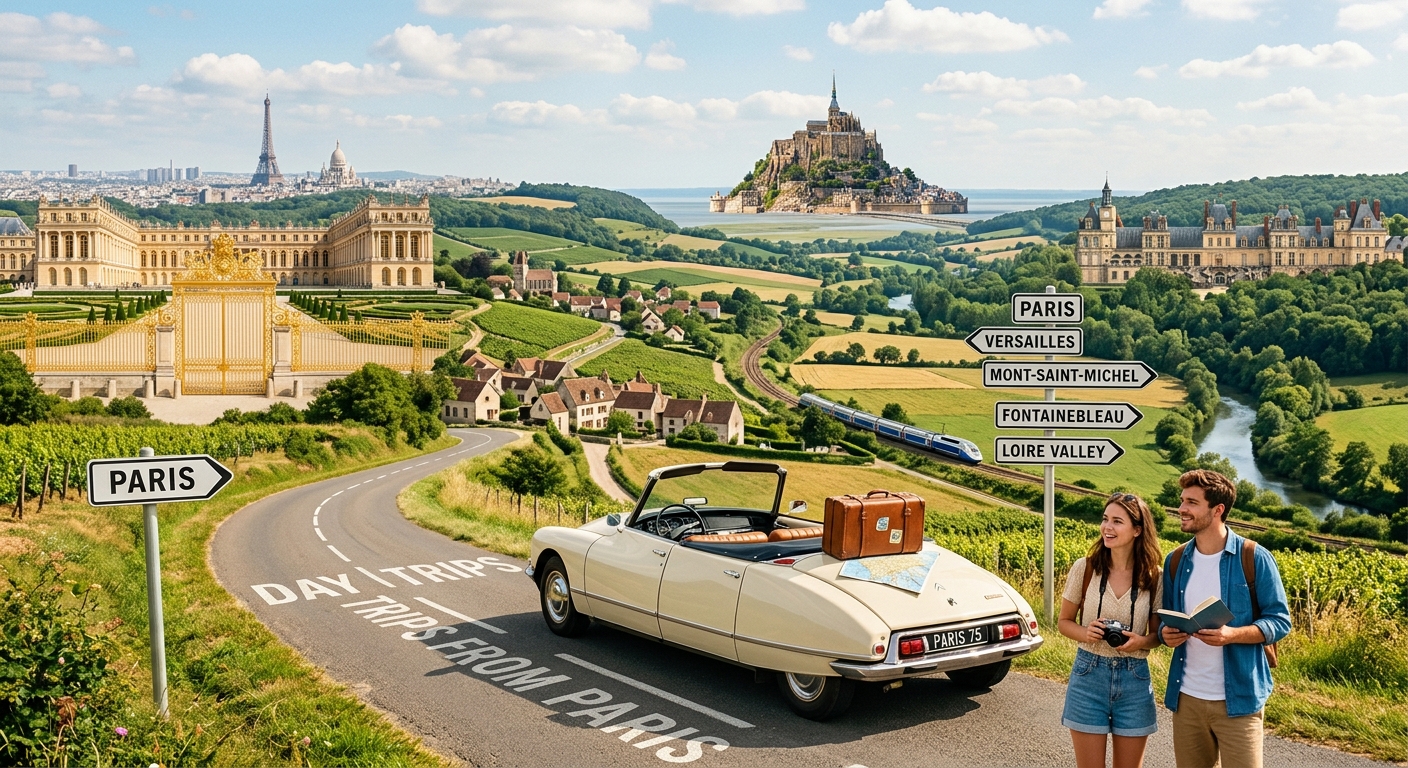
If you only have time to scan one section, start here. The short version is that the best day trips from Paris depend on what kind of day you want, but a few stand out every single season because they’re easy, iconic, and worth the logistics. Versailles is the classic must-do, Giverny is the prettiest art-and-garden escape, Reims is the easiest wine day trip, and Fontainebleau is the best “less crowded but still grand” château option.
We like to think of day trips from Paris in two buckets: the truly easy trips you can do confidently without a car, and the ambitious full-day excursions that are possible but require earlier starts, more commitment, and a little more patience. That distinction matters a lot, because a “day trip” can mean a 30-minute train ride to a palace or a 3.5-hour one-way haul to a coastal landmark. If you’re traveling with kids, older relatives, or a group of friends, the difference becomes even more important.
For first-time visitors, our team’s advice is simple: pick one major anchor, not three. Versailles plus a stroll through the gardens, Giverny plus a lunch stop, or Reims plus one tasting and the cathedral is usually the sweet spot. Trying to stack too many places into one day is the most common mistake we see, and it’s especially easy to do when you’re excited and scrolling through endless lists.
Here’s the fast answer capsule, based on the most common trip styles we’ve seen travelers ask for on Gidly. Think of this as your “what should I book first?” shortcut. If you want the biggest wow factor, choose Versailles. If you want the most relaxing and photogenic day, choose Giverny. If you want food and drink with a bit of sparkle, choose Reims. If you want history with fewer crowds, choose Fontainebleau or Chantilly. And if you want a long-haul bucket-list experience, Mont-Saint-Michel and Normandy are the most ambitious but still possible with guided tours.
Direct answer capsule: the top picks for different trip styles
For the easiest overall experience, Versailles wins because it is straightforward by train, famous for a reason, and flexible enough for half-day or full-day plans. For scenery and art, Giverny is the move, especially in spring and summer when Monet’s gardens are at their best. For wine lovers, Reims or Épernay offers the strongest mix of tasting rooms, cellars, and sightseeing, with cathedral time as a bonus. For a calmer château day, Fontainebleau is a local favorite because it feels grand without the same crush of crowds you’ll find at Versailles.
If you’re traveling with kids, we usually point people toward Versailles, Chantilly, or a more open-air nature day where you can slow down without the pressure of hitting every highlight. Couples often like Giverny, the Loire Valley, or a wine-forward day trip because the pacing is naturally more romantic. Friends usually have the best time in Reims, Champagne, or a food-and-drink-centered outing because the day feels social and easy to share.
For budget travelers, train-accessible destinations with free or low-cost outdoor time are the smartest choice, and the best value tends to come from destinations where the main cost is transport plus one ticket or tasting. The trips that sound cheap but become expensive often involve poor planning, multiple taxis, or tickets bought too late. A good rule in 2026 is to compare not just the headline price, but the total day cost including local transfers and timed-entry admissions.
What makes a great day trip from Paris
The best day trips from Paris have three things in common: simple transport, a clear “main event,” and enough downtime that the day doesn’t feel like a sprint. You want a place where the train or tour gets you close to the action, where one major attraction anchors the experience, and where lunch, coffee, or a scenic walk fills the gaps naturally. If those pieces are missing, the trip can still be beautiful, but it may feel stressful rather than restorative.
From experience, the easiest wins are trips that line up well with Paris rail hubs and don’t require complicated transfers at the destination. That’s why Versailles, Fontainebleau, Reims, and Chantilly are perennial favorites. They’re easy to explain, easy to book, and easy to recover from if you’re tired at the end of the day. That matters whether you’re traveling solo, as a couple, or with a group that has mixed energy levels.
We also look at whether the destination gives you flexibility if weather changes. A day trip that is still good in rain, cold, or heat is much safer to recommend than one that becomes miserable if the forecast shifts. In 2026, that’s more relevant than ever because travelers are being more selective about what they spend time and money on. A great day trip should feel worth the transfer, worth the tickets, and worth the planning effort.
The short list: best overall, easiest by train, best for kids, best for history, best for scenery
If you want the shortest possible shortlist, here’s ours. Best overall: Versailles. Easiest by train: Versailles or Reims. Best for kids: Versailles or Chantilly. Best for history: Versailles, Reims, or Normandy if you’re up for a longer day. Best for scenery: Giverny, Loire Valley, or Chantilly’s grounds and forested surroundings.
What we like about this breakdown is that it matches real travel decisions, not just famous names. A family with a stroller thinks differently than a couple planning an anniversary lunch. A solo traveler on a budget may prefer a short train ride and lots of wandering, while a group of friends may want a wine tasting that feels like an event. That’s why there isn’t one universal “best” day trip from Paris—there are best trips for specific moods.
If you’re still undecided, choose based on how much structure you want. Versailles is the easiest to structure. Giverny is the gentlest. Reims is the most social. Fontainebleau is the most balanced. And if you want to impress a travel buddy with a slightly more ambitious plan, the Loire Valley or Mont-Saint-Michel will do the trick, as long as you accept that they’re long days, not casual ones.
How to choose based on time, budget, and season
Time is the biggest filter. If you have only one day and want to keep things easy, stick to destinations under about 90 minutes each way by train or coach. That includes Versailles, Reims, Chantilly, Fontainebleau, and some parts of the outskirts that don’t demand extra transit. Once you move into 2.5 to 4 hours one way, the day gets much more intense and your flexibility drops sharply.
Budget also matters more than most people expect. A “cheap” day trip can become expensive if it requires multiple transfers, taxis from the station, and advance ticket surcharges. For 2026, expect many popular sights to use timed entry or timed garden access during peak periods, so booking ahead can save both money and stress. If you’re cost-conscious, prioritize destinations where the main attraction is easy to reach on foot from the station or a direct bus.
Season is the final piece. Spring is best for gardens and blossoms, summer is best for long daylight and outdoor wandering, autumn is excellent for wine and harvest-related outings, and winter favors indoor châteaux, museums, and cathedral-heavy itineraries. The smartest plan is to match the destination to the season rather than forcing the same trip year-round. That’s how you get a day that feels intentional rather than merely convenient.
| Day Trip | Travel Time from Paris | Typical Total Cost | Car Needed? | Best For |
|---|---|---|---|---|
| Versailles | 30–45 min | €30–€80 | No | First-timers, families, history lovers |
| Giverny | 1h–1h30 | €40–€120 | No, but tour helps | Art lovers, couples, garden fans |
| Reims / Champagne | 45 min–1h30 | €60–€180 | No | Wine, friends, tastings |
| Fontainebleau | 40–60 min | €25–€70 | No | Calm château day, budget travelers |
Best overall day trips from Paris
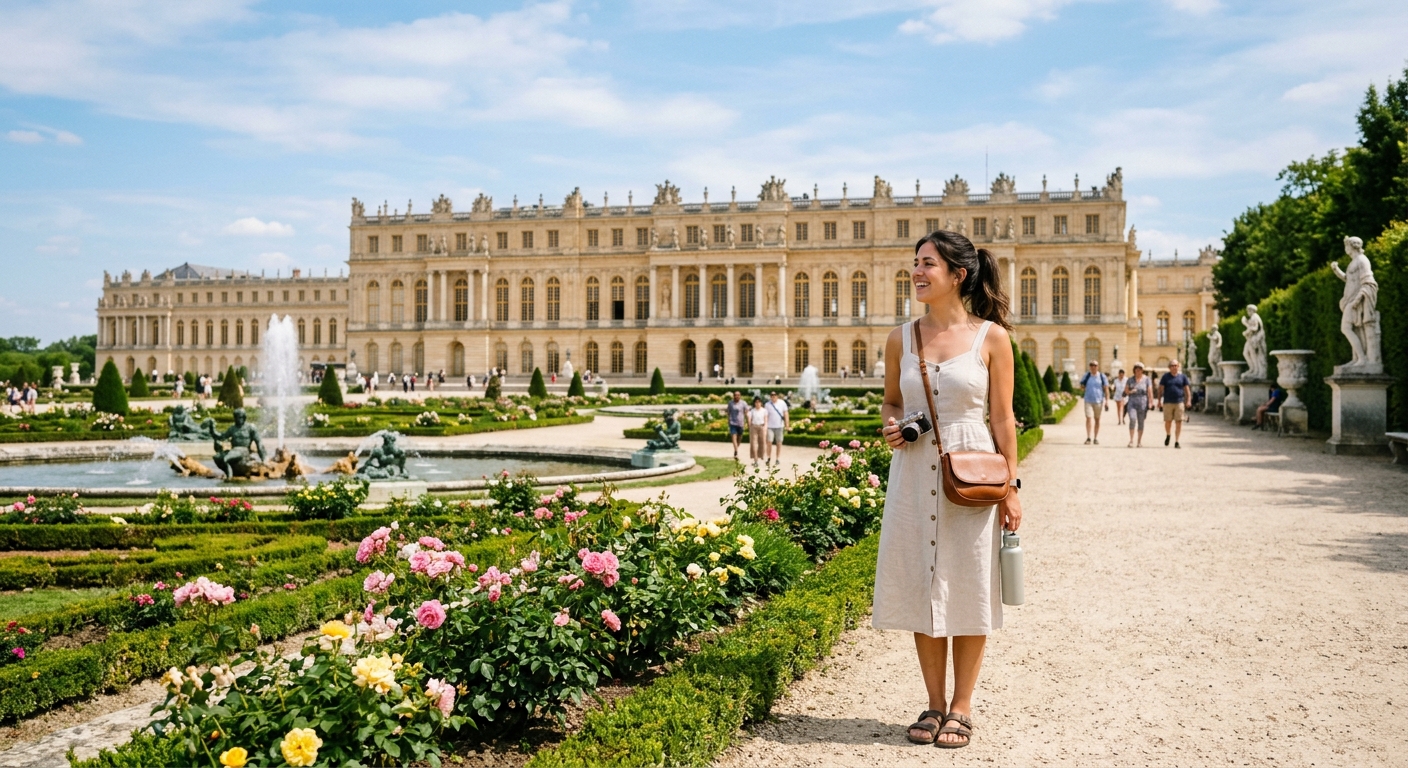
The best overall day trips from Paris are the ones we’d recommend first to almost anyone because they offer a strong mix of ease, payoff, and flexibility. These are the trips that feel worth the effort whether you’re planning a romantic escape, a family outing, or a solo wander with your camera. In 2026, the top tier still includes Versailles, Giverny, Reims, and Fontainebleau, with each destination filling a different lane.
We visited these destinations with one question in mind: which ones still feel good once you factor in real-world travel, crowds, and time limits? The answer is not always the same as what guidebooks tell you. Versailles is iconic, but busy. Giverny is gorgeous, but seasonal and dependent on weather and timing. Reims is easy and fun, but best if you want more than sightseeing. Fontainebleau is quieter and often underrated, which is exactly why locals love it.
Think of this section as your “best of” shortlist. If you only do one day trip, choose Versailles. If you want a day that feels softer and more beautiful, choose Giverny. If you want to pair a city break with something celebratory, Reims or Épernay is ideal. If you want a castle day without the full Versailles circus, Fontainebleau is the move. Each of these also works well as part of Gidly-style discovery because they’re easy to match with your travel mood once you know what you want from the day.
Versailles: the iconic palace-and-gardens day trip
Versailles is the classic Paris day trip for a reason: the palace is staggering, the gardens are huge, and the whole experience still feels like stepping into a different era. The big win is accessibility. You can get there without a car, and once you understand the different station options, the trip becomes much simpler than most first-time visitors expect. The palace itself is the main draw, but the grounds, Trianon estate, and seasonal fountain displays can easily turn a few hours into a full day.
From our experience, Versailles is best when you don’t rush it. Arrive early if you can, because the midday crowd can make the palace feel more compressed than it should. If you care about photos or quieter moments in the gardens, morning light and late afternoon are both better than peak lunchtime. The best plan is often palace first, then gardens, then a relaxed lunch in town or a picnic if the weather cooperates. That pacing is what makes Versailles feel majestic instead of exhausting.
Pricing in 2026 typically starts around the mid-€20s for standard palace access, with more for timed-entry, guided, or added estate experiences. Some visitors spend more because they combine tickets with audio guides, tours, or special access, and that can be worth it if this is your only château day. Just be aware that popular time slots do sell out, especially during spring, summer, and school holidays. If you’re a planner, book in advance through the official Versailles website and check if any major gardens or fountain operations are scheduled for your travel date.
Giverny: Monet’s Garden and impressionist landscapes
Giverny is the prettiest “slow day” trip near Paris, especially in late spring and summer when Monet’s garden is in bloom. The appeal here is less about grandeur and more about atmosphere. You’re going for color, calm, and that specific impressionist feeling of walking through a place you’ve seen in paintings, books, and museum galleries your whole life.
Giverny works especially well for couples, solo travelers, and anyone who wants a peaceful reset after a few intense Paris days. It’s also one of the better day trips from Paris if you like sketching, photography, or just lingering in garden paths without a rushed itinerary. The town itself is small, and that’s part of the charm. You can build a gentle day around the garden visit, lunch, and maybe one more stop if you’re on a tour, but it doesn’t need more than that.
There is a catch: seasonality matters a lot here. Monet’s Garden is at its best in spring bloom and early summer, and the experience can feel thinner later in the year if you’re expecting peak color. Tickets are often timed, and booking ahead is smart in high season because the better entry slots disappear fast. As a rule, don’t leave Giverny to a spontaneous same-week plan during peak months unless you’re fine with limited options. For travelers who love art and gardens, though, it is one of the most satisfying day trips from Paris by train plus shuttle or by guided excursion.
Reims and Champagne: tasting, cellars, and cathedral time
Reims is the easiest champagne-focused day trip from Paris and one of the most social, flexible choices for a group. The train ride is fast, the city is compact enough to navigate without a car, and you can mix serious history with tastings in a way that feels relaxed rather than overplanned. Reims Cathedral adds real cultural weight to the day, while champagne houses and smaller growers add the celebratory side that most visitors are actually there for.
This is one of our favorite choices for groups of friends because it naturally creates conversation and gives you built-in shared memories. It also works for couples if you want something polished but not too formal. In 2026, many visitors are pairing one major champagne house with a smaller tasting or a lunch reservation, which is the right move if you want to avoid tasting fatigue. The city can also serve as a good fallback trip when weather isn’t ideal, because some of the experience is indoors in cellars and tasting rooms.
Budget-wise, expect train tickets plus tastings to make this more expensive than a simple château outing. Still, the quality of the experience is high, and the logistics are easier than many people assume. If you’re deciding between Reims and a more far-flung wine region, choose Reims for efficiency and lower stress. If you want a polished day that feels special without requiring a car, it remains one of the best day trips from Paris without a car.
Fontainebleau: château, forest, and a calmer alternative to Versailles
Fontainebleau is the sleeper hit of Paris day trips. The château is historically important, architecturally rich, and much less overwhelming than Versailles, which means you can actually enjoy the interiors and still have energy left for a forest walk or lunch in town. If Versailles feels too crowded for your taste, Fontainebleau is often the better answer.
The beauty of this trip is its balance. You get royal history, but you also get nature, and that combination makes the day feel less formal. It’s an excellent choice for travelers who like wandering, for families who need a bit more open space, and for repeat visitors who want something with a slightly more local feel. From Paris, it is one of the easiest castle trips to manage by train, and the town itself gives you enough infrastructure for a pleasant lunch and a low-stress return.
In our view, Fontainebleau is especially underrated in shoulder season. Spring and fall can be ideal because the forest is comfortable to walk, crowds are lighter, and the château is easier to appreciate without the peak Versailles pressure. It’s also friendly to budget travelers because you can make the day as simple or elaborate as you want. If you want a château without the “major expedition” energy, Fontainebleau is a very smart pick.
| Destination | Why Go | Typical Booking Difficulty | Best Season |
|---|---|---|---|
| Versailles | Iconic palace, gardens, royal history | Medium to high in peak season | Spring, early fall |
| Giverny | Monet’s gardens, peaceful scenery | High in bloom season | Late spring, summer |
| Reims | Champagne tastings, cathedral, city break | Medium | Year-round, especially fall |
| Fontainebleau | Château plus forest, fewer crowds | Low to medium | Spring and fall |
Easy day trips from Paris by train without a car
If you’re looking for day trips from Paris without a car, this is the section to bookmark. Paris rail logistics are much easier once you understand which station serves which direction, and the right departure point can save you from the classic rookie mistake of showing up at the wrong terminal with five minutes to spare. The best train-based trips are not just the ones with direct service, but the ones where the station, transfer, and final walk all make sense for a day outing.
We checked the most commonly used departure stations because that’s where travelers get tripped up. Gare du Nord is your key hub for Reims, some northern routes, and international options. Gare Saint-Lazare serves western routes, while Gare de Lyon covers some southeast and Burgundy-linked trips, and Paris-Montparnasse is important for the Loire direction on certain services. Knowing which side of Paris you need saves time and lowers stress immediately.
Train travel is also often better than a guided tour if you want freedom. You can leave when you want, eat where you want, and move at your own pace. But if the destination requires a shuttle or extra local transit, a guided tour may actually be the smoother choice. The rule of thumb we use is simple: if the destination is directly walkable or clearly connected from the station, DIY train travel usually wins. If it requires several connections, a tour can be worth the premium.
Which destinations are simplest from Paris Gare du Nord, Gare Saint-Lazare, Gare de Lyon, and Paris-Montparnasse
Gare du Nord is the heavy hitter for northern and northeastern trips, and it’s often the easiest start point for Reims and some international excursions. It’s busy, so you want to arrive with a little cushion, but the upside is that it serves many of the day trip destinations that travelers actually want. If your plan involves champagne, cathedrals, or cross-border day travel, Gare du Nord is usually where you begin.
Gare Saint-Lazare is the station to keep in mind for western routes, and it’s especially relevant when you’re aiming for places like Normandy-linked destinations or certain suburban day trips. It can feel less chaotic than some of the bigger interchange stations, but you still want to pay attention to platform changes and departure boards. If you are staying on the Right Bank, this station can be surprisingly convenient depending on your hotel or apartment.
Gare de Lyon is useful for southeast routes and some longer-distance train days. Paris-Montparnasse matters for Loire-bound planning and some western/Southwestern connections. The takeaway is that there is no single “best” station; there is only the right station for your destination. The more you align your outing with the correct departure hub, the less likely you are to waste time in transit or miss a train because of last-minute confusion.
Train time, frequency, and transfer expectations for top destinations
For Versailles, you’re usually looking at a short rail ride plus a manageable final walk or local transit, which is why it’s such a strong no-car day trip. Reims is similarly appealing because the rail ride is short and the city is compact enough to navigate with confidence. Fontainebleau is another easy win, though you should still account for any last-mile transfer depending on exactly where you want to go once you arrive.
For Giverny, train logistics can be a little more involved because the garden itself is not always a pure station-to-doorstep experience, which is why many visitors combine train and shuttle or choose a guided day tour. That extra step doesn’t make it hard, but it does make advance planning more important. For Loire Valley châteaux, train-based access often works best when you use a town base or a tour that bundles transport, because the castles themselves are spread out more than Versailles or Fontainebleau.
Frequency matters as much as travel time. A destination with frequent returns gives you flexibility if you finish early or want to linger. We always recommend checking the late afternoon and evening return options before you leave Paris, because the number of trains you have available will shape how comfortable the day feels. A beautiful trip becomes a stressful one fast if you realize your last practical train leaves earlier than expected.
When a train is better than a guided tour
Train travel is usually better when the attraction is simple to reach, you want maximum flexibility, and you’re comfortable handling tickets yourself. It also tends to be the cheaper option, especially for solo travelers, couples, or anyone who values independence over structure. If you like making spontaneous lunch stops, changing your plan midstream, or staying longer at the place you enjoyed most, the train is your friend.
Guided tours can still win when the destination has awkward connections or when you want commentary and pre-organized timing. That’s especially true for long day trips or places with multiple moving parts, such as Normandy, Mont-Saint-Michel, or some Loire Valley itineraries. The big benefit is mental load reduction. You pay more, but somebody else handles the complicated bits.
In 2026, the sweet spot is often hybrid planning: book your own train for the easy trips, but consider a guided experience when the final transfer would otherwise be a headache. That’s not about being “touristy.” It’s about spending your energy on the enjoyable part of the day, not on puzzle-solving. If you can arrive relaxed and leave relaxed, the extra money is often justified.
Common rail mistakes: wrong station, missing the last return, underestimating local transit
The most common rail mistake is using the wrong Paris station because the city’s train network is split by direction and service type. Travelers who don’t double-check the departure point often add unnecessary stress to their morning, and in the worst cases, they miss the train entirely. Another common issue is assuming there will be frequent late returns when the actual schedule is more limited than expected.
We also see people underestimate local transit once they arrive. Even if the train ride is simple, the destination may still require a bus, shuttle, taxi, or a longer walk than expected. This matters especially for Giverny, the Loire, and some coastal or rural destinations. If you’re carrying a lot, traveling with kids, or going in bad weather, that final mile can matter more than the train itself.
Our advice is practical: verify the station, check the return timetable before you leave Paris, and read the final transfer instructions as carefully as the main train time. Also, give yourself a buffer for strikes, delays, or platform changes, which can happen in any year and are always worth respecting. A little preparation here goes a long way toward making the whole day feel smooth.
Day trips from Paris for history lovers
If your perfect outing includes real historical weight, Paris is surrounded by some of the richest day-trip history in Europe. The best history-focused day trips from Paris are not just famous landmarks; they are places where the story feels alive once you arrive. Versailles is about monarchy and power, Reims is about coronations and the French state, Fontainebleau is about royal continuity, and Normandy brings modern remembrance into the picture.
We like history trips because they give you a deeper sense of place than a purely scenic outing. You’re not just looking at something beautiful; you’re understanding why it matters. That makes these destinations especially rewarding for first-time visitors who want more than selfies, but it also works for repeat travelers who’ve already done the major Paris museums and want a fuller regional context. In 2026, many travelers are blending tickets, guides, and independent walking time to get a richer experience without overdoing the schedule.
For history lovers, the challenge is choosing the right scale. Some places are dense and walkable, like Versailles or Reims. Others are emotionally intense and logistically bigger, like Normandy. The best day trip for you depends on whether you want royal pageantry, medieval architecture, WWII remembrance, or a broader snapshot of French political history. The good news is that Paris has excellent options in every lane.
Versailles and the politics of French power
Versailles is the history trip that tells you how French power was staged, performed, and projected. The palace is not just ornate for the sake of being ornate; it is a lesson in monarchy, diplomacy, and absolute rule. Walking through the main rooms, especially the Hall of Mirrors, gives you a tangible sense of how political theater was designed to impress and control.
For history-minded travelers, the best way to experience Versailles is to pay attention to the context rather than rushing from room to room. Read a little before you go, or use an audio guide so the architecture and art actually mean something while you’re there. The gardens also matter historically because they reflect the same sense of order, control, and ambition as the palace itself. This is one of those trips where the setting is the message.
If you only have time for one big royal site near Paris, Versailles is probably still the right one. It’s the most famous for a reason, and it is well signposted for international visitors. Just remember that history trips work best when you leave space to absorb them. Don’t overbook the day with extra castles unless you’re sure you have the energy for it.
Normandy D-Day beaches and WWII remembrance sites
Normandy is one of the most powerful day trips from Paris, but it is also one of the least casual. The D-Day beaches, memorials, and related sites carry enormous emotional weight, and the trip is best approached with respect and realistic expectations. From Paris, this is generally not a simple independent outing unless you are very comfortable with long-distance train-and-transit coordination or self-drive logistics.
Many travelers prefer a guided tour for Normandy because the narrative and transport are bundled together, which makes the experience more coherent. You can focus on the sites rather than on whether your transfer is on time. The tradeoff is that you have less flexibility and the day is often quite full. If this trip is a top priority, give it the time it deserves and don’t pretend it is the same kind of day as Versailles or Reims.
When done well, Normandy is unforgettable. When rushed, it can feel like a checkbox. That’s why we only recommend it as a day trip if you understand that you’ll see a meaningful slice, not the entire region. If your schedule is tight, Normandy might be better as an overnight. But if one long, reflective day is exactly what you want, it remains one of the most important excursions from Paris.
Reims Cathedral and coronation history
Reims is excellent for history lovers because it combines royal coronation history with an easy, attractive city-center visit. The cathedral has enormous significance in French history, and the city’s identity is tied to that heritage in a way you can feel immediately. Unlike some history sites that are isolated or remote, Reims lets you move naturally between architecture, civic space, and tasting rooms without needing a car.
We think Reims is ideal for travelers who want history without a heavy museum schedule. You can spend time at the cathedral, walk the center, and still build in a meal or tasting that keeps the day lively. That mix of depth and ease makes it especially good for mixed-interest groups, where not everyone wants to spend all day reading plaques. It also works well in shoulder seasons when cathedral visits and cellar tours are more pleasant than outdoor-only plans.
If you want a trip that feels both cultured and social, Reims is hard to beat. It’s especially satisfying when you pair the cathedral with one well-chosen champagne house or smaller producer. The result is a day that feels coherent instead of scattershot. For many travelers, that’s the perfect balance.
Château de Fontainebleau and royal heritage
Fontainebleau is one of the most historically rich castles near Paris, and it often feels easier to enjoy than Versailles because the crowds are lighter. The château has seen centuries of royal and imperial history, which gives it a layered, lived-in quality that history buffs really appreciate. It’s a place where you can trace changing power, taste, and style across long periods without feeling overwhelmed.
What makes Fontainebleau especially good is that the history and the setting complement each other. You can explore the interior, then step out into a landscape that helps reset your attention. This makes the visit feel less like a museum crawl and more like a full day out. For travelers who care about detail but don’t want a giant production, Fontainebleau is an ideal compromise.
We’d recommend this trip to anyone who has already seen Versailles or who wants a royal site with more breathing room. It’s also a great option during off-peak months because it still delivers a strong experience when gardens are less dramatic. In many ways, it’s the understated cousin of Versailles—and that’s exactly why people fall for it.
Day trips from Paris for families and kids
Planning day trips from Paris with kids changes the rules a bit. The best family trips are not necessarily the ones with the most famous names, but the ones that combine short travel, open space, bathrooms that are easy to find, and enough variety to keep different ages happy. In our experience, families do best when they choose one primary attraction, build in snack breaks, and avoid over-scheduling the day.
Versailles, Chantilly, and certain outdoor or nature-based destinations tend to work well because they allow movement and flexibility. Kids usually do better when there is room to wander, sit, snack, and reset. A beautiful site is great, but a great family outing also needs practical details like stroller access, meal timing, and a realistic return journey. The destinations we recommend here are the ones that hold up when travel is less about ticking boxes and more about managing energy.
For parents, the key is to think in chapters rather than in attractions. Morning travel, main site, lunch, play or stroll, return. That structure keeps expectations manageable and helps the day feel successful even if the weather shifts or kids get tired early. In 2026, families are also leaning harder into pre-booked timed entry because it reduces line stress and gives everyone a predictable start.
Versailles with children: stroller, space, and picnic planning
Versailles can work surprisingly well for kids if you approach it the right way. The big advantage is space: the gardens, lawns, and wider estate give children room to move in a way that many Paris attractions simply do not. If you plan a picnic, bring water, and don’t try to see every room, the day becomes much more manageable. That said, the palace itself can feel long for younger children, so pacing is everything.
We usually suggest families prioritize either the palace or the gardens depending on ages and attention spans. If your kids are very young, the gardens may be more rewarding than an extended interior visit. If they are school-aged and interested in history, a shorter palace visit plus an outdoor break can work beautifully. Stroller access and restrooms are workable enough to make the trip feasible, but you still need to be realistic about how much walking everyone can handle.
Timing matters too. Early arrival avoids some of the biggest crowd pressure, and that alone can make the day smoother for families. You also want to check whether any special garden programming or fountain schedules are operating during your visit, because a little live spectacle can make the trip more engaging for children. Versailles is not a kid-specific attraction, but it can absolutely become a family win if you keep the plan simple.
Chantilly: horses, grand estate, and family-friendly pacing
Chantilly is one of our favorite family day trips because it has the elegant “castle day” feel without the heavier crowds of Versailles. The estate offers a gentler pace, and the horse heritage gives you a built-in hook that many kids find more engaging than long palace interiors. If your family likes animals, open air, and a destination that feels a little less obvious, Chantilly is worth serious consideration.
The best thing about Chantilly is that the day can be calibrated to your energy level. You can focus on the château, enjoy the grounds, include a horse-related experience, or simply keep the visit relaxed and scenic. That flexibility is a big plus for families, because not every child wants the same kind of day. It also tends to feel less overwhelming for adults who are balancing child logistics with wanting to enjoy themselves too.
From a planning perspective, Chantilly works well because it is not too far from Paris and does not usually demand the same advance stress as the most famous sites. That said, it still benefits from checking schedules in advance, especially if you want a performance, special exhibit, or timed attraction. It’s a strong alternative if Versailles feels too large or too crowded for your family’s style.
Parc zoologique, castles, and outdoor escapes near Paris
Not every family day trip has to be a palace. Sometimes the best outing is a zoo, a large park, a wildlife-focused visit, or a destination that mixes nature with easy sightseeing. Near Paris, those kinds of trips are particularly useful when you need to keep kids entertained without committing to a very structured museum day. They can also be great backup options when the weather is only partly cooperative.
Outdoor escapes are especially useful in spring and summer when children have more energy and you want them to burn some of it in a way that doesn’t involve endless waiting. Even within “castle” travel, places with big grounds are often better than ultra-formal interiors for families. A castle plus garden plus snack break will usually outperform a super-famous attraction that requires a lot of quiet attention and standing still.
The other benefit is cost control. Outdoor or mixed-sightseeing days often cost less than multiple timed-entry tickets plus add-ons. If you’re traveling with more than one child, that difference adds up quickly. Families who want value and flexibility should always compare a classic palace day to a nature-forward alternative before they book.
How to keep kids engaged on a full-day trip
The secret to successful family day trips from Paris is not magic; it’s structure and snacks. Children are more likely to enjoy a trip if the day has clear phases, short transit windows, and something they can look forward to at each stop. That might mean a pastry on the train, a picnic in the gardens, or a special hot chocolate after the main visit. Small rewards make long days easier.
You should also choose destinations with natural “reset” points. Gardens, lawns, riversides, and open courtyards are much better than long interior-only programs when kids are involved. If your child likes animals, art, or boats, build the day around that interest rather than around what adults think is most impressive. The more relevant the destination feels to the child, the more cooperative the day usually becomes.
Finally, don’t overestimate the number of stops children can enjoy in one day. One major attraction plus one meal is often enough. The best family day trips leave everyone with energy left at the end, not just relief that the schedule is over. That’s the benchmark to aim for.
Day trips from Paris for couples, date night, and romantic outings
If you’re planning a romantic outing, the best day trips from Paris usually have a slower rhythm, beautiful scenery, and a lunch or tasting that feels like part of the experience. Couples tend to do best when they choose places that invite wandering rather than rushing. That’s why Giverny, the Loire Valley, and wine-oriented trips are so appealing, while even Versailles can become romantic if you time it well and avoid the peak crowd crush.
Romantic day trips work best when the logistics disappear into the background. You want enough structure that you’re not constantly checking your phone, but enough freedom that you can linger at a café, take photos, or change pace on the fly. In 2026, more couples are prioritizing “experience quality” over simply ticking off famous sites, which is why tours with a strong visual or culinary component are often outperforming purely sightseeing-based plans.
From our perspective, the ideal couples’ outing usually includes one signature sight, one beautiful meal, and one unhurried stretch of scenery. That could be Monet’s Garden plus lunch in Giverny, a Loire château with wine stops, or a half-day at Versailles followed by a return to Paris for dinner. The point is to keep the mood light, beautiful, and unforced.
Loire Valley château experiences with wine and gardens
The Loire Valley is one of the most romantic day-trip regions from Paris because it pairs castles with landscapes that feel softer and less formal than Versailles. Many visitors go for the châteaux, but what lingers is the feeling of moving through a countryside that seems made for elegant wandering. If you and your partner want a trip that feels a little more epic, the Loire is a strong contender.
It does, however, require honest planning. The region is more spread out, and the best experience often comes through a tour or a very carefully planned self-drive or train-plus-transfer approach. That’s why it can feel more luxurious than spontaneous. You are not just hopping on a train and strolling through one attraction; you are committing to a curated day. For many couples, that’s exactly what makes it special.
We suggest the Loire especially for anniversaries, engagements, or “let’s do one memorable thing while we’re in France” moments. If your goal is intimacy and scenery rather than efficiency, this region delivers. Just book early, compare route options, and be realistic about how many castles you can actually enjoy in one day.
Giverny and small-town lunch stops for a slower pace
Giverny is arguably the most naturally romantic day trip from Paris because it is beautiful without trying too hard. The garden paths, water lily setting, and small-town atmosphere encourage lingering and conversation rather than rushing from one site to another. It feels especially lovely in spring, when the flowers are at their best and the air still has that fresh, optimistic quality.
For couples, the biggest advantage of Giverny is the pace. You can visit the garden, have lunch somewhere charming, and spend the rest of the day strolling or sitting rather than sprinting through a checklist. If you want to take photos together, this is one of the most forgiving and flattering backdrops near Paris. It’s the kind of place where doing less actually gives you more.
Because Giverny is so seasonal, timing matters more than almost anywhere else on this list. If you can choose your date, aim for bloom season or a day with good weather. If your trip is fixed, check what’s actually open and whether any timed entry is still available. That little bit of planning makes the difference between a dreamy garden day and a merely acceptable one.
Evening-return options and why some tours feel more romantic than DIY
Some couples prefer guided tours because they remove the practical friction that can interrupt a good day. No one wants to argue over train connections or platform changes when they’re supposed to be enjoying themselves. A well-run tour can feel surprisingly romantic because both people get to be present instead of managing logistics. That’s especially true for longer day trips or destinations with tricky transfers.
DIY travel, on the other hand, can be wonderfully romantic when the destination is simple and the couple enjoys a little freedom. The key is whether both people actually want to be the planners. If one of you is carrying the whole load, the day can feel less like a date and more like a project. That’s why we often recommend tours for longer or more complicated outings and independent train travel for easier destinations.
Evening-return options are especially valuable if you want to make the day feel relaxed rather than squeezed. An itinerary that gets you back in time for a proper Paris dinner can be the best of both worlds. If you’re deciding between a day trip and a night out, think about whether you want a scenic reset or a full romance arc from morning to evening.
Best photo stops and sunset-friendly itineraries
For couples who love photos, the best day trips from Paris are the ones with varied scenery and predictable light. Gardens, riverfronts, château courtyards, and cathedral squares all offer different moods, which makes the day visually interesting without needing too many extras. Versailles and Giverny are especially photogenic, while the Loire can feel cinematic if you hit the timing right.
If sunset matters, you need to think about return logistics early. Some destinations are beautiful late in the day, but not every train schedule supports a dreamy linger. That’s where a little itinerary planning pays off. You may want a slightly earlier lunch and a later wander, or the reverse if you’re balancing crowd avoidance with light conditions. The most romantic plan is the one that fits both mood and transport.
A simple trick is to choose one place where you want the “hero shot” and then leave the rest of the day flexible. Trying to chase every perfect photo usually makes couples less relaxed, not more. The goal is to come back with memories, not just images.
Day trips from Paris with friends: social, scenic, and shareable
Some of the best day trips from Paris are the ones you do with friends because the social energy changes everything. A good friend trip is part sightseeing, part shared meal, part “we should absolutely do this again” memory. Champagne country, Reims, coastal or scenic escapes, and food-first itineraries are especially strong because they give everyone something to talk about and photograph.
We’ve found that friend groups usually want a day that feels both efficient and a little celebratory. They don’t want a trip that is so logistical it becomes exhausting, but they also don’t want something too quiet or solemn. That’s why Reims, Épernay, and select outdoor or tasting-based outings are often better friend trips than more museum-heavy destinations. In 2026, these outings also line up nicely with split-pay apps and advance booking tools, which makes group planning much easier than it used to be.
The goal here is to choose a destination that can handle different personality types. One friend wants a museum. Another wants wine. Another wants photos. A good group day trip gives all three something to enjoy without forcing anyone to dominate the schedule. That’s the sweet spot.
Champagne tasting in Reims or Épernay
Reims and Épernay are the obvious friend-group winners because they turn the day into an occasion. Champagne houses, tastings, and elegant cellars create a built-in social rhythm, and the shared experience makes the trip feel special right away. Reims is often easier for first-timers because the city is slightly more straightforward to navigate, while Épernay can feel especially charming if you want a smaller, more focused champagne setting.
For groups, the biggest advantage is that everyone can participate without needing the same level of historical or artistic interest. You can have one person who cares about tasting notes and another who just wants a fun day out, and both can still enjoy the trip. If you’re celebrating something—a birthday, reunion, or “just because” trip—this is one of the strongest options near Paris.
The only caution is budget. Tastings, train tickets, and optional tours can add up, especially if the group wants premium experiences. Bookings are easier when you lock the plan early and decide in advance whether you want one big house, a smaller grower visit, or a mix. That keeps the day from turning into indecision on the platform.
Beachy or coastal day trips when you want a change of scene
Sometimes the best friends’ trip is simply a change from the city rhythm. Coastal day trips can be refreshing because they give you open sky, sea air, and a different pace, even if the day is longer than a quick château visit. These trips work especially well in warm months when everybody wants something breezy and photo-friendly. Just be honest about the travel time, because coast-based plans can become long if you’re not careful.
If you’re with a group that wants a more vacation-like vibe than a museum or palace, a coastal day can be a great reset. The tradeoff is that many of these outings are less efficient than the rail-friendly classics. That’s fine if the point is atmosphere. It’s not ideal if everyone is tired and wants a short, easy day. This is where the “true day trip vs ambitious day trip” distinction matters most.
For friend groups, we usually recommend coast options when the weather is reliably good and when at least one person is willing to handle the logistics. Otherwise, you’re better off choosing Reims, Versailles, or Fontainebleau and saving the coast for a longer holiday. A beautiful day is nice; a beautiful day without transportation stress is better.
Food-first itineraries: markets, tastings, and local specialties
Food-first outings are underrated as friend trips because they’re naturally social and low-pressure. A market visit, tasting, or regional lunch can feel like an event without requiring museum energy. Reims is the clearest example because you can combine champagne with lunch and a bit of sightseeing, but many towns near Paris can support a food-centered pace if you choose well.
What makes food trips work is the built-in rhythm of sitting, talking, eating, and sharing. Not everyone wants to stand in a palace for three hours. Some people want bread, cheese, pastry, and a good table. A food-first day trip delivers that while still letting you feel like you’ve done something distinct and local.
In 2026, food experiences are also easier to book in advance, which helps groups coordinate. You can often reserve tastings, lunch, or market-led experiences earlier than you can wing it on arrival. If your crew is the kind that plans around brunch as much as sightseeing, lean into that. It’s a perfectly valid travel strategy.
Group logistics: tickets, meeting points, and split-pay planning
Group logistics can make or break a day trip. The easiest way to keep a friend outing fun is to decide the main tickets, meeting point, and return time before the day starts. Paris train stations are busy, and trying to gather six people at the last minute is a recipe for stress. A clear departure plan avoids that.
Split-pay planning matters too. If one person books the train and another books lunch, and a third books the tasting, someone is always doing mental math. Use shared apps or agree on one person to coordinate and settle up later. That sounds mundane, but it preserves the energy you want for the actual outing. The day should feel like an experience, not like a spreadsheet.
Our advice for friends is to pick destinations with simple arrival points and easy rendezvous spots. Major train stations, central squares, and well-known entrances are your friends. If the group can meet easily and leave easily, you’re already halfway to a good day.
Budget-friendly and free day trips from Paris
Not every great day trip from Paris has to be expensive. In fact, some of the best experiences are budget-friendly because the destination itself does most of the work. If you’re keeping an eye on costs in 2026, the smartest strategy is to combine a reasonably priced train ride with a destination that has free outdoor spaces, inexpensive entry, or one main attraction rather than multiple expensive add-ons.
We always encourage travelers to think in total cost, not just admission. A cheap ticket to a faraway place is not a bargain if you also need taxis, multiple transfers, or last-minute meals in a tourist zone. The best budget day trips from Paris are those where you can arrive, enjoy, and leave without much friction. Fontainebleau, some parts of Reims, and selected nearby nature-oriented outings often fit that bill.
Another good budget move is choosing destinations that still feel rich without requiring paid extras. Gardens, river walks, town centers, and cathedral exteriors can be surprisingly satisfying when the weather is nice. That’s especially true if you’re traveling solo or as a couple and want to save your money for a special dinner back in Paris. Value is not about being cheap; it’s about getting the most enjoyable day for the least waste.
Low-cost train destinations and day-trip hacks
One of the easiest ways to save money is to focus on destinations with direct, frequent trains from Paris. Direct service tends to reduce both uncertainty and transfer costs. It also makes it easier to choose off-peak departures, which can sometimes offer better pricing depending on how and when you book. That’s why stations like Gare du Nord and other major hubs matter for budget planning.
A second hack is to travel light and pack food or snacks if appropriate. A pastry, sandwich, or picnic can reduce the urge to buy multiple expensive meals in tourist areas. This works especially well for destinations with gardens or open-air space, where a picnic feels part of the experience rather than a compromise. It’s also a nice way to make the day feel less formal and more flexible.
Finally, choose one paid attraction and let the rest of the day be free. That might mean a castle ticket plus a river walk, or a tasting plus cathedral time. By limiting the number of paid entries, you keep the day from becoming a spending spiral. Budget travel is often about curation, not deprivation.
Free or low-cost attractions once you arrive
Many day-trip destinations have more free appeal than visitors realize. Cathedral exteriors, historic town centers, parks, and scenic streets often cost nothing and can be just as memorable as the paid attraction. Reims, for example, gives you a great city feel even if you keep tastings minimal. Fontainebleau and Chantilly also offer the chance to enjoy their grounds without turning every moment into a ticketed event.
The trick is to arrive with realistic expectations. You’re not trying to “do everything.” You’re trying to have a satisfying day. That might mean one major entry, one meal, and lots of walking. When people try to cram three paid sites into a budget day, the plan often collapses under its own ambition. The better move is to choose a destination that naturally gives you plenty of free time and ambiance.
If you’re traveling in shoulder season, free outdoor areas can be especially good value because the crowds are lighter and the weather is often still workable. A town with a beautiful center and a single flagship attraction can go a long way when your budget is limited. That’s why we keep recommending places that are enjoyable even if you don’t buy every optional extra.
How to save on museum entries, gardens, and transport
To save on entry fees, look for official combination tickets, off-peak pricing, or booked-ahead options that avoid premium day-of rates. For garden-heavy or château-heavy trips, the main savings often come from being disciplined about which add-ons you really need. You may not need a guided audio package if you’ve already done your research, and you may not need premium access if you’re happy with the standard route.
Transport savings usually come from planning early and traveling off peak when possible. The earlier you compare options, the easier it is to spot good-value departures. This is especially true when the destination is close enough that the transport is only a small part of the day, because that keeps the total cost reasonable even if the attraction itself is a bit pricey. For many travelers, a slightly cheaper ticket plus a simple lunch beats a luxury tour that feels overpackaged.
One more tip: check whether your destination has a tourism pass, combined ticket, or local discount package if you’re planning multiple sites in one area. It isn’t always the cheapest route, but it’s worth comparing before you buy separate items. Even a small savings can make the trip more relaxed if you’re watching the budget closely.
Best budget picks by season
In spring, pick destinations with free gardens or town walks so you can enjoy the season without paying for a huge itinerary. In summer, nature-heavy or riverside trips often feel the most rewarding because long daylight means more value from each hour. In fall, wine regions can still be worth the splurge because harvest season adds atmosphere and the shoulder-season crowds can ease up. In winter, a short train trip with a major indoor attraction is usually the best value.
Fontainebleau is often a strong budget-friendly option year-round because it gives you both château interest and the possibility of inexpensive outdoor time. Reims can also be good value if you keep tastings selective and choose one or two key experiences. Versailles can still be worth the money, but it is often better when booked thoughtfully rather than at the last minute. The right seasonal pick makes budget travel feel intentional rather than restrictive.
So if you’re asking “what’s affordable without feeling boring?” the answer is usually a destination that combines one big sight with lots of free ambiance. That formula wins more often than people think.
Rainy day and indoor day trips from Paris
Rain changes everything, but it does not ruin your day trip plans if you choose wisely. The best rainy-day day trips from Paris are the ones with strong indoor components, short transit, and low risk if the weather turns ugly. That often means castles, cathedrals, museums, cellar tours, and destination towns where you can move between indoor stops without spending the whole day outdoors.
We’ve found that travelers who ignore weather tend to regret it most when they’ve picked a garden-heavy outing on a day of wind and rain. On the other hand, a museum-and-château plan can be excellent in poor weather because it keeps the trip atmospheric without forcing you to stand outside for long periods. Reims, Versailles, and Fontainebleau are all possible in rain, while Giverny becomes much more weather-sensitive.
Indoor backup planning is not just about avoiding discomfort. It’s about protecting your time. A rainy day trip should still feel worth the train ride, which means choosing destinations with enough indoor substance that the experience remains strong regardless of the forecast. That’s the standard we use when recommending “safe” weather backup outings from Paris.
Museums, châteaux, and covered attractions
Versailles is a strong indoor fallback because the palace itself offers plenty to see even if you spend less time in the gardens. Fontainebleau also works well because the château interiors carry enough historical and visual weight to justify the trip on their own. Reims offers cathedral and cellar experiences that are naturally more weather-proof than many countryside trips. Those are the destinations we trust most when rain is in the forecast.
Museums are another solid option, especially if you like structure and don’t mind a more contemplative day. The nice thing about mixing museum time with a town walk is that you still get a sense of place, even if the weather is poor. That combination is often better than a purely indoor Paris day because it gives you both destination value and flexibility. You’re not trapped in one room for six hours unless you want to be.
If your destination has strong covered or underground elements—cellars, palace galleries, exhibition rooms—that usually makes it a safer bet in shoulder season. This is where Reims stands out for food and drink travelers, because a lot of the experience naturally happens indoors. It’s one reason many people prefer a wine day when the forecast is uncertain.
Best indoor backup plans near Paris
The best indoor backup plans are the ones that are still enjoyable if you do them on a whim. That might be a château with heated interiors, a cellar tour with a tasting, or a cathedral-centered city day where the walking is limited and the indoor architecture is the star. If you build an itinerary around too many open-air elements and then the rain comes, you’ll spend the whole day adapting instead of enjoying.
When we think backup, we also think “easy to book.” If the weather forecast is dicey, a destination that allows same-week planning without total sellout pressure is more useful than a famous site with no availability. In 2026, timed-entry systems make this especially important because many people wait until the last minute and then discover the slots they wanted are gone. A flexible indoor plan should still be bookable.
That said, rain can be a gift if it pushes you toward a destination you might otherwise overlook. A quieter château, an exhibition, or a strong tasting experience can turn a mediocre weather day into a standout memory. You just need to choose the right format.
When weather changes the best choice
Weather matters most when the heart of the day is outdoors. Giverny, beach or coast trips, long gardens, and forest-heavy plans are all more weather-dependent than castle interiors or city-center cathedral visits. If your date is fixed and the weather looks poor, don’t force a scenic plan just because it looked great online. Adapt the day to what is actually enjoyable.
A useful rule is this: if the day trip is mostly about atmosphere and photos, good weather matters a lot. If it’s mostly about history, food, or interiors, weather matters less. That’s why Versailles and Reims are often safer during unpredictable seasons, while Monet’s Garden really deserves a bright day. There’s no shame in switching plans to preserve the experience.
We also recommend checking seasonal closure patterns and special hour changes because weather-sensitive destinations sometimes adjust operations more than people expect. If you’ve got one chance to get it right, read the official site before leaving. That small habit prevents a lot of disappointment.
What to book in advance when rain is forecast
If the forecast is uncertain, book the parts that are hardest to replace: timed-entry tickets, high-demand tours, and any tastings or lunch reservations you care about. A good indoor plan can still sell out, and rain often drives more people toward the same safe destinations. Versailles and popular champagne experiences are classic examples of places that benefit from early booking regardless of the weather.
You should also confirm refund and rescheduling policies before you lock anything in. Rain is not always a reason to cancel, but flexible terms can make planning much less stressful. If you know you can adjust, you’ll feel more comfortable committing. That matters especially when you’re choosing between a DIY trip and a tour.
The best rainy-day strategy is to be proactive rather than reactive. Choose the indoor-friendly destination, book the key piece, and keep a backup café or lunch plan in your pocket. Then the weather becomes a factor, not a crisis.
Top day trips by category: castles, art, food, and outdoor adventures
Some travelers plan by destination, but others plan by mood or interest. If that’s you, this category-based section is the most useful way to narrow down the best day trips from Paris. Castles are for grandeur and history, art trips are for beauty and inspiration, food and drink outings are for social energy and local flavor, and outdoor trips are for reset days when you want fresh air more than a museum schedule.
We like this approach because it mirrors how people actually choose things to do on Gidly: by vibe first, then by logistics. It also helps with the classic problem of having too many choices. Instead of comparing every destination to every other destination, you can compare only the ones that fit the kind of day you want. That makes the decision easier and, frankly, more enjoyable.
The main trick is to be honest about energy. A castle day can be mentally demanding. A food day can be luxurious but costly. An outdoor trip can be glorious in spring and miserable in bad weather. Matching category to season and traveler type is how you avoid a mismatch.
Castles and royal estates
For castles, Versailles is the famous answer, but Fontainebleau and Chantilly are often the better practical choices depending on what you want. Versailles is the most iconic and the most grand. Fontainebleau is often calmer and more manageable. Chantilly gives you an estate feel with horse heritage and family-friendly pacing. The “best” castle trip from Paris really depends on whether you want scale, quiet, or variety.
Castle days are best when you commit to one main site and let the surrounding town or grounds fill out the rest of the day. It is tempting to castle-hop, but that often turns a luxurious outing into a logistical scramble. One château with a good lunch and a walk afterward is usually more satisfying than three rushed stops. The grandeur needs time to breathe.
If you’re choosing by season, spring and fall are particularly good for castles because the grounds are pleasant and the crowds are more manageable. Summer can be beautiful, but also busier. Winter can still work, especially if you care more about interiors than gardens. That makes castles one of the most versatile categories near Paris.
Art, museums, and exhibitions
Art-focused trips are best when they combine a famous name with a setting that reinforces the experience. Giverny is the standout here because it connects directly to Monet and impressionist landscapes. That connection gives the outing emotional depth, especially if you’ve seen the paintings before coming. It’s the kind of day that feels intelligent without being exhausting.
There are also more exhibition-style outings around Paris and in nearby towns that can be excellent for travelers who want something less classic and more current. In 2026, this matters more because many visitors want “something to do” rather than just “something to see.” Temporary shows, seasonal installations, and special exhibitions can turn a day trip into a more event-like experience. If you’re an art lover, don’t ignore the rotating programming at major destinations.
Art trips work especially well for solo travelers and couples because they invite reflection. You can move at your own pace and spend as much or as little time as you want. The main advice is to check what’s on before you go so you don’t arrive expecting one kind of experience and get another.
Food and drink experiences
Food and drink day trips are some of the most satisfying because they hit multiple senses at once. Reims and Champagne are the obvious standouts, but many nearby towns can support a meal-first or tasting-first itinerary. If you’re someone who treats lunch like an event, these are the trips to focus on. They’re social, memorable, and usually easier to enjoy than a marathon museum day.
These trips also work well if you’re traveling with a mixed-interest group because food is the common denominator. People may disagree about which château matters most, but almost everyone can agree on a good lunch. In 2026, the best food day trips are often the ones where you can combine a reservation, a tasting, and some relaxed walking without a complicated schedule.
The caution is budget and return timing. Tastings and restaurant reservations can expand the day’s cost and structure. That’s fine if you want a treat, but it’s worth planning deliberately. Food trips are at their best when you choose quality over quantity.
Outdoor, active, and nature-based escapes
Outdoor day trips are ideal if you want to recover from city intensity. Gardens, forests, river walks, and open estates give you breathing room and a change of pace that can be surprisingly refreshing after a few Paris-heavy days. Giverny is the garden icon, Fontainebleau offers forest plus château, and several other regional escapes can satisfy the same need for air and motion.
These trips are also highly seasonal. Spring and summer are best for obvious reasons, but fall can be beautiful if you like foliage and cooler walking weather. In winter, outdoor trips are more hit-or-miss unless the destination also has strong indoor elements. That’s why we treat weather and season as non-negotiable planning factors for this category.
If you like active travel, outdoor days are often the easiest to make feel personal. You can walk more, stop where you want, and spend less time in rigid attraction flow. That makes them great for solo travelers, couples, and anyone who wants a day that feels restorative rather than packed.
Seasonal guide: best day trips from Paris in spring, summer, fall, and winter
Season is one of the biggest factors in choosing the best day trips from Paris, and honestly, it should be. A trip that looks perfect in photos can feel totally different if you go in the wrong month. Spring brings blossoms and gardens, summer brings long light and bigger crowds, fall brings harvest season and soft colors, and winter shifts the best choices toward indoor comfort and shorter daylight windows.
We checked the destinations on this list through that seasonal lens because the same trip can be fantastic in one season and merely okay in another. That’s especially true for places like Giverny and the Loire Valley, where the landscape is part of the appeal. On the other hand, castles and cathedral-heavy trips tend to hold up better all year. A smart day tripper plans with the weather calendar in mind, not against it.
In 2026, seasonal planning is also about crowd management. The busiest weeks are usually the ones with school holidays, summer peaks, and major event periods. If you can travel shoulder season, you’ll often get better availability and a calmer experience. This section will help you decide what to prioritize each part of the year.
Spring bloom trips and garden timing
Spring is the season for Giverny, park-heavy outings, and anything that depends on blossoms or fresh color. The gardens at Monet’s home are the obvious star, but spring also helps quieter estate trips feel more alive. It’s a particularly good time for travelers who want pretty photos without the full force of summer crowds. The light is often softer, too, which makes the whole day feel more elegant.
Spring is also when you should be especially alert to opening dates and timed-entry release windows. Garden destinations often become bookable quickly once the season gets underway. If you’re serious about a spring outing, don’t wait until the last second. The good time slots and best weather-aligned days disappear first.
This is a wonderful season for couples, solo travelers, and anyone who loves strolling without heat fatigue. It’s also one of the best times to combine a garden visit with a long lunch. The result is an easy, beautiful day that feels perfectly matched to the season.
Summer crowds, peak booking, and long daylight hours
Summer is the season of abundance and congestion. You get long daylight hours, easier late returns, and plenty of time to linger at destinations, which is great. But you also get more visitors, higher pressure on tickets, and a greater chance that popular time slots will sell out. That means your ideal summer trip is one you can book well in advance.
The upside is that outdoor places really shine. Gardens, castle grounds, scenic river walks, and courtyard-heavy itineraries all benefit from the long days. Versailles is particularly flexible in summer because there is enough daylight to make a full-day plan feel natural. Giverny is also strong if you secure the right ticket and go on a day with good weather.
If you hate crowds, use summer strategically. Go early, book early, and focus on destinations with large outdoor areas or multiple possible time windows. Avoid trying to improvise at peak popularity. Summer rewards planners and punishes the “we’ll see when we get there” crowd.
Fall foliage, harvest season, and wine trips
Fall may be the best season overall for Reims, Champagne, and wine-oriented day trips. The harvest mood adds atmosphere, the temperatures are comfortable, and the scenery often has a warm, golden quality that feels distinctly French. It’s also a terrific season for château visits because the grounds are still pleasant without summer heat. If you like food and drink, autumn is your season.
Fall is also a great compromise for travelers who want a less crowded experience without giving up too much daylight. The weather is still usually friendly enough for walking, but the frantic summer pace has eased. This makes places like Fontainebleau especially attractive because you can enjoy both the château and the forest comfortably.
For many travelers, fall is the easiest season to balance romance, value, and comfort. If you’re deciding when to use your one “special day trip,” autumn is a very strong candidate. Just keep an eye on harvest-related reservations if you want a wine experience that is particularly in demand.
Winter holidays, reduced hours, and cozy indoor options
Winter changes the playing field because daylight is shorter and some outdoor destinations feel less compelling. That’s when indoor-friendly day trips become more important. Versailles, Fontainebleau, Reims, and cathedral-centered visits are all safer choices than garden-only plans. You want a destination that feels satisfying even if you’re outside less and indoors more.
Holiday season also means special events, shortened hours, and occasional closures, so you should always verify before leaving. A winter trip can be excellent if you treat it like a cozy cultural outing rather than a purely scenic one. Think interior architecture, tasting rooms, and long lunches. That kind of day can be very satisfying in cold weather.
If you’re in Paris in winter, don’t assume day trips are off the table. They’re just different. Choose the destinations that stay strong when the air is crisp and the sun sets early. That’s how you keep the day enjoyable from start to finish.
Neighbor-by-neighborhood and station-based planning from Paris
One of the easiest ways to improve your day-trip experience is to plan from your actual neighborhood and not from a generic city-center idea of “Paris.” The city is large, and a trip that starts near your hotel can feel dramatically easier than one that requires a cross-city metro haul before your first train even leaves. This is where station-based planning pays off.
We like to think of Paris departures as a logistics puzzle you can solve once, then reuse. If you know which station serves your destination, you can choose accommodation nearby, time your morning correctly, and avoid stress. This is especially useful for travelers doing day trips from Paris without a car, because the train station is the first major milestone of the day. Get that right, and the rest gets much simpler.
It also helps with search behavior. Travelers often type “day trips from Paris near me” without realizing that the answer depends on where in Paris they are staying. If you’re in the Right Bank, Gare du Nord or Saint-Lazare may be easier. If you’re near the Left Bank, Montparnasse or Gare de Lyon might be more convenient. The closer your hotel is to the departure point, the smoother the whole outing feels.
Best departure stations for each destination
For Versailles, your exact route may vary, but the key is to confirm the most convenient rail or transit connection based on your starting neighborhood. For Reims and other northeastern outings, Gare du Nord is usually the main hub to think about. For Fontainebleau and some southeast-linked trips, Gare de Lyon is often relevant. For Loire-oriented planning, Paris-Montparnasse is the station to check first.
That sounds technical, but it matters a lot. Many travelers know the destination and ignore the station until the morning of departure. Then they lose time moving across the city. If you instead plan backward from the station, you can make a smarter decision about breakfast, taxi timing, and whether you need to leave an extra 20 minutes for metro connections.
Our local advice: if you have an early departure, choose a hotel or apartment that makes the station easy to reach. Even a small difference in walk time can change how stressful the morning feels. Paris rewards people who think in logistics and then forget about them once the day begins.
How to plan from central Paris neighborhoods and hotels
If you’re staying in the center, don’t overcomplicate the morning. Check whether your hotel is closer to a relevant station and whether a direct taxi or rideshare makes more sense than a multi-line metro transfer. This is especially important if you’re leaving with bags, kids, or a group. The easier the start, the better the day.
Neighborhood matters in another way too: some areas make it easier to grab coffee, pastries, or an early breakfast before you leave. That sounds minor, but a calm breakfast can be the difference between a clean departure and a rushed one. If you’re doing a long day trip, starting with a proper meal is worth it.
We also recommend checking your return route before you leave the hotel. Knowing which station you’ll come back into, and how you’ll get from there to your stay, prevents the end of the day from feeling chaotic. Day-trip success is not just about the destination. It’s about the full loop.
Near me phrasing and location-aware search tips for travelers
Many visitors search in a hurry, especially when they’re already in Paris and want “day trips from Paris near me.” The best way to use that kind of search is to combine it with your actual station or neighborhood. If you know you’re near Gare du Nord, look for day trips that depart north or northeast. If you’re closer to Gare de Lyon or Montparnasse, look at destinations aligned with those lines.
This is also how you avoid false convenience. A place may look close on a map but still be annoying to reach from your current location. The best trip is the one that is easy both on paper and in practice. That’s why local context matters so much for trip planning in a city as large as Paris.
If you want a quick heuristic, search by “day trips from Paris without a car” and then cross-check the departure station. That keeps the search useful and grounded. It’s one of the easiest ways to turn broad inspiration into a real plan.
Booking return trains and transport from the station back to your stay
The return leg is where people make avoidable mistakes. They focus so much on the outbound journey that they forget the trip ends with a station arrival and a commute back to their accommodation. Always check the last viable train and how long it takes from your destination back to the station, especially if you plan to linger over lunch or sunset.
If you’re traveling with a group or family, the return plan should be even more concrete. Who is carrying tickets? Which station exit are you using? What’s the easiest path back to the hotel? These details sound tiny, but they make the difference between a graceful finish and a stressful scramble. Good day trips are designed backward from the return.
We recommend keeping the last return flexible if possible, but not so flexible that you risk missing it. Aim for a comfortable buffer. A little extra time at the end is better than realizing you had one train too late and now need to improvise a backup.
Guided tours vs DIY transit: which is better?
One of the biggest choices travelers face is whether to book a guided tour or handle the trip independently by train. There is no single right answer, because the best option depends on the destination, your comfort level, and how much you value convenience versus freedom. For some day trips from Paris, DIY train travel is clearly best. For others, a guided tour is worth every euro.
We look at this decision through three lenses: cost, flexibility, and complexity. If the destination is straightforward, train travel usually wins. If the day involves multiple transfers, limited public transit, or a lot of moving parts, a tour can save you from unnecessary stress. The more ambitious the outing, the more helpful a tour can be.
This section is especially useful for first-time visitors and group planners because it helps narrow the options quickly. Not every great experience needs a private driver or a big coach bus, but not every destination is ideal for improvisation either. Choosing the right format can improve the day as much as choosing the right destination.
Pros and cons of guided day tours
The biggest advantage of a guided tour is simplicity. You don’t have to worry about station logistics, transfers, or whether you’ve booked the right tickets in the right order. That makes tours especially appealing for longer destinations or places you only want to see once and see well. For many travelers, that convenience is worth the price.
The downside is less flexibility. Tours run on a schedule, and if you want to linger somewhere longer, you usually can’t. You may also end up in a group with a pace that doesn’t match yours. If you like independence, that can be frustrating. Still, for destinations with complicated logistics, the tradeoff is often acceptable.
We tend to recommend guided tours for harder-to-reach places, first-time visitors who want zero guesswork, and travelers who prefer a narrated experience. They can also be better for corporate outings or groups that want a shared structure. If the point is to relax and learn, tours often do the job beautifully.
Pros and cons of independent train travel
Independent train travel gives you control. You choose your schedule, your lunch, and your pace. That makes it ideal for easy destinations like Versailles, Fontainebleau, and Reims, where the rail and local logistics are relatively manageable. It also tends to be more affordable, especially if you’re traveling as a pair or solo.
The downside is that you are your own planner. If a station changes, a train is delayed, or a local bus is confusing, that becomes your problem to solve. For some people, that’s part of the fun. For others, it’s a source of stress. The best DIY travelers are the ones who enjoy a bit of puzzle-solving and are comfortable checking schedules twice.
Our general rule: if the journey feels simple to describe in one sentence, DIY is probably fine. If you need a paragraph to explain how to get there, a guided tour may be the smarter move. That’s a practical test that usually works well.
Cost comparison, flexibility comparison, and time-efficiency comparison
DIY train trips usually cost less in direct dollars or euros, but they can cost more in mental energy if the logistics are messy. Tours cost more, but they package transport and structure, which can be a real value for longer or more complicated days. The right comparison is not just “tour price vs train price.” It’s total day value versus total effort.
Flexibility strongly favors DIY. If you want to change your plan mid-day, skip a stop, add a café, or leave early, independent travel wins every time. Time-efficiency can go either way depending on the destination. For a close, easy place, trains are hard to beat. For a complicated one, a tour may save enough time and friction to justify the premium.
We suggest thinking like this: if you’re going for convenience, choose the format that reduces your decision fatigue. If you’re going for value, choose the format that minimizes unnecessary costs. If you’re going for a one-time bucket-list memory, choose the format that maximizes confidence.
When to choose a tour for hard-to-reach places like Mont-Saint-Michel
For places like Mont-Saint-Michel, a tour often makes more sense because the trip is long and the final access can be inconvenient if you’re handling everything yourself. The same logic applies to some Normandy plans and some Loire Valley itineraries. These are not impossible DIY outings, but they’re much easier to enjoy when someone else has already handled the transit chain.
That doesn’t mean tours are always better. It means that for especially ambitious day trips, the “ease premium” can be worth it. If you only have one day and you want to actually enjoy the destination rather than spend it managing the route, a tour can be a good investment. It’s the difference between seeing a place and wrestling with it.
For destinations that are truly simple by rail, though, tours usually aren’t necessary. Save the guided experience for the places where it genuinely improves the day. That’s the most efficient way to think about it.
Is it really a day trip? Feasibility guide for longer destinations
Not every destination near Paris is equally realistic as a day trip, and this is where travelers need a little honesty. Some places are fully comfortable day trips, some are technically possible but tiring, and a few are better treated as overnight or multi-day plans unless you have a very specific reason to squeeze them in. Knowing the difference is one of the best ways to avoid travel regret.
We’ve seen travelers overestimate what one day can do, especially when they’re excited by bucket-list names. Mont-Saint-Michel, Normandy, the Loire Valley, and international options like Bruges all sit on a spectrum of feasibility. The question is not simply “Can I go?” It’s “Can I go and still have a good time?” That’s the real standard.
This section is designed to save you from the fantasy itinerary problem. If your “day trip” requires 8 hours of transport for 4 hours on the ground, that is not an easy outing; it is a travel challenge. Some travelers enjoy that challenge. Most should not.
Mont-Saint-Michel: possible, but demanding
Mont-Saint-Michel from Paris is possible as a day trip, but it is one of the most demanding options on this list. The travel time is long, and the destination deserves more than a rushed glance if you want to appreciate it. That’s why many people ultimately prefer an overnight. Still, some guided tours make a same-day visit feasible if this landmark is high on your bucket list.
The key question is energy. Are you okay with an early departure, a long day on transport, and limited time on site? If yes, you can do it. If not, you may be happier choosing a closer destination and keeping Mont-Saint-Michel for a future trip. There’s nothing wrong with acknowledging that a famous place is better experienced with more time.
We recommend it only if it’s a priority rather than a casual idea. It is iconic and beautiful, but it is not the most relaxed use of a single Paris day. That distinction matters.
Normandy: what fits in one day and what does not
Normandy in one day can work if your goal is a focused visit, such as a D-Day beaches and memorials itinerary. What does not work well is trying to see all of Normandy in one day. The region is too broad for that. The best version of a Normandy day trip is a carefully selected route that accepts limits and gives the sites room to breathe.
That means choosing one theme and sticking to it. WWII remembrance, for example, can make for a deeply meaningful day. A food-and-coast hybrid is possible in some cases, but it needs clear planning. If you try to do too much, the day becomes a blur. If you do one thing well, it becomes memorable.
For most visitors, a guided tour is the smart choice here. It reduces the burden of transfers and gives the day structure. That’s especially useful if you’re short on time and want the experience to feel coherent rather than improvised.
Loire Valley: how much can you realistically see
The Loire Valley is more feasible than Mont-Saint-Michel but still not simple. The region is full of castles, which is great if you have a longer itinerary, but a single day only gives you room for a small slice. The realistic version is one major château, maybe one town or lunch stop, and then the return. More than that often turns into a rush.
This is where people get into trouble: they see an image of the Loire Valley and imagine a casual castle crawl. In reality, the distances between sites can be significant. If you’re not driving, you need to be deliberate about which castle you choose and how you’ll move around. A tour simplifies the math, but it doesn’t magically create more time.
Our advice is to decide whether you want one excellent Loire experience or several rushed ones. If it’s the former, go for it. If it’s the latter, reconsider or extend the trip to overnight.
International day trips like Bruges: when they make sense
International day trips from Paris, such as Bruges, can make sense if you want a novelty factor and you’re comfortable with longer rail travel. But they’re not ideal for everyone. The biggest risk is that you spend too much of the day in transit and not enough enjoying the destination. That’s fine if the border-crossing aspect is part of the fun, but not if you want a relaxed outing.
Bruges works best for travelers who are already disciplined planners and do not mind an early start. It is easier if you accept that the day will be fuller and more structured than a classic château trip. For first-timers, we usually recommend saving the international option for a longer stay unless it’s a major bucket-list goal.
So are these trips worth it? Sometimes, yes. But only if you understand what you’re buying with your time. A great day trip is not just about distance—it’s about whether the day still feels enjoyable when you arrive and when you come home.
Practical planning tips: prices, hours, booking, and local hacks
Practical planning is what separates a good day trip from a stressful one. The best day trips from Paris are easier when you know the price range, booking window, opening-hour patterns, and the small local hacks that help you avoid the obvious mistakes. In 2026, this matters even more because popular destinations are using more timed-entry systems and travelers are booking later than they should.
We always recommend checking official venue and train sources before you go, especially for castles, gardens, and special events. Hours change seasonally, certain rooms or grounds may close temporarily, and special exhibitions can alter how you want to plan the day. If you’re paying for a premium outing, you want the current information, not last year’s assumptions.
Think of this section as your sanity-saving checklist. It’s the part that keeps a beautiful trip from turning into a logistical headache. A little advance checking goes a long way here.
Typical cost ranges for trains, tours, admissions, and tastings
For easy train-based trips, round-trip transport can often stay within a modest budget if booked with some flexibility. Admission for major attractions like Versailles or a château will add to that, and tastings or guided tours can raise the total substantially. In broad 2026 terms, a simple day trip might land in the €30–€80 range per person if you keep it lean, while more layered experiences can easily move into the €100–€180 range or beyond.
What drives the price up is usually not one giant expense but the accumulation of small ones: transport, entry, lunch, local transit, tasting fees, and optional guides. If you’re watching budget, choose a destination where at least one major element is free or low cost. That way you can spend on what matters most to you instead of on transport friction.
Guided tours generally cost more but sometimes include enough structure to justify it. This is especially true for longer or more complex outings. When comparing prices, always include the convenience factor in your mental math.
Best booking windows for popular destinations
For high-demand spots like Versailles and Giverny, book as early as you can if you’re traveling in peak season. Popular time slots can disappear quickly, especially on sunny weekends and during school breaks. Champagne tastings and well-reviewed tours can also sell out ahead of time, particularly when the season is good and availability is limited.
If your trip is in spring, summer, or during a holiday period, don’t assume same-day flexibility. That’s one of the biggest planning mistakes. In 2026, the best practice is to book the anchor attraction first, then sort out transport around it. That keeps you from ending up with a train that doesn’t match your ticket window.
If you’re more spontaneous, choose destinations with lower booking pressure and more open inventory. Fontainebleau and some less crowded sites are often easier to leave semi-open. But for marquee destinations, advance booking is the safer path.
Opening hours, seasonal closures, and timed-entry warnings
Hours vary by destination and season, and that can affect your entire itinerary. Gardens may open later or close earlier outside peak months, and château interiors may have separate schedules from the grounds. Some sites also have special closures for maintenance, events, or holidays. Checking official hours is not optional if you want the day to go smoothly.
Timed-entry warnings matter most for famous places. Versailles and Monet’s Garden are classic examples where arriving without a booking can create headaches. If you are aiming for a specific time of day, lock that in first. Then build meals and transit around the reservation rather than hoping the rest will work itself out.
We also recommend checking whether your chosen date overlaps with a holiday or major event. That can affect crowd levels, transport, and closing times. The easiest trip is the one you’ve verified twice.
Insider tips: skip-the-line, early departures, lunch strategy, and crowd avoidance
The simplest crowd-avoidance strategy is to go early. That advice sounds basic because it is, but it remains the single best trick for popular day trips from Paris. Early departures mean lighter trains, shorter entry lines, and a more relaxed start. If you hate crowds, build your whole day around this one idea.
Lunch strategy matters too. Book lunch earlier or later than the busiest local window, especially in places heavily visited by day-trippers. You’ll get better service and less frustration. If you’re doing a garden or outdoor trip, a picnic can be even better because it removes one more moving part from the day.
For premium attractions, consider skip-the-line or timed access only when it genuinely saves you from a queue you would otherwise hate. Not every add-on is worth it. The best insider tip is not to buy everything; it’s to buy the few things that remove the biggest friction.
Comparison tables: which day trip is best for your trip style?
When people ask us to compare day trips from Paris, they usually want a decision tool more than a list. This section is designed to do exactly that. By comparing travel time, audience fit, budget, and season, you can quickly narrow the options without reading every detail twice. It’s the fastest way to go from “too many ideas” to “I know what I’m booking.”
We’ve included multiple comparison angles because no single metric tells the whole story. A short train ride is great, but a short train ride to the wrong vibe is still the wrong trip. Likewise, a beautiful destination may be too costly or too weather-sensitive for your travel date. These tables help you balance all of that at once.
Use this section like a shortlist tool. It is especially helpful if you’re planning with other people and need an objective starting point. Sometimes a table settles the debate faster than another round of opinions.
Best by travel time from Paris
| Trip | Approx. Round-Trip Travel Time | Easy Without a Car? |
|---|---|---|
| Versailles | 1–1.5 hours total | Yes |
| Fontainebleau | 1.5–2 hours total | Yes |
| Reims | 1.5–3 hours total | Yes |
| Giverny | 2–3 hours total | Usually, with shuttle/tour |
| Loire Valley | Varies widely | Sometimes, tour preferred |
| Normandy | Long | Usually tour |
| Mont-Saint-Michel | Very long | Tour strongly recommended |
Best by audience: couples, families, friends, solo travelers, corporate groups
| Audience | Best Picks | Why It Works |
|---|---|---|
| Couples | Giverny, Loire Valley, Versailles | Scenic, romantic, photo-friendly |
| Families | Versailles, Chantilly, Fontainebleau | Space, flexibility, mixed-interest appeal |
| Friends | Reims, Épernay, food tours | Social, celebratory, easy to split costs |
| Solo Travelers | Giverny, Fontainebleau, Versailles | Easy pacing, reflective, safe with rail access |
| Corporate / Team Building | Versailles, Reims, guided Loire tours | Group-friendly structure and shared experiences |
Best by budget and booking difficulty
| Trip | Budget Level | Booking Difficulty |
|---|---|---|
| Fontainebleau | Low to moderate | Low to medium |
| Versailles | Moderate | Medium to high in peak season |
| Reims | Moderate to high | Medium |
| Giverny | Moderate | High in bloom season |
| Loire Valley | Moderate to high | Medium to high |
| Mont-Saint-Michel | High | High |
Best by season and weather
| Season | Top Picks | Why |
|---|---|---|
| Spring | Giverny, Versailles, Fontainebleau | Blooms, mild weather, good walking |
| Summer | Versailles, Giverny, Loire Valley | Long daylight, outdoor time, peak scenery |
| Fall | Reims, Fontainebleau, Loire Valley | Harvest, colors, comfortable temperatures |
| Winter | Versailles, Reims, Fontainebleau | Indoor-friendly, atmospheric, reliable |
Common mistakes when planning day trips from Paris
Even experienced travelers make avoidable mistakes when planning day trips from Paris, and the good news is that most of them are simple to fix. The most common problems are too many stops, wrong station logistics, late booking, and overconfidence about weather or return trains. If you can avoid those four issues, your chances of a smooth day go up dramatically.
We see these mistakes repeat because excited travelers often plan based on highlights rather than on reality. A beautiful map can hide a lot of friction. A famous destination can be great but still unpleasant if the schedule is wrong or the crowds are overwhelming. The goal here is to help you think like a local planner, not like a last-minute dreamer.
This section matters because the best day trips from Paris are only best if they’re actually enjoyable. A smart itinerary is not about squeezing the most into a day; it’s about leaving enough room for the day to feel good.
Choosing too many stops for one day
The biggest mistake is trying to turn one day into a regional sampler. Travelers want Versailles, plus another château, plus lunch in a different town, plus a vineyard, plus a sunset stop. In practice, that usually becomes rushed and tiring. The more ambitious the day, the more one thing starts to cannibalize another.
Instead, choose one anchor and one supporting experience. That could be palace plus gardens, cathedral plus tasting, or château plus lunch. Once you embrace that structure, the day becomes calmer and more satisfying. You’ll remember the place, not the logistics.
This is especially important for families and groups. Different people have different tolerance for movement, and a packed day can turn enthusiasm into fatigue fast. Simplicity is not boring; it’s what lets the good part happen.
Ignoring station logistics and return timing
People often think the destination is the main challenge, but in Paris, the station is part of the trip. Use the right one, leave enough time to reach it, and understand your return options before you leave. That prevents the most common “we almost missed it” drama.
Return timing is also easy to underestimate because the day feels open once you’re on the ground. But if you want to avoid a stressful end, know the last decent train and don’t plan your final meal too close to it. It sounds obvious, yet this is one of the most frequent errors we see.
The fix is simple: check departure and return times before you commit to lunch or a late museum stop. A little planning now saves a lot of scrambling later.
Booking too late for peak season
Peak season sellouts are real, especially for Versailles, Giverny, and sought-after tours. Many travelers assume they can decide on the day, then discover the time slots they wanted are gone. That’s frustrating and entirely avoidable if you book ahead when the trip matters to you.
In 2026, advance booking is less about being ultra-organized and more about protecting your options. The earlier you book, the more likely you are to get the time of day that actually fits your plan. If you’re visiting during spring bloom, summer, or holiday periods, this becomes even more important.
When in doubt, book the scarce thing first. You can always adapt the rest around it, but you can’t always recreate a sold-out time slot.
Overlooking closures, strike risk, and seasonal variations
Paris and France can be affected by occasional strikes, service changes, and seasonal closures, and day trips are not immune. Gardens may close, train schedules may shift, and special events can affect access or crowd levels. This is why checking official sources matters so much.
Seasonal variation is especially important for gardens, castles, and outdoor trips. A place can be open but not at its best, or it can have limited hours that make a late start impractical. The more seasonal the attraction, the more important this becomes.
Our advice is to verify the current year’s details before leaving, especially if the outing is time-sensitive or expensive. Freshness is part of a good travel plan, not an optional extra.
Frequently Asked Questions
What are the best day trips from Paris for first-time visitors?
For first-time visitors, Versailles is the safest and most iconic choice, with Giverny and Reims close behind depending on your interests. If you want a calmer castle day, Fontainebleau is an excellent alternative that still feels special.
What are the best day trips from Paris without a car?
The best day trips from Paris without a car are Versailles, Reims, Fontainebleau, and, with a bit more planning, Giverny. These destinations are the easiest to manage by train or organized tour and do not require you to drive.
Which day trips from Paris are easiest by train?
Versailles and Reims are among the easiest by train because the rail connections are simple and the destinations are straightforward to navigate. Fontainebleau is also easy, especially if you want a less crowded château experience.
How do you get from Paris to Versailles for a day trip?
You can reach Versailles by train from Paris without needing a car, then continue with a manageable walk or local transit to the palace area. Always check the current route and departure station before you leave, since the best connection depends on where you’re staying.
Is Versailles worth it as a day trip from Paris?
Yes, Versailles is absolutely worth it for most travelers because it delivers the full royal-palace experience and huge gardens in one easy outing. If you only do one day trip from Paris, Versailles is usually the most universally satisfying pick.
How much time do you need for Versailles?
Plan on at least half a day, and ideally a full day if you want to see both the palace and the gardens without rushing. The more you care about the estate, the more time you should give yourself.
Is Giverny doable as a day trip from Paris?
Yes, Giverny is very doable as a day trip from Paris, especially in spring and summer when Monet’s Garden is at its most beautiful. Because it is seasonal and popular, it’s smart to book ahead and plan the train or tour carefully.
What are the best day trips from Paris for history lovers?
The best day trips from Paris for history lovers are Versailles, Reims, Fontainebleau, and Normandy if you’re prepared for a longer day. Each offers a different historical angle, from monarchy and coronations to WWII remembrance.
What are the best day trips from Paris for families with kids?
Versailles, Chantilly, and Fontainebleau are among the best family options because they offer space, flexibility, and enough variety to keep kids engaged. The key is to keep the itinerary simple and build in breaks.
What are the best budget-friendly day trips from Paris?
Fontainebleau is one of the best budget-friendly picks, and Reims can also work well if you keep tastings modest and plan the transport carefully. The cheapest trips are usually the ones with direct train access and just one paid attraction.
What day trips from Paris are best in winter?
Winter is a good time for Versailles, Reims, and Fontainebleau because they all have strong indoor components. Garden-heavy trips like Giverny are usually better in warmer months unless you’re specifically chasing a quieter off-season experience.
Can you do Mont-Saint-Michel as a day trip from Paris?
Yes, but it is a demanding day trip and is usually best done with a guided tour. If Mont-Saint-Michel is a top priority, many travelers find it more enjoyable as an overnight rather than a rushed same-day outing.
How far in advance should you book day trips from Paris?
For popular spring and summer trips, book as early as you reasonably can, especially for Versailles, Giverny, and popular tastings or tours. If your dates are fixed, booking ahead gives you much better availability and less stress.
Are guided tours better than taking the train yourself?
Guided tours are better when the destination is complicated, long-distance, or easier to enjoy with structure. Taking the train yourself is usually better for easy trips like Versailles, Reims, or Fontainebleau where the logistics are simple.
What are the best romantic day trips from Paris for couples?
Giverny and the Loire Valley are especially romantic, and Versailles can also be lovely if you avoid the peak crowd rush. The best couples’ day trips usually combine scenery, a good meal, and a relaxed pace.
What are the best day trips from Paris for groups of friends?
Reims, Épernay, and other food-and-drink-focused outings are fantastic for friends because they feel social and celebratory. The easiest friend trips are the ones where everyone can enjoy the day without complex logistics.
What are the best rainy day or indoor day trips from Paris?
Versailles, Fontainebleau, and Reims are strong rainy-day options because they have major indoor components. If the weather is bad, choose a destination where the core experience does not depend on being outdoors all day.
What are the best food and wine day trips from Paris?
Reims and Épernay are the top choices for wine and champagne, while other nearby towns can work well for meal-first itineraries. For a food-centered day, pick a destination with a strong local specialty and a simple transport plan.
Are international day trips from Paris worth it?
International day trips can be worth it if you want novelty and do not mind a longer travel day, but they are usually less relaxing than closer options. Bruges is the kind of trip that works best when the destination itself is the main priority.
What are the cheapest train-accessible day trips from Paris?
Fontainebleau and some simple, direct train destinations are often among the cheapest if you keep the plan focused. The best way to save is to choose a destination with direct rail access and one main paid attraction.
What should you not miss on a Paris day trip itinerary?
Don’t miss the main attraction you came for, whether that is the palace, the garden, the cathedral, or the tasting. Also, don’t skip checking your return train or tour time, because that is what keeps the day comfortable and on track.
What are the biggest mistakes people make when planning day trips from Paris?
The biggest mistakes are packing in too many stops, using the wrong station, booking too late, and ignoring seasonal closures or weather. The easiest fix is to choose one clear anchor and verify the logistics before you leave Paris.
Where can I find last-minute things to do near Paris?
If you need last-minute options, focus on destinations with easy rail access, flexible entry, or places where you can still enjoy the day without a tightly timed reservation. Gidly is a good place to explore nearby outings quickly when you want inspiration that fits your schedule.
What are the best day trips from Paris near me if I’m staying in central Paris?
If you’re staying in central Paris, the best “near me” day trips are usually Versailles, Fontainebleau, and Reims because they are relatively easy to reach without a car. The exact best choice depends on which station is closest to your hotel or apartment.
What is the best day trip from Paris if I only have one day?
If you only have one day, Versailles is usually the best all-around choice because it is iconic, straightforward, and easy to enjoy without a car. If you prefer something quieter, Fontainebleau is the best alternative.
What are the best day trips from Paris for solo travelers?
Solo travelers often enjoy Giverny, Versailles, and Fontainebleau because they are easy to navigate and rewarding at a relaxed pace. These trips work especially well if you want time to wander, take photos, and enjoy the experience on your own schedule.
What are the best day trips from Paris for team building or corporate outings?
Versailles, Reims, and guided Loire Valley tours are strong options for team building because they give the group a shared experience with enough structure to stay organized. For corporate outings, the best choice is usually the one with the least logistical friction.
What should I book ahead for Paris day trips in peak season?
Book your timed-entry attraction first, then any tastings, lunch reservations, or guided tours that are likely to sell out. Versailles, Giverny, and popular champagne experiences are the most important ones to secure early in peak season.
Resources and useful links
The best day trips from Paris are easier to plan when you’re using the right official sources. We always recommend checking venue websites, rail schedules, and tourism pages close to your travel date because hours, tickets, and seasonal operations can change. This is especially important in 2026, when timed entry and seasonal scheduling play a bigger role than they used to.
Use this section as your practical reference list. It’s not glamorous, but it’s the kind of information that saves trips. If you’re planning something popular or weather-sensitive, these are the pages we’d check first before leaving the hotel.
Official venue and tourism websites to verify hours and tickets
For Versailles, start with the official Château de Versailles website: en.chateauversailles.fr. For Giverny, use the official and local tourism resources tied to Monet’s Garden and the destination area, and check the garden’s seasonal schedule before booking. For Reims, the official tourism site is useful for cathedral and cellar planning: reims-tourisme.com.
For Fontainebleau, use the official château site: chateau-fontainebleau.fr. For Chantilly, check the official château and estate pages: chateaudechantilly.fr. For Norman historical sites and local tourism information, official regional pages are the best source for current access and closures.
Always double-check the official site before booking any transport or lunch reservation. If the attraction changes hours, you want to know early. A five-minute check can save a whole day.
Train and transit resources for up-to-date schedules
For train planning, use the current rail operator and booking tools that show real-time schedules and platform information. This matters because day-trip success often depends on the exact departure and return window, not just the city-to-city route. The most helpful habit is to verify both the outbound and return trips before you go.
If you’re unsure which Paris station you need, start from the destination and work backward. That’s the cleanest way to avoid mistakes. Once you’ve locked the station, compare travel times and transfer notes so you know how much margin to leave for getting there.
For local transit at the destination, check whether the site has a shuttle, bus, or walkable route from the station. That final mile is often where travelers lose time and energy. A quick map check makes a bigger difference than most people expect.
Weather, crowd, and seasonal planning tools
Before a garden-heavy or outdoor-heavy day trip, check a reliable weather forecast and look at cloud cover, rain probability, and temperature rather than just a basic “sunny” icon. For crowd planning, weekends and school holidays usually mean more pressure on popular outings. If you can shift by even one day, you may get a much better experience.
Seasonal planning tools are especially helpful for bloom timing, harvest-related travel, and holiday hours. If you’re headed to Giverny, spring timing is crucial. If you’re heading to Champagne, autumn can be especially appealing. If you’re traveling in winter, make sure the destination still has strong indoor appeal.
We also like using crowd patterns as a decision tool. If a destination is likely to be packed, move your booking earlier in the day or pick a less famous alternative. That’s a simple way to keep the outing enjoyable.
Gidly catalog and discovery prompts for related outings
If you’re still choosing between possibilities, use Gidly to compare outings by mood, season, and group type. Search for things like “day trips from Paris without a car,” “best day trips from Paris by train,” “romantic things to do near Paris,” or “family-friendly castle visits near Paris” to narrow the field quickly. The more specific your search, the better the recommendations become.
Gidly is especially useful when you want to discover alternatives to the obvious picks. Maybe you’ve already done Versailles, or maybe you want a rainy-day backup that still feels special. Discovery tools help you move from a broad idea to a plan that fits your exact trip. That’s often where the best outings come from.
To explore more options, visit Gidly's full events catalog. It’s a fast way to discover current outings and build a trip that matches your pace, budget, and season.
Conclusion: choose the right Paris day trip and book it with confidence
The best day trips from Paris are the ones that match your mood, your time, and your tolerance for logistics. If you want the classic first-timer choice, go to Versailles. If you want beauty and calm, choose Giverny. If you want history plus celebration, head to Reims. If you want a quieter château day, Fontainebleau and Chantilly are both excellent. And if you’re chasing a bigger, more ambitious adventure, Normandy or Mont-Saint-Michel can work as long as you understand the time commitment.
The smartest travelers in 2026 are planning around season, station access, and crowd levels rather than just picking the most famous name. That’s why some of the best outings are not necessarily the most obvious ones. A simpler trip done well can beat a more famous one done badly every time. Book early when you need to, check official hours before you leave, and keep one backup plan in your pocket.
Most of all, choose a trip that feels fun from the start, not one that makes you anxious before you even get on the train. That’s the real test. If the plan feels good on paper and still feels good when you imagine the return, you’ve probably picked well. Find your perfect outing on Gidly and explore more ways to make your Paris time unforgettable.