
guide -
Best Time to Visit Thailand: Seasons & Monsoons
Best time to visit Thailand: for most travelers, the sweet spot is November through February, when the weather is cooler, drier, and easiest for beaches, Bangkok sightseeing, and northern adventures. That said, the “best” month really depends on where you’re going, because Koh Sa
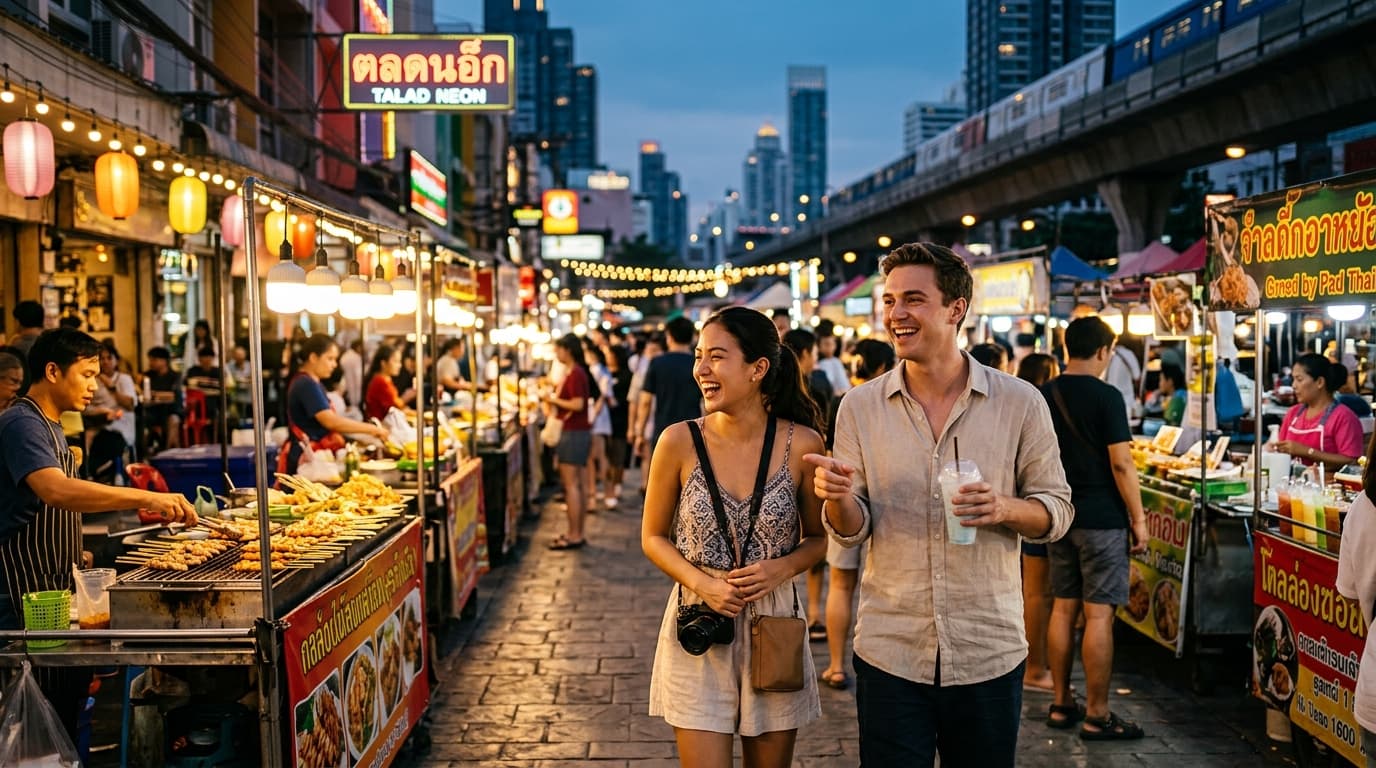
Best time to visit Thailand: for most travelers, the sweet spot is November through February, when the weather is cooler, drier, and easiest for beaches, Bangkok sightseeing, and northern adventures. That said, the “best” month really depends on where you’re going, because Koh Samui follows a different rain pattern than Phuket, and Chiang Mai has its own cool season and burning-season quirks.
If you’re planning a Thailand trip in 2026, the smartest approach is to match your month to your destination and travel style. We checked the seasonal patterns the way local planners do: by region, by festival calendar, by crowd levels, and by price swings, so you can decide whether to go for peak weather, shoulder-season savings, or a festival-driven itinerary. Thailand rewards flexible travelers, and the best trip often comes from picking the right coastline, the right month, and the right kind of activities for the season.
Quick answer: what is the best time to visit Thailand?
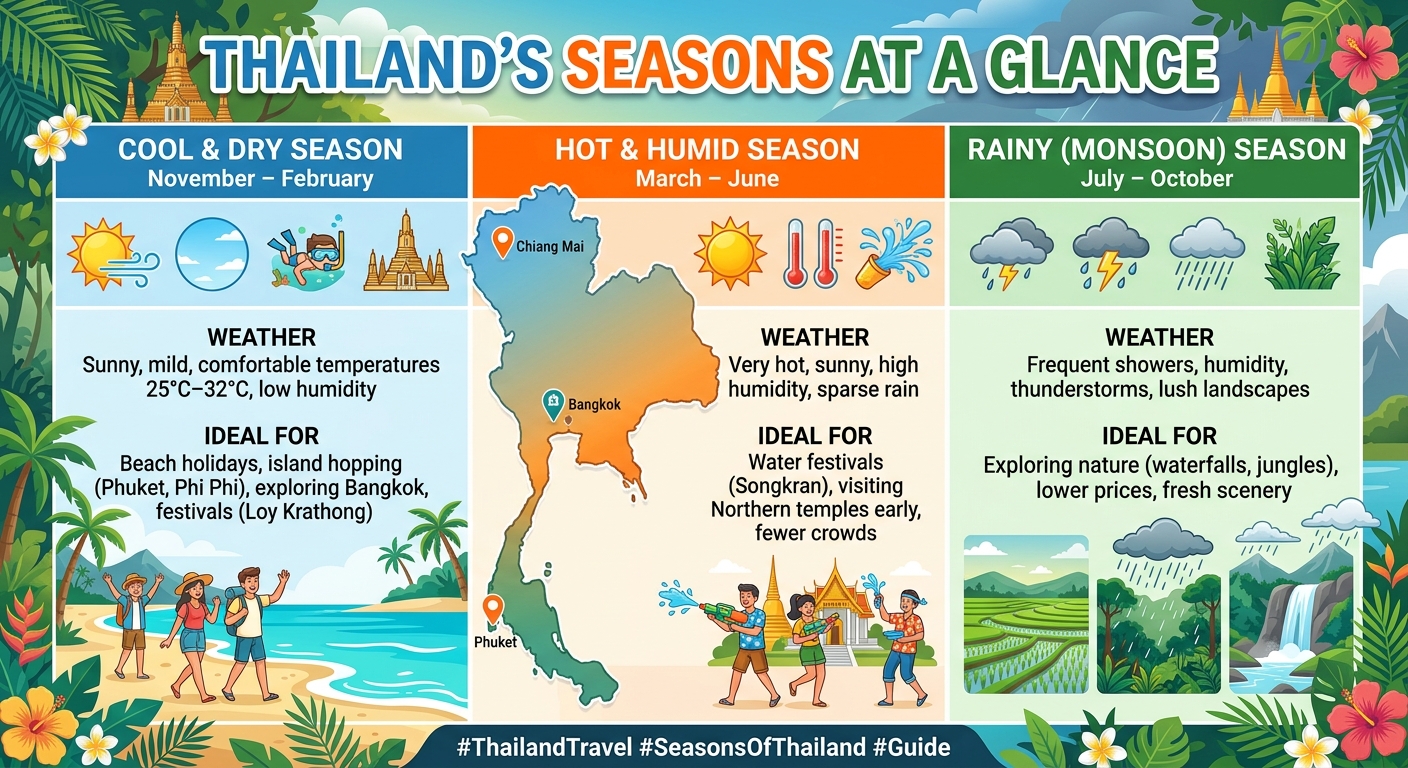
Thailand’s best overall travel window is November to February, especially if this is your first trip and you want the easiest mix of comfortable temperatures, lower humidity, and strong conditions for beaches, city sightseeing, and island hopping. In most of the country, that period lines up with the cool-dry season, which means your days are more likely to be sunny and your evenings more pleasant for markets, rooftop bars, night trains, and temple visits. If you only want one answer, that’s it.
But here’s the local catch: Thailand is not one weather story. The Andaman coast, including Phuket and Krabi, is at its best in the winter months, while the Gulf coast, including Koh Samui, Koh Phangan, and Koh Tao, can stay a lot friendlier in summer when the Andaman side turns wetter. Bangkok is doable year-round, but the sweet spot is still November through February. Chiang Mai is also strongest in the cool season, though you need to think carefully about the burning season from roughly late February through April.
So the real answer is not just “winter.” It is “winter for most first-timers, summer for some Gulf islands, shoulder season for budget travelers, and festival months if you want the most energetic version of Thailand.” In our experience, the best itinerary is often a two-stop or three-stop plan that takes advantage of different weather patterns, rather than trying to force the whole country into one perfect month. If you want the easiest travel experience, go from late November to early February. If you want value, fewer crowds, and a bit more flexibility, the shoulder months can be excellent too.
Best months overall: November to February explained
From a pure travel comfort perspective, November to February is Thailand’s most reliable stretch. Temperatures are still warm, of course, but the oppressive heat has usually backed off, the sky is more often clear, and humidity tends to feel easier to manage. That matters a lot if you’re moving around a lot, because temple-hopping in Bangkok, exploring Chiang Mai’s old city, and ferry-hopping through the islands all become more enjoyable when you’re not fighting the weather every hour.
We like this window for first-time visitors because it creates fewer “bad decisions” during planning. You can book a walking food tour, spend a day at a floating market, add a long-tail boat trip, and still have energy left for nightlife or a nice dinner. Beaches are also in their most photogenic state, especially on the Andaman side. The downside is simple: everyone else knows this too, so prices are higher, popular resorts sell out faster, and the best tours can fill early.
If you’re traveling for a honeymoon, anniversary, or big milestone trip, this is the safest time to go. If you are traveling for affordability, we would still point you toward the edge of this season—November before the holiday rush, or late February before temperatures spike. In other words, the best months overall are not just about weather; they are about how much certainty you want.
Fast caveat: why Koh Samui and the Gulf coast differ
This is one of the most important Thailand planning facts, and it gets missed constantly: the Gulf coast has a different rainy season than the Andaman coast. That means when Phuket and Krabi are getting wetter, Koh Samui may still be doing just fine, and vice versa depending on the month. If you only remember one regional exception, remember this one.
Koh Samui, Koh Phangan, and Koh Tao often have their rainiest stretch later in the year, especially around October to December, while the Andaman coast more commonly sees its wettest period from roughly May to October. So if you’re going in summer and still want island time, the Gulf can be the smarter play. That’s why local agents and experienced travelers often build summer Thailand trips around Samui rather than Phuket.
From our perspective, this difference is one of the reasons Thailand works so well as a multi-stop destination. You do not need to accept “bad weather” as the price of going in a certain month. You just need to choose the coastline that makes sense. If you’re booking a trip in summer, check the seasonal pattern before locking in ferries, hotels, and beach days.
Who should visit in shoulder or rainy season instead
Shoulder season and rainy season are not fallback options only for people who “couldn’t go at the right time.” They can be the smartest choice for value travelers, repeat visitors, and anyone who wants a quieter version of Thailand. If your priorities are lower prices, fewer crowds, more spontaneous booking, and easier access to major attractions, then May, June, September, and early October can be very attractive. You may trade away some weather certainty, but you often gain a lot in flexibility.
We especially recommend shoulder season for solo travelers, digital nomads, and couples who care more about atmosphere than perfect beach weather. Bangkok, Chiang Mai, and many inland experiences still work well in the wet months because showers are often short and intense rather than all-day washouts. Museums, food experiences, spa days, cooking classes, Muay Thai nights, and bar-hopping are all very doable when it rains.
Families can also benefit, especially if school holiday timing matters more than perfect weather. The key is to avoid assuming that every day will be sunny, and instead plan a mix of indoor and outdoor activities. In rainy season, the best Thailand trips are built around flexibility, a good hotel pool, and a willingness to swap a beach day for a temple or market when the forecast changes.
Thailand’s seasons at a glance
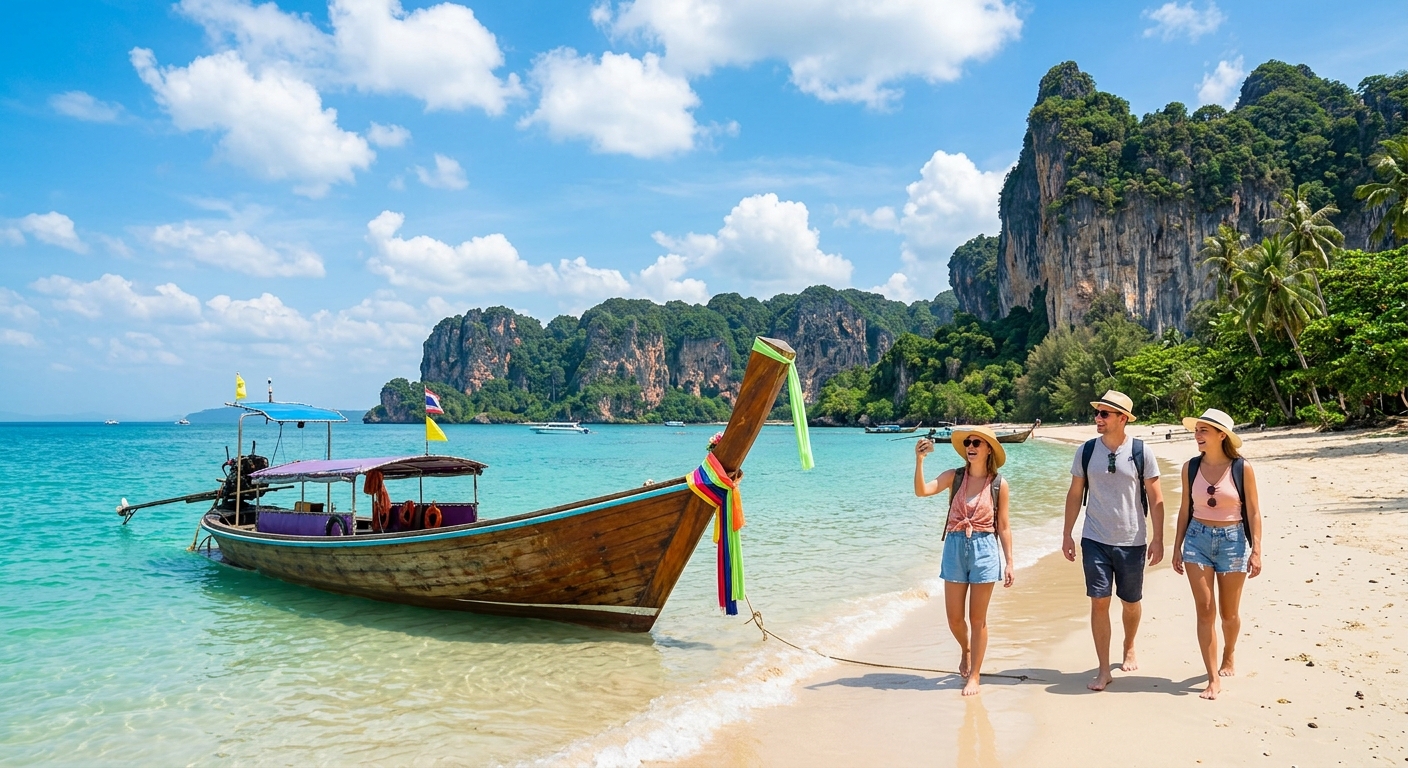
Thailand’s climate is easier to understand when you stop thinking in just “good” and “bad” weather and start thinking in seasonal trade-offs. The country is warm year-round, but the feel changes a lot across the dry season, hot season, and rainy season. Those shifts affect what you’ll wear, what you’ll book, and how much time you’ll want to spend outside each day. In practical terms, the seasons shape everything from ferry schedules to how long you can comfortably walk around a temple complex.
For travelers, the biggest question is not just whether it rains, but how the rain arrives. In many parts of Thailand, rain comes in bursts or in intense afternoon storms rather than a full day of drizzle. That means the wet season can still be a great time for trips if you structure your day wisely. Meanwhile, the dry season gives you the easiest logistics but also the highest demand.
From experience, the smartest Thailand planners use seasons as a trip-design tool. They pick the right region, the right indoor-outdoor balance, and the right month for the exact kind of vacation they want. A beach-forward honeymoon, a Bangkok food trip, a Chiang Mai culture itinerary, and an island-hop with friends all have different weather tolerance. Thailand gives you options, and that is the real advantage.
Dry season, hot season, and rainy season explained
The dry season generally runs from November through February in much of Thailand. This is the period most travelers want because the weather is more stable, humidity is lower than the rest of the year, and the chance of long rain interruptions is reduced. It is also the most straightforward season for planning day trips, ferry transfers, and sightseeing-heavy itineraries. If you are chasing the classic Thailand postcard experience, this is usually the season to target.
The hot season usually stretches from March through May, and it can feel intense, especially in Bangkok and the north. April is often the hottest month of the year, and daytime heat can be exhausting if you’re doing a lot of walking. But hot season is not automatically a bad time to visit. For travelers who can handle warmth, it offers strong beach conditions in some areas, a lively festival calendar, and sometimes slightly better rates before rains arrive.
The rainy season typically runs from May or June through October in many parts of the country, though exact timing varies by region. This is when you can see heavy showers, stormier seas, and more humid conditions. Still, the rainy season is often misunderstood. It does not mean constant rain every day. It often means a high chance of afternoon storms, lush scenery, and lower prices, which can be a worthwhile trade if you plan smartly.
Average temperatures and humidity by season
Thailand stays warm across all seasons, so travelers should think less about “cold versus hot” and more about “manageable versus sticky.” During the cool-dry season, many places feel more comfortable for full-day outings, with temperatures that are still tropical but not punishing. Bangkok and central Thailand can feel much more pleasant when humidity is lower and the air is clearer.
In the hot season, temperatures can rise sharply, especially inland. April often brings some of the most challenging heat, and walking around midday can be rough unless you plan breaks, shaded routes, and air-conditioned stops. Beaches help because the sea breeze makes the heat more tolerable, but the sun is stronger and dehydration happens fast. We always suggest carrying water, electrolyte packets, and a backup indoor plan.
Humidity is the real secret factor. Even when the thermometer looks fine, sticky air can make it feel much hotter. That’s why two months with the same temperature can feel completely different to a visitor. If you are sensitive to humidity, the cool season will feel noticeably easier, while the rainy season can feel heavy and wet even when the temperature drops a little after a storm.
How the Andaman coast, Gulf coast, Bangkok, and the north differ
Thailand’s key travel regions each behave differently, which is why broad weather advice can be misleading. The Andaman coast—Phuket, Krabi, Phi Phi, and nearby islands—tends to shine in the dry season and get wetter in the middle of the year. The Gulf coast—Koh Samui, Koh Phangan, Koh Tao—often has a different rain cycle, making it a strong summer option for beaches.
Bangkok is less about season-specific “avoidance” and more about comfort management. It gets hot, humid, and stormy at times, but it is a year-round city with enough indoor options to stay enjoyable even in wet months. In fact, rainy season can make indoor entertainment feel even more appealing, especially food halls, malls, galleries, and cocktail bars. The city does not stop when it rains; it just changes pace.
The north, including Chiang Mai and Chiang Rai, is most attractive in the cool season, with pleasant temperatures for temples, hiking, and market wandering. However, this is also where the burning season can seriously affect air quality from late winter into spring. That means the north is not just a temperature question. It is a health and visibility question too, especially if you are sensitive to smoke.
What “monsoon” means in Thailand in practical travel terms
In everyday travel language, “monsoon” in Thailand usually means seasonal rain patterns rather than a nonstop weather disaster. For most visitors, the important question is not whether rain exists, but how it changes your plans. Can you still get from hotel to attraction? Will ferries run? Are beach conditions safe enough for swimming or snorkeling? That is the practical side of monsoon season.
Rain can affect visibility, sea conditions, and transfer reliability, especially for island trips. A stormy day may mean choppier ferries, limited snorkeling visibility, or a reduced chance of scenic boat tours. On land, it may simply mean you shift your schedule and wait out a storm in a café, spa, or museum. Thailand is very used to rain, so most infrastructure is built around it.
We recommend thinking of monsoon as a “trip-shaping” factor, not a dealbreaker. If you pick the right region and keep some flexibility, you can still have a fantastic vacation. The travelers who struggle most are the ones who assume every day will be beach-perfect or who do not leave any room for weather changes. A little planning makes a big difference here.
Best months to visit Thailand
The best months to visit Thailand depend on what you want out of the trip, but there are clear patterns that make some months easier than others. If you want classic good weather, November through February is the easiest recommendation. If you want fewer crowds and lower costs, the shoulder season can be a better value. If you want cultural energy, some of the hottest months also happen to host the country’s biggest festivals.
For many travelers, the real decision is not between “good month” and “bad month,” but between “safe month” and “strategic month.” A safe month gives you weather certainty and broad regional flexibility. A strategic month gives you a chance to save money or catch a specific event, but you need to plan a little more carefully. Thailand rewards that kind of thinking.
In 2026, the best months will likely remain consistent with historical patterns, but demand dynamics matter more than ever. Popular dates around Christmas, New Year, Songkran, and major school-holiday windows get booked earlier, while shoulder season can be surprisingly strong for value. If you can travel with even a bit of flexibility, you can shape a much better trip.
November: ideal balance of weather and crowds
November is one of the smartest months to visit Thailand because it often hits the sweet spot between better weather and more manageable crowds. The rainy season has usually started to retreat in many places, the heat is becoming more comfortable, and the country feels ready for peak travel without yet being fully swallowed by holiday demand. This is especially useful if you want beach time without the full January high-season surge.
We like November for itineraries that combine Bangkok, Chiang Mai, and one beach region, because travel between stops is simpler when you are not dealing with peak crowd pressure. It is also a strong month for outdoor activities like long-tail boat rides, temple visits, and night markets. In our experience, November often gives you the “best of both worlds” feeling: good enough weather to relax, but not so much demand that every hotel or tour feels packed.
If you are planning a honeymoon, anniversary trip, or a first visit that you want to feel polished without paying absolute peak prices, November is a great target month. Book early if you are traveling over long weekends or close to festive dates, but otherwise this is one of the most balanced months in the country. It is a very safe answer for people who want a little bit of everything.
December to February: peak season pros and cons
December through February is peak season for a reason: the weather is at its most comfortable, outdoor plans are easiest to enjoy, and beach days are often at their most reliable. If your dream Thailand trip includes island hopping, rooftop dinners, elephant sanctuaries, street food walks, and long sightseeing days, this stretch is the most forgiving. It is especially strong for first-timers who want a smooth introduction to the country.
The downside is cost and availability. Flights, hotels, ferries, and tours usually become more expensive, especially around Christmas, New Year, and Lunar New Year if your dates overlap with regional travel surges. Popular beaches and islands also feel busier, and the most desirable rooms can sell out early. This is the season when “I’ll just book later” often turns into “why is everything expensive?”
Still, the experience can be worth it. If you value predictability more than bargains, peak season is the right call. Our advice is to book the key pieces early, stay flexible on smaller details, and focus on quality over trying to cram too much into a few days. In peak season, a calmer itinerary often feels better than a rushed one.
March to April: hot season for flexible travelers
March and April can be a challenging but rewarding time to travel in Thailand. The heat rises, the sun is intense, and some inland areas can feel very warm by midday. If you are not comfortable in hot weather, this is not the easiest window for non-stop sightseeing. But if you can plan around the heat, there are real advantages here.
Beach destinations can still be appealing, especially if you build in pool time, early starts, and afternoon breaks. Bangkok trips become more about indoor/outdoor balance, meaning temples in the morning, a long lunch, then museums, malls, spas, or bars later. In the north, the heat plus seasonal smoke can be a serious issue, so we would be more cautious about Chiang Mai in late March or April unless you are there mainly for Songkran or a specific event.
We recommend March and April for travelers who want festival energy, lower rates than peak season, or who simply enjoy a hotter tropical feel. Songkran in April is a major reason to go, but it also means you need to be ready for crowds, water fights, and changed logistics. If you travel during this period, choose accommodation with good air conditioning, a pool if possible, and a flexible daily schedule.
May to October: why shoulder and wet season can still work
May to October is the most weather-variable part of the year, but it can be a very smart time to go. Prices are generally lower, hotel choice improves, and many places feel less crowded. For travelers who care more about atmosphere and value than guaranteed sunshine, this can be a really good window. It is also a great time for cultural travel, city food trips, and multi-day itineraries that do not depend on perfect beach weather every day.
The important thing is to travel with realistic expectations. Rain may affect ferry schedules, sea visibility, or a few outdoor plans. But you can still enjoy Thai food markets, cafés, museums, spas, night markets, and indoor experiences in almost any month. In Bangkok and Chiang Mai, rainy days often create a nice excuse to slow down. On the islands, you just want to watch the sea and transfer forecasts more carefully.
If you are looking for a cheaper trip, May to October deserves serious attention. The best value often appears in late May, June, September, and early October, depending on the region. The most successful wet-season visitors are those who stay flexible, avoid overbooking hard-to-change transport, and choose destinations based on the month rather than forcing a “perfect weather” fantasy.
Month-by-month weather guide
A month-by-month guide is the easiest way to turn broad seasonal advice into real trip planning. Thailand’s weather changes enough from month to month that the details matter, especially if you are balancing beach plans, city time, and northern sightseeing. This section is where the vague advice becomes actionable.
The best way to use this guide is to match your month to your destination and your risk tolerance. If you want the safest bet, choose a month that aligns with good weather in the region you care about most. If you are flexible, use the month to shape the type of trip you want, whether that means beach-heavy, city-heavy, festival-heavy, or budget-focused.
We’ve organized this by the practical implications of each month, not just the climate notes. That way you can see what the weather means for ferries, tours, crowds, and price pressure. If you’re deciding between two or three possible travel windows, this is usually where the answer becomes obvious.
January in Thailand: best for classic first trips
January is one of the very best months to visit Thailand for a classic, all-around trip. The weather is generally dry and comfortable in most major travel regions, which makes it easy to combine Bangkok, Chiang Mai, and southern beaches in one itinerary. It is a strong month for walking tours, temple visits, outdoor dining, and island days without the same level of heat you’ll face later in the year.
The trade-off is that January sits right in the middle of high demand, especially after New Year. Accommodation prices can stay elevated, and the best beach resorts or boutique stays can book up quickly. This is especially true in Phuket, Krabi, Koh Samui, and Chiang Mai. If you are traveling in January, reserve key pieces early and expect busier attractions than you’d see in shoulder season.
From a planning perspective, January is one of the easiest months for first-timers because it reduces weather-related surprises. You can focus on experiences instead of contingency plans. If you have been waiting for the “perfect Thailand month,” this is one of the closest answers you’ll get.
February and March: warm, sunny, and busier
February is still very favorable across much of Thailand, often with sunny skies, manageable humidity, and excellent conditions for sightseeing and beaches. Many travelers love February because it feels slightly less compressed than the holiday-heavy December period while still offering excellent weather. It is a particularly good month for romantic trips and mid-length vacations.
March begins the transition toward hotter weather. That does not make it a bad month, but it does change how you should structure the trip. Start earlier in the day, use midday breaks, and don’t overload your schedule with long outdoor stretches. If you are heading to the north, keep an eye on the air quality conditions as the season changes.
Both months tend to be popular, so prices can remain strong, especially in resort areas. If your main goal is beach time without the very highest winter crowds, February can be a very attractive compromise. March is better for travelers who are heat-tolerant and more flexible with timing.
April and Songkran: heat plus festival energy
April is famous in Thailand for two reasons: it is one of the hottest months, and it is when Songkran, the Thai New Year water festival, takes over the country. If you love festivals and high-energy travel, April can be fantastic. Streets in many places turn into playful water fights, and the atmosphere is lively, social, and memorable.
At the same time, the heat is real. Outdoor sightseeing can feel draining, and the best strategy is to build your days carefully. Start early, go easy at midday, and choose places with air conditioning or water access for the hottest hours. In Bangkok, this often means a mix of temples, malls, bars, and food stops. On the islands, it means lots of swimming and shade.
If you travel in April, do not underestimate how much Songkran can affect availability and logistics. Transportation and hotels around the holiday can fill up, and some businesses adjust hours. But for travelers who want the most unforgettable cultural energy of the year, April can be one of the most rewarding times to go.
May and June: early rains and lower prices
May and June mark the beginning of the wetter part of the year in many areas, but that does not mean the trip is ruined. In fact, these months can be some of the best value periods if you’re okay with occasional rain and warmer humidity. You may get a mix of sunny days and strong afternoon showers, which is manageable with good planning.
These months are attractive because you’ll often find more room availability and better pricing than in the dry season. That can make them especially appealing for travelers who want nicer hotels without peak-season prices. Bangkok and much of the inland route are still very workable, and some Gulf islands can offer better beach timing than the Andaman side during this stretch.
If you travel in May or June, keep your schedule flexible and avoid packing every day with high-commitment outdoor excursions. Use this season to enjoy Thailand at a slightly slower pace. It can be ideal for food-focused trips, spa escapes, and travelers who prefer value over certainty.
July and August: mixed weather and family travel
July and August are summer holiday months for many international travelers, which means Thailand gets an influx of visitors even though the weather is more mixed. This is a good time for families who need school break timing, especially if they’re willing to trade perfect weather for easier vacation scheduling. You will see sunshine, rain, and everything in between depending on region.
From a destination standpoint, the Gulf coast often becomes more attractive than the Andaman side for beach trips, while Bangkok and Chiang Mai can still work well with indoor-outdoor balancing. If you are thinking about islands, make sure to check the weather specifics for your exact destination rather than assuming all coastlines behave the same way. Ferry and tour conditions matter more in this period.
July and August can be a solid compromise if you want a family trip during school holidays, especially if you book accommodations with pools and backup indoor facilities. We’d avoid overcommitting to long island transfer chains during this period unless you’re comfortable adapting on the fly.
September and October: wettest months in many areas
September is often one of the wettest months in many parts of Thailand, and October can remain quite rainy in some regions as the monsoon begins to taper. If you are chasing the best beach weather, these are not the safest choices for most destinations. But if you are chasing value, this is where some of the biggest bargains show up.
These months suit travelers who are comfortable with rainy-day plans and who want to experience a quieter Thailand. Bangkok can still be fun because the city’s entertainment, food, and shopping scenes do not stop for rain. Chiang Mai can also be attractive if air quality has improved and you’re focused on city and culture rather than constant hiking. The biggest challenge is usually on the coast, where sea conditions can be less predictable.
In our experience, September and October are the months where travelers either love their flexibility or regret their assumptions. If you choose them, do it intentionally. Book with weather awareness, keep insurance in place, and build a trip that would still be enjoyable even if one or two outdoor plans get rained out.
November and December: transition into peak season
November and December are the transition months into Thailand’s busiest, most comfortable travel season. November often feels like the country is opening the door to peak travel, while December fully enters it. Weather improves in many regions, sea conditions become friendlier, and holiday energy starts to build. This makes them very appealing for both leisure and celebration trips.
These months are especially good if you want your itinerary to feel balanced rather than weather-hardy. It is easier to stack activities in a single day without worrying as much about afternoon storms or heavy humidity. Rooftop bars, markets, boat tours, and day trips all become simpler to enjoy.
Of course, demand rises fast. If you’re traveling in December, especially around Christmas and New Year, you should plan much earlier than you would in a shoulder month. This is one of those periods where the best trip ideas are often the ones you secure first, not the ones you decide later. The weather is great, but the competition for that great weather is real.
Best time for beaches in Thailand
If beaches are the heart of your Thailand trip, timing matters more than almost anything else. Thailand’s coastlines are beautiful year-round in photos, but in real life the sea state, rain pattern, and ferry reliability can change the experience a lot. The biggest mistake travelers make is assuming all beach areas have the same best season. They do not.
The Andaman and Gulf coasts behave differently, which gives you options if you know how to use them. That is great news, because it means you can often find decent beach weather somewhere in Thailand no matter when you travel. The trick is choosing the right coast for your month and your tolerance for weather risk.
For beach travel, the best itinerary usually starts with the weather calendar, then filters to ferry convenience, then to the kind of vibe you want. Some islands are better for diving, some for parties, some for families, and some for quiet escapes. Let the season guide the beach, not the other way around.
Best beach weather on the Andaman coast: Phuket, Krabi, Phi Phi
The Andaman coast is at its best in the dry season, especially from November through April. This is the classic time for Phuket, Krabi, the Phi Phi islands, and nearby beaches. The water is clearer, the sky is more reliable, and boat tours tend to be easier to schedule. If your Thailand dream includes iconic limestone scenery and full beach days, this is the coastline and season most travelers picture.
Phuket and Krabi can also work nicely in November, as the weather improves without quite as much peak-season pressure as December and January. For many travelers, that balance is ideal. You still get strong beach conditions, but you may avoid the very heaviest holiday crowding. If you want a more relaxed version of the winter beach trip, November or early December can be a great compromise.
We would be more cautious from May through October on the Andaman side, especially if your main goal is swimming, snorkeling, or boat-hopping. The weather can still be beautiful on some days, but risk rises. If you must travel then, choose flexible plans, stay a little longer in one place, and keep backup activities ready in case the sea gets rough.
Best beach weather on the Gulf coast: Koh Samui, Koh Phangan, Koh Tao
The Gulf coast is Thailand’s most useful seasonal exception. Koh Samui, Koh Phangan, and Koh Tao often have better beach weather in the summer months when the Andaman coast gets wetter. That means if you’re traveling in June, July, or August, the Gulf can be the more strategic coastal pick. It is a major reason experienced Thailand travelers don’t lock themselves into Phuket by default.
Koh Samui in particular is popular for travelers who want a more resort-friendly island with strong beach infrastructure and a wide range of hotels. Koh Phangan can be great if you want a mix of laid-back beaches and social energy, while Koh Tao is famous for diving. The best month still depends on your exact activities, but the Gulf’s seasonal pattern gives you more viable summer options than many people expect.
That said, the Gulf is not immune to rain. The timing of monsoons can shift slightly from year to year, so always check current forecasts before your trip. But if your dates land in the middle of summer and you want to maximize your chance of decent beach weather, the Gulf is often your best bet.
Snorkeling, diving, and island-hopping timing
For snorkeling and diving, water clarity and sea conditions matter just as much as sunshine. The best conditions often come when the sea is calmer and visibility is higher, which usually aligns with the dry season on the Andaman coast and more favorable Gulf timing in its own good months. If you are planning a dive-focused holiday, check not only weather but also currents, boat schedules, and the specific marine sites you want to visit.
Island-hopping is easiest when the seas are calmer, because ferry and speedboat services can run more smoothly and the ride is more comfortable. During rougher months, even if your destination is still open, the journey can feel much less pleasant. This is especially relevant if you’re traveling with kids, older relatives, or anyone prone to motion sickness. Good weather can make the difference between a dream boat day and a miserable one.
Our advice is to book key marine activities with some flexibility. Choose operators with good safety standards, follow local advisories, and be ready to swap days if conditions change. Thailand’s best water experiences are memorable, but they are even better when you plan them with the season in mind.
Beach crowds, sea conditions, and ferry reliability
Beach season is not just about weather; it is also about crowd pressure and transport reliability. The nicest weather months often bring the biggest crowds, which affects beach loungers, restaurant waits, ferry bookings, and hotel rates. If you want a quieter beach trip, shoulder season can be a good trade-off, provided you choose your region carefully.
Sea conditions can also impact reliability. In rougher months, ferries and speedboats may be delayed or canceled, and smaller island transfers can become more unpredictable. This is one reason why travel insurance and buffer days matter more for island itineraries than for city trips. You don’t want to schedule a flight out of Bangkok on the same day as your only cross-island transfer if the weather looks iffy.
For a smoother beach experience, we recommend arriving on the mainland or nearest hub a day before your island transfer when traveling in less predictable seasons. It reduces stress and gives you room for delays. The beaches are worth it, but they reward good timing and patience.
Best time for Bangkok
Bangkok is a year-round city, but some months make it much easier to enjoy. The heat, humidity, and rain patterns affect how comfortable it is to walk, eat outdoors, explore temples, and bounce between neighborhoods. If you’re mostly doing city sightseeing, this section matters as much as the beach calendar.
The good news is that Bangkok has enough indoor and late-night energy to remain fun even when weather is less than ideal. That makes it one of the most forgiving destinations in Thailand, especially if you like food, nightlife, shopping, and culture. In other words, Bangkok is not a city you “skip” because of weather; it is a city you schedule smartly.
We checked the city the same way a local weekend planner would: by comfort, traffic, and the kind of things you actually want to do. The answer is clear—Bangkok is best in the cool-dry season, but it can still be excellent in the rainy months if you lean into the right experiences.
Bangkok weather by season and what it means for sightseeing
Bangkok’s weather is mostly about heat management. In the cool-dry season, sightseeing feels much easier because you can move between the Grand Palace, Wat Pho, canals, markets, and riverfront neighborhoods without collapsing from the heat. That makes November through February the best period for temple-focused and walking-heavy itineraries.
During the hot season, especially March and April, the city becomes more demanding. You may want to start early, take a long lunch break, and use late afternoon for indoor activities or river breezes. This does not mean Bangkok becomes unpleasant, but you have to pace yourself. Many travelers overestimate how much outdoor time they can handle in the afternoon heat.
In the rainy season, Bangkok becomes more flexible than frustrating, because the city’s transport, malls, cafes, bars, and food halls provide easy fallback options. A downpour might interrupt a river ferry ride or market visit, but it rarely ruins an entire day if you plan well. For city travelers, that resilience makes Bangkok a strong year-round choice.
Best months for rooftop bars, temples, and night markets
Rooftop bars are most enjoyable when the weather is clear, breezy, and warm without being oppressive, which tends to be the cool season sweet spot. November through February is ideal for skyline cocktails, sunset views, and open-air dining. You can still go in hotter months, of course, but the experience is more comfortable when you are not sweating through your first drink.
Temples are also much easier to appreciate in cooler weather. Sites like Wat Pho, the Grand Palace, and Wat Arun involve walking, standing, and in some cases waiting in direct sun. That makes the dry season a much better fit for religious and cultural sightseeing. Bring respectful clothing and comfortable shoes, because even in the best weather the city can be physically demanding.
Night markets are a mixed case. They are fun year-round, but they feel especially good in warm-but-not-too-hot evenings. The rainy season can actually make them more appealing because the temperature drops a bit after a shower. If you are the kind of traveler who likes food stalls, lively streets, and casual browsing, Bangkok is easy to enjoy in almost any month.
Rainy-season city travel advantages
Bangkok in the rainy season has genuine upsides. Hotel prices can soften compared with the most intense peak periods, and the city’s indoor entertainment choices become more attractive. You can do a cooking class, spa session, shopping day, gallery visit, or café-hopping route without losing the whole trip to rain. For many travelers, this makes the city surprisingly pleasant in wet months.
Rain also helps soften the heat, which can make urban sightseeing more bearable than in the hottest months. If you are sensitive to high temperatures, a rainy-season Bangkok trip can feel easier than a dry-season April trip. The city has enough covered walkways and transport options that you can still move around efficiently when storms roll through.
Our best advice is to treat Bangkok as a “layered” destination. Have an outdoor plan, an indoor plan, and a nightlife plan. That way you can shift based on weather without stress. The city rewards spontaneity, especially if you know where to pivot.
Air quality and heat considerations for Bangkok trips
Air quality is not the first thing travelers think about when they ask about Thailand weather, but it can matter. While Bangkok is not as affected by the northern burning season as Chiang Mai, haze and pollution can still appear at certain times of year. If you are sensitive to air quality, check current conditions before traveling and be prepared to adjust outdoor-heavy plans.
Heat is more consistently important. Bangkok’s concrete and traffic can amplify the sense of warmth, especially in the afternoon. That means hydration, sunscreen, and lightweight clothing are not optional. A good strategy is to cluster outdoor sights together and use public transit, taxis, or river transport to limit extra exposure.
If your trip is mainly about food, nightlife, shopping, and urban experiences, Bangkok remains a strong choice in most months. The real question is how much outdoor wandering you want to do. Plan around the weather, and the city becomes much easier to love.
Best time for Chiang Mai and northern Thailand
Chiang Mai and northern Thailand are easiest to enjoy when the air is cooler and the sky is clearer. The north has a different feel from the beaches and from Bangkok, and timing can make a big difference in your comfort. If you want temples, mountain drives, hiking, markets, and a slower cultural rhythm, you’ll want to pay close attention to season.
The north is not just about temperature, though. Air quality is a major seasonal factor, and it can change the whole experience. That’s why the best time for Chiang Mai is not simply “whenever it is cool.” You also need to think about the burning season, festival timing, and how much outdoor time you plan to spend. From our perspective, the north demands the most seasonal awareness of any Thailand region.
Once you understand the calendar, though, Chiang Mai becomes one of the most rewarding places in the country. It pairs beautifully with food tours, cafes, night markets, and day trips to the mountains. It is also a great place to slow down, which means seasonal comfort matters even more.
Cool season in the north: November to February
The cool season is the best time for Chiang Mai, hands down, if you want comfortable temperatures and good conditions for sightseeing. November through February gives you the most pleasant walking weather, the best odds for clear mountain views, and the easiest environment for visiting temples, markets, and old-city cafes. This is also the most enjoyable time for countryside day trips.
We especially like this period for travelers who enjoy a mix of culture and relaxation. You can spend the morning at a temple, the afternoon at a coffee shop or market, and the evening at a night bazaar or dinner spot without feeling drained. If you are coming to northern Thailand for slow travel, this is the window that helps the region shine.
Because the season is so favorable, Chiang Mai can feel busier and more expensive than during the off-season. Booking earlier is wise, especially for boutique hotels or popular guesthouses. But for most travelers, the comfort gained more than justifies the added demand.
The burning season and why timing matters
The burning season, often associated with late February through April, is the main reason travelers need to be careful about when they visit Chiang Mai. During this period, smoke from agricultural burning can reduce air quality significantly and sometimes obscure visibility. That can affect not only hiking and mountain views, but also your overall comfort and health.
If you are sensitive to smoke, have asthma, or simply don’t want to spend your trip worrying about air quality, avoid the peak burning window if possible. This is one of the few times in Thailand when weather alone is not the full story. Even if temperatures are not extreme, the atmosphere can feel unpleasant for outdoor time.
There are still travelers who visit during this period for festivals or lower prices, and some days are better than others. But if Chiang Mai is a priority destination for you, November through January is generally much safer and more enjoyable. We would prioritize the cool season unless you have a specific reason to go later.
Best months for temples, markets, and outdoor day trips
Temple visits and market wandering are best when you can move slowly and stay comfortable outdoors. That makes November through February the clear winner for Chiang Mai’s old town, artisan markets, and night bazaars. You will appreciate simple things like walking from one block to another without sweating through your clothes. It sounds small, but it changes the whole tone of the trip.
Outdoor day trips, such as visits to waterfalls, elephant sanctuaries, hill communities, or mountain viewpoints, also work best in the cool season. Trails are less punishing, visibility is usually better, and you are more likely to enjoy the scenery rather than just endure it. If you are building a north-focused itinerary, this is the season to maximize your time outside.
Even in shoulder months, Chiang Mai can still work if your priorities are indoor-friendly, such as cooking classes, craft workshops, coffee culture, and spa time. But if you want the full outdoor north experience, go in the cool season when the region feels at its best.
Chiang Mai festivals and mountain escapes by season
Chiang Mai has some of Thailand’s most interesting seasonal experiences, from lantern-related traditions to local cultural events and mountain excursions. The timing of festivals can make the city feel especially memorable, but they also raise demand. If you are planning to attend a major event, book accommodations and transfers early.
Mountain escapes are most pleasant when the air is cool and the views are clear, which is another reason the cool season stands out. You can turn a Chiang Mai base into a great northern itinerary with short trips to nearby nature and smaller towns. The cooler months make those outings much more appealing and less physically taxing.
If you want a trip that feels both cultural and scenic, November to February remains the easiest recommendation. It is the season when Chiang Mai’s mix of food, temples, creativity, and nature feels most coherent. In the north, timing really is half the trip.
Best time for islands and coastlines
Thailand’s islands are where timing gets truly strategic. The country has two major coastal systems, and they do not peak at the same time. That means your ideal month can change dramatically depending on whether you want the Andaman side or the Gulf side. Once you understand this, planning becomes much easier.
For many travelers, the island question is the main question. Beaches, ferries, snorkeling, diving, and sunset dinners all depend on the sea state and seasonal rainfall. If you get this right, your trip feels effortless. If you get it wrong, you may spend too much time worrying about boats and weather apps.
The good news is that Thailand gives you enough regional diversity to work around most weather patterns. The key is choosing islands based on month, not just popularity. That is especially important if you are trying to create a multi-stop itinerary with the least amount of travel friction.
Andaman coast vs Gulf coast seasonal differences
The Andaman coast and Gulf coast are the backbone of Thailand’s beach timing strategy. The Andaman coast, including Phuket, Krabi, and the Phi Phi area, is strongest in the dry season and tends to get wetter in the middle of the year. The Gulf coast, including Koh Samui, Koh Phangan, and Koh Tao, often provides better summer options and can remain appealing when the west coast is at its rainiest.
This difference matters because it changes how you plan flights, ferries, and hotel stays. If you are visiting in December or January, the Andaman coast often makes more sense for classic beach weather. If you are visiting in June or July, the Gulf coast may be the smarter option. In many cases, experienced travelers build their route around this split instead of fighting it.
If you are only visiting one coastal zone, choose the coast that matches your month. If you are planning a longer trip, consider using the seasonal split to your advantage. That approach can dramatically improve your odds of good weather.
Best months for Koh Samui, Koh Phangan, and Koh Tao
Koh Samui, Koh Phangan, and Koh Tao often fit best in months when the Gulf is relatively stable and the Andaman coast is less ideal. That makes them very useful for summer travel. If you are traveling during June, July, or August, these islands can offer a better chance of beach-friendly conditions than Phuket or Krabi. That’s why they are often recommended by locals and seasoned Thailand travelers for off-winter trips.
Koh Samui is the most developed of the three and works well for travelers who want easy logistics, solid resort options, and a wide variety of activities. Koh Phangan is more varied than people assume, with both party energy and quieter corners. Koh Tao is the go-to for diving and a more compact island feel. The best one depends on whether you want comfort, nightlife, or underwater time.
As always, check the exact weather in your travel week. Seasonal patterns are useful, but they are not guarantees. If your trip depends on calm seas or precise transfers, give yourself buffer time.
Best months for Phuket, Krabi, and Trang
Phuket, Krabi, and Trang shine most in the Andaman dry season. November through April is the most reliable range for beautiful waters, beach days, and island tours. Phuket is the easiest base for a wide range of hotels, nightlife, and activities. Krabi offers dramatic scenery and easier access to some of the region’s most famous bays and cliffs. Trang can be quieter and is often appealing for travelers who want a less hectic coastline.
December through February is the most comfortable but also the busiest stretch. November is often the sweet spot if you want strong weather without the full holiday crush. March and April still work well, though temperatures rise. Once you move into the wetter middle months, the forecast matters more and boat conditions can become less predictable.
If you are planning one coast-focused vacation and want the highest odds of classic Thailand beach weather, this is the side to target in the dry season. If you’re traveling outside that window, you may still have a lovely trip, but you should have a more flexible mindset.
How to choose islands based on weather risk tolerance
Choosing the right island is partly a weather decision and partly a personality decision. If you hate uncertainty, choose a destination and month with the strongest historical weather pattern, then book a good base and keep transfer days light. If you are comfortable taking a weather gamble for lower prices or fewer crowds, shoulder season can offer a lot of value.
Families and first-time travelers usually do better with lower-risk choices. That means picking the coast with the stronger seasonal fit and avoiding ultra-tight transfer chains. Couples might choose a more atmospheric island with a nice resort and fewer moving parts. Solo travelers and friends can often handle a bit more improvisation, especially if they want nightlife or activity variety.
The best island trip is rarely the one with the most ambitious itinerary. It is the one that gives the weather enough room to behave. Keep that in mind, and you’ll make a much better choice.
Festivals and events by season
Festival timing can transform a Thailand trip. Some of the best travel memories come from visiting during a major holiday or cultural event, but festivals also change prices, availability, and crowd levels. That means they are both an opportunity and a planning constraint.
If you care about atmosphere, this section matters a lot. Thailand’s festivals are not just “nice extras”; they can define the feel of the entire trip. Songkran brings playful chaos, Loy Krathong creates one of the country’s most beautiful nights, and regional celebrations can fill your calendar with food, music, and local energy.
The main thing to remember is that festival timing should shape your booking strategy. If you want to be there, reserve early. If you just want to avoid disruptions, check the calendar before you lock in flights and hotels. Festivals are part of the travel experience here, whether you plan for them or not.
Songkran in April: Thailand’s biggest water festival
Songkran, Thailand’s New Year celebration, usually takes place in mid-April and is the country’s most famous festival. Expect water fights, lively streets, and a lot of energy in major cities and tourist areas. It is a blast if you want an unforgettable cultural celebration, but it is not a calm sightseeing week.
Songkran affects logistics. Some stores and services may have changed hours, transportation can be busier, and hotels around the festival dates often book out earlier than usual. It is a great time to visit if you embrace the energy, but less ideal if you want a quiet, predictable vacation. In our experience, the best Songkran trips are built with a playful attitude and a few lighter schedule days.
If you’re planning to participate, bring quick-dry clothes, waterproof protection for your phone, and a willingness to get soaked. If you’d rather observe from the sidelines, stay in a calmer area or choose accommodation with easy indoor access. Either way, book ahead.
Loy Krathong and Yi Peng in late fall
Loy Krathong, often celebrated in November, is one of Thailand’s most beautiful festivals. People float decorated offerings on water, and in some regions the atmosphere becomes magical after dark. In northern Thailand, Yi Peng lantern celebrations are especially associated with Chiang Mai and create one of the most visually stunning scenes in the country. If you want a truly memorable night, this is one of the best reasons to time a trip carefully.
The downside is demand. Hotels in festival hot spots can sell out quickly, transport gets more competitive, and the best viewing spots can become crowded. If you’re visiting during this period, book early and choose your location wisely. The atmosphere is worth it, but it rewards those who plan ahead.
For travelers who care about photography, romance, or once-in-a-lifetime experiences, late fall is exceptionally strong. If your trip is flexible, aligning with Loy Krathong or Yi Peng can be a brilliant choice. Just be ready for a busier, more expensive travel window.
Chinese New Year, Makha Bucha, and regional events
Thailand has many holidays and events beyond the headline festivals. Chinese New Year can affect availability and atmosphere in certain areas, especially where there are strong Chinese-Thai cultural communities or major tourist traffic. Makha Bucha and other Buddhist holidays can also influence temple activity, alcohol availability in some places, and the rhythm of local life.
Regional events, food festivals, music gatherings, and cultural fairs happen throughout the year. These can be excellent reasons to travel, especially if you want a more local feel. The exact timing changes annually, so it’s worth checking official event calendars before you book. That’s especially true if you want to align with a specific city or region.
We recommend using festivals as a bonus layer, not the sole reason for your trip, unless the event itself is your main goal. When the festival and weather line up, that can be amazing. When they don’t, your trip still needs to work.
What festival timing means for crowds, prices, and bookings
Festival periods often push prices higher and reduce flexibility. Hotels near the event zone sell faster, tours can fill up, and restaurants may get busier. If you travel during a major holiday, book early and expect more competition for the most desirable times and locations. That applies especially to Chiang Mai during lantern season and beaches around Christmas/New Year.
At the same time, festivals can make a trip feel much more alive and memorable. The trick is deciding whether you want that energy or whether you prefer calmer logistics. There is no wrong answer, but it changes the kind of vacation you’ll have.
If you are budget-focused, festival timing is often not the cheapest choice. If you are experience-focused, it may be worth the extra cost. Decide which matters more before you start booking.
Cheapest time to visit Thailand
If your main goal is saving money, Thailand can be an excellent value destination, but timing still matters. The cheapest time is usually during the shoulder and rainy seasons, when hotel prices soften and flight deals are more likely to appear outside major holidays. The trick is knowing where the value is real and where it only looks cheap on paper.
Budget travel in Thailand works best when you understand the trade-offs. Lower prices often come with more weather risk, fewer crowds, or more variable sea conditions. That can be a great deal if you’re flexible, but a frustrating one if you’re expecting perfect weather for a fixed-price bargain. Cheap is only a win if it still matches your trip style.
We’ve seen plenty of travelers save money without sacrificing the trip by choosing the right month, the right region, and the right booking approach. This section breaks down how to do that well.
Lowest-price months and where deals appear
Generally, the most affordable periods are late spring through early fall, especially outside major holiday dates. May, June, September, and early October are often strong value months for hotels and some tours. If you are flexible on destination, you may find even better deals by choosing regions that are less weather-sensitive during your dates.
Bangkok tends to offer good value more consistently because it has such a large inventory of hotels and activities. Chiang Mai can also be budget-friendly outside the busiest cool-season peaks. Beach destinations may show more dramatic swings, particularly in the most popular resort areas. That means the best bargains are often found where demand has cooled but the destination still remains operational and enjoyable.
Airfares can vary dramatically depending on your departure city and how far ahead you book. If you are flying from the US, UK, Canada, or Australia, the best deal is often not “the cheapest month overall” but the month where your route is least competitive. Compare both your local airfare market and Thailand’s hotel season before you decide.
Shoulder season savings vs weather trade-offs
Shoulder season is where many smart travelers find the best value. You may give up a bit of weather certainty, but in return you often get better hotel rates, easier reservations, and a calmer overall atmosphere. This can be especially useful if you care about comfort rather than checking off every “best weather” box.
The weather trade-off is not usually catastrophic. Instead, it means you might see some afternoon showers, rougher seas, or a little less beach reliability. If your trip includes cities, food experiences, spa days, and cultural sightseeing, those trade-offs are often worth it. If your trip is 90 percent beach, you need to be more cautious.
Shoulder season works best when the itinerary is designed to be resilient. Book places with pools, choose destinations with indoor options, and avoid overcommitting to hard-to-change transport. That is how you turn seasonal uncertainty into a savings win instead of a headache.
Budget tips for flights, hotels, ferries, and tours
To save money, start with flights and major hotel nights, because those are usually the biggest variables. Booking early helps more in peak season, while shoulder-season flexibility can help you grab last-minute deals. For ferries and inter-island travel, planning a little ahead is smart, especially if your route depends on a specific day and weather window.
For tours, look for official operators, compare inclusions carefully, and avoid paying peak rates for things that do not need peak timing. A food tour, city walk, or market visit can often be booked closer to the date than a ferry-linked island excursion. In our experience, travelers save the most by booking the non-negotiables first and staying flexible on the rest.
Restaurants, street food, and local transport can keep the budget manageable no matter when you go. The most expensive part is usually your room and inter-city or island transfers. Focus on those two categories first, and you’ll control most of the cost.
When “cheap” can actually be the smartest time to go
Cheap is smartest when your goal is not perfect weather, but a balanced trip with fewer crowds and a better price-to-experience ratio. For many travelers, that means choosing months when Thailand is still very enjoyable but less in demand. You might have a little rain, but you also get easier bookings and more room to breathe.
This is especially true for repeat visitors who have already done the classic dry-season trip. If you’ve seen the postcard version of Thailand, the wet-season or shoulder-season version can feel more local and relaxed. The key is entering the trip with the right expectation: not “I got the cheap month, so everything will be ideal,” but “I chose the month that best fits my budget and tolerance.”
When that mindset clicks, low-cost Thailand travel becomes not just possible but genuinely rewarding. The country is one of the best places in the world to travel strategically.
| Month | Weather | Crowds | Prices |
|---|---|---|---|
| November | Very good, transitional dry season | Moderate | Moderate to high |
| December-February | Best overall | High | High |
| March-April | Hot, mostly dry | Moderate to high | Moderate to high |
| May-June | Mixed, early rains | Lower | Lower |
| September-October | Wettest in many areas | Low | Lowest to moderate |
Best time to visit Thailand by travel style
The best time to visit Thailand changes a lot depending on who you are traveling with and what kind of trip you want. A couple on a honeymoon has different weather priorities than a family with kids, and a solo traveler may care more about budget and vibe than about perfect sea conditions. The country is flexible enough to serve all of those trips well, but not in the same month.
We often advise travelers to stop asking, “What is the best month?” and start asking, “What kind of Thailand trip do I want?” That simple shift makes planning much easier. It also helps you avoid choosing a month that looks great on paper but does not fit your actual goals. Travel style matters.
Here’s how we’d match seasonal timing to common traveler types, based on the way Thailand actually feels in each part of the year.
Best time for first-time visitors
First-time visitors usually do best in November through February because the trip is easiest to manage. Weather is comfortable, beaches are reliable, Bangkok is more walkable, and Chiang Mai is at its best. That combination reduces decision fatigue, which is great if you are trying to see multiple parts of the country in one trip.
If you are a first-timer, the biggest risk is underestimating heat, rain, and transfer time. The cool season minimizes those headaches. It also gives you the widest range of possible itineraries, from classic city-and-beach combinations to more culture-heavy routes. We usually recommend first-timers avoid the most weather-sensitive months unless they are intentionally optimizing for price or festivals.
For a first visit, aim for convenience and comfort first. Once you know Thailand better, you can get more experimental with the season.
Best time for couples and date-night trips
Couples often prefer the most comfortable weather because it makes romantic dinners, rooftop bars, beach walks, and spa days feel effortless. That puts November through February at the top of the list, especially if you want an easy honeymoon-style experience. It is also the best time for sunset cruises and outdoor dining without weather anxiety.
That said, couples can also enjoy shoulder-season trips if they prioritize atmosphere and value. A quieter beach, a nice resort with a pool, and a few good restaurant reservations can make a rainy-season escape feel very special. The real key is choosing accommodation and activities that feel intimate even if the weather is imperfect.
If romance is the goal, avoid packing the itinerary too tightly. Thailand is better when you leave time for slow mornings, flexible evenings, and spontaneous meals.
Best time for families and kids
Families usually do best in the dry season or during school holidays that fall in more comfortable months. November through February is ideal because outdoor activities are easier and the heat is less intense. Kids tend to handle the weather better when it is not overly hot, and parents appreciate fewer rainy-day surprises.
However, family travel can still work in summer holiday windows if you choose the right region. The Gulf coast can be a better beach bet than the Andaman side during some summer months, and Bangkok’s indoor options help on rainy days. Hotels with pools become especially valuable for families traveling in less predictable weather.
When planning with kids, prioritize shorter transfer times, reliable transport, and backup indoor entertainment. That way, the season matters less and the whole trip stays smoother.
Best time for friends and group trips
Friends and group trips often work well in shoulder season because groups can be more flexible about weather. If your crew wants nightlife, beach time, and a bit of adventure, you do not necessarily need the absolute best weather month. You do, however, need enough flexibility to handle changes in plans.
Groups also tend to benefit from slightly lower prices outside the most popular holiday windows. That can make it easier to secure villas, larger hotel rooms, or group tours. If you are celebrating something, consider choosing a festival month for extra energy, but book early because group logistics get harder when demand rises.
For friend groups, the best month is often the one that balances fun, affordability, and easy planning. Thailand has enough nightlife and activity variety to work beautifully in that format.
Best time for solo travelers
Solo travelers can thrive in almost any season, but shoulder months are especially attractive because they can be cheaper and less crowded. If you enjoy meeting people, exploring food scenes, and moving at your own pace, you may actually like the quieter atmosphere of late spring or early fall. Thailand is very solo-friendly in general.
Peak season is also good for solo travel if you want the easiest social scene and the broadest choice of tours. You will find more group activities, more fellow travelers, and more consistent weather. The downside is cost, which is why solo travelers often find the shoulder season to be a sweet spot.
We’d suggest solo travelers use the season to shape the type of trip they want: social and reliable in peak months, quieter and more budget-friendly in shoulder months, or more spontaneous when the weather allows.
| Travel style | Best months | Why it works |
|---|---|---|
| First-time visitors | Nov-Feb | Most reliable weather and easiest itinerary |
| Couples | Nov-Feb; shoulder season for value | Romantic weather and resort comfort |
| Families | Nov-Feb; summer in Gulf coast | Easier outdoor days and better logistics |
| Friends/groups | Nov-Feb; May-Jun for value | Good mix of nightlife, beach, and flexibility |
| Solo travelers | Shoulder season or peak season | Choose between value and social energy |
Comparison tables: choose your best month fast
If you are trying to decide quickly, comparison tables are your best friend. Thailand has so many seasonal variables that it helps to see the decision in one place rather than bouncing between paragraphs. These tables distill the most important differences into something you can scan and use right away.
We built these comparisons around what travelers actually need to know: weather, prices, crowds, and destination type. That makes it easier to match a month to your style. It also helps if you are comparing a beach trip with a city trip or figuring out whether to go north or south.
Use these as a planning shortcut, then read the surrounding sections for nuance. The tables give you the fast answer; the text gives you the practical details.
Best months by weather, price, crowds, and region
| Month | Weather score | Price level | Crowds | Best region focus |
|---|---|---|---|---|
| November | Excellent | Moderate | Moderate | Most of Thailand |
| December | Excellent | High | High | Andaman coast, Bangkok |
| January | Excellent | High | High | Nationwide |
| February | Excellent | High | Moderate-high | Nationwide |
| March | Good to hot | Moderate-high | Moderate | Beaches, Bangkok |
| April | Hot | Moderate | Moderate-high | Songkran destinations |
| May | Mixed | Lower | Lower | Bangkok, Gulf coast |
| June | Mixed | Lower | Lower | Gulf coast, city breaks |
| July | Mixed | Moderate | Moderate | Gulf coast, family trips |
| August | Mixed | Moderate | Moderate | Gulf coast, indoor-city mix |
| September | Wet | Lowest | Low | Bangkok, value travel |
| October | Wet to improving | Low | Low | Transitional trips |
Best time by destination type: beach, city, culture, nightlife
| Destination type | Best months | Why |
|---|---|---|
| Beach | Nov-Apr for Andaman; May-Aug for Gulf | Best sea and weather alignment |
| City | Nov-Feb; rainy season if flexible | Comfort for walking and indoor backups |
| Culture | Nov-Feb in the north; year-round in Bangkok | Easier sightseeing and museum/tour days |
| Nightlife | Year-round, best in cool season | Comfortable evenings and easier late nights |
Quick comparison of Andaman coast vs Gulf coast
| Coast | Best months | Rainier months | Best for |
|---|---|---|---|
| Andaman coast | Nov-Apr | May-Oct | Phuket, Krabi, Phi Phi |
| Gulf coast | May-Aug often strong; other months can be good too | Often later in the year | Koh Samui, Koh Phangan, Koh Tao |
Practical trip-planning tips
Once you know the best month, the next step is turning that knowledge into a smooth trip. Thailand planning is not just about choosing dates; it is about booking the right pieces at the right time, packing for the weather, and building a route that still works if the forecast changes. Good trip planning can save you time, money, and stress.
We think the most common Thailand mistakes happen here. Travelers book too late, pack for the wrong season, or plan transfers too tightly. The country is friendly to travelers, but seasonal travel rewards preparation. A little practical planning goes a long way.
Use this section like a checklist. It will help you decide what to lock in early, what can wait, and how to stay comfortable in a tropical climate that changes by month and region.
What to book early and when to wait
Book early for peak-season hotels, popular resort areas, festival dates, and any island transfers that depend on precise timing. December, January, and Songkran period rooms can disappear quickly, especially in popular destinations like Phuket, Bangkok, Chiang Mai, and Koh Samui. The earlier you lock in the important pieces, the less likely you are to pay a premium later.
You can often wait longer on restaurants, casual city tours, and some walk-up activities outside major holiday periods. In Bangkok and Chiang Mai, there are usually enough options to keep you flexible. For beach transfers, though, waiting is riskier because weather and boat schedules can change. We recommend treating island logistics as high-priority bookings.
If you are traveling in shoulder season, you may have more room to wait and monitor prices. Just do not assume this will always save money. Some of the best-value rates are found by booking smartly, not by booking last-minute.
Packing for heat, humidity, rain, and temple visits
Thailand packing depends heavily on season. In the hot and rainy months, lightweight, breathable clothing is essential. Think quick-dry fabrics, comfortable sandals, and a compact umbrella or rain jacket. If you are visiting temples, you will also want modest clothes that cover shoulders and knees, or an easy layer you can throw on.
For dry season, you still need breathable clothes because Thailand never becomes cold in the way many travelers think of it. The difference is that you may not need to worry as much about rain protection, though a light layer is always smart for transport or over-air-conditioned spaces. Comfortable walking shoes are more important than heavy gear.
We also suggest packing a power bank, sunscreen, mosquito repellent, and a reusable water bottle. These basics matter in every season. The tropical environment is beautiful, but it asks a little more of you than a temperate city break.
Getting around Thailand in different seasons
Transport can change with the weather, especially if you are relying on boats or long intercity routes. In dry season, ferries and island transfers are usually easier, and overland travel is more predictable. In rainy months, you may need to leave more time for delays and be ready to shift plans if seas get rough.
Bangkok transport is generally manageable year-round, though rain can make traffic worse and walking less pleasant. In the north, roads to mountain areas can still be fine, but visibility and air quality may change your experience. For island routes, build in buffers whenever possible. If one transfer is delayed, you will be glad you didn’t schedule something tight right after it.
Whenever possible, avoid making same-day international flight and ferry combinations if the weather is uncertain. The safest route is usually to sleep near your arrival or departure hub when you have a big travel day.
Safety, storms, and travel insurance basics
Thailand is generally a safe and easy country to travel in, but seasonal weather still deserves respect. Storms can affect boat operations, heavy rain can make roads slippery, and strong sun can lead to dehydration or heat exhaustion. If you are visiting in the wetter months, keep an eye on weather alerts and follow local advice.
Travel insurance is especially useful for island trips and peak-season bookings, where cancellations or delays can be expensive. It is also helpful if you are tying together multiple destinations and do not want one weather issue to cascade through the whole plan. This is a practical investment, not an optional extra for complicated itineraries.
If you are going into the wet or hot season, keep your days flexible enough to adapt. That one habit can save a lot of stress and make the trip feel much easier.
How the Thailand travel scene is evolving in 2025–2026
Thailand’s travel scene in 2025–2026 is still rooted in the same seasonal logic, but traveler behavior is changing. More visitors are booking around flexibility, wellness, remote-work-friendly stays, and experience-driven itineraries rather than just chasing the cheapest room. That means the timing of your trip matters in new ways, especially if you want the best mix of availability and price.
We are also seeing more travelers spread out across the calendar instead of clustering only in the classic peak windows. Some want less crowded trips, some want festival timing, and some are intentionally choosing the rainy season to save money. That shift is making shoulder season more interesting and sometimes more competitive than it used to be.
For 2026 planning, the best approach is to think strategically. Check official weather sources, compare regional forecasts, and book with enough flexibility to adapt. That is the way smart travelers are getting better Thailand trips right now.
Current travel trends and demand patterns
Demand patterns in Thailand still rise strongly during the cooler months and around major holidays, but travelers are increasingly spreading bookings across shoulder periods. This is partly a response to rising prices in top destinations and partly a result of more people working remotely or traveling on flexible schedules. It is easier than ever to build a Thailand trip outside the classic winter rush.
Another trend is more region-specific planning. Travelers are learning that the Gulf coast can be a better summer choice and that Chiang Mai should be timed around air quality. This regional awareness is improving trip quality, but it also means the best spots can sell faster once people understand the seasonal pattern. Knowledge itself is shaping demand.
If you are planning in 2026, don’t assume shoulder season will automatically be empty. Good value still exists, but savvy travelers are finding it more quickly. Book the pieces that matter.
Why flexible travelers can save more now
Flexible travelers are in a strong position because they can shift between date ranges, coastlines, and accommodation categories. That flexibility often translates into better value. You may find cheaper hotels in shoulder season, better flight options on slightly different departure dates, or more availability in the region that matches the season best.
This matters even more if you are building a multi-stop itinerary. If one coast looks rainy, another may look better. If one month is expensive, the adjacent month may be much more reasonable. Travelers who can move by a week or choose between destinations tend to get better Thailand trips overall.
The biggest savings usually come from timing, not just bargain hunting. Choose the right month first, and then look for deals within that month.
What official sources and weather forecasts to check before booking
Before booking, check official tourism pages and weather forecasts rather than relying on one generic travel blog. Start with the Tourism Authority of Thailand for destination and event information. For weather, use local meteorological sources and look at short-term forecasts closer to your trip. Forecasts become more useful as you get closer to departure.
Also keep an eye on ferry operators, hotel cancellation policies, and official festival pages if you are traveling around major events. A good plan is to verify weather one month out, one week out, and again just before departure. That gives you enough time to adjust without overreacting too early.
For flight and hotel planning, compare multiple sources and look at free cancellation windows where possible. The goal is not to predict the future perfectly. It is to keep your options open until the weather picture is clearer.
Common mistakes when choosing when to visit Thailand
Thailand is an easy country to enjoy, but a few planning mistakes can make a trip much harder than it needs to be. The biggest errors usually come from oversimplifying the weather, assuming one destination’s season applies everywhere, or booking too aggressively around the cheapest-looking deal. A smarter timing strategy avoids those pitfalls.
We see the same issues come up over and over, especially among first-time visitors. Some people chase “Thailand in general” instead of choosing a region. Others forget that festivals and school holidays change availability. The good news is that these mistakes are easy to avoid once you know what to look for.
Here are the most common planning traps and how to dodge them.
Assuming one season applies to the whole country
Thailand is too geographically varied for one-size-fits-all season advice. What works for Phuket may not work for Koh Samui. What works for Bangkok may not work for Chiang Mai. If you plan as though one weather chart covers the entire country, you can end up in the wrong place at the wrong time.
This mistake is especially common for first-time travelers who want a little bit of everything. The fix is simple: match the month to the region. Once you do that, the rest of the itinerary becomes much easier to plan. Think in routes, not just dates.
Seasonal nuance is the difference between a good Thailand trip and a great one. It is worth the extra ten minutes of research.
Ignoring ferry and sea conditions
Beach travelers often focus on rain totals and forget to check sea conditions. That can be a costly oversight because ferries and boats are directly affected by weather. Even if your destination is technically open, the journey may be rougher or less predictable than you expect.
This matters most for island hopping and short beach getaways. If you are flying in for a few days and hoping everything runs smoothly, a rough sea day can throw off the whole plan. Always build in a buffer if your trip depends on boats.
When in doubt, give the sea the respect it deserves. It is part of the itinerary, not just the scenery.
Overlooking festivals and school holidays
Festival periods and school holidays can dramatically affect crowds and pricing. Songkran, Loy Krathong, Christmas, New Year, and regional holiday periods create demand spikes that are easy to miss if you only look at weather. That can mean sold-out rooms, higher transport costs, and less flexibility once you arrive.
If you want the energy of a major festival, great—just book early. If you want a quieter trip, make sure you are not accidentally landing in the middle of one. The difference can be huge, especially in hot spots like Chiang Mai, Bangkok, and popular islands.
Always check the calendar before finalizing your trip. It’s one of the simplest ways to avoid overpaying.
Booking based only on cheapest airfare
Cheapest airfare is not always the best overall value. A low fare can land you in a month with tough weather, expensive resort rates, or extra transfer complexity. Once you factor in hotels, transport, and activity limitations, the “cheap” flight can become the expensive trip.
The smartest approach is to compare total trip cost, not just the flight. Sometimes a slightly pricier airfare in a better month saves money overall because your hotels and tours are easier to book. It also improves the experience, which is the point of traveling in the first place.
Pick the month first, then chase the flight deal within that window. That order usually works better.
FAQ: best time to visit Thailand
Here are the most common questions travelers ask when deciding the best time to visit Thailand. We’ve kept the answers direct, practical, and easy to scan so you can use them while planning your trip.
What is the best overall month to visit Thailand?
November is often the best overall month because it offers a strong balance of good weather, improving sea conditions, and slightly less crowd pressure than the deepest part of peak season. If you want the safest all-around answer, November through February is the best window.
Is Thailand good to visit in the rainy season?
Yes, Thailand can be very good in the rainy season if you plan around regional weather and keep your itinerary flexible. Rain often comes in bursts, not all day, and cities like Bangkok still offer plenty of indoor and evening activities.
What is the cheapest month to travel to Thailand?
The cheapest months are often during the shoulder or rainy season, especially May, June, September, and early October, depending on the destination. These months usually offer lower hotel prices and fewer crowds, but you trade for more weather uncertainty.
When is the best time for beaches in Thailand?
For the Andaman coast, the best beach months are usually November through April. For the Gulf coast, especially Koh Samui, Koh Phangan, and Koh Tao, summer months can work better than many travelers expect.
When is the best time for Bangkok?
Bangkok is most comfortable from November through February because temperatures and humidity are easier to manage. That said, the city is still very workable in rainy season if you lean into food, shopping, nightlife, and indoor activities.
When is the best time for Chiang Mai?
Chiang Mai is best from November through February, when the weather is cooler and more comfortable for temples, markets, and mountain day trips. Avoid the burning season if you are sensitive to smoke or want the clearest experience.
Is October a good time to go to Thailand?
October can be a good time if you want lower prices and fewer crowds, but it is still rainy in many regions. It works best for flexible travelers who are okay with some weather risk and want a quieter trip.
What months should I avoid in Thailand?
There is no month you must completely avoid, but March and April can be very hot, and some northern areas have air quality issues in the late winter to spring period. The wettest months in many areas, especially September and October, are less ideal if your trip is beach-heavy and inflexible.
Which coast of Thailand is best in summer?
The Gulf coast is often the better summer choice, especially Koh Samui, Koh Phangan, and Koh Tao. The Andaman coast more often has wetter conditions in the middle of the year, so it is less reliable for classic beach weather then.
How far in advance should I book Thailand?
For peak season and major festivals, book several months ahead if you can, especially for flights, hotels, and island transfers. For shoulder season, you may have more flexibility, but it is still smart to book the major pieces early if you want the best locations and rates.
Resources and useful links
Good planning comes from good sources. If you want to make a Thailand trip really work, check official weather and tourism sources first, then compare booking tools, then lock in the dates that best fit your weather goals. That workflow keeps you from relying on outdated assumptions or generic advice.
We also recommend thinking about the entertainment side of the trip at the same time as the weather side. Thailand is full of markets, shows, concerts, food events, nightlife, and neighborhood experiences, and the best time to enjoy them often depends on the season. That is where a guide like Gidly can help you connect timing to actual things to do.
Below are the most useful resources to keep in your planning stack.
Official weather and tourism sources to check
For destination planning and event updates, start with the Tourism Authority of Thailand. For weather, use Thailand’s official meteorological updates and local forecast tools close to departure. If you are going to the north, pay special attention to regional air quality and smoke conditions in late winter and spring.
Festival dates can also change slightly from year to year, so it’s smart to verify with official event pages before you commit. That is especially important for Songkran, Loy Krathong, and Yi Peng. A little checking now can save a lot of uncertainty later.
Whenever possible, cross-reference sources rather than trusting one weather snapshot. Seasonal planning works best when you combine historical patterns with current updates.
Flight, hotel, ferry, and event planning resources
Use flight comparison tools to check fare patterns across a few date options, especially if you can move your trip by a few days. For hotels, prioritize cancellation flexibility if you are traveling during rainy season or around major holidays. For ferry and island logistics, check operators directly and allow buffer time between legs.
For events and things to do, it helps to have a live discovery tool instead of starting from scratch every time. Thailand has a huge variety of city events, nightlife options, festivals, and seasonal experiences, and the best plan often combines a few bookable anchors with room for spontaneous choices.
This is also where a local-style events catalog can make planning easier. When your dates are set, you can build the fun around them instead of guessing what is available once you arrive.
Gidly: discover things to do and event ideas for your dates
If you want to match your Thailand trip to the right entertainment, food, and event ideas, explore Gidly's full events catalog. It is a useful way to find what is happening during your dates, whether you are looking for nightlife, live music, seasonal activities, or neighborhood outings that fit the weather.
We like using Gidly-style planning because it turns a weather decision into a better trip decision. If you know you are going in the cool season, you can prioritize outdoor events and markets. If you are traveling during rainy months, you can focus on indoor entertainment, food experiences, and evening plans that work no matter what the sky does.
Find your perfect outing on Gidly and build a Thailand trip that is not just weather-smart, but actually fun from the first day to the last.
Conclusion: choose the best time based on your travel goals
The best time to visit Thailand depends on what kind of trip you want, but the simplest answer is still November through February for the broadest mix of comfortable weather, great beach conditions, and easy sightseeing. If you want the least stressful first trip, that is the window to aim for. If you want cheaper prices or fewer crowds, shoulder season can be a smart alternative. If you want a festival or a specific island pattern, timing becomes even more important.
What really matters is matching the month to the region. Use the Andaman coast in its dry season, the Gulf coast in its summer-friendly window, Bangkok when you want a city trip that can flex around weather, and Chiang Mai in the cool months if you want the north at its best. Once you see Thailand through that lens, the planning becomes much clearer.
In 2026, flexible travelers will still have the biggest advantage. They can choose the best coast, the best dates, and the best experiences for their budget and travel style. That is the real secret to a great Thailand trip: don’t just ask when to go, ask what kind of Thailand you want to experience, then plan around that.
Recap of the best months by region and style
For overall comfort, choose November through February. For the Andaman coast, focus on November through April. For the Gulf coast, summer often works better than many travelers expect. For Bangkok, the cool season is easiest but the city can work year-round. For Chiang Mai, the cool months are best and the smoky late-winter period deserves caution.
If you are a couple, a family, or a first-time visitor, peak season gives you the smoothest experience. If you are a solo traveler, a repeat visitor, or a budget traveler, shoulder season may offer a better mix of value and atmosphere. If you want a festival, build around it and book early.
That’s the simple framework we’d use if we were planning the trip ourselves.
Final planning tip and CTA to Gidly
The best Thailand trips come from timing plus flexibility. Lock in your region first, then your month, then your key experiences. And if you want ideas for the best things to do once your dates are set, explore the full lineup at Gidly to find event inspiration that fits your season, your neighborhood, and your travel style.
Find your perfect outing on Gidly.