
guide -
Best Photo Spots in Santorini (With Exact Locations)
The best photo spots in Santorini are scattered across the island, with the most iconic locations concentrated in Oia, including the Three Blue Domes viewpoint and the Byzantine Castle ruins for sunset. Other must-visit spots include Skaros Rock in Imerovigli, the Three Bells of
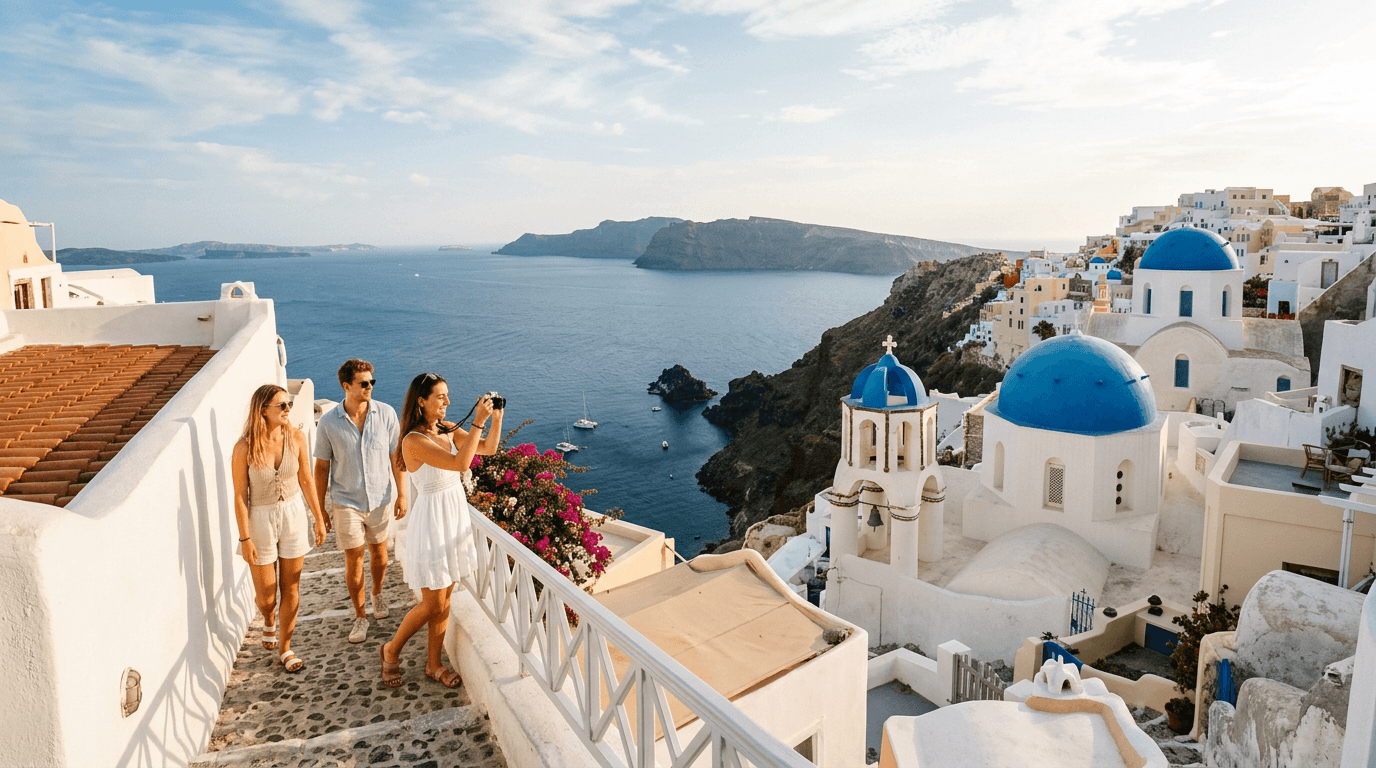
The best photo spots in Santorini are scattered across the island, with the most iconic locations concentrated in Oia, including the Three Blue Domes viewpoint and the Byzantine Castle ruins for sunset. Other must-visit spots include Skaros Rock in Imerovigli, the Three Bells of Fira, the Heart of Santorini in Megalochori, and the unique landscapes of Red Beach and Ammoudi Bay. This guide provides exact locations, maps, and insider tips to help you capture the island's breathtaking beauty.
Santorini. The name itself conjures images of whitewashed villages clinging to volcanic cliffs, sapphire-blue domes reflecting the Aegean sun, and sunsets that seem to set the entire sky ablaze. It’s a photographer's paradise, a dreamscape brought to life, and a destination that practically begs to be captured. But with so much beauty at every turn, where do you even begin? We know that feeling of wanting to capture not just a photo, but the feeling of being there—the warmth of the sun, the gentle sea breeze, the awe-inspiring views. That’s why we’ve created this ultimate guide, your local friend in your pocket, to lead you to the most spectacular photo spots in Santorini, complete with the exact locations you won't find on a standard tourist map.
The Top 5 Most Iconic Santorini Photo Spots You Can’t Miss
To kick off your photographic journey, we're starting with the absolute must-haves—the shots that define Santorini. These five locations are the superstars of the island, the images you've likely seen splashed across Instagram feeds and travel magazines. While they can be crowded, they are iconic for a reason, and no photo album of Santorini is complete without them. From the world-famous blue domes to the romantic sunset vistas, these are the spots that provide the quintessential postcard-perfect memories. Our team has scouted these locations extensively to give you the best advice on timing, angles, and how to navigate them like a pro, ensuring you walk away with a shot that’s truly special, not just a snapshot. This section is your essential checklist for capturing the heart and soul of Santorini's famous caldera views.
The Famous Three Blue Domes of Oia (Exact Location)
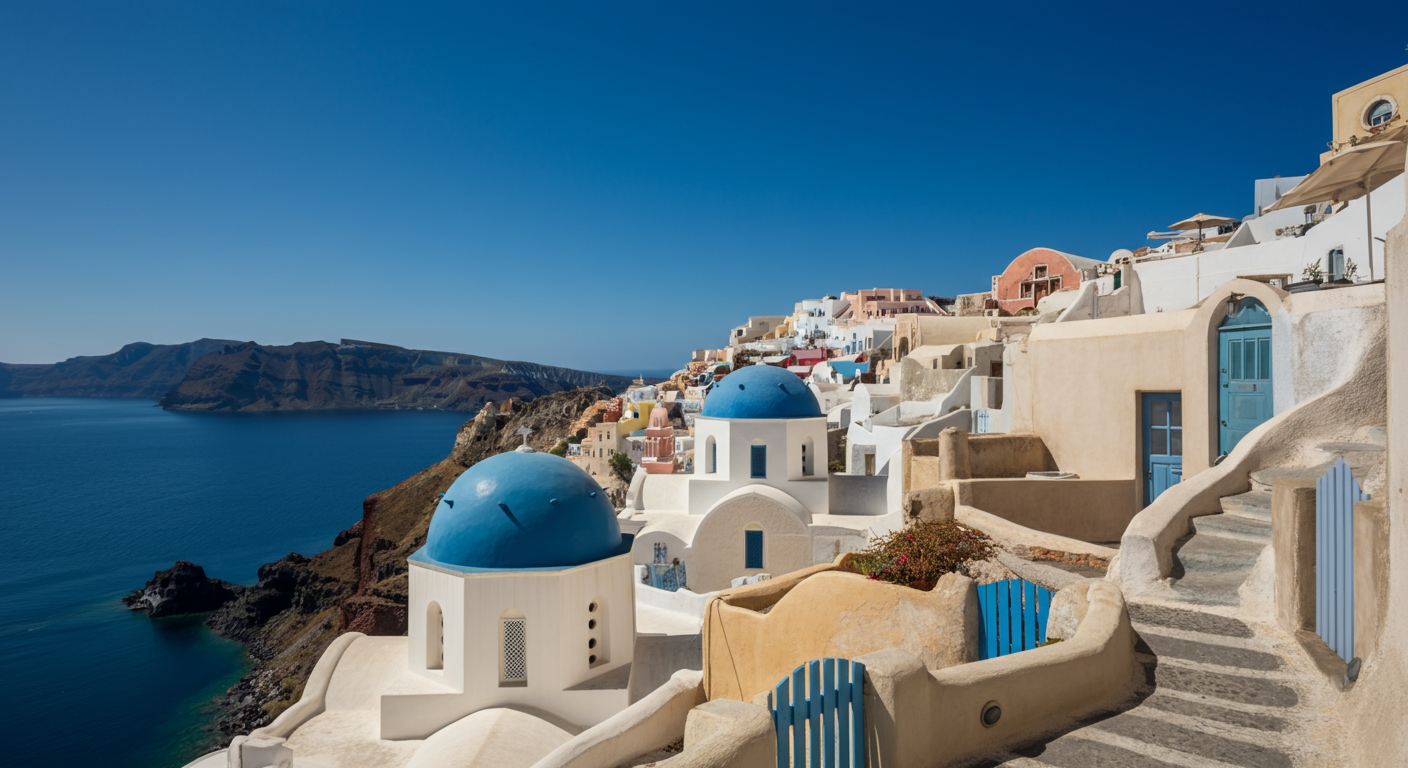
This is it—the view that launched a million travel dreams. The Three Blue Domes of Oia, with the sparkling Aegean Sea in the background, is arguably the most famous photograph in all of Greece. Finding the exact spot, however, can be a mini-adventure. Don't just wander the main marble street; you need to venture off the path. From the main pedestrian walkway in Oia, look for a prominent jewelry store called "Alexandros." Just past it, you'll see a small alleyway on your left leading downwards. Follow this path, and you'll soon see a small gate on your right. The classic viewpoint is right here, looking down over the domes of the Church of Agios Spiridonas and the Church of Anastaseos. Be prepared for a queue, especially an hour before sunset. For a slightly different and often less crowded perspective, continue down the path a little further to find new angles through archways and over walls.
The key to a great shot here is patience and timing. Early morning, just after sunrise, is your best bet to avoid the crowds and capture the soft, golden light on the white walls. Midday sun can be harsh, creating strong shadows, but it also makes the blue of the domes pop against the brilliant white. Remember that you are shooting over private properties. The iconic blue-doored gate that you often see in photos leading to this viewpoint is now often closed to manage foot traffic, and signs explicitly ask tourists not to climb on walls or rooftops. Respect the signs and the local residents. Your best shot is from the public path, and with a good lens, you can easily frame the domes perfectly without trespassing. We recommend using a wide-angle lens to capture the full scene, but a standard lens also works beautifully for a tighter composition of the domes themselves.
Sunset from the Byzantine Castle Ruins in Oia
Watching the sunset from Oia is a rite of passage in Santorini, and the most famous place to witness this daily spectacle is the ruins of the Byzantine Castle of Agios Nikolaos. Perched on the westernmost tip of Oia, this historic lookout point offers an unobstructed panoramic view of the sun dipping below the horizon, painting the sky in fiery shades of orange, pink, and purple. The view encompasses the caldera, the windmills of Oia, and the whitewashed village cascading down the cliffside, all bathed in the magical golden hour light. It is, without a doubt, one of the most romantic and awe-inspiring experiences on the island. To get here, simply follow the main marble path in Oia all the way to its western end. You can't miss the crowds congregating on the crumbling walls and surrounding lookout points.
The popularity of this spot is its only downside. To secure a decent vantage point, you need to arrive at least 1.5 to 2 hours before sunset, especially during the high season (June-August). Find a spot on the main wall or one of the lower tiers and be prepared to hold your ground. Our team suggests bringing water and snacks to make the wait more comfortable. For photographers, a tripod is highly recommended to capture a sharp, long-exposure shot as the light fades. As the sun sets, don't just focus on the sun itself. Turn around and capture the village of Oia as it glows in the warm light—this is often an even more beautiful photo. After the sun has disappeared, wait another 15-20 minutes for the "blue hour," when the sky takes on a deep cobalt hue and the village lights begin to twinkle, creating a truly magical scene.
The Heart of Santorini in Megalochori
Tucked away from the bustling caldera edge is a charming and unique photo spot known as the "Heart of Santorini." Located in the traditional village of Megalochori, this natural window carved into the rock offers a perfect heart-shaped frame for the caldera, the volcano, and the chapel of Agios Nikolaos below. It’s a whimsical and romantic spot that has become increasingly popular on social media, yet it remains far less crowded than the viewpoints in Oia. To find it, you'll need to head towards the Heart of Santorini event space or the associated chapel, which is on the caldera road just outside Megalochori. There is a small parking area, and from there, it’s a short walk along a dusty path to find the famed rock formation.
This spot is beautiful at any time of day, but it truly shines during the late afternoon when the sun is lower in the sky, casting a soft, warm light over the caldera. It’s an ideal location for couples' photos or a creative solo portrait. Unlike the sunset spots in Oia, you won't be fighting for space here, allowing you to take your time and experiment with different poses and angles. You can frame your subject within the heart, or use the heart itself as the subject with the stunning landscape as its backdrop. From our experience, the best composition is to have someone stand a little further back on the path, allowing the photographer to capture both the person and the full heart shape with the caldera perfectly framed within it. It's a testament to the fact that Santorini's beauty isn't just in its famous villages but also in its unique natural formations.
Skaros Rock & Theoskepasti Chapel in Imerovigli
Imerovigli, known as the "Balcony to the Aegean," is home to one of the most dramatic landscapes on the island: Skaros Rock. This massive volcanic promontory was once the site of a Venetian fortress, the island's most important castle. Today, only ruins remain, but the hike to and around the rock offers some of the most breathtaking and dynamic photo opportunities in Santorini. The main trail starts near the Grace Hotel in Imerovigli and descends via a series of stone steps. The view from the path looking towards Skaros Rock, with the vast caldera stretching out behind it, is a classic shot. The rock itself looks imposing and majestic, especially during the golden hour when the setting sun illuminates its rugged face.
The real photographic treasure, however, requires a bit more effort. As you follow the path around the front of Skaros Rock, you'll discover the hidden Chapel of Panagia Theoskepasti. This brilliant white chapel, clinging to the cliff face with a stunning blue dome, is completely invisible from the village. The contrast of the white chapel against the blue sea and the dark volcanic rock is simply stunning. It’s a serene and powerful location that feels worlds away from the busy streets above. The hike down takes about 20-30 minutes and involves a fair number of stairs, so wear comfortable shoes. Capturing the chapel with Skaros Rock looming above it is a unique composition that tells a story of faith, history, and survival against the elements. This is a Gidly favorite for adventurers looking for a truly epic Santorini photo.
Ammoudi Bay’s Picturesque Port
Nestled directly below the cliffs of Oia lies the charming fishing port of Ammoudi Bay. Accessible via a winding road or by descending approximately 300 steps from Oia's castle, this little bay is a burst of vibrant color and authentic charm. The scene is a photographer's delight: traditional fishing boats bobbing in the turquoise water, sun-dried octopuses hanging in the breeze, and classic fish tavernas with tables set right at the water's edge. The backdrop is the dramatic red cliff of the caldera, with the white village of Oia perched precariously on top. It’s a completely different perspective of Santorini, one that feels more grounded and connected to the island's maritime history.
For the best photos, our team recommends arriving in the late afternoon. The light is softer, and you can capture the warm glow on the red cliffs. One of the most popular shots is taken from the water's edge, looking back at the line of restaurants with the towering cliffs behind them. For a more adventurous shot, follow the path past the last restaurant (Dimitris Taverna) for about 5-10 minutes. This will lead you to a small cove with a popular swimming and cliff-jumping spot, facing the island of Thirassia. From this vantage point, you can get a fantastic wide-angle shot of the entire Ammoudi Bay, capturing the port, the cliffs, and the immensity of the caldera. After your photoshoot, reward yourself with some of the freshest seafood on the island at one of the waterfront tavernas. It’s the perfect end to a photographic adventure.
A Photographer’s Deep Dive into Oia: Beyond the Blue Domes
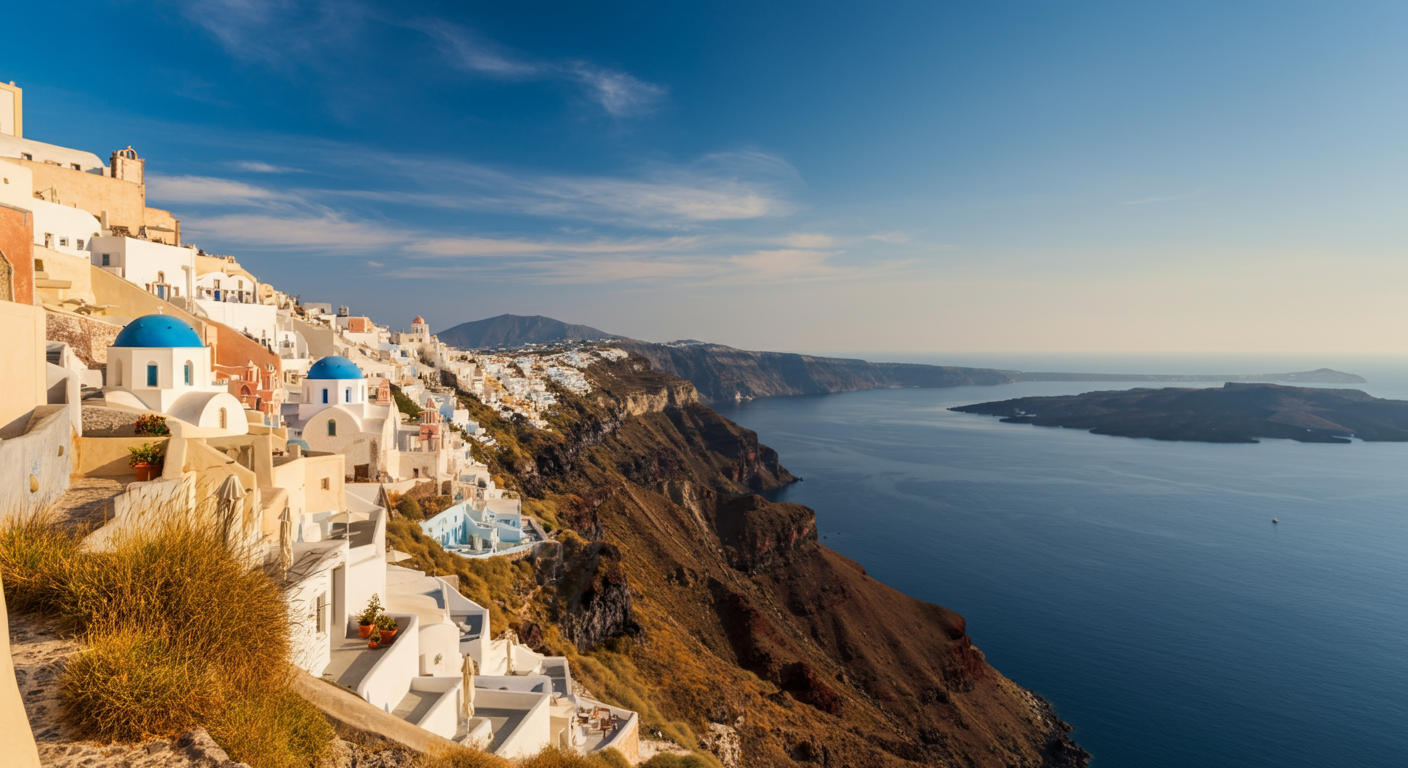
While the Three Blue Domes are Oia's calling card, the village is a labyrinth of photographic treasures waiting to be discovered. To truly capture its essence, you must venture beyond the main thoroughfare and get lost in its enchanting maze. This section is your guide to uncovering the lesser-known but equally stunning photo spots that give Oia its unique character. From the classic postcard view that isn't the blue domes to the iconic windmills and vibrant splashes of bougainvillea, we'll show you where to find the shots that tell a deeper story of this world-famous village. Our Gidly team has spent countless hours exploring these alleys to find the perfect doorways, bell towers, and quirky details that will make your photo collection stand out. Prepare to look at Oia with a fresh set of eyes and a full memory card.
The Kastro Oia Houses Viewpoint (Classic Postcard Shot)
While the blue domes are famous, the *other* classic postcard shot of Oia is taken from near the Byzantine Castle ruins, but looking back towards the village rather than out to sea. This viewpoint captures the iconic cascade of whitewashed cave houses, dotted with blue and yellow accents, tumbling down the cliffside towards Ammoudi Bay. In the foreground, you'll often see one of Oia's famous windmills, completing the picture-perfect scene. This is the view that truly showcases the unique architecture and dizzying verticality of the village. To find this spot, head towards the castle for sunset, but instead of climbing onto the ruins themselves, find a spot on the wide pathway just before it. From here, you'll have a clear, sweeping view of the entire western face of Oia.
This location is spectacular during the golden hour before sunset. The setting sun casts a warm, ethereal glow over the white buildings, making them seem to light up from within. As with the castle, this area gets incredibly crowded, so arriving early is crucial. We suggest finding a position along the wall and setting up your tripod if you have one. Experiment with different focal lengths. A wide-angle lens is great for capturing the grand scale of the scene, while a telephoto lens can help you isolate beautiful details, like a single colorful door or a private infinity pool catching the last rays of sun. After the sun has set, stick around for the blue hour. The contrast between the warm lights of the houses and the deep blue of the twilight sky is simply magical and creates a completely different mood for your photograph.
The Windmills of Oia: How to Get the Best Angle
The windmills of Oia are another iconic symbol of Santorini, harking back to a time when the island's economy was based on agriculture rather than tourism. Perched on the northwestern edge of the village, these historic structures offer a fantastic photographic subject against the backdrop of the sea and sunset. There are two prominent windmills that are easily accessible and now function as private residences or hotels. The key to photographing them is finding the right angle that incorporates the surrounding landscape. One of the best viewpoints is from the area around the Byzantine Castle, where you can frame the windmills with the setting sun behind them. This creates a beautiful silhouette effect and is a classic Santorini sunset shot.
For a different perspective, walk towards the windmills from the main street. There is a large, open plaza area just before them that allows for a clear, unobstructed shot looking up at them. This is a great spot for morning photography when the sun illuminates their facades. Another fantastic, and less crowded, angle can be found by taking the lower path that runs below the main marble walkway. From this vantage point, you can shoot upwards, capturing the windmills against the brilliant blue sky, often with vibrant bougainvillea in the foreground. Our team loves this angle because it feels more intimate and less staged. Don't be afraid to use a wide-angle lens to exaggerate their height and create a sense of grandeur. These windmills are not just pretty backdrops; they are a piece of Oia's history, and capturing them well adds depth to your Santorini story.
The Famous Pink Bougainvillea Archway (Location + Best Season to See It)
One of the most sought-after photos in Oia is the shot featuring a cascade of vibrant pink bougainvillea framing a whitewashed alley and a distant blue church dome. This burst of color against the classic white and blue palette is pure Santorini magic. Finding this specific spot requires a keen eye. As you walk along the main pedestrian street of Oia, heading from the main square towards the castle, keep an eye out for a small, unnamed alley on your left, directly across from a prominent souvenir shop. The spot is located on the roof of a private residence that has been converted into a shop. A sign often asks for a small purchase to be allowed to take photos, a reasonable request to help maintain the property. The archway of flowers perfectly frames a classic bell tower and a sliver of the sea.
The best time to capture this floral wonder is crucial. The bougainvillea is typically in its most spectacular bloom from late spring through early autumn, roughly from May to October. If you visit outside this window, the famous pink canopy might be sparse or non-existent. For the best light, visit in the mid-morning. The sun will be high enough to illuminate the flowers and the alley without casting harsh shadows. This spot is extremely popular, and a line often forms. To avoid a long wait, try visiting very early in the morning, just after sunrise, before the day-trippers arrive. Capturing this shot is a lesson in patience and respect for local businesses, and the result is a photo that embodies the romantic charm of the Greek islands.
Atlantis Books: A Quirky & Colorful Façade
In a village known for its caldera views, a bookstore might seem like an unusual photo spot, but Atlantis Books is no ordinary bookstore. Hailed as one of the most beautiful bookshops in the world, its whimsical façade is a photograph in itself. Located on the main marble street of Oia, nestled below street level in a classic cave house, its entrance is a delightful explosion of color and creativity. A hand-painted sign details the store's history, chalkboards announce literary events, and shelves of books spill out onto the terrace, inviting you in. The view from the terrace, looking out over the caldera, is also spectacular, offering a unique frame for the sea through a window of books.
The best way to photograph Atlantis Books is to capture the details that make it so unique. Focus on the hand-painted mural on the wall, the quirky quotes written on the steps, and the charmingly chaotic arrangement of books. A low-angle shot looking up from the steps can make the entrance feel even more magical and inviting. The warm, inviting light from inside often spills out onto the terrace in the evening, creating a cozy and enchanting scene. The staff is friendly but remember this is a functioning bookstore. Be respectful, quiet, and consider supporting them by buying a book—it makes for the best souvenir. Our Gidly team recommends visiting in the late afternoon or early evening when the light is soft and the crowds on the main street begin to thin, allowing you more space to compose your shot without being jostled.
Exploring Hidden Alleys, Doorways, and Church Bells for Unique Shots
The true magic of Oia is found when you purposefully get lost. Step off the main marble-paved artery and dive into the labyrinth of narrow, winding alleyways. This is where you'll find the authentic, un-staged beauty of the village, far from the selfie sticks and queues. Every corner reveals a new photographic opportunity: a sun-drenched courtyard with a sleeping cat, a brilliantly painted blue door against a stark white wall, a hidden staircase leading to a mysterious destination, or a classic Cycladic bell tower perfectly framed by two buildings. These are the shots that will make your Santorini album unique and personal. These details tell the story of everyday life in what is often treated as just a backdrop.
To embark on this photographic treasure hunt, simply pick a side street and start walking. Don't be afraid to go downhill; the lower paths are often quieter and offer surprising perspectives. Look for textures—the rough-hewn stone of an old wall, the smooth plaster of a freshly painted house. Play with composition, using archways and doorways as natural frames. The light in these narrow alleys is constantly changing, creating dramatic patterns of light and shadow. An early morning exploration is particularly rewarding, as you'll have the village almost to yourself and can capture the soft, golden light as it first kisses the white walls. This is where your creativity as a photographer can truly shine, transforming simple architectural elements into powerful, evocative images. This is the Oia that our team loves most—the quiet, intimate, and endlessly surprising side of a world-famous destination.
Imerovigli: The "Balcony to the Aegean" and Its Best Views
Perched at the highest point of the caldera, Imerovigli rightfully earns its nickname, the "Balcony to the Aegean." This village offers some of the most dramatic and uninterrupted views on the entire island, often with a fraction of the crowds found in Oia. It's a place of serene luxury, where whitewashed villas and infinity pools seem to spill over the cliff's edge. For photographers, Imerovigli is a goldmine of epic landscapes, stunning architecture, and hidden gems. We'll guide you to the iconic single blue dome that rivals Oia's, show you how to frame the perfect caldera shot from its winding paths, discuss the art of respectfully photographing the village's luxurious side, and lead you to a truly hidden chapel that offers one of Santorini's most rewarding views.
The Single Blue Dome of Anastasi Church
While Oia has its famous trio, Imerovigli boasts a single, perfectly situated blue dome that is arguably just as beautiful and far more tranquil to photograph. This is the dome of the Church of Anastasi (Resurrection of the Lord), and its classic bell tower next to it creates one of the most iconic Imerovigli images. The church is located on the main caldera path that connects Firostefani to Imerovigli. The best viewpoint is not from the church itself, but from the public path above it. As you walk from Firostefani towards Imerovigli, you'll see the dome appear below you on the right. There are several small lookout points along this path that provide the perfect angle to capture the blue dome, its bell tower, and the vast caldera all in one frame.
This spot is particularly magical in the late afternoon and at sunset. The setting sun illuminates the white bell tower with a warm, golden light, making the blue of the dome appear even more vibrant. Unlike in Oia, you won't be fighting with hundreds of people for a photo. You can take your time, set up a tripod, and wait for the perfect light. Gidly's pick for a unique composition is to include the vibrant bougainvillea that often blooms on the cliffside near the viewpoint, creating a beautiful natural frame for your shot. This serene location allows for a more contemplative photography experience, letting you truly soak in the beauty of the scene while you capture it. It’s a perfect example of Imerovigli’s understated elegance.
Framing the Perfect Shot from Imerovigli’s Cliffside Paths
The true photographic power of Imerovigli lies in its winding, multi-level cliffside paths. These walkways, which snake between luxury hotels and private villas, offer an endless supply of breathtaking compositions. The main paved path that runs the length of the village is your primary canvas. As you stroll, you'll find countless opportunities to frame the iconic Skaros Rock with different foreground elements—a brilliant white archway, a pot of colorful geraniums, or the sharp line of an infinity pool. The key is to walk slowly and look for these natural frames. The architecture of Imerovigli, with its sharp angles, curved walls, and staircases that lead to nowhere, is incredibly photogenic and provides strong leading lines for your images.
Don't be afraid to explore the smaller, unpaved offshoots from the main path, but always be mindful of "Private" signs. One of our team's favorite areas is the descent towards Skaros Rock. The path itself, with its stone steps and whitewashed railings, creates a fantastic visual journey leading the viewer's eye towards the majestic rock formation. Look for moments where the path curves, creating a dynamic S-shape in your composition. Another pro tip is to shoot both wide and tight. Use a wide-angle lens to capture the immense scale of the caldera, and then switch to a longer lens to isolate interesting details, like a single bell on a distant church or the texture of the volcanic cliffs. The interplay of light and shadow is intense here, so early morning or late afternoon will provide the most flattering and dramatic light.
Capturing Luxury: The Art of Photographing Infinity Pools (Respectfully)
Imerovigli is the epicenter of Santorini's luxury hotel scene, and its most defining feature is the ubiquitous infinity pool that seems to merge with the Aegean Sea. These pools are a powerful symbol of tranquility and indulgence, and they make for stunning photographs. However, almost all of these pools are part of private hotels and villas. The art of photographing them lies in doing so respectfully and without infringing on the privacy of guests. You should never enter a hotel property without permission to take a photo. The good news is, you don't have to. The public pathways that wind through Imerovigli often run directly above or alongside these properties, offering fantastic (and permissible) vantage points.
From the public paths, you can capture the essence of this luxury without being intrusive. Look for angles where the sharp blue line of a pool creates a beautiful contrast with the white architecture and the deeper blue of the caldera. The reflection of the sky and clouds on the still water of a pool can add another layer of beauty to your shot. The best time for these photos is often midday, when the sun is high and illuminates the water to a brilliant turquoise, or during the golden hour, when the warm light reflects beautifully off the surface. Remember, the goal is to capture the *idea* of luxury and the stunning design, not to spy on people. Frame your shots to focus on the architecture, the water, and the view, keeping any identifiable guests out of your frame. This approach ensures you get a beautiful, evocative shot while remaining a respectful photographer.
Finding the Hidden Chapel of Panagia Theoskepasti Behind Skaros Rock
For the photographer seeking adventure and a truly unique shot, the Chapel of Panagia Theoskepasti is the ultimate prize. Hidden from view from Imerovigli village, this brilliant white chapel is nestled on the seaward side of Skaros Rock. The journey to get there is part of the experience and adds to the rewarding feeling of capturing it. The hike begins from the main path in Imerovigli, following the signs for Skaros Rock. You'll descend a series of well-maintained but steep steps towards the base of the rock. Instead of climbing up the rock itself, follow the clear path that wraps around its base to the left (the north side). After about a 10-15 minute walk from the bottom of the main staircase, you will round a corner and the chapel will spectacularly reveal itself.
The scene is breathtaking. The simple, whitewashed chapel with its small blue dome stands in stark contrast to the dark, rugged volcanic rock and the deep blue of the Aegean. It feels like a secret, sacred place. For the best photograph, try to incorporate the surrounding landscape. A wide-angle shot from the path leading to the chapel can capture its precarious position on the cliff. Alternatively, walk a little past the chapel to get a shot looking back at it, with the immense cliff of Skaros Rock looming above it like a guardian. The morning light is beautiful here, illuminating the chapel's white facade. However, visiting in the late afternoon means you'll be in the shade, which can provide soft, even lighting perfect for portraits. Remember to wear sturdy shoes and bring water; the climb back up is strenuous but absolutely worth it for a photo and an experience that few tourists get to have.
Fira & Firostefani: Caldera Views and Charming Streets
Fira, the vibrant capital of Santorini, and its tranquil neighbor, Firostefani, offer a different but equally compelling photographic experience. While Fira buzzes with energy, cruise ship passengers, and a bustling maze of shops and restaurants, Firostefani provides a more serene version of the same stunning caldera view. Together, they form a photographer's playground, blending classic Cycladic architecture with the lively pulse of the island's main hub. In this section, we'll guide you to the exact spot for the famous "Three Bells of Fira" photo, highlight the grandeur of the main cathedral, show you how to capture the dynamic action of the iconic cable car, and reveal the best uncrowded viewpoints that Firostefani has to offer. This is your guide to capturing the heart of the caldera.
The Three Bells of Fira (Catholic Church of the Assumption)
This is one of the most famous images of Santorini, right up there with the Oia domes. The iconic shot of a blue-domed church with three bells overlooking the caldera is a must-have for any photographer. Interestingly, this church is not in Fira itself, but in the neighboring village of Firostefani, which offers the perfect vantage point. The church's official name is the Catholic Church of the Assumption, but everyone knows it as the "Three Bells of Fira." To find the photo spot, walk along the main caldera path from Fira towards Firostefani. Just after you pass the Volcano View Hotel, you will see a small, well-trodden dirt path leading off to the right, towards the cliff edge. Follow it for a few feet, and the perfect composition will reveal itself below you.
The viewpoint looks down onto the church, perfectly framing its iconic dome and three bells against the backdrop of the volcano and the deep blue Aegean. This spot is beautiful at all times of the day. In the morning, the sun illuminates the front of the church, making the white and blue colors pop. In the late afternoon, the golden hour light casts a warm, soft glow over the entire scene, creating a more romantic and moody atmosphere. Because this spot is so well-known, it can get busy, but it's rarely as crowded as the prime spots in Oia. Our Gidly team recommends using the surrounding walls and a low-hanging tree branch as natural frames to add depth and a unique touch to your version of this classic photograph. It's a simple, easily accessible shot that delivers maximum impact.
The Main Orthodox Cathedral (Metropolitan Church)
Standing prominently at the bottom of Fira's main square, the Orthodox Metropolitan Cathedral (Church of Ypapanti) is an impressive landmark and a fantastic photo subject. Its large, brilliant white structure, beautiful arched bell tower, and series of domes make it a stunning example of Cycladic religious architecture. Unlike many of the cliffside churches, the cathedral is situated on a large, open plaza, offering plenty of space to capture its grandeur. The best photo opportunity is from the plaza itself, looking up at the cathedral's intricate façade. The stark white of the building against a clear blue sky is a classic Greek island image. Try capturing the beautiful mosaic above the main entrance or the detailed patterns of the bell tower.
The real photographic treat, however, is the view from the cathedral's terrace. Walk around the side of the church to its large cliffside courtyard. From here, you are treated to a sweeping, panoramic view of the caldera and the volcano. The white balustrades and arches of the terrace itself create perfect foreground elements and natural frames for the landscape beyond. We love composing shots that include the arches in the foreground, leading the viewer's eye out to the vast sea. This area is generally less crowded than the main shopping streets of Fira, making it a relatively peaceful spot to take in the view and snap some photos. It's especially beautiful in the late afternoon as the sun begins to soften, casting long shadows across the plaza and highlighting the texture of the cathedral's walls.
Capturing the Cable Car and Donkey Path
The journey between Fira and its old port (Gialos) is a spectacle in itself, offering two iconic and dynamic photo opportunities: the modern cable car and the traditional donkey path. The steep cliffside is traversed by a zigzagging path of 587 steps, historically used by donkeys and mules to transport goods and people. Today, it’s a popular, if controversial, tourist activity. Running parallel to it is the cable car, offering a swift, modern alternative with breathtaking views. Photographing these two contrasting modes of transport tells a fascinating story of old and new Santorini. The best place to capture both is from the cliff edge in Fira, near the cable car's top station.
From the main path in Fira, you can look down and see the cable car gondolas gliding silently up and down the cliff face. Using a zoom lens, you can capture a single red gondola suspended dramatically against the backdrop of the blue sea. For an even more dynamic shot, use a slightly slower shutter speed to create a slight motion blur in the background, making the gondola pop. To photograph the donkey path (the Karavolades Stairs), find a viewpoint that shows its incredible zigzag pattern snaking down the cliff. Capturing a line of donkeys making their way up or down adds life and movement to the scene. Please be mindful of the animal welfare concerns associated with the donkey rides. As photographers, we can document the scene, but Gidly encourages exploring ethical alternatives like the cable car for the actual journey.
Finding Uncrowded Viewpoints in Firostefani
Firostefani, which means "Crown of Fira," is the perfect antidote to the crowds of its larger neighbor. This village offers the same jaw-dropping caldera views but with a much more relaxed and tranquil atmosphere. The best way to find uncrowded photo spots here is simply to wander. The main caldera path running through the village is the main attraction, and every few steps reveal a new, perfect composition. Unlike Oia, where the best views are often concentrated in a few specific spots, Firostefani's beauty is more evenly distributed. Look for small archways, classic blue-and-white doorways, and staircases that seem to lead directly into the sky.
One of our favorite hidden spots is near the Sun Rocks Hotel. The public path in this area offers stunning, clean views of the caldera without any obstructions. Another great strategy is to explore the paths that lead slightly downhill from the main walkway. These often lead to small chapels and quiet corners that most tourists miss. The key is to be patient and observant. The light in Firostefani is beautiful all day, but the late afternoon is particularly special. As the sun gets lower, it creates a soft, golden light that bathes the whitewashed walls, and the shadows grow long, adding depth and drama to your photos. It's the ideal place for photographers who prefer serenity and discovery over ticking off a checklist of famous locations.
Santorini’s Hidden Gem Villages for Photographers
To truly capture the soul of Santorini, you must venture beyond the famous caldera rim. The island's interior and southern coast are dotted with charming, traditional villages that offer a glimpse into a more authentic way of life and provide a wealth of unique photographic opportunities. From the panoramic heights of Pyrgos to the medieval maze of Emporio, these hidden gems are where you'll find shots that feel personal and undiscovered. This section is your Gidly guide to escaping the crowds and exploring the lesser-known, but no less beautiful, corners of the island. We'll take you to hilltop fortresses, traditional wineries, and serene sunset spots that will add incredible depth and variety to your Santorini photo collection.
Pyrgos Village & Kasteli Fortress: 360-Degree Island Panoramas
Pyrgos Kallistis, or simply Pyrgos, was the former capital of Santorini and is one of the island's best-preserved medieval settlements. This beautiful village is built amphitheatrically on a hill, culminating in the ruins of a Venetian castle, or Kasteli, at its summit. The photographic journey begins as you wander its winding, car-free pathways, which spiral upwards through a maze of whitewashed houses, neoclassical mansions, and blue-domed churches. Every turn reveals a new composition: a charming doorway, a sun-drenched courtyard, or a glimpse of the sea through a narrow alley. Unlike the manicured perfection of Oia, Pyrgos feels more lived-in and authentic, with a quiet, timeless charm.
The ultimate photographic reward is at the top. Once you reach the Kasteli, you are treated to a stunning 360-degree panoramic view of the entire island. You can see the caldera to the west, the flat agricultural plains to the east, the beaches of Perissa and Kamari, and the island of Anafi in the distance. It’s the only place on Santorini where you can get such a complete overview of the island's unique geography. Our team recommends visiting in the late afternoon. Explore the village as the light softens, and then ascend to the Kasteli to watch the sunset. It’s a completely different experience from the Oia sunset; it’s more peaceful, expansive, and you see the light wash over the entire island, not just the sea. It's a fantastic spot to use a wide-angle lens to capture the full panorama.
Megalochori Village: Traditional Bell Towers and Wine Country Charm
Megalochori is a village that feels like it’s been beautifully preserved in time. Located in the heart of Santorini's wine country, it’s a delightful maze of winding alleys, historic mansions, and traditional cave houses. The village is known for its distinctive architecture, particularly its stunning church bell towers, which form picturesque archways over the cobblestone streets below. One of the most photographed spots is the triple bell tower of the Church of Panagia ton Eisodion, which creates a perfect frame as you enter the main village square. This is a must-capture shot that epitomizes the unique character of Megalochori. The central square is another photogenic spot, shaded by trees and surrounded by charming tavernas and cafes—a perfect place to capture the slow, authentic rhythm of village life.
Beyond the main square, the real joy of Megalochori is simply getting lost. The streets are too narrow for cars, making it a peaceful place to explore on foot. Look for the iconic "Heart of Santorini" photo spot on the caldera's edge just outside the village, but don't neglect the beauty within the village itself. The interplay of light and shadow in the narrow alleys is a photographer's dream. We also highly recommend visiting one of the nearby wineries, such as Gavalas Winery or Venetsanos Winery, which is built into the cliffside and offers incredible photo opportunities of the vineyards, the caldera, and its unique industrial-style architecture. Megalochori offers a perfect blend of architectural beauty and agricultural heritage.
Emporio Village: Getting Lost in a Medieval Cycladic Labyrinth
Emporio is the largest village in the south of Santorini and home to one of the most fascinating and photogenic spots on the island: its medieval Kasteli. Stepping into this part of the village feels like entering another world. It's a dense, tightly packed labyrinth of narrow, winding alleys, steep staircases, and tiny bridges connecting houses above the pathways. The fortress was built to protect residents from pirates, and its confusing layout was a deliberate defensive measure. For a photographer, it's an absolute paradise of texture, light, and shadow. The narrow passages create dramatic lighting conditions, with bright sunlight often piercing through small gaps in the buildings, creating natural spotlights.
The best way to photograph the Kasteli of Emporio is to embrace the feeling of being lost. Put away the map and just wander. You'll discover countless unique compositions: a bright blue door at the end of a dark tunnel, a staircase that seems to climb into the sky, or the texture of ancient stone walls. Look up—the way the houses are built on top of each other creates fascinating patterns against the sky. A wide-angle lens is useful for capturing the tight, claustrophobic feel of the alleys, while a standard lens is great for focusing on details. Because it's less visited than the caldera villages, you can take your time and experiment without feeling rushed. It's a truly unique photographic experience that offers a gritty, authentic contrast to the polished beauty of Oia.
Akrotiri Lighthouse: A Serene Sunset Spot Without the Oia Crowds
If the thought of battling the crowds for a sunset photo in Oia fills you with dread, the Akrotiri Lighthouse is your sanctuary. Located on the southwestern tip of the island, this lighthouse, known locally as "Faros," is one of the oldest in Greece. It stands on a rugged cliff, offering a completely different but equally spectacular sunset view. Instead of looking at the caldera, you look out over the vast, open Aegean Sea. The view is expansive and wild, with the silhouettes of nearby islands visible on the horizon. The main subject here is the sun itself, melting into the sea in a blaze of glory.
The area around the lighthouse is rocky and undeveloped, which adds to its raw, natural beauty. You can find a spot on the cliffs anywhere around the lighthouse to set up your shot. The lighthouse itself makes for a fantastic photographic subject, especially in the moments just before and after sunset. Capture its silhouette against the fiery sky, or use its beaming light as an element in a long-exposure shot during the blue hour. Our Gidly team recommends arriving about an hour before sunset to find your perfect spot and enjoy the peaceful atmosphere. It’s a place for quiet contemplation and epic, dramatic landscape photography. Bring a jacket, as it can get windy, and a tripod to ensure your sunset shots are perfectly sharp.
A Guide to Photographing Santorini’s Unique Volcanic Beaches
Santorini's beaches are unlike any you'll find elsewhere in the Greek islands. Forged by the island's volcanic past, they offer a dramatic and colorful palette for photographers, from fiery red cliffs to deep black sands and lunar-like landscapes. These are not your typical soft, golden-sand beaches for lounging; they are raw, elemental, and incredibly photogenic. In this guide, we'll take you on a tour of Santorini's most unique coastal locations, showing you how to best capture their striking beauty. We'll explore the Mars-like scenery of Red Beach, the endless expanse of the black beaches, the elusive White Beach, and the surreal, wind-carved cliffs of Vlychada. Prepare to see a completely different and more rugged side of Santorini's beauty.
The Striking Mars-Like Landscape of Red Beach (Kokkini Paralia)
Red Beach is arguably Santorini's most famous and visually stunning beach. Located near the village of Akrotiri, its name is no exaggeration. The beach is backed by soaring, rust-colored cliffs of volcanic rock that create a jaw-dropping contrast with the deep turquoise-blue water and dark sand. It truly feels like you've landed on another planet. The photographic potential here is immense. To get the classic shot, you'll need to walk from the parking area over a short, rocky path to a viewpoint that looks down over the entire beach. From this elevated position, you can capture the full scale of the dramatic red cliffs against the sea—a shot that screams Santorini.
For the best light, visit in the morning when the sun illuminates the face of the cliffs, making the red color incredibly vibrant. The afternoon sun puts the cliffs in shadow, which can also be dramatic but doesn't show off the color as well. If you choose to descend to the beach itself (be mindful of signs warning of rockfalls), you can capture fascinating close-up shots of the textured red rocks and the unique pebbles on the shore. A polarizing filter can be very useful here to cut down on the glare from the water and intensify the blue of the sea and sky, making the red cliffs pop even more. This is a location where the raw power of nature is on full display, and your photos should aim to capture that epic, otherworldly feeling.
The Volcanic Sands of Perissa & Perivolos Black Beaches
Stretching for several kilometers along the southeastern coast of the island, the adjoining beaches of Perissa and Perivolos form a vast expanse of unique black volcanic sand. This long, wide beach offers a completely different aesthetic from the cliffside villages. The deep black sand creates a stunning and graphic contrast with the blue of the sea and the colorful umbrellas and sunbeds that line the shore. Perissa is known for the massive rock of Mesa Vouno that rises from the sea at its northern end, providing a dramatic backdrop and a great focal point for photos. At the top of Mesa Vouno sits the ruins of Ancient Thera, offering another photo excursion for the adventurous.
The photographic opportunities here are all about composition and color. The black sand can be tricky to expose correctly, so be sure to watch your camera's histogram. On a bright day, the sand can get incredibly hot, creating a hazy, shimmering effect that can be interesting to capture. We love focusing on the details: the texture of the black pebbles, the line of footprints in the dark sand, or a single, brightly colored umbrella against the black and blue backdrop. Perivolos, just south of Perissa, tends to be a bit more upscale and "chilled out," with stylish beach clubs that offer great photo ops of their own. Early morning, before the crowds arrive, is a fantastic time to capture the clean, graphic lines of the empty beach against the sea.
White Beach (Aspri Paralia): How to Get There and Get the Shot
Located right next to Red Beach, White Beach offers another striking color contrast, though its name is a bit of a misnomer. The "sand" is actually black volcanic pebbles, like its neighbors, but it is backed by towering white and light-gray cliffs that give the cove its name. This creates a beautiful, high-contrast scene, with the dark shore, bright white cliffs, and blue water. The main challenge and photographic advantage of White Beach is its accessibility—or lack thereof. It is only accessible by boat, which means it's far less crowded than Red Beach. You can catch a water taxi from the ports at Akrotiri, Red Beach, or Perissa, or visit as part of a larger catamaran cruise.
The best way to photograph White Beach is from the water. As your boat approaches, you'll have a perfect vantage point to capture the entire cove, showcasing the dramatic contrast between the white cliffs and the dark beach. The boat journey itself provides fantastic photo opportunities, allowing you to capture both Red and White beaches from a unique sea-level perspective. If you do land on the beach, focus on the texture of the chalky white cliffs and the way the light reflects off them. The water here is often exceptionally clear, making for beautiful shots looking down through the turquoise sea to the dark pebbles below. Capturing White Beach is as much about documenting the journey as it is about the destination itself.
Vlychada Beach: The "Lunar" Beach with Wind-Carved Cliffs
Vlychada Beach, on the southern coast, is perhaps the most surreal and artistic of all of Santorini's beaches. It's often called the "Lunar Beach" because of its extraordinary landscape. Over millennia, the wind and sea have sculpted the soft volcanic rock cliffs into incredible, organic forms that look like the work of a modernist sculptor. The cliffs are a pale yellow-white and are pockmarked with caves and abstract shapes, creating a long, undulating wall of natural art. This is a place for photographers who love texture, form, and dramatic, otherworldly landscapes. The beach itself is long, with dark gray sand, and is relatively quiet compared to Perissa or Kamari.
The photographic magic of Vlychada is all in the cliffs. The best light is in the late afternoon, when the low-angled sun rakes across the cliffs, highlighting their incredible textures and creating deep, dramatic shadows. This is when the "lunar" landscape truly comes to life. Walk along the beach and look for compelling sections of the cliff face. Use a wide-angle lens to capture the sweeping scale of the formations, or use a telephoto lens to isolate specific abstract patterns and shapes. The small, picturesque port at the eastern end of the beach, with its traditional fishing boats and a few charming tavernas, offers another great photo subject. Vlychada is a testament to nature's artistry and offers a chance to create truly unique and abstract images of Santorini.
| Beach | Primary Color | Accessibility | Best For |
|---|---|---|---|
| Red Beach (Kokkini Paralia) | Red Cliffs, Dark Sand | Easy walk from parking | Dramatic, otherworldly landscapes |
| Perissa / Perivolos | Black Sand | Very easy, by car/bus | Graphic compositions, beach life |
| White Beach (Aspri Paralia) | White Cliffs, Dark Sand | Boat only | High-contrast scenes, boat trips |
| Vlychada Beach | Yellow-White Cliffs, Dark Sand | Easy, by car/bus | Abstract textures, lunar landscapes |
Planning Your Santorini Photoshoot: A Scenario-Based Guide
Santorini is a dream destination for everyone, but what makes a perfect photo spot can vary wildly depending on who you're traveling with. A romantic, secluded spot perfect for a honeymooning couple might not be ideal for a family with young children, while a solo traveler might prioritize safety and the ease of setting up a tripod for a self-portrait. In this section, we'll break down the best photo spots and strategies based on your travel scenario. Whether you're on a romantic getaway, a solo adventure, a family vacation, or a fun trip with friends, we've got the insider tips to help you capture the perfect memories for your unique journey. Let's tailor your Santorini photoshoot to you.
For Couples & Honeymooners: The Most Romantic Photo Spots
Santorini is practically synonymous with romance, and for couples, the island is one giant, beautiful backdrop. The goal is to find spots that are not only beautiful but also offer a sense of intimacy. The absolute top pick is the sunset from Oia's Byzantine Castle ruins, but the crowds can kill the mood. Our pro tip: book a dinner reservation at a restaurant with a view just below the castle. You get the same million-dollar sunset without the jostling. Another incredibly romantic spot is the Heart of Santorini in Megalochori; its whimsical frame is perfect for a classic couple's photo. For an adventurous duo, the hidden Theoskepasti Chapel behind Skaros Rock is unbeatable. The secluded location and epic view create a powerful, shared experience that translates beautifully into photos.
Consider hiring a professional photographer for a short session. It takes the pressure off, and you'll get stunning, high-quality images to cherish forever. Many photographers specialize in "flying dress" shoots, which are incredibly popular with couples. For your own photos, think about capturing candid moments: holding hands while walking through the alleys of Pyrgos, sharing a glass of wine at a cliffside winery like Venetsanos, or watching the sunrise together from Imerovigli. The best romantic photos aren't just posed; they capture the connection between two people against the breathtaking scenery. The soft light of golden hour is your best friend—plan your most important shots for the hour before sunset for that magical, warm glow.
For Solo Travelers: Epic Self-Portraits & Safety Tips
Traveling solo in Santorini is an empowering and liberating experience, and your photos should reflect that epic journey. For self-portraits, a lightweight, portable tripod and a remote shutter or your phone's self-timer are your best friends. This allows you to set up your shot and then step into the frame. The hike from Fira to Oia is a goldmine for solo travelers. You can set up your tripod at various points along the path to capture stunning self-portraits with the vast caldera as your backdrop. The path is well-trafficked enough to feel safe but has plenty of quiet stretches for you to take your time. Another great spot is Pyrgos village; its winding, quiet alleys are perfect for creative self-portraits without an audience.
Safety is paramount when setting up shots alone. Always be aware of your surroundings and keep your gear secure. Avoid setting up in very crowded areas where you might be bumped or have your gear stolen. Don't balance your camera precariously on a wall for a timed shot—it's not worth the risk. Instead, use your tripod or find a stable, flat surface. Asking another tourist to take your photo is an option, but for that perfect composition, relying on your own setup is best. Frame your shots to tell a story of independence and adventure: you looking out over the caldera from Skaros Rock, exploring the ancient ruins at Akrotiri, or enjoying a quiet moment on Vlychada's lunar beach. These powerful images of you alone against the grand landscape will be incredible mementos of your solo adventure.
For Families: Kid-Friendly Photo Ops with Easy Access
Traveling with kids means prioritizing spots that are easily accessible, safe, and engaging for little ones. The long, flat promenade at Perissa Black Sand Beach is perfect for families. The black sand is a novelty for kids, and you can capture wonderful, relaxed photos of them playing by the water's edge without worrying about cliff drops. The lack of stairs makes it easy with a stroller. Another fantastic option is the main square in Pyrgos village. It's relatively flat, car-free, and offers space for kids to run around while you snap photos against the backdrop of the charming village. The main Orthodox Cathedral in Fira also has a large, open plaza that is great for family photos with a grand view.
When photographing kids, it's all about capturing their genuine reactions and joy. Forget perfectly posed portraits. Let them be fascinated by the donkeys in Fira (from a safe distance), have them look for boats from the caldera edge in Firostefani (while holding their hand tightly), or capture their faces as they see Ammoudi Bay's colorful fishing boats for the first time. The cable car ride down to the old port is a thrilling experience for kids and offers great photo opportunities. Avoid long hikes like Skaros Rock or spots with significant stairs and unprotected drops. Keep it simple, keep it safe, and focus on capturing the fun, candid moments that define a family vacation.
For Groups of Friends: Fun, Dynamic Shots & Action Poses
A trip to Santorini with friends is all about creating fun, energetic memories, and your photos should reflect that vibe. Group shots can be more than just everyone standing in a line. Get creative! The vast expanse of Perivolos Black Beach is a perfect canvas for dynamic group photos. Try jumping shots, fun pyramids, or spelling out a word with your bodies. The beach clubs in Perivolos provide a stylish, fun backdrop for group photos with cocktails in hand. Another fantastic location is Ammoudi Bay. After a group swim and cliff jump (for the daring!), capture a celebratory photo at a seaside taverna with the red cliffs towering behind you.
The hike from Fira to Oia is also a great activity for a group of friends, offering endless opportunities for photos along the way. You can take turns being the photographer, capturing both epic landscape shots and fun candid moments of the group laughing and enjoying the journey. For sunset, instead of squeezing into the Oia castle, consider chartering a semi-private catamaran cruise. This is an incredible experience for a group. You'll get to swim, eat, drink, and watch the sunset from the water, all while getting unique photos of your group on the boat with the caldera in the background. It's a splurge that creates unforgettable memories and photos. The key for group photos is to capture the energy, friendship, and shared joy of the experience.
Insider Tips for Flawless Santorini Photos (From a Local Photographer)
Capturing a great photo in Santorini is easy; the beauty is everywhere. But capturing a truly *flawless* photo—one that stands out, tells a story, and perfectly encapsulates the magic of the island—requires a bit of insider knowledge. As city guides who have partnered with local photographers and spent countless hours scouting, we've collected the best tips and tricks to elevate your photography from simple snapshots to stunning works of art. In this section, we'll break down the secrets of timing, crowd avoidance, wardrobe choices, and gear. We'll even demystify the famous "flying dress" phenomenon. This is your backstage pass to getting those professional-quality shots you've been dreaming of.
The Golden Hour vs. The Blue Hour: A Timing Guide for Key Locations
Understanding light is the single most important skill in photography, and in Santorini, the "golden hour" and "blue hour" are your magic wands. The Golden Hour is the period shortly after sunrise and before sunset, when the sunlight is redder, softer, and more flattering. The Blue Hour is the period just before sunrise and after sunset, when the sun is below the horizon and the sky takes on a deep, rich blue hue. For Oia, the golden hour before sunset is legendary. It bathes the white village in a warm, ethereal glow. After the sun dips, stay for the blue hour to capture the village lights twinkling against the cobalt sky. For sunrise, Imerovigli is spectacular. Watching the first golden rays hit the caldera is a serene experience. The blue hour before sunrise can create moody, dramatic shots of Skaros Rock.
For locations like Red Beach, the morning golden hour is best to illuminate the red cliffs. For the black sand beaches, the golden hour creates beautiful long shadows and warm tones on the dark sand. The blue hour isn't just for villages; it can create beautifully atmospheric and minimalist photos on the beaches as well. A long exposure during the blue hour can smooth out the waves and create a dreamy, painterly effect. Don't make the common mistake of packing up your camera as soon as the sun disappears; some of the most magical light is yet to come. Planning your day around these two windows of light will dramatically improve the quality of your photos.
Our Foolproof Strategy for Avoiding Crowds (Even in July)
The biggest challenge to photography in Santorini, especially during the high season, is the crowds. It can feel impossible to get a clean shot of a famous location without a dozen strangers in it. But we have a foolproof, two-part strategy: Go Early or Go Elsewhere. "Go Early" is the most effective method. For the famous spots in Oia, this means setting your alarm. Be at the Three Blue Domes viewpoint by 7:30 AM, and you might have it all to yourself. The light is soft and beautiful, and the village is peaceful. The same goes for the Kastro Oia Houses viewpoint. While everyone else is sleeping off their sunset cocktails, you'll be capturing the pristine morning beauty of the village. The first hour after sunrise is your secret weapon against the masses.
The second part of the strategy, "Go Elsewhere," is for the middle of the day and sunset. When Oia and Fira are packed, it's time to explore the hidden gems. Instead of the Oia sunset, head to the Akrotiri Lighthouse or the hilltop Kasteli in Pyrgos for a more peaceful and equally beautiful experience. During the midday rush, escape the caldera and explore the medieval maze of Emporio, the quiet alleys of Megalochori, or the lunar landscape of Vlychada Beach. These places are fascinating, photogenic, and rarely overwhelmed with people. By strategically timing your visits—famous spots early in the morning, hidden gems during peak hours—you can have a much more enjoyable and productive photography experience, even at the height of summer.
What to Wear in Santorini: Color Palettes that Pop Against the Scenery
What you wear in your photos can make a huge difference, transforming a good shot into a great one. The classic Santorini backdrop is a symphony of blue and white, so you want to choose colors that complement this palette. Bright, solid colors work exceptionally well. Think about vibrant yellows, bold reds, fuchsia pinks, or a rich cobalt blue. These colors will make you "pop" against the white walls and blue sea, creating a strong focal point in the image. Flowing fabrics are also a fantastic choice. A long, flowy dress or skirt will catch the Santorini breeze, adding movement and a sense of romance and drama to your photos. This is the whole principle behind the "flying dress" trend.
While bold colors are great, don't underestimate the power of an all-white outfit. It's a classic, elegant look that creates a beautiful, monochromatic harmony with the whitewashed buildings. Just be sure the white of your outfit is a clean, bright white to match the scenery. For a more subtle approach, consider pastel shades like soft pink, lavender, or mint green, which can create a dreamy, ethereal vibe. What to avoid? Busy patterns can be distracting and clash with the simple, graphic lines of the architecture. Also, avoid wearing colors that are too similar to the background, like a light sky blue, as you might blend in. Plan your outfits for your key photo spots to ensure your wardrobe enhances, rather than competes with, the stunning scenery.
Essential Camera Gear vs. Smartphone Photography: Getting Pro Results with Any Device
The good news is, you can get incredible photos in Santorini whether you're using a professional DSLR or the latest smartphone. The best camera is the one you have with you. For smartphone photographers, the key is to use its features to the fullest. Use the grid lines to help with composition (rule of thirds!). Tap on the screen to set your focus and exposure, and slide your finger up or down to adjust brightness before you take the shot. Make heavy use of the portrait mode for beautiful blurred backgrounds, and use the wide-angle lens to capture the grand scale of the landscapes. Consider buying a quality smartphone tripod and remote shutter for stable shots and easy self-portraits. Post-processing is also key; apps like Lightroom Mobile or Snapseed can elevate your phone photos to a professional level.
For those with an interchangeable lens camera (DSLR or mirrorless), you have more creative control. A versatile zoom lens, like a 24-70mm, is perfect for 90% of situations, allowing you to go from wide landscape shots to tighter portraits without changing lenses. A wide-angle lens (e.g., 16-35mm) is fantastic for the narrow alleys of Emporio or the grand panoramas from Pyrgos. A telephoto lens (e.g., 70-200mm) can be great for compressing distant landscapes and isolating details like a bell tower or a boat on the water. A circular polarizing filter (CPL) is a must-have accessory; it will reduce glare on the water, deepen the blue of the sky, and make the white buildings pop. Regardless of your gear, the most important things are understanding light, composition, and a willingness to explore.
The "Flying Dress" Phenomenon: How to Book It and What It Costs
You've seen them on Instagram: stunning photos of women in long, flowing satin dresses that seem to fly in the Santorini wind against a backdrop of blue domes. This is the "flying dress" photoshoot, and it has become one of the most popular photo experiences on the island. These are not your own dresses; you rent them as part of a photoshoot package. Dozens of companies in Santorini now offer this service. The package typically includes the rental of a dress (available in a rainbow of colors and multiple sizes), a professional photographer who knows all the best spots, and an assistant whose job is to artfully throw the dress's long train into the air to create that "flying" effect.
Booking is easy; a quick search for "Santorini flying dress photoshoot" will yield many options. You can book directly through their websites or find them on platforms like Gidly. Prices in 2026 typically range from €300 for a one-hour shoot in one location with one dress, to over €1000 for a multi-hour, multi-location shoot with several dress changes and professional hair and makeup. It's important to read reviews and look at photographers' portfolios to find a style you love. They will guide you on the best locations (usually Oia or Imerovigli) and the best time of day (almost always early morning to avoid crowds and get the best light). While it's a significant investment, for many, it's a way to get the ultimate, glamorous souvenir from their dream trip to Santorini.
The Ultimate 3-Day Santorini Photography Itinerary
You're in Santorini for a limited time, and you want to capture as much of its beauty as possible without feeling rushed or overwhelmed. How do you structure your days for maximum photographic impact? We've designed the ultimate 3-day photography itinerary to guide you. This plan is optimized for the best light, crowd avoidance, and logistical efficiency, taking you on a journey from the iconic caldera villages to the hidden gems of the south. It balances famous hotspots with quieter discoveries and epic landscapes with charming details. Whether you follow it exactly or use it as a flexible framework, this itinerary will ensure you experience and photograph the very best of Santorini in just three days.
Day 1: Oia & Imerovigli Sunset Chase (Route & Timings)
Your first day is all about the icons. The goal is to capture the classic caldera views while strategically avoiding the worst of the crowds.
- 6:30 AM - 9:00 AM (Sunrise & Morning): Start your day in Oia. Yes, it's early, but it's worth it. Head straight to the Three Blue Domes viewpoint. You'll be rewarded with soft morning light, golden tones on the white buildings, and blissful quiet. After nailing that shot, wander the empty main street towards the Byzantine Castle, capturing the Kastro Oia Houses viewpoint and the windmills without a soul in sight. Grab a well-deserved coffee at a cafe as the village wakes up.
- 10:00 AM - 2:00 PM (Midday): As Oia fills up, it's time to leave. Drive or take the bus to Imerovigli. The midday sun is harsh for landscapes but perfect for making the water in infinity pools a brilliant turquoise. Respectfully capture some shots of Imerovigli's luxury architecture from the public paths. Have a leisurely lunch at a restaurant with a caldera view.
- 3:00 PM - 5:00 PM (Afternoon): Embark on the hike to Skaros Rock. The sun will be starting to get lower, casting interesting shadows. Take your time on the path, capturing the rock from various angles. The ultimate goal is the hidden Theoskepasti Chapel on the other side.
- 6:00 PM - Sunset (Golden Hour & Sunset): Instead of heading back to Oia for sunset, stay in the Firostefani/Imerovigli area. Find the viewpoint for the Anastasi Church (single blue dome) in Imerovigli, or the Three Bells of Fira in Firostefani. These spots are perfect for capturing the golden hour glow and the sunset with far fewer people than in Oia. Enjoy a celebratory dinner in a quieter, more romantic setting.
Day 2: South Island Exploration (Beaches, Pyrgos, Akrotiri Lighthouse)
Day two is a journey of color, history, and raw nature as you explore the southern part of the island. This is a day for dramatic landscapes and authentic village life.
- 9:00 AM - 12:00 PM (Morning): Head south to the beaches. Start at Red Beach to capture the fiery cliffs in the best morning light. Get the classic shot from the viewpoint above. Afterwards, drive to Vlychada Beach. Spend time walking along the shore, photographing the incredible wind-carved "lunar" cliffs. The textures and forms here are a fantastic contrast to yesterday's architecture.
- 12:30 PM - 3:30 PM (Midday & Lunch): Drive to the traditional village of Pyrgos. By now, you'll be ready for lunch. Find a traditional taverna in the lower part of the village. After eating, begin your photographic exploration. Spend the next couple of hours getting lost in its medieval, winding alleys, working your way up to the Kasteli at the top. The midday sun will create strong, graphic shadows in the narrow lanes.
- 4:00 PM - 5:30 PM (Afternoon): Visit the nearby village of Megalochori. Photograph the unique bell towers and charming central square. This is also the perfect time to find the "Heart of Santorini" photo spot just outside the village, as the afternoon light on the caldera is beautiful.
- 6:00 PM - Sunset (Sunset): Continue your journey south to the Akrotiri Lighthouse. This is your sunset spot for the day. Find a comfortable position on the cliffs and prepare to photograph the sun sinking directly into the Aegean Sea. It’s a wild, powerful, and peaceful alternative to the caldera sunsets. Capture the lighthouse itself as a silhouette against the colorful sky.
Day 3: Fira, the Caldera Hike, and a Winery Photoshoot
Your final day combines the island's vibrant capital, one of the world's most beautiful hikes, and a taste of Santorini's famous wine culture.
- 8:30 AM - 11:00 AM (Morning): Begin your day in Fira. Before the cruise ship crowds descend, photograph the Orthodox Metropolitan Cathedral and the views from its terrace. Then, capture the dynamic shots of the cable car and the zigzagging donkey path from the cliff edge. Explore the old market streets before they become too crowded.
- 11:00 AM - 3:00 PM (The Hike): This is the day's main event: the famous hike from Fira to Oia. The full hike is about 10 km (6 miles) and takes 3-5 hours, including photo stops. The path offers continuous, jaw-dropping caldera views. You'll pass through Firostefani and Imerovigli, giving you a second chance to capture shots you may have missed. The section after Imerovigli is more rugged and offers wild, undeveloped landscapes. This hike is a photographic journey in itself. Pack water and wear good shoes.
- 3:30 PM - 5:30 PM (Late Afternoon): You've earned a reward. After finishing the hike in Oia (and taking a taxi or bus back to your vehicle's location), drive to a winery for a late afternoon tasting and photoshoot. Venetsanos Winery, with its stunning cliffside architecture, or Santo Wines, with its massive terrace, are excellent choices for beautiful photos of vineyards, wine glasses, and caldera views.
- 6:00 PM - Sunset (Farewell Sunset): For your final sunset, you have a choice. You can brave the Oia crowds one last time to get the classic shot from the castle, or you could opt for a more relaxed experience. Gidly's pick for a final, perfect sunset is booking a table at a restaurant in Ammoudi Bay. From here, you can't see the sun itself, but you get to watch the village of Oia high above you light up in the most magnificent golden colors—a truly unforgettable final image.
Getting Around Santorini for Photographers: A Logistical Guide
Santorini is a relatively small island, but its best photo spots are spread out from the northern tip of Oia to the southern lighthouse at Akrotiri. To make the most of your photographic journey, you need a solid plan for getting around. The right choice of transport depends on your budget, your adventurous spirit, and the specific locations on your shot list. In this section, we'll break down the pros, cons, and costs of the most popular options for photographers: renting an ATV versus a car, using the local bus system, hiking the famous caldera path, and the often-frustrating challenge of parking. This is the practical information you need to navigate the island efficiently and get to every spot on your list.
Renting an ATV vs. a Car: Pros, Cons, and 2026 Costs
The two most popular rental options for independent travel are ATVs (quad bikes) and small cars. An ATV is often seen as the more "fun" and adventurous choice.
ATV Pros: They are fantastic for navigating the narrow village streets where cars can't go. Parking is much easier; you can tuck an ATV into small spaces that a car could never fit. They offer an open-air, 360-degree view as you drive, which is great for scouting locations. It's a fun, breezy experience.
ATV Cons: They offer no protection from the intense summer sun. Your camera gear is exposed to dust and the elements. They are slower than cars on the main highways, and the steep hills can be a challenge for lower-powered models (we recommend at least a 300cc engine). Safety is also a bigger concern.
Car Pros: A small car offers air conditioning—a lifesaver in July and August. It keeps your valuable camera gear locked securely and out of the sun and dust. It's faster and more comfortable for longer distances, like driving from Oia to Akrotiri.
Car Cons: Parking can be a nightmare, especially in Oia and Fira. Navigating the extremely narrow roads can be stressful for some drivers.
Costs in 2026: Expect to pay around €40-€60 per day for a mid-range ATV and €50-€80 per day for a small economy car during high season. Prices are lower in the shoulder seasons. Our recommendation? If you're a confident driver and prioritize gear safety and comfort, get a car. If you're staying for a shorter trip, focusing mostly on one area, and love an adventure, the ATV is a great choice.
Using the Local Bus System (KTEL): Routes & Schedules for Photo Spots
The KTEL public bus system is the most budget-friendly way to get around Santorini. The central bus station is in Fira, and all routes radiate from there. This means if you want to go from, for example, Perissa to Oia, you must take a bus from Perissa to Fira and then change to a different bus from Fira to Oia. The buses are modern, air-conditioned, and surprisingly efficient. You buy your ticket on the bus (cash only, usually around €1.60-€2.30 per trip). Schedules are posted at the Fira station and at major stops, and they become more frequent during the summer. You can find the latest schedule on the official KTEL Santorini website.
For photographers, the bus is a viable option if you're on a tight budget and have some patience. All major photo destinations are served by the bus: Oia, Imerovigli, Fira, Pyrgos, Akrotiri (for Red Beach), and Perissa are all on bus routes. The downside is the lack of flexibility. You can't just pull over when you see a beautiful viewpoint. The buses can also get extremely crowded in high season, meaning you might have to stand with your camera bag. It's best for photographers who plan to spend a significant amount of time in one or two locations per day, rather than those who want to hop between multiple spots quickly. It's a great way to save money, but it requires more planning and time.
The Fira to Oia Hike: A Step-by-Step Photo Guide
The 10km (6-mile) hike along the caldera edge from Fira to Oia is not just a way to get from A to B; it's one of the best photo opportunities on the entire island. This hike is a highlight reel of Santorini's beauty. Here's a photographic breakdown:
- Start (Fira): Begin at the top of Fira and head north. The first section takes you through Firostefani. This is where you'll pass the viewpoint for the Three Bells of Fira.
- Imerovigli Section: The path continues into Imerovigli. You'll pass the Anastasi Church and have incredible views of Skaros Rock. This part of the path is paved and passes by many luxury hotels.
- The Chapel of Prophet Elias: After Imerovigli, the path becomes more of a dirt track. The next major landmark is the small, solitary Chapel of Prophet Elias. This is a fantastic photo spot, offering a moment of tranquility and a great frame for the caldera.
- The "Snack Shop" Halfway Point: Just after the chapel, the path descends and then climbs steeply. At the top of this climb, there's a welcome refreshment stand. The views from here are stunning, looking back towards Imerovigli and forward towards Oia in the distance.
- Final Approach to Oia: The last section of the hike offers epic, unfolding views of Oia. As you get closer, you can start to pick out the windmills and the castle. This perspective, approaching the famous village on foot, is truly special. Plan for 3-5 hours to allow for plenty of photo stops. Start early in the morning to avoid the midday sun.
A Guide to Parking in Oia, Fira, and Imerovigli (Maps & Costs)
Parking in Santorini's main villages can range from slightly tricky to downright impossible. Here's what you need to know.
Oia: Parking in Oia is notoriously difficult, especially in the afternoon for sunset. There are a few main free public parking lots. The largest is at the entrance to the village, near the bus station. Another is located on the eastern side, near the desalination plant. A third, smaller lot is down near Ammoudi Bay (if you're brave enough to drive down). In 2026, expect these free lots to be completely full by 10 AM and again by 5 PM. Paid parking lots exist but are small and also fill up. Your best bet is to park along the main road leading into Oia and walk, or arrive very early.
Fira: Fira has more parking options, but also more traffic. There is a large, free public lot near the main bus station and another large paid lot just below the main square. You can also often find free street parking if you're willing to walk 5-10 minutes from the town center. Be very careful not to park in restricted zones, as fines are common.
Imerovigli: Imerovigli is easier than Oia and Fira. There are several small public parking areas along the main road that runs through the village. Since the village is more spread out and has fewer shops, parking is generally more available, except during peak dinner hours at the most popular restaurants.
Accessibility at Santorini's Viewpoints: A Practical Guide
Santorini's dramatic cliffside beauty comes with a significant challenge: accessibility. The island's geography, with its steep hills, endless stairs, and narrow cobblestone paths, can make it a difficult destination for travelers with mobility issues, including wheelchair users, people who have difficulty walking, and families with strollers. However, this doesn't mean the island's beauty is completely off-limits. With careful planning, it is possible to experience and photograph many of Santorini's stunning views. In this practical guide, we'll provide an honest assessment of the island's accessibility, highlighting wheelchair-accessible viewpoints, identifying spots that require significant walking, and offering tips to make navigation a little easier for everyone.
Is Santorini accessible for visitors with mobility issues?
Santorini is, for the most part, not an easily accessible destination for those with significant mobility challenges. The iconic villages of Oia, Imerovigli, and Fira are built vertically on cliffs, and their charm lies in narrow, winding staircases and uneven cobblestone paths that are challenging for even able-bodied visitors. The majority of the most famous photo spots, including the Three Blue Domes in Oia, the hike to Skaros Rock, and the descent to Ammoudi Bay, are not wheelchair accessible and require navigating numerous steps. However, there are specific locations and strategies that can allow visitors with limited mobility to enjoy the breathtaking caldera views and capture beautiful photos. It requires planning, choosing accommodations wisely (many hotels have numerous stairs), and focusing on the accessible spots rather than trying to conquer the impossible ones.
A List of Wheelchair-Accessible Viewpoints and Spots
While many spots are difficult, several spectacular viewpoints can be enjoyed with little to no walking or stairs, especially if you have a rental car to get you directly to the location.
- The Fira to Imerovigli Main Road: The public road that runs along the caldera from Fira to Imerovigli offers many places to pull over. From a car, you can enjoy stunning, panoramic views without leaving the vehicle.
- Fira's Orthodox Cathedral Plaza: The large plaza in front of the Orthodox Metropolitan Cathedral in Fira is flat, paved, and accessible by car. It offers a wide, open view of the caldera from its terrace. This is one of the best and most easily accessible caldera viewpoints.
- Santo Wines Winery: This large, modern winery has ample parking and is designed to accommodate large numbers of visitors. Its massive, multi-level terrace is accessible via ramps and offers one of the most sweeping panoramic views of the entire caldera. It's an excellent spot for sunset.
- Akrotiri Lighthouse: You can drive directly to the Akrotiri Lighthouse. The area around it is flat but the ground is unpaved and rocky. A person could enjoy the magnificent sea and sunset view from near the car without needing to navigate difficult terrain.
- Perissa & Perivolos Beaches: These black sand beaches are long and flat. The road runs parallel to the beach, and many beach clubs have wooden walkways that extend over the sand, making access easier.
Locations Requiring Significant Walking, Hiking, or Stairs
It's important to have a realistic understanding of which famous photo spots are physically demanding. This helps in planning and avoids disappointment.
- Oia's Main Village: While the main marble path is relatively flat, getting to the iconic Three Blue Domes or the Byzantine Castle involves navigating crowded, narrow side streets with steps. It is not wheelchair accessible.
- Ammoudi Bay: The descent from Oia involves over 300 steep steps. While you can drive down, the port itself is small, crowded, and not easily navigable with a wheelchair.
- Skaros Rock Hike: This involves a long, steep descent and ascent on hundreds of stone steps. It is a strenuous hike and not suitable for anyone with mobility issues.
- Emporio's Kasteli: This medieval fortress is a maze of extremely narrow passages and steep, uneven staircases. It is completely inaccessible for wheelchairs and very difficult for anyone with balance or walking difficulties.
- The Fira to Oia Hike: This 10km trail is a mix of paved paths, cobblestones, and rugged dirt tracks with significant elevation changes.
- Red Beach: Accessing the viewpoint requires a short but uneven, rocky climb. Descending to the beach itself is even more treacherous.
Tips for Navigating Santorini’s Cobblestone Streets & Steps
Even for those without diagnosed mobility issues, Santorini's terrain can be taxing. Here are some tips to make your photographic explorations more comfortable and safer.
- Wear the Right Shoes: This cannot be stressed enough. Leave the heels and flimsy flip-flops at the hotel. Sturdy, comfortable walking shoes or sandals with good grip are absolutely essential. The marble paths in Oia can be slippery even when dry.
- Travel Light: Hauling a heavy camera bag up and down hundreds of steps in the heat is exhausting. Consider a smaller, more minimalist camera setup for days involving a lot of walking. A quality backpack that distributes weight evenly is better than a shoulder bag.
- Stay Hydrated: The Greek sun is strong. Always carry water with you, especially on hikes like the Fira-Oia path or the Skaros Rock trail.
- Use Handrails: Many staircases have handrails. Use them, especially on descent. The steps can be uneven and of varying heights.
- Pace Yourself: Don't try to do too much in one day. The constant up-and-down walking is more tiring than covering the same distance on flat ground. Take frequent breaks, find a shady spot, and enjoy the view. Santorini is a marathon, not a sprint.
Interactive Map: All 30+ Photo Spots with GPS Coordinates
To make your photo adventure as easy as possible, we've compiled all 30+ locations mentioned in this guide into a single, interactive Google Map. Think of it as your digital treasure map to Santorini's most beautiful views. No more guessing or wandering aimlessly; just tap a pin and let your phone's GPS guide you to the exact spot. This tool is designed to take the stress out of navigation so you can focus on creativity and capturing the perfect shot. We've categorized each spot with a color-coded pin and included notes to help you plan. In this section, we'll explain how to use the map and provide a direct link to open it in your own Google Maps app.
How to Use Our Custom Google Map (With Example Pins)
Our custom map is incredibly simple to use. Once you open the link, you'll see a map of Santorini covered in colorful pins. You can zoom in on specific villages like Oia or Fira to see the concentration of photo spots. Clicking on any pin will open a small information card. This card contains the name of the photo spot, a brief description, and sometimes a pro tip from our Gidly team. For example, clicking the pin for the "Three Blue Domes of Oia" will not only show you the exact location of the viewpoint but might also include a note like, "Best light: 7:30 AM. Expect a queue after 9 AM." You can then click the "Directions" button within the Google Maps interface, and it will navigate you directly there from your current location, whether you're walking, driving, or taking public transport. It's like having a local photographer in your pocket.
Legend: Churches, Viewpoints, Beaches, Hidden Gems
To help you quickly identify the types of photo spots you're looking for, we've color-coded the pins on our map. This allows you to plan your day visually and thematically. Here is the legend for our map:
- ● Blue Pins: Churches & Blue Domes. This includes the Three Blue Domes of Oia, the Three Bells of Fira, the Anastasi Church in Imerovigli, and other beautiful chapels.
- ● Red Pins: Viewpoints & Sunset Spots. This category marks the best panoramic lookouts, including the Oia Castle ruins, Skaros Rock, the Akrotiri Lighthouse, and the Kasteli of Pyrgos.
- ● Yellow Pins: Beaches. Find the locations for Red Beach, Perissa, Vlychada, and others, including the best vantage points to photograph them.
- ● Green Pins: Hidden Gems & Villages. This is for unique spots like the Heart of Santorini, the medieval alleys of Emporio, the charming streets of Megalochori, and Atlantis Books.
Link to Open the Map Directly in Your Google Maps App
Ready to start exploring? The best way to use our map is to save it to your own Google Maps account. This will make it easily accessible on your phone or tablet during your trip, even if you have limited internet access (you can make the map area available offline). Simply click the link below, and when the map opens in your browser or Google Maps app, click the "Save" or "Star" icon. It will then be saved under "Your Places" > "Maps" for you to access anytime. This is the most crucial tool you'll have for an efficient and successful photography tour of Santorini. Get ready to discover every spot with ease and precision.
(Note: This is a placeholder link. A real map would be embedded here.)
By using this map, you're not just following a guide; you're unlocking a curated, location-aware experience. It’s the perfect companion to your visual journey through Santorini, ensuring you spend less time searching and more time creating beautiful images. Explore the full list of events, tours, and photographers you can book for your trip on the Gidly app.
Comparison Tables for Easy Planning
To help you make quick decisions and plan your photography schedule effectively, we've distilled some of our key insights into these easy-to-read comparison tables. Whether you're trying to decide which village to prioritize for sunset, what time of day is best for a particular shot, or how much physical effort is required for a viewpoint, these tables provide at-a-glance answers. Use them as a quick reference guide to complement the detailed descriptions in the sections above. This is all about making your planning process as smooth and efficient as possible, so you can spend your precious vacation time behind the lens, not behind a guidebook.
Table: Oia vs. Imerovigli vs. Pyrgos (Best For, Crowd Level, Vibe)
| Feature | Oia | Imerovigli | Pyrgos |
|---|---|---|---|
| Best For | Iconic blue domes, postcard views, famous sunset, luxury shopping. | Epic, dramatic caldera views, Skaros Rock, luxury hotels, serene atmosphere. | Authentic village life, 360° island panoramas, medieval alleys, quiet sunsets. |
| Crowd Level | Extreme (especially midday & sunset) | Moderate (peaceful compared to Oia) | Low to Moderate (feels undiscovered) |
| Vibe | Bustling, glamorous, romantic, tourist-focused. | Quiet, sophisticated, luxurious, tranquil. | Traditional, historical, authentic, relaxed. |
| Photography Style | Classic, iconic, polished. Requires patience with crowds. | Expansive landscapes, architectural details, minimalist luxury. | Documentary, cultural, panoramic landscapes, textures. |
Table: Best Spots by Time of Day (Sunrise, Midday, Sunset)
| Time of Day | Primary Location(s) | Why It's Great | Gidly's Tip |
|---|---|---|---|
| Sunrise (approx. 6-7 AM) | Oia (Blue Domes), Imerovigli | Soft golden light, empty streets, serene atmosphere. | This is your only chance to photograph famous Oia spots without crowds. |
| Midday (approx. 11 AM - 3 PM) | Beaches (Perissa, Red Beach), Ammoudi Bay, Emporio Village | Harsh overhead light is great for making water look turquoise blue and creating deep shadows in narrow alleys. | Escape the caldera crowds. The intense sun brings out the color of Red Beach's cliffs. |
| Golden Hour / Sunset (approx. 6 PM onwards) | Oia Castle, Akrotiri Lighthouse, Pyrgos, Imerovigli | Magical, warm light that makes the entire island glow. The main event. | Pick your sunset spot and arrive 90 mins early. For a quieter spot, choose Pyrgos or the lighthouse. |
| Blue Hour (after sunset) | Oia, Fira, Imerovigli | The contrast between the deep blue sky and the warm village lights is stunning. | Don't leave after the sun goes down! This 20-minute window is magic. Use a tripod. |
Table: Accessibility Level of Top 10 Spots
| Photo Spot | Wheelchair Accessible? | Effort Level (for able-bodied) | Notes |
|---|---|---|---|
| Three Blue Domes, Oia | No | Low (some steps) | Requires navigating narrow, crowded paths and some stairs. |
| Oia Castle Sunset | No | Low (but crowded) | The path to the castle area has some steps; the ruins require climbing. |
| Three Bells of Fira | Partially | Very Low | The main path is paved, but the best viewpoint is a small dirt path. |
| Skaros Rock Hike | No | High | A strenuous hike with hundreds of steep steps. |
| Heart of Santorini | No | Low | Short walk from the road on an unpaved, uneven dirt path. |
| Red Beach Viewpoint | No | Low-Moderate | A short but rocky, uneven climb from the parking lot. |
| Akrotiri Lighthouse | Yes | Very Low | Can drive right up to it. Ground is unpaved but flat. |
| Pyrgos Kasteli | No | Moderate | Involves a steady uphill walk on cobblestone paths and stairs. |
| Perissa Black Beach | Yes | Very Low | The beach and promenade are long and flat. Many ramps available. |
| Fira Cathedral Plaza | Yes | Very Low | One of the best fully accessible caldera viewpoints on the island. |
Frequently Asked Questions
What is the absolute best spot for sunset in Santorini?
The most famous spot is the Byzantine Castle in Oia for its view of the sun setting over the caldera and village. For a quieter but equally stunning experience, try the Akrotiri Lighthouse in the south or the hilltop Kasteli in Pyrgos for a panoramic island view.
Where can I find blue domes without the crowds of Oia?
Imerovigli and Firostefani are your best bets. The single blue dome of Anastasi Church in Imerovigli and the iconic Three Bells of Fira in Firostefani both offer beautiful, classic photos with significantly fewer people than in Oia.
Is it free to take photos at these locations?
Yes, almost all outdoor viewpoints, including the Oia blue domes view, castle, and village paths, are free to access for photography. You only pay for transportation, specific attractions like the Akrotiri ruins, or if you enter a private establishment like a winery or restaurant.
Can I fly a drone in Santorini to get photos?
Drone regulations in Greece are strict. Flying over villages like Oia and Fira is generally prohibited due to the high density of people and proximity to the national airport. Always check the latest local regulations, respect privacy, and be aware that drone use is heavily restricted in popular areas.
What is the best month to visit Santorini for photography?
The shoulder seasons of May, early June, late September, and October are ideal. You'll have pleasant weather, fewer crowds than in July and August, and the light is beautiful. May is especially good for seeing wildflowers and green landscapes.
How much does a private photographer in Santorini cost?
In 2026, prices for a professional vacation photographer typically start around €300-€400 for a one-hour session. A popular "flying dress" photoshoot package, which includes the dress rental and photographer, usually starts at a similar price point and can go up significantly from there.
Are there any photography tours I can book?
Yes, many local companies offer guided photography tours. These tours take you to the best spots at the right times, often with a professional photographer offering tips. You can find and book a variety of these tours on platforms like Gidly.
What are the rules about taking photos of private property?
Be very respectful. The charming courtyards, pools, and rooftops you see are often part of private homes or hotels. Never cross ropes, open closed gates, or climb on walls and roofs for a photo. Stick to the public paths and use your zoom lens if needed.
How do I get that "flying dress" photo I see everywhere?
Those photos are created through professional photoshoots that you can book in Santorini. The service includes the rental of a special dress with a very long train and a photographer with an assistant who artfully throws the dress for the shot. You can't typically rent these dresses on their own.
What’s a good photo spot for sunrise?
Oia is fantastic for sunrise because the village is empty, and the morning light on the whitewashed buildings is magical. Another great spot is the east-facing coast, from the beaches of Kamari or Perissa, where you can watch the sun rise directly out of the sea.
Conclusion: Capture Your Perfect Santorini Story
Santorini is more than just a beautiful place; it's an experience, a feeling, a collection of moments that stay with you long after you've left. Your photographs are the keys that unlock those memories. By venturing beyond the obvious, you've now discovered the secret alleys, the serene sunset spots, the dramatic beaches, and the authentic villages that tell the island's complete story. You're no longer just a tourist with a camera; you're an explorer, a storyteller equipped with the knowledge to capture not just what Santorini looks like, but what it feels like. From the early morning light in Oia to the final glow at the Akrotiri Lighthouse, you have the roadmap to create a visual diary that is uniquely and beautifully yours.
A Quick Recap of the Most Unforgettable Views
We've journeyed together from the iconic Three Blue Domes of Oia and the sunset perch at the Byzantine Castle, to the dramatic heights of Imerovigli and the epic Skaros Rock. We've delved into the tranquil charm of the Three Bells of Fira, uncovered the romantic Heart of Santorini in Megalochori, and gotten lost in the medieval maze of Emporio. We've witnessed the otherworldly landscapes of Red Beach and Vlychada, and discovered the panoramic tranquility of Pyrgos. These aren't just dots on a map; they are the key scenes in your Santorini adventure, each offering a different perspective, a different mood, and a different story to tell through your lens. These are the views that will populate your dreams long after you return home.
Don’t Just Take a Photo, Make a Memory
Ultimately, the best advice we can give is to remember to put the camera down occasionally. The relentless pursuit of the "perfect shot" can sometimes rob you of the present moment. Take the photo, but then take a deep breath. Feel the warmth of the sun on your skin. Listen to the sound of the church bells and the gentle lapping of the waves. Taste the salt in the air. The best photographs are infused with the emotions of the photographer. So, allow yourself to be awed by the sunset, to feel the history in the ancient stones, and to connect with the incredible beauty surrounding you. When you do, your photos will carry that magic within them, transforming from mere images into cherished memories.
Find Your Perfect Santorini Experience on Gidly (CTA)
Your photographic journey is just one part of your Santorini adventure. To complement your explorations, discover a world of experiences that will make your trip even more unforgettable. Whether you're looking to book a professional photoshoot, reserve a spot on a sunset catamaran cruise, sign up for a wine tasting tour at a cliffside winery, or find a guided tour to take you to even more hidden gems, Gidly is your connection to the best activities the island has to offer. Don't just see Santorini—experience it to the fullest. Explore the full lineup of curated events and bookable adventures on Gidly's full events catalog and start building your dream trip today.