
guide -
The Most Beautiful Parks in London for a Sunny Day
The best parks in London are a spectacular and diverse collection, with Hyde Park offering iconic central London buzz, Richmond Park providing a vast, wild escape with free-roaming deer, and Regent's Park boasting exquisite gardens and unparalleled city views. Deciding on the sin
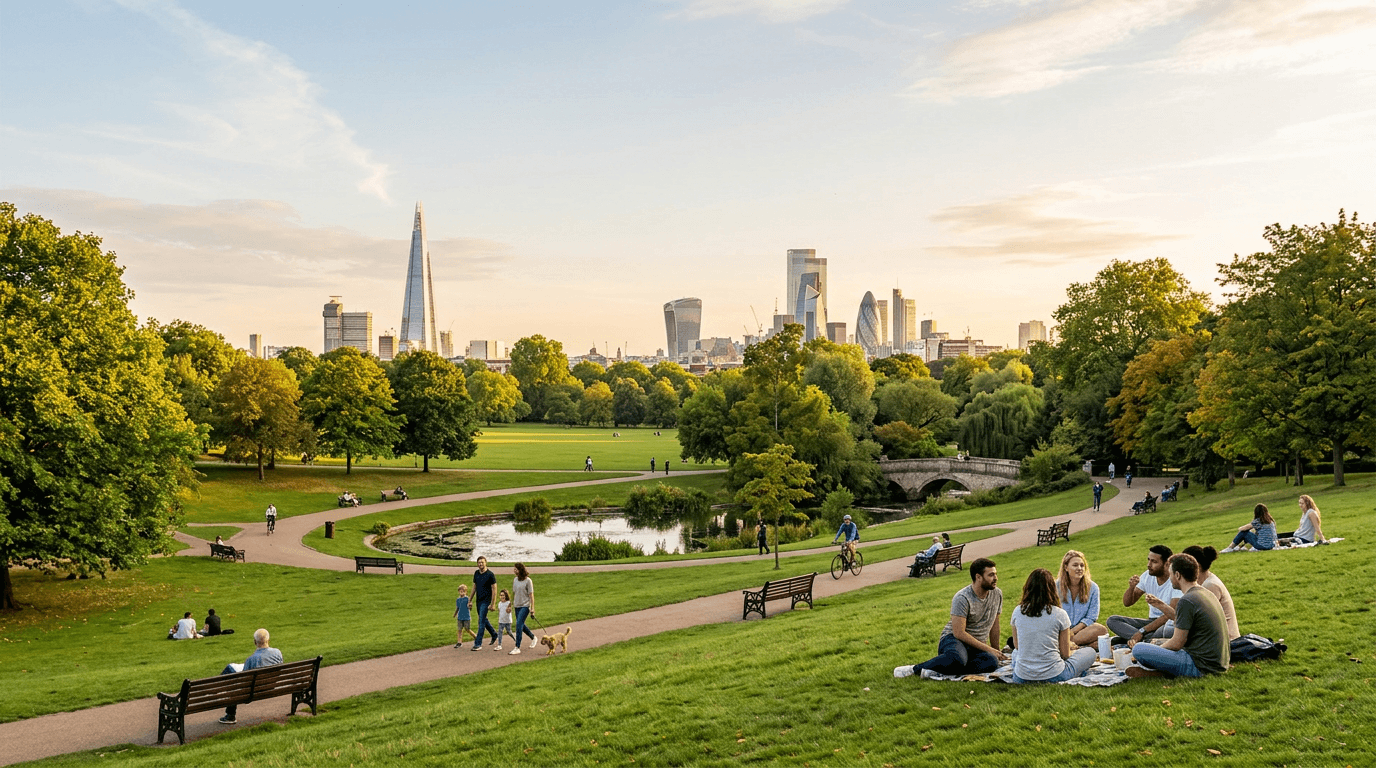
The best parks in London are a spectacular and diverse collection, with Hyde Park offering iconic central London buzz, Richmond Park providing a vast, wild escape with free-roaming deer, and Regent's Park boasting exquisite gardens and unparalleled city views. Deciding on the single "best" park truly depends on what kind of sunny day adventure you're seeking, as London's green spaces cater to every possible mood, from romantic strolls and family picnics to wild swims and group sports.
Welcome to your ultimate guide to London's glorious parks, brought to you by your friends at Gidly. When that rare and precious London sun finally breaks through the clouds, there's an unspoken, city-wide agreement to drop everything and head outside. But where to go? With over 3,000 parks covering nearly 18% of the city, the choice can be overwhelming. That's where we come in. We've pounded the pavements, picnicked on the lawns, and even braved the lidos to bring you the definitive list. This isn't just another ranking; it's a comprehensive manual for making the most of London's green lungs. Whether you're planning a first date, trying to tire out the kids, or just seeking a moment of peace, we have the perfect patch of green for you.
Our Top 10 Picks: The Best Parks in London Ranked
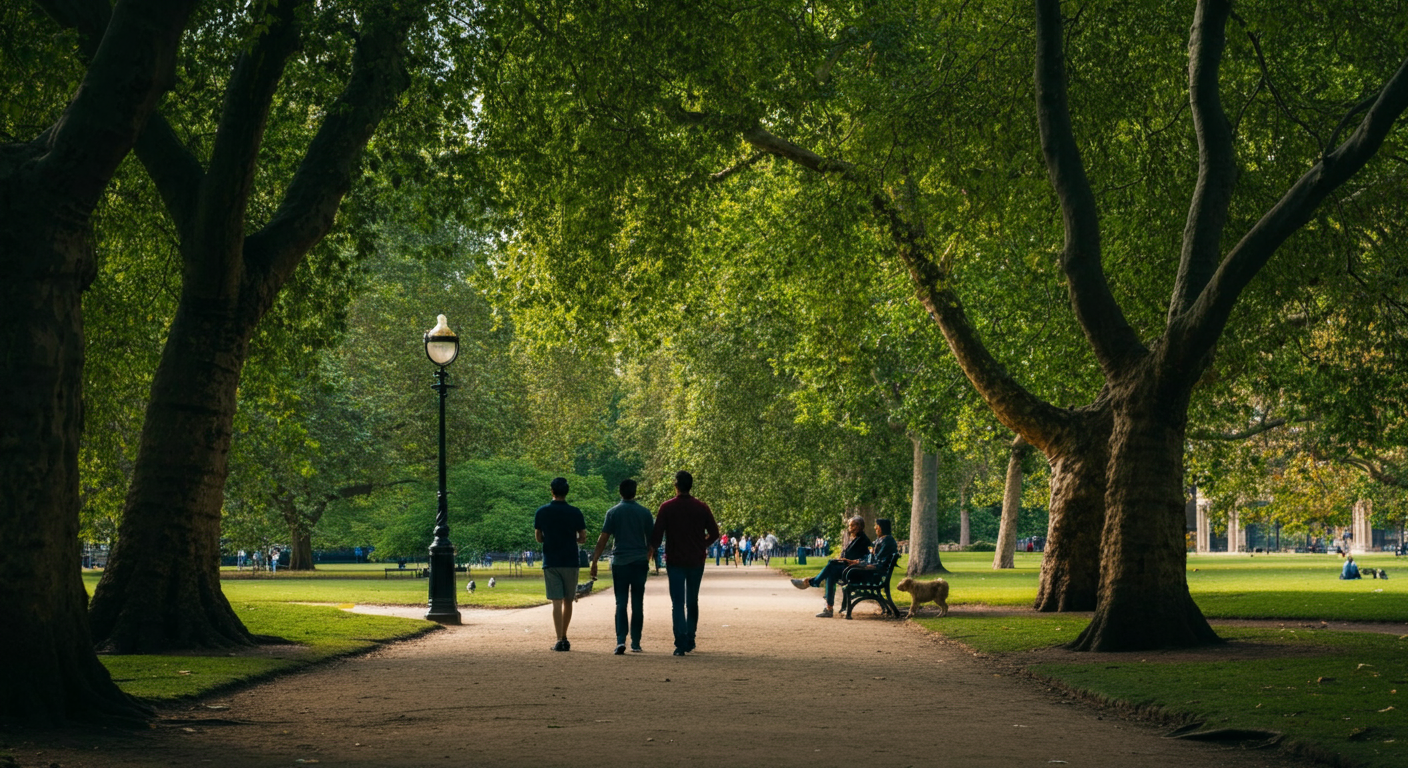
Here is our definitive Gidly ranking of London's top ten parks, a carefully curated list that balances iconic status with hidden gems. We've assessed each park on its beauty, atmosphere, range of activities, and unique character to help you find your perfect green sanctuary in the city. From sprawling Royal Parks to beloved local haunts, this is your starting point for any park-based adventure in London.
Compiling a "top ten" is always a challenge, especially in a city as rich with green space as London. Our team debated endlessly, championing their personal favorites and making cases for underrated spots. The list you see below is the result of those passionate discussions, blended with objective criteria like visitor amenities, accessibility, and sheer 'wow' factor. We considered the grand, historic landscapes of the Royal Parks alongside the vibrant, community-focused energy of East London's finest. Each park on this list offers something truly special, a reason to travel across the city just to experience its unique magic. So, whether you're a seasoned Londoner or a first-time visitor, prepare to discover (or rediscover) the very best outdoor spaces this incredible city has to offer.
1. Hyde Park: The Iconic Heart of London
Topping our list is the one and only Hyde Park, the undeniable king of London's green spaces. It's not just a park; it's a sprawling, 350-acre stage for London life in all its vibrant forms. What makes Hyde Park the winner is its perfect synthesis of scale, location, and activity. It’s vast enough to find a quiet corner for a contemplative read, yet central enough to feel the city's pulse. You can spend an entire day here without a hint of boredom, transitioning from a morning jog to afternoon gallery-hopping, and finishing with an evening concert or a leisurely boat ride on the Serpentine. It’s the quintessential London park experience, a place where history, nature, and modern city life intersect beautifully. Our team agrees: if you only have time to visit one park in London, Hyde Park provides the most complete and iconic experience.
The park is divided by the Serpentine and Long Water lakes, creating distinct atmospheres on either side. To the north, you'll find the Italian Gardens and Speakers' Corner, while the south is home to the Diana, Princess of Wales Memorial Fountain and the Serpentine Galleries. This internal geography means every visit can feel different. You might enter near Marble Arch and be swept up in the historical echoes of public debate, or you could start at Hyde Park Corner and find yourself on a tranquil walk towards Kensington Gardens, its seamless western neighbor. Its accessibility is unparalleled, bordered by some of London's most famous neighborhoods like Mayfair, Knightsbridge, and Paddington, making it a natural hub for locals and tourists alike.
Top activities are as varied as the park itself. For a classic London moment, rent a paddle or pedal boat from the Serpentine Boating Lake and see the park from a new perspective. Art lovers must visit the two Serpentine Galleries, renowned for their cutting-edge contemporary art exhibitions that are often free to enter. On a Sunday morning, a visit to Speakers' Corner offers a fascinating, and often eccentric, glimpse into free speech and public debate. In summer, the park transforms into a major concert venue with the British Summer Time (BST) festival, while winter brings the dazzling, sprawling spectacle of Winter Wonderland. And of course, there are miles of paths for walking, running, and cycling, including the popular 4-mile perimeter loop.
2. Richmond Park: A Wild Escape with Royal History
Securing the second spot is the magnificent Richmond Park, a place that feels less like a city park and more like a vast, wild countryside estate. Its sheer scale is breathtaking; at 2,500 acres, it's the largest of London's Royal Parks and offers a true sense of escape from the urban sprawl. The winning factor for Richmond Park is its unparalleled feeling of wildness, famously embodied by its 600-strong herds of free-roaming Red and Fallow deer. Spotting these majestic creatures grazing against a backdrop of ancient oak trees is a truly magical London experience, one that transports you miles away from the city's hustle. This park is a designated National Nature Reserve and a Site of Special Scientific Interest, a testament to its ecological importance and rugged, untamed beauty.
Created by King Charles I in the 17th century as a deer-hunting park, its royal history is palpable. The enclosed nature of the park was originally for keeping the deer in, but now it serves to keep the modern city out, preserving a timeless, pastoral landscape. The variety within the park is astounding, from open grasslands and bracken-covered hillsides to secluded woodlands and tranquil ponds. It’s a haven for cyclists tackling its challenging hills, for families enjoying a weekend stroll, and for nature photographers hoping for that perfect shot of a stag silhouetted at sunrise. The air feels different here, cleaner and filled with the sounds of nature rather than traffic.
Deer spotting is, of course, the number one activity. For the best chances, our team recommends heading to the open plains away from the main roads, particularly in the early morning or late afternoon. For a burst of horticultural splendor, a visit to the Isabella Plantation is essential. This 40-acre woodland garden within the park is a riot of color in late spring, with its world-famous collections of azaleas and rhododendrons. For one of London's most protected and iconic views, make the pilgrimage to King Henry's Mound. From this specific spot, a telescope is provided to look through a keyhole in a hedge, down a tree-lined avenue, all the way to a clear view of St. Paul's Cathedral, some 10 miles away. This view is so important it's protected by an Act of Parliament, forbidding any new building from obstructing it.
3. The Regent's Park & Primrose Hill: Gardens, Views, and a Zoo
The Regent's Park, combined with the panoramic viewpoint of Primrose Hill, clinches the third spot on our list for its masterful blend of cultivated beauty and stunning urban vistas. While Hyde Park has the buzz and Richmond has the wilderness, Regent's Park offers a level of refined, formal elegance that is unmatched. Designed by the famous architect John Nash, it's a masterpiece of landscape design, featuring graceful tree-lined avenues, a large boating lake, and some of the most spectacular formal gardens in London. What sets it apart is this dual offering: you can immerse yourself in the meticulously manicured beauty of Queen Mary's Gardens and then, just a short stroll across the road, ascend Primrose Hill for one of London's most breathtaking and romantic skyline views.
The park is a hub of culture and recreation. It houses the world-renowned ZSL London Zoo on its northern edge, the enchanting Open Air Theatre, and extensive sports facilities that are always buzzing with activity. The park feels both grand and welcoming. The Outer Circle road is a favorite for cyclists and runners, while the inner pathways offer endless opportunities for leisurely walks. The park's layout, with its concentric rings, makes it easy to navigate yet large enough to feel like you've had a proper escape. It’s a park that caters perfectly to both active pursuits and moments of quiet contemplation, making it a firm favorite among Londoners from all walks of life.
The absolute must-do activity is to visit Queen Mary's Gardens, especially in early June when the rose garden, with its 12,000 roses of over 400 varieties, is in full, intoxicating bloom. The scent alone is worth the trip. Afterwards, climb the 63 metres to the summit of Primrose Hill for that iconic, postcard-perfect view of the central London skyline – it’s particularly magical at sunset. For a unique cultural experience, book tickets for a show at the Regent's Park Open Air Theatre, where watching a play under the stars on a warm summer evening is an unforgettable experience. And, of course, a visit to the London Zoo provides a full day of family-friendly entertainment. The park also has a large boating lake with pedalos and rowboats for hire, offering a fun way to spend an afternoon.
4. Greenwich Park: Where Time and Worlds Collide
Greenwich Park is a place of immense historical significance and natural beauty, offering a unique combination that earns it a high place on our list. It's London's oldest enclosed Royal Park and sits on a hillside overlooking the River Thames, offering some of the most iconic and widely photographed views of the city's skyline. The park's allure lies in its dramatic topography and its status as a UNESCO World Heritage Site, shared with the maritime buildings below. Standing on the hill by the Royal Observatory, you are literally at the center of world time, straddling the Prime Meridian Line (Longitude 0°), with a view that sweeps from the modern skyscrapers of Canary Wharf to the historic City of London. It’s this powerful collision of time, history, and landscape that makes a visit to Greenwich Park so memorable.
The park's layout is a mix of formal and informal, with a grand axial layout designed by André Le Nôtre (the landscape architect of Versailles) in the 1660s, which provides the main avenues and vistas. Away from these grand paths, you can discover more rustic areas, including an ancient Saxon burial ground, a large deer enclosure (home to a small herd of Fallow and Red deer), and a beautiful flower garden. The park is also home to the Royal Observatory, the Peter Harrison Planetarium, and the National Maritime Museum at its base. This concentration of world-class attractions within and adjacent to the park means you can easily spend a full day exploring science, history, and nature in one location.
The quintessential Greenwich experience is to make the rewarding climb to the top of the hill. The view from outside the Royal Observatory is free to access and simply breathtaking; it’s the perfect spot to watch the city change color as the sun sets. While there, it's well worth paying to enter the Observatory to stand on the historic Prime Meridian Line and explore the fascinating history of timekeeping and astronomy. For a more tranquil experience, seek out the hidden Queen's Orchard or the peaceful Rose Garden. The park also has a boating lake, a popular children's playground, and plenty of space for picnics. On a sunny weekend, the atmosphere on the main hill is electric, with Londoners and tourists alike soaking in the view and the vibrant atmosphere.
5. Hampstead Heath: Wild Swimming and Rugged Charm
Hampstead Heath is not so much a park as it is a sprawling, untamed piece of countryside dropped into North London. Its rugged, wild charm is precisely why it’s a beloved escape for Londoners and why it secures a firm spot in our top five. At 790 acres, the Heath is a glorious mosaic of ancient woodland, meadows, ponds, and rolling hills, offering a feeling of wildness that is distinct from the more manicured Royal Parks. Its most famous feature, and a key reason for its high ranking, are its bathing ponds – separate male, female, and mixed ponds that offer the bracing, exhilarating experience of "wild" swimming right in the city. The Heath is a place for rambling without a map, for getting a little bit lost, and for reconnecting with a more natural, uncurunated landscape. It feels like a lung for the city, a place of freedom and fresh air.
The Heath's topography is varied and dramatic, culminating in Parliament Hill, which offers another of London's great protected panoramic views. The view from here feels different from others; it's more expansive and captures the vastness of the city spreading out below. The Heath is steeped in literary and artistic history, having inspired everyone from the poet John Keats to the painter John Constable. This cultural heritage adds to its romantic and slightly brooding atmosphere. It's a place of contrasts: you can find solitude in the Sandy Heath or Kenwood's ancient woods, then emerge to the lively bustle around the ponds or the family-friendly atmosphere of the Parliament Hill Lido, a large, unheated open-air swimming pool.
The top thing to do, for the brave, is to take a dip in one of the iconic bathing ponds. It's a year-round activity for hardy locals, but for most, it's a thrilling summer experience (be prepared for cold water!). For a less intense swim, the Parliament Hill Lido is a great alternative. A walk to the top of Parliament Hill is non-negotiable for any first-time visitor. The view is simply spectacular and a popular spot for kite-flying on a breezy day. Another must-visit is the northern part of the Heath to explore the grounds of Kenwood House, a stunning stately home with a world-class (and free to enter) art collection, including a Rembrandt self-portrait. The surrounding grounds are beautifully landscaped and offer a more serene, pastoral experience.
6. St. James's Park: Pelicans and Pageantry
St. James's Park is the jewel in the crown of the Royal Parks when it comes to location, pageantry, and sheer photogenic beauty. While not the largest, it is perhaps the most ornate and certainly the most central, surrounded by three Royal Palaces: Buckingham Palace, Clarence House, and St. James's Palace. Its charm lies in its exquisite landscaping and its front-row seat to British ceremony. The park's famous blue bridge offers one of London's most picture-perfect views, framing Buckingham Palace with the lush foliage and shimmering lake in the foreground. It's a park designed for strolling and admiring, a tranquil oasis right in the heart of ceremonial London.
The park's history is as colorful as its famous flowerbeds, which are replanted seasonally to provide a constant display of horticultural excellence. It was originally a marshy water meadow, later acquired by Henry VIII and then redesigned in a more formal French style for Charles II. The current, more naturalistic layout dates back to the work of John Nash in the 1820s. The park's central feature is St. James's Park Lake, home to an incredible array of waterfowl. Its most famous residents, however, are the pelicans. They have been a feature of the park for nearly 400 years, ever since the Russian Ambassador gifted the first ones to King Charles II in 1664. Seeing these huge, prehistoric-looking birds is a unique London experience.
The primary activity in St. James's Park is simply to enjoy a leisurely walk and soak in the views. A walk across the Blue Bridge is essential. From there, you can see the London Eye and the Shard in one direction, and Buckingham Palace in the other. Time your visit to witness the daily pelican feeding, which usually takes place between 2:30 PM and 3:00 PM at the eastern end of the lake, near Duck Island Cottage. For a taste of royal pageantry, position yourself along The Mall, the grand ceremonial route that runs along the park's northern edge, to watch the Changing the Guard ceremony (check schedules online as they vary). In summer, you can rent a deckchair for a small fee and simply relax, watching the world go by in one of London's most beautiful settings.
7. Victoria Park: The People's Park of East London
Known affectionately as 'Vicky Park', Victoria Park is the beloved green heart of East London. It wins its spot on our list for its vibrant community spirit, its fantastic facilities, and its perfect blend of historic charm and modern energy. Opened in 1845, it was purpose-built to serve the working people of the East End, earning it the nickname "The People's Park." That community-focused ethos remains strong today. The park is a sprawling 213 acres, split into two distinct halves by a road. The western side is more formal and decorative, with beautiful gardens, lakes, and the magnificent Baroness Burdett Coutts Drinking Fountain. The eastern side is more open, geared towards sports and larger events, creating a space that genuinely offers something for everyone.
Victoria Park has a raw, energetic vibe that sets it apart from the more formal Royal Parks. On a sunny weekend, it feels like the entire population of East London has descended upon it, creating a fantastic, bustling atmosphere. You'll see families having picnics, friends playing frisbee, skaters at the popular skatepark, and countless people enjoying the park's two large lakes. One of its standout features is the chain of lakes connected by canals and bridges, where you can hire rowing boats and pedalos. The park has undergone significant restoration in recent years, beautifully restoring its Victorian features while adding modern amenities, which has only enhanced its appeal. It's a testament to how a park can be both a historic landscape and a vital, living part of a modern community.
There's a huge range of things to do. A walk or cycle around the park's perimeter is a great way to see everything it has to offer. Hiring a boat on the West Boating Lake is a classic Vicky Park activity. For families, the park has two excellent playgrounds, including the V&A Playground with its giant slides and sandpits. In the summer, the park hosts major music festivals like All Points East, attracting huge international acts. For a more low-key experience, grab a coffee from the Pavilion Cafe and sit by the lake, or explore the more secluded corners of the English Garden. The park is also bordered by the Regent's Canal and Hertford Union Canal, making it a perfect starting or ending point for a longer waterside walk.
8. Battersea Park: Riverside Fun for All Ages
Battersea Park is the undisputed champion of South London parks when it comes to sheer variety of activities, especially for families. Situated on the south bank of the River Thames, it offers beautiful riverside walks combined with an almost theme-park-like array of attractions packed into its 200 acres. Its winning feature is its ability to entertain every member of the family for a full day. From a children's zoo and an adventure playground to a boating lake, sports facilities, and even a contemporary art gallery, Battersea Park is designed for active fun. It's a Victorian park with a modern, energetic feel, constantly buzzing with people doing things, rather than just relaxing.
The park's location along the Thames provides a stunning backdrop, with views across to Chelsea and the iconic Albert Bridge. A walk or cycle along the riverside promenade is a highlight, especially at dusk when the bridge is lit up. The park is also home to the striking London Peace Pagoda, a unique and serene monument gifted to Londoners by Japanese Buddhists. Dotted around the park are beautiful gardens, including the Sub-Tropical Garden and the Old English Garden, offering quieter moments away from the main hubbub. The recent development of the area around Battersea Power Station has brought even more energy and visitors to the park, solidifying its status as a premier South London destination.
For families, the first stop is often the Battersea Park Children's Zoo, a small but beautifully maintained zoo perfect for younger kids. Next door, the Go Ape treetop adventure course offers a thrilling challenge for older kids and adults. The park's boating lake is another major draw, with a wide selection of boats for hire. For art lovers, the Pump House Gallery, set in a picturesque Victorian tower, hosts a changing program of contemporary art exhibitions. The park also boasts extensive sports facilities, including tennis courts, football pitches, and a running track. It's a park that truly encourages participation and play.
9. Holland Park: A Secluded Gem with a Japanese Garden
Holland Park is a sophisticated and enchanting gem nestled in one of London's most elegant neighborhoods. It's much smaller and more intimate than the grand Royal Parks, and this is precisely its charm. Its number one attraction, and the reason it’s a must-visit, is the breathtaking Kyoto Garden. This authentic Japanese garden was gifted by the Chamber of Commerce of Kyoto in 1991 and is a masterpiece of tranquility and traditional design. With its tiered waterfalls, serene pond filled with koi carp, stone lanterns, and meticulously pruned maple trees, it feels like stepping into another world. The presence of roaming peacocks, with their vibrant plumage and distinctive calls, only adds to the park's magical and slightly surreal atmosphere. It's a park that prioritizes beauty and serenity over scale.
The park is split into three distinct areas. The northern half is semi-wild woodland, a remnant of the original grounds of Holland House, a Jacobean mansion whose ruins still stand in the park's center. The central section around the house contains the formal gardens, including the Kyoto Garden, the Dutch Garden, and the beautiful Rose Garden. The southern area is dedicated to sports and recreation. This variety in such a compact space is remarkable. The park also hosts a summer opera season, Opera Holland Park, with performances held under a canopy attached to the ruins of Holland House, creating one of the most unique and atmospheric performance venues in London.
The main activity is, without question, to spend time in the Kyoto Garden. It's a place for quiet contemplation, photography, and simply absorbing the peaceful atmosphere. Please be aware that it's a popular spot and can get crowded, so visiting on a weekday morning is often best for a more serene experience. Beyond the garden, exploring the woodland trails can make you forget you're in central London. Look out for the park's resident peacocks and be sure to visit the Dutch Garden, planted with thousands of tulips in spring. For those with children, the park has a large and well-equipped adventure playground. And for a dose of culture, check the schedule for Opera Holland Park or one of the art exhibitions often held in the Orangery.
10. Crystal Palace Park: Dinosaurs and a Dash of History
Rounding out our top ten is the wonderfully weird and historic Crystal Palace Park in South London. This park is a fantastic mix of history, nature, and delightful eccentricity. Its claim to fame and the main reason for its inclusion is the collection of magnificent, Grade I listed dinosaur sculptures that have been lurking amongst the foliage since 1854. These were the world's first-ever dinosaur models, and while they may be scientifically inaccurate by today's standards, they are incredible works of Victorian art and a source of endless fascination for visitors of all ages. The park itself is a grand Victorian pleasure ground, built around the site of the original Crystal Palace exhibition hall which was moved here after the Great Exhibition of 1851 and tragically burnt down in 1936. The park is full of echoes of this grand past, from the towering sphinxes to the vast terraced lawns.
The park has a unique, slightly melancholic charm due to its history. You can still see the grand terraces and foundations where the Crystal Palace once stood, giving you a sense of the immense scale of the original building. But the park is far from just a historical relic. It's a vital community hub with a huge range of facilities. It boasts one of the UK's most important athletic stadiums, a large boating lake, a maze, a children's farm, and a popular skatepark. The sheer variety packed into this space is impressive, and the hilly landscape provides great views and interesting walks.
The number one thing to do is to go on a dinosaur hunt. The sculptures are located around the lower lake, and following the "Dinosaur Trail" is a fantastic activity for families. You can hire a pedalo on the boating lake to get an up-close, water-level view of the prehistoric beasts. After your dinosaur safari, get lost in the park's large maze, which has been puzzling visitors since the 1870s. For a great view, climb the steps of the terraces to the Crystal Palace Museum, a small volunteer-run museum that tells the fascinating story of the site. The park also has a family farm and a great playground, ensuring a full and varied day out for everyone.
London Parks Compared: Find Your Perfect Match
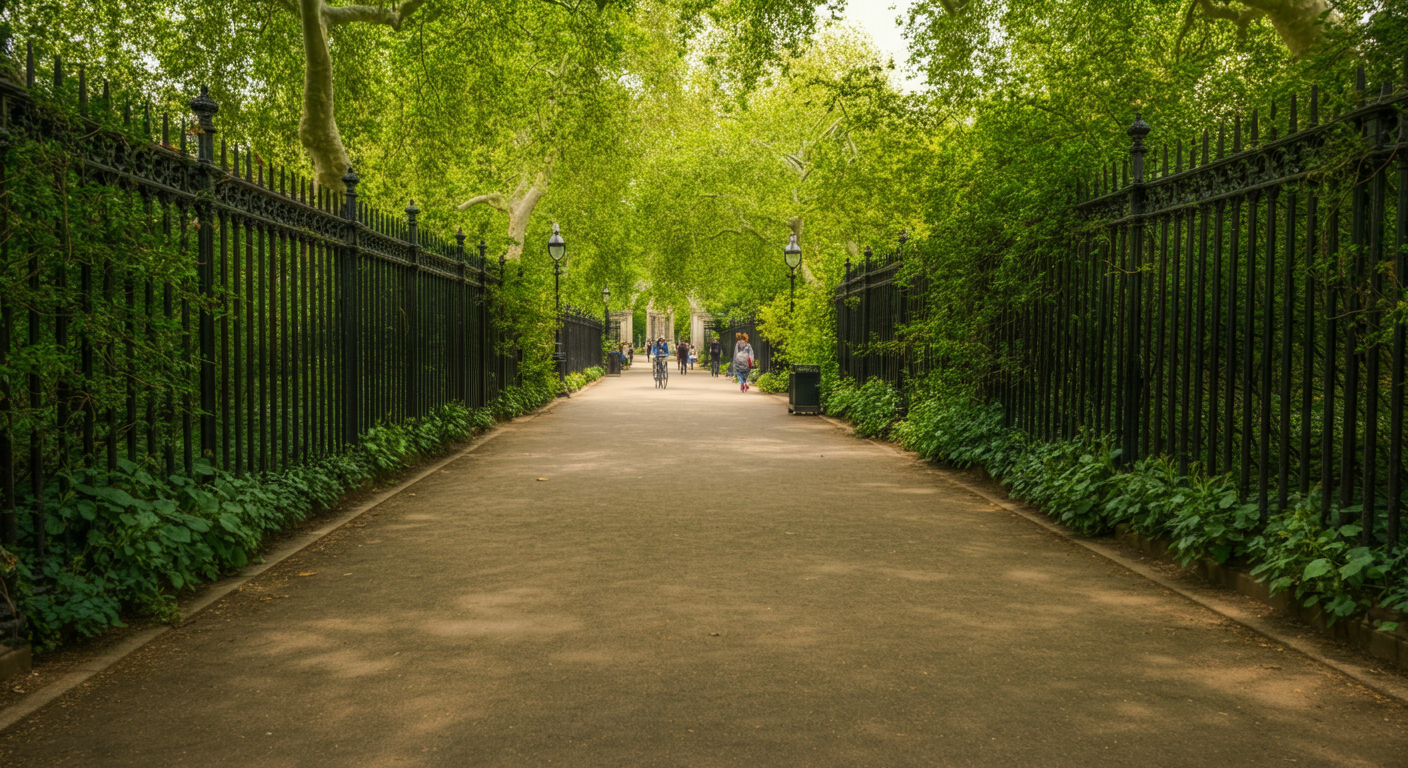
Choosing the right park can make or break a sunny day in London. To help you decide at a glance, we’ve created this comprehensive comparison table. This chart is designed to cut through the details and give you the essential information you need to match a park to your mood and needs. Are you looking for a vast expanse to feel truly lost in nature, or a compact, beautiful garden for a quick city escape? Do you need a dog-friendly space with off-leash areas, or are you planning a trip based on Tube zones? We've distilled the essence of our top-ranked parks into key, comparable data points.
Our Gidly team has identified several key factors that people consider when choosing a park. "Best For" gives you a quick summary of the park's main strength. "Vibe" captures the overall atmosphere—is it a bustling urban hub or a tranquil rural retreat? "Size" is a crucial factor, indicating whether you're in for a short stroll or an all-day hike. "Key Amenity" highlights the one unique feature that sets the park apart, be it wild deer or world-class art. We've also included practical information on dog-friendliness and the park's location within London's transport network (Tube Zone). Use this table as your quick-reference guide to planning your next park adventure.
Table Overview: How to Use This Chart
This table is your shortcut to park-planning perfection. Start by thinking about what your main priority is for the day. If you're with your four-legged friend, scan the "Dog-Friendly" column first. If you're planning a date and want a specific atmosphere, check the "Vibe" and "Best For" columns. Perhaps you're based in Zone 2 and want something easy to get to; the "Tube Zone" column will be your best friend. For example, if you see "Wildlife & Space" under "Best For," you know Richmond Park is your destination. If you're after "Gardens & Views," head straight for Regent's Park.
The "Key Amenity" column is our insider pick for the one thing you absolutely cannot miss at each location. It’s the park's unique selling point. While Hyde Park has many attractions, boating on the Serpentine is its most iconic activity. Similarly, while Holland Park has many beautiful features, the Kyoto Garden is what makes it truly special. Use this chart to create a park "bucket list" or simply to make a quick decision on a whim when the sun comes out. It's all about making your choice easier, so you can spend less time planning and more time enjoying London's incredible green spaces.
Comparison Table Data
Below is the data our team compiled to help you compare London's best parks at a single glance. We've focused on the most important aspects that define the experience at each location. This table should serve as a launchpad for your decision-making, giving you the confidence to pick the perfect park for any occasion. After a quick look, you can dive into the more detailed descriptions in our guide to get the full picture. Happy park-hopping!
| Park | Best For | Vibe | Size (Acres) | Key Amenity | Dog-Friendly | Tube Zone |
|---|---|---|---|---|---|---|
| Hyde Park | Events & Activities | Iconic & Bustling | 350 | The Serpentine Lake | Yes (on-lead in some areas) | 1 |
| Richmond Park | Wildlife & Space | Wild & Rural | 2,500 | Free-roaming deer | Yes (strict on-lead rules during rutting/birthing seasons) | 3/4 |
| The Regent's Park | Gardens & Views | Elegant & Grand | 410 | Primrose Hill View | Yes (some restricted garden areas) | 1/2 |
| Greenwich Park | History & Views | Historic & Scenic | 183 | Royal Observatory & Meridian | Yes (on-lead in some areas) | 2/3 |
| Hampstead Heath | Wild Swimming & Walks | Rugged & Bohemian | 790 | Bathing Ponds | Yes (very dog friendly) | 2/3 |
| St. James's Park | Pageantry & Flowers | Ornate & Royal | 57 | Pelicans & Palace Views | Yes (on-lead only) | 1 |
| Victoria Park | Festivals & Community | Vibrant & East London | 213 | Boating Lake & Pavilion | Yes (designated on/off lead areas) | 2 |
| Battersea Park | Family Fun & Activities | Active & Modern | 200 | Children's Zoo & Go Ape | Yes (on-lead in some areas) | 2 |
| Holland Park | Tranquility & Romance | Intimate & Elegant | 54 | Kyoto Garden | Yes (on-lead, no dogs in Kyoto Garden) | 2 |
| Crystal Palace Park | Quirky History & Kids | Eccentric & Historic | 200 | Victorian Dinosaurs | Yes | 3/4 |
By Scenario: Best Parks for a Romantic Day Out & Date Nights
London's parks are natural amphitheatres for romance, offering countless idyllic settings for a memorable date. Whether you're on a first date or celebrating an anniversary, a park provides a relaxed and beautiful backdrop. The most romantic park, according to our Gidly team, is the enchanting Holland Park for its intimate Kyoto Garden, while Regent's Park with its glorious roses and the unparalleled sunset views from Primrose Hill comes in a very close second.
The beauty of a park date is its versatility. It can be as simple as a walk and a coffee or as elaborate as a gourmet picnic and an evening at an open-air theatre. The key is choosing a park that matches the mood you want to create. For quiet conversation and stunning beauty, a smaller, more intimate park is ideal. For a more active and playful date, a larger park with activities like boating or cycling is perfect. In this section, we'll break down the best romantic options, from picturesque walks to unique date ideas that are sure to impress.
Answer Capsule: The most romantic park is Holland Park for its intimate Kyoto Garden, followed by Regent's Park for its stunning rose garden and sunset views from Primrose Hill.
For sheer, unadulterated romance, Holland Park is hard to beat. The Kyoto Garden is a pocket of perfect tranquility, with its waterfalls, koi pond, and resident peacocks creating a magical atmosphere that feels worlds away from the city. It’s the perfect place for quiet conversation and shared moments. Following closely behind is the combination of The Regent's Park and Primrose Hill. A stroll through the fragrant Queen Mary's Rose Garden in early summer is a sensory delight, and following it up with a short walk to the top of Primrose Hill to watch the sunset over London is a classic, unbeatable date formula. These two options represent the pinnacle of park romance in London.
Strolling Hand-in-Hand: The Most Picturesque Walks
A simple walk is often the most romantic activity, and London's parks offer some truly beautiful routes. Our top pick for a romantic stroll is within Holland Park. Start near the Holland Park Avenue entrance, wander through the semi-wild woodland, and then descend into the formal gardens. Make your way to the Kyoto Garden for the main event, before exploring the adjacent Dutch Garden. The walk is compact but full of discovery and changing scenery, perfect for an hour of conversation. The paths are winding and often provide a sense of seclusion, even on a busy day. The sound of the waterfall in the Japanese garden provides a perfect, soothing soundtrack.
Another fantastic option is the walk along the Regent's Canal from the charming area of Little Venice to the edge of Regent's Park. While not strictly a park walk for its entire duration, this route is incredibly picturesque. You’ll walk past colorful houseboats, elegant stucco-fronted houses, and weeping willows dipping into the water. The walk takes about 30-40 minutes and deposits you near the London Zoo, from where you can enter Regent's Park itself. Once in the park, you can continue the romantic theme by walking around the boating lake or heading straight for the Inner Circle to find the tranquil beauty of the formal gardens. This walk combines urban charm with parkland beauty for a varied and interesting date.
Picnic Perfection: Top Spots with a View
A well-planned picnic is a cornerstone of park romance, and the location is everything. For the ultimate picnic with a view, nothing beats the summit of Primrose Hill. As the sun begins to dip, the city lights start to twinkle, and the sky puts on a spectacular show. Find a spot on the western slope, lay down your blanket, and enjoy a feast with one of the world's most famous skylines as your backdrop. It’s a hugely popular spot, so on a warm evening, expect to share the experience, but the communal, happy atmosphere only adds to the charm. It's a five-star view for the price of a sandwich and a bottle of something nice.
For a different but equally stunning vista, head to Greenwich Park. The hill leading up to the Royal Observatory offers a commanding view over the Queen's House and the Old Royal Naval College, with the futuristic towers of Canary Wharf rising dramatically behind them. It's a view that encapsulates London's history and modernity in a single frame. The slope is steep but wide, offering plenty of space to spread out a picnic blanket. From experience, we can say that enjoying a picnic here as the river traffic glides by and the city buzzes in the distance is a truly special London moment. It feels grand, historic, and deeply romantic.
Unique Park Date Ideas: Boating, Theatre, and Art
If you want to elevate your park date beyond a simple walk or picnic, London's green spaces offer plenty of unique activities. One of the most classic and enjoyable is boating on the Serpentine in Hyde Park. Renting a rowboat or a pedalo for an hour is a fun, slightly nostalgic activity that allows for great conversation as you gently glide across the water. You get a unique perspective of the park, and it's a great way to work together (or show off your rowing skills). The lake is large enough that you can find your own space, and the views of the parkland from the water are lovely.
For a truly unforgettable summer evening, book tickets to the Regent's Park Open Air Theatre. Watching a top-quality production of a play, musical, or comedy as dusk falls and the stars come out is a magical experience. The theatre has a special, intimate atmosphere, and you can make a full evening of it by having a pre-show picnic in the park or enjoying the theatre's own bar and dining options. It feels like a very special, very 'London' thing to do. Check the Gidly app for listings and booking links throughout the summer season.
For the art-loving couple, a date centered around the Serpentine Galleries in Hyde Park is a fantastic option. The two galleries are located on either side of the Serpentine Bridge and showcase world-class modern and contemporary art, with free admission. You can spend an hour or two exploring the thought-provoking exhibitions and then discuss them over a walk through Kensington Gardens. Each summer, a new temporary Serpentine Pavilion is also commissioned from a leading architect, creating a unique and temporary architectural space to explore, have a coffee, and enjoy the park from a new perspective. It’s a sophisticated and culturally enriching date that costs next to nothing.
By Scenario: Best Parks for Kids & Family Adventures
When the sun shines, London's parks transform into the city's best and biggest playgrounds for families. Choosing the right park can mean the difference between a day of happy exhaustion and a day of "I'm bored!". From our extensive Gidly testing (which involved our team's own children), Battersea Park is a standout for families due to its sheer density of attractions like the children's zoo and adventure playground. However, for younger children, the enchanting Diana Memorial Playground in Kensington Gardens, with its incredible pirate ship, is an absolute must-visit destination in its own right.
A successful family park outing requires more than just open space. It needs engaging play areas, clean and accessible facilities (toilets and baby change are crucial!), options for food and drink, and ideally, something to capture the imagination. We've scoured the city to find the parks that tick all these boxes. Whether you're looking for incredible playgrounds, free animal encounters, or just a family-friendly cafe with a good slice of cake and plenty of room for a buggy, this section has you covered. Get ready to plan a day of adventure that your little ones will be talking about for weeks.
Answer Capsule: Battersea Park is fantastic for families with its children's zoo and adventure playground, while the Diana Memorial Playground in Kensington Gardens is a must-visit for younger kids.
For a full day of varied family entertainment, Battersea Park is the top choice. The combination of the Battersea Park Children's Zoo, the Go Ape treetop course, the boating lake, and multiple playgrounds means there's something to entertain kids of all ages. For those with younger children, particularly under 10, the Diana, Princess of Wales Memorial Playground is a destination in itself. Its centerpiece, a huge wooden pirate ship, is a triumph of playground design that sparks imaginative play like nowhere else. Both parks are brilliant, but they cater to slightly different needs and age groups.
Playgrounds That Wow: A Comparison
London has some truly world-class playgrounds, and a few stand out from the pack. The Diana Memorial Playground in Kensington Gardens is inspired by the stories of Peter Pan. Its magnificent wooden pirate ship, beached on a sea of sand, is the star attraction. Kids can climb the rigging, steer the wheel, and imagine they're sailing to Neverland. The playground also features a sensory trail, teepees, and various play sculptures, all set within a lush, beautifully landscaped environment. It's incredibly popular, and there's often a queue to get in on sunny days, but it is absolutely worth the wait. It’s securely gated with staff at the entrance, providing peace of mind for parents.
Over in South London, the Battersea Park Adventure Playground offers a different kind of thrill. It’s geared towards slightly older, more adventurous children, with a focus on natural-style play structures, zip lines, high climbing frames, and challenging obstacle courses. It’s the sort of place where kids can really test their physical limits in a safe environment. Meanwhile, in Crystal Palace Park, the playground is situated conveniently near the dinosaur trail and the children's farm. It’s a large, modern playground with a great variety of equipment, including extensive sand and water play areas which are a huge hit in the summer. Each of these playgrounds has a unique character, but all three guarantee hours of fun.
Animal Encounters for Free: Deer, Pelicans, and Parakeets
You don't need to pay for a zoo ticket to see amazing animals in London. The city's parks offer some incredible wildlife-spotting opportunities for free. The most famous is, of course, seeing the magnificent Red and Fallow deer in Richmond Park or the slightly smaller Bushy Park. Seeing these large animals roaming free is an awe-inspiring experience for children. Remember to teach them the importance of keeping a safe and respectful distance (at least 50 metres) and never feeding the animals. It's a brilliant real-life lesson in wildlife conservation.
For a guaranteed and truly unique animal sighting, head to St. James's Park to see the pelicans. These huge, comical birds are a park fixture and can usually be found lounging on their favorite rocks on the lake, near Duck Island. Watching them at feeding time (around 2:30 PM) is a special treat. Another, more widespread phenomenon is the flocks of bright green ring-necked parakeets found in many London parks, especially Hyde Park and Kensington Gardens. These noisy, tropical-looking birds are now a common sight and sound in London. They are often quite bold, and some will even land on your hand if you offer them a piece of fruit (though feeding wildlife is generally discouraged). These encounters add a touch of unexpected wildness to a city day out.
Parks with Family-Friendly Cafes & Ample Facilities
A park's amenties can be just as important as its playground when you have a family in tow. A good cafe with high chairs, kids' menus, and nearby toilets can be a lifesaver. Victoria Park in East London excels in this regard. The Pavilion Cafe, located by the West Boating Lake, is a firm family favorite. It serves excellent food and coffee, has plenty of outdoor seating, and is right next to a great playground and the boating lake, so you can refuel while the kids are still entertained. The park also has multiple other cafes and plenty of well-maintained toilet blocks throughout its large expanse.
Regent's Park is another excellent choice for facilities. It has several cafes dotted throughout, including the Broad Walk Cafe and the Regent's Bar & Kitchen, which are large, bustling, and well-equipped for families. More importantly, the park has numerous toilet blocks, including dedicated family toilets and baby changing facilities, which are clearly marked on park maps. From our team's experience, knowing you're never more than a five-minute walk from a loo can significantly reduce the stress of a day out with little ones. Hyde Park also offers good facilities, with cafes and toilets at regular intervals, such as the Serpentine Bar & Kitchen, which has stunning views over the lake.
By Scenario: Best Parks for Fun with Friends & Group Activities
London's parks are the city's communal back gardens, perfect for gathering a group of friends for some fun in the sun. For big groups, you need space, a lively atmosphere, and options for activities. Victoria Park in East London is the undisputed king for a social gathering, with its vast open spaces, vibrant, festival-like atmosphere on a sunny day, and great local pubs. For groups more focused on organized sports, Clapham Common is the go-to destination, with its seemingly endless array of sports pitches and courts.
Planning a group outing to a park is a classic London weekend activity. It's cheap, cheerful, and allows for a flexible number of people to come and go. But to get it right, you need to know where you can legally have a BBQ, where you can book a tennis court, and most importantly, where the best nearby pub is for a post-park pint. We've done the research for you, so you can focus on rallying the troops and deciding who's in charge of bringing the frisbee. This section will guide you through planning the perfect park day with your mates.
Answer Capsule: Victoria Park in East London is perfect for groups with its vibrant atmosphere and ample space, while Clapham Common is the go-to for organized sports.
For a relaxed, social gathering with music, food, and people-watching, Victoria Park is your best bet. Its expansive fields can accommodate large groups without feeling crowded, and the atmosphere is always buzzing and friendly. If your group is more competitive and wants to engage in organized sports like football, tag rugby, or softball, then Clapham Common in South London is purpose-built for you. Its flat, open plains are crisscrossed with marked pitches and courts, making it the city's premier hub for amateur sports leagues and casual kickabouts.
Group Sports & Activities: Where to Play
When it comes to organized sports, Regent's Park is a top contender with its dedicated sports hub, The Hub. This facility offers pristine bookable pitches for football, rugby, and softball, as well as cricket nets and tennis courts. It’s one of the largest outdoor sports facilities in central London, and booking a pitch here is a great way to organize a proper game with friends. You can book pitches and courts via their website, and our team advises booking well in advance, especially for weekend slots in the summer. It's a fantastic, well-maintained facility for a more serious sporting get-together.
For a more casual, drop-in approach, Clapham Common is ideal. While many pitches are used by leagues, there's always enough space to find a patch of grass for a game of football or to set up a volleyball net. The park also has numerous public tennis courts and a running track. Similarly, Hampstead Heath's vast, open spaces, particularly around Parliament Hill, are perfect for informal games of frisbee or rounders, with the added bonus of a stunning city view. Many parks, including Battersea Park and Hyde Park, have tennis courts that can be booked online through platforms like the LTA's ClubSpark system. A quick search on the Gidly app can often point you to booking links for specific park facilities.
BBQ & Picnic Rules: Which parks allow BBQs?
This is a crucial and often confusing topic for London park-goers. The rules on BBQs can be strict and vary from borough to borough and even park to park. As a general rule, disposable BBQs are banned in almost all of London's Royal Parks (Hyde Park, Regent's Park, Greenwich, etc.) due to the fire risk and damage they cause to the grass. You should always assume BBQs are NOT allowed unless you see signage or information on the park's official website stating otherwise. This is a rule we at Gidly strongly advise you to follow to avoid fines and protect the parks.
However, some council-run parks do have designated BBQ areas. A prime example is London Fields in Hackney, which has a specific, marked-out area where BBQs are permitted during certain hours. Similarly, Burgess Park in Southwark has designated BBQ facilities that can be used. It is absolutely essential to check the specific council's website for the most up-to-date rules before you plan a BBQ. Look for information on designated zones, time restrictions, and rules for disposal. If in doubt, don't light up. A far safer and more universally accepted option is to have a fantastic picnic, which is welcomed in all parks.
Parks with Great Nearby Pubs for a Post-Walk Pint
A walk in the park followed by a pint in a great pub is a time-honored London tradition. Some parks are perfectly situated for this combo. Hampstead Heath is arguably the best. After a long ramble across the Heath, you can descend into the charming streets of Hampstead, which are filled with historic pubs. The Holly Bush is a beautiful, old pub tucked away on a picturesque backstreet, offering a cozy and traditional atmosphere. Alternatively, The Spaniard's Inn, on the northern edge of the Heath, is a legendary and atmospheric pub with a huge garden, famously mentioned in Dickens's *The Pickwick Papers*.
Richmond Park is another top contender. After a day of deer-spotting, you can exit the park and head into Richmond town centre, which has a fantastic selection of riverside pubs. The White Cross is a classic choice, with a terrace that goes right down to the river (and sometimes floods, adding to the excitement!). Sipping a pint here while watching the boats go by is a perfect end to the day. For a more country pub feel, The Lass O' Richmond Hill, right by the Richmond Gate entrance to the park, is a lovely, dog-friendly pub with great food and a welcoming atmosphere. This perfect pairing of park and pub is a key part of the London experience.
By Scenario: Best Parks for Budget-Friendly & Free Things to Do
London can be an expensive city, but its parks are a glorious, democratic exception, offering a wealth of experiences for free. The best part is that all of London's parks, including the grand Royal Parks, are completely free to enter. For the best all-around free experience, our team recommends Greenwich Park. It offers world-class, no-cost views of the London skyline and allows you to soak in centuries of maritime and royal history just by walking around. It proves that the best things in life (or at least in London) can indeed be free.
Beyond simply entering, the parks are packed with free entertainment, from natural spectacles to man-made marvels. You can see priceless art, watch quirky public debates, listen to impromptu music, and get one of the best workouts available in the city without ever opening your wallet. All it takes is a bit of planning and a willingness to explore. In this section, we'll reveal the best free viewpoints, the most entertaining free activities, and how to put together the perfect, low-cost park picnic to fuel your budget-friendly adventures.
Answer Capsule: All London parks are free to enter, but for the best free experience, visit Greenwich Park for incredible, no-cost views of the London skyline and maritime history.
The fact that every one of London's major parks has no admission fee is a gift to residents and tourists alike. While some attractions within the parks may charge, the core experience is always free. Greenwich Park stands out because its primary attraction—the breathtaking view from the hill—is completely free and accessible to all. The combination of this stunning panorama with the surrounding historic landscape makes it the ultimate destination for a high-value, no-cost day out in the capital.
The Best Free Views of London: A Trifecta of Vistas
For those seeking the most impressive free views of the city, there are three standout locations. First, as we've championed, is the hill in Greenwich Park. The view from here is a protected vista, offering a unique perspective over the UNESCO World Heritage site in the foreground and the dramatic skyline of Canary Wharf. It's a view that tells a story of London's past, present, and future. It's easily accessible and rewards a short, steep walk with an unforgettable panorama that is genuinely world-class. You can spend hours just watching the city from this vantage point.
The second essential free view is from the top of Primrose Hill, just north of The Regent's Park. This viewpoint offers a more central and classic perspective of the London skyline, with landmarks like the BT Tower, the Shard, and the London Eye all clearly visible. It's a lower, more intimate viewpoint than Greenwich, making it feel like you're right on the edge of the city's heart. It's the romantic's choice, perfect for sunsets and skyline gazing. Finally, for a wilder, more expansive view, head to Parliament Hill on Hampstead Heath. From here, the city seems to stretch out endlessly before you, nestled in a vast green landscape. It provides a real sense of London's scale as a metropolis set within a green basin.
Free Entertainment: Speakers, Performers, and Parakeets
Beyond static views, the parks are alive with free entertainment if you know where to look. The most famous example is Speakers' Corner in Hyde Park, located near Marble Arch. Every Sunday, this historic corner of the park comes alive with orators, debaters, and eccentrics, all exercising their right to free speech. It's a fascinating, often chaotic, and uniquely British spectacle that is completely free to watch. You can wander from speaker to speaker, listening to debates on politics, religion, and every topic under the sun. It’s living history and a truly memorable experience.
In many of the larger parks on a sunny weekend, you'll also stumble across street performers, buskers, and impromptu musical jams. The South Bank of the Thames, while not a park, is famous for this, but places like Victoria Park and even the pathways of Hyde Park often attract talented musicians who add a brilliant soundtrack to your day. And as mentioned before, the parks' wildlife provides its own free show. The daily feeding of the pelicans in St. James's Park, the dramatic autumn rut of the deer in Richmond Park, and the simple joy of watching the bright green parakeets flit through the trees in Kensington Gardens are all top-tier entertainment, courtesy of Mother Nature.
How to Pack the Perfect, Low-Cost London Picnic
A picnic is the ultimate budget-friendly park meal, and packing a great one is an art form. The key to a low-cost picnic is to prepare things at home rather than buying expensive pre-packaged items. Start with a good base: a simple baguette, some cheese (a block of cheddar goes a long way), and some cured meat or a tub of homemade hummus. A simple pasta salad or couscous salad is easy to make in a large batch and transport in a reusable container. For snacks, forget expensive crisps and opt for carrots, cucumbers, and peppers chopped into sticks.
For something sweet, bake a batch of simple flapjacks or brownies at home – far cheaper and tastier than shop-bought cakes. The most important tip for a low-cost picnic is the drinks. Fill a large reusable bottle with squash or iced tea from home instead of buying individual plastic bottles of water or fizzy drinks. A flask of hot tea or coffee is also a great idea, even on a sunny day. Pack everything in a backpack or a sturdy tote bag to avoid needing a fancy wicker basket. Essentials to remember include a blanket to sit on, reusable cutlery, and a bag to take all your rubbish home with you.
A Neighbourhood-by-Neighbourhood Guide to London's Green Spaces
London is a city of villages, and each neighbourhood has its own distinct character, which is often reflected in its local park. To help you find a great green space wherever you are in the city, we’ve broken down our park guide by area. Whether you're in the heart of the West End or exploring the suburbs, a beautiful park is never far away. This neighbourhood guide will help you discover the character of each area's green lungs, from the grand Royal Parks of Central London to the wild, sprawling heaths of the north and the vibrant community hubs of the east.
Using this guide, you can plan a day out based on your location or even design a "park crawl" through a specific part of the city. We'll highlight the key players in each area and give you a sense of the local vibe. This is your key to unlocking the city's green network, helping you to think like a local and find the perfect park "near me," no matter where your London adventures take you. From the manicured lawns of the west to the edgy cool of the east, let's take a tour of London's neighbourhood parks.
Central London: St. James's Park, Hyde Park, The Regent's Park
Central London is home to the most famous of the Royal Parks, which act as the magnificent green lungs for the heart of the city. St. James's Park is the most ornamental, a jewel box of a park defined by its proximity to Buckingham Palace and its stunning floral displays. Hyde Park is the great central meeting point—a vast, democratic space for everything from massive concerts to quiet contemplation. It's the park that has it all. The Regent's Park, on the northern edge of central London, offers a more refined, elegant experience, with its beautiful gardens, boating lake, and the added attraction of ZSL London Zoo and the panoramic views from Primrose Hill. These three parks define the open-space experience in Zone 1, offering grandeur, activity, and beauty on an epic scale.
West London: Richmond Park, Holland Park, Bushy Park
West London is characterized by vast, sprawling green spaces and elegant, hidden gems. The giant of the west is Richmond Park, a massive expanse of wild heath and woodland that feels more like the countryside than a city park. Its famous deer herds and epic scale make it a destination park worth traveling for. Nearby Bushy Park, another huge Royal Park, offers a flatter but equally beautiful landscape, also with deer, and is famous for the stunning Diana Fountain. In contrast, Holland Park is a much more intimate and sophisticated affair. Tucked away in Kensington, its main draws are the exquisite Kyoto Garden and the romantic, slightly wild woodlands, offering a tranquil and cultured escape from the bustling city.
North London: Hampstead Heath, Finsbury Park
North London is dominated by the wild and wonderful Hampstead Heath. It’s less of a park and more of a beloved, untamed landscape of hills, woods, and ponds. It's famous for its bathing ponds, its incredible views from Parliament Hill, and its bohemian, intellectual history. The Heath is fiercely protected by its local community and has a rugged charm that's completely unique. Further east, Finsbury Park serves as a vital green space for a busy part of North London. It's a classic Victorian park with formal gardens, a boating lake, and large open spaces that host major music festivals and sporting events. It has a lively, community-focused feel and is a hub of local life.
East London: Victoria Park, Queen Elizabeth Olympic Park
East London's park scene is defined by a mix of historic community spaces and cutting-edge modern design. Victoria Park, or 'Vicky Park', is the grand old dame of East London parks. It's a huge, beautiful Victorian park with a vibrant, modern energy, beloved by locals for picnics, festivals, and weekend strolls. It truly is "The People's Park." A newer but equally important addition is the Queen Elizabeth Olympic Park. Built for the 2012 Games, it's a stunning example of modern landscape design, with beautiful gardens, innovative playgrounds, and world-class sporting facilities like the Velodrome and Aquatics Centre. Its riverside walks and impressive sculptures make it a fascinating place to explore, representing the new, regenerated East London.
South London: Greenwich Park, Battersea Park, Clapham Common
South London boasts a fantastic and diverse range of parks. Greenwich Park is the historic heavyweight, offering those world-famous views, royal history, and a connection to time itself. It’s a park that feels grand and important. Further west, Battersea Park is all about activity and family fun. Its riverside location is beautiful, but people come here for the zoo, the adventure playground, the boating, and the general buzz of energy. It’s a park for doing things. Finally, Clapham Common is the social and sporting heart of South West London. This vast, flat open space is dedicated to activity, with countless sports pitches, a running track, and a lively atmosphere. It’s where South London comes to play and socialize on a sunny day.
Seasonal Guide: London's Parks Through the Year
London's parks are not just for sunny summer days; they offer a unique and changing beauty throughout the entire year. Each season brings a different character to the city's green spaces, with new colours, new activities, and new reasons to visit. For the most spectacular seasonal displays, we recommend Regent's Park in late spring for its world-famous roses, Hyde Park in summer for a dip in the Serpentine Lido, Richmond Park in autumn for its stunning foliage and dramatic deer rut, and Hampstead Heath in winter for a crisp, frosty walk with breathtakingly clear city views.
A true Londoner knows that the parks are a year-round resource for well-being and entertainment. From the first snowdrops of spring to the festive lights of winter, there's always something to see and do. Understanding the seasonal rhythms of the parks can elevate your experience, allowing you to catch the cherry blossoms at their peak or find the best spot for a winter walk. This guide will walk you through the highlights of each season, ensuring you make the most of London's parks, no matter what the calendar (or the weather) says.
Answer Capsule: For spring, visit Regent's Park for roses. For summer, head to Hyde Park for lido swimming. For autumn, see the colours in Richmond Park. For winter, enjoy a frosty walk in Hampstead Heath.
To experience the best of the seasons, follow this simple guide: late spring's floral explosion is best witnessed among the 12,000 blooms in Queen Mary's Garden in Regent's Park. When summer's heat arrives, cool off with an open-water swim at the Serpentine Lido in Hyde Park. As the leaves turn, the ancient woodlands of Richmond Park offer a symphony of red and gold. And for a perfect winter's day, nothing beats a bracing walk to the top of Parliament Hill on Hampstead Heath, rewarded by crystal-clear views over the frosty city.
Spring Blooms (March-May): Cherry Blossoms and Daffodils
Spring is when London's parks shake off their winter slumber and burst into life. The season starts with vast carpets of bright yellow daffodils, which you can see in glorious abundance in St. James's Park and Green Park. Following the daffodils, the magnolias and cherry blossoms (sakura) steal the show. Greenwich Park is one of the best places to see cherry blossoms; there is a beautiful avenue of blossoming trees leading towards the Ranger's House that creates a stunning pink tunnel in late March or early April. For magnolias, the gardens of Kenwood House on Hampstead Heath have some spectacular old trees. But for pure, concentrated floral power, the Isabella Plantation in Richmond Park is a must-visit in late April and May, when its incredible collection of azaleas and rhododendrons creates a breathtaking riot of colour.
Summer Fun (June-August): Lidos, Festivals, and Outdoor Cinema
Summer is the high season for park life in London. It's the time for picnics, sunbathing, and a huge array of special events. For open-air swimming, you are spoilt for choice. The Serpentine Lido in Hyde Park is iconic, but the Parliament Hill Lido on Hampstead Heath is larger and has a beautiful Art Deco feel. For a more natural experience, the Hampstead Heath bathing ponds offer a truly invigorating dip. Summer is also festival season, with major music events like All Points East in Victoria Park and British Summer Time in Hyde Park. Many parks also host outdoor cinema screenings on warm evenings – a perfect summer date night. And of course, summer is the time for the Regent's Park Open Air Theatre and Opera Holland Park, offering world-class culture under the stars. Check Gidly's full events catalog for the latest listings.
Autumn Colours (September-November): Fiery Foliage and the Deer Rut
Autumn in London's parks is a truly beautiful spectacle. As the crowds of summer thin out, the trees put on their own spectacular show. For the best autumn colours, head to the parks with extensive woodlands. Richmond Park is incredible, with its ancient oak trees turning shades of gold and bronze. The Isabella Plantation is also beautiful in autumn, with the fiery colours of the acers (maple trees) reflected in the ponds. Hampstead Heath's mix of woodland and open space also offers wonderful autumn walks. September and October in Richmond and Bushy Parks also bring the drama of the annual deer rut, when the stags roar and clash antlers to compete for females. It's a powerful and unforgettable wildlife spectacle, but remember to keep a very safe distance.
Winter Magic (December-February): Frosty Strolls and Festive Events
Winter brings a different, more subtle beauty to the parks. A frosty morning walk can be one of the most magical experiences, when the grass crunches underfoot and the low winter sun makes the landscape sparkle. Hampstead Heath and Richmond Park are both fantastic for a bracing winter walk, often feeling wonderfully remote and peaceful. The views from the hills are often clearest in the crisp winter air. The season also brings festive events. Hyde Park is transformed into the huge, dazzling spectacle of Winter Wonderland, with its ice rink, markets, and fairground rides. Many other parks, such as Kenwood and Kew Gardens (a short walk from Richmond Park), host beautiful winter light trails, which are a magical way to enjoy the parks after dark. A warm coat, a flask of hot chocolate, and a willingness to embrace the cold are all you need to enjoy the parks in winter.
Accessibility in London Parks: A Guide for Visitors with Mobility Needs
Enjoying London's green spaces should be an experience open to everyone. While the historic and often hilly nature of some parks can present challenges, significant efforts have been made to improve accessibility. We've investigated the options to help visitors with mobility needs plan their day out. From parks with excellent paved surfaces and accessible cafes to information on renting mobility scooters, this section provides practical advice to ensure a comfortable and enjoyable visit.
Accessibility is a key consideration for the Gidly team, and we believe it's crucial to provide clear, reliable information. The newer parks, like Queen Elizabeth Olympic Park, were designed with accessibility as a core principle from the outset. Many of the older Royal Parks have also implemented excellent schemes, though the natural topography can sometimes be a limiting factor. This guide aims to highlight the best options and provide links and resources to help you find detailed information for your specific needs, ensuring your park visit is smooth, safe, and stress-free.
Parks with the Best Wheelchair Access and Paved Pathways
For a completely modern and accessible experience, the Queen Elizabeth Olympic Park is unparalleled. It was designed for the 2012 Paralympic Games, and as such, boasts wide, smooth, step-free pathways throughout. The park's attractions, cafes, and award-winning playgrounds are all designed with accessibility in mind. Hyde Park is another excellent choice for wheelchair users. Its central areas, particularly along the Serpentine and the main north-south and east-west pathways (like the Broad Walk), are wide, flat, and well-paved. Most of the main entrances and cafes are also step-free. Similarly, the formal areas of Regent's Park, especially the Inner Circle and the paths around the boating lake, offer lovely, flat routes perfect for a comfortable stroll or roll.
Renting Mobility Scooters and All-Terrain Buggies
Recognizing the challenges posed by their vast and sometimes rugged terrain, some larger parks offer mobility assistance schemes. Richmond Park has a fantastic partnership with the charity Park Truggy, offering free use of all-terrain "Tramper" mobility scooters for visitors to explore the park's wilder areas. These need to be booked in advance and allow users to access parts of the park that would be impossible in a standard wheelchair or scooter. Similarly, Bushy Park offers a similar scheme. For other parks, the Liberty Drives scheme, run by volunteers, offers free buggy rides in Regent's Park and Hyde Park/Kensington Gardens for visitors with mobility impairments, allowing them to enjoy a guided tour of the park's highlights. These services are invaluable and should be booked ahead of your visit.
Information on Accessible Toilets and Blue Badge Parking
Finding accessible facilities is crucial for a successful day out. All of the main Royal Parks have accessible toilets, which are usually located near the main cafes and car parks. The Royal Parks website has detailed maps for each park showing the location of these facilities. For Blue Badge holders, most of the Royal Parks with car parks (like Richmond, Bushy, Greenwich, and Regent's Park) have designated disabled parking bays. However, parking rules in the parks can be complex and are subject to change, especially with recent traffic reduction schemes. It is absolutely essential to check the official Royal Parks website for the most current information on vehicle access and Blue Badge parking policies before you travel. Newer parks like Queen Elizabeth Olympic Park have extensive accessible parking in their main car parks.
Quiet/Sensory-Friendly Areas within Parks
For visitors with sensory sensitivities or those simply seeking a peaceful escape from the crowds, many large parks have quieter, more secluded areas. In Holland Park, the woodland areas offer a peaceful contrast to the often-crowded Kyoto Garden. In Regent's Park, the St John's Lodge Gardens is a small, enclosed "secret" garden that is often very quiet and meditative. The Isabella Plantation in Richmond Park, outside of its peak blooming season, can be a wonderfully tranquil place to wander. Many parks have 'quiet garden' or 'scented garden' areas designed for sensory enjoyment. Exploring the park maps on their official websites can often help identify these more tranquil, less-trafficked corners for a more calming park experience.
Practical Tips for Visiting London Parks
To make the most of your day in one of London's beautiful parks, a little bit of local knowledge goes a long way. From unspoken rules of etiquette to smart transport choices, these practical tips from the Gidly team will help you navigate your visit like a seasoned Londoner. Understanding the dos and don'ts will not only make your trip smoother but also help preserve the parks for everyone to enjoy. This is your insider's guide to park practicalities.
We've gathered advice on everything from respecting the wildlife to booking a tennis court. We’ll cover the perennial London debate of public transport versus driving, and offer some essential safety advice to ensure your park adventure is memorable for all the right reasons. Think of this as the friendly advice you'd get from a local friend before you head out the door. Following these simple guidelines will ensure a safe, respectful, and enjoyable experience for you and for everyone else sharing the green space.
Park Etiquette: The Dos and Don'ts
London's parks are shared spaces, and a few simple rules of etiquette keep them pleasant for everyone. The number one rule is: leave no trace. Take all your litter home with you, or use the bins provided. If the bins are full, do not leave your rubbish next to them. Noise is another key factor; while a sunny park is a place for fun, be mindful of those around you and avoid playing loud music that disturbs others. When it comes to wildlife, the rule is simple: admire from a distance. Never feed the deer, squirrels, or birds, as it can harm them and make them aggressive. Keep dogs under control, especially around wildlife and children, and always clean up after them. Following these simple courtesies ensures the parks remain a welcoming haven for all.
Getting There: Using Public Transport vs. Driving
For most of London's central parks, public transport is by far the best option. Parks like Hyde Park, Regent's Park, and St. James's Park are served by multiple Tube lines and countless bus routes, making them incredibly easy to reach. Driving into central London is generally not recommended due to traffic, the Congestion Charge, the Ultra Low Emission Zone (ULEZ), and the severe lack of parking. For the larger, more suburban parks like Richmond Park or Hampstead Heath, driving is more feasible, as they have their own car parks. However, these car parks fill up extremely quickly on sunny weekends, leading to long queues and frustration. Our advice is to use public transport whenever possible. For Richmond Park, consider taking a train to Richmond station and then the 371 or 65 bus to one of the park gates. For Hampstead Heath, the Overground line to Hampstead Heath station is perfect.
Booking Facilities: Tennis Courts and Sports Pitches
If you're planning to play sports, booking in advance is almost always necessary, especially for popular facilities like tennis courts. Most park tennis courts are now managed through online booking systems. A great place to start is the LTA's (Lawn Tennis Association) booking portal, which covers many public courts across London. For sports pitches in the Royal Parks, such as the football pitches at Regent's Park, you'll need to go through their official booking website. Bookings often open a week or two in advance and can get snapped up quickly, so it pays to be organized. Some parks have free-to-use facilities, like the basketball courts in Victoria Park, but for anything that requires a net or specific markings, assume you'll need to book and potentially pay a small fee.
Safety Tips for Park Visitors
London's parks are generally very safe, but it's always wise to take sensible precautions. Be aware of your surroundings and keep your valuables secure, just as you would anywhere else in a big city. It's best not to display expensive electronics or leave your bags unattended, even for a moment. If you're visiting a large, wild park like Richmond Park or Hampstead Heath, it's a good idea to let someone know your general route, especially if you're exploring alone. Stick to the main paths after dark, and if a situation or area feels uncomfortable, trust your instincts and leave. During deer rutting (autumn) and birthing (spring) seasons in Richmond and Bushy Parks, be extra vigilant and pay close attention to the safety warnings about keeping a significant distance from the animals.
Frequently Asked Questions
Which London park is most famous?
Hyde Park is arguably the most famous park in London, and one of the most famous in the world. Its central location, huge size, and iconic features like the Serpentine Lake and Speakers' Corner make it a must-visit for tourists and a beloved landmark for Londoners.
Which London park is biggest?
Richmond Park is the largest of London's eight Royal Parks, covering an enormous 2,500 acres. However, the entire Lee Valley Regional Park, which stretches 26 miles along the River Lee, is significantly larger, but it is a collection of spaces rather than a single enclosed park.
Can you swim in London parks?
Yes, you can! Hampstead Heath is famous for its year-round bathing ponds (men's, women's, and mixed), and Hyde Park has the Serpentine Lido, both offering open-air swimming. Many parks also have lidos (outdoor pools), such as Parliament Hill Lido and Brockwell Lido.
Which parks have deer?
You can see herds of free-roaming Red and Fallow deer in Richmond Park and Bushy Park in West London. Greenwich Park also has a smaller, enclosed deer herd in an area known as The Wilderness.
Are dogs allowed in all London parks?
Most London parks are very dog-friendly, but there are often rules to follow. Dogs are typically required to be on a lead in formal gardens, near cafes, and around wildlife areas. Some specific areas, like the Kyoto Garden in Holland Park or children's playgrounds, do not permit dogs at all.
What is the best park for a view of the London skyline?
The three best parks for skyline views are Greenwich Park for its iconic view over maritime London and Canary Wharf, Primrose Hill for its classic central London panorama, and Parliament Hill on Hampstead Heath for a wide, expansive vista of the entire city.
Are there any Royal Parks that are less crowded?
Bushy Park, located near Hampton Court Palace, is a vast Royal Park that is often much less crowded than its more famous neighbour, Richmond Park. It offers similar beautiful landscapes, waterways, and roaming deer with a more peaceful atmosphere.
Can I have a BBQ in a London park?
Generally, no. BBQs are prohibited in all of the Royal Parks (like Hyde Park and Richmond Park). A few council-run parks, such as London Fields, have designated BBQ areas, but you must check the local council's website for the specific and current rules before planning one.
What's the difference between a park and a heath?
While the terms are often used interchangeably, a 'park' usually implies a more designed and manicured landscape, often with formal gardens and planted flowerbeds. A 'heath', like Hampstead Heath, refers to a more natural, wild landscape of open, uncultivated land with scrub, gorse, and woods.
Which park is best for a rainy day?
On a rainy day, a park with excellent indoor attractions is best. Greenwich Park is a great choice as you can shelter in the National Maritime Museum or Royal Observatory. Similarly, Hyde Park is near numerous museums in South Kensington, and Hampstead Heath is close to the free-to-enter Kenwood House art gallery.
Conclusion: Your Next London Park Adventure Awaits
From the iconic grandeur of Hyde Park to the wild expanse of Richmond, the refined elegance of Regent's Park to the quirky charm of Crystal Palace, London's parks offer a world of adventure. We've journeyed through the city's green heart, exploring vast Royal Parks and intimate neighbourhood gems, and one thing is clear: there is a perfect park for every person, every mood, and every occasion. These spaces are not just lawns and trees; they are the vibrant, breathing soul of the city, offering escape, recreation, and connection.
The key takeaway from our deep dive is that the "best" park is the one that's best for you, right now. Whether you need a romantic backdrop for a date, a world-class playground to entertain your kids, a vast field for sports with friends, or simply a quiet bench for a moment of peace, London has a patch of green waiting for you. We hope this guide has inspired you to look beyond your local and explore the incredible diversity of London's parklands.
So, what are you waiting for? The sun is out (or might be soon!), and your next park adventure is calling. Pack a picnic, grab your frisbee, or just bring a good book. Use this guide to try somewhere new or to see your favourite park in a new light. And for even more inspiration on what to do and see across the city, from park festivals to gallery openings, don't forget to find your perfect outing on Gidly. Now go and get some green in your life!