
guide -
10 Best Hiking Trails in Switzerland for All Levels
The best hiking trails in Switzerland offer an unparalleled mix of iconic scenery and accessible adventure, with top choices including the panoramic Oeschinensee Lake hike for its surreal blue waters, the 5 Lakes Walk in Zermatt for classic Matterhorn views, and the epic Schynige
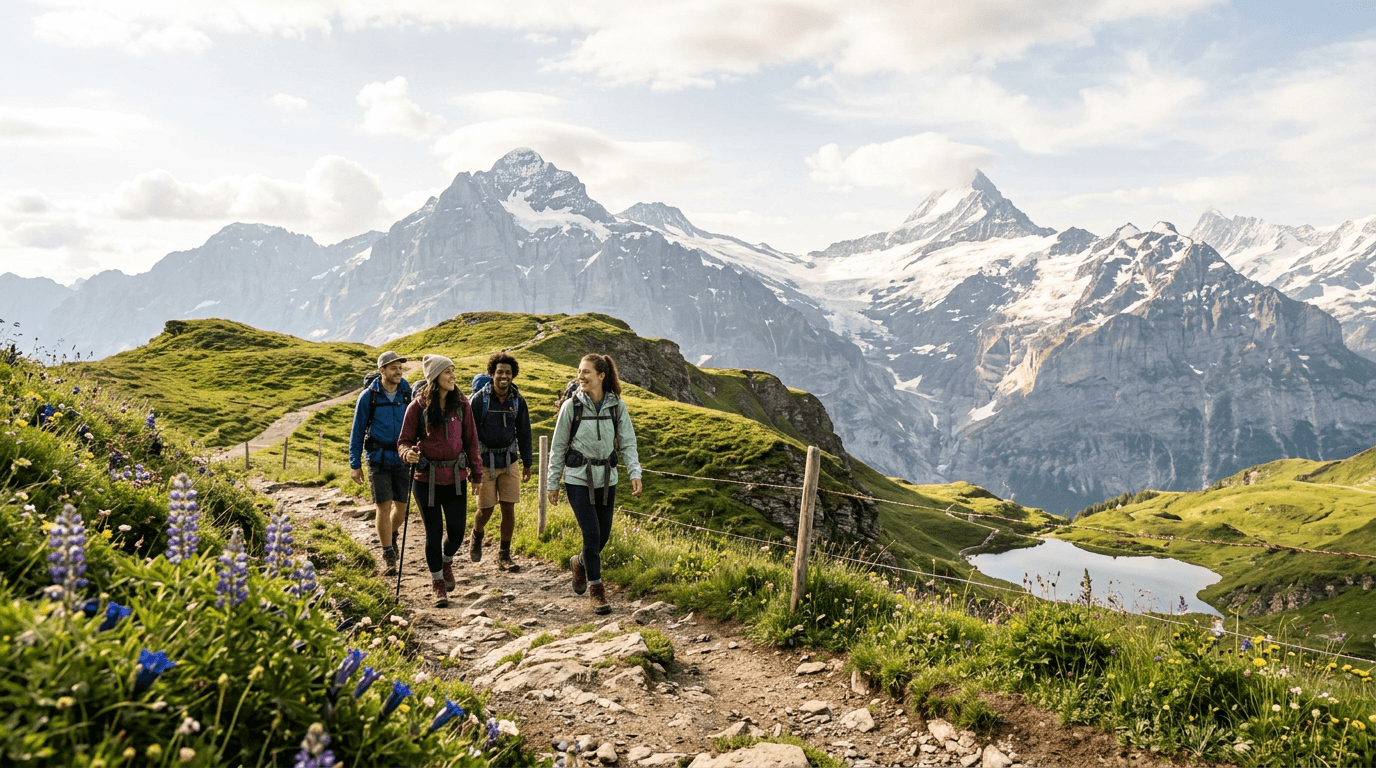
The best hiking trails in Switzerland offer an unparalleled mix of iconic scenery and accessible adventure, with top choices including the panoramic Oeschinensee Lake hike for its surreal blue waters, the 5 Lakes Walk in Zermatt for classic Matterhorn views, and the epic Schynige Platte to First ridge trail for a quintessential Berner Oberland experience. Whether you're a seasoned trekker or a family looking for a gentle stroll, Switzerland's meticulously maintained network of paths provides the perfect trail for every skill level and desire.
Welcome to your ultimate guide to hiking in the Swiss Alps, brought to you by your friends at Gidly. We live and breathe the experiences that make a city—or in this case, a country—truly special. Switzerland isn't just a place of chocolate and watches; it's a paradise carved by glaciers and mountains, crisscrossed by over 65,000 kilometers of marked trails. From the thundering waterfalls of Lauterbrunnen Valley to the serene, wine-laced terraces of Lavaux, there's a story waiting around every bend. In this guide, we'll go beyond a simple list, giving you the insider knowledge to plan your perfect alpine adventure for 2025 and beyond. We’ve hiked these trails, timed the cable cars, and found the best spots for a post-hike fondue, so you can spend less time planning and more time soaking in the views.
Our Top 10 Hiking Trails in Switzerland for 2025: The Ultimate List
Here it is: our definitive list of the most breathtaking, memorable, and rewarding hikes in Switzerland. We've curated this collection to showcase the incredible diversity of the Swiss landscape, from easy lakeside walks to challenging alpine ridges. Each trail has been chosen for its unique character, accessibility, and sheer "wow" factor. These aren't just walks; they are core memories waiting to be made. Our team has carefully selected these routes to ensure there's something for everyone, whether you're chasing that perfect Instagram shot of the Matterhorn or seeking a quiet moment of reflection beside a glacier. This top 10 represents the pinnacle of Swiss day hiking for the upcoming 2025 season.
1. Oeschinensee Lake Hike: The Blausee of the Alps
Often called the most beautiful mountain lake in the Alps, Oeschinensee is a jaw-dropping turquoise gem cradled by the 3,000-meter peaks of the Blüemlisalp massif. The classic hike to the lake is more of a spectacular stroll, making its incredible beauty accessible to almost everyone. After taking the gondola from Kandersteg, a gentle 25-minute walk brings you to the viewpoint that has launched a thousand screensavers. From there, you can descend to the lakeshore to rent a rowboat, have a lakeside picnic, or simply sit in awe. This trail is perfect for families, couples, and anyone seeking maximum scenic reward for minimal effort. The path is wide and well-maintained, offering continuous, breathtaking views that evolve with every step you take.
For those wanting more of a challenge, the Panorama Trail (Heuberg) offers a higher route around the lake. This trail, marked as number 8 on local signs, is a more strenuous T2 hike that takes about 3 hours. It involves some steep sections and requires sure-footedness, but the elevated perspectives of the lake and surrounding glaciers are absolutely worth the extra effort. You’ll hike through alpine meadows dotted with wildflowers and hear the distant clang of cowbells, a truly quintessential Swiss experience. We recommend starting this hike early to avoid the afternoon sun and crowds, allowing you to enjoy the tranquility of the high alpine environment. No matter which path you choose, ending your day with a drink at one of the mountain restaurants overlooking the lake is a must-do.
2. The Five Lakes Walk (5-Seenweg), Zermatt: Postcard Views of the Matterhorn
If you have one day in Zermatt and want the definitive Matterhorn experience, the Five Lakes Walk is your answer. This trail delivers exactly what it promises: a journey connecting five unique alpine lakes, with three of them—Stellisee, Grindjisee, and Leisee—offering stunning reflections of the world's most famous mountain on calm days. Starting from the Blauherd cable car station, the trail is a manageable T2 hike that mostly trends downhill, making it suitable for most fitness levels and active families. The diversity of the lakes is part of the magic; from the raw, open shores of Stellisee to the larch-fringed, moody Grindjisee, each stop feels like a new discovery. The path itself winds through a rocky, high-alpine landscape that makes you feel like you are truly on top of the world.
The total duration is about 2.5 to 3 hours of walking time, but you should budget at least 4-5 hours to truly enjoy it. Pack a picnic to enjoy by Grindjisee and don't forget your swimsuit for a chilly but exhilarating dip in Leisee, which has a designated swimming area and a playground for kids. The key to this hike is the weather. The Matterhorn is notoriously shy and can be shrouded in clouds, so check the live webcams at the valley station before buying your expensive lift ticket. Our team suggests going on the very first cable car of the morning for the best chance of clear skies, calm water for reflections, and fewer people on the trail. The Five Lakes Walk is more than a hike; it's a pilgrimage for mountain lovers and a masterclass in alpine scenery.
3. Schynige Platte to First: The Ultimate Berner Oberland Ridge Hike
For many avid hikers, this is the crown jewel of the Jungfrau Region. The 6-hour ridge hike from Schynige Platte to the First gondola station is a non-stop panorama of the Berner Oberland's most famous peaks: the Eiger, Mönch, and Jungfrau. The journey begins with a nostalgic ride on a 19th-century cogwheel train up to Schynige Platte, an experience in itself. From there, the trail (trail #62 on the Via Alpina) traverses a high ridge, offering staggering, dual-sided views. On one side, you have the turquoise lakes of Thun and Brienz shimmering below; on the other, the formidable wall of icy peaks and glaciers. It’s a challenging T2/T3 hike due to its length and elevation gain, requiring good stamina and a full day.
The path is well-marked and maintained, but it's narrow and exposed in places, so a head for heights and sturdy hiking boots are essential. You'll pass the Faulhorn, where a mountain hotel offers a chance to rest and refuel (or even stay the night for an incredible sunset and sunrise). The final descent towards Bachalpsee, with its famous mirror-like reflection of the Schreckhorn, is a rewarding final flourish before you reach the bustling First station. Our team agrees that packing a hearty lunch and plenty of water is crucial, as services are limited between the start and the Faulhorn. This is a bucket-list day hike that perfectly encapsulates the grandeur of the Swiss Alps, leaving you with a profound sense of accomplishment and awe.
4. Schäfler Ridge, Appenzell: An Epic Knife-Edge Trail
The Alpstein massif in the Appenzell region offers some of Switzerland’s most dramatic and unique limestone formations, and the Schäfler Ridge hike is its most thrilling highlight. This trail is not for the faint of heart, but for those with a taste for adrenaline and a solid head for heights, it's an unforgettable experience. The adventure typically starts with a cable car ride up to Ebenalp, passing the famous Aescher-Wildkirchli guesthouse built into a cliff face. From Ebenalp, it’s a steep but manageable 1-hour climb to the Schäfler guesthouse, where the views open up spectacularly. This is where the real fun begins. The path narrows to a "knife-edge" ridge with steep drop-offs on both sides, secured by cables in the most exposed sections.
This section is rated a T3/T4, demanding sure-footedness and confidence. While the cabled sections are secure, the sheer exposure is what makes this hike so electrifying. You feel like you're walking on the spine of a dragon, with the entire Säntis range laid out before you. After traversing the ridge, the trail descends steeply towards Seealpsee, a beautiful lake nestled in the valley below. The full loop, from Ebenalp to Schäfler, down to Seealpsee, and then back to the Wasserauen station, takes about 4-5 hours. We strongly advise against attempting this hike in wet or windy conditions, as the ridge can become treacherous. For experienced hikers looking for a true alpine thrill, the Schäfler Ridge is an absolute must-do.
5. Charles Kuonen Suspension Bridge Trail: The Longest Pedestrian Bridge in the Alps
Combine a beautiful forest hike with a major adrenaline rush on the trail to the Charles Kuonen Suspension Bridge near Randa (in the same valley as Zermatt). At 494 meters long and soaring 85 meters above the Grabengufer ravine, this is one of the longest pedestrian suspension bridges in the world. The hike to get there is a significant part of the experience. The most popular route is a loop starting from the town of Randa, which takes about 4-5 hours to complete. The trail climbs steeply through a beautiful larch forest, offering periodic glimpses of the Weisshorn and the Mattertal valley. The anticipation builds as you ascend, until you finally see the impossibly long, slender bridge spanning the valley.
Walking across the bridge is a thrilling and slightly wobbly experience. The grated floor allows you to see the ground far below, adding to the excitement. It’s an incredible feat of engineering and offers a unique perspective of the alpine landscape that you can't get anywhere else. After crossing the bridge, the trail continues its loop, descending back towards Randa. Gidly's team notes that this hike is quite strenuous due to the steep, continuous ascent (nearly 1,000 meters of elevation gain), so it's best for those with a good level of fitness. It’s a fantastic option for a day trip from Zermatt if you want a different kind of mountain challenge that combines natural beauty with human ingenuity.
6. Gornergrat Scenic Trail, Zermatt: A High-Altitude Panorama
While the Five Lakes Walk offers reflections, the Gornergrat Scenic Trail delivers raw, unobstructed power. This high-altitude hike provides what many consider the single greatest viewpoint in the Alps: a 360-degree panorama encompassing 29 peaks over 4,000 meters, including the majestic Matterhorn, the Dufourspitze (Switzerland’s highest peak), and the vast Gorner Glacier. The journey begins with a spectacular ride on the Gornergrat Bahn, Europe’s highest open-air cogwheel railway, to the Gornergrat summit at 3,089 meters. After soaking in the views from the observatory platform, instead of riding all the way down, you'll hike a section of the trail. The best and most popular option is hiking from Gornergrat down to Riffelberg (or Rotenboden), a walk of about 1.5-2 hours.
This trail is almost entirely downhill, but the altitude can still make it feel challenging. The path is wide and safe, making it a T2 trail suitable for most people. Along the way, you'll pass the iconic Riffelsee lake, another prime spot for Matterhorn reflections, often less crowded than the lakes on the 5-Seenweg. The true magic of this hike is the constant, in-your-face presence of the high peaks and the sprawling glacier below. You're walking through a landscape of giants. From our experience, hiking this trail in the late afternoon offers beautiful light on the mountains and thinner crowds, as most tourists have already descended. This is the ultimate hike for those who want to feel completely immersed in the high alpine world without a multi-day trek.
7. Muottas Muragl Panorama Trail, St. Moritz: Art and Views
The Engadin valley, with its glamorous hub of St. Moritz, offers a different flavor of alpine beauty—wider valleys, shimmering lakes, and a unique quality of light. The Muottas Muragl Panorama Trail is the perfect introduction to this region's splendor. A vintage funicular whisks you from the valley floor up to the Muottas Muragl hotel and viewpoint at 2,456 meters. From here, a relatively flat and easy T1 panoramic trail contours along the mountainside towards the Alp Languard chairlift. The walk takes about 2-2.5 hours and is a feast for the eyes from start to finish. Below you, the entire Upper Engadin lake plateau stretches out—Lake St. Moritz, Lake Silvaplana, and Lake Sils—like a string of turquoise jewels.
What makes this trail unique is its blend of nature and art. Along the path, you'll find installations and benches created by local artists, inviting you to sit and contemplate the landscape in a new way. It's a civilized and gentle hike, perfect for a relaxed day out, for families, or for those adjusting to the altitude. From Alp Languard, you can take a chairlift down to Pontresina, or for the more energetic, hike down through the forest. The Gidly team loves this trail for a "rest day" hike—it provides all the epic views of a major alpine trek with a fraction of the effort, leaving you with plenty of energy to explore the chic boutiques and cafés of St. Moritz later in the day.
8. The Hornlihutte Trail (Hörnlihütte): Base Camp of the Matterhorn
For a truly profound connection to the Matterhorn, hike to its base camp. The Hörnlihütte (Hörnli Hut) is the legendary starting point for climbers attempting to summit the iconic peak. The trail to the hut is a serious, high-altitude alpine hike (rated T4) and should only be attempted by experienced, sure-footed hikers with a head for heights. The journey begins at Schwarzsee, accessible by gondola from Zermatt. From there, the path switchbacks steeply up the Hörnli ridge. The trail is narrow, rocky, and exposed, with metal staircases and fixed ropes to assist in the trickiest sections. It's a relentless 2-hour climb that gains over 650 meters in elevation, a true test of grit and determination.
The reward is immense. Reaching the hut at 3,260 meters feels like arriving at the edge of the world. The Matterhorn looms directly above you, so close you can hear rocks falling from its faces. You can watch climbers preparing for their ascent or returning from their epic journey. The atmosphere is electric with alpine history and ambition. You can enjoy a well-deserved lunch at the hut's restaurant while taking in the unparalleled views. This is not a hike for casual tourists; it is a challenging adventure that brings you face-to-face with the raw, untamed spirit of the mountains. Our team strongly advises checking conditions, starting early, and being prepared for rapid weather changes at this altitude.
9. Aletsch Glacier Panorama Trail, Bettmeralp: Hiking Beside a Sea of Ice
Stand in the presence of a true natural wonder on the Aletsch Glacier Panorama Trail. The Great Aletsch Glacier is the largest glacier in the Alps, a 23-kilometer-long river of ice that is a UNESCO World Heritage site. This hike allows you to walk alongside its upper reaches, providing awe-inspiring views of its immense scale. The best route starts by taking a cable car from the car-free village of Bettmeralp up to the Bettmerhorn viewpoint. After being mesmerized by the initial view, you'll follow a stunning high trail towards the Moosfluh viewpoint. This T2 trail is relatively easy, with gentle ups and downs, but it's the constant, mind-boggling view to your right that makes it so special. You can see the glacier's two medial moraines—dark stripes of rock that run down its center like highways—and hear the creaks and groans of the moving ice.
The hike from Bettmerhorn to Moosfluh takes about 2 hours. From Moosfluh, you can take another cable car down to Riederalp or continue hiking along the ridge. The area is exceptionally well-equipped for visitors, with information panels explaining the glacier's geology and its unfortunate retreat due to climate change. It's a beautiful and humbling experience. Gidly recommends this hike for anyone, including families with older children, who wants to understand the power and fragility of the alpine environment. To make a full day of it, you can explore the charming car-free villages of Bettmeralp and Riederalp, which are perched on a sunny plateau high above the Rhône Valley.
10. Stoos Ridge Hike: A Thrilling Walk Above Lake Lucerne
For a dose of thrilling views and unique engineering, head to the Stoos Ridge Hike. The adventure begins with a ride on the world's steepest funicular railway, which ascends at an incredible 110% gradient to the car-free village of Stoos. From the village, you'll take a series of chairlifts up to the Klingenstock summit. This is where the famous ridge hike begins. The path, narrow but well-secured with chains and stairs where needed, snakes along the sharp ridge towards the Fronalpstock peak. This T3 trail is a continuous highlight reel, offering spectacular dual panoramas. To your left, you have the dramatic peaks of Central Switzerland; to your right, the various arms of Lake Lucerne sparkle in brilliant shades of blue and green.
The hike itself takes about 2 hours and is an exhilarating experience for sure-footed hikers with a good head for heights. While exposed, it feels secure and is a popular and well-trafficked route. Reaching the Fronalpstock summit, with its large viewing platform and restaurant, feels like a grand finale. The 360-degree view from here is arguably one of the best in all of Central Switzerland, encompassing the lake, the Rütli Meadow (the birthplace of Switzerland), and countless peaks. From Fronalpstock, you can take a chairlift and the funicular back down. We recommend purchasing the "Stoos Peak Experience" ticket, which covers all the required lifts for the loop. It’s a perfect, compact adventure that packs a massive scenic punch.
A Hike for Every Occasion: Matching the Trail to Your Trip
A great hike is not just about the trail itself, but about the experience you have on it. The perfect trail for a romantic sunset stroll is very different from one for a challenging adventure with friends or a safe, engaging walk with young children. As your guide to all things fun, Gidly is here to help you match the perfect Swiss hike to your specific occasion. We've broken down our recommendations based on who you're traveling with and what kind of vibe you're looking for. This ensures that your time in the mountains is not just scenic, but also perfectly suited to your group's dynamics, abilities, and goals. Let's find the ideal alpine outing for your crew.
For a Romantic Date Night: Sunset Hikes & Picnic Spots
There's nothing more romantic than sharing a spectacular alpine sunset with your special someone. The key to a perfect romantic hike is choosing a trail with a west-facing view, easy access in low light, and a cozy spot to lay down a blanket. Our top recommendation is the hike from Männlichen to Kleine Scheidegg in the Jungfrau Region. Take one of the last gondolas up from Wengen or Grindelwald and enjoy the relatively flat, 90-minute "Panorama Trail" as the sun begins to dip. The path offers head-on views of the Eiger, Mönch, and Jungfrau, which catch the golden "alpenglow" in the evening. Find a quiet bench, unpack a small picnic of local cheese and wine, and watch the mountains blush in the fading light before catching the last train down from Kleine Scheidegg.
Another fantastic option is the Rigi Kulm "Queen of the Mountains" sunset experience near Lucerne. Take the historic cogwheel railway from Vitznau or Arth-Goldau to the summit. The 360-degree view over Lake Lucerne and countless other lakes is breathtaking at any time, but it becomes truly magical at sunset. There are numerous easy walking paths at the summit, allowing you to find a private spot away from the main viewing platform. After the sun disappears, you can enjoy a romantic dinner at the Rigi Kulm Hotel before taking a late train down. The combination of easy access via public transport, world-class views, and excellent amenities makes this the ultimate hassle-free romantic outing. It’s all about creating a memorable moment without the stress of a strenuous trek.
For a Family Outing: Best Hikes with Kids & Strollers
Hiking with kids requires a different set of priorities: safety, engagement, and accessibility are paramount. The goal is to instill a love for the mountains, not to conquer a peak. The Flumserberg "Lilliweg" trail is a fantastic choice for families with young children. This themed trail is designed to be interactive, with various play stations along the way to keep little ones entertained. The path is wide, mostly flat, and offers beautiful views of the Churfirsten mountain range. It’s easily accessible and has plenty of spots for a family picnic. The entire loop takes about 1.5 hours, a perfect duration for short attention spans.
For families with strollers or wheelchairs, Switzerland offers surprisingly excellent options. The path around Leisee lake in Zermatt (part of the 5 Lakes Walk) is a prime example. Accessible via the Sunnegga funicular, this area features a smooth, paved path around a beautiful lake with a playground, barbecue pits, and a clear view of the Matterhorn. Another Gidly favorite is the walk from Grütschalp to Mürren in the Lauterbrunnen valley. After a cable car ride up from Lauterbrunnen, a wide, mostly flat gravel path offers jaw-dropping views of the Eiger, Mönch, and Jungfrau across the valley. It's about a 1-hour walk, easily manageable with a sturdy stroller, and ends in the charming, car-free village of Mürren, where you can grab a well-deserved ice cream.
For an Adventure with Friends: Challenging Group Hikes
When you're with a group of friends, you can often tackle more ambitious goals and share in a collective sense of achievement. A challenging group hike should offer adventure, stunning scenery, and a great mountain hut or restaurant at the end for a celebratory beer. The Pizol 5-Lake Classic Hike is a perfect candidate. This strenuous 5-hour T3 hike in Eastern Switzerland takes you through a dramatic, lunar-like landscape past five crystal-clear mountain lakes, each with its own unique color and character. The shared challenge of the steep ascents and descents builds great camaraderie, and the ever-changing scenery provides endless photo opportunities and conversation starters. It's a tough day out, but the shared memories will last a lifetime.
For a multi-day adventure, consider tackling a section of the Via Alpina. The leg from Engelberg to Engstlenalp and over the Jochpass to Meiringen is a spectacular two-day trek. This route offers incredible diversity, from the majestic Titlis glacier views to the serene Engstlensee lake. Staying overnight in the historic Hotel Engstlenalp allows your group to relax, share stories from the day, and recharge for the next leg. The feeling of arriving in a new town on foot after crossing a high mountain pass is an unbeatable group experience. It fosters teamwork and provides a genuine escape from the everyday grind, strengthening friendships along the way.
For a Corporate Outing: Accessible Team-Building Trails
Taking the team out of the office and into the mountains can be a fantastic way to boost morale and foster collaboration. For a corporate outing, the ideal trail is accessible for a wide range of fitness levels, logistically simple, and includes a rewarding destination for a team lunch or activity. The Lavaux Vineyard Terraces, a UNESCO World Heritage site overlooking Lake Geneva, is an exceptional choice. The well-paved path from St. Saphorin to Lutry is a gentle walk of about 11 km that can be done in sections. It requires no special gear and offers stunning views of the lake and the French Alps. More importantly, the route is dotted with wineries (caveaux) where the team can stop for a wine tasting, turning the hike into a unique cultural and team-building experience.
Another excellent option is the Uetliberg Panorama Trail just outside Zurich. Easily reachable by a short train ride from the city's main station, this trail offers a quick escape into nature with fantastic views over the city, Lake Zurich, and the distant Alps. A gentle 1-2 hour walk along the ridge from Uetliberg to Felsenegg is manageable for everyone. At Felsenegg, you can treat the team to lunch at the panoramic restaurant before taking a cable car down to Adliswil and a train back to the city. Its proximity to Zurich, ease of access, and combination of light exercise with a rewarding meal make it the perfect formula for a successful and inclusive corporate team event.
For Solo Travelers: Safe & Scenic Trails for Reflection
Hiking solo is a meditative and empowering experience, offering a chance for quiet reflection and a deep connection with nature. For solo hikers, the best trails are well-marked, reasonably trafficked for safety, and offer profound scenic beauty that can be enjoyed at one's own pace. The Panoramaweg from First to Grosse Scheidegg in the Grindelwald area is a perfect choice. While the trail to Bachalpsee can be busy, continuing on the path towards Grosse Scheidegg reveals a much quieter, equally stunning landscape. The trail is wide and safe (T1/T2), with constant views of the Wetterhorn and the Grindelwald valley. The presence of the occasional post bus on the road below adds a layer of security, and the endpoint at Grosse Scheidegg has a restaurant and bus stop for an easy return.
Another soul-stirring option for a solo hike is the trail network around Guarda in the Lower Engadin region. This village is one of the best-preserved and most beautiful in Switzerland, and the surrounding trails are peaceful and scenic. A lovely loop hike leads from Guarda up to the "Schellen-Ursli" hut (referencing a famous Swiss children's book) and back, taking you through flower-filled meadows and quiet pine forests with views of the Engadin Dolomites. The trails are exceptionally well-signposted, and the region feels safe and welcoming. After your hike, you can spend time wandering the cobblestone streets of Guarda, feeling like you've stepped back in time. It’s a perfect blend of natural beauty and cultural immersion for a reflective solo journey.
Switzerland on a Budget: The Best Free & Low-Cost Hikes
Switzerland has a reputation for being expensive, but experiencing its world-class hiking doesn't have to break the bank. With a little planning and some insider knowledge, you can enjoy the same million-dollar views for a fraction of the cost. The key is to minimize reliance on pricey cable cars and mountain railways, be smart about food, and know where to find affordable lodging. From breathtaking valley walks to panoramic ridge trails accessible on your own two feet, there are countless ways to immerse yourself in the Alps without emptying your wallet. Let's explore how to hike Switzerland on a budget, proving that the best things in life (and in the Alps) can indeed be free or very close to it.
Our Top 5 Completely Free Swiss Hikes
The best free hikes are those that start and end in a town or at a location accessible by public transport, requiring no additional mountain transport costs. These hikes often involve more initial climbing, but the rewards are just as sweet.
- Lauterbrunnen Valley Floor Walk: This is arguably the most spectacular free walk in Switzerland. Start in Lauterbrunnen and walk along the flat valley floor towards Stechelberg. You'll pass 72 waterfalls, including the famous Staubbach Falls, with sheer cliffs rising on either side. It’s an easy, 1-hour walk on a paved path, accessible to everyone.
- Mount Rigi Panorama Trail (from a lower station): While most take the train to the top, you can hike up Mount Rigi for free. A great option is to take the train to the Rigi Klösterli station and hike the 2-3 hours to the summit (Rigi Kulm). You'll earn your incredible views of Lake Lucerne and save over 70 CHF on the ticket.
- The Swiss Path (Weg der Schweiz): This 35km trail around Lake Uri (the southern part of Lake Lucerne) was created to celebrate Switzerland's 700th anniversary. You can hike it in sections for free, using the regular ferry service (not free, but cheaper than a mountain railway) to hop between points. The section from Flüelen to Tellplatte is particularly scenic.
- Creux du Van: Known as the "Swiss Grand Canyon," this natural rock amphitheater in the Jura Mountains is a spectacular sight. You can drive to the Soliat restaurant near the top and walk a few minutes to the rim for free, or embark on a rewarding 4-hour loop hike from the town of Noiraigue.
- Saxer Lücke (from Frümsen): While most access this iconic Appenzell viewpoint via the Hoher Kasten cable car, a challenging but free alternative is to hike up from the valley village of Frümsen. It's a strenuous 3-4 hour ascent, but you'll be rewarded with dramatic views of the jagged ridge without the 50 CHF cable car fee.
How to Save Money on Cable Cars & Mountain Railways
Sometimes, a cable car is unavoidable or simply worth the cost to access a high-altitude wonderland. However, you should almost never pay the full price. The single most important money-saving tool for any traveler in Switzerland is the Swiss Half Fare Card. For a one-time fee of 120 CHF (valid for one month), you get a 50% discount on virtually all trains, buses, boats, and most mountain cable cars and funiculars across the country. If you plan on taking just two or three major mountain excursions (like Jungfraujoch or Gornergrat), the card pays for itself immediately. Our team considers this non-negotiable for any hiking-focused trip.
Another strategy is to look for "Good Morning" or "Good Afternoon" tickets. Many cable car companies offer reduced prices for those who go up on the very first lift of the day or go up late in the afternoon. This is a great way to save 20-30% and has the added benefit of helping you avoid the midday crowds. Also, always check the SBB app for "Saver Day Passes." If purchased well in advance, these can give you unlimited travel on the entire Swiss network for a day for as little as 52 CHF (with a Half Fare Card), which can be cheaper than a single long-distance return train ticket. Finally, hike one way. Take a lift up and hike down, or hike up and ride down. This simple trick cuts your mountain transport bill in half while still giving you a great hiking experience.
Picnics and Groceries: Eating Well for Less on the Trail
Mountain restaurants offer incredible views but come with hefty price tags, with a simple lunch easily costing 30-40 CHF per person. The most effective way to save money while hiking is to pack your own picnic. This isn't a sacrifice; it's a quintessential Swiss experience! Head to a local Coop or Migros supermarket (found in almost every town) and stock up. You can assemble a gourmet alpine lunch for under 15 CHF. Grab some fresh bread (Bürli), local cheeses like Gruyère or Appenzeller, some Bündnerfleisch (air-dried beef), a healthy portion of trail mix (Nussmischung), and of course, some Swiss chocolate for a summit reward. Most supermarkets also have excellent pre-made salads and sandwiches.
Don't forget a reusable water bottle. The tap water in Switzerland is of the highest quality, and you can fill your bottle for free from taps and designated fountains everywhere, even high in the mountains. Look for fountains with a sign indicating "Trinkwasser" (drinking water). This alone will save you 4-5 CHF per bottle you would have bought. Many popular hiking areas also have designated barbecue pits ("Feuerstelle" or "Brätlistelle"), often stocked with free firewood. Grilling some sausages (cervelat is the classic choice) with a mountain view is a fantastic and budget-friendly way to enjoy a hot meal on the trail. Embracing the picnic culture is not just economical; it allows you to eat whenever and wherever you find the perfect view.
Finding Affordable Hiker-Friendly Accommodation
Accommodation is often the biggest expense on a Swiss trip. While hotels in prime locations like Zermatt and Grindelwald are pricey, there are several excellent budget-friendly alternatives for hikers. Staying in a nearby valley town and commuting to the trailheads is a great strategy. For example, instead of staying in Zermatt, consider Täsch or Randa. Instead of Grindelwald or Wengen, look for accommodation in Interlaken or Wilderswil. You'll add a short train ride to your day, but the savings on accommodation can be enormous, often 50% or more.
For a truly immersive and affordable experience, consider staying in a Swiss Alpine Club (SAC) hut. These mountain huts offer dormitory-style lodging in spectacular, remote locations. A night with half-board (dinner and breakfast) typically costs around 70-85 CHF per person, an incredible value for a hot meal and a bed high in the mountains. It's a fantastic way to break up longer treks or experience a high-alpine sunset and sunrise. Hostels are another great option, with excellent locations in places like Grindelwald, Interlaken, and Zermatt. They offer both dorm beds and private rooms at a fraction of the cost of hotels. Finally, look into "Ferienwohnungen" (holiday apartments) on platforms like Airbnb, especially if you're traveling in a small group, as splitting the cost can be much cheaper than booking multiple hotel rooms.
Swiss Hiking by Region: A Neighborhood-by-Neighborhood Guide
Switzerland may be a small country, but its geography and culture are incredibly diverse. The hiking experience in the German-speaking Berner Oberland, with its rolling green hills and iconic peaks, is vastly different from the rugged, French-speaking Valais or the Italian-influenced charm of Ticino. To help you navigate this rich tapestry, we've broken down the country's prime hiking destinations by region. Think of this as your neighborhood guide to the Alps. Each area has its own unique personality, signature trails, and culinary specialties. Understanding these regional differences will help you choose the perfect home base for your alpine adventures.
The Berner Oberland: Interlaken, Grindelwald, and Lauterbrunnen’s Best
The Berner Oberland is the Switzerland you've seen on postcards. Centered around the towns of Interlaken, Grindelwald, and Lauterbrunnen, this region is home to the mighty trio of the Eiger, Mönch, and Jungfrau. The landscape is a story of contrasts: lush green valleys with charming chalets give way to stark, glaciated peaks. It boasts an incredibly dense network of trails, cogwheel trains, and cable cars, making its epic scenery remarkably accessible. This is the heartland of classic Swiss hiking. Hikes like the Schynige Platte to First ridge walk and the Männlichen to Kleine Scheidegg Panorama Trail are legendary for their non-stop views of the high peaks. The region is perfect for first-time visitors to Switzerland who want to be immersed in iconic alpine beauty.
Beyond the famous routes, the Berner Oberland is full of hidden gems. We recommend exploring the Rosenlaui Valley, a quieter side valley near Meiringen, which offers wild, romantic landscapes and a hike to the impressive Rosenlaui Glacier Gorge. Another fantastic option is the hike to the Gleckstein Hut (Glecksteinhütte) from Grindelwald, a challenging T4 trail that takes you into a wild, glaciated cirque with breathtaking views. The region is also famous for its waterfalls; the walk through the Lauterbrunnen Valley floor, past 72 cascades including Trümmelbach Falls (which drains the Eiger glacier inside the mountain), is an easy but unforgettable experience. After a long day of hiking, be sure to try a plate of Berner Platte, a hearty dish of various meats and sausages.
Valais: Zermatt, Verbier, and the Matterhorn’s Domain
The canton of Valais (or Wallis in German) is a land of superlatives. It’s home to the highest peaks in Switzerland, the largest glaciers, and the most famous mountain of all: the Matterhorn. This is a more rugged, raw, and sun-drenched region than the Berner Oberland. The valleys are deeper, the slopes are steeper, and the atmosphere feels wilder. Zermatt is the undisputed capital of hiking here, with trails like the 5 Lakes Walk and the Gornergrat Scenic Trail offering unparalleled views of the Matterhorn. But Valais is much more than just Zermatt. The resort town of Verbier is a hub for thrilling hikes, including the Sentier des Chamois, where you are almost guaranteed to spot nimble mountain goats.
Gidly’s insider pick for Valais is the Aletsch Arena, where you can hike alongside the magnificent Aletsch Glacier, the longest in the Alps. The panorama trail from Bettmerhorn to Moosfluh is a relatively easy walk with colossal views. For a unique cultural hike, explore the "bisses" of Valais. These are ancient irrigation channels built centuries ago to bring water from the glaciers to the sunny, dry slopes. Many have been converted into beautiful, nearly flat hiking trails that contour along the mountainsides, like the Bisse du Ro in Crans-Montana. The region is also Switzerland's largest wine-producing area, so be sure to pair your post-hike meal of raclette (melted cheese scraped over potatoes) with a glass of local Fendant or Pinot Noir.
Appenzell: Unique Traditions and Dramatic Alpstein Peaks
Appenzell offers a completely different hiking experience. Located in northeastern Switzerland, this region is known for its rolling green hills, traditional farming culture, and the dramatic, jagged limestone peaks of the Alpstein massif. It feels like a miniature, more intimate version of the high Alps. The hiking here is characterized by steep ascents to rewarding ridges and charming mountain inns (Berggasthäuser). The culture is deeply traditional, and you're likely to see farmers in classic attire and hear the sounds of yodeling and cowbells. It's a region that charms you with its authenticity as much as its scenery. Hikes are often punctuated by stops at unique guesthouses, like the iconic Aescher-Wildkirchli, built precariously into a cliff face.
The signature hike of the region is the thrilling Schäfler Ridge, a knife-edge path for experienced hikers. Another classic is the hike from Hoher Kasten down to the stunning Saxer Lücke viewpoint, one of the most photographed spots in the region. For a more moderate but equally beautiful option, the loop hike to Seealpsee is a must. This idyllic lake, nestled beneath the mighty Säntis peak, can be reached via a few different routes, including one past the aforementioned Aescher. After your hike, reward yourself with Appenzeller cheese, Biberli (a gingerbread-like pastry), and a glass of the local herbal liqueur, Appenzeller Alpenbitter. This region is perfect for hikers who appreciate dramatic geology and a strong sense of local culture.
Central Switzerland: Hiking Around Lake Lucerne and Mount Pilatus
Central Switzerland is the historical and geographical heart of the country. The landscape is dominated by the sprawling, fjord-like Lake Lucerne (Vierwaldstättersee) and its guardian mountains: Rigi, Pilatus, and Stanserhorn. This region offers an incredible variety of hikes, from gentle lakeside strolls to challenging summit ascents, all with the stunning backdrop of the lake. The interconnected network of boats, trains, and cable cars makes it incredibly easy to combine different modes of transport for "hike and cruise" style days out. The Stoos Ridge Hike is a prime example of the thrilling experiences on offer, with its world-record funicular and breathtaking ridge walk high above the lake.
Mount Rigi, known as the "Queen of the Mountains," is a hiker's paradise with over 120 km of trails for all abilities. The Rigi Panorama Trail is a classic, easy walk with non-stop views. For a more mystical adventure, the "Dragon Path" on Mount Pilatus offers a series of short, dramatic trails carved into the rock near the summit, playing on the local legends of dragons living on the mountain. Gidly's recommendation for a unique experience is the Bürgenstock Fling, a cliff walk (Felsenweg) that offers spectacular views from a path seemingly suspended over Lake Lucerne, culminating in a ride on the thrilling Hammetschwand Lift, Europe's highest outdoor elevator. The proximity to the beautiful city of Lucerne makes this region perfect for those who want to combine alpine adventure with urban exploration.
Graubünden: St. Moritz, Davos and the Swiss National Park
Graubünden is Switzerland's largest and most sparsely populated canton, a vast wilderness of deep valleys, high passes, and pristine nature. It's home to the glamorous resorts of St. Moritz and Davos, but also to the country's only national park. The hiking here feels grand, wild, and remote. The Engadin Valley, where St. Moritz is located, is famous for its "champagne climate," wide sunny valleys, and turquoise lakes. The Muottas Muragl Panorama Trail is the classic Engadin hike, offering effortless views of the lake-strewn plateau. For a more strenuous adventure, the hike to the Segantini Hut provides incredible panoramas and a connection to the famous painter Giovanni Segantini, who did much of his work in this landscape.
The crown jewel of the region is the Swiss National Park, a strictly protected wilderness area where nature is left to its own devices. The 21 marked trails offer a chance to see ibex, chamois, marmots, and even the bearded vulture in their natural habitat. The Val Trupchun trail is renowned as the park's best for wildlife viewing. The park has a strict "leave no trace" policy, and you must stay on the marked paths, preserving the wild character of the area. Beyond the park, the region of Davos Klosters offers hundreds of kilometers of trails, from the family-friendly Madrisa Land to challenging treks in the Silvretta range. Graubünden is for the hiker who seeks solitude, grand scale, and a true sense of wilderness.
Planning Your Swiss Hiking Adventure: A Practical Guide (2025-2026)
A successful Swiss hiking trip is all in the preparation. The mountains are beautiful but demand respect, and understanding the local systems and conditions is key to a safe and enjoyable adventure. This practical guide is your pre-trip checklist, covering everything from decoding the trail rating system to mastering the world-class public transport network. We’ll provide you with the essential knowledge you need for the 2025-2026 seasons, including the best times to go, what to pack, and how to navigate with confidence. Think of Gidly as your experienced local friend, giving you all the tips to make your planning seamless and your hiking trip unforgettable.
Understanding the Swiss Hiking Scale (T1-T6): Answer Capsule
Switzerland uses a clear, six-level trail rating system developed by the Swiss Alpine Club (SAC) to indicate difficulty. Understanding this T1 to T6 scale is crucial for choosing trails that match your ability.
- T1 (Hiking): Yellow signs. Well-maintained, flat, or gently sloping paths. No special skills needed. Sneakers are often sufficient. Example: Lauterbrunnen Valley Floor Walk.
- T2 (Mountain Hiking): White-Red-White signs. Steeper sections, trail is clear but can be narrow. Requires sure-footedness and basic hiking boots. Example: Männlichen to Kleine Scheidegg.
- T3 (Challenging Mountain Hiking): White-Red-White signs. Exposed sections, may have ropes or chains. Requires good balance, a head for heights, and sturdy boots. Example: Stoos Ridge Hike.
- T4 (Alpine Hiking): White-Blue-White signs. Involves scrambling (using hands), exposed ledges, may cross glacier fields. Requires significant alpine experience. Example: Hörnli Hut Trail.
- T5 (Challenging Alpine Hiking): White-Blue-White signs. Often on glaciers or rock with short climbing sections. Full alpine gear (rope, ice axe) required.
- T6 (Difficult Alpine Hiking): White-Blue-White signs. Very demanding, high-risk climbing sections on poor rock or ice. For expert mountaineers only.
Best Time to Hike: A Month-by-Month Breakdown of Seasons
Timing is everything in the Alps. The main hiking season is relatively short, and conditions can change dramatically from month to month. Here’s what to expect:
- May/June (Early Summer): Lower elevation trails (below 1,800m) are generally open and beautiful, with lush green landscapes and blooming wildflowers. However, higher altitude trails will likely still be covered in snow. Many mountain huts and some cable cars may still be closed. This is a great time for valley and mid-mountain hikes.
- July/August (Peak Season): This is the prime time for Swiss hiking. The weather is warmest, and almost all trails, including high alpine passes, are snow-free and open. All cable cars and mountain huts are operational. Days are long, but this is also the busiest and most expensive time. Thunderstorms are common in the late afternoons, so early starts are crucial.
- September (Golden Season): From our team's experience, this is the best month to hike. The summer crowds have thinned, the weather is often more stable than in August, and the first autumn colors begin to appear on the larch trees, creating a golden glow. Most trails and lifts remain open until late September or early October.
- October (Late Autumn): A beautiful but transitional month. Lower elevations can be stunning with full autumn foliage. However, higher elevations can see their first significant snowfall, leading to trail closures. Many cable cars and huts begin to close for the season. Check conditions daily.
- November-April (Winter): High-altitude hiking is not possible. This is the season for dedicated winter hiking and snowshoeing on groomed, marked winter trails at mid-elevations.
Getting to the Trailhead: Mastering Swiss Public Transport (SBB)
Switzerland's public transport system is a marvel of engineering and punctuality, making it the best way to get to trailheads. The system is fully integrated, meaning your train ticket can cover connecting buses and even boats. The SBB (Swiss Federal Railways) app is your single most important tool. You can use it to check timetables for every train, bus, boat, and cable car in the country, and to purchase tickets for your entire journey from city to summit. Timetables are gospel; if the app says a bus leaves at 14:03, it will leave at 14:03. This reliability allows you to plan complex, multi-leg journeys with confidence.
Renting a car can be tempting, but it's often more of a hindrance for hiking. Many of the best hikes are point-to-point, not loops, meaning you end in a different place than you started. Public transport makes this seamless. Furthermore, many of the best hiking villages (Zermatt, Mürren, Wengen, Stoos) are car-free, requiring you to park in the valley and take a train or cable car up anyway. Embrace the Swiss way: relax on a scenic train ride, watch the landscape unfold, and arrive at the trailhead refreshed and ready to hike.
The Ultimate Swiss Hiking Packing List: What to Wear and Bring
The weather in the Swiss Alps can change in an instant. A sunny morning can turn into a cold, rainy, or even snowy afternoon, especially at altitude. The key is layering. Never go hiking without these essentials, even on a short walk:
- Footwear: Sturdy, broken-in hiking boots with good grip are essential for T2 trails and above. For easy T1 valley walks, trail running shoes or sturdy sneakers can suffice.
- Clothing (Layers):
- Base Layer: A moisture-wicking t-shirt (synthetic or merino wool, not cotton).
- Mid Layer: A fleece or light insulated jacket for warmth.
- Outer Layer: A waterproof and windproof jacket (like Gore-Tex). This is non-negotiable.
- Pants: Lightweight hiking pants. Convertible pants that turn into shorts are a great option.
- Backpack: A comfortable daypack (20-30 liters) to carry your gear.
- Navigation: Your smartphone with a downloaded offline map (see next section) and a portable power bank. A physical map is a great backup.
- Sun Protection: Sunglasses, a wide-brimmed hat, and high-SPF sunscreen. The sun is incredibly strong at altitude.
- Food & Water: At least 1.5-2 liters of water per person and plenty of high-energy snacks (nuts, bars, chocolate).
- Small First-Aid Kit: Blister plasters, antiseptic wipes, bandages, and any personal medication.
- Extras: Hiking poles (highly recommended, especially for descents), a small trash bag (leave no trace), and a camera to capture the views!
Navigation & Safety: Best Apps and Emergency Procedures
While Swiss trails are famously well-marked with yellow signs, technology can be an invaluable co-pilot. The best navigation app for Switzerland is, without a doubt, SwitzerlandMobility. This official app shows the entire network of marked hiking, biking, and canoeing trails on detailed topographic maps. You can plan routes, track your progress, and download maps for offline use (a paid subscription is required for offline maps but is well worth it). Other great options include AllTrails and Komoot, which have strong user communities and trail reviews. Whichever app you use, always download your map before you leave, as cell service can be spotty in the mountains.
Safety should always be your top priority. Before you set out, check the weather forecast specifically for your hiking area using an app like MeteoSwiss, which provides detailed mountain forecasts. Be aware of trail status; in the early season, trails can be closed due to snow or avalanche risk. Check local tourism websites or ask at the cable car station for the latest updates. If you have an emergency, the number to call for mountain rescue is 1414 (for REGA, the Swiss Air-Rescue). It's also wise to let someone know your planned route and estimated return time. Following these simple steps will ensure your alpine adventure is safe and stress-free.
Beyond the Hike: Themed Trails for a Unique Experience
While the panoramic views are a primary draw, Switzerland offers a fantastic variety of themed trails that add another layer of enjoyment to your walk. These routes transform a simple hike into a cultural, historical, or culinary journey. They are perfect for days when you want a more relaxed, interactive experience or wish to dive deeper into the local culture. From tasting your way through wine country to walking in the footsteps of ancient traders, these themed trails offer a unique way to engage with the Swiss landscape. Gidly loves these experiences because they turn a day out into a story you can tell. Let's explore some of the most engaging themes.
Culinary Trails: Hiking from Cheese Dairies to Wineries
What could be better than combining a beautiful walk with delicious local food and drink? Switzerland's culinary trails are designed to do just that. The most famous of these is the walk through the Lavaux Vineyard Terraces between Lausanne and Montreux. The paved paths wind through steeply terraced vineyards overlooking Lake Geneva, a UNESCO World Heritage site. The trail is dotted with "caveaux," small cellars where local vintners offer tastings of the region's crisp Chasselas wine. It's a feast for the senses, with stunning views and delightful flavors.
For cheese lovers, the Gruyère region offers several routes. A classic is the walk from the village of Gruyères (home of the famous cheese) to the Maison Cailler chocolate factory in Broc. Along the way, you can visit a demonstration cheese dairy (La Maison du Gruyère) to see how the iconic cheese is made. In the Appenzell region, you can hike between alpine dairies where cheese is still made over an open fire in the summer months. These "Schaukäsereien" (show dairies) often sell their products directly, giving you the chance to taste cheese at its absolute freshest. These hikes are less about athletic challenge and more about leisurely indulgence, a perfect recipe for a memorable day.
Historical Routes: Walking Through Time on Ancient Paths
Many of Switzerland's hiking trails follow ancient trade routes, pilgrim paths, and military passages that have been used for centuries. Walking these paths is like stepping back in time. The Via Gottardo, for example, follows the historic route over the Gotthard Pass, a crucial north-south link in Europe for hundreds of years. You can hike sections of the old mule track, passing by ancient chapels and hospices, and even walk across the legendary Devil's Bridge in the Schöllenen Gorge. It's a powerful way to connect with the history of alpine travel and trade.
Another fascinating historical route is the previously mentioned Swiss Path (Weg der Schweiz) around Lake Uri. Each of Switzerland's 26 cantons sponsored a section of the trail, with the length of each section proportional to its population. The trail starts at the Rütli Meadow, the legendary site of the founding of Switzerland in 1291, and winds its way around the most historic part of the lake, passing Tell's Chapel along the way. Walking this path is a journey through the country's foundational myths and history. These trails offer more than just exercise; they provide context and a deeper appreciation for the land and its people.
Art & Sculpture Trails: Finding Culture in the Mountains
For those who appreciate art, Switzerland has cleverly integrated culture into the natural landscape with a number of art and sculpture trails. These paths feature installations by local and international artists, creating an open-air museum experience. The Muottas Muragl Panorama Trail near St. Moritz, which we've mentioned, is a prime example, with its "Senda d'Art" featuring thought-provoking pieces set against the backdrop of the Engadin lakes. This blend of nature and human creativity encourages hikers to pause and see the landscape from a different perspective.
In the Verbier region, the 3-D Sculpture Park at 2,300 meters showcases large-scale sculptures against a stunning alpine backdrop. Each year, new artists are invited to add to the collection, making it a constantly evolving experience. Similarly, near Brienz, the Skulpturenweg Axalp is a trail adorned with whimsical wooden sculptures carved by local woodcarvers. It's a delightful walk for families and anyone with a sense of playfulness. These trails demonstrate that art isn't confined to galleries; it can live and breathe in the mountains, creating a unique and enriching dialogue between the artwork and its environment.
Winter Hiking & Snowshoeing: A Guide to Snowy Trails
The magic of the Swiss Alps doesn't disappear when the snow falls; it simply transforms. Winter hiking and snowshoeing offer a peaceful, sparkling alternative to the summer crowds. Most ski resorts maintain a network of dedicated winter hiking trails (Winterwanderwege). These paths are machine-groomed, hard-packed, and marked with distinctive pink signs. They allow you to walk through a snowy wonderland with just a good pair of waterproof hiking boots. Popular regions for this include Grindelwald, Davos, and the Engadin, where you can walk along frozen lakes or through silent, snow-laden forests.
For a more adventurous experience and to access deeper snow, try snowshoeing. Renting snowshoes is easy in any winter resort town. Marked snowshoe trails (also indicated by pink signs) will lead you safely through pristine, untouched snowfields. A Gidly favorite is the snowshoe trail from Mürren to the Schilthornhütte, which offers incredible, close-up views of the Jungfrau massif. Another stunning option is the Rigi Kulm trail in winter, where you can walk above a sea of fog that often covers the lowlands. Always stick to the marked trails, as going off-piste can be dangerous due to avalanche risk. Winter hiking is a serene and magical way to experience the quiet beauty of the Alps.
Insider Tips from a Local: How to Hike Switzerland Like a Pro
After you've done the main trails and have your planning down, it's time to start hiking like a local. This means knowing the little secrets that make the experience smoother, more enjoyable, and more authentic. It’s about understanding the rhythm of the mountains, discovering trails that aren't in every guidebook, and knowing the unwritten rules of the path. The Gidly team has spent countless hours on these trails, and we're excited to share the tips and tricks that separate the tourists from the seasoned mountain folk. These insights will help you find tranquility, connect with the local culture, and get the most out of every step.
The Golden Hours: Best Times to Hike to Avoid the Crowds
The most popular trails, like the 5 Lakes Walk or the path to Oeschinensee, can get very crowded, especially between 10 AM and 3 PM in July and August. To experience these places in peace, you need to hike during the "golden hours." This means either starting exceptionally early or going late in the afternoon. Taking the very first cable car of the morning (often around 8 AM) can give you a solid 1-2 hour head start on the masses. You'll be rewarded with crisp morning air, better light for photography, and the trail mostly to yourself. This is particularly effective for reflection photos at lakes like Stellisee or Bachalpsee, as the wind is often calmest in the early morning.
Alternatively, hiking late in the afternoon can be magical. Most tour groups and day-trippers head down the mountain by 4 PM. Starting your hike around 3 or 4 PM (for a 2-3 hour trail) means you'll experience the beautiful, soft evening light and a profound sense of quiet. The mountains seem to breathe a sigh of relief as the day winds down. Just be sure to check the time of the last cable car or train descent so you don't get stranded! Hiking during these off-peak times transforms a popular trail from a busy attraction into a personal, serene experience.
Hidden Gem Trails You Won’t Find in Guidebooks
While the famous hikes are popular for a reason, the real magic often lies on the trails less traveled. Every region has its local secrets. In the Jungfrau region, instead of the crowded Männlichen-Kleine Scheidegg path, try the hike from Grindelwald to the "Bäregg" mountain inn. It's a challenging but incredibly rewarding trail that takes you deep into the valley towards the Lower Grindelwald Glacier, offering jaw-dropping ice and mountain views away from the crowds. In the Valais, skip the Zermatt crowds for a day and explore the majestic Val d'Hérens. The hike to the Lac Bleu d'Arolla is a short, easy walk to a vibrantly colored lake, surrounded by stone pine forests and glaciers, that feels worlds away from the hustle and bustle.
Another Gidly secret spot is the Trift Bridge (Triftbrücke) in the Gadmen valley. While it has gained some fame, it still requires a significant effort that deters most tourists. After a cable car ride, it's a 90-minute hike to one of the most spectacular suspension bridges in the Alps, hanging over a turquoise glacial lake with the Trift Glacier in the background. It feels like a true expedition. Seeking out these lesser-known trails requires a bit more research and effort, but the payoff is a unique sense of discovery and a more intimate connection with the wild beauty of Switzerland.
Local Trail Etiquette: Do’s and Don’ts in the Swiss Alps
Hiking in Switzerland comes with a few unwritten social rules that are good to know. The most important one is the greeting. It is customary to greet fellow hikers you pass on the trail. A friendly "Grüezi" (in German-speaking areas), "Bonjour" (in French), or "Buongiorno" (in Italian) is expected and appreciated. On quieter trails, you might greet everyone; on busy ones, a nod or a smile might suffice. It’s a simple act that fosters a sense of community and friendliness on the mountain. When hiking on a narrow path, the general rule is that the person ascending has the right of way, as it's harder to regain momentum going uphill. Step aside to let them pass.
Another crucial principle is "Leave No Trace." Pack out everything you pack in, including organic waste like apple cores or banana peels. They take a long time to decompose at high altitudes. Stay on the marked trails to prevent erosion and protect the delicate alpine flora. Respect wildlife by keeping your distance and never feeding the animals. And please, close any gates you open; they are there to keep livestock in their designated pastures. Following these simple rules shows respect for nature and for the local farmers who maintain the landscape, ensuring the trails remain beautiful for everyone.
Using Gidly to Find Post-Hike Food, Events, and Fun
The adventure doesn't end when the hike is over! A perfect day in the Alps is capped off with a delicious meal, a local festival, or some relaxing entertainment. This is where Gidly comes in. After a strenuous day on the trail, you can use the Gidly app to find the best local restaurants for that well-deserved cheese fondue or raclette. Our curated listings can guide you to a cozy, traditional spot or a modern eatery, whatever your mood. We provide reviews, price ranges, and locations to make your choice easy. Maybe you're finishing your hike in a town like Interlaken or Lucerne and want to see what's happening that evening.
Gidly is your guide to local events, from open-air concerts and traditional folklore shows to village festivals and farmers' markets. Imagine finishing your hike above Grindelwald and discovering through Gidly that there's a local yodeling festival in the village that evening. It’s these spontaneous, authentic experiences that elevate a great trip to an unforgettable one. You can search for activities near your location, see what's trending, and plan the second half of your day. By connecting your epic hike with the vibrant local culture, you create a complete and immersive Swiss experience from sunrise to well after sunset.
How Switzerland’s Hiking Scene is Evolving (2025-2026 Trends)
The world of alpine recreation is constantly evolving, and Switzerland is at the forefront of these changes. As we look towards the 2025-2026 seasons, several key trends are shaping how people experience the mountains. These shifts are driven by new technologies, a growing awareness of environmental impacts, and a desire for more flexible and diverse forms of adventure. From the buzz of e-bikes on mountain roads to innovative new lifts and a stronger focus on sustainability, the Swiss hiking scene is adapting to meet the needs of the modern adventurer. Understanding these trends will help you navigate the new opportunities and be a more responsible visitor.
The Rise of E-Biking and "Hike and Bike" Routes
The single biggest trend in the Swiss Alps right now is the explosion of e-biking. Electric mountain bikes are making the mountains more accessible than ever before, allowing people of varying fitness levels to tackle steep ascents that were once the domain of serious cyclists. This has led to the rise of "hike and bike" routes. Many hikers are now using e-bikes to cover the less scenic approach roads or gentle forest tracks, saving their energy for the steeper, more beautiful hiking sections higher up. For example, you could e-bike from Grindelwald up to the Grosse Scheidegg pass and then begin your ridge hike from there, effectively creating your own custom adventure.
Resorts are quickly adapting to this trend. You'll now find e-bike rental shops in almost every alpine village, and many cable cars and trains are equipped to transport bikes. SwitzerlandMobility now has a dedicated network of marked e-bike routes. This trend offers fantastic new possibilities for linking different valleys and covering more ground. However, it also brings challenges. Conflicts can arise between hikers and bikers on shared trails. Always be aware of your surroundings and follow local signage indicating whether a trail is multi-use or dedicated to a single activity. The e-bike is a powerful new tool for exploring the Alps, and we expect its integration with hiking to become even more seamless in the coming years.
Sustainability and Protecting the Alpine Environment
There is a growing and vital focus on sustainability in the Swiss Alps. The sight of retreating glaciers, like the Aletsch, is a stark and daily reminder of climate change. In response, both tourism providers and hikers are becoming more environmentally conscious. The "Leave No Trace" ethos is more important than ever. Visitors are strongly encouraged to use public transport (which is often hydro-powered), carry reusable water bottles, and pack out all trash. Many mountain huts are investing in solar panels and sophisticated water treatment systems to minimize their footprint.
The concept of "slow travel" is also gaining traction. Instead of rushing to tick off as many peaks as possible, visitors are encouraged to spend more time in one region, exploring it deeply and supporting the local economy. This reduces travel-related emissions and fosters a more meaningful connection with the place. As a visitor, you can contribute by choosing eco-certified accommodations, buying local products, and respecting trail closures designed to protect wildlife during breeding seasons. The future of Swiss hiking depends on a collective effort to preserve the fragile alpine environment that makes it so special.
New Infrastructure: Lifts, Huts, and Bridges to Watch For
Switzerland is constantly upgrading and innovating its alpine infrastructure to improve access and enhance the visitor experience. One of the most significant recent developments is the Eiger Express, a state-of-the-art tricable gondola that whisks visitors from Grindelwald to the Eiger Glacier station in just 15 minutes, drastically cutting down the journey time to the Jungfraujoch. This kind of investment makes high-altitude areas more accessible for shorter day trips. Keep an eye out for similar lift upgrades across the country, as they often open up new hiking possibilities.
The network of SAC huts is also being continually modernized. Old huts are being renovated with better insulation, more comfortable sleeping quarters, and improved environmental systems. New huts are occasionally built, and existing ones sometimes add thrilling new features. The expansion of suspension bridges also continues to be a trend, following the success of the Charles Kuonen and Trift bridges. These engineering marvels create new connections and offer unique perspectives on the landscape. Before your 2025 or 2026 trip, it's always worth checking the websites of major alpine destinations like Jungfrau Railways or Zermatt Bergbahnen for news on the latest projects and openings.
Common Mistakes to Avoid When Hiking in Switzerland
While Switzerland is an incredibly safe and well-organized country for hiking, there are still common pitfalls that can trip up even experienced walkers, especially those new to the Alps. These mistakes often stem from underestimating the power and unpredictability of the mountain environment. From wearing the wrong shoes to relying too heavily on technology, these errors can turn a dream hike into a miserable or even dangerous experience. By being aware of these common mistakes, you can ensure your alpine adventure is safe, comfortable, and memorable for all the right reasons. Here are the key things our team sees people get wrong time and time again.
Underestimating the Weather and Elevation
This is the number one mistake. You might start your hike in a sunny, warm valley town, but at 2,500 meters, the weather can be completely different and can change with terrifying speed. A sunny morning can become a cold, foggy, and rainy afternoon in less than an hour. Always check a detailed mountain weather forecast (like MeteoSwiss) before you go, and always, always pack layers, including a waterproof jacket, a warm fleece, a hat, and gloves—even in August. Underestimating the weather can lead to discomfort at best and hypothermia at worst. Similarly, don't underestimate the effect of elevation. Hiking at 2,000+ meters is more strenuous than at sea level. Take it easy on your first few days to acclimatize, drink plenty of water, and don't push yourself too hard.
Ignoring Trail Signage and Closures
Switzerland's trail marking system is brilliant, but you have to pay attention to it. The yellow signs at junctions give estimated walking times (not distances), which are calculated for a steady, average hiker. Trust these times. More importantly, pay attention to the white-red-white or white-blue-white markings on rocks and trees between junctions to stay on the path. It can be easy to follow a faint track that leads nowhere. Crucially, if you encounter a sign that says a trail is "geschlossen" or "fermé" (closed), respect it. It's closed for a reason—likely snow, rockfall risk, or a damaged bridge. Ignoring these warnings is extremely dangerous and can put both you and potential rescuers at risk.
Relying Solely on a Smartphone for Navigation
While navigation apps like SwitzerlandMobility are fantastic tools, relying on your smartphone as your only means of navigation is a critical error. Phone batteries can die unexpectedly, especially in the cold. Phones can be dropped and broken. Cell service is unreliable in remote valleys. Your phone should be your primary navigation tool, but you must have backups. The first backup is a portable power bank to recharge your phone. The second, and most important, backup is knowing how to read a physical map. A lightweight, waterproof paper map of your hiking area and a simple compass weigh almost nothing and can be a lifesaver if your technology fails. It's a classic skill that never goes out of style.
Wearing the Wrong Footwear or Clothing
We've seen it all: people attempting steep, rocky mountain trails in flimsy fashion sneakers, or wearing cotton jeans on a day with a rainy forecast. The wrong gear can ruin your day. For any trail rated T2 or higher, you need proper hiking boots with ankle support and a grippy sole. They protect you from twisting an ankle on uneven ground and provide traction on slippery surfaces. As for clothing, the golden rule is: cotton kills. Cotton absorbs sweat and rain, stays wet, and draws heat away from your body, which can be dangerous in cold conditions. Always opt for synthetic materials or merino wool, which wick moisture away and keep you warm even when damp. Investing in a good pair of boots and a waterproof jacket is the best money you'll spend on your hiking trip.
Comparison Table: Top 5 Swiss Day Hikes
To help you choose the perfect hike at a glance, we've compiled a comparison table of five of our absolute favorite day hikes. This table breaks down the key stats for each trail, including its location, difficulty, duration, and approximate transport costs. We've also added our Gidly recommendation for who each hike is best suited for, whether you're a family with kids, a thrill-seeker, or a couple looking for romantic views. Use this as a quick reference guide to match a world-class trail to your budget, ability, and desired experience. This makes it easy to see the trade-offs and find the hike that's just right for you.
| Trail Name | Region | Difficulty (T-Scale) | Duration | Approx. Transport Cost (Return, no pass) | Best For |
|---|---|---|---|---|---|
| Oeschinensee Lake Hike (Classic) | Berner Oberland | T1 | 1-2 Hours | ~32 CHF (Gondola) | Families, Beginners, Photographers |
| Five Lakes Walk (5-Seenweg) | Valais (Zermatt) | T2 | 2.5-3 Hours | ~52 CHF (Lifts) | Iconic Matterhorn Views, Classic Experience |
| Schynige Platte to First | Berner Oberland | T2/T3 | 6-7 Hours | ~115 CHF (Train up, Gondola down) | Experienced Hikers, Epic Panoramas |
| Stoos Ridge Hike | Central Switzerland | T3 | 2-3 Hours | ~52 CHF (Peak Experience Ticket) | Thrill-seekers, Lake Views |
| Lavaux Vineyard Terraces | Lake Geneva | T1 | 3-4 Hours (full walk) | ~15 CHF (Train one way) | Romantic Outings, Wine Lovers, Easy Paced |
Frequently Asked Questions (FAQ)
What is the most beautiful hike in Switzerland?
While beauty is subjective, many consider the hike to Oeschinensee Lake or the Schynige Platte to First ridge trail among the most beautiful. Oeschinensee offers a stunning, impossibly blue lake surrounded by cliffs, while the Schynige Platte hike provides non-stop panoramic views of the Eiger, Mönch, and Jungfrau peaks.
Where can I find easy hikes in Switzerland for beginners?
Switzerland has countless easy hikes. Excellent beginner options include the Lauterbrunnen Valley floor walk, the walk from Grütschalp to Mürren, the trail around Leisee in Zermatt, and the Muottas Muragl Panorama Trail near St. Moritz. These are all rated T1, are relatively flat, and offer spectacular scenery.
What are the most challenging multi-day treks?
For experienced trekkers, the Via Alpina (Green Trail) is a classic, crossing the country in about 20 stages. The Walker's Haute Route from Chamonix to Zermatt is another world-famous, challenging trek. For a severe alpine challenge, the Tour of the Monte Rosa involves glacier crossings and high passes.
When is the best month to go hiking in the Swiss Alps?
September is widely considered the best month for hiking in Switzerland. The weather is typically more stable than in mid-summer, the summer crowds have dispersed, and the autumn colors begin to appear. However, the main season runs from July to September, when most high-altitude trails are snow-free.
How do I use public transport to get to trailheads?
Use the SBB Mobile app to plan your entire journey from door to trailhead. It integrates trains, buses, boats, and most cable cars. Buying a Swiss Half Fare Card is highly recommended as it gives you a 50% discount on nearly all tickets, making this convenient system affordable.
What does the T1-T6 hiking scale mean?
It's the Swiss Alpine Club's trail rating system. T1 is easy hiking on flat, wide paths. T2-T3 are mountain hikes on steeper, narrower paths that require boots and sure-footedness. T4-T6 are demanding alpine routes marked in blue and white, requiring alpine experience and sometimes special equipment.
Are there good hiking trails near Zurich or Geneva?
Yes, absolutely. Near Zurich, you can hike up Uetliberg for city views or explore the trails around the Walensee region. Near Geneva, the Salève mountain (technically in France but accessible from Geneva) offers great views, and the Jura Mountains provide beautiful, less crowded hiking opportunities.
What should I pack for a day hike in Switzerland?
Always pack layers: a moisture-wicking base layer, a warm fleece, and a waterproof jacket. Also essential are sturdy hiking boots, sun protection (hat, sunscreen, sunglasses), at least 1.5 liters of water, snacks, a small first-aid kit, and a fully charged phone with a power bank.
Can you recommend any stroller-friendly or wheelchair-accessible trails?
Yes, many areas are accessible. The path around Leisee in Zermatt, the walk from Grütschalp to Mürren, and the Furenalp "Kitzelpfad" (tickle path) in Engelberg are great stroller-friendly options. The Swiss Paraplegic Association website has a comprehensive guide to wheelchair-accessible routes.
What are the best options for winter hiking or snowshoeing?
Most ski resorts maintain groomed winter hiking trails (Winterwanderwege) marked with pink signs. Great regions include Grindelwald, St. Moritz, and Davos. For snowshoeing, try the marked trails in areas like the Mürren, the Gotthard Pass region, or around the Jaun Pass for beautiful, peaceful winter landscapes.
How can I hike in Switzerland on a budget?
To save money, get a Half Fare Card to cut transport costs by 50%. Pack picnics from supermarkets like Coop or Migros instead of eating at mountain restaurants. Choose free hikes that don't require cable cars, and stay in hostels or SAC mountain huts instead of hotels.
Are there any themed trails, like culinary or historical hikes?
Yes, many! For a culinary theme, hike the Lavaux Vineyard Terraces with wine tastings. For history, walk a section of the Swiss Path around Lake Lucerne. For art, explore the sculpture trails in Verbier or on Muottas Muragl. These add a fun, cultural layer to your hike.
Conclusion: Your Swiss Hiking Adventure Awaits
From the turquoise waters of Oeschinensee to the iconic profile of the Matterhorn, Switzerland offers a hiking experience that is second to none. It’s a country where dramatic natural beauty is made accessible through incredible engineering and meticulous planning, allowing everyone to find their perfect path. We’ve journeyed through the top 10 must-do trails, explored hikes for every occasion, and shared insider tips to help you hike like a local. Whether you're planning a challenging solo trek, a romantic sunset walk, or a fun-filled family outing, the Swiss Alps are ready to deliver unforgettable memories.
The key takeaway is to plan ahead but stay flexible. Respect the mountains, pack wisely, and choose trails that match your ability. Embrace the local culture, from greeting fellow hikers with a "Grüezi" to enjoying a well-earned picnic with a view. The true joy of hiking in Switzerland lies not just in the destinations, but in the journeys themselves—the scenic train rides, the taste of fresh alpine cheese, and the quiet moments of awe in the presence of giants. Your ultimate Swiss hiking adventure is out there, waiting for you to take the first step. And when the hiking is done, don't forget to check out Gidly's full events catalog to discover the perfect post-hike festival, concert, or culinary experience to complete your day.