
guide -
The Ultimate Backpacking Southeast Asia Route
The best backpacking Southeast Asia route, especially for first-timers, is the classic "Banana Pancake Trail." This well-trodden path typically loops through Thailand, Laos, Vietnam, and Cambodia, offering a perfect blend of culture, adventure, beaches, and an incredible traveler
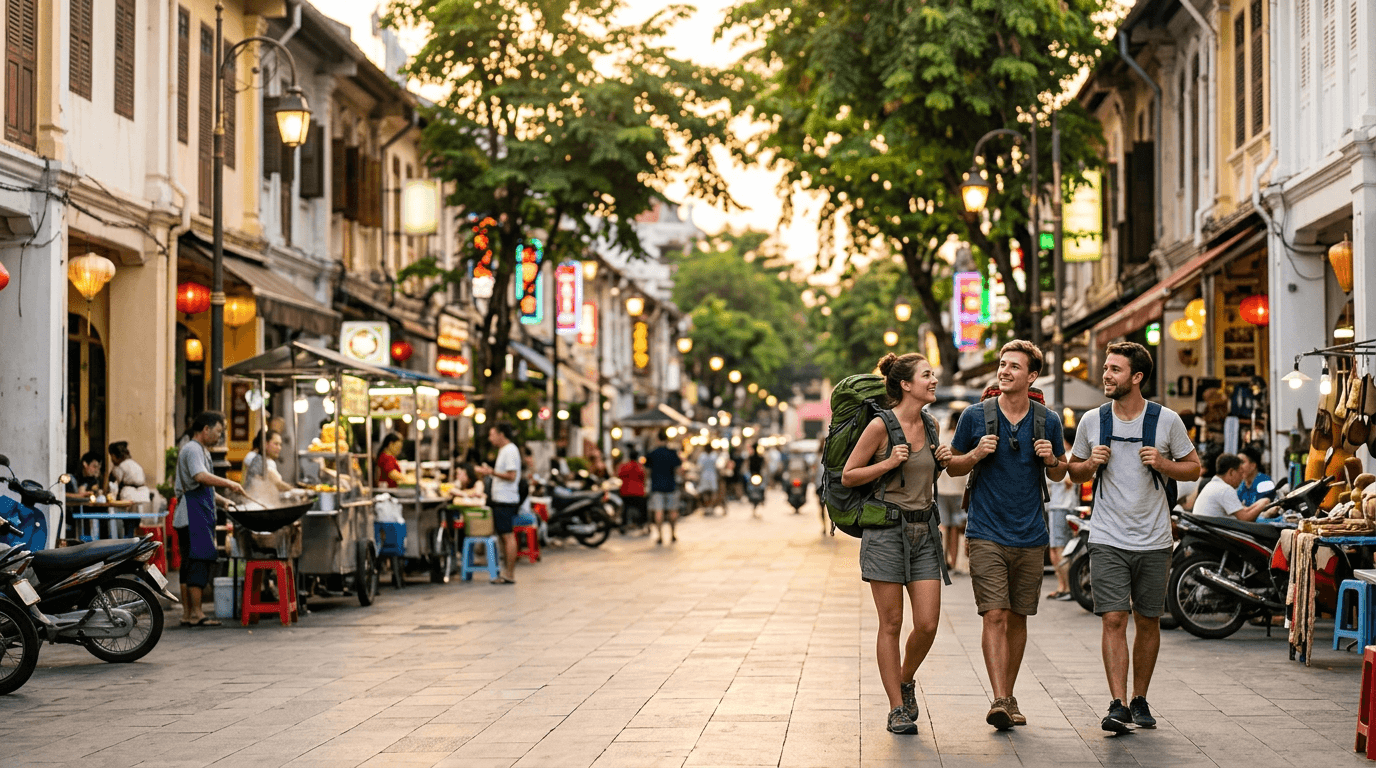
The best backpacking Southeast Asia route, especially for first-timers, is the classic "Banana Pancake Trail." This well-trodden path typically loops through Thailand, Laos, Vietnam, and Cambodia, offering a perfect blend of culture, adventure, beaches, and an incredible traveler community, all connected by easy and affordable transport.
Welcome to the ultimate planner for your Southeast Asia adventure! You're standing at the edge of one of the most exciting, life-changing journeys you'll ever take. This region is a kaleidoscope of vibrant cultures, jaw-dropping landscapes, mouth-watering food, and unforgettable experiences. From the misty mountains of Northern Thailand to the emerald waters of Ha Long Bay, and from the ancient temples of Angkor to the idyllic beaches of the Philippines, Southeast Asia has a magnetic pull on travelers for a reason. Here at Gidly, we've backpacked these routes ourselves, gotten lost (in a good way), haggled for tuk-tuks, and eaten more Pad Thai than we can count. This guide is the culmination of all that experience, designed to be the only resource you need to plan your perfect 2025-2026 backpacking route. Let's dive in and start building your dream trip.
What is the Best Backpacking Route in Southeast Asia?

For anyone planning their first big trip to this part of the world, the sheer number of options can feel overwhelming, but there's a clear winner for the best starting point. The most logical and popular backpacking route in Southeast Asia is the classic circuit known as the Banana Pancake Trail, which covers Thailand, Laos, Vietnam, and Cambodia. This route is not a strict path but a general flow that countless travelers follow, making it incredibly easy to navigate, meet people, and find affordable accommodation and transport. It's the perfect introduction to the region, balancing iconic sights with a robust and supportive traveler infrastructure. You can travel overland for most of it, creating a seamless and immersive journey.
The beauty of this route lies in its logical progression. Most travelers start in Bangkok, a major international flight hub, before heading north to Chiang Mai. From there, it's a simple overland journey into Laos, where you can take the famous slow boat down the Mekong River. After exploring Laos, you cross into Vietnam, typically traveling from north to south (or vice versa). Finally, you enter Cambodia to marvel at Angkor Wat before either flying out from Phnom Penh or crossing back into Thailand to explore the southern islands. This circular route minimizes backtracking and travel time, maximizing your opportunities for adventure. It hits all the major highlights while still leaving room for spontaneous detours and discoveries along the way.
A 2-3 sentence summary of the "Banana Pancake Trail"
The "Banana Pancake Trail" is the unofficial name for the most common backpacking route through Southeast Asia, connecting major tourist hubs in Thailand, Laos, Vietnam, and Cambodia. It's so-named for the sweet banana pancakes commonly sold in backpacker areas, symbolizing the well-established tourist infrastructure that makes this route incredibly accessible for first-timers. Following this trail guarantees you'll find English menus, cheap hostels, and a constant stream of fellow travelers to share stories and tips with. It's the quintessential SEA backpacking experience, forming a logical loop that starts and often ends in the transportation hub of Bangkok.
This trail is less a strict itinerary and more of a traveler's highway. Think of it as a current that flows through the region's most iconic spots: the temples of Chiang Mai, the laid-back vibes of Vang Vieng, the stunning scenery of Ha Long Bay, and the ancient wonder of Angkor Wat. Because so many people travel this route, a massive support system has sprung up around it. You'll find tour agencies that can book your next bus ticket, hostels that are social hubs for meeting your new travel buddies, and a constant flow of information shared between backpackers heading in opposite directions. It’s the perfect training ground for learning the art of backpacking.
How to Use This Guide to Plan Your Perfect Itinerary
This guide is designed to be your compass, not a rigid set of instructions, for navigating the incredible landscape of Southeast Asia. We'll break down the classic routes, offer alternatives for every type of traveler, and provide the practical details you need to make it happen. Think of it as a build-your-own-adventure book. We'll start with the famous Banana Pancake Trail, the foundation of most SEA trips. Then, we'll show you how to customize it based on how much time you have—whether it's a one-month sprint or a six-month marathon. We'll dive deep into individual country itineraries, niche routes for foodies or divers, and all the essential logistics like budgets, visas, and transportation. Use the sections that resonate with you, and feel free to skip what doesn't. Your perfect trip is a personal masterpiece, and we're just here to hand you the paintbrushes.
Start by reading through the different route durations to get a realistic sense of what you can achieve in your timeframe. Pay close attention to the country-by-country breakdowns to identify your "must-see" destinations. As you read, keep a running list of places and experiences that spark your excitement. Are you dreaming of diving in the Philippines or trekking in Northern Thailand? Maybe you're a history buff who wants to spend extra time at the temples of Angkor and the war museums in Vietnam. Identifying these passions early will help you allocate your most precious resource: time. This guide provides the building blocks; your job is to arrange them in a way that creates your unique adventure. And remember, the Gidly app is your pocket companion for finding amazing things to do once you're on the ground.
Understanding the Classic Circuit vs. Off-the-Beaten-Path Options
The classic circuit, or Banana Pancake Trail, is your gateway to Southeast Asia. It’s popular for a reason: it’s efficient, affordable, and packed with world-class sights and a vibrant social scene. For a first-time backpacker, it’s a godsend. You’ll never be truly alone (unless you want to be), and logistics are incredibly straightforward. However, the downside of this popularity is that you'll be sharing these incredible places with many other travelers. Some spots can feel like a "backpacker bubble," where it's easier to find a pizza than a truly local dining experience. While you'll have an amazing time, it might not always feel like a rugged, exploratory adventure.
On the other hand, venturing off the beaten path offers a completely different reward: authenticity. It means trading the convenience of a tourist bus for a ride on a local chicken bus, navigating menus without English translations, and discovering villages and landscapes that few other foreigners see. This could mean exploring the remote provinces of Northeast Thailand (Isan), motorbiking through the central highlands of Vietnam, or island-hopping to lesser-known gems in the Philippines. The trade-off is that it requires more effort, time, and confidence. Our advice? A combination of both is the perfect recipe. Use the classic trail as your spine, and then branch off to explore smaller, less-visited areas for a few days at a time. This gives you the best of both worlds: the social fun and ease of the main route, plus the unique stories and genuine connections from your detours.
How to Pick Your Route Based on Time, Budget, and Interests
Your ideal backpacking route is a triangle of three crucial factors: your available time, your total budget, and your personal interests. First, be realistic about your timeframe. If you only have one month, trying to cram in four countries will result in a blur of bus stations and border crossings. Instead, focus on one or two countries to truly immerse yourself. With three months, the classic "Core Four" (Thailand, Laos, Vietnam, Cambodia) becomes perfectly manageable. With six months or more, you can explore this core region deeply and add on countries like Malaysia, Indonesia, and the Philippines. Always account for travel days—a bus journey can easily eat up a full day.
Next, consider your budget. While Southeast Asia is famously affordable, costs vary. Laos and Cambodia are generally the cheapest, while Singapore and parts of Thailand (especially the popular islands) can be more expensive. A daily budget of $30-$40 USD is a good starting point for most of the region, but if you're on a shoestring, you might prioritize cheaper countries. Finally, and most importantly, what do you love to do? If you're a party animal, you'll want to structure your route around hotspots like Koh Phangan, Vang Vieng, and the Gili Islands. If you're a history enthusiast, you'll allocate more time to Angkor Wat, the Killing Fields, and Vietnam's DMZ. A diver will plan around the seasons in the Similan Islands and the Philippines. List your top five passions, and build your route around them. This is your adventure, so make sure it reflects what makes you tick.
A Note on Flexibility: Why Your Best Plan is a Loose One
Here’s the most important piece of advice you’ll receive: hold your plans loosely. While it's essential to have a general route and a list of must-sees, the magic of backpacking happens in the spontaneous moments you can't plan for. You might meet an amazing group of people in a hostel and decide to travel with them for a few weeks, completely changing your intended direction. You might hear about a hidden waterfall or a local festival from another traveler and decide to make a detour. Or you might simply fall in love with a place—like the chilled-out town of Pai in Thailand or the stunning islands of El Nido in the Philippines—and decide to stay for a week longer than you intended.
Over-planning can be the enemy of adventure. If you book all your buses and hostels weeks in advance, you'll be locked into an itinerary that might not match the person you become on the road. The best approach is to have a starting point (e.g., fly into Bangkok), book your first few nights of accommodation, and know your general direction of travel (e.g., "north towards Laos"). Beyond that, let the journey unfold. Book your next bus a day or two in advance. Check hostel reviews on the go. This flexibility allows you to say "yes" to unexpected opportunities, which will almost always become your most cherished memories. Your best plan is a direction, not a detailed schedule.
The Classic Route: The Banana Pancake Trail Explained
The Banana Pancake Trail is the legendary, well-worn path that has guided generations of backpackers through the heart of mainland Southeast Asia. It’s the region's central artery for travelers, a loosely defined circuit that connects the major highlights of Thailand, Laos, Vietnam, and Cambodia. It earned its nickname from the ubiquitous banana pancakes (or roti) found on street food carts in every backpacker enclave along the route. These sweet, comforting treats became a symbol of the traveler-focused infrastructure that makes this journey so accessible. Following the trail means you're never far from an English menu, a cheap hostel, a bus ticket office, or a fellow adventurer to swap stories with.
Think of it as a feedback loop. As more backpackers visited these specific places, more businesses catering to them popped up. This, in turn, made the route even easier and more appealing to the next wave of travelers. The trail generally flows in a logical loop. A common starting point is Bangkok, from which travelers head north to Chiang Mai and Pai. From there, they cross into northern Laos, travel down through the country, and then cross into Vietnam. The journey through Vietnam typically runs from Hanoi in the north to Ho Chi Minh City in the south (or vice versa). The final leg involves crossing into Cambodia to see Phnom Penh and the temples of Angkor before looping back to Bangkok. It's a journey that has become a rite of passage for backpackers worldwide.
What Exactly is the Banana Pancake Trail?
At its core, the Banana Pancake Trail is a traveler-created network of destinations, transportation links, and services. It's not an official route you'll find on any government map; it's a living, breathing ecosystem shaped by the collective movement of backpackers. The key stops on this trail are the greatest hits of the region: Bangkok's chaotic energy, Chiang Mai's temples and treks, the slow boat journey on the Mekong, Luang Prabang's serene beauty, Vang Vieng's adventure sports, Hanoi's Old Quarter, Ha Long Bay's limestone karsts, Hoi An's ancient town, Ho Chi Minh City's historical weight, Phnom Penh's poignant history, and Siem Reap's magnificent Angkor Wat. It's a highlight reel of Southeast Asia.
But the trail is more than just a list of places. It's the entire infrastructure that connects them. It's the network of sleeper buses that whisk you from one city to the next overnight. It's the hostels with bulletin boards covered in flyers for tours, cooking classes, and bus schedules. It's the countless travel agencies on every street corner that can book your next leg of the journey with minimal fuss. It’s the community of fellow travelers moving along the same current, creating a shared experience and a constant source of information and companionship. The trail is a safety net and a social network rolled into one, making independent travel in a foreign land feel surprisingly simple and connected.
Why This Route is Perfect for First-Time Backpackers
For anyone new to long-term travel, the Banana Pancake Trail is the perfect training ground. Its biggest advantage is the removal of logistical friction. The fear of the unknown—how will I get there? Where will I sleep? Will I meet anyone?—is significantly reduced. In places like Khao San Road in Bangkok or the Old Quarter in Hanoi, you can walk out of your hostel and book a bus to almost anywhere else on the trail within minutes. This ease of travel allows you to focus on the experience itself rather than getting bogged down in complicated planning.
Furthermore, the social aspect is a massive draw for first-timers, especially solo travelers. The trail is a conveyor belt of potential friends. You'll meet people on buses, in dorm rooms, and on day tours. This constant social interaction provides a safety net and makes it easy to find travel buddies for a few days or even weeks. The cost-effectiveness is another major perk. Because the route is so popular, competition keeps prices for accommodation, food, and transport incredibly low. You can comfortably travel on a budget of $30-40 per day. In essence, the Banana Pancake Trail offers a "soft landing" into the world of backpacking, providing just enough adventure to be exciting without being overwhelming.
A Visual Map of the Classic Circuit
Imagine a map of mainland Southeast Asia. The classic Banana Pancake Trail forms a rough clockwise circle. You start in the center, in **Bangkok, Thailand**. From there, you draw a line north to **Chiang Mai** and perhaps a small loop west to **Pai**. Next, the line crosses the northeastern border into Laos, landing in **Huay Xai**. From there, it follows the Mekong River southeast to **Luang Prabang**, then continues south to **Vang Vieng** and the capital, **Vientiane**. From southern Laos (perhaps after visiting the 4000 Islands), the line jumps east across the border into **Vietnam**.
In Vietnam, the route is a long, vertical line. You could start in the north at **Hanoi** (and take a side trip to **Ha Long Bay**), then travel south through **Ninh Binh**, **Hue**, and **Hoi An**, all the way down to **Ho Chi Minh City** in the south. From Ho Chi Minh City, the final major leg of the journey takes you west, crossing the border into **Cambodia**. The line goes first to the capital, **Phnom Penh**, and then northwest to **Siem Reap**, the home of Angkor Wat. To complete the circle, you draw a line from Siem Reap back across the border into Thailand, returning to **Bangkok**. This visual represents the most common, logical, and efficient flow for a multi-country trip.
Pros and Cons of Sticking to the Main Trail
Deciding whether to stick to the Banana Pancake Trail or venture off it involves a classic travel trade-off between convenience and authenticity. The advantages of staying on the trail are undeniable, especially for new travelers. It's easy, safe, cheap, and incredibly social. You'll see some of the world's most amazing sights without the stress of complex logistics. However, this convenience comes at a cost. The main "con" is the crowds. Popular spots can feel saturated with tourists, and your experience can sometimes feel curated for Western travelers rather than being a genuine cultural immersion. You might find yourself in a bar full of backpackers watching a Premier League football game instead of interacting with locals.
Another potential downside is "travel fatigue" from seeing the same faces and having the same conversations in every new city. The experience can become homogenized. Venturing off the trail, even for a short period, can be a refreshing antidote. It forces you to rely on your own resourcefulness, use sign language to communicate, and have experiences that are uniquely yours. You’ll find quieter temples, more authentic food, and often, more welcoming locals who are curious about you. The Gidly team's ultimate recommendation is to use the trail as a framework. Travel the main route, but build in "detour days" to explore a nearby national park, a small rural town, or a less-visited province. This hybrid approach gives you the social benefits and ease of the main trail combined with the memorable adventures that lie just beyond it.
| Aspect | Pros of Sticking to the Trail | Cons of Sticking to the Trail |
|---|---|---|
| Logistics | Extremely easy; transport and tours are readily available. | Less sense of adventure; everything is pre-packaged. |
| Social Scene | Very easy to meet other travelers and find companions. | Can feel like a "backpacker bubble"; less local interaction. |
| Cost | Highly competitive pricing keeps costs low for hostels and transport. | Touristy areas can have inflated prices for food and attractions. |
| Authenticity | You still see incredible, authentic cultural sites (e.g., Angkor Wat). | Experiences can feel homogenized and tailored to tourists. |
Southeast Asia Backpacking Routes by Duration (The Scenarios)
The single most important factor in planning your Southeast Asia route is how much time you have. A one-month trip is a completely different beast from a six-month epic, and trying to do too much in too little time is the number one mistake we see backpackers make. This section breaks down realistic and rewarding itineraries for different timeframes, from a quick but action-packed month to a half-year deep dive. These are tried-and-tested scenarios that our team has experienced, designed to help you maximize your enjoyment and minimize your time spent in transit. Each scenario offers a different flavor of Southeast Asia, so you can pick the one that best suits your travel style and vacation allowance. Think of these as proven templates that you can adapt to your own interests.
Remember that "travel days" are a real thing and should be factored into your planning. A 12-hour bus ride, combined with checking in and out of accommodation, can easily consume an entire day where you don't do much sightseeing. A good rule of thumb is to allocate at least one full day for travel between major city changes. We also recommend building in "zero days"—days where you have nothing planned at all. These are crucial for doing laundry, recharging your social battery, or just relaxing by a pool. Being constantly on the move is exhausting, and these rest days will keep you from burning out. Let's explore what's possible for your trip duration.
The 1-Month Whirlwind: Focus on Thailand & Cambodia OR a North-to-South Vietnam trip
With just one month, the key is to be selective and not spread yourself too thin. Attempting the full four-country loop in this timeframe is a recipe for burnout. Instead, we highly recommend one of two fantastic options. **Option 1: Thailand & Cambodia.** This gives you a taste of two distinct but complementary cultures. You could fly into Bangkok (3-4 days), head north to Chiang Mai for culture and nature (5-6 days), then fly from Chiang Mai to Siem Reap, Cambodia, to explore the incredible Angkor Wat temple complex (3-4 days). From there, travel to the Cambodian coast to relax on the islands of Koh Rong (4-5 days) before heading back to Thailand to experience its world-famous southern islands like Koh Phi Phi or Koh Lanta for your final week. This route offers a perfect mix of city chaos, ancient history, lush mountains, and stunning beaches.
**Option 2: A Deep Dive into Vietnam.** Vietnam is uniquely suited for a one-month trip because of its long, thin shape, which creates a natural and logical north-to-south (or south-to-north) trajectory. You can fly into Hanoi (north) and spend a month making your way down to Ho Chi Minh City (south), flying out from there. This route is incredibly diverse. You'll experience the vibrant culture of Hanoi, the breathtaking beauty of Ha Long Bay, the adventure of the Ha Giang Loop, the historical significance of Hue and Hoi An, the mountain air of Da Lat, and the bustling energy of Ho Chi Minh City. This allows for a much deeper immersion into one country's culture, food, and history without wasting excessive time on border crossings.
The 2-Month Explorer: The best of Thailand, Laos & Vietnam
Two months is a fantastic amount of time that allows you to comfortably explore three of the core countries without feeling rushed. This itinerary usually skips Cambodia (you can always come back!) in favor of a more relaxed pace through Thailand, Laos, and Vietnam. A logical flow would be to start in Bangkok, Thailand. Spend about two to three weeks exploring the country: a few days in the capital, a week in the north (Chiang Mai, Pai), and a week island hopping in the south. After your fill of Thai beaches, fly from Southern Thailand (e.g., Phuket or Krabi) or Bangkok up to Hanoi, Vietnam, to begin your next leg.
Dedicate around three weeks to Vietnam, traveling south from Hanoi. This gives you ample time for Ha Long Bay, maybe a motorbike loop, and exploring the central cities before reaching Ho Chi Minh City. From southern Vietnam, you can then cross overland into Laos. This might seem like backtracking, but it's often more logical than trying to squeeze it between Thailand and Vietnam. You'd enter southern Laos and explore the 4000 Islands (Si Phan Don), then make your way north through the country, stopping in places like Vang Vieng and Luang Prabang. From Luang Prabang, you can then easily cross back into Northern Thailand to fly out of Chiang Mai or take a bus/train back to Bangkok. This route gives you a solid taste of the region's diversity, from Thai beaches to Vietnamese cities to the laid-back Laotian countryside.
The 3-Month Deep Dive: The Full Banana Pancake Trail (Thailand, Laos, Vietnam, Cambodia)
Three months is the sweet spot. It's the ideal timeframe to complete the entire classic Banana Pancake Trail (Thailand, Laos, Vietnam, and Cambodia) at a comfortable and enjoyable pace. This is the quintessential Southeast Asia backpacking experience. You'll have enough time to see all the major highlights, linger in places you love, and even take a few detours off the beaten path. You can follow the classic clockwise route we described earlier without feeling rushed. Start in Bangkok (1 week, including travel recovery) and head north to Chiang Mai and Pai (2 weeks).
Cross into Laos for the slow boat and spend about 2-3 weeks exploring Luang Prabang, Vang Vieng, and the south. From Laos, cross into Vietnam and dedicate a full month to traveling the length of the country from north to south. This allows for multi-day experiences like the Ha Giang Loop and ample time in cultural hubs like Hoi An. Finally, cross from southern Vietnam into Cambodia. Spend 1-2 weeks here, dedicating plenty of time to the sobering history of Phnom Penh and giving the vast Angkor Wat complex the multiple days it deserves. You can also relax on the southern coast before crossing back into Thailand to either fly home from Bangkok or enjoy one last week on a Thai island. This three-month journey is what most people picture when they dream of backpacking Southeast Asia.
The 6-Month Epic: Covering the Core Four plus Malaysia, Indonesia, and the Philippines
With a luxurious six months, the whole of Southeast Asia opens up to you. This is the ultimate dream for many backpackers, allowing for a truly deep and comprehensive exploration of the region. You'll start by spending the first three months completing the Banana Pancake Trail as described above, but at an even more relaxed pace. You can afford to spend a full month in both Thailand and Vietnam, take more side trips, learn a new skill like diving or rock climbing, or even volunteer for a week or two. You'll have the flexibility to say "yes" to almost any opportunity that comes your way.
After conquering the "Core Four," you can begin the second half of your epic journey. From Cambodia or Southern Thailand, it's an easy overland journey down through Peninsular Malaysia. You can explore the Cameron Highlands, the historic city of Malacca, and the bustling capital of Kuala Lumpur. From Malaysia, you can cross into Singapore for a quick (and expensive!) glimpse of the future before flying to your next destination: Indonesia. You could easily spend a month here, exploring the volcanoes of Java, the culture of Bali, and the paradise islands of Gili or Lombok. For the grand finale, take a flight to the Philippines. Spend your last month island-hopping through the stunning archipelagos of Palawan (El Nido, Coron) and the Visayas (Cebu, Bohol). A six-month trip is not just a vacation; it's a life-changing chapter of exploration.
The Core Four: Country-by-Country Route Breakdowns
Now that you have a sense of the overall routes, let's zoom in on the "Core Four": Thailand, Vietnam, Cambodia, and Laos. These countries form the backbone of the Banana Pancake Trail and offer an incredible diversity of experiences. In this section, we’ll provide a more detailed breakdown of a typical itinerary for each country, including suggested durations, key destinations, and must-do activities. Our team at Gidly has spent countless weeks exploring every corner of these nations, and these routes are designed to give you the most logical flow and the biggest bang for your buck. Use these as a starting point and feel free to adjust them based on your interests. Remember, these are just suggestions—the real adventure is in making the journey your own.
For each country, we'll outline a path that minimizes backtracking and utilizes the most common and efficient transport links. We'll highlight the unmissable spots but also throw in a few Gidly-approved gems that you might not find in every guidebook. We’ll cover everything from the bustling capital cities to tranquil mountain towns and idyllic islands. We’ll also give you a realistic timeframe for each country, helping you piece together your larger multi-country puzzle. Whether you're planning to spend two weeks or four, these mini-itineraries will provide a solid foundation for your trip planning. Let's start with the country that serves as the gateway for most backpackers: Thailand.
Thailand Itinerary (2-4 Weeks): Bangkok, Chiang Mai, Pai, Southern Islands (Krabi vs. Gulf)
Thailand is the perfect introduction to Southeast Asia. It’s incredibly easy to travel, the food is divine, and it offers a fantastic mix of culture, nature, and beaches. For a 2-4 week trip, you'll want to split your time between the north and the south. **Start in Bangkok (3-4 days).** Dive headfirst into the madness. Explore the Grand Palace and Wat Pho (home of the reclining Buddha), get lost in the Chatuchak Weekend Market, and experience the backpacker hub of Khao San Road. Then, take an overnight train or bus north to **Chiang Mai (5-7 days).** This is the cultural heart of Northern Thailand. Visit the stunning Doi Suthep temple, take a Thai cooking class, visit an ethical elephant sanctuary (we recommend Elephant Nature Park), and wander through the ancient city walls. From Chiang Mai, take the famously winding 3-hour minibus ride to **Pai (3-4 days).** This small, bohemian town nestled in the mountains is all about chilling out. Rent a scooter and explore the Pai Canyon, surrounding waterfalls, and the Land Split.
After the north, it's time for the islands. This is where you have to make a choice: the Andaman Coast (Krabi side) or the Gulf of Thailand Coast. If you have time, you can do both, but with 2-3 weeks, it's best to pick one. **Andaman Coast (Krabi, Koh Phi Phi, Koh Lanta - best November to April):** Fly from Chiang Mai to Krabi. Use Railay Beach as a base for rock climbing and stunning scenery. Take a ferry to Koh Phi Phi for the world-famous Maya Bay (check its current status) and incredible party scene. For a more relaxed vibe, head to the larger island of Koh Lanta. **Gulf Coast (Koh Samui, Koh Phangan, Koh Tao - better during the summer months):** Fly from Chiang Mai to Surat Thani (or Koh Samui). Koh Phangan is home to the legendary Full Moon Party but also has beautiful, quiet beaches on its northern side. Koh Tao is a mecca for scuba diving, offering some of the cheapest diving certification courses in the world. Finish your trip by flying back to Bangkok for your journey home or onward to the next country.
Vietnam Itinerary (3-4 Weeks): The Classic North-to-South (or vice versa) Route
Vietnam is a country of breathtaking diversity, and its long, slender shape makes it perfect for a linear journey. Three to four weeks is an ideal amount of time to travel its full length. The most common route is from north to south, but doing it in reverse is just as easy. **Start in Hanoi (3-4 days).** Immerse yourself in the charming chaos of the Old Quarter, sip egg coffee, and watch a traditional water puppet show. Use Hanoi as your base for a 2-day/1-night or 3-day/2-night cruise on the magnificent **Ha Long Bay or the less-crowded Lan Ha Bay (3 days).** For the adventurous, head back to Hanoi and embark on the **Ha Giang Loop (4-5 days).** This motorbike journey through the northernmost provinces is arguably the most spectacular scenery in all of Southeast Asia. You can ride yourself or hire an "easy rider."
From the north, begin your journey south. An overnight train or bus takes you to **Ninh Binh (2 days)**, often called "Ha Long Bay on land" for its stunning karst landscapes. Continue south to **Phong Nha (2 days)** to explore some of the world's largest and most impressive cave systems. Next, stop in the former imperial capital of **Hue (2 days)** to see the ancient citadel and royal tombs. A short journey over the stunning Hai Van Pass (best done by motorbike) brings you to the enchanting town of **Hoi An (3-4 days).** Get custom clothes made, wander the lantern-lit streets, and relax on the nearby beach. From Hoi An, you can fly or take a long bus ride further south. Consider a stop in the mountain retreat of **Da Lat (2 days)** for a change of scenery. Your final destination is **Ho Chi Minh City (HCMC) (3 days).** Explore the War Remnants Museum, the Cu Chi Tunnels, and dive into the city's incredible food scene before flying out or crossing into Cambodia.
Cambodia Itinerary (1-2 Weeks): Angkor Wat, Phnom Penh, and the Coast (Koh Rong)
Cambodia may be smaller than its neighbors, but it packs a powerful punch of history, culture, and natural beauty. One to two weeks is a good amount of time to experience its main highlights. Most travelers enter from either Thailand (near Siem Reap) or Vietnam (near Phnom Penh). Let's assume a route from Vietnam. **Start in Phnom Penh (2-3 days).** The capital is a city of stark contrasts. You must confront the country's tragic past by visiting the Tuol Sleng Genocide Museum and the Choeung Ek Killing Fields. While harrowing, it's essential for understanding modern Cambodia. Balance this with visits to the beautiful Royal Palace, the Silver Pagoda, and the bustling Central Market.
From Phnom Penh, take a 5-6 hour bus to the southern coast. You can base yourself in Sihanoukville (though it has become heavily developed and is less of a backpacker haven now) or head straight to the islands. **Koh Rong and Koh Rong Samloem (3-4 days)** are the main draws. Koh Rong offers a lively party scene on one side and quiet, pristine beaches on the other. Koh Rong Samloem is its more chilled-out little sister, perfect for relaxation. After your beach time, travel north to the main event: **Siem Reap (3-5 days).** This town is the gateway to the magnificent **Angkor Archaeological Park.** You'll need at least three days to do it justice. Buy the 3-day pass and explore the main temples (Angkor Wat, Angkor Thom, Bayon, Ta Prohm) as well as some of the farther-flung, quieter ruins. After exploring the temples, you can cross the border into Thailand or fly out from Siem Reap's international airport.
Laos Itinerary (2-3 Weeks): Slow Boat, Luang Prabang, Vang Vieng, and 4000 Islands
Laos is the sleepy, landlocked heart of Southeast Asia. It moves at a slower pace, and your itinerary should reflect that. Trying to rush through Laos is missing the point entirely. A 2-3 week journey is perfect for soaking in its serene landscapes and laid-back culture. The most iconic way to enter is from Northern Thailand, at the **Huay Xai** border crossing. From here, you'll embark on the famous **2-day slow boat journey down the Mekong River.** You'll spend a night in the small village of Pakbeng before arriving in the crown jewel of Laos: **Luang Prabang (4-5 days).** This UNESCO World Heritage city is a dream. Wake up early to witness the morning alms-giving ceremony (Tak Bat), visit the stunning Kuang Si Falls, climb Mount Phousi for sunset, and explore the many beautiful temples and French colonial architecture.
From Luang Prabang, take a scenic 4-hour bus or minivan ride south to **Vang Vieng (3-4 days).** Once known solely for its wild river tubing parties, Vang Vieng has cleaned up its act and rebranded as an eco-adventure hub. The scenery is spectacular, with limestone karsts jutting out of rice paddies. You can still go tubing (in a more relaxed fashion), but now the main activities are kayaking, rock climbing, and exploring the numerous blue lagoons and caves. After Vang Vieng, you can either head to the capital, **Vientiane (1-2 days)**, for a quick look at the "Arc de Triomphe" of Laos (Patuxai) before flying out, or continue south on a long overnight bus journey to the **4000 Islands (Si Phan Don) (3-4 days).** This collection of islands in the Mekong River near the Cambodian border is the epitome of relaxation. Rent a bicycle, spot rare Irrawaddy dolphins, and just swing in a hammock. From here, you can easily cross into Cambodia.
Expanding the Route: Where to Go Beyond the Core Four
Once you've conquered the Banana Pancake Trail or if you're on a longer trip, the adventure doesn't have to stop. Southeast Asia is a vast and varied region, and venturing beyond the "Core Four" opens up entirely new worlds of culture, food, and landscapes. Countries like Malaysia, Singapore, Indonesia, and the Philippines each offer unique experiences that are well worth the extra travel time. This section is for those with more than three months to spare, or for second-time visitors looking to explore new frontiers. These countries often require a flight, breaking the continuous overland journey of the mainland, but the reward is immense. From the modern metropolis of Singapore to the volcanic peaks of Indonesia and the thousands of pristine islands in the Philippines, this is where your backpacking journey can reach the next level.
Integrating these countries into your route requires a bit more planning. Malaysia and Singapore can be seamlessly added as an overland extension south from Thailand. However, reaching the archipelagos of Indonesia and the Philippines will almost certainly involve booking a budget flight. The Gidly team recommends tackling these after you've completed the mainland circuit. For example, after finishing your Core Four loop in Bangkok, you could fly to Kuala Lumpur or Bali to start the next phase. We'll also touch upon the complex situation in Myanmar, providing the latest insights for 2025-2026 so you can make an informed and ethical decision about travel there. Let's explore the incredible possibilities that lie beyond the classic trail.
Malaysia & Singapore: A Seamless Overland Journey
Malaysia is a fantastic and often underrated addition to a Southeast Asia itinerary. It’s a fascinating cultural melting pot of Malay, Chinese, and Indian influences, which is reflected in its incredible food scene. It's also more developed than its northern neighbors, offering a comfortable and easy travel experience. A great way to see the country is by traveling overland from Southern Thailand. After island hopping, you can cross the border near Hat Yai and head to the beautiful island of **Penang (3-4 days)**. Explore the street art and colonial architecture of George Town (a UNESCO site) and embark on a culinary pilgrimage through its legendary hawker stalls. From Penang, travel south to the **Cameron Highlands (2-3 days)** to escape the heat, hike through rolling green tea plantations, and visit strawberry farms.
Your next major stop should be the sprawling capital, **Kuala Lumpur (KL) (3 days).** Marvel at the iconic Petronas Towers, explore the Batu Caves with their giant golden statue of Lord Murugan, and get lost in the city's massive shopping malls and vibrant street markets. From KL, you can make a final stop in the historic port city of **Malacca (Melaka) (2 days)**, another UNESCO World Heritage site known for its unique colonial architecture and Peranakan culture. The grand finale of this overland journey is crossing the causeway into the city-state of **Singapore (2-3 days).** While expensive, it's a mind-blowing glimpse into a hyper-modern, green metropolis. Visit the Gardens by the Bay, see the view from the Marina Bay Sands, and eat at a Michelin-starred hawker stall. Singapore's Changi Airport is a major international hub, making it a perfect place to end your trip or fly onward to Indonesia or the Philippines.
Indonesia: Volcanoes and Beaches in Java, Bali & The Gilis
Indonesia is a country on an epic scale, an archipelago of over 17,000 islands. You could spend a lifetime exploring it, but for a one-month backpacking trip, the most popular route focuses on the islands of Java, Bali, and the Gili Islands. Most travelers fly into either Jakarta (on Java) or Denpasar (on Bali). A great route is to fly into **Yogyakarta, Java (3-4 days).** This is the cultural heart of Java, home to the magnificent **Borobudur** (the world's largest Buddhist temple) and the sprawling Hindu complex of **Prambanan**. From Yogyakarta, you can begin an epic overland journey east across Java. This trip is all about volcanoes. You'll take a train to Malang or Probolinggo to arrange a tour to see the sunrise over the ethereal **Mount Bromo** and then continue to Banyuwangi to hike up **Ijen Crater** to witness its famous "blue fire" and turquoise acid lake.
From the eastern tip of Java, it's a short ferry ride to the western tip of **Bali**. Bali is an island of incredible diversity. You can spend a week or more here. Stay in **Ubud (4-5 days)** for yoga, lush rice terraces, and a spiritual vibe. Head to **Canggu (3-4 days)** for surfing, trendy cafes, and a digital nomad scene. Go south to Uluwatu for dramatic cliffside temples and world-class surf breaks. After you've had your fill of Bali, take a fast boat from Padangbai to the **Gili Islands**. There are three islands to choose from: **Gili Trawangan (Gili T)** is the party island, **Gili Meno** is the quiet honeymoon island, and **Gili Air** is the perfect mix of the two. Spend a few days here snorkeling with turtles, cycling around the car-free islands, and enjoying the sunset. From the Gilis, you can easily get a boat to the neighboring island of Lombok or head back to Bali to fly out.
The Philippines: The Island-Hopping Paradise (and How it Affects Your Route)
The Philippines is, in our opinion, home to the most beautiful beaches and clearest water in all of Southeast Asia. However, traveling here requires a different mindset. Unlike the mainland, you can't travel overland. Your route will be a series of flights and ferries, making it slightly more expensive and time-consuming to get around. It's best to dedicate a solid block of time (at least 3-4 weeks) to the Philippines and not try to squeeze it in between other countries. The main international gateways are Manila and Cebu. Most backpackers try to transit through Manila as quickly as possible and fly directly to the islands. A classic route focuses on the region of **Palawan**. Fly into Puerto Princesa and travel north to spend time in both **El Nido (4-5 days)** and **Coron (4-5 days).**
El Nido and Coron are the poster children for the Philippines. You'll spend your days on boat tours (Tours A, B, C, D in El Nido are famous), hopping between secret lagoons, pristine white-sand beaches, and incredible snorkeling spots. The scenery is genuinely jaw-dropping. Another popular region to explore is the Visayas. You can fly into **Cebu** and use it as a base. From there, you can travel to Moalboal to experience the famous sardine run, go canyoneering at Kawasan Falls, take a ferry to **Bohol (3 days)** to see the unique Chocolate Hills and tiny tarsier primates, or head to the beautiful island of **Siquijor (3 days)**, known for its mystical healers and waterfalls. A popular option is also to visit **Siargao**, the surfing capital of the Philippines. Because of the travel logistics, it's wise to pick one or two main island groups and explore them thoroughly rather than trying to see everything.
Myanmar (Burma): Current Travel Status & Ethical Considerations for 2025-2026
Myanmar is a country of profound beauty and deep-rooted culture, famous for the ancient temples of Bagan and the tranquil Inle Lake. However, the political situation in the country remains highly volatile and complex following the military coup in February 2021. As of our latest update for 2025-2026, most Western governments, including the US, UK, and Australia, advise against all but essential travel to Myanmar due to the ongoing civil unrest, armed conflict, and the arbitrary enforcement of local laws. The situation on the ground can change rapidly, and the safety of foreign travelers cannot be guaranteed. Many areas of the country are under martial law, and conflicts between the military and ethnic armed organizations are widespread.
Beyond the safety concerns, there are significant ethical considerations. The tourism industry in Myanmar is heavily linked to the military regime. Money spent on government-controlled hotels, airlines, and attractions can directly or indirectly fund the junta. Many pro-democracy activists and local communities have called for a tourism boycott to avoid legitimizing and funding the military government. While the desire to see Myanmar's wonders and support its people is understandable, the current consensus within the responsible travel community is that visiting at this time is problematic. From the Gidly team's perspective, we cannot responsibly recommend travel to Myanmar for backpacking purposes in 2025-2026. We advise travelers to monitor official government travel advisories and wait until the situation stabilizes and a path for ethical tourism, one that directly benefits the local people without supporting the regime, becomes clear.
Niche Itineraries: Backpacking For Your Passion
While the classic trail is fantastic, what if your travels were driven by a specific passion? Southeast Asia is so much more than just a checklist of sights; it's a playground for every interest imaginable. This section is dedicated to those who want to build a route around what they love most. We've moved beyond the generic to craft specialized itineraries for foodies, divers, history buffs, adventure junkies, and digital nomads. These routes connect the dots between the absolute best spots in the region for each specific activity. Think of it as a themed journey that prioritizes depth over breadth. Following your passion is a surefire way to create a trip that’s not just memorable, but deeply meaningful to you.
These itineraries often crisscross the region, sometimes requiring flights to connect the top spots, but the payoff is an experience tailored perfectly to your interests. Our team at Gidly includes avid foodies, certified divemasters, and adrenaline seekers, and we've poured our personal expertise into these suggestions. Whether you dream of tasting every regional noodle soup, logging dives with whale sharks, exploring ancient empires, or finding the best Wi-Fi with a view, we've got a route for you. This is your chance to transform a standard backpacking trip into a personal quest.
The Foodie Trail: A Culinary Route Through SEA's Best Street Food Hubs
For you, a temple is just a pretty building you see on the way to the next night market. This route is a pilgrimage to the holy grails of Southeast Asian cuisine. Start your journey in **Bangkok, Thailand (5 days)**. Forget the tourist traps; dive into neighborhood markets like Wang Lang or Or Tor Kor. Master the art of ordering boat noodles, som tam (papaya salad), and mango sticky rice. Take a cooking class. Next, fly to **Penang, Malaysia (4 days)**, arguably the street food capital of the world. Wander George Town's streets, feasting on Char Kway Teow, Assam Laksa, and Hokkien Mee. From Penang, fly to **Hanoi, Vietnam (5 days).** This is the home of Pho and Bun Cha. Spend your days on a tiny plastic stool, slurping noodles and sipping Bia Hoi (fresh beer). Don't miss out on egg coffee. Then, travel south to **Hoi An (3 days)**, a culinary hotspot known for its unique local dishes like Cao Lau noodles and White Rose dumplings.
From Vietnam, fly to **Singapore (3 days)**. This city-state elevates street food to an art form in its famous hawker centers. Visit Maxwell Food Centre for Tian Tian Hainanese Chicken Rice or Lau Pa Sat for satay under the stars. The grand finale is a flight to **Ho Chi Minh City, Vietnam (4 days)**, a city that runs on Banh Mi and broken rice (Com Tam). Take a food tour on the back of a scooter to truly experience the city's after-dark culinary scene. This route isn't about counting countries; it's about counting delicious meals. You'll return home with a heavier suitcase and a much more sophisticated palate.
The Diving Circuit: A Route Connecting the Best Dive Sites (Thailand, Philippines, Indonesia)
If you'd rather be 20 meters underwater than anywhere else, this is your dream route. It connects three of the world's best and most affordable diving destinations. Start in **Koh Tao, Thailand (1-2 weeks)**. This is the global hub for getting your PADI or SSI Open Water certification. The diving is easy, the marine life is plentiful (turtles!), and the courses are incredibly cheap. Once certified, you can fun dive around the island's many sites. If you're there between March and May, you might even spot a whale shark. Next, plan your trip to the **Similan Islands, Thailand (best November-April)**. This requires booking a liveaboard boat, usually departing from Khao Lak. The visibility is incredible, and you'll dive among giant granite boulders, with manta rays and whale sharks as frequent visitors.
From Thailand, fly to the **Philippines**. This is the heart of the Coral Triangle, with unparalleled marine biodiversity. Head to **Malapascua Island, Cebu,** for a near-guaranteed sighting of the rare thresher shark on an early morning dive. Or base yourself in **Moalboal, Cebu,** to swim through the mesmerizing "sardine ball," a tornado of millions of sardines just off the shore. The pinnacle of your diving journey is a flight to **Indonesia**. For the ultimate experience, head to **Komodo National Park** (via Labuan Bajo). The currents here are strong, but the reward is mind-blowing: huge schools of fish, manta ray cleaning stations, sharks, and, of course, the famous Komodo dragons on land. Another world-class option is **Raja Ampat**, though it is more remote and expensive, it's considered by many to be the best diving on the planet.
The History Buff's Itinerary: A Journey Through Ancient Temples and War History
This route travels back in time, exploring the rise and fall of ancient empires and the poignant conflicts of the 20th century. Begin in **Siem Reap, Cambodia (5 days).** Dedicate at least three full days to the Angkor Archaeological Park. Go beyond the main temples and hire a tuk-tuk driver to take you to Banteay Srei (the "Citadel of Women") and the jungle-strangled ruins of Beng Mealea. Next, travel to **Phnom Penh (3 days)** to grapple with the devastating history of the Khmer Rouge at Tuol Sleng and the Killing Fields. This is a sobering but essential part of understanding Cambodia. From there, fly to Hanoi, Vietnam. Your historical journey continues with a focus on the Vietnam War (or the American War, as it's known locally). In **Hanoi (4 days)**, visit the Hoa Lo Prison (the "Hanoi Hilton") and the Ho Chi Minh Mausoleum.
Travel south to the former Demilitarized Zone (DMZ). Base yourself in **Hue (3 days)**, the former imperial capital, and take a day tour of the DMZ, visiting the Vinh Moc tunnels (where a whole village lived underground to escape bombing) and the Khe Sanh Combat Base. Continue south to **Ho Chi Minh City (3 days)** and explore the War Remnants Museum, a powerful, if one-sided, account of the conflict. A half-day trip to the Cu Chi Tunnels is a must, allowing you to crawl through the tiny tunnels used by the Viet Cong. To round out your trip, fly to **Ayutthaya, Thailand (2 days)**, the former capital of the Kingdom of Siam. Rent a bicycle and explore the stunning ruins of this once-great city, which was razed by the Burmese in the 18th century.
The Adventure Junkie's Path: Motorbiking, Trekking & Climbing Hotspots
If your idea of a good time involves adrenaline, altitude, and a bit of engine grease, this is the route for you. Start by conquering the **Ha Giang Loop in Northern Vietnam (5-6 days).** This 350km motorbike loop is the pinnacle of adventure travel in the region, with switchback mountain passes and breathtaking scenery. No previous experience? Hire an easy rider and enjoy the views from the back. After this, head south to **Phong Nha, Vietnam (3 days)**, to explore its colossal cave systems. Go on a multi-day jungle trek that includes camping inside an enormous cave with a company like Oxalis Adventure. From Vietnam, fly to **Chiang Mai, Thailand (5 days).** Use this as a base for multi-day jungle treks into the surrounding hills, staying overnight in remote Karen tribe villages. The trekking here is less about epic peaks and more about cultural immersion and jungle survival.
Next, it’s time for some rock climbing. Head to **Krabi, Thailand (4 days).** The limestone karsts of Railay Beach and Tonsai Beach offer world-class climbing for all skill levels, from beginner courses to advanced multi-pitch routes over the turquoise sea. After climbing, seek more thrills in **Vang Vieng, Laos (3 days).** While the tubing is tame now, the area is a hub for rock climbing, kayaking down the Nam Song river, and exploring caves via ziplines. For a final, off-the-grid challenge, consider a trek to **Mount Rinjani in Lombok, Indonesia (3 days).** This grueling multi-day hike up an active volcano is one of the most rewarding physical challenges in Southeast Asia, with incredible views from the crater rim.
The Digital Nomad Route: Best Hubs for Working and Exploring
This route is for those who are living the dream: working remotely while traveling the world. The key priorities are good Wi-Fi, a comfortable and affordable cost of living, a vibrant community, and plenty of things to do after you close your laptop. The undisputed king of digital nomad hubs in SEA is **Chiang Mai, Thailand (stay for 1 month+).** It has it all: a massive community of nomads, countless co-working spaces (like Hub53 and Punspace), incredibly fast internet, cheap and delicious food, and a relaxed city vibe. You can easily settle in here for a month or three to get a lot of work done. When you need a change of scenery, head to the island of **Koh Phangan, Thailand (1 month).** While famous for its Full Moon Party, the island (especially the Sri Thanu area) has become a huge hub for yoga, wellness, and digital nomads, with co-working spaces like La Casa Tropicana right on the beach.
Another top-tier hub is **Canggu, Bali, Indonesia (1 month+).** This surf town is a magnet for young, creative remote workers. It's packed with trendy cafes that double as offices, world-class co-working spaces (like Tropical Nomad and Dojo Bali), and a social scene that makes it easy to network and make friends. After the hustle of Canggu, consider a stint in **Da Nang, Vietnam (1 month).** It offers a lower cost of living than the other hubs, a long sandy beach, and a growing nomad community. It's less of a "scene" than Chiang Mai or Canggu, which can be a good thing if you need to focus. These four locations form a fantastic circuit for any digital nomad looking to balance productivity and paradise in Southeast Asia.
| Niche Interest | Top Destinations | Why It's Great |
|---|---|---|
| Foodie | Bangkok (TH), Penang (MY), Hanoi (VN) | Unrivaled street food scenes with distinct regional flavors. |
| Diver | Koh Tao (TH), Komodo (ID), Malapascua (PH) | World-class marine biodiversity, affordable courses, and unique megafauna. |
| History Buff | Siem Reap (KH), Hue (VN), Ayutthaya (TH) | Mix of ancient empires and poignant 20th-century conflict history. |
| Adventure Junkie | Ha Giang (VN), Krabi (TH), Lombok (ID) | Epic motorbiking, world-class rock climbing, and challenging volcano treks. |
| Digital Nomad | Chiang Mai (TH), Canggu (ID), Koh Phangan (TH) | Great infrastructure (Wi-Fi), low cost of living, and large communities. |
The Ultimate Guide to Transportation in Southeast Asia
Getting around Southeast Asia is an adventure in itself. The transportation network is vast, varied, and incredibly affordable, forming the circulatory system of the Banana Pancake Trail. From bumpy overnight bus rides to scenic train journeys and shockingly cheap flights, you'll have a multitude of options for getting from A to B. Understanding how to navigate this system is key to a smooth and successful backpacking trip. In this section, we'll demystify the world of Southeast Asian transport, giving you the lowdown on the best ways to travel both within and between countries. We'll cover the pros and cons of different modes of travel, highlight some iconic journeys you shouldn't miss, and provide insider tips on booking and safety.
Our team has collectively spent thousands of hours on every conceivable form of transport in the region, from the infamous sleeper buses of Vietnam to the tranquil slow boat in Laos. We've learned the hard way which booking platforms are reliable, when it's worth splurging on a flight, and the essential rules for renting a motorbike without getting scammed. This comprehensive guide will equip you with all the knowledge you need to travel like a seasoned pro. Whether you're planning an entirely overland journey or strategically using flights to maximize your time, this section will help you make the smartest choices for your route and budget.
Overland Travel: Sleeper Buses, Trains & Minivans
Overland travel is the bread and butter of backpacking in Southeast Asia. It's cheap, immersive, and the most common way to get around the mainland. The **sleeper bus** is an icon of the region. These buses, common in Vietnam and Laos, have rows of bunk beds or reclining seats, allowing you to cover long distances overnight and save on a night's accommodation. While they vary in comfort, they are an efficient way to travel. Pro tip: try to get a bunk on the bottom level for a less bumpy ride. **Trains** are another fantastic option, particularly in Thailand and Malaysia. The Thai railway system is extensive, and taking an overnight train from Bangkok to Chiang Mai or to the south is a classic backpacker experience. It's generally more comfortable and scenic than the bus. **Minivans** (or "vans") are used for shorter routes, like Chiang Mai to Pai. They are faster than large buses but can be cramped, and drivers are known for their... spirited driving style. For all overland travel, it's wise to book a day or two in advance, especially on popular routes.
While wonderfully affordable, overland travel does have its downsides. Journeys are often long, and delays are common. "VIP Bus" is a term used very loosely, so manage your expectations. Always keep your valuables with you in a small daypack, not in your main bag stored under the bus. Earplugs, an eye mask, and a travel pillow will become your best friends on overnight journeys. Despite the occasional discomfort, we believe overland travel is an essential part of the experience. It’s where you'll see the countryside roll by, share snacks with local families, and have some of the most unexpectedly memorable moments of your trip.
Iconic Journeys: The Ha Giang Loop (Vietnam) & The Slow Boat to Luang Prabang (Laos)
Some journeys in Southeast Asia are destinations in and of themselves. These are the trips you'll be telling stories about for years to come. First and foremost is the **Ha Giang Loop** in Northern Vietnam. This 3-5 day motorbike journey is, without exaggeration, one of the most spectacular road trips on the planet. Winding through remote northern provinces bordering China, the route takes you over soaring mountain passes, through ethnic minority villages, and alongside breathtaking river valleys. If you're not a confident motorbike rider, you can hire an "easy rider," an experienced local guide who will drive you on the back of their bike. The Gidly team considers this an absolute must-do for any adventure seeker in Vietnam.
The second iconic journey is the **slow boat from Huay Xai to Luang Prabang** in Laos. After crossing the border from Thailand, you'll board a long, wooden boat for a two-day cruise down the mighty Mekong River. This is the polar opposite of a rushed bus ride. You'll spend hours lazily drifting downstream, watching life unfold on the riverbanks: water buffalo bathing, children playing, and fishermen casting their nets. The boat stops overnight in the small village of Pakbeng before continuing to Luang Prabang the next day. It's a meditative and beautiful introduction to the famously relaxed pace of life in Laos. Bring a book, a deck of cards, and be prepared to unwind completely.
Budget Airlines: How to Fly Smart with AirAsia, VietJet, etc.
While overland travel is king on the mainland, budget airlines are a game-changer for longer distances and inter-archipelago travel. Airlines like AirAsia, VietJet Air, Lion Air, and Cebu Pacific have revolutionized travel in the region, offering incredibly cheap flights that can save you days of travel time. A flight from Chiang Mai in Northern Thailand to Krabi in the south can cost as little as $30-$50 and takes two hours, compared to a 24-hour+ journey by bus and train. Flying is also essential for getting to places like the Philippines or Indonesia from the mainland. The key is to book in advance for the best prices, as last-minute fares can be expensive.
However, flying budget requires a savvy approach. The initial ticket price is often just a starting point. These airlines make their money on ancillary fees. Be prepared to pay extra for checked baggage, seat selection, and even a drink of water on board. Always check the baggage allowance carefully—it's often much lower than on international carriers, and excess baggage fees at the airport are exorbitant. We recommend traveling with a carry-on-sized backpack (around 40L) to avoid these fees altogether. Use flight comparison sites like Skyscanner or Google Flights to find the best deals, but always double-check the final price on the airline's own website after all fees are included.
Comparison: 12Go Asia vs. Baolau vs. Booking Locally
When it comes to booking your overland travel, you have three main options. **1. Booking Locally:** This is the old-school backpacker method. You simply walk into a travel agency on the street or go directly to the bus/train station a day or two before you want to leave. The main advantage is that it can sometimes be slightly cheaper, and you can pay in cash. The downside is the hassle, potential language barriers, and the risk of popular routes being sold out. **2. 12Go Asia:** This is the most popular online booking platform for transport in Southeast Asia. Its coverage is extensive, especially in Thailand, Vietnam, and Malaysia. The website is user-friendly, accepts international credit cards, and provides reviews of different bus companies. It's incredibly convenient and reliable. You'll pay a small booking fee, but for the peace of mind and ability to plan ahead, our team finds it's almost always worth it.
**3. Baolau:** This is another excellent online platform, with a particularly strong presence in Vietnam. It often covers more local routes and smaller operators than 12Go, especially for trains in Vietnam. We recommend checking both platforms when planning a route, as one might have a better option or price for a specific journey. **Our verdict:** For first-time backpackers, using 12Go Asia or Baolau is the way to go. The convenience and security far outweigh the small extra cost. For seasoned travelers on a shoestring budget, booking locally is still a viable option, but be prepared for a bit more legwork.
Renting Motorbikes in SEA: A Guide to Freedom (and Safety)
Renting a scooter or motorbike is the key to unlocking true freedom in Southeast Asia. For just $5-10 a day, you can have your own wheels to explore at your own pace, discovering hidden temples, empty beaches, and remote viewpoints far from the tourist crowds. It's how you turn a simple stay in Pai, Hoi An, or Lombok into a real adventure. However, this freedom comes with significant risks. Southeast Asia has some of the most dangerous roads in the world, and tourist accidents are tragically common. Safety must be your absolute number one priority.
Here are the essential rules for renting a motorbike: **1. Always wear a helmet.** No excuses. **2. Have the right license and insurance.** You need an International Driving Permit (IDP) with a motorcycle endorsement, and your travel insurance must explicitly cover you for riding a motorcycle. If you have an accident without these, your insurance will be void, and you could face massive medical bills and legal trouble. **3. Inspect the bike thoroughly before renting.** Take photos/videos of any existing scratches or damage. Check the brakes, tires, and lights. **4. Never, ever leave your passport as a deposit.** A reputable rental shop will accept a cash deposit or a copy of your passport. Leaving your actual passport gives them leverage to charge you for non-existent damages. **5. Start slow.** If you've never ridden before, take it easy on quiet back roads before hitting main highways. Many travelers learn to ride in SEA, but it's a high-risk environment to do so.
Your Southeast Asia Budget: A Detailed Breakdown for 2025-2026
One of the most appealing aspects of backpacking Southeast Asia is its incredible affordability. This is a region where your money can stretch for weeks or even months, allowing for a long-term travel experience that would be impossible in many other parts of the world. However, understanding how to budget effectively is crucial for a stress-free trip. In this comprehensive guide, we'll break down exactly how much money you need for your 2025-2026 adventure. We'll provide detailed daily budget estimates for different travel styles, look at the big pre-trip costs you need to save for, and offer practical advice on managing your money on the road. This isn't just about throwing numbers around; it's about empowering you to plan a trip that fits your financial reality.
The Gidly team has tracked our expenses meticulously on dozens of trips through the region, so these figures are based on real-world, on-the-ground experience. We'll cover everything from the cost of a hostel bed and a plate of street food to the hidden ATM fees that can eat into your savings. A common question we hear is, "How much money do I need?" The answer is always, "It depends." But by the end of this section, you'll have a very clear idea of what *your* trip is likely to cost and how to make your travel dreams a financial reality.
Answer Capsule: How much does it cost to backpack Southeast Asia per day?
On average, you can expect to spend between $30 and $50 USD per day while backpacking in Southeast Asia. A shoestring backpacker can get by on as little as $25-$35 a day by staying in the cheapest dorms, eating mostly street food, and limiting paid activities. A more comfortable mid-range budget of $40-$60 a day allows for private rooms in guesthouses, a mix of street food and restaurant meals, and more frequent tours and activities. Anything above $70 a day is a liberal budget, allowing for boutique hotels, domestic flights, and a wide range of experiences without much financial worry.
This daily budget typically covers accommodation, food, local transport, and some activities. It does not include major pre-trip expenses like international flights, travel insurance, or big-ticket items like a PADI diving course or a multi-day trek. Remember that this is an average across the region; some countries like Cambodia and Laos are cheaper, while Singapore and popular Thai islands will be more expensive. Your personal travel style—whether you enjoy nightlife, shopping, or adventure sports—will also significantly impact your daily spend. A good strategy is to budget on the higher end ($50/day) to give yourself a comfortable buffer.
Daily Budget by Country: Shoestring ($25-35), Mid-Range ($40-60), and Liberal ($70+)
Your daily expenses will fluctuate as you move between countries. Here's a more detailed breakdown of what you can expect to spend per day in the most popular backpacking destinations in 2025-2026. These figures are per person, in USD. A "shoestring" traveler sticks to dorms, street food, and free activities. "Mid-range" allows for private rooms, restaurant meals, and regular tours. "Liberal" means you're not sweating the small stuff and can opt for more comfort and convenience.
For example, in Laos, a shoestring budgeter can easily live on $25 a day, enjoying a dorm bed for $5, three delicious local meals for $10, and having $10 left over for a beer and renting a bicycle. In contrast, a mid-range traveler in Thailand might spend $50 a day: $15 for a private fan room, $20 on a mix of street food and cafe meals, and $15 for a temple entrance fee and a few drinks. It's important to note that activities can be a major budget variable. A day of diving can cost $100, while a day of wandering through a city is free. Track your expenses for the first week to get a feel for your personal spending habits and adjust your budget accordingly.
| Country | Shoestring Daily Budget | Mid-Range Daily Budget | Notes |
|---|---|---|---|
| Thailand | $30 - $40 | $50 - $70 | Islands are more expensive than the north. Bangkok can be done cheaply. |
| Vietnam | $25 - $35 | $40 - $60 | Incredibly cheap food and beer. Tours like Ha Long Bay will be big-ticket items. |
| Cambodia | $25 - $35 | $40 - $55 | Very cheap, but the Angkor Wat pass ($37 for 1 day) is a significant cost. Uses USD. |
| Laos | $25 - $30 | $35 - $50 | Likely the cheapest country on the main trail. Activities are affordable. |
| Malaysia | $30 - $40 | $50 - $70 | More developed. Transport is excellent. Alcohol is more expensive. |
| Indonesia | $30 - $40 | $50 - $70 | Bali can be pricier. Overall very affordable. Domestic flights add up. |
| Philippines | $35 - $45 | $55 - $75 | Slightly more expensive due to reliance on flights and boat tours. |
Pre-Trip Costs You Must Budget For: Flights, Insurance, Vaccinations & Gear
Your daily budget on the road is only one part of the financial equation. Before you even step on the plane, you'll need to account for several significant one-time costs. **International Flights:** This will likely be your single biggest expense. A round-trip ticket from North America or Europe to Bangkok can range from $700 to $1,500+, depending on the season and how far in advance you book. Use fare alerts and be flexible with your dates to find the best deal. **Travel Insurance:** This is non-negotiable. For a multi-month trip, expect to pay anywhere from $300 to $700 for comprehensive coverage. We recommend providers like SafetyWing or World Nomads, which are popular with long-term travelers. Do not leave home without it. **Vaccinations and Medications:** A visit to a travel clinic can cost several hundred dollars. Recommended vaccinations might include Hepatitis A & B, Typhoid, Tetanus, and possibly Japanese Encephalitis or Rabies depending on your itinerary. Add the cost of any prescription medications and a well-stocked first-aid kit.
**Backpacking Gear:** If you're starting from scratch, the cost of a good backpack, packing cubes, appropriate clothing, a travel towel, and other essentials can easily add up to $300-$500 or more. **Visas:** While many countries offer free visa-free entry, others may require you to pay for a visa in advance or on arrival. These fees can range from $30 to $50 per country. When you add it all up, your pre-trip savings goal should be at least $2,000 to $3,000 *before* you even factor in your daily spending money. This initial pot of money is crucial for getting your trip off the ground safely and responsibly.
Managing Money: ATM Fees, Currency Exchange, and Using Cards (Revolut, Wise)
How you access and manage your money on the road can save you a surprising amount of cash. The biggest budget killer is ATM fees. Most local banks in Southeast Asia will charge a flat fee of $5-8 per withdrawal, on top of any fees your home bank charges. To minimize this, withdraw the maximum amount possible each time. Better yet, sign up for a bank account or travel card that offers free or reimbursed foreign ATM withdrawals. In the US, Charles Schwab Bank is a popular choice. For travelers from Europe and elsewhere, fintech companies like Revolut and Wise (formerly TransferWise) are game-changers. Their multi-currency accounts and debit cards allow you to hold different currencies and withdraw money with very low fees.
When it comes to currency exchange, avoid changing money at the airport, as the rates are always terrible. Use an ATM upon arrival for the best exchange rate. Credit cards are widely accepted in larger hotels, restaurants, and shopping malls, but Southeast Asia is still a predominantly cash-based economy, especially for street food, local markets, and guesthouses. It's essential to always have a decent amount of local currency on hand. Gidly's recommendation is to travel with two different cards (e.g., a Revolut card and your regular bank debit card) and keep them in separate places. This way, if one is lost, stolen, or blocked, you have a backup.
Top 10 Tips for Saving Money on the Road
Stretching your budget means you can travel longer and experience more. Here are our top ten battle-tested tips for saving money while backpacking in Southeast Asia:
- Eat Street Food: It's not only delicious and authentic, but it's also a fraction of the price of restaurant meals. A filling and tasty meal often costs just $1-3.
- Embrace Overnight Transport: Sleeper buses and trains save you the cost of a night's accommodation while covering long distances.
- Bargain Respectfully: Haggling is part of the culture in markets and for tuk-tuk rides. Do it with a smile, be reasonable, and know when to walk away.
- Drink Local Beer: Imported beers and cocktails are expensive. Stick to local brews like Chang, Bia Hoi, or Beerlao, which can be incredibly cheap.
- Limit ATM Withdrawals: Take out larger sums of cash less frequently to minimize fixed ATM fees.
- Use Free Refill Stations: Many hostels and cafes offer free water refills. Carry a reusable bottle to save money and reduce plastic waste.
- Travel in the Shoulder Season: The months between high and low season offer a great balance of good weather and lower prices for flights and accommodation.
- Take Advantage of Free Activities: Wander through local markets, relax on public beaches, hike to viewpoints, and explore temples with no entrance fees.
- Book Directly with Hostels: While booking sites are convenient, sometimes contacting a hostel directly or just showing up can get you a slightly better rate, as they avoid commission fees.
- Learn a Few Local Words: Knowing "hello" and "thank you" can go a long way. It shows respect and can sometimes lead to a "local price."
Visas & Border Crossings Made Easy
Navigating visas and border crossings can seem like one of the most daunting parts of planning a Southeast Asia trip, but with a bit of research, it's actually quite straightforward. The rules and regulations are constantly changing, so it's vital to have up-to-date information. In this section, we'll simplify the process for you. We'll provide a country-by-country breakdown of typical visa requirements for citizens of major Western countries (USA, UK, EU, Australia, Canada), explain the difference between e-visas and visas on arrival, and give you practical tips for making overland border crossings as smooth as possible. Our goal is to take the anxiety out of the bureaucracy so you can focus on the excitement of entering a new country.
The Gidly team has crossed dozens of land borders and navigated countless visa applications. We've learned to spot the common scams, understand the unwritten rules, and prepare the necessary documents to avoid any hitches. Remember, being prepared is everything. Having the right currency, the correct number of passport photos, and a printout of your e-visa can be the difference between a 20-minute crossing and a multi-hour ordeal. While we provide the most current information available for 2025-2026, it is absolutely essential that you double-check the official embassy website for your specific nationality before you travel, as rules can and do change without notice.
A Country-by-Country Guide to Visa Requirements (for US, UK, EU, AU citizens)
Visa rules are specific to your passport. The information below is a general guide for citizens of the USA, UK, most EU countries, Australia, and Canada. **Crucially, your passport must be valid for at least 6 months from your date of entry, and you must have at least one or two blank pages.**
| Country | Visa Information (as of late 2024 for 2025/2026) | Cost & Notes |
|---|---|---|
| Thailand | 30-day visa exemption on arrival (often called "visa on arrival"). Can be extended once for another 30 days. For longer stays, apply for a 60-day tourist visa from a Thai embassy beforehand. | Free for the initial 30 days. Extension costs ~1,900 THB. 60-day visa costs vary by embassy. |
| Vietnam | Most Western nationalities now get a 45-day visa exemption. For longer stays, you MUST apply for a 90-day e-visa online in advance. | 45-day exemption is free. 90-day e-visa costs $25 USD for single entry. Apply only on the official government site. |
| Cambodia | 30-day tourist visa available on arrival at major airports and land borders. You can also get an e-visa in advance to speed up the process. | Visa on Arrival: ~$30 USD. E-visa: ~$36 USD. Pay in crisp, new USD bills at the border. |
| Laos | 30-day visa available on arrival at major airports and land borders. E-visa also available for certain entry points. | Visa on Arrival: ~$40-50 USD (varies by nationality). E-visa: ~$50. Pay in USD. Have a passport photo ready. |
| Malaysia | 90-day visa exemption for most Western nationalities. | Free. Very straightforward. |
| Indonesia | 30-day Visa on Arrival (VOA) available for many nationalities. This can be extended once for another 30 days. Some nationalities get a 30-day visa exemption (cannot be extended). | VOA: ~500,000 IDR (~$35 USD). You can now pay by card at some airports or apply for an e-VOA online. |
How to Handle Overland Border Crossings Like a Pro
Crossing a land border in Southeast Asia for the first time can be an intimidating experience, but it's usually a chaotic but organized process. Here's a step-by-step guide to make it seamless. First, get on a reputable "direct" bus. This means the bus company handles the border logistics, waiting for you on the other side. When you arrive at the border, you will have to get off the bus with all your luggage. You'll first go to the "Departure" window for the country you are leaving. Here, an officer will stamp you out. After this, you physically walk across the border—often a short walk across a bridge or a "no man's land"—to the "Arrivals" hall of the new country. Here, you will go through immigration, and if necessary, apply for your visa on arrival.
To do this like a pro, have everything ready in a folder: your passport, your departure card (if you received one on entry), any necessary visa application forms (sometimes handed out on the bus), your passport photos, and the exact visa fee in crisp USD. Be polite and patient with the officials. Once you have your new visa and entry stamp, you'll proceed through customs (usually just a quick bag scan or a wave-through) and find your bus, which will be waiting for you in the parking lot. The whole process can take anywhere from 30 minutes to a couple of hours, depending on how busy the border is.
E-Visas vs. Visa on Arrival (VOA): Which to Choose and When
For countries like Vietnam, Cambodia, and Laos, you often have a choice between getting a visa on arrival (VOA) at the border or applying for an e-visa online beforehand. Each has its pros and cons. The **Visa on Arrival** is convenient if you're not a big planner. You just show up at the border, fill out a form, pay the fee, and get your visa. The downside is that you might have to wait in a long queue, and you need to have all your documents and cash ready. It can be a bit stressful if you're not prepared. From our experience, the VOA process at a busy land border can add a significant delay to your journey, especially if multiple buses arrive at once.
The **E-Visa**, on the other hand, is the Gidly team's preferred method. You apply and pay on an official government website a week or two before your arrival. You then print out the approval letter. When you get to the border, you can often skip the long VOA queue and go straight to the immigration officer, show your passport and e-visa letter, and get stamped in. It's much faster and less stressful. The only downsides are that you need to plan ahead, and the e-visa might cost a few dollars more than the VOA. For Vietnam, the 90-day e-visa is now the standard and by far the best option for most travelers planning to stay longer than 45 days.
How to Avoid Common Visa Scams and Delays
While most border crossings are legitimate, some are notorious for petty scams targeting unprepared tourists. The most common scam is the "bus company visa service." The bus attendant will offer to handle everyone's visa for a fee. They will collect all the passports and money, and while they do get the visas, they often overcharge by $5-10 per person. To avoid this, politely decline and handle your own visa application at the official window. Another common tactic is unofficial "helpers" at the border who try to sell you forms or direct you to fake health screening checkpoints for a fee. Ignore them and walk directly to the official immigration building.
At the visa window itself, be aware of minor overcharging. An officer might claim there's an "overtime fee" or a "stamping fee" of a few dollars. Arguing over a dollar or two is usually not worth the hassle, but if the amount seems exorbitant, you can politely ask for a receipt. The best way to avoid all this is to be prepared. Use the official government e-visa website (beware of look-alike agency sites that overcharge). Have the exact visa fee in USD. Have your own pen. Have your passport photos. Confidence and preparation are your best defense against scams and will ensure a speedy, hassle-free crossing every time.
Accommodation: From $5 Hostels to Boutique Guesthouses
Your choice of accommodation in Southeast Asia will define your travel experience and your budget. The region offers an incredible spectrum of places to stay, from buzzing social hostels where a dorm bed can cost less than a cup of coffee back home, to charming family-run guesthouses and serene homestays that offer a window into local life. Finding the right place to lay your head each night is about more than just a bed; it's about finding your tribe, getting local recommendations, and creating a temporary home on the road. The hostel scene, in particular, is the vibrant heart of the backpacker trail, acting as a social hub, travel agency, and information center all in one.
In this section, we'll guide you through the world of Southeast Asian accommodation. We’ll explain what to expect from the modern hostel scene, how to use booking platforms like Hostelworld and Agoda to your advantage, and how to find more authentic stays in guesthouses and homestays. We’ll also give you the inside scoop on how to pick a hostel that matches your vibe, whether you're looking to party all night or get a good night's sleep before a big day of exploring. Having stayed in hundreds of hostels and guesthouses across the region, our team knows what makes a place great, and we're here to share that wisdom with you.
The Hostel Scene: What to Expect & How to Choose the Right Vibe
The hostel scene in Southeast Asia is one of the most developed in the world. Gone are the days of dingy, basic dorms. Today's hostels are often modern, clean, and thoughtfully designed. You can expect amenities like Wi-Fi, air conditioning (a godsend), privacy curtains on bunk beds, personal reading lights and power outlets, and secure lockers. Many hostels also have fantastic common areas, rooftop bars, swimming pools, and on-site cafes. They are social epicenters, often organizing daily activities like city walking tours, family dinners, and nightly pub crawls, making it incredibly easy to meet other travelers.
The key to a good hostel experience is choosing one that matches your travel style. Hostels generally fall into two categories: **party hostels** and **social/chill hostels**. Party hostels are exactly what they sound like—loud, boisterous, and focused on drinking and socializing late into the night. They are perfect if you're looking to let loose and meet a lot of people quickly. Look for keywords like "bar crawl," "party," and reviews that mention a "wild atmosphere." On the other hand, if you value a good night's sleep, look for social but more relaxed hostels. These still have great common areas and activities but have a quieter vibe. Read recent reviews carefully. Look for comments on cleanliness, staff friendliness, location, and the overall atmosphere. A hostel with a rating above 9.0 on Hostelworld is usually a safe bet.
Using Hostelworld, Booking.com, and Agoda Effectively
Your smartphone is your best friend for finding accommodation on the go. The three main platforms you'll use are Hostelworld, Booking.com, and Agoda. **Hostelworld** is the king for finding and booking hostels. Its user base is almost exclusively backpackers, so the reviews are highly relevant and trustworthy. The filtering options are great, allowing you to search by price, rating, and facilities. It's our go-to for finding social dorm-style accommodation. **Booking.com** has a wider range of properties, including hostels, but it's particularly strong for finding private rooms in guesthouses and budget hotels. Its map view is excellent for checking the location. **Agoda** is an Asia-based platform and is often the best for finding deals on hotels and guesthouses throughout the region. It sometimes has properties or lower prices that don't appear on Booking.com.
Our strategy is to use all three. Start with Hostelworld to identify the top-rated social hostels. Then, check Booking.com and Agoda for private room options or if you're looking for something a bit quieter. Always, always read the most recent reviews. A hostel that was great a year ago might have gone downhill. Pay attention to reviews written in the last month. Also, check the location on a map. A cheap hostel that's miles from the city center might end up costing you more in transport and time. For maximum flexibility, you can book your first night or two online and then extend your stay in person if you like the place.
Homestays and Guesthouses: Finding Authentic Local Stays
While hostels are fantastic for socializing, sometimes you crave a more authentic, local experience. This is where guesthouses and homestays shine. A **guesthouse** is typically a family-run establishment, similar to a small hotel or B&B. You'll usually get a private room (often with an ensuite bathroom), and the atmosphere is much more relaxed than a hostel. The owners are often a wealth of local knowledge and can give you fantastic recommendations for food and activities that are off the tourist trail. Guesthouses offer a great balance of privacy, comfort, and a personal touch, often for not much more than the price of two dorm beds.
A **homestay** takes this a step further, offering you a room within a local family's home. This is the most immersive accommodation experience you can have. You'll share meals with the family, learn about their daily lives, and get a true glimpse into the local culture. Homestays are particularly popular in rural areas like the villages around Sapa in Vietnam or in the highlands of Laos. While your comfort level might be more basic, the cultural exchange is priceless. You can find these options on Booking.com, Agoda, or through local trekking and tour agencies. For a truly memorable trip, we recommend mixing it up: stay in social hostels in big cities and seek out guesthouses and homestays when you're in smaller towns or rural areas.
A Guide to Southeast Asia's Best Party Hostels (and how to avoid them)
Whether you're looking for the party or running from it, knowing the big names is key. Southeast Asia is home to some legendary party hostels that are destinations in their own right. In Thailand, **Bodega Hostels** (in Bangkok and other cities) and **Slumber Party Hostels** are notorious for their wild pub crawls and non-stop party atmosphere. In Vietnam, the original **Vietnam Backpacker Hostels** (formerly in Hanoi and now with other locations) and **Mad Monkey Hostels** (also in Cambodia and the Philippines) are epicenters of the party scene. In Cambodia, **Mad Monkey** in Siem Reap and Phnom Penh continues the trend. These places guarantee a wild time, but they are not for the faint of heart or for those who need their sleep.
So, how do you find—or avoid—them? The clues are in the name and the reviews. Names with "party," "social," or "bodega" are a good hint. On booking sites, check the hostel's description. If it heavily promotes its bar, happy hours, and pub crawls, it's a party hostel. Read the one-star reviews; they are often from people who were looking for a quiet night's sleep and were horrified by the noise. Conversely, five-star reviews will rave about the "insane party" and "easy to meet people." If you want to avoid the party, look for hostels that emphasize "comfort," "quiet," "co-working," or a "family feel." Filtering by "free breakfast" instead of "bar" can also help. Choosing the right vibe is crucial for your happiness on the road.
Health, Safety & Responsible Travel
Staying healthy, safe, and being a responsible traveler are the cornerstones of a successful and meaningful backpacking trip. While Southeast Asia is generally a very safe destination for tourists, it's important to be prepared and aware of potential risks. Common sense is your most valuable asset. This section is your practical guide to looking after yourself and the places you visit. We'll cover the essential health preparations you need to make before you leave, including vaccinations and packing a first-aid kit. We'll share our top safety tips for avoiding common scams, staying safe while partying, and for solo travelers. Crucially, we'll also delve into how you can be a more sustainable and responsible tourist, ensuring your travels have a positive impact on the local communities and environments you have the privilege of visiting.
Think of this as the "boring but essential" chapter. Taking a few precautions before and during your trip can prevent minor issues from turning into major problems. Getting the right vaccinations can save you from serious illness, knowing the common scams can save you money and stress, and traveling responsibly ensures that the beautiful places we love to visit will remain beautiful for generations to come. Our advice is based on official health guidelines and the collective experience of our team, including specific tips for solo female travelers from women who have navigated the route themselves.
Answer Capsule: Is Southeast Asia safe for backpackers?
Yes, Southeast Asia is overwhelmingly safe for backpackers, including solo female travelers. The vast majority of travelers have incredible, incident-free trips. The main risks are not violent crime, but rather petty theft, traffic accidents, and common scams. By exercising the same level of caution you would in any unfamiliar place—like being aware of your surroundings, not flashing valuables, and being careful with your drinks—you can significantly minimize these risks. The local people are generally friendly, welcoming, and helpful to tourists.
The biggest actual danger in Southeast Asia is traffic. Road safety standards are much lower than in Western countries, and accidents, particularly involving motorbikes, are the most common cause of serious injury to travelers. Therefore, the single most important safety measure you can take is to be extremely cautious on the roads, whether as a pedestrian, a passenger, or a driver. Always wear a helmet on a motorbike and choose reputable bus companies for long journeys. Overall, with a good dose of common sense, Southeast Asia is a very safe and rewarding region to explore.
Essential Vaccinations & The Ultimate Backpacker First-Aid Kit
Your health preparations should begin 4-6 weeks before you depart with a visit to a travel clinic or your doctor. They will provide personalized advice based on your itinerary and medical history. Standard recommended vaccinations for Southeast Asia often include: **Hepatitis A, Hepatitis B, Typhoid,** and a **Tetanus booster.** Depending on the specifics of your trip (e.g., long-term rural stays, extensive work with animals), they may also recommend **Rabies, Japanese Encephalitis,** and **Cholera.** Bring your vaccination records with you. Malaria is a concern in some remote, rural parts of the region, but not in major cities or tourist areas. Your doctor will advise if you need to take anti-malarial medication.
Alongside vaccinations, you should pack a comprehensive first-aid kit. While you can buy most things in pharmacies there, it's helpful to have a basic kit for immediate needs. Our ultimate kit includes:
- Painkillers: Ibuprofen or Paracetamol.
- Antihistamines: For allergic reactions or bug bites.
- Anti-diarrhea medication: Imodium is a lifesaver when you have a long bus ride ahead.
- Oral rehydration salts: Crucial for recovering from traveler's diarrhea or dehydration.
- Antiseptic wipes and hand sanitizer.
- Plasters (Band-Aids), sterile dressings, and medical tape.
- Strong insect repellent: Look for one containing DEET.
- Sunscreen and after-sun lotion/aloe vera.
- Any personal prescription medications** (with a doctor's note).
Staying Safe: Common Scams, Party Safety, and Solo Travel Tips
Awareness is your best defense. The most common scams are opportunistic. In Bangkok, be wary of the "Grand Palace is closed" scam, where a friendly local tells you your intended attraction is closed but offers to take you to an amazing gem or suit shop instead (it's a commission trap). Always verify information yourself. Be firm but polite with tuk-tuk drivers and agree on a price *before* you get in. When partying, the golden rule is to never leave your drink unattended and be wary of overly friendly strangers offering you drinks. Drink spiking can happen. Know your limits; being intoxicated makes you a more vulnerable target for theft.
For solo travelers, Southeast Asia is fantastic, but a few extra precautions are wise. Always let someone back home know your general itinerary. When you arrive in a new place, text a friend or family member the name and address of your hostel. Avoid walking alone in unlit areas late at night. If you feel uncomfortable in a situation, trust your gut and remove yourself from it. It's better to seem rude than to be unsafe. Project confidence, even if you're lost. Walk with purpose. A great tip is to get a local SIM card as soon as you arrive, so you always have access to maps and can contact people if needed. The vast majority of your interactions will be positive, but these simple habits will help ensure they all are.
Especially for Solo Female Travelers: Advice from Women Who Have Done It
The Gidly team includes many women who have traveled solo extensively through Southeast Asia, and their unanimous verdict is that it's a wonderful and safe destination. However, being a woman traveling alone comes with a unique set of considerations. **Dress modestly,** especially when away from the main tourist beaches. Covering your shoulders and knees when visiting temples is a requirement, but dressing more conservatively in general can help you avoid unwanted attention. A light scarf or sarong is an essential packing item for this. **Be mindful of who you trust.** While the vast majority of people are kind, be cautious about sharing too much personal information (like your hotel name or the fact you're alone) with strangers you've just met. It's okay to be vague or invent a travel companion who is "meeting you later."
Choose your accommodation wisely. Read reviews from other solo female travelers. Many hostels now offer female-only dorms, which can provide an extra layer of comfort and security. **Trust your intuition.** This is the most important rule. If a person, place, or situation feels off, it probably is. Don't hesitate to leave, no matter how awkward it feels. Join solo female travel groups on Facebook (like 'Girls LOVE Travel') before your trip. They are an incredible resource for up-to-date advice, finding travel buddies, and getting support from a community of women who understand your experience. Most importantly, don't let fear hold you back. Millions of women travel solo in SEA every year and have the time of their lives.
Sustainable Backpacking: A Practical Guide to Being a Responsible Tourist
As travelers, we have a responsibility to protect the beautiful places we visit. Sustainable backpacking means making conscious choices to minimize your negative impact and maximize your positive impact on the local environment, culture, and economy. Here are some practical steps you can take:
- Reduce Plastic Waste: This is a huge issue in SEA. Carry a reusable water bottle and use refill stations. Say "no" to plastic straws and bags. Bring a tote bag for shopping.
- Support Local Businesses: Eat at family-run restaurants, stay in local guesthouses, and buy souvenirs directly from artisans. This ensures your money goes directly into the community.
- Be Culturally Sensitive: Learn a few words of the local language. Dress modestly, especially at religious sites. Ask for permission before taking photos of people. Understand and respect local customs.
- Choose Ethical Animal Encounters: Avoid any activity that involves riding elephants or posing with captive wild animals like tigers. Instead, visit true sanctuaries like the Elephant Nature Park in Chiang Mai, which focus on rescue and rehabilitation.
- Conserve Water and Energy: Take shorter showers and turn off lights and air-conditioning when you leave your room. Simple habits make a big difference.
Being a responsible tourist isn't about being perfect; it's about being mindful. Every small choice you make contributes to a larger impact. By traveling with respect and awareness, you help preserve the magic of Southeast Asia for future travelers and, more importantly, for the people who call it home.
The Only Southeast Asia Packing List You'll Ever Need
Packing for a long-term backpacking trip is an art form, a delicate balance between being prepared for anything and not breaking your back with a heavy pack. The number one rule of packing for Southeast Asia is simple: pack less than you think you need. You are not embarking on an expedition to a remote wilderness; you're traveling along a route where you can buy almost anything you might have forgotten, often for a fraction of the price you'd pay at home. A heavy backpack is the enemy of a happy traveler. It makes travel days miserable, incurs extra fees on budget airlines, and weighs you down both physically and mentally. This section provides the ultimate, field-tested packing list, focusing on versatility, minimalism, and practicality for the tropical climate.
Our philosophy, honed over countless trips, is to pack for one week. With access to cheap and fast laundry services everywhere (costing just a few dollars per kilo), there is no need to carry more. We’ll guide you on choosing the right backpack, the essential multi-purpose clothing items you'll actually wear, the must-have electronics for 2025, and, just as importantly, the things you should absolutely leave at home. This is the packing list that will save your back, your wallet, and your sanity.
Choosing the Perfect Backpack: 40-50L is All You Need
Your backpack is your home on the road, so choosing the right one is your most important gear decision. The biggest mistake first-time backpackers make is buying a bag that is far too large. You do not need a 70L or 80L behemoth. A backpack in the **40-50 liter range** is the sweet spot for Southeast Asia. This size is large enough to hold everything you need but small enough to force you to pack light. Crucially, a 40L pack often qualifies as carry-on luggage for many airlines, which will save you hundreds of dollars in checked baggage fees over a multi-month trip. It's also much more manageable to carry through crowded streets and onto buses.
Look for a **front-loading (or panel-loading) backpack**, not a top-loading one. A front-loading pack opens like a suitcase, allowing you to easily see and access all your gear. A top-loading pack, like a garbage bag, requires you to pull everything out to get to something at the bottom. This is a crucial feature for staying organized. Brands like Osprey (the Farpoint/Fairview series is a backpacker classic), Deuter, and Gregory are renowned for their quality and comfort. Go to an outdoor store and try on different packs with weight in them. The fit is personal, and a comfortable harness system that distributes weight to your hips is essential. A good backpack is an investment that will last for many trips to come.
Essential Clothing: What to Pack for Heat, Rain, and Temples
Think lightweight, quick-drying, and versatile. Your wardrobe should be built around mix-and-match pieces. Here’s a tried-and-tested list:
- 4-5 T-shirts or Tank Tops: Choose breathable fabrics like merino wool or synthetic blends over cotton, as they dry faster and resist odor.
- 1 Long-Sleeved Shirt: Essential for sun protection, mosquito protection in the evenings, and for overly air-conditioned buses.
- 2 Pairs of Shorts/Skirts.
- 1 Pair of Lightweight Trousers: Elephant pants, which you can buy there for a few dollars, are perfect. Linen or hiking pants also work well. These are crucial for visiting temples and for cooler evenings.
- 1 Pair of Leggings or Joggers: For travel days and hiking.
- 1 Dress or Smart Outfit: For a night out.
- 1 Sarong: The ultimate multi-purpose item. It can be a towel, a beach cover-up, a skirt, a dress, a blanket, or a privacy screen.
- 1 Lightweight Rain Jacket: Even in the dry season, you'll encounter showers.
- 1 Fleece or Hoodie: Yes, even in the tropics! You will be grateful for it on freezing overnight buses and in the mountains.
- 5-7 Pairs of Underwear & Socks.
- 2 Swimsuits.
- Footwear: Keep it simple. One pair of comfortable walking sandals (like Tevas or Chacos), one pair of flip-flops, and one pair of lightweight trainers are all you need.
Use **packing cubes** to compartmentalize your clothing and compress it. This is the single best organizational hack for backpacking.
Must-Have Electronics, Apps, and Gadgets for 2025
In today's connected world, a few gadgets are essential for a smooth trip. But remember, every electronic item is another thing to charge, carry, and worry about.
- Unlocked Smartphone: Your camera, map, communication device, and booking tool all in one. Ensure it's unlocked so you can use local SIM cards.
- Power Bank: A portable battery pack is a lifesaver on long travel days or in places with unreliable electricity. A 10,000-20,000mAh capacity is ideal.
- Universal Travel Adapter: One adapter that works for all plug types is better than carrying multiple.
- Headphones: Essential for music, podcasts, and blocking out snoring in dorm rooms. Noise-canceling headphones are a worthy splurge.
- Kindle or E-reader: For carrying hundreds of books without the weight.
- Headlamp: Invaluable for navigating dark dorm rooms after lights-out or during power cuts.
Don't forget to load your phone with essential apps before you go. Must-haves include: **Gidly** (for finding things to do!), **Maps.me** (for offline maps), **Google Translate** (with offline language packs), **Grab** or **Go-Jek** (the Uber of SEA), **Hostelworld/Booking.com/Agoda,** and a currency converter app like **XE Currency**.
What NOT to Pack: Things You Think You Need But Don't
What you leave behind is just as important as what you take. Here’s a list of items that commonly and unnecessarily weigh down first-time backpackers' bags:
- Jeans: They are heavy, hot, and take forever to dry. Leave them at home.
- Too Many Toiletries: You can buy soap, shampoo, and toothpaste everywhere. Decant small amounts into travel-sized bottles to get you started, then buy more as you go.
- A Sleeping Bag: Hostels provide bedding. A silk sleeping bag liner can be a good idea for extra peace of mind, but a full sleeping bag is overkill.
- Expensive Jewelry or Valuables: Anything you would be devastated to lose should stay at home.
- A Bulky Towel: A lightweight, quick-drying microfiber travel towel is all you need. Many hostels provide towels anyway.
- Too Many Books: Bring one physical book to read and trade, and use an e-reader for the rest.
- Hiking Boots: Unless you are planning serious, multi-day mountain treks, a good pair of trainers is sufficient for most day hikes and activities.
Remember the golden rule: when in doubt, leave it out. You can buy almost anything you need in the markets and malls of Bangkok, Hanoi, or Kuala Lumpur. Packing light is a skill, and it's one that will make your entire journey more enjoyable.
Best Time to Go: Weather, Seasons & Festivals
Deciding when to go to Southeast Asia can be complex, as the region's climate is governed by multiple monsoon patterns. There is no single "best time" to visit the entire area. While one country is in its dry season, another might be in the middle of a deluge. However, by understanding the general weather patterns, you can plan your route to chase the sunshine or, alternatively, take advantage of the benefits of traveling in the quieter, greener rainy season. This section will break down the weather across the region, highlight the pros and cons of traveling during different seasons, and point out major festivals that you might want to plan your trip around (or actively avoid).
Generally, Southeast Asia has two main seasons: wet and dry. The **dry season** (roughly November to April for most of the mainland) is the peak tourist season, offering sunny skies, low humidity, and pleasant temperatures. The **wet season** (roughly May to October) brings afternoon downpours, higher humidity, but also fewer crowds, lower prices, and incredibly lush, green landscapes. Don't be too afraid of the "rainy" season—it rarely means all-day rain, but rather short, intense bursts in the afternoon. Choosing when to go depends on your tolerance for rain, your budget, and what you want to do. For example, beach lovers will want to maximize sunshine, while budget travelers might prefer the shoulder season deals.
A Visual Guide to SEA's Weather Patterns (Dry, Rainy, Shoulder)
Let's break down the weather by sub-region to make it easier to visualize. **Mainland Southeast Asia (Thailand, Laos, Cambodia, Vietnam):**
- Dry Season (Nov - Feb): This is the prime time. Weather is fantastic across the board—sunny, not too hot, and low humidity. This is peak season, so expect bigger crowds and higher prices.
- Hot/Shoulder Season (Mar - May): The heat and humidity build to an intense peak, especially in April. It's still mostly dry, but can be uncomfortably hot. In Northern Thailand, this is also "burning season," when farmers burn their fields, leading to poor air quality.
- Rainy Season (Jun - Oct): Expect daily afternoon downpours. It’s hot and humid. The landscape is incredibly green and vibrant. This is the low season, offering great deals and fewer tourists.
**Malaysia & Indonesia:** Being closer to the equator, the climate is more consistently hot and humid year-round. The main differentiator is the rainy season. For western Malaysia and Bali/Java/Lombok, the **dry season is generally April to October**, making it a perfect place to visit when the mainland is wet. The **rainy season runs from November to March.** The Philippines has a similar pattern, with the dry season from December to May.
The Pros and Cons of Traveling During Rainy Season
The term "rainy season" can be off-putting, but it shouldn't necessarily deter you from traveling. It offers a completely different experience with its own set of advantages. The most significant **pro is fewer crowds and lower prices.** You can often get great deals on flights and accommodation, and you'll have popular sites like Angkor Wat more to yourself. The landscape is also at its most beautiful—the rice paddies are a vibrant emerald green, and waterfalls are at their most powerful and spectacular. The rain also helps to wash away the dust and cool down the air, providing a refreshing break from the humidity. The rain itself is often predictable, coming in short, heavy bursts in the late afternoon, which you can easily plan around.
However, there are definite **cons.** The high humidity can be draining for some people. Outdoor activities like trekking can become muddy and challenging, and boat trips to islands can be canceled due to rough seas. In some remote areas, roads can become impassable. Mosquitoes are also more prevalent, increasing the risk of dengue fever. For a beach-focused holiday, the rainy season can be a gamble. But for a culture-and-scenery-focused trip, especially for budget-conscious travelers who don't mind a bit of rain, the low season can be a fantastic time to explore Southeast Asia. It often feels more authentic without the peak-season crowds.
Major Festivals to Plan Your Route Around (or Avoid)
Timing your trip to coincide with a major festival can be a highlight of your journey, offering a spectacular insight into local culture. But be warned: they also mean booked-out transport and accommodation, so you need to plan far in advance.
- Songkran (Thai New Year): Held annually from April 13-15 in Thailand, this is the world's biggest water fight. Cities like Bangkok and Chiang Mai turn into massive, joyous water battles. It's incredibly fun but also chaotic. If you're not up for being constantly soaked, it might be a time to avoid major cities.
- Loy Krathong & Yi Peng (Festival of Lights): In November in Thailand (especially Chiang Mai), thousands of paper lanterns are released into the sky (Yi Peng) and little floats (krathongs) are set adrift on rivers. It's a breathtakingly beautiful and magical sight.
- Tết (Vietnamese New Year): This falls in late January or early February and is the most important holiday in Vietnam. While it's a fascinating cultural experience, it can be a difficult time to travel. Many businesses close, and transport is booked solid for weeks as people travel home to their families.
- Nyepi (Balinese New Year): Usually in March, this is Bali's "Day of Silence." For 24 hours, the entire island shuts down. The airport closes, no one is allowed on the streets, and lights must be kept low. It's a unique experience of enforced meditation, preceded by parades of giant "ogoh-ogoh" monsters.
Check the exact dates for these festivals when planning, as most are based on a lunar calendar and change each year. If a festival is on your bucket list, book your flights and accommodation months in advance. If not, be aware of them so you don't get stuck.
Comparison Table: Choosing Your First Country
If you're short on time or just want to ease into your Southeast Asia adventure, choosing the right country to start with can make all the difference. Thailand, Vietnam, Cambodia, and Laos each offer a distinct flavor and excel in different areas. Thailand is the classic, well-rounded beginner's choice, while Vietnam offers incredible diversity for a single-country trip. Cambodia packs a historical punch, and Laos is the ultimate destination for slow-paced, relaxed travel. There's no single "best" country—the right choice depends entirely on what you're looking for in a travel experience. This table breaks down the strengths of each of the "Core Four" to help you decide which one is the perfect launchpad for your journey.
Think about your top priority. Is it mind-blowing food? An epic party scene? Jaw-dropping natural landscapes? Or stretching your dollar as far as it can go? Our team has debated this endlessly over countless beers, and this table represents our consensus. Use it to match your travel style to the country that will deliver the most of what you love. For example, a foodie on a budget would be in heaven in Vietnam, while someone looking for easy island hopping and a great social scene should probably start in Thailand.
Thailand vs. Vietnam vs. Cambodia vs. Laos
Here's a head-to-head comparison to help you choose your ideal starting point or the country to focus on for a shorter trip.
| Category | Thailand | Vietnam | Cambodia | Laos |
|---|---|---|---|---|
| Best for Beginners | Winner. Unbeatable tourist infrastructure, easy to get around, huge social scene. The perfect "soft landing." | Good, but can be slightly more intense and chaotic than Thailand. Great for second-timers. | Relatively easy, but infrastructure is less developed outside of the main hubs. | The relaxed pace is great, but transport can be slower and less reliable. |
| Best for Food | World-famous and incredible. From Pad Thai to Green Curry, the flavors are bold and accessible. | Winner. Incredibly diverse, fresh, and regional. Pho, Banh Mi, and Bun Cha are just the start. The best value for foodies. | Good, with unique dishes like Fish Amok, but less famous and varied than its neighbors. | Hearty and flavorful food (like Laap), but the culinary scene is less developed. |
| Best for Partying | Winner. Home to the Full Moon Party, legendary Bangkok nightlife, and wild island beach bars. Unmatched party scene. | Strong party scene in hostels and cities (Hanoi's Bia Hoi corner), but curfews can be earlier. | Lively backpacker bars in Siem Reap (Pub Street) and Koh Rong. | More laid-back. Vang Vieng still has a party vibe, but it's much tamer than in its heyday. |
| Best for Scenery | Stunning beaches and limestone karsts in the south, lush mountains in the north. | Winner. Unbeatable variety, from the epic mountains of Ha Giang and Sapa to Ha Long Bay and the Mekong Delta. | Beautiful, undeveloped islands and lush countryside, but less dramatic than Vietnam. | Spectacular karst landscapes in Vang Vieng and the serene beauty of the 4000 Islands and Kuang Si Falls. |
| Best for Budget | Very affordable, but can be pricier in popular islands and Bangkok. | Excellent value. Extremely cheap food, beer, and accommodation. | Very cheap, though the Angkor pass is a significant one-off cost. | Winner. Generally considered the cheapest of the four, especially for food, accommodation, and activities. |
Frequently Asked Questions
What is the best Southeast Asia route for 3 months?
The best 3-month route is the classic "Banana Pancake Trail," covering Thailand, Laos, Vietnam, and Cambodia. This timeframe allows you to spend 2-4 weeks in each country at a comfortable pace, seeing all the major highlights without feeling rushed.
How much money do I really need for 6 months in Southeast Asia?
For a 6-month trip, you should budget approximately $8,000 to $10,000 USD. This covers a daily budget of around $40-$50, plus pre-trip costs like flights, insurance, and gear. This will allow for a comfortable mid-range backpacking experience.
Is it cheaper to fly or take buses between countries?
Taking buses is almost always cheaper for traveling between neighboring countries on the mainland (e.g., Thailand to Cambodia). However, for longer distances or crossing water (e.g., Thailand to the Philippines), budget airlines like AirAsia are the only practical option and can be very affordable if booked in advance.
Can you travel Southeast Asia without a concrete plan?
Absolutely! It's the best way to do it. Have a general route in mind and book your first few nights, but leave the rest open. The flexibility to change your plans based on recommendations or new friendships is one of the best parts of backpacking.
What is the safest country in Southeast Asia for solo backpackers?
While the entire region is generally safe, Thailand and Vietnam are often cited as particularly safe and easy for solo backpackers due to their excellent tourist infrastructure and large traveler communities. Laos is also extremely safe due to its laid-back and non-confrontational culture.
Do I need to book hostels in advance?
It's a good idea to book your first night or two in a new city in advance, especially during peak season or if you're arriving late at night. For the rest of your stay, you can often book a day or two ahead or even just show up, giving you more flexibility.
What is the best way to get a SIM card for all of Southeast Asia?
The easiest and cheapest way is to buy a local SIM card in each country upon arrival. You can get them at the airport or in any phone shop for a few dollars. While regional SIMs exist, they are often more expensive and less reliable than local ones.
What are some off-the-beaten-path destinations for a second trip?
For a second trip, consider exploring the Isan region of Northeast Thailand for authentic culture, motorbiking Vietnam's Central Highlands, or island hopping in more remote parts of the Philippines like the Visayas. Eastern Indonesia, including Flores and the road to Komodo, also offers incredible adventure beyond Bali.
Is it better to start a SEA route in Bangkok or Hanoi?
Bangkok is the most common and arguably the best starting point. Its international airport (BKK) is a massive hub with cheaper and more frequent flights from around the world. It's centrally located, making it easy to travel north to Laos or east to Cambodia after exploring Thailand.
What vaccinations do I need for Southeast Asia?
You should consult a travel doctor 4-6 weeks before your trip. Typically recommended vaccinations include Hepatitis A & B, Typhoid, and a Tetanus booster. Depending on your specific route, Rabies and Japanese Encephalitis might also be advised.
Conclusion: Your Southeast Asia Adventure Awaits
You've made it to the end of this massive guide, and hopefully, your head is now buzzing with ideas, excitement, and a clear vision for your own Southeast Asia backpacking route. We've journeyed through the classic Banana Pancake Trail, explored itineraries for every timeframe and passion, and delved into the nitty-gritty of budgets, visas, and packing. The most important takeaway should be this: there is no single "right" way to do it. Your perfect route is the one that excites you, the one that pulls you toward the experiences you've been dreaming of. Whether that's a one-month deep dive into Vietnam's food scene or a six-month epic across seven countries, the adventure is yours to create.
Planning is half the fun, but remember the golden rule we talked about at the beginning: hold your plans loosely. The true magic of backpacking lies in the unexpected detours, the spontaneous friendships, and the moments you could never have scheduled. Use this guide as your foundation, your safety net of knowledge, but give yourself the freedom to wander, to change your mind, and to say "yes" to the unknown. That's where the best stories are found.
Recap: Key Steps to Planning Your Route
Feeling overwhelmed? Let's simplify it. Here are the key steps to take right now:
- Determine Your Timeframe & Budget: How long can you go for, and how much can you save? This is your foundation.
- Identify Your "Must-Sees": List the top 5 experiences you absolutely cannot miss. Build your route around these.
- Choose a General Route: Pick a scenario from our guide (e.g., the 3-Month Deep Dive) that fits your timeframe.
- Book Your Entry Flight: Find a good deal into a major hub like Bangkok. That makes it real!
- Handle Pre-Trip Essentials: Visit a travel clinic, buy travel insurance, and start gathering your gear.
Once you've done that, you're ready. The rest can be figured out on the road.
A Final Word of Encouragement
Taking the leap to go backpacking in Southeast Asia can be scary. It's a big, unknown world out there. But every single person you'll meet on the road, every seasoned traveler with a backpack covered in flags, was once in your shoes, feeling that same mix of excitement and apprehension. We promise you, it is worth it. You are about to embark on a journey that will challenge you, change you, and leave you with a lifetime of memories, friendships, and incredible stories. You'll discover not only new countries but new strengths within yourself. So take a deep breath, trust your preparation, and get ready for the adventure of a lifetime.
CTA: Discover More Things to Do Before You Go on Gidly
As you fine-tune your itinerary and start dreaming about specific activities—from cooking classes in Chiang Mai to canyoning in Da Lat—don't forget to check out what's happening on the ground. The adventure continues on Gidly, your ultimate guide to events and things to do in every city you'll visit. Explore tours, find hidden gems, and get inspired for your daily adventures.
Start exploring now and make your Southeast Asia trip unforgettable. Find your perfect outing on the Gidly's full events catalog!