
guide -
3 Days in Paris: The Ultimate Weekend Itinerary
3 days in Paris is enough for a first trip if you plan smart, stay central, and cluster your sightseeing by neighborhood instead of trying to “see everything.” In 72 hours, you can cover the Eiffel Tower, the Louvre, Notre-Dame area, Sainte-Chapelle, Montmartre, and one special e
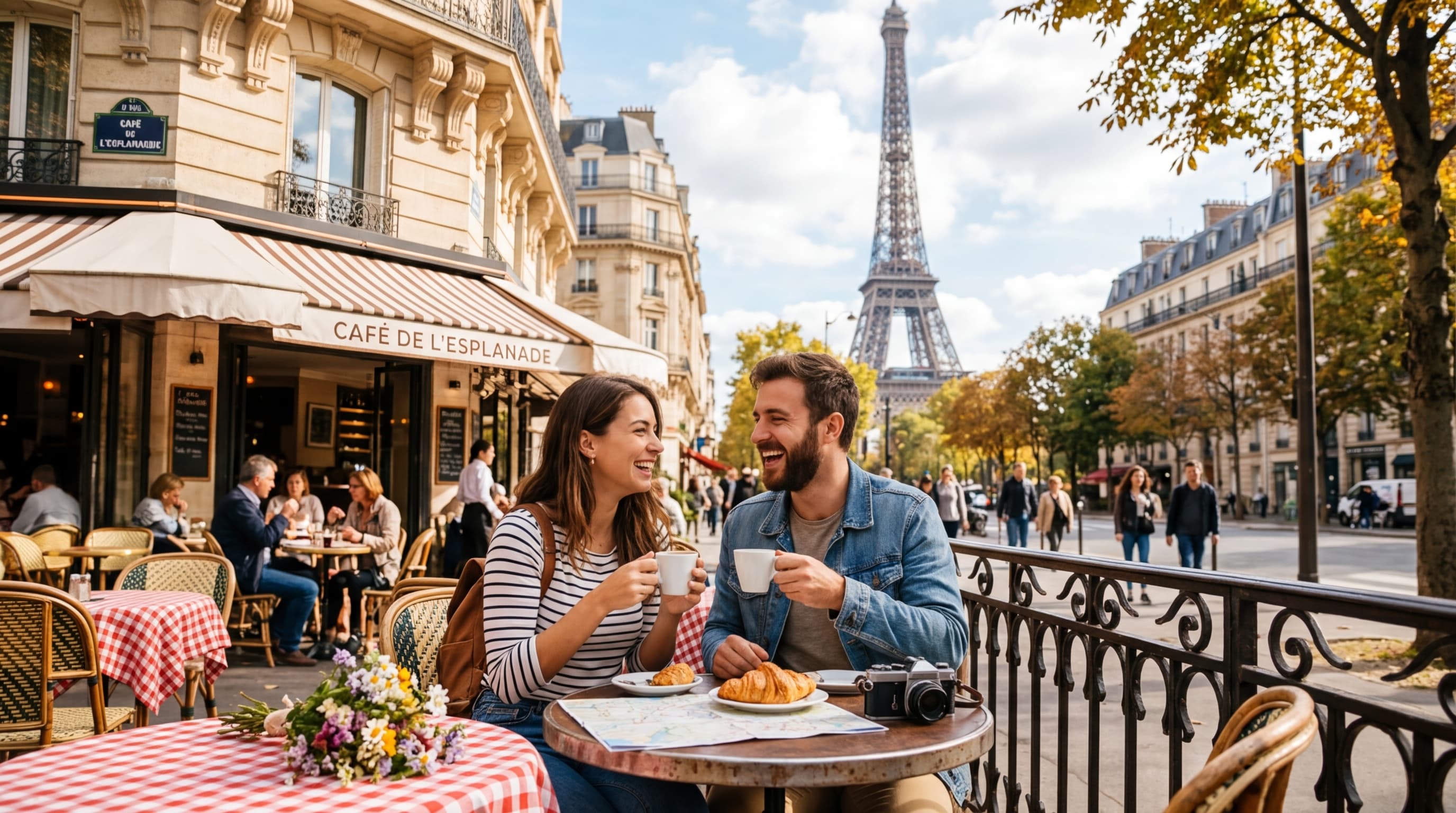
3 days in Paris is enough for a first trip if you plan smart, stay central, and cluster your sightseeing by neighborhood instead of trying to “see everything.” In 72 hours, you can cover the Eiffel Tower, the Louvre, Notre-Dame area, Sainte-Chapelle, Montmartre, and one special experience like a Seine cruise or Versailles without feeling completely rushed.
If this is your first time in Paris, the key is balance: one iconic landmark day, one historic-and-culture day, and one choose-your-own-finale day. From experience, the travelers who love their trip most are the ones who mix the big names with one or two local moments like a cafe break in Saint-Germain, sunset on the Seine, or an evening jazz set. We checked current routing logic, booking patterns, and the way visitors actually move through the city in 2026, and this guide is built to help you avoid the classic backtracking mistake. Think of it as your practical, local-friend version of Paris planning, with realistic pacing, neighborhood shortcuts, and entertainment ideas that fit real life. If you want current events, dining, and nightlife options while you’re in town, you can always explore the full lineup at Gidly.
What makes Paris tricky for short stays is not a lack of things to do, but too much choice packed into a city that rewards good geography. The best 3-day Paris itinerary is not the one with the most attractions, but the one that lets you enjoy the city without spending half your time in transit or queues. That means booking the major timed-entry sights early, staying in a central arrondissement, and leaving room for meals, views, and one flexible wildcard like a concert, exhibition, or river cruise. We’ll walk you through exactly what to do, what to skip, where to stay, how much it costs, and how to tailor the plan for couples, families, friends, solo travelers, and budget visitors.
Quick Answer: Is 3 Days in Paris Enough?
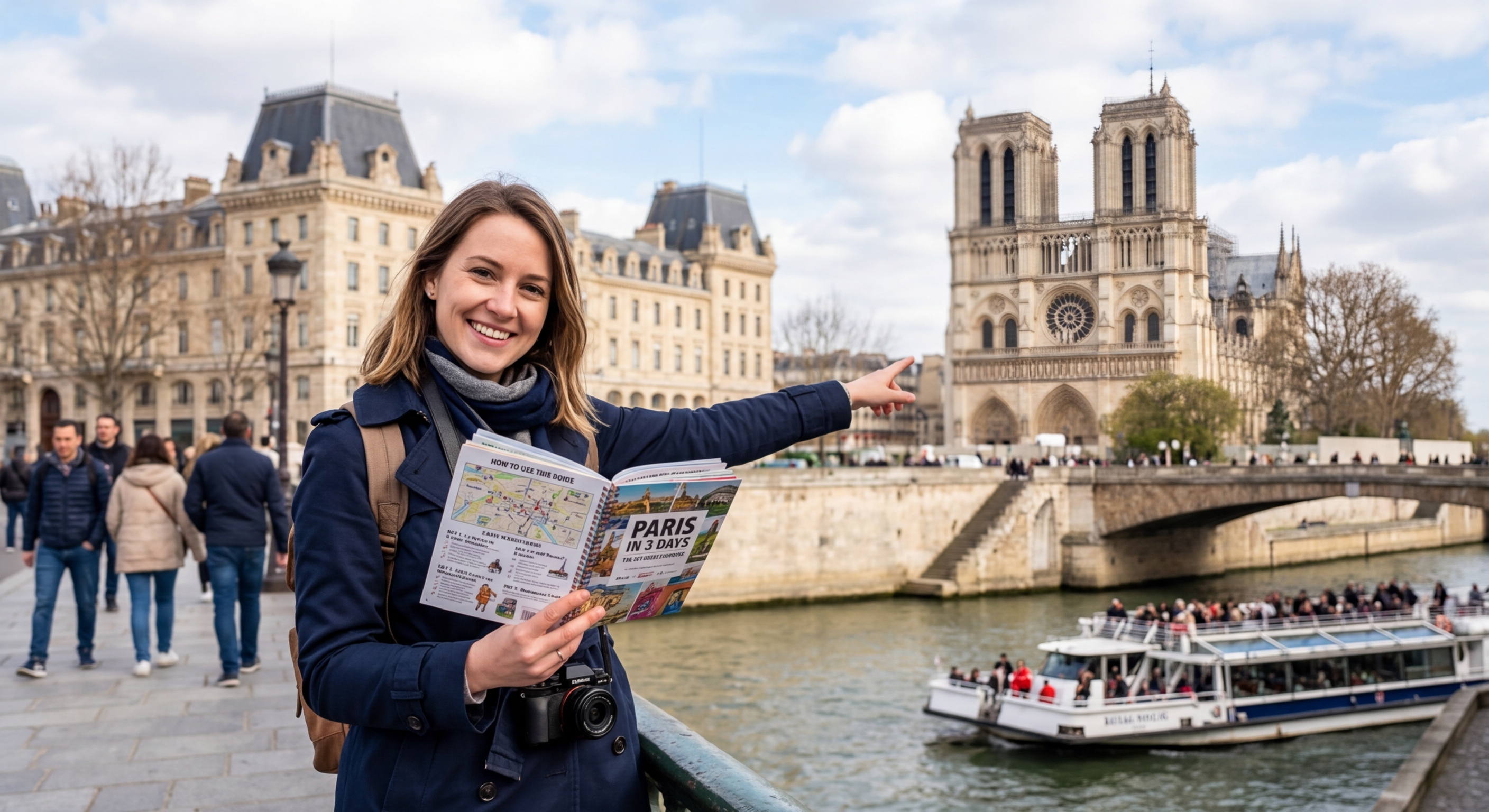
3 days in Paris is enough for a meaningful first visit, but not enough to “do everything,” and that’s actually a good thing. The smartest trip focuses on the city’s essential highlights, one major museum, one neighborhood wander, and one memorable evening moment like a sunset cruise or a sparkling Eiffel Tower view.
From our perspective, the best 72-hour Paris plan is built by geography, not by a bucket list checklist. Day 1 works best around the west/center icons, Day 2 around the historic core and major museums, and Day 3 is your flexible finale for Montmartre, Versailles, or a neighborhood-heavy day like the Marais or Canal Saint-Martin. This structure keeps your trip efficient and gives you a chance to actually enjoy Paris instead of racing between metro stops. If you only remember one planning rule, remember this: the fewer times you cross the city, the better your trip feels.
We’ve seen first-time visitors make the same mistake over and over, which is trying to fit in every “must-see” because the trip is short. That often means you leave exhausted, with blurry memories of transit and ticket lines rather than views, meals, and atmosphere. The better approach is to treat Paris like a set of connected neighborhoods where each day has a theme, a pacing rhythm, and one or two optional add-ons. With that mindset, three days is not limiting; it’s focused, and that focus is what makes the weekend memorable.
What a 3-day Paris trip realistically includes
A realistic 3 days in Paris itinerary can comfortably include the Eiffel Tower area, the Louvre or another flagship museum, the Notre-Dame and Sainte-Chapelle area, Montmartre, and one scenic Seine moment. It can also include a proper cafe break, a nice dinner, and one evening activity such as live jazz, a river cruise, or a sunset rooftop stop. If you’re traveling at a normal pace, you should think in terms of 2 to 3 major anchors per day, not 6 or 7. That pace leaves room for lunch, walking, transit delays, and the little detours that make Paris feel magical. It also makes the itinerary more resilient if one line has a wait or one attraction is fuller than expected.
For first-time visitors, the most satisfying version of a short Paris stay usually includes one museum, one iconic monument, one neighborhood stroll, one scenic viewpoint, and one special “Paris at night” moment. The museum can be the Louvre, Musée d’Orsay, or even a smaller gem like the Rodin Museum if you want a calmer experience. The neighborhood stroll could be Saint-Germain-des-Prés, the Marais, or the Latin Quarter, depending on your style. In other words, you do not need to cover every arrondissement to feel like you saw Paris. You need a smart sample of its history, food, architecture, and evening energy.
What people often underestimate is how much time Paris rewards just by being experienced slowly. Sitting at an outdoor cafe, walking along the Seine, browsing a bakery, or pausing in a square can feel just as important as a headline attraction. That’s why the best three-day plan blends “must-see” and “must-feel.” If you do that, you’ll leave with the right balance of iconic photos and actual memories. And if you still have energy at the end of the day, that’s when a live show, comedy set, or rooftop drink can turn a good trip into a great one.
What to skip if you only have 72 hours
If you only have 72 hours, the biggest thing to skip is the urge to overpack your days with too many far-flung sights. Paris is not a city where you win by crossing it constantly; you win by grouping nearby landmarks and saving your energy for the parts that matter most. For most first-timers, that means skipping lower-priority museums, cutting back on shopping time unless that’s your main interest, and resisting the temptation to bolt from the Eiffel Tower to Montmartre to the Catacombs in one afternoon. That kind of itinerary looks productive on paper, but in real life it feels fragmented and exhausting.
Another thing to skip is trying to “see all of Paris” through a guided bus-style approach or a giant list of random landmarks. You’ll get more out of a properly paced walk through a neighborhood than from ticking off ten attractions from a distance. Unless a specific museum or landmark is a top personal priority, avoid spending too much time in queues for secondary sights. In a short trip, your time has value, and the city’s charm is often in the in-between moments. The more you reduce transitions, the more polished the trip feels.
Finally, skip any plan that depends on last-minute flexibility for the city’s most popular timed-entry attractions. The Louvre, Eiffel Tower summit, Sainte-Chapelle, and Versailles can all become headaches if you leave them to chance. If your dates are fixed, book the hard-to-get items first and let the rest of the itinerary flow around them. That one decision saves a ton of stress. It also makes room for a better kind of spontaneity: choosing a great dinner, a sunset view, or a performance after you’ve already handled the must-dos.
Best approach: cluster by district, not by checklist
The best way to plan 3 days in Paris is to cluster by district rather than by checklist. Paris is organized into arrondissements and neighborhood zones that naturally connect to one another, so a good route takes advantage of those links instead of fighting them. For example, the Eiffel Tower, Champ de Mars, Trocadéro, and the Seine all make sense together because they sit in the same broad west-central flow. Similarly, the Louvre, Palais Royal, Tuileries, Place Vendôme, and the Île de la Cité area can be linked into a single walking arc. When you think this way, your day starts to feel like a local’s route instead of a tourist puzzle.
This clustering approach is especially useful if you’re visiting in winter, shoulder season, or during a busy event week, because it reduces the number of times you need to depend on weather, transit, or long waits. It also helps you avoid the classic Paris mistake of zigzagging from one side of the river to the other and back again. In our experience, that zigzagging is what makes even a beautiful city feel tiring. A clustered plan, by contrast, keeps your momentum smooth. That means more time in cafes, parks, and museums, and less time studying metro maps under pressure.
If you remember nothing else, use this framework: west/center icons on Day 1, historic core and major museum on Day 2, and a neighborhood or day-trip finale on Day 3. That structure is simple enough to remember but flexible enough to adapt. It also works for different travel styles, from romantic weekends to family trips to budget-friendly city breaks. For entertainment-minded travelers, it creates natural openings for dinner shows, jazz clubs, rooftop drinks, or an evening event after the sightseeing blocks. That flexibility is what turns a basic itinerary into a trip that actually feels like Paris.
| Itinerary Style | Best For | What It Covers |
|---|---|---|
| Clustered by neighborhood | First-timers, families, short stays | Less transit, more time on the ground, better pacing |
| Checklist-driven | People with fixed must-sees | More attractions, but higher risk of fatigue and backtracking |
| Experience-led | Couples, solo travelers, entertainment seekers | Fewer sights, more cafes, views, dinners, and events |
How to Use This 3 Days in Paris Itinerary
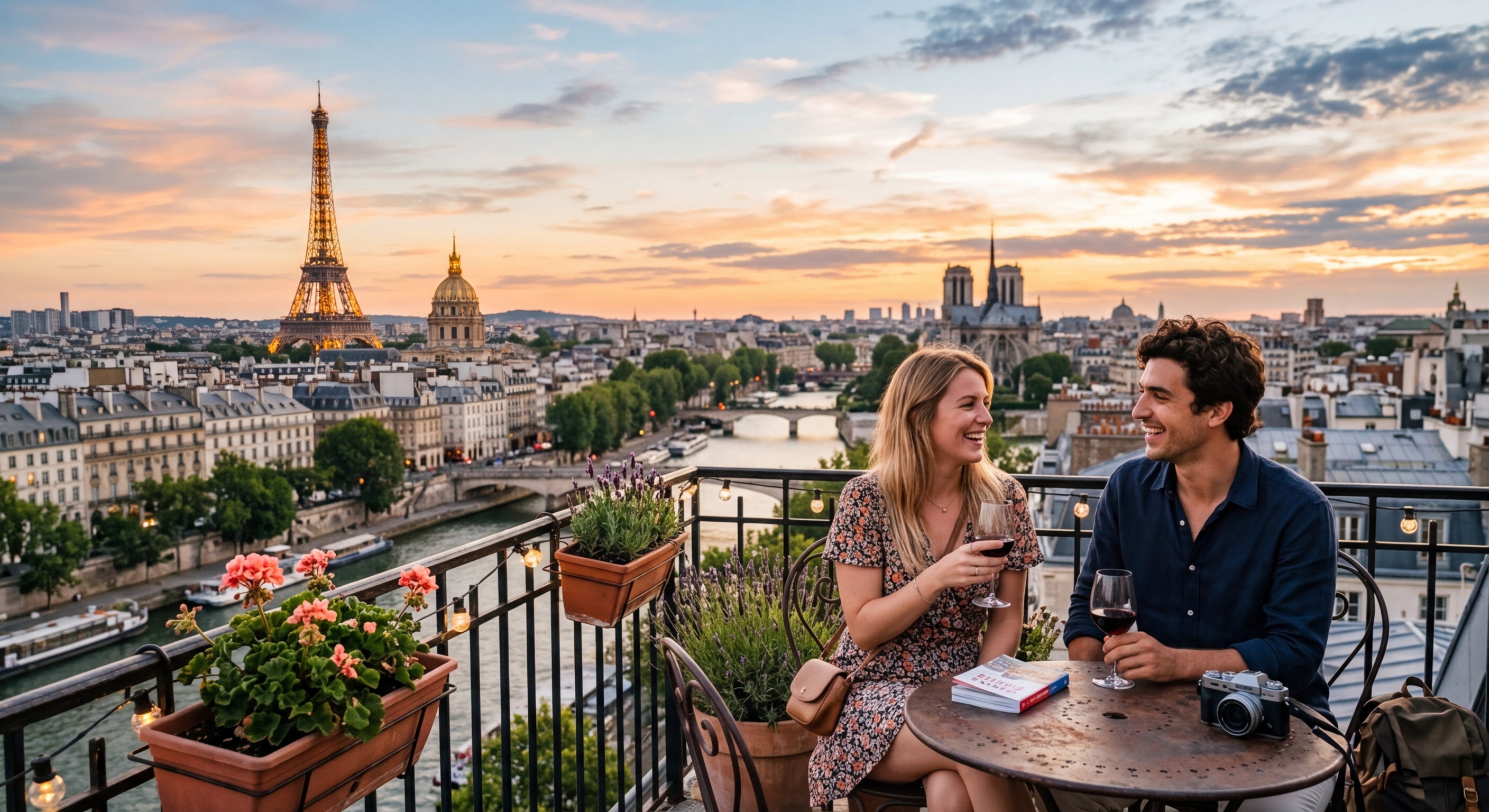
This guide is designed to work like a flexible planning tool, not a rigid script. We built it for first-time visitors who want a realistic, efficient weekend in Paris, but it also works for repeat visitors who want a sharper route and better entertainment add-ons.
The article is organized by planning stage: first the strategy, then the logistics, then the day-by-day route, then scenario-based versions for different travel styles. That means you can either read it straight through or jump to the pieces you need most, whether that’s where to stay, what to book, or what to do if it rains. We also added comparison tables, practical timing notes, and swap-in options like live music or food halls so you can customize the trip without breaking the logic of the route. In a city as layered as Paris, that flexibility matters more than a perfect checklist. It also helps when your energy changes mid-trip, which happens all the time after a long flight or a late dinner.
Our team visited with different trip goals in mind, including quick sightseeing, romantic evenings, and family pacing, and the same core rule kept coming up: the itinerary works best when you give each day a clear purpose. If Day 1 is about the west-side icons and views, Day 2 is about historic core and culture, and Day 3 is about the neighborhood finale, the trip naturally feels balanced. You don’t have to force every interest into every day. Instead, you can swap in a concert, exhibition, or dinner reservation in the evening slot, which is exactly where a tool like Gidly helps by surfacing live options in Paris while you’re on the ground.
Choose your travel style before you start
Before you lock in your 3 days in Paris plan, decide what kind of trip you actually want. A fast-paced first-timer itinerary is different from a romantic weekend or a family trip with kids, and a museum-heavy visit is different from a nightlife-focused one. If you’re a first-time visitor, your priority is usually the classic highlights and a few neighborhoods that feel unmistakably Parisian. If you’re traveling as a couple, you may want to build around views, good dinners, and one memorable evening experience. If you’re with kids, you’ll want parks, shorter walks, easier meal stops, and fewer queues.
Budget-conscious travelers should think in terms of “free value” plus a few well-chosen splurges, rather than trying to do every ticketed attraction. Museum lovers can go deep on the Louvre or Musée d’Orsay, but even then it is wise to keep the pace humane. Solo travelers often have the greatest flexibility, which makes a neighborhood-heavy approach especially satisfying because you can follow your curiosity without coordinating with anyone else. Friends traveling together often do best with one energetic day, one culture day, and one social evening with a rooftop, bar, or live show. Corporate or team outings, meanwhile, usually benefit from a more structured plan with a shared dinner and an evening activity that does not require too much walking or advance knowledge of the city.
Once you know your style, it becomes much easier to pick your finale on Day 3. If your style is romantic, Montmartre or a Seine cruise may be the right fit. If your style is culture-forward, Versailles or a museum afternoon makes sense. If your style is social and modern, the Marais, Canal Saint-Martin, or an entertainment night may be better. This one decision can transform the whole trip because it tells you what to prioritize and what to leave out. It also keeps you from copying an itinerary that looks pretty online but doesn’t actually fit your energy.
How to read the day plans
Each day in this itinerary is broken into morning, afternoon, and evening blocks so you can see the rhythm of the day at a glance. That structure matters because Paris is best experienced in stages, not as one giant race from attraction to attraction. We also include transit and booking notes because in Paris those details can save you hours. For example, if you know a site has a timed entry or a popular reservation window, you can build the rest of the day around it rather than squeezing it in awkwardly later. The goal is to make planning feel simple enough that you can actually enjoy it.
Use the blocks like building pieces. If you arrive late from the airport, you can keep the morning lighter and push the main monument visit later in the day. If the weather is gorgeous, swap an indoor museum block for an outdoor walk or river moment. If you’re traveling with kids, consider choosing one major anchor per half-day instead of two. If you’re traveling in winter, the evenings may be the best time for cozy restaurants and indoor entertainment, while summer may make sunset and late-night walks the highlight. The itinerary is meant to bend with reality.
We also recommend thinking in terms of energy. A museum-heavy morning followed by a long dinner can be perfect, but a second museum plus a long transit across town usually feels too compressed for a short trip. That’s why each day here includes at least one built-in breathing space. In Paris, a cafe stop is not wasted time; it is part of the experience. That mindset makes the itinerary feel less like homework and more like a weekend well spent.
When to swap in local events and entertainment
One of the best things about Paris is that sightseeing and entertainment overlap beautifully. If you have a concert, comedy night, exhibition, food market, or river cruise on your radar, you can often swap it in without losing the logic of the day. For example, if you’re tired after the Louvre, a relaxed dinner and a live jazz set can be a better use of your evening than pushing into another monument. If the weather turns rainy, a theater performance, museum exhibit, or indoor food hall can save the day. This is where a discovery platform like Gidly becomes genuinely useful, because you can browse what’s happening right now rather than relying on static recommendations.
Live entertainment is especially helpful on Day 1 or Day 3 when you might want something memorable but not too exhausting. A dinner reservation followed by a cabaret-style show, comedy night, or intimate music set gives you that “I’m really in Paris” feeling without requiring another sightseeing sprint. Food experiences work the same way: tasting menus, wine bars, bakeries, and markets are all good substitutes for a standard evening walk. And if you’re traveling with friends, these kinds of add-ons can create shared memories that stick longer than another photo stop.
The important thing is not to layer entertainment on top of an overstuffed sightseeing schedule. Instead, use it to complete the day. If you’ve already had a full morning and afternoon, an evening performance or neighborhood dinner is ideal. If your day was lighter, then a rooftop or nighttime cruise might be the perfect cap. Paris rewards travelers who keep their options open and choose quality over quantity. That’s the kind of trip this guide is built to help you plan.
Before You Go: Paris Trip Planning Basics
The smoother your prep, the better your 3 days in Paris will feel once you arrive. Because the trip is short, a few smart planning decisions have an outsized impact on how much you actually enjoy the city.
The main priorities before you go are simple: choose a central place to stay, book the hardest-to-get attractions early, decide what season best fits your style, and understand enough transport basics to avoid wasting time. In Paris, a little preparation pays off more than in many other cities because the biggest sights are popular and the city layout can punish inefficient planning. We looked at the 2026 visitor pattern and the same advice still holds true: timed-entry reservation, central accommodation, and geographic clustering are what separate a calm weekend from a chaotic one. The good news is that once those pieces are in place, the rest of the trip becomes much easier to enjoy.
Another big factor is arrival time. If you’re landing on Friday night, for example, you may not want to schedule an early, high-intensity sightseeing start on Saturday morning unless you know you recover quickly from travel. Likewise, if you’re arriving at midday on day one, it might make more sense to use the afternoon for lighter sightseeing and save a major museum for the following morning. Good trip planning is not about squeezing maximum activity into every hour. It’s about using the right hour for the right kind of experience.
Best time of year for 3 days in Paris
Spring, summer, fall, and winter all offer strong reasons to visit Paris, but each comes with a different rhythm. Spring is one of the most popular times because the city looks fresh, the daylight is improving, and outdoor walking feels especially rewarding. Summer brings long evenings, more river and terrace energy, and a lively outdoor vibe, but it also brings bigger crowds and more competition for reservations. Fall is often a sweet spot for many travelers because the weather is usually comfortable, the city feels stylish and active, and the daylight still allows for good sightseeing. Winter can be quieter and very atmospheric, especially if you like museums, cafes, holiday lights, and indoor entertainment.
If you care most about outdoor wandering and golden-hour photos, spring and early fall are ideal. If you love long daylight, late dinners, and a social city buzz, summer is your season, though you’ll need to book more ahead and be patient with crowds. If you want a more relaxed museum-and-cafe trip, late fall or winter can be excellent, especially for budget-conscious travelers who prefer fewer lines. In 2026, the broader trend is still toward experience-led travel, so seasonal events, special exhibits, and evening programming matter more than ever. That means the right season is often the one that matches the kind of entertainment you want, not just the temperature.
From experience, first-timers usually enjoy Paris most when they choose a season that matches their walking tolerance. A colder but clear day can still be amazing if you like indoor culture and cozy dinner plans. A summer trip can be unforgettable if you’re comfortable with crowds and are okay starting early. No matter the season, build in one outdoor scenic block and one indoor backup. That balance keeps the itinerary resilient and helps you enjoy Paris whatever the weather does.
How many nights to book and what arrival time works best
If you want a true 3 days in Paris sightseeing experience, the ideal setup is usually 4 nights, not just 3. That gives you time to arrive, settle in, and still have three full sightseeing days without turning departure day into a stress test. A Friday-to-Tuesday or Saturday-to-Wednesday format often works especially well because it gives you a real window for jet lag, luggage storage, and a relaxed final meal. If you only book 3 nights, one of your sightseeing days is usually partially eaten by arrival or departure logistics. That can work, but it makes the trip feel tighter.
If your trip is a Friday-to-Monday or Saturday-to-Tuesday weekend, aim to arrive as early as possible on the first day, ideally by late morning or early afternoon. That gives you time for a light first outing and a proper dinner without overloading yourself. For long-haul travelers from the US, UK, Canada, or Australia, the arrival hour can make a big difference in your energy level. If you arrive too late, it may be smarter to keep the first evening simple: check in, walk a nearby district, have dinner, and save the major sightseeing for the next morning. If you arrive early, you can squeeze in a Seine walk or Eiffel Tower approach on day one without feeling rushed.
The best trip start is the one that lets you begin with a win. That might mean a central hotel, a simple first meal, and an easy landmark nearby. It might also mean avoiding the temptation to cross the city the moment you land. Paris is wonderful, but only if you give yourself enough runway to enjoy it. A good arrival plan often determines whether the trip feels calm from the first hour or chaotic from the airport onward.
Timed-entry bookings you should reserve early
For a short trip, the places to reserve first are the ones most likely to create bottlenecks: the Louvre, Eiffel Tower summit or elevator access, Sainte-Chapelle, Musée d’Orsay, Catacombs, and Versailles if you’re going. Seine cruises and some popular dinner reservations can also book up during peak season or weekends. When planning in 2026, we recommend checking official venue sites early because availability can shift quickly around holidays, school breaks, and special exhibitions. In practice, the more iconic the attraction, the more likely it is to benefit from advance planning.
Not every stop needs a reservation, of course. Paris is still a city where you can wander many neighborhoods freely, stop into cafes, and enjoy parks without much pre-planning. But the highest-value ticketed experiences should not be left to chance. If you’re building a tightly packed weekend, the biggest time-saving move is to know your reservation windows first and then build the route around them. That prevents the common “we wanted to do this but it sold out” problem.
As a rule of thumb, anything with a summit, timed access, or major exhibition deserves early attention. If you’re traveling in peak spring or summer, book even earlier. If you’re flexible and okay with a partial experience, you may find same-day or next-day options for certain attractions, but that is not the best strategy for a first trip. Short version: book the hard stuff early, then leave the rest open for atmosphere, meals, and spontaneous discoveries. That’s the smartest way to travel in Paris.
Paris transport basics for short stays
For a short stay, the Paris Metro is often the fastest way to cover medium distances, but walking is the best way to enjoy short neighborhood connections. The RER is useful for airport transfers, Versailles, and some longer cross-city moves. Taxis and rideshares are convenient when you’re tired, arriving late, or trying to avoid a complicated transfer with luggage. If you stay central, you can often combine walking with a few strategic metro rides and keep transit time low. That combination is what makes the itinerary feel efficient instead of exhausting.
Getting from the airports to central Paris depends on where you arrive and how much luggage you have. For many first-time visitors, the stress-free option is a taxi or a pre-booked transfer, especially after a long flight. If you want a cheaper route and you’re comfortable with public transit, the RER and airport-specific rail links can work well, but they require a little confidence and planning. Once you’re in the city, prioritize staying in or near the 1st, 4th, 5th, 6th, 7th, 8th, or 9th depending on your style, because that reduces transport friction. The time you save each day adds up quickly over 3 days.
Walking is not just transport in Paris; it’s part of the experience. Still, it helps to think of walking in batches rather than assuming you can casually cover the whole city. Use the metro when the move is long or repetitive, and use your feet when the route is scenic or tightly clustered. That balance protects your energy and keeps your days feeling elegant rather than chaotic. For a weekend trip, a little planning around transport is one of the easiest ways to improve the whole journey.
Where to Stay in Paris for 3 Days
Where you stay in Paris matters more on a short trip than on a longer one, because your hotel becomes your base for every decision you make. If your accommodation is central and well connected, you can spend your limited time enjoying Paris. If it is far out or poorly linked, you can easily lose an hour or more each day just getting to and from the sites you care about.
For 3 days in Paris, we strongly favor central neighborhoods that reduce transit friction and keep you close to major landmarks, restaurants, and evening options. The best areas are not always the cheapest, but they often save you more in time and energy than they cost in euros. In our experience, first-timers are happiest when they choose proximity over space, especially if they plan to do a lot of walking and only return to the room to sleep. Couples often prefer the 6th, 7th, or 4th for atmosphere. Families may like the 1st, 5th, or parts of the 9th because they feel convenient and manageable. Budget travelers can still find good value if they prioritize access to the metro over a postcard-perfect address.
There is no single “best” neighborhood for everyone, but there are definitely neighborhoods that fit short stays better than others. The right choice depends on whether you want romance, convenience, nightlife, or a calmer base. We also recommend thinking about your arrival and departure logistics, because a hotel close to your transit line can save you real stress on travel days. Below is a practical breakdown that should help you choose.
Best neighborhoods for first-time visitors
The most practical neighborhoods for first-time visitors are the 1st, 4th, 6th, 7th, 8th, and select parts of the 5th and 9th arrondissements. The 1st puts you close to the Louvre, Tuileries, Palais Royal, and central transit. The 4th gives you access to the Marais, Notre-Dame area, and the Seine, which is a great fit if you want a lively but historic base. The 6th is a favorite for cafes, classic Paris atmosphere, and easy access to the Left Bank. The 7th is ideal if you want to be near the Eiffel Tower and big landmarks. The 8th works well for the Arc de Triomphe, Champs-Élysées, and luxury shopping, while parts of the 5th and 9th offer strong value and good walking connections.
If we were choosing purely for convenience, the 1st and 4th are hard to beat because they sit near the city’s core. If we were choosing for charm and dining, the 6th and 7th are especially appealing. If we were choosing for classic “I’m in Paris” energy, the 4th and 6th are often the sweet spot because they combine atmosphere, food, and walkability. The tradeoff is price, since the most convenient areas tend to command a premium. Still, on a 3-day trip, that premium can be worth every euro because it buys you more usable time.
Another practical factor is how often you plan to go out in the evening. If you want dinners, bars, or live entertainment, staying in or near central neighborhoods makes late nights much easier. If your plan is mostly sightseeing and early nights, you can be slightly more flexible. But for a weekend trip, we usually advise against choosing a place that sounds cute but requires a long transfer every time you want to do anything. That’s the kind of decision that looks minor during booking and feels major on day two.
Best areas by travel style
For couples, the 6th, 7th, and parts of the Marais are especially strong because they pair nicely with romantic cafes, attractive streets, and easy dinner options. For families, the 1st, 5th, and 9th can be smart because they provide decent access to parks, museums, and transport without being too chaotic. For nightlife, the 9th, Marais, and some parts of the 10th can be better because they place you closer to bars, music venues, and later-night dining. Budget travelers may find better value in the 9th, 5th, or on the edges of central districts where you still have quick metro access but avoid the highest premium blocks. Quiet, upscale stays often work best in the 7th or select parts of the 6th, especially if your ideal evening is a nice dinner and an early return to the hotel.
If you want a romantic weekend, think about how close you are to the Seine, smaller restaurants, and scenic evening walks. If you want a friend trip, prioritize easy metro access and proximity to places with late-night energy. If you are traveling solo, a neighborhood that feels walkable and comfortable after dark matters more than having a huge room. If you are with kids, proximity to parks and easier meal stops can reduce friction more than almost anything else. The key is matching the neighborhood mood to the trip mood.
We always suggest reading a hotel map before booking. Sometimes a “great area” listing is actually a property several blocks farther from the useful part of that district than you expected. On a short trip, those few blocks can become a lot of extra walking. Choose a location that makes your daily route easy, not just one that sounds appealing on the booking page. That distinction saves frustration.
Hotels vs apartments vs aparthotels
For 3 days in Paris, hotels are usually the simplest choice because they reduce friction. You get check-in support, daily housekeeping, luggage handling, and fewer chores, which matters a lot when your time is limited. Apartments can be great if you want more space or you’re traveling with family, but they often require more coordination and can come with stricter check-in logistics. Aparthotels sit in the middle and can be a very smart option for a three-night stay because they often give you more room without giving up the convenience of hotel-style service.
If you’re traveling as a couple or solo, a well-located hotel is often the best value because the location matters more than the size of the room. If you’re with kids or a group of friends, an aparthotel can make mornings easier and give everyone a little breathing room. Apartments can be attractive if you plan to do a little grocery shopping or want a local-home feel, but for a first trip the extra logistics can be a tradeoff. We usually recommend choosing the simplest setup that still gives you the neighborhood you want. That keeps the focus on the trip, not the accommodations.
Another point to remember is how you will use the room. If it’s mostly a sleep base between sightseeing blocks, you do not need to overinvest in space. If you plan to have downtime because you’re traveling with children or recovering from long-haul jet lag, then a little more room might be worth it. On a short trip, convenience beats complexity nearly every time. The best stay is the one that supports the itinerary you want to enjoy.
Where not to stay if your time is limited
If your time is limited, avoid choosing a neighborhood just because the nightly rate looks lower. Outer arrondissements and poorly connected areas can be perfectly fine for longer stays, but on a 3-day trip they often create a time-cost penalty that eats into your sightseeing. That extra commute can easily add stress during mornings and make you more likely to skip the evening plan you actually wanted. In Paris, a cheaper hotel outside the core often ends up costing you more in practical terms than you save in euros. That’s why short-stay travelers should be especially cautious.
We also recommend avoiding places that require multiple transit changes to reach the main sights you care about. If your hotel is cheap but every day starts with a complicated metro combination, you’ll feel that burden quickly. The same applies if you’re arriving late at night or leaving early in the morning. A central location is not just about convenience during sightseeing; it also makes arrival and departure much smoother. For a weekend, every small stressor matters more.
As a rule, if you’re not sure whether a neighborhood is too far out, map it against your planned route for Day 1 and Day 2. If the commute looks long or awkward, keep looking. It is better to spend a little more on the right base than to lose time every day. The city is beautiful enough that you should be able to experience it, not just commute through it.
| Neighborhood | Vibe | Best For |
|---|---|---|
| 1st arrondissement | Central, polished, convenient | First-timers, museum lovers, short stays |
| 4th arrondissement / Marais | Historic, lively, walkable | Couples, friends, food lovers |
| 6th arrondissement | Classic Left Bank charm | Romantic trips, cafe culture |
| 7th arrondissement | Elegant, landmark-heavy | Eiffel Tower focus, families, couples |
| 9th arrondissement | Energetic, practical, good value | Budget travelers, nightlife, friends |
Day 1 in Paris — Iconic Sights and the Best First Impression
Day 1 should feel like Paris at its most instantly recognizable: the Eiffel Tower, Trocadéro views, a Seine moment, and a relaxed but memorable evening. This is the best way to land emotionally in the city without exhausting yourself on the first day.
The goal for Day 1 is not to conquer the whole city but to create your first “wow” sequence. That means starting in the west-central side of Paris, where the Eiffel Tower area, river views, and open spaces give you a classic welcome. We recommend moving from the tower itself to Trocadéro or the surrounding views, then drifting along the Seine for a walk or cruise, and finishing with dinner and an evening lit-up Paris moment. This route is simple, iconic, and geographically efficient. It gives you the most recognizable Paris experience while keeping the day manageable.
Many first-time visitors make Day 1 too ambitious because they’re excited and want to see everything immediately. We get it. But Paris works better if you let the first day breathe. You do not need to force in multiple museums or cross-river logistics in the afternoon. Instead, let the city introduce itself with a few signature moments, a good meal, and one great view after dark. That rhythm is usually enough to make travelers feel like the trip has officially begun.
Morning: Eiffel Tower and Trocadéro views
Start your first day at the Eiffel Tower area if it is one of your top priorities, and decide in advance whether you want to go up or simply enjoy the surrounding views. The tower area is one of the most visited in Paris, so early timing matters if you want a calmer experience and better photos. If you plan to go up, book ahead through the official site and build extra time into the morning because queues and security can affect your schedule. If you do not need the ascent, you can still have a fantastic first stop by focusing on the Champ de Mars, the bridge views, and the Trocadéro side for the best classic perspective.
Trocadéro is especially useful because it gives you the photo angle many people want on their first trip. It is also a good place to start if you want the tower in your frame rather than underneath it. From there, you can walk toward the river and feel the scale of the city open up around you. The area is busy, so the early morning gives you a much better experience than midday. If you are traveling with kids or a group, this area also works well because it’s easy to meet up and regroup without complicated navigation.
One practical tip: don’t overstay at the tower if your schedule is tight. Enjoy the moment, take the photos, and move on while the energy is still high. Many travelers spend too long here and then rush everything else. By keeping this first block focused, you preserve the rest of the day. That’s the difference between a solid Paris morning and an exhausted one.
Late morning: Seine walk or river cruise
After the Eiffel Tower, the Seine is the perfect transition because it ties the city together visually and gives your day a slower pulse. You can either take a self-guided walk along the riverbanks or book a cruise, depending on how much structure you want. A cruise can be an efficient way to get a scenic overview without wearing yourself out, while a walk gives you more room to stop, linger, and observe. Both options work, and both feel very Parisian.
If this is your first trip, a river cruise can be especially helpful because it shows you multiple landmarks from the water in a single block of time. It is also a nice way to rest your feet before lunch. On the other hand, if you enjoy wandering and want to make the city feel more intimate, walk the banks and use the bridges as your scenic anchors. This is one of the best places to slow down without feeling like you’re losing time. In fact, many travelers find that a Seine walk becomes one of their favorite memories precisely because it is unforced.
As a first-day move, the Seine is a smart way to reset your energy. It bridges the iconic morning with the more flexible afternoon. If the weather is good, this is also one of the best opportunities to take in open-air Paris without committing to a big park or museum. Keep an eye out for lunch options near the river so you can keep the day efficient. A simple cafe stop here can set the tone for the rest of the trip.
Afternoon: Invalides, Champ de Mars, and nearby museum options
By afternoon, you have a choice: keep the day light, or add one nearby cultural stop if your energy is still strong. Invalides is a logical add-on if you want a bit of history and architecture without overcommitting. The Champ de Mars is better if you want to stay outside and enjoy a relaxed park atmosphere. A nearby museum can also fit here if you prefer a more structured afternoon, but we recommend only one major add-on, not several. That keeps the day elegant rather than packed.
If you are traveling with children or older relatives, the open spaces around the Eiffel Tower may be enough for the afternoon, paired with a casual lunch and some downtime. If you are a museum lover, you can consider the Musée de l’Armée at Les Invalides, which is a good fit because it is geographically close and thematically distinct from the Louvre later in the trip. If you are a couple or a solo traveler, this afternoon can be your slower recovery block before an evening out. The point is to protect your energy for the night.
This is also a good time to check how you’re feeling after your arrival day. If you’re tired, don’t force another big sight. Paris rewards pacing, and the city is happier when you’re not sprinting through it. A short break at a cafe or a quiet bench in the park can be the smartest thing you do all day. In a short itinerary, recovery is not laziness; it is strategy.
Evening: sunset, dinner, and lit-up Paris
For the evening, aim for a sunset view and then a relaxed dinner, ideally in a neighborhood that still feels connected to your day. The Eiffel Tower sparkle moment is a classic for good reason, and seeing Paris lit up after dark is one of the best ways to end day one. You can watch from Trocadéro, the Seine, or another nearby vantage point, depending on crowd levels and weather. If you want a date-night feel, this is the perfect evening for a nice dinner followed by a stroll. If you’re with friends, a lively bistro or rooftop can make the night more social. If you’re traveling with family, keep the evening accessible and avoid making it too late.
A good first-night dinner should be memorable but not overly complicated. Paris has endless options, but on a short trip you want somewhere dependable, not a place that steals two hours with a confusing reservation process. Choose a restaurant near your evening plan or back near your hotel so you do not have to cross the city when you’re already tired. If you want entertainment, this is a great evening to add a jazz club, cabaret show, or a scenic Seine cruise after dinner. Paris excels at this kind of layered evening.
If the weather cooperates, even a simple walk after dinner can be enough. There is something about seeing the city glowing at night that makes the whole trip click into place. Day 1 should end with that feeling of arrival. It does not need to end with exhaustion.
Day 2 in Paris — Louvre, Historic Core, and Left Bank Highlights
Day 2 is your culture and history day, and it should move through Paris’s core in a way that feels connected and satisfying. This is the day for the Louvre, the Tuileries, Palais Royal, Île de la Cité, Sainte-Chapelle, and a Left Bank evening that slows things down beautifully.
This route works well because the landmarks sit in a natural chain. You can start at the Louvre or nearby, move through the garden and square spaces around it, cross toward the historic island area, and end the day in the Latin Quarter or Saint-Germain-des-Prés. That creates a full but not frantic day, and it lets you experience some of the city’s most important cultural layers without bouncing across town. If Day 1 is the postcard, Day 2 is the substance. You get architecture, art, history, and cafe culture in one coherent route.
We recommend keeping the museum block focused rather than trying to do a marathon of galleries. The Louvre is enormous, and if you try to see it all, you’ll finish the day drained. Instead, choose a smart route through the rooms or take a guided visit if you want the highlights efficiently. Then use the rest of the day to enjoy the spaces around it, because those areas are part of Paris’s identity too. This day works best when you treat the museum as one anchor among several, not as the whole event.
Morning: Louvre strategy for limited time
If you only have a few days in Paris, the Louvre should be approached with a strategy, not a sense of obligation. Decide whether you want a self-guided highlight tour or a guided visit before you go. If you enjoy art and have a clear list of works you want to see, a self-guided plan can work well. If you want to maximize your time and reduce decision fatigue, a guided route is often the better choice. Either way, do not enter the museum without a plan, because the building is far too large for casual wandering if your time is limited.
For a short trip, we usually recommend spending a focused block of time rather than trying to stay for half the day. That can mean seeing a few iconic works, enjoying the architecture, and then leaving while you still have energy for the rest of the route. The museum is one of those places where “less but better” wins. In our experience, visitors remember a thoughtful visit more than a rushed attempt to cover every wing. If the Louvre is a must-see for you, reserve it early and protect the time block.
One thing to remember is that the Louvre area itself is worth savoring. The glass pyramid, the courtyards, and the surrounding spaces are part of the experience. You do not need to force a museum marathon to justify your morning. A smart visit will still leave you with a sense of having seen something important without turning the rest of the day into a recovery session. That is the ideal balance for a 3-day trip.
Midday: Palais Royal, Tuileries, and Place Vendôme
Once you leave the Louvre, the best next move is to walk through the nearby spaces that connect the center of Paris so elegantly. Palais Royal is a wonderful pause point because it combines architecture, calm, and a sense of local rhythm. The Tuileries add a classic garden transition that helps you move from indoor culture to outdoor strolling. Place Vendôme gives the route a more polished, elegant finish and helps you understand how central and refined this part of Paris feels. Together, these stops create a very efficient midday block.
This is also an ideal place for lunch or a cafe break. The point is not to rush from one sightseeing label to the next, but to let the city unfold as a walkable sequence. If you’re hungry, stop early rather than waiting until you’re irritable. Paris is not a city where a missed meal improves your mood. A well-timed lunch in this area makes the afternoon much easier and helps you keep your pace steady.
From a planning standpoint, this is one of the strongest examples of why geography matters. The Louvre, Palais Royal, Tuileries, and Place Vendôme are all close enough to be combined without much hassle. That means you can get a lot of visual and cultural value from a relatively low-transit section of the day. It is a good reminder that short trips often work best when the spaces between attractions are as intentional as the attractions themselves.
Afternoon: Île de la Cité, Notre-Dame area, and Sainte-Chapelle
The Île de la Cité area is one of the most meaningful parts of Paris to include in a short trip because it gives you the city’s historic heart. Even if Notre-Dame’s interior access or surrounding conditions change by season or restoration stage, the area itself remains central to the Paris experience. Sainte-Chapelle is usually the standout booking here because it is compact, beautiful, and very rewarding when timed well. If it is on your list, reserve ahead and use that reservation as the anchor for your afternoon. The nearby river setting and island streets make it easy to fill the surrounding time without stress.
What you want to avoid is treating this area as a fast photo stop. It is richer than that, and a little time here helps the city’s story make sense. The stone, the river, the bridge connections, and the historic setting all matter. This is a good place to slow your pace, especially after the structure of the Louvre. A few quiet minutes by the water can reset your energy before dinner. That makes the whole day feel more balanced.
If you’re visiting with family, this is a good place to keep expectations realistic and avoid overbooking. If you’re traveling as a couple, it can be one of the most atmospheric parts of the entire trip. If you’re a solo traveler, it’s a great place to walk without pressure and take in the mood of the city. However you approach it, keep in mind that this is a high-value area for a short trip and should not be rushed. A beautiful afternoon here can become one of the strongest memories of the weekend.
Evening: Latin Quarter or Saint-Germain-des-Prés
For the evening, move to the Left Bank and let the mood shift from major landmarks to cafes, bookstores, and slower streets. The Latin Quarter is lively, youthful, and good for casual dinner options, while Saint-Germain-des-Prés feels a little more classic and polished. Either area gives you an excellent finish to the day because both are walkable and rich in atmosphere. If you want a low-key evening, choose a cafe and a simple dinner. If you want something a bit more polished, look for a nice bistro or wine bar. If you want entertainment, this is one of the easiest places to add a jazz set or small venue show.
We like this evening because it avoids the feeling of “one more giant attraction.” After a museum and historic core day, the best ending is one that feels human and relaxed. Sit down, have a good meal, and enjoy being in a neighborhood where people actually linger. This is where Paris starts to feel less like a museum and more like a living city. That shift is important on a short trip because it keeps the itinerary from feeling one-dimensional.
If you are traveling with friends or as a couple, this is also a prime opportunity to let dinner be the anchor and choose an activity afterward only if you still have energy. If you’re with kids, an early dinner and a calm walk are usually enough. The day has already done a lot of work, so the evening can be simple. Paris always rewards a little restraint. The quieter you end the day, the better your next morning tends to feel.
Day 3 in Paris — Choose Your Finale: Montmartre, Versailles, or Local Neighborhoods
Day 3 should be your flexible finale, and that is where the itinerary becomes personal. Depending on your priorities, you can choose charm and views in Montmartre, a full Versailles day trip, a local neighborhood day in the Marais or Canal Saint-Martin, or an entertainment-forward finish with food, music, and nightlife.
This is the day where many travelers either make the trip unforgettable or overcomplicate it. The right choice depends on what you still want from Paris and how much energy you have left. If you feel like you want one last iconic experience, Montmartre may be your answer. If you’re a history or architecture fan and don’t mind travel time, Versailles is worth considering. If you’re more interested in local Paris life, a neighborhood day can be the best possible ending because it feels more lived-in and less checklist-driven. And if your group wants a social, modern, city-night vibe, an entertainment-focused finale can be the perfect capstone.
We recommend choosing only one version of Day 3, not trying to combine all four. That is how the final day gets messy. This day should match your energy and your travel style. By now you’ve seen the big landmarks and likely know whether you want more monuments, more ambiance, or more nightlife. Use that clarity to make the best choice. The goal is to leave Paris feeling like you chose your own trip, not like you copied someone else’s template.
Option A: Montmartre and Sacré-Cœur
Montmartre is one of the best choices for a final day if you want charm, hilltop views, and a slower wandering pace. Sacré-Cœur gives you the famous view, but the area around it is what really makes the day feel special. Spend time on the streets below the basilica, browse small shops, and let the neighborhood guide the rhythm of the day. Montmartre works especially well for couples, solo travelers, and anyone who wants a more atmospheric ending after the big headline sights. It is also a good choice if you prefer walking over strict sightseeing.
The reason Montmartre works so well on Day 3 is that it gives you a distinctly different mood from the first two days. You move from monumental Paris to a more artistic, village-like feeling. That contrast makes the trip richer. If you have time, go beyond the obvious viewpoints and explore some of the surrounding streets where the pace is calmer. That is often where visitors get the best sense of the neighborhood. It’s also where you find the kind of small discoveries that make a short trip feel personal.
For practical planning, aim for a daylight visit with a sunset return if your schedule allows. That gives you the best view and the best sense of the hill’s atmosphere. The area can be busy, so keep valuables secure and stay aware of your surroundings. Still, when planned well, Montmartre is a lovely way to end a weekend in Paris. It gives you visual drama without requiring another museum ticket or a long cross-city transfer.
Option B: Versailles day trip
Versailles is worth it for some travelers, but not for everyone on a 3-day itinerary. If your dream Paris trip includes grand palace history, formal gardens, and a major day trip, then Versailles can absolutely justify the time. But if your priority is seeing more of Paris itself, you should consider what you’d be giving up. Versailles is not a quick add-on; it is a substantial block of time that works best when you commit to it fully. For many first-time visitors, it means trading a slower neighborhood day or a deeper Paris exploration for one outside-the-city experience.
We usually recommend Versailles for travelers who are especially interested in history, architecture, or grand estates, and for those who are okay with a more structured day. It is also a strong choice if you have already been to Paris before and want to vary the experience. If you are on your very first visit and only have 3 days, we would only choose Versailles if it is a high-priority dream item. Otherwise, Montmartre or a neighborhood day may give you more overall value. This is the classic tradeoff decision.
When you do choose Versailles, book early and start the day with enough buffer for transit. The palace can easily consume much of the day, especially if you want to see more than the bare minimum. That means you should simplify the rest of your itinerary and not force a heavy evening afterward. Versailles works best when you respect its scale. Treat it like the main event, not a quick stop.
Option C: Marais, Canal Saint-Martin, or a museum-light neighborhood day
If you want a more local-feeling ending, the Marais and Canal Saint-Martin are excellent choices. The Marais gives you historic streets, boutiques, cafes, and a lively urban vibe that still feels walkable and efficient. Canal Saint-Martin offers a cooler, more contemporary feel with water views, relaxed cafes, and a local hangout atmosphere. Both are great for visitors who want to step away from the monument trail and spend a day enjoying Paris as a neighborhood city. This is often the best choice for repeat visitors, solo travelers, and people who care about food and atmosphere as much as headline sights.
A museum-light day can be refreshing after two days of landmark-heavy routing. You can start with a leisurely brunch, wander for a few hours, stop into a shop or gallery, and then choose a casual lunch or dinner later. This kind of day creates room for spontaneity and helps you experience the city at street level. It is especially useful if the weather is mixed, because both the Marais and Canal Saint-Martin have plenty of indoor and outdoor options nearby. You can keep the day flexible without losing structure.
We think this is one of the best ways to make a short trip feel richer. Instead of collecting more famous sites, you spend time in neighborhoods where Paris’s everyday rhythm is visible. That often leaves a stronger impression than another hour in a queue. It’s a good choice if you want your trip to feel lived-in rather than merely visited.
Option D: Entertainment-forward final day
If your group wants a more modern city experience, use Day 3 for food halls, live music, comedy, theater, or nightlife. Paris has a strong entertainment scene, and short-trip visitors sometimes overlook it because they are so focused on the monuments. That’s a shame, because an evening of music, a special dinner, or a late-night neighborhood crawl can be the most memorable part of the weekend. This is the best route for friends, couples who like going out, and solo travelers who want the city to feel dynamic after dark.
A food-forward final day can begin with a market, casual lunch, and a bakery stop, then move into an afternoon wander before an evening show or live set. Comedy clubs and intimate music venues are particularly good because they don’t require too much planning but still give you a sense of Paris after hours. If you want current options, Gidly is useful for discovering what’s happening now, whether that’s a concert, an exhibition, a rooftop, or a late dinner in the right neighborhood. That kind of flexibility is a big advantage on the final day of a short trip.
This option is especially good if you already did your “must-sees” on the first two days and want to leave room for atmosphere. It also works well for repeat visitors who do not need another monument. Paris is a city where an excellent evening can stand in for another museum morning. If you travel this way, the trip feels more current, more social, and often more fun.
Best Things to Do in 3 Days in Paris by Category
When you only have 3 days in Paris, it helps to think in categories so you can swap items in and out based on weather, booking availability, and personal taste. This section works like a substitution bank, which is especially useful if a timed-entry reservation sells out or the forecast changes at the last minute.
The major categories below cover the landmarks, museums, outdoor experiences, food stops, and entertainment options that most travelers care about. That makes the itinerary easier to customize without breaking the overall rhythm. We built this section because many guides over-focus on the same list of famous sights and under-serve the “what else can I do?” question. In reality, your best Paris trip is usually a combination of one or two headline attractions plus a mix of scenic, social, and culinary moments. That blend makes the itinerary feel fuller and more personal.
Use this section as a menu. If you love museums, lean harder into the art options. If you care more about date-night energy, prioritize the food and evening sections. If you are traveling with kids, choose the outdoor and easy-access attractions. The city gives you many ways to shape the same three days into a very different trip.
Must-see landmarks
The landmark shortlist for a first trip includes the Eiffel Tower, Louvre, Notre-Dame area, Arc de Triomphe, Sacré-Cœur, and the Seine. These are the sites people usually want because they define the Paris image in the global imagination. The key is not to do them all in a single breath, but to distribute them sensibly across the three days. The Eiffel Tower and Seine work well on Day 1. The Louvre and Notre-Dame area fit naturally on Day 2. The Arc de Triomphe and Sacré-Cœur can work if you have room or if they align with your chosen finale.
The landmark experience is strongest when you mix views and ground-level exploration. For example, standing near the Eiffel Tower is different from seeing it from Trocadéro or from a river cruise. Likewise, the Arc de Triomphe is not just a monument; it’s part of the broader Champs-Élysées axis. The Notre-Dame area is best appreciated as a historic district, not just a quick photo stop. That kind of layered approach gives you better memories and better photos.
If you are deciding what to prioritize, choose the landmarks that best fit your route and your travel style. You do not need every famous structure to “count” as having seen Paris. The best mix is one or two monument-heavy moments and at least one scenic or neighborhood shift. That gives your trip more texture and helps the city feel alive rather than merely checked off.
Art, museums, and exhibitions
The essential museum names are the Louvre, Musée d’Orsay, Centre Pompidou, Rodin Museum, Musée de l’Orangerie, and Petit Palais. If this is your first trip, the Louvre is the most iconic, but it is also the most demanding in terms of time and decision-making. Musée d’Orsay is often easier to handle on a short trip because it is more compact and still deeply rewarding. The Rodin Museum is a favorite for travelers who want a calmer experience with beautiful sculpture and garden surroundings. The Orangerie is especially strong if you love Impressionist art and want something manageable. Petit Palais can be a pleasant surprise because it combines beauty, accessibility, and a less overwhelming scale.
On a 3-day trip, we usually recommend one flagship museum plus one optional shorter cultural stop if your energy allows. That keeps the itinerary interesting without turning the city into a museum marathon. If you choose the Louvre, consider using the rest of the day for outdoor walks and light neighborhood time. If you choose Orsay, you may have more room for a second cultural stop. The important part is to leave the museum with enough mental energy to enjoy dinner and the evening. Paris is best when your day has variety.
If exhibitions are your thing, check current seasonal programming before you go. Paris often has strong temporary exhibitions that can rival permanent collections for first-time visitors. This is where current listings and official site checks matter, because the best show might be limited-time only. For travelers who want culture with less pressure, exhibitions can be an excellent substitute for a larger museum block. They fit beautifully into a 3-day itinerary.
Outdoor and scenic experiences
Paris shines outdoors, and some of the best moments in a short trip happen away from the formal attractions. The Seine riverbanks, bridges, gardens, viewpoints, and hilltop areas all offer easy ways to enjoy the city without another ticket or queue. Good outdoor stops include the Champ de Mars, Tuileries, Luxembourg Gardens, the Seine walk, Trocadéro, and hill views from Montmartre. These spaces are especially valuable in spring and fall when the weather is comfortable and the city feels open and walkable.
Outdoor experiences are not just filler between tickets. They are what make the city breathe. A garden lunch or an hour by the river can reset your day and give you the kind of relaxed rhythm Paris does so well. If the weather is clear, try to build at least one scenic walk into each day. If the weather is mixed, keep one outdoor block flexible so you can move it when the sky improves. Paris is a city where a half-hour of sunlight can change the whole mood of the trip.
For photos and views, time matters. Early morning is best for quieter scenes, and late afternoon gives you warmer light and a stronger atmosphere. Sunset is ideal when you want the city to feel especially cinematic. That is why scenic planning belongs in an itinerary, not as an afterthought. These moments often become the most memorable part of the weekend.
Food and drink experiences
Food in Paris is not separate from sightseeing; it is part of the trip. Cafe culture, bakeries, wine bars, markets, and classic bistro meals all deserve slots in your itinerary. A good Paris day might include a pastry stop in the morning, a cafe lunch, and a proper dinner in the evening. Food markets are excellent when you want to sample different things without committing to a long reservation. Wine bars are ideal for couples, solo travelers, or a relaxed friends’ night. Bakeries can save both time and money while still giving you a memorable local experience.
For a short trip, the smartest food strategy is to avoid overplanning every meal while still reserving one or two special dinners. Let breakfast be easy and nearby. Make lunch flexible so it can fit your route. Save one evening for a nicer meal if that matters to you. If you like trying local specialties, work them into the trip naturally rather than building the entire day around food. That gives you room to enjoy the city without feeling locked into a restaurant schedule.
If you want a true local feel, seek out neighborhood cafes and small wine bars rather than only the biggest-name spots. Those places often give you a better sense of how Paris actually lives. They also fit well into the route logic of a short trip. A well-timed meal is one of the easiest ways to make the itinerary feel luxurious without overspending.
Live entertainment and nightlife
Paris has a real nightlife and entertainment scene, and it is worth using it on a short trip if your energy allows. Jazz clubs, comedy, cabaret, small concerts, live DJ bars, and theater performances can all work beautifully as evening add-ons. The advantage of entertainment is that it changes the trip’s mood without requiring another big sightseeing block. If you have already spent the day walking and visiting landmarks, an evening show can be the perfect contrast. This is especially useful on Day 1 or Day 3.
For first-time visitors, we recommend checking the neighborhood before booking. Some areas are better for late-night dining and bars, while others are better for a more polished show or a quieter music venue. The 9th, Marais, Latin Quarter, and some central districts are often good places to start. If you are traveling as friends or as a couple, this is one of the most fun ways to upgrade the weekend. If you’re solo, it can also be a great way to enjoy the city without needing a partner or group. Paris at night can feel sophisticated, relaxed, and very social at the same time.
When you want live options, look for what is current rather than relying on old blog posts. That is one reason we like Gidly for trip planning: it helps surface current events, shows, and entertainment in Paris so you can match your evening to what’s actually happening now. That makes the city feel fresh, especially if you are visiting during a busy season or around a festival weekend. A great nighttime choice can be the final detail that makes your 3-day Paris itinerary feel complete.
By Scenario: What to Do in Paris for Different Travel Styles
The best 3 days in Paris itinerary depends on who you are traveling with and what kind of trip you want. A couple, a family, a group of friends, a solo traveler, and a budget visitor will all have different priorities and energy levels. That’s why we built scenario-based guidance into this guide.
In practice, the city can support almost any style of trip if you choose the right neighborhoods and pacing. Date-night travelers will want views, dinners, and evening atmosphere. Friends may want a more social and energetic route. Families need shorter transfers, easier food options, and one or two kid-friendly anchors. Solo travelers often want flexibility and comfort, while budget visitors need free or low-cost choices that still feel authentic. Paris can absolutely do all of those things if the itinerary is intentional.
The trick is to think of the city as a menu, not a script. You can keep the core structure of the trip and swap the last blocks based on your travel style. This section shows you how.
Date night in Paris
For a romantic weekend, prioritize scenic views, a good dinner, and one memorable evening experience. The Eiffel Tower, Seine, Saint-Germain, the Marais, and Montmartre all fit this style nicely. A great date-day could start with the tower area, move to a river walk, pause for lunch, and finish with a polished dinner or a sunset cruise. On Day 2, the Left Bank works especially well because it offers a more intimate, cafe-driven pace. On Day 3, Montmartre or a beautiful neighborhood walk can give the trip a softer ending.
What makes a date-night itinerary work is not just the landmarks, but the timing between them. You want enough structure to feel guided, but enough space to enjoy spontaneous moments. A cafe stop, a wine bar, or a quiet bridge view can be more romantic than another crowded attraction. If you want to add a special evening, look for a show, live jazz, or a dinner with a view. Paris is at its best when it feels a little cinematic, and a romantic itinerary should lean into that.
One smart move is to keep the hotel central and the final dinner near your evening plan. That reduces friction and lets the night unfold naturally. If you’re planning a proposal, anniversary, or birthday, use the itinerary as a framework and let one special reservation be the highlight. That gives the trip emotional focus without losing the city flow.
Weekend with friends
Friends traveling together usually want a mix of iconic sights, social energy, and a few flexible food or nightlife options. For this group, a more active Day 1 and a lively Day 3 often work well. You can still do the Eiffel Tower and Louvre, but it helps to balance those with cafes, rooftops, and a dinner neighborhood that has some evening buzz. The Marais, the 9th, and the Latin Quarter are especially good for friend groups because they offer lots of casual dining and after-hours options.
The biggest advantage of traveling with friends is that you can divide the planning load. One person can handle the museum reservation, another can pick the dinner spot, and someone else can watch for event listings. That makes the trip more efficient. It also means you can be more flexible when one person wants a scenic walk and another wants drinks. Paris works best for friend trips when you stay open to compromise and keep the days geographically tight.
If your group likes nightlife, save energy for one evening when you can go out without worrying about an early start the next morning. A live music venue, cocktail bar, or comedy night can turn the trip into something more than sightseeing. This is also where Gidly-style discovery helps, because you can see what’s happening now instead of guessing. For friends, that current-event layer can be the most fun part of the weekend.
Family-friendly 3 days in Paris
With kids, the itinerary should be gentler, more predictable, and built around fewer transfers. Choose one or two major sites per day and leave extra time for breaks, snacks, and bathroom stops. Parks, gardens, scenic walks, and smaller museum blocks often work better than trying to cram in the biggest possible checklist. The Eiffel Tower area, Luxembourg Gardens, the Seine, and the Marais are all good family-friendly anchors. The Louvre can work, but only with a clear plan and realistic expectations.
Families often do best with central lodging because it reduces the number of stressful transitions. If children are tired, the ability to return to the room quickly can save the day. Food planning also matters more for families, so a neighborhood with easy cafe and bakery access is helpful. A river cruise can be an excellent family experience because it gives you sightseeing with minimal walking. Likewise, a low-pressure neighborhood afternoon can be more memorable than a packed museum marathon.
For an evening, keep the plan simple. A scenic dinner, an early walk, or a short entertainment option is usually enough. Paris does not need to be overprogrammed to be family-friendly. In fact, the less chaos you introduce, the more likely everyone is to enjoy it. The goal is happy memories, not maximum mileage.
Solo traveler in Paris
Solo travel in Paris is especially rewarding because you can move at your own pace and follow your own interests. A solo itinerary works well when it blends structured anchors with open time for wandering, cafe stops, and spontaneous discoveries. The Louvre, Sainte-Chapelle, the Seine, Saint-Germain, the Marais, and Montmartre are all strong solo choices because they are easy to navigate independently. A solo traveler can also take advantage of dining flexibility, since a single seat at a wine bar or cafe is often easier to manage than a group reservation.
Safety and comfort are important, especially at night, so choose central neighborhoods and stay aware of your surroundings. During the day, solo travelers often enjoy the freedom to linger in museums or sit at a cafe without coordinating anyone else’s schedule. This makes Paris particularly good for thoughtful, curiosity-driven trips. You can spend longer in the places you love and skip what doesn’t appeal to you. That freedom often leads to a more satisfying experience than a group trip with compromise fatigue.
For entertainment, solo travelers can easily fit in a jazz club, exhibition, or evening show without needing a companion. It’s one of the best cities for that kind of independent evening. If you are traveling alone for the first time, a central hotel, simple routing, and a little pre-booking go a long way toward making the trip feel easy and enjoyable.
Budget-friendly or free Paris
Paris can be done on a budget if you are selective and strategic. The key is to use the city’s free value: walking routes, bridges, parks, cathedral exteriors, window shopping, and scenic viewpoints. You do not need to pay for every attraction to have a great weekend. The Seine, Montmartre streets, Luxembourg Gardens, Tuileries, and many neighborhood walks are free or very low cost. Even the Eiffel Tower can be experienced from outside without buying the most expensive access.
A budget trip works best when you prioritize one or two paid highlights and fill the rest of the day with free or low-cost experiences. That might mean one museum and one cruise, or one tower ticket and a simple bistro dinner. A bakery breakfast, cafe lunch, and casual dinner can also keep costs in line while still feeling very Parisian. The trick is to avoid wasting money on inefficient transport or overpaying for convenience you don’t really need. If your hotel is central, you can reduce transit costs and maximize walking.
Free entertainment exists too. You can enjoy street life, public gardens, seasonal markets, and some rotating exhibitions or events depending on timing. If you want to find current low-cost options, Gidly-style event discovery is useful because it helps you spot what’s happening now without assuming everything worth doing has a high price tag. A budget-friendly Paris trip can still feel rich if you choose well.
Neighborhood-by-Neighborhood Guide
Paris makes much more sense when you understand how its neighborhoods cluster. That is especially important for short stays because each arrondissement or district tends to support a different kind of day. If you know where the landmarks, cafes, museums, and evening energy live, it becomes much easier to shape an efficient itinerary.
For 3 days in Paris, the most useful districts are the ones that help you stay central and move logically from one experience to the next. Some areas are best for classic sightseeing, some for cafe life, some for nightlife, and some for local wandering. The point of this section is not to memorize Paris, but to help you see how the city hangs together. Once you understand the geography, your days become much easier to plan and much more pleasant to live through.
Below, we break down the neighborhoods that matter most on a short trip. This will also help if you’re choosing where to stay or deciding whether a particular route makes sense.
1st, 4th, and 7th arrondissements
The 1st, 4th, and 7th are the core zones for classic first-time visitors. The 1st is central and practical, with direct access to the Louvre, Tuileries, and Palais Royal. The 4th is where you’ll find the Marais and portions of the historic center, which makes it especially walkable and lively. The 7th is home to the Eiffel Tower area and a polished, elegant feel that works well for couples and families. Together, these districts give you a strong blend of major sights, river access, and central convenience.
If your trip is short, these areas help you minimize transit time. They also make it easier to return to your hotel during the day if you need a rest. The 4th can be especially useful because it lets you move between sightseeing and neighborhood life without much effort. The 7th is ideal if your main goal is the tower and nearby iconic views. The 1st, meanwhile, is one of the best places to base yourself if you want to stay right in the middle of the action. Each has a slightly different feel, but all are strong short-stay options.
These arrondissements are also helpful for evening planning because they place you near dinner and scenic walks. That matters more than many travelers expect. A good location often determines whether you actually feel like going out after a long sightseeing day. In a short itinerary, that decision can shape the whole trip.
5th and 6th arrondissements
The 5th and 6th are especially useful if you like historic atmosphere, cafes, bookshops, and a more classic Left Bank feel. The 5th is associated with the Latin Quarter, which is lively, youthful, and full of walkable energy. The 6th is one of the most beloved neighborhoods for visitors who want Parisian charm without being too far from the center. Saint-Germain-des-Prés sits in this zone and is ideal for leisurely meals and atmosphere-rich strolls.
These areas work beautifully on a 3-day trip because they connect so naturally to the major historic core. After Day 2 sightseeing, for example, they make an excellent evening base. If you want your hotel or dinner area to feel elegant but not overly flashy, the 6th is often a great choice. If you like a more energetic student-and-history mix, the 5th may be more your style. Both are highly walkable and rewarding for travelers who like to slow down and explore.
Food is a big part of the appeal here. You can find classic cafes, casual bistros, and neighborhood spots that feel less touristy than some central monument zones. That can be a huge advantage if your goal is to balance sightseeing with real local life. On a short stay, these neighborhoods help you do exactly that.
8th and 9th arrondissements
The 8th and 9th are useful if you want grand boulevards, shopping, nightlife, and an energetic city feel. The 8th gives you access to the Arc de Triomphe and Champs-Élysées, which makes it an easy fit if those are on your list. The 9th is often a smart base for travelers who want practical convenience and a bit more access to evening life. It is also a strong choice for friends or budget-conscious visitors who want good transport and lots of dining options.
These areas can feel busier and more commercial than the Left Bank, but that can be an advantage if you want to be surrounded by options. They also work well for entertainment because you are closer to theaters, music venues, and nightlife corridors. If you want a hotel that gives you flexibility for both day sightseeing and night plans, the 9th in particular can be a very good compromise. The 8th is better if your trip is built around iconic boulevards and luxury energy.
For a 3-day itinerary, these districts are most useful when they fit your chosen route. They are not always the most atmospheric, but they are often very efficient. That makes them practical, especially for visitors who value easy transit and lots of nearby choices.
Montmartre, Marais, and Canal Saint-Martin
Montmartre, the Marais, and Canal Saint-Martin each deliver a different kind of Paris. Montmartre is the most scenic and old-world of the three, with hilltop views and artistic charm. The Marais is a favorite for stylish walking, food, shops, and a lively historic core. Canal Saint-Martin is more relaxed and contemporary, with a neighborhood feel that appeals to travelers who want something less obvious and more local. These are the kinds of districts that help a short trip feel distinct, because they each add a different emotional layer to the city.
Montmartre makes the most sense when you want a romantic or picturesque Day 3. The Marais is ideal for a neighborhood-focused finale or a social evening. Canal Saint-Martin is perfect when you want a less touristy afternoon with cafes and an easygoing vibe. If you’re choosing just one extra area beyond the classic sights, the Marais is often the most versatile. If you want the most dramatic views, Montmartre wins. If you want a chill, local feeling, Canal Saint-Martin is your place.
These districts also help with entertainment planning because they each support different evening moods. The Marais is strong for dinners and bars. Montmartre can support live music and atmospheric nights. Canal Saint-Martin is great for low-key food and drinks. Knowing these differences helps you tailor the final day of your trip in a way that feels personal, not generic.
Paris Travel Tips That Save Time and Money
Smart logistics are what make a short Paris trip feel smooth. When you only have 3 days in Paris, every extra queue, unnecessary metro change, or poorly timed meal can have a noticeable effect. That’s why this section focuses on simple choices that save time and money without making the trip feel cheap or overmanaged.
Most travelers benefit from a mix of walking, metro rides, and occasional taxis or rideshares. The right balance depends on the distance, the weather, and how tired you are. Budget matters too, of course, but so does time. A cheap move that costs you an hour may not be worth it on a weekend trip. Likewise, an expensive convenience like a taxi can be well worth it when it helps you preserve energy for the actual sightseeing. The goal is not to spend the least; it is to spend wisely.
We also want to highlight timing traps, pass decisions, and safety basics, because these are the areas where short-stay travelers most often lose momentum. A little planning here has a big payoff later.
Metro, RER, walking, and taxis
The Paris Metro is the most useful transit tool for a short trip because it connects central areas quickly and efficiently. It is especially good for moving between neighborhoods when the walk would be too long but the trip is not worth a taxi. The RER is important for airport transfers and Versailles, and can save time when used correctly. Walking is best for nearby landmarks and scenic routes, especially in central districts where the city’s character is visible on the street. Taxis and rideshares are ideal when you’re tired, in a hurry, or carrying luggage.
We usually recommend walking as much as possible within a neighborhood and using the metro strategically to bridge larger gaps. If you are staying central, you may be surprised how much you can do on foot. If you are going to or from the airport, a taxi may be worth the convenience after a long flight. If you are headed to Versailles, check your route carefully in advance because that is one place where transit planning matters a lot. The best transit plan is the one that keeps your day moving and your energy intact.
At night, consider comfort and safety. If you’re tired after dinner or a show, a taxi back to the hotel can be a smart decision. That doesn’t make the trip less authentic. It makes it more enjoyable. Efficiency is part of good travel, especially on a short visit.
Budget guide for 3 days in Paris
A 3-day Paris budget can vary a lot depending on your hotel, dining choices, and whether you add premium tickets or a day trip. For a rough planning framework, expect the biggest expenses to be accommodation, major attractions, meals, and airport transfers. If you’re careful, you can do Paris without making it a luxury trip, but the city is not usually a true bargain destination if you want to stay central and enjoy the highlights. The good news is that you can control costs through pacing and by mixing free and paid experiences.
Attractions vary widely in price, and some of the most iconic sites justify their cost more than others because they anchor the whole trip. Food can be managed surprisingly well if you combine bakeries, cafes, and one or two nicer meals instead of every meal being a long sit-down affair. Transport is usually manageable if you walk and use the metro sensibly. Your one splurge might be a summit ticket, a special dinner, a river cruise, or a Versailles day trip, depending on your priorities. That one upgrade can improve the trip more than spreading the money thinly across several average experiences.
Budget travelers should focus on value, not deprivation. Paris offers plenty of free or inexpensive pleasure if you know where to look. The key is to spend on what you’ll remember and save on what doesn’t matter as much. That usually leads to a better weekend anyway.
Museum pass and city passes
A museum pass or city pass can make sense in Paris, but only if your itinerary actually uses it well. If you are planning to visit several included museums in a tight window, a pass may be worthwhile. If you are only doing one flagship museum plus a few outdoor landmarks, it may not be the best value. The decision depends on how many included sites you will realistically visit and whether you want to maximize simplicity or savings. For many short trips, individual booking is easier and more flexible.
The mistake is buying a pass because it sounds efficient, then forcing your itinerary to match the pass instead of your actual interests. That can create an exhausting checklist mentality. If you already know you want the Louvre, Orsay, and one or two more included sites, the pass might help. If you prefer a slower, more scenic, or entertainment-rich trip, it may not. That’s why pass value is highly personal. Always compare the math against your real route, not against a theoretical “perfect” museum day.
Our rule is simple: if the pass saves money without changing your itinerary too much, it may be useful. If it adds pressure or encourages over-scheduling, skip it. Time and energy matter more than theoretical savings on a 3-day trip.
Opening hours, closing days, and timing traps
Paris travelers often run into trouble because they assume sites are open the way they are in other cities. In reality, opening days, closing times, and seasonal schedules can affect your plan a lot. Museums may close one day a week. Popular attractions may have limited evening access. Restaurants may have lunch and dinner service windows that do not match casual travel assumptions. If you are visiting during a holiday period or special event week, that can further affect availability.
The smartest move is to check official sites before you leave and again shortly before your visit. That matters most for the Louvre, Eiffel Tower, Sainte-Chapelle, Musée d’Orsay, Versailles, and any booked restaurant or cruise. A little schedule checking prevents one of the most frustrating short-trip problems: arriving somewhere only to discover your timing was off. It is a simple habit that saves a lot of stress.
Timing also matters within the day. Early mornings and late afternoons are often the best windows for popular sights, while midday can be crowded. That means your itinerary should be built around these natural rhythms rather than ignoring them. Good timing is a hidden superpower in Paris.
Safety, scams, and common tourist mistakes
Paris is a major global city, and like any major destination it has petty crime and tourist scams to be aware of. The biggest practical concern for visitors is usually pickpocketing in crowded areas, on transit, and around famous landmarks. Keep your bag secure, avoid distractions in dense crowds, and stay mindful around major tourist zones. Another common issue is overly aggressive solicitation near busy attractions. A calm, confident no is usually all you need.
Common tourist mistakes also include overpacking the itinerary, staying too far out, and assuming everything can be done spontaneously. In a short trip, those choices can make the weekend feel harder than it should. Another mistake is not budgeting enough time for meals and rest. Paris is not best experienced as a nonstop sprint. The city rewards those who slow down, but that does not mean you should be naive about practical concerns.
Our advice is to stay alert, not anxious. Keep your essentials organized, use reputable booking sources, and trust official websites for attraction info. That balance keeps you comfortable and focused on the good parts of the trip.
Insider Tips and Local Hacks for a Better Paris Weekend
These are the kinds of small details that make a Paris trip feel smoother, smarter, and more local. On a 3-day visit, tiny decisions matter: when you go, where you pause, how you move, and what you skip.
From experience, the biggest wins come from timing and geography. If you visit major sights at the right time of day, you avoid much of the friction. If you choose neighborhoods carefully, you reduce transit and improve your meal options. If you build in coffee, snacks, and bathrooms deliberately, you prevent those annoying little delays that can derail a short day. Paris is absolutely a city where the details add up. The good news is that once you know the rhythm, it becomes easier to enjoy every block.
We also included a few “hidden but realistic” ideas that fit into a short trip without forcing you into weird detours. That way you can feel like you found something special without sacrificing the core itinerary.
Best times to visit major sights
For the most popular attractions, early morning and late afternoon are usually the best windows. Early morning gives you fewer crowds and a calmer approach to the day. Late afternoon often provides softer light and a more pleasant pace after the midday rush. For the Eiffel Tower and Trocadéro, early morning is especially helpful if you want photos without chaos. For the Louvre, an early reservation can dramatically improve the experience. For Sainte-Chapelle and Versailles, booking the right time slot matters even more because those places can get busy quickly.
As a planning rule, try not to stack the day’s most popular sight in the middle of a crowded midday stretch if you can help it. If you have to, be prepared for longer lines and more energy drain. It is usually better to use midday for walking, lunch, and lower-pressure stops. That way your day has a built-in pressure release. It also lets you enjoy the city instead of feeling rushed from one queue to the next.
One final timing tip: light changes everything in Paris. If a photo or a view matters to you, pay attention to the sun. A landmark can feel completely different at dawn, late afternoon, or after dark. That’s part of what makes the city so rewarding on a short trip.
Hidden gems that still fit a 3-day schedule
If you want a few less-obvious but still realistic additions, consider the Rodin Museum, Petit Palais, covered passages, a smaller local market, or a neighborhood wine bar. These are the kinds of places that add texture without requiring a huge detour. They work because they sit near more established routes or because they don’t demand a half-day commitment. In a 3-day itinerary, that’s exactly what you want: places that deepen the experience without swallowing the schedule.
We especially like hidden gems that fit naturally near other plans. For example, a smaller museum can pair with a neighborhood lunch. A covered passage can work after a shopping or cafe block. A local wine bar can become your evening stop if you want something authentic but low-stress. These choices give you “I found this myself” energy without making the trip feel off-script.
Think of hidden gems as flavor, not as replacements for the essentials. The goal is not to skip the Eiffel Tower to be cool. The goal is to make your trip feel personal after you’ve done the classics. That balance is often what travelers remember most.
Coffee, snack, and restroom strategy
This sounds minor, but it matters a lot on a short trip. In Paris, a well-timed coffee stop can rescue a day, and a bakery snack can keep you from getting cranky between meals. Restroom planning matters too, especially if you’re visiting with kids, older travelers, or a group that moves at different speeds. The best approach is to build in regular cafe stops rather than hoping you can power through to the next attraction. That is rarely the best idea in any city, and Paris is no exception.
We recommend having one “anchor snack” each day, whether that’s a pastry, sandwich, or espresso break. It gives your itinerary a natural reset. Likewise, if you know you’re going to be in a museum or park area for a while, plan the restroom and snack stop proactively. These are the little logistics that turn a pleasant day into a comfortable one. Comfort is underrated in travel planning.
If you’re traveling with a group, this becomes even more valuable because it reduces friction and keeps everyone in a better mood. A good cafe stop can feel as important as a landmark when you’re in the middle of a busy day. That is very Parisian, honestly.
How to avoid crisscrossing the city
The simplest way to avoid crisscrossing Paris is to choose one rough area per half-day and stay within it. If your morning is on the west side, don’t schedule lunch on the far east unless there is a specific reason. If your afternoon is in the historic core, let dinner happen nearby or on the Left Bank instead of across town. Every time you cross the city unnecessarily, you make the day feel heavier. That is the number one pacing mistake we see with first-time visitors.
Another useful tactic is to group by riverbank and arrondissement. Paris becomes much easier when you think Left Bank versus Right Bank, central Paris versus the outer rings, and north hill versus river level. That mental map helps you see which sights naturally belong together. It also gives you a better sense of where you can walk versus where you should take transit. The itinerary in this guide follows that logic on purpose.
If you ever feel unsure, ask yourself one question: does this next stop fit the neighborhood I’m already in? If the answer is no, reconsider whether it is worth the transit time. That simple filter saves energy and keeps your weekend feeling curated rather than scattered.
What’s Trending in Paris for 2025-2026
Paris in 2025-2026 is still very much about iconic landmarks, but visitor behavior has evolved. People want fewer but better experiences, stronger reservations, and more evening culture. That shift matters a lot for short trips because it changes how you should plan your time.
We’re seeing more travelers build trips around neighborhoods, food, and nighttime experiences rather than trying to pile in every classic sight. That makes sense in a city like Paris, where atmosphere is part of the attraction. It also means live events, food-forward outings, rooftop evenings, and seasonal programming matter more than they used to for trip satisfaction. The city is not just a daytime sightseeing machine; it is an evening city too. If you lean into that, your short trip will feel much richer.
Another trend is that advance bookings and timed tickets are more important than ever. Busy weekends, school holidays, and special exhibitions can change the pressure level fast. That makes current information and live listings incredibly useful. The more up-to-date your plan is, the better your trip will feel.
More experience-led trips, fewer checklist marathons
Travelers increasingly want trips that feel curated rather than exhaustive. In Paris, that means choosing a smaller set of major sights and building around them with cafes, scenic walks, and one or two special experiences. People are less interested in checking every box and more interested in having a weekend that feels balanced and memorable. This is great news for short-stay visitors because it validates the smarter itinerary style already used in this guide. You do not need to overbook to feel like you saw Paris.
Experience-led travel also works better with the city’s natural strengths. A great meal, a walk by the river, a hidden courtyard, or a live show can be as meaningful as another famous building. That is particularly true on a 3-day trip, where your total time is limited and pacing matters. If you embrace this trend, you’ll likely enjoy the city more and remember the trip more clearly. Fewer stops, stronger choices, better weekend.
This shift is also why we recommend scenario-based planning. A couple’s trip, a family trip, and a friends’ trip should not look identical. The best Paris itineraries now reflect personality, not just popularity.
Demand for evening culture and food-forward plans
Paris is seeing stronger interest in evening dining, live music, rooftops, and nighttime river moments. That makes sense because those experiences feel different from the daytime museum circuit and can transform a short visit into something more social and memorable. Travelers want evenings that feel like part of the destination, not just a reset between sightseeing blocks. That is why dinner plus a show, or river plus cocktails, or jazz plus neighborhood wandering can be a powerful combination.
Food-forward planning is also more popular because it gives travelers flexibility. You can swap a tasting menu in for a museum block, or use a great cafe lunch as your main daily splurge. This approach fits Paris especially well because the city’s food culture is deeply tied to its identity. A short trip should absolutely leave room for that. If anything, this is one of the easiest ways to make your itinerary feel current.
For nightlife, the trend is toward curated and neighborhood-specific choices rather than generic late nights. That is why it helps to know which district fits your vibe. The right area can make the evening much easier to enjoy.
Booking behavior and crowd patterns
As travel demand remains strong, crowd patterns in Paris still reward advance planning, especially for the biggest attractions. Timed tickets and pre-booked reservations can dramatically improve the experience, not just the logistics. Weekend demand tends to be especially high, which matters for short trips because many visitors are arriving for the same Friday-to-Monday window. Peak seasons and school breaks also increase competition for the best slots. That means last-minute flexibility can be useful, but it should not be your primary strategy for the major sights.
In 2026, travelers are also more likely to mix booking types: some fixed reservations, some flexible neighborhood blocks, and some live-event discovery closer to the date. That hybrid approach is smart. It gives you structure without making the trip feel overcontrolled. It also allows you to respond to weather, energy, and current city happenings. If you can book the “musts” early and leave the “fun extras” open, you usually get the best result.
For a short stay, crowd awareness is part of the plan. That doesn’t mean avoiding Paris when it’s busy. It means using the city’s rhythms to your advantage. Early starts, off-peak reservations, and current listings can make a big difference.
Comparison Tables: Which Paris Plan Is Best for You?
If you’re still deciding how to shape your 3 days in Paris, comparison tables can help make the tradeoffs obvious. Different travelers need different pacing, costs, and priority sets, and the “best” itinerary is the one that matches your goals.
Below, we compare the most common trip styles, the Versailles decision, and the museum-heavy versus neighborhood-heavy approach. These tables are designed to be easy to scan and practical to use. We built them to make the planning process faster, especially for readers who are comparing options with friends, partners, or family members.
Use these as decision aids, not rigid rules. They should help you quickly see where your priorities fit best.
| Trip Style | Ideal Traveler | Pace |
|---|---|---|
| Classic first-timer | First visit, wants famous sights | Moderate to brisk |
| Romantic Paris | Couples, anniversaries, proposals | Relaxed, scenic, dinner-focused |
| Family-friendly | Parents with kids or teens | Moderate, with breaks |
| Budget trip | Value-conscious visitors | Flexible and efficient |
| Entertainment-focused | Friends, nightlife lovers, solo social travelers | Balanced day, active nights |
| Option | Pros | Cons |
|---|---|---|
| Versailles day trip | Grand, historic, unique | Uses a lot of time; reduces Paris neighborhood time |
| Stay fully in Paris | Better city immersion, less transit, easier pacing | Less palace/history variety |
| Itinerary Type | Energy Use | Memorability |
|---|---|---|
| Museum-heavy | High | Very high for art lovers |
| Neighborhood-heavy | Moderate | High for atmosphere and balance |
| Mixed core plan | Moderate | Best all-around for first-timers |
Common Mistakes When Planning 3 Days in Paris
Most short-trip problems in Paris are avoidable. They usually come from trying to do too much, ignoring geography, or not booking the important things early enough. If you know the common mistakes in advance, you can sidestep them and enjoy the city more.
We’ve seen these issues show up repeatedly in traveler feedback and in real itinerary planning. The good news is that they are easy to fix once you notice them. A better plan usually does not require more money; it requires better sequencing. It also requires the discipline to leave some things out, which is harder than it sounds when you’re excited about a first trip. But on a 3-day itinerary, restraint is your friend.
Think of this section as the anti-stress guide. It will help you avoid the most common ways a promising Paris weekend turns into a rushed one.
Trying to do too much
The most common mistake is simple: people try to fit too many landmarks into too little time. Paris has a way of making everything look close on a map, which can encourage overconfidence. In reality, even small transit delays, queues, and meal breaks add up quickly. If your day contains five major sights plus several “quick stops,” it can start to feel like a marathon. That often leaves travelers too tired to enjoy the moments they were most excited about.
A better approach is to identify the day’s anchor and build around it. One museum, one neighborhood, one scenic moment, and one good meal is already a strong day. That may sound lighter than what some lists suggest, but it usually feels much better in practice. The city is more rewarding when you have time to absorb it. A short trip should feel memorable, not exhausting.
When in doubt, remove one item from the plan. You will almost always be happier. This is the simplest planning rule in the guide.
Ignoring geography and transit time
Another mistake is ignoring how the city is laid out and assuming transit time is trivial. In Paris, a poorly sequenced day can feel much longer than it should because you’re constantly changing districts. A route that moves naturally from one neighborhood to the next is far easier to enjoy than one that jumps around the city map. That’s why we emphasize clustering so heavily in this guide. It is the single best way to improve efficiency.
Before you finalize your itinerary, check whether the morning, afternoon, and evening stops actually connect. If they do not, ask whether the detour is worth it. Usually, the answer is no unless the extra stop is a major priority. This is particularly important if you’re traveling with kids, older relatives, or a group with different energy levels. Good geography reduces friction for everyone.
If you only remember one thing from this section, remember that Paris rewards proximity. Build your days around that idea and everything gets easier.
Not booking the must-dos in advance
Some attractions are forgiving and some are not. For a short trip, the risky items are the ones with timed entry, strong popularity, or limited access. The Louvre, Eiffel Tower summit, Sainte-Chapelle, Versailles, and some major dining reservations can create real frustration if left to chance. If one of these is important to your trip, book it before you arrive. That’s especially true in peak season or on weekend travel dates.
Spontaneity is great for neighborhoods, cafes, and smaller experiences. It is much less reliable for top-tier attractions. That distinction matters. You can keep the trip flexible while still securing the hard-to-get items early. That is the sweet spot.
Travelers who skip this step often end up either disappointed or forced into a less ideal time slot. A little advance planning solves both problems. It is one of the highest-value tasks you can do before departure.
Forgetting to build in meals, rest, and weather backups
People often plan attractions and forget the in-between needs that make the day sustainable. Meals, snacks, bathroom breaks, and downtime are not filler; they are part of a good itinerary. If you ignore them, your energy drops and your decisions get worse. That is especially true if you are walking a lot or traveling in weather that is too hot, too cold, or rainy.
Every day should have a built-in rest window and one weather-friendly alternative. If a park visit becomes unpleasant, you should know which museum or cafe can replace it. If your lunch runs long, you should know which afternoon item can shift later. That kind of flexibility keeps the trip from feeling fragile. It also makes the weekend more enjoyable in real life, which is the point.
The best Paris itineraries feel calm because they anticipate human needs. That is what separates a good route from a stressful one.
FAQ: 3 Days in Paris
Is 3 days in Paris enough for first-time visitors?
Yes, 3 days in Paris is enough for a strong first visit if you stay central and plan by neighborhood. You can see the Eiffel Tower, Louvre, Notre-Dame area, Montmartre, and still enjoy cafes, a Seine moment, and one special dinner or evening outing.
What are the absolute must-sees in Paris in 3 days?
The must-sees for most first-timers are the Eiffel Tower, Louvre, Notre-Dame area, Sainte-Chapelle, the Seine, and Montmartre or the Arc de Triomphe. If you add one flagship museum and one scenic evening moment, you’ll have a very complete short trip.
Should I do Versailles on a 3-day Paris itinerary?
Only if Versailles is a high-priority dream item for you. It uses a big chunk of the day, so it’s best when you’re comfortable trading some Paris neighborhood time for a grand day trip.
What is the best area to stay in Paris for 3 days?
For most short trips, the 1st, 4th, 6th, or 7th arrondissements are the best choices because they’re central and close to major sights. The Marais and parts of the 9th are also strong if you want more food, nightlife, or value.
How much money do I need for 3 days in Paris?
It depends on your hotel and how many paid attractions you choose, but the biggest costs are usually accommodation, meals, and tickets. You can keep costs reasonable by staying central, mixing free walks with one or two paid highlights, and avoiding unnecessary transit.
What is the best way to get around Paris efficiently for a weekend trip?
Use a mix of walking, the Metro, and occasional taxis or rideshares. The key is to cluster nearby sights so you don’t spend your short trip crisscrossing the city.
Is Paris safe for tourists, especially at night?
Paris is generally safe for tourists, but you should stay alert for pickpocketing in crowded areas and around major attractions. At night, stick to central, well-traveled neighborhoods and use a taxi or rideshare if you’re tired or far from your hotel.
Can I see Paris cheaply in 3 days?
Yes, you can see a lot of Paris cheaply by focusing on scenic walks, parks, neighborhood exploration, and a few carefully chosen paid sights. Choose one or two major tickets and use free outdoor experiences to fill out the rest of the trip.
What should I book before arriving in Paris?
Book the Louvre, Eiffel Tower access if you want to go up, Sainte-Chapelle, Versailles, and any important dinner reservations in advance. Those are the items most likely to sell out or become inconvenient if left to the last minute.
What should I do in Paris if it rains?
Shift to indoor options like museums, covered passages, church visits, cafes, or a live show. Paris has plenty of rainy-day backups, so a wet forecast doesn’t have to ruin the itinerary.
Where can I find current events, shows, and entertainment in Paris while I’m there?
Check current listings on live discovery platforms like Gidly and official venue pages for concerts, exhibitions, comedy, food events, and nightlife. That’s the easiest way to match your evening plans to what’s actually happening during your trip.
Useful Resources and Official Links
If you like to verify hours, prices, and reservations before you go, official sources are your best friend. For a short trip, they help you avoid outdated advice and last-minute surprises. We always recommend checking the venue itself rather than relying solely on old blog posts, especially in a city as active as Paris.
Below are the most useful official resources for the attractions and transport systems mentioned in this guide. We also included Gidly as a practical discovery tool for current entertainment, dining, and event options while you’re in Paris. That combination gives you both planning confidence and real-time flexibility. It’s the best of both worlds for a three-day visit.
Use these links to confirm current details before and during your trip. That is the easiest way to keep your itinerary fresh and accurate.
Official venue websites and ticket pages
- Louvre Museum official site
- Eiffel Tower official site
- Musée d’Orsay official site
- Sainte-Chapelle official site
- Palace of Versailles official site
- Seine cruise official operator example
Transport and city information sources
- RATP Paris transport official site
- Paris Tourist Office official site
- Paris airport passenger information
Gidly catalog and discovery links
For live events, restaurants, exhibitions, nightlife, and entertainment ideas in Paris, use Gidly’s full events catalog to discover what’s happening now. It’s a great way to fill the evening slots in your itinerary with something current and neighborhood-specific. That matters especially if you want to swap a sightseeing block for a concert, comedy show, or food experience.
Final Thoughts: Build Your Perfect 3 Days in Paris
The best 3 days in Paris itinerary is efficient, balanced, and personal. If you cluster your days by geography, book the key tickets early, and leave room for meals and evening atmosphere, you will get a much better trip than if you try to chase every famous sight in one rush.
Our simplest recap is this: Day 1 is the Eiffel Tower, Seine, and sunset welcome; Day 2 is the Louvre, historic core, and Left Bank finish; Day 3 is your personalized finale, whether that means Montmartre, Versailles, the Marais, or a night out. That structure gives first-time visitors the iconic essentials while still leaving room for local flavor and entertainment. It also works across seasons, budgets, and travel styles because it is based on the actual shape of the city, not just a wish list. In our experience, that is what makes a short Paris trip feel smooth and memorable.
If you’re planning the rest of your trip, think about your style first, then choose the final day that fits it best. Couples may want views and dinners. Families may want easy pacing and parks. Friends may want energy and nightlife. Solo travelers may want flexibility and comfort. Budget travelers may want free walks and one or two excellent paid highlights. Whatever your version looks like, Paris rewards good planning and a little spontaneity in the right places.
When you’re ready to fill in the live pieces of your trip, discover more things to do on Gidly and browse current events, shows, restaurants, and nightlife in Paris. It’s the easiest way to turn a solid itinerary into a weekend that feels current, local, and completely yours.
Best overall itinerary recap
Day 1: Eiffel Tower, Trocadéro, Seine, and a glowing night view. Day 2: Louvre, Palais Royal, Île de la Cité, and a Left Bank evening. Day 3: Montmartre, Versailles, the Marais, or an entertainment-forward finale depending on your travel style.
Best next step based on traveler type
Couples should focus on scenic evenings and romantic neighborhoods. Families should prioritize central stays, easier meals, and fewer transfers. Friends should mix sightseeing with nightlife or live entertainment. Solo travelers should choose flexible, walkable routes. Budget travelers should combine free walks, one major museum, and a few smart splurges.
CTA to discover more on Gidly
For current events, dining, live music, comedy, exhibitions, and nightlife that fit your exact travel dates, explore the full lineup at gidly.app. That’s the best way to complete your Paris plan with experiences that are happening right now.